ECI Monthly news & updates
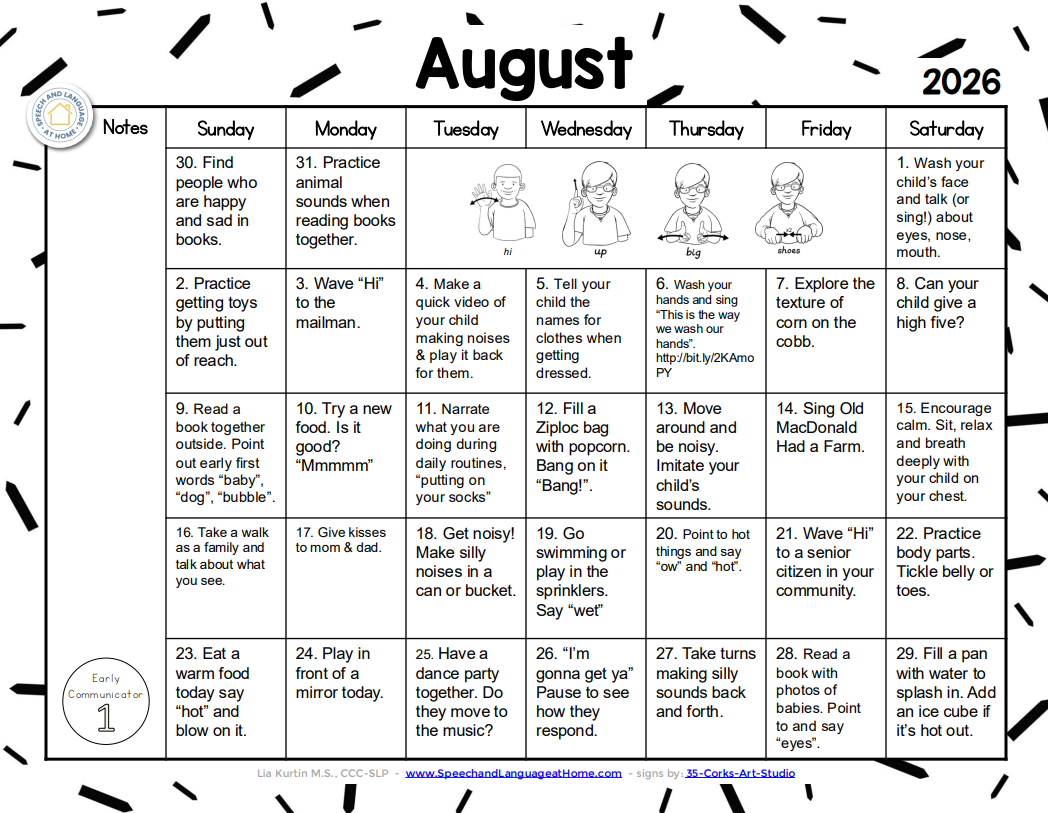
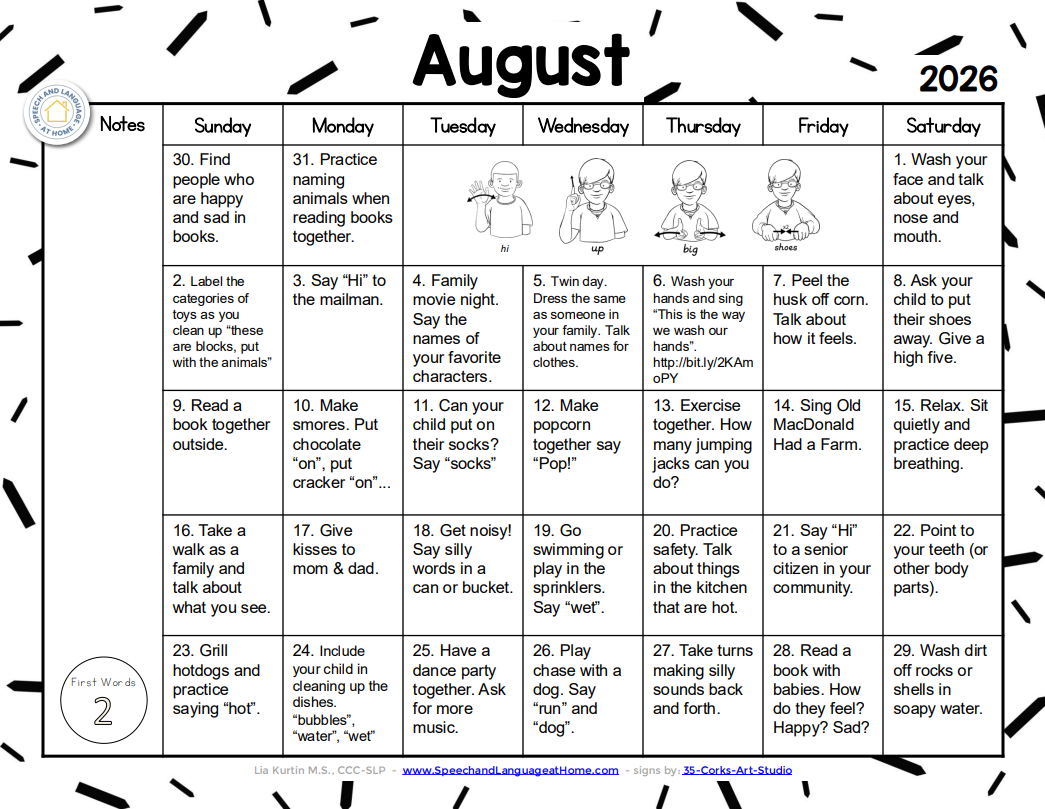
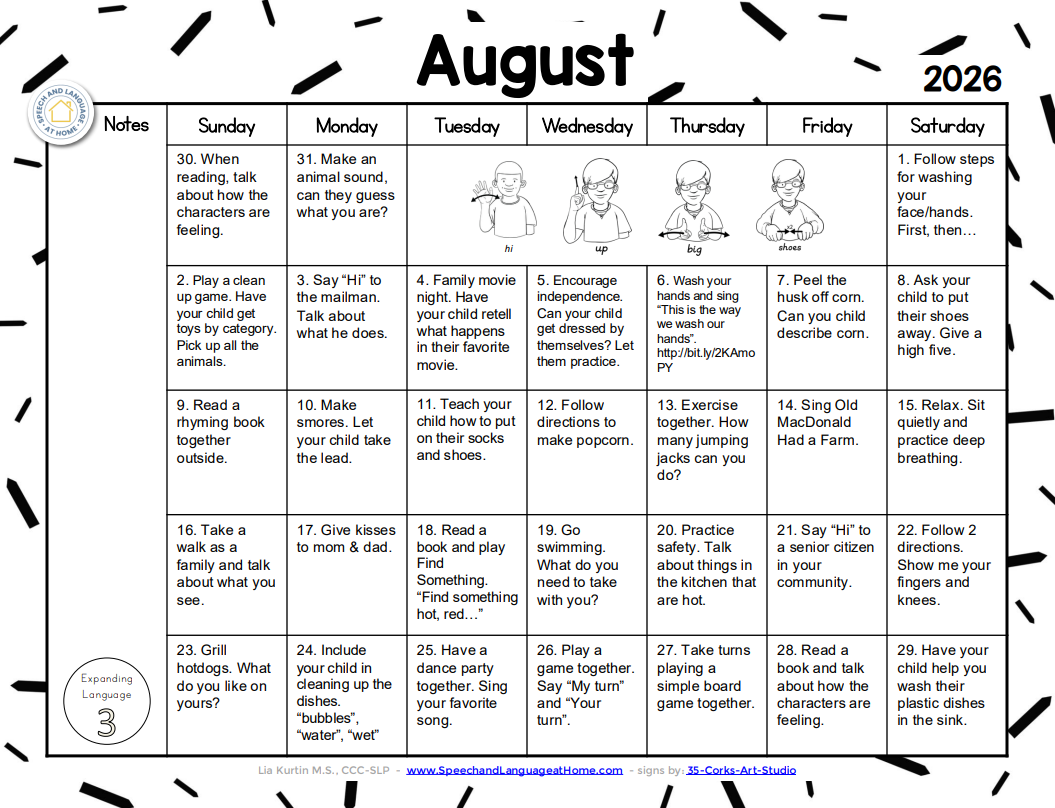
| | Early Communicator Calendar | | | Expanding Language Calendar | | |
Tried & True Tips from a Therapist
by Kristi Denkeler, EIS, SC, Team Leader
Help Your Toddler Manage Big Feelings
| |
Have you ever been cut off in traffic or had someone refuse to let you merge? Maybe you've stood behind someone with a full cart in the express checkout lane...50 items instead of 15?! Frustrating moments like these can make anyone feel upset. Now imagine your child having those same big feelings without the words or skills to express them.
When we feel overwhelmed, our "inner toddler" may want to scream, kick, or throw things too. As adults, we have learned ways to calm ourselves. We might enjoy a cup of coffee, take a warm bath or shower, eat a piece of chocolate, exercise, listen to music, or go for a walk or take a drive.
Toddlers are still learning these important self-calming skills. As an Early Intervention Specialist, one of the most common questions I hear from families is how to help reduce tantrums and teach healthy ways to calm down. It is important to remember that we are helping shape these amazing, curious, and sometimes challenging little people. They deserve patience, respect, and guidance as they learn. Here are some strategies that can help.
1. Create a Calm Spot
A calm spot is different from a time-out. It is a special place that you and your child create together when they are calm. This space gives your child a safe place to go when they need a break. (See ideas here.)
Choose a quiet area away from the television and other loud distractions. A calm spot can be as simple as a small tent, a cozy corner with pillows, or a soft rug.
Fill the area with calming items such as:
-
Sensory bottles (Learn how to make a sensory bottle here.)
- Texture books
- Stress balls or sensory balls
- Shakers and pop-it toys
- Bubbles, feathers, or pretend birthday candles to blow out
- Favorite stuffed animals
- Soft pillows or bean bags
- Books, posters, or picture cards that show different emotions
2. Practice Calming Skills Through Play
Children learn best through play. Practice calming strategies before your child is upset so they know what to do when big feelings happen.
Try activities such as:
- Blowing out pretend candles
- Blowing bubbles
- Drinking cold water through a straw
- Counting favorite toys
-
Playing with Play-Doh, slime, kinetic sand, water, or ice (Try this DIY taste-safe kinetic sand or these great ice play ideas.)
Blowing and sucking activities can help children regulate their breathing and calm their bodies.
3. Model Taking a Break
Children learn by watching the adults around them. When you need a break, let your child see you use your own calming strategies. Say something like, "I am feeling frustrated, so I am going to my calm spot to take a few deep breaths." This teaches your child that everyone has big feelings and that taking a break is a healthy way to handle them.
4. Read Books About Feelings
Read books about emotions every day or several times each week. Stories help children recognize different feelings, learn new words to express themselves, and discover healthy ways to cope. Check out these book suggestions.
|
5. Use Music and Movement
Calming music, silly songs, or simple yoga activities can help children relax and reset. You may even choose a special calming song that you use consistently whenever your child needs help settling down. Check out Cosmic Kids for some wonderful themed yoga activities.
6. Offer Regulating Snacks
Some children find crunchy snacks, chewy foods, or cold drinks through a straw calming. These simple activities can provide sensory input that helps them regulate their emotions.
7. Stay Calm During a Tantrum
When a child is having a tantrum, talking loudly or trying to reason with them often makes the situation more difficult. Instead, help your child move to a safe, comfortable space where they can express their feelings.
Once your child begins to calm down, speak in a gentle voice and get down to their eye level. You might say, "I see that you are upset. I am here to help." Naming their feelings helps children learn to recognize and communicate emotions over time.
Every Child Is Different
There is no single strategy that works for every child. Pay attention to what helps your child feel calm and practice those strategies often, especially when they are already feeling happy and relaxed.
The calming skills you teach your child today can become lifelong tools for managing emotions, solving problems, and building healthy relationships.
| | |
Spotlight Story - The Villanueva Family
by Cait Villanueva
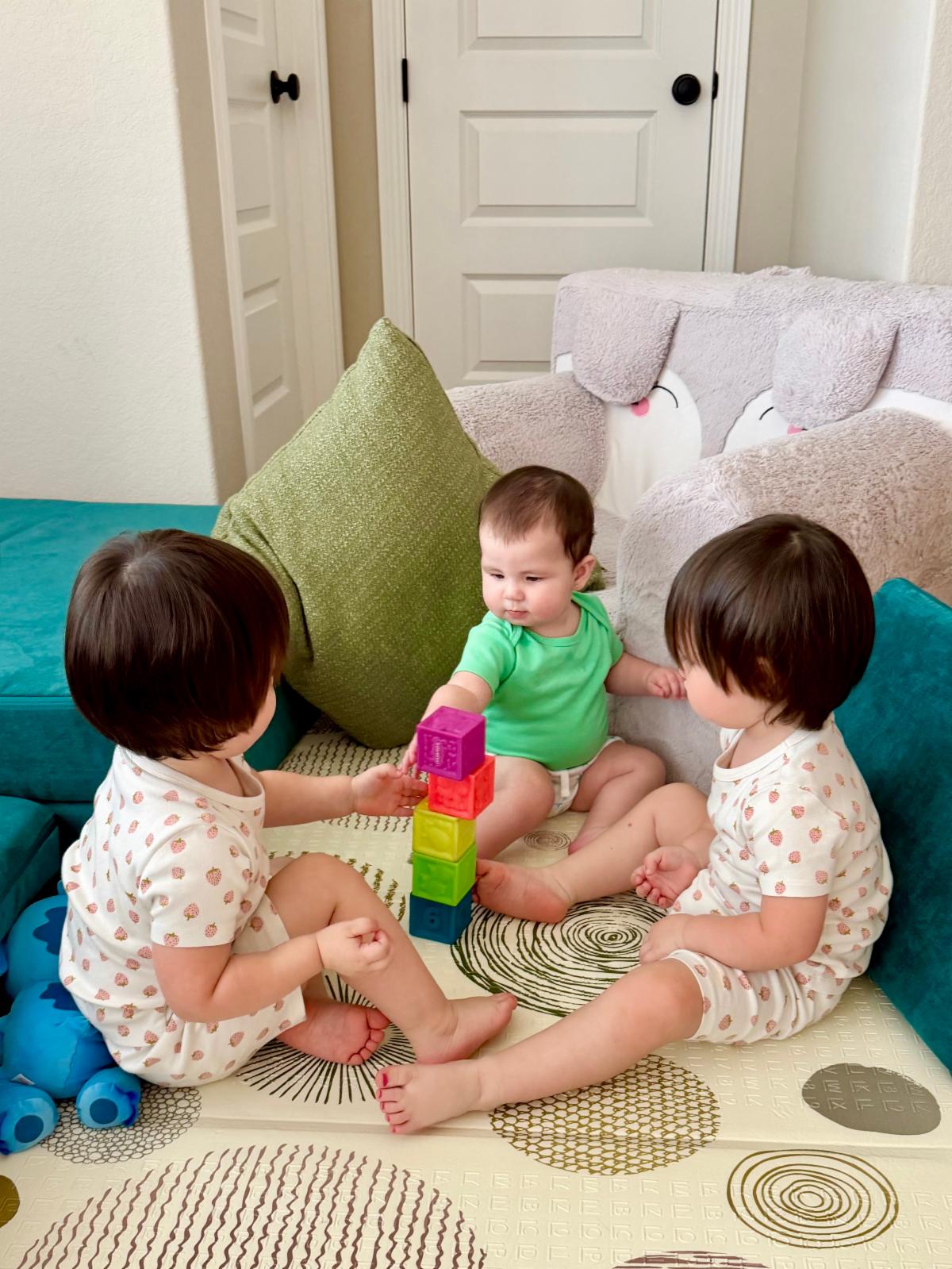
I was a new mom to two beautiful, premature twin girls (Riley and Skyler) when I first learned about Early Childhood Intervention from their pediatrician. I had no idea what to expect when I scheduled their evaluation for services with Easterseals, except that I was eager to make sure they had every tool at their disposal to meet developmental milestones and excel in life. Little did I know, the Easterseals physical and speech therapists would become some of my daughters’ fiercest advocates, not to mention some of the most encouraging confidantes an overwhelmed parent could ever hope for. In fact, when our family welcomed another precious girl (Quinn) only 14 months after the twins were born, I immediately reached out to Easterseals to ensure that she received the same support and therapy that her sisters did.
I watched the twins work through gross and fine motor skills under the watchful eye and gentle hands of two physical therapists, who each developed their own relationships with our girls; they nurtured and cheered them on through difficult physical transitions, always teaching me and demonstrating how I could continue that work with them between sessions to maximize their developmental progress. One of those physical therapists is now also working with my youngest, helping her navigate her own unique journey through gross and fine motor skill development. This woman has become part of our family, and I feel immeasurably grateful to her for how attentive, knowledgeable, affectionate, and playful she has been with all three of our babies.
Not only have my daughters benefited from Easterseals physical therapy, but all three of them have also received speech therapy — whether that took the form of building upon receptive and expressive language or feeding support during the transition from bottles to solid food. I cannot tell you how much ECI services have supported my girls throughout their lives thus far, as well as empowered me as a mother to three under two years old. No thanks could ever be enough for how much Easterseals therapists have changed our lives. I truly hope that every new mother finds her way to your door, because there are few things better than seeing your children overcome their particular struggles or than hearing kind words of encouragement when the responsibility of parenthood weighs on your shoulders. Thank you, Easterseals. We’re forever grateful for what ECI has done for our girls and for our entire family.
| | | | |
Your Story Matters
We’d love to hear your journey. Whether it’s a small milestone or a life-changing moment, your story can inspire others and help us show the power of possibility.
| |
Introducing The Heart of ECI
At Easterseals ECI, our work is driven by people with big hearts—those who go above and beyond to support children, families, and one another every single day. To celebrate that spirit, we’re introducing a new monthly feature called “The Heart of ECI.” Each month, we’ll spotlight one of our incredible team members who embodies the compassion, dedication, and teamwork that make our mission come alive. These individuals are nominated by their peers—the people who see their kindness, commitment, and impact in action every day.
|
Cheri Vega, EIS/SC
Early Intervention Specialist
Pre-Enrollment
Serving Easterseals since 1999
This month, we are proud to recognize Cheri Vega as our Heart of ECI. Cheri exemplifies what it means to be a compassionate, dependable, and mission-driven team member. She builds strong, positive relationships with families and colleagues, communicating with clarity, respect, and intention. Her ability to listen thoughtfully and foster collaboration creates a supportive environment where both families and staff feel valued.
In her vital role within the pre-enrollment process, Cheri is often the very first connection families have with ECI. This initial interaction sets the tone for everything that follows—and Cheri does it exceptionally well. She has a remarkable ability to build instant rapport, helping families feel safe, supported, and understood from the very beginning. With clarity and care, she walks parents through what can be complex and emotional diagnoses, ensuring they feel informed and reassured as they take their first steps into services.
Cheri’s thoughtful preparation and attention to detail ensure that each family’s experience is smooth and welcoming. She anticipates needs, organizes materials in advance, and approaches every interaction with intention and empathy. Her work not only reflects the mission of Easterseals ECI—it actively brings children and families into our program by creating a foundation of trust and connection.
With strong organizational skills and a deep sense of responsibility, Cheri is a reliable and steady presence for both families and her team. Her professionalism, compassion, and dedication make her an essential part of our program’s success.
Cheri’s ability to make families feel seen, supported, and confident in their journey is truly what sets her apart. We are incredibly grateful for the impact she makes every day.
Congratulations, Cheri, and thank you for being the heart of ECI!
| |
| |
Heart & Voice: Advocating for Tomorrow, is a monthly segment in our newsletter dedicated to highlighting advocacy opportunities for young children with special healthcare needs. This feature will educate and inform parents about current issues, policies, and initiatives that directly impact their children’s care and well-being. Whether you're new to advocacy or looking to stay engaged, Heart & Voice will empower you with the knowledge and tools to make your voice heard and help shape a better future for your child.
| |
|
Region 20
Family Engagement
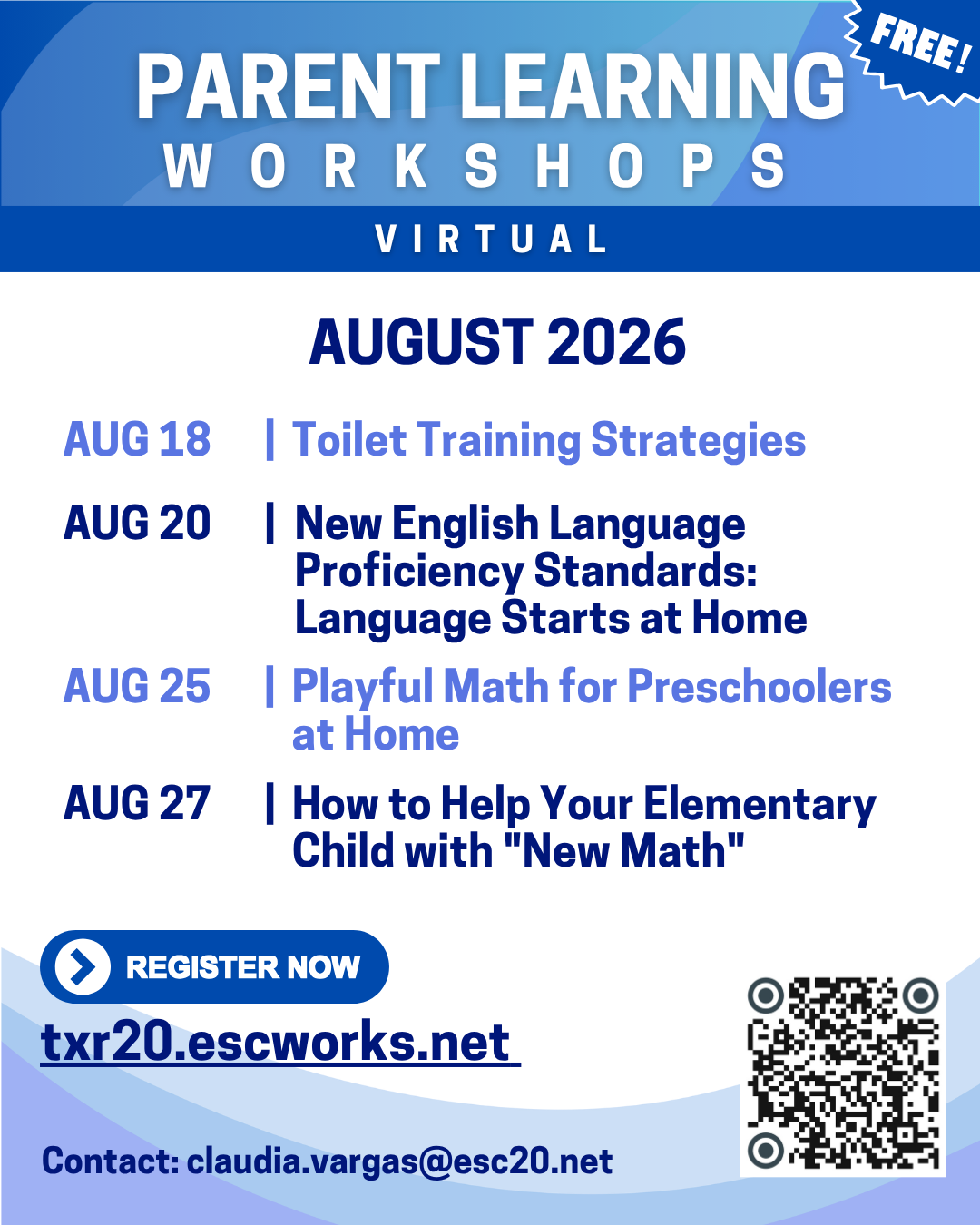
The Education Service Center, Region 20 Family Engagement Program provides training and support to school districts, charter schools, private schools and families to help strengthen home-school-community partnerships.
Family Engagement Program Initiatives:
- Provide ongoing and direct training and support for district and campus staff who work directly with families;
- Provide ongoing and direct training and support in building a sustainable framework for home-school partnerships;
- Provide FREE weekly parent trainings on a variety of topics, including special education; and
- Collaborate and partner with organizations to increase community awareness and supports.
Region 20 Family Engagement has resources on speech and language and communicating with your baby, social stories, preschool activities, and much more. Their trainings are free of charge, you just create an account and register.
The ESC-20 Family Engagement Department routinely sends out email communications. If you'd like to receive email communications on what's happening in the field of Family Engagement and ESC-20 Family Engagement initiatives, subscribe to the Family Engagement Network.
| |
| | |
August Awareness Observations | | | | | |
Month-Long
- Autoinflammatory Disorders Awareness
- Children's Eye Health and Safety
- Children's Vision and Learning
- Digestive Tract Paralysis (DTP)
- Don't be a Bully Month
- Immunization Awareness
- Neurosurgery Outreach Month
- Never Leave a Child Unattended in a Car, Purple Ribbon Month
- Spinal Muscular Atrophy Awareness
- Stevens-Johnson Syndrome (SJS)
Days
- August 6 - National Wiggle Your Toes Day
- August 8 - Happiness Happens Day
- August 8 - Severe ME Awareness Day
- August 12 - International Youth Day
- August 13 - International Left-handers Day
- August 19 - World Humanitarian Day
| | | |
2203 Babcock Road
San Antonio, TX 78229
phone: 210.614.3911
fax: 210.625.3162
| |  | |
Easterseals Rehabilitation Center
is a subrecipient of Texas Early Childhood Intervention Services
and partially funded by
Texas Health and Human Services.
| | | | | |