News and Notes

UCSF Health Workforce Research Center on Long-Term Care

January 2023

Established in 2013, UCSF HWRC is one of nine programs funded by multi-year cooperative agreements with the US National Center for Health Workforce Analysis in the US Bureau of Health Workforce at HRSA. Together, these centers reflect a significant contribution toward comprehensive workforce planning in the United States.


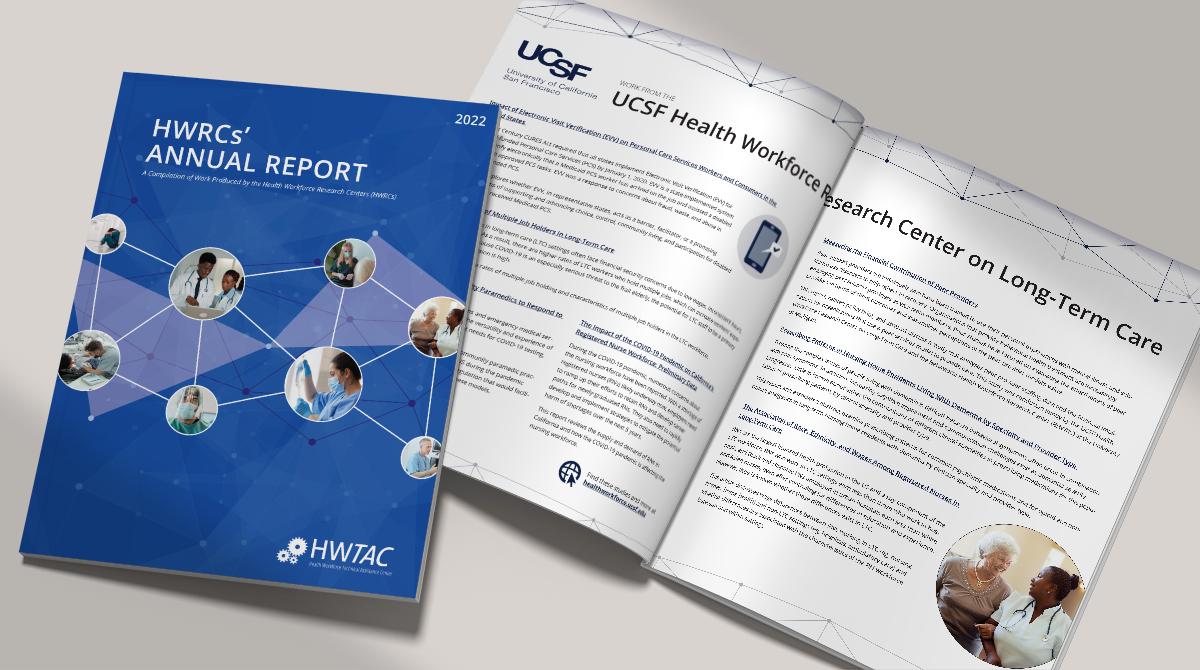
Get a look at all of the HRSA-sponsored work in the new Health Workforce Research Centers' (HWRCs') Annual Report for 2022. Topics include COVID-19, burnout, telehealth, health equity, and more! This year the report includes a section that features an important research project from each center.


Health workforce researchers work in a wide variety of settings and have taken numerous pathways to reach their current positions. Panelists in a recent webinar, moderated by the UCSF HWRC’s Dr. Janet Coffman, described their respective career paths and shared insights they gained along their professional journeys. This webinar was recorded and provides great information for people at all career stages who are interested in exploring options for pursuing careers in health workforce research. See the re-play of the webinar now!


This newsletter highlights new HWRC publications, as well as workforce-related research conducted by our team at the Institute for Health Policy Studies and Healthforce Center at UCSF, and other research partners.

Highlighted Stories

HWRC to Lead the Evaluation of the California Grows Innovation Fund

Faculty and staff from the UCSF HWRC, UCSF Institute on Health and Aging, and UCSF School of Nursing will conduct an evaluation of the California Grows Innovation Fund, which is dedicating $55 million toward workforce training and incentive programs to increase the skills, retention, and job satisfaction of the direct care workforce, including both paid and unpaid caregivers. The evaluation team will draw from its experience in evaluation research including its evaluation of San Francisco’s Support at Home Program, which offered vouchers for home care services to middle-income people living with disabilities. The evaluation will include site visits, surveys of program participants, and analysis of administrative data. The CalGrows program and evaluation will continue throughout 2023 and provide guidance on successful strategies to enhance workforce skills and advancement.

Personal Care Aides in Rural America: Shortages and Burnout Among an Essential Health Workforce

Personal care aides (PCAs) provide essential services for people with self-care disabilities yet there are shortages of these workers in many parts of the country. PCAs assist people with basic daily needs, such as meal preparation, bathing, and dressing. As the US populace grows older and more individuals experience disabilities, personal care has become one of the fastest growing occupations.


New research explores quantitatively where people with disabilities who need help with self-care and daily activities live and compares that to where PCAs are located (see the interactive maps). Researchers also assembled the personal stories of some of these workers in another interactive presentation that highlights the low pay, lifestyle challenges, and significant burnout.


In a Health Affairs paper from this project, we addressed the need for wage and benefit increases, improved training and career opportunities, increased flexibility in state Medicaid policies on paid family caregiving, incentives and compensation for travel, and increased data collection and government tracking of workforce data could help boost the supply of personal care aides in rural America.


This research was performed by Susan A. Chapman, Laura Wagner, and Timothy Bates at UCSF HWRC in partnership with Rayna Sage, Lillie Grieman, and Ari Lissau at the Research and Training Center on Disability in Rural Communities (RTC:Rural) at the University of Montana.

Recent Publications from UCSF HWRC-LTC Investigators

Bates, T, Jura, M, Werts, M, et al. Trends in postgraduate dental training in the United States. J Dent Educ. 2022; 86: 1124– 1132. https://doi.org/10.1002/jdd.13073


Chapman, SA, Greiman, L, Bates, T, Wagner, LM, Lissau, A, Toivanen-Atilla, K, Sage, R. (2022) Personal Care Aides: Assessing Self-Care Needs And Worker Shortages In Rural Areas. Health Affairs. 41(10):1403-1412. doi: 10.1377/hlthaff.2022.00483


Hynson, E, Bloomer, J, Samson, Z, Price, K, Tran, D, Muench, U. Workforce Trends of Underrepresented Minority Nurses in the United States Over the Last Decade: Progress Towards Equal Representation? Policy Polit Nurs Pract. 2022 Nov;23(4):215-227. doi: 10.1177/15271544221118319


Nguyen, T, Andraka-Christou, B, Arnaudo, C, Bradford, WD, Simon, K, Spetz, J. Analysis of US County Characteristics and Clinicians With Waivers to Prescribe Buprenorphine After Changes in Federal Education Requirements. JAMA Network Open, 2022; 5 (10): e2237912. doi: 10.1001/jamanetworkopen.2022.37912


Mertz, EA, Bates, T, Kottek, A, et al. Practice patterns of postgraduate trained dentists in the United States. J Dent Educ. 2022; 86: 1133– 1143. https://doi.org/10.1002/jdd.13072


Muench, U, Jura, M, Thomas, CP, Perloff, J, Spetz, J. Rural-urban prescribing patterns by primary care and behavioral health providers in older adults with serious mental illness. BMC Health Services Research, 2022, 22, Article number 1440. doi: https://doi.org/10.1186/s12913-022-08813-6


Werts, M, Patel, P, and Mertz, E. Teledentistry Trends in the United States During the COVID-19 Pandemic. Oral Health Workforce Research Center (OHWRC), Oct. 2022. https://oralhealthworkforce.org/wp-content/uploads/2022/10/OHWRC-TeledentistryCaseStudies-2022Final.pdf

Recent Presentations from UCSF HWRC-LTC Investigators

Susan Chapman presented on the homecare workforce and shortages in rural areas on Nov. 1 at a conference in Bergen, Norway, and participated with colleagues on projects studying the long term care systems and policy issues in Norway, Denmark, and the Netherlands. Chapman’s role on the project is to both learn from those systems, they have a social care model, and provide comparative information on US models and systems.


Laura Wagner helped Northern Kentucky University on Oct. 24-25 launch the FirstGenRN project in a small satellite campus in northern rural Kentucky to train registered nurses. See more details about the grant from the Commonwealth of Kentucky and the Kentucky health care crisis.


Laura Wagner organized and led the UCSF First Generation to College Students in the Health Professions Symposium on Nov. 7 with support from the California Wellness Foundation. Almost 200 attendees from Hawai’i to the United Kingdom registered to identify strategies for supporting first generation to college health professions’ students through visibility awareness, career development, and mentoring; and to consider strategies for participants to understand and improve or develop their own institutional first generation to college initiatives in the health professions. See details and resources from the symposium.

Please visit our website to learn about our ongoing projects!

Visit us at: http://healthworkforce.ucsf.edu

Twitter: @ucsfhwrc

Follow us on LinkedIn!

Web  Twitter  LinkedIn