|
Amboseli Trust for Elephants
January - March 2026
| |
31st March 2026 | Newsletter | |
Note from our Director
Sir/ Madam
Well, we got much more than expected and much earlier than expected. The “long rains” in Amboseli usually start in mid March and continue into April and sometimes into May. This year they came in copious amounts starting in February and as I write this now at the end of March, we are still getting rain almost every day.
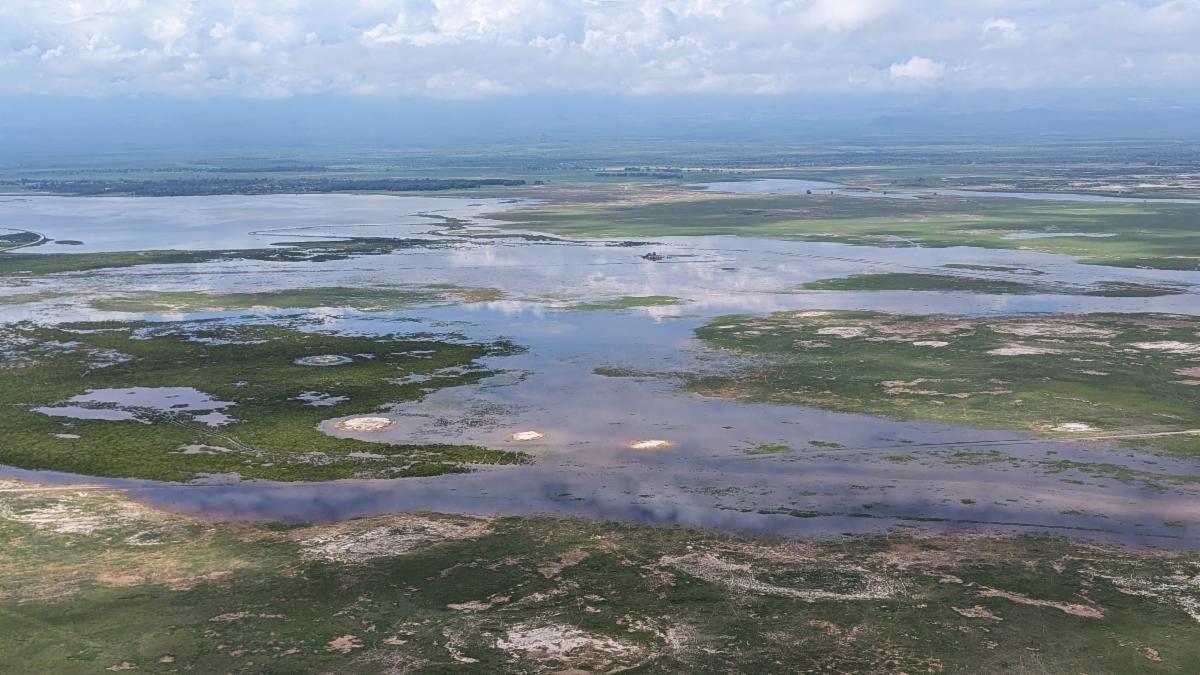
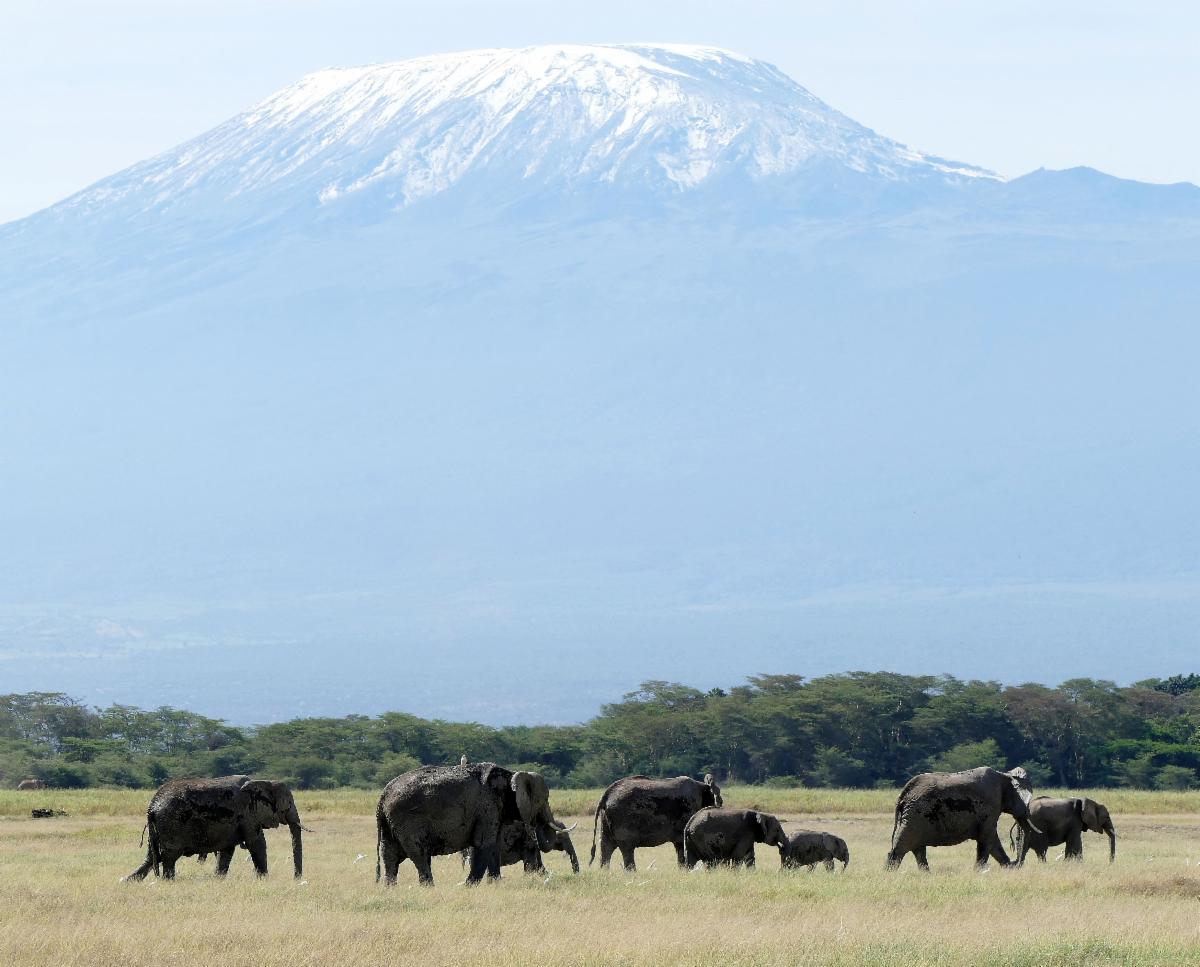
Amboseli was a huge lake many thousand years ago when Kilimanjaro erupted and blocked a major river. Eventually that lake dried up and what is now Amboseli became a basin with only a small area flooding in wet seasons. That situation is changing and Amboseli appears to be turning into a lake once again. At least half of the Park is under water including the airstrip. Nevertheless, visitors are still enjoying the parts of the Park that are accessible.
Our research camp remains dry but getting in an out is problematic. We don’t dare complain because we can see the landscape turning bright green and the grass growing well above the elephants’ knees. We all vividly remember the droughts. With more than 200 elephant calves less than a year old, these rains are very welcome for their mothers and for all the elephants.
Cynthia Moss
Director
| | | | Amboseli in March (photo thanks to our friend Alexis Peltier) | | |
The Value of Older Individuals
Prof Phyllis Lee - ATE's Director of Science
| | |
Several years ago, I collaborated with a group of global scientists working on very long-lived animals, from fish to whales to elephants and primates. In late 2024, the team published the results of this work as Loss of Earth’s old, wise, and large animals in the journal Science (read paper on this link).
We argued that humans have caused a collapse in the old age-classes of wild animal populations and that many of Earth’s oldest, often largest, and most experienced individuals have been eliminated from ecosystems. The ecological and conservation importance of old individuals has been neglected, even though there are a surprising number of animals who live to “extreme old age” when undisturbed by people. Old individuals are found in crustaceans, mollusks, sponges, and corals as well as fishes, turtles, birds, elephants, whales, carnivores, and humans.
| | Ulrica and her family. Born in 1963, Ulrica is currently the oldest female in Amboseli at 63 years old | | Each old individual provides unique biological, ecological, cultural, and ecosystem services that have been - or are being - lost when these aged individuals are exploited. We used specific examples, such as our Amboseli elephant study, to encourage conservationists to address new research, policy and management avenues to better understand and conserve the unique ecological roles provided by older, more experienced animals. At the IUCN Congress in November 2025 we proposed a motion to consider “Longevity Conservation” to halt the ongoing loss of older individuals. IUCN Congress adopted the motion, and we hope this will now show the importance of old individuals to fundamental biological and ecological processes. | |
The History of the HA family - Updated
| | |
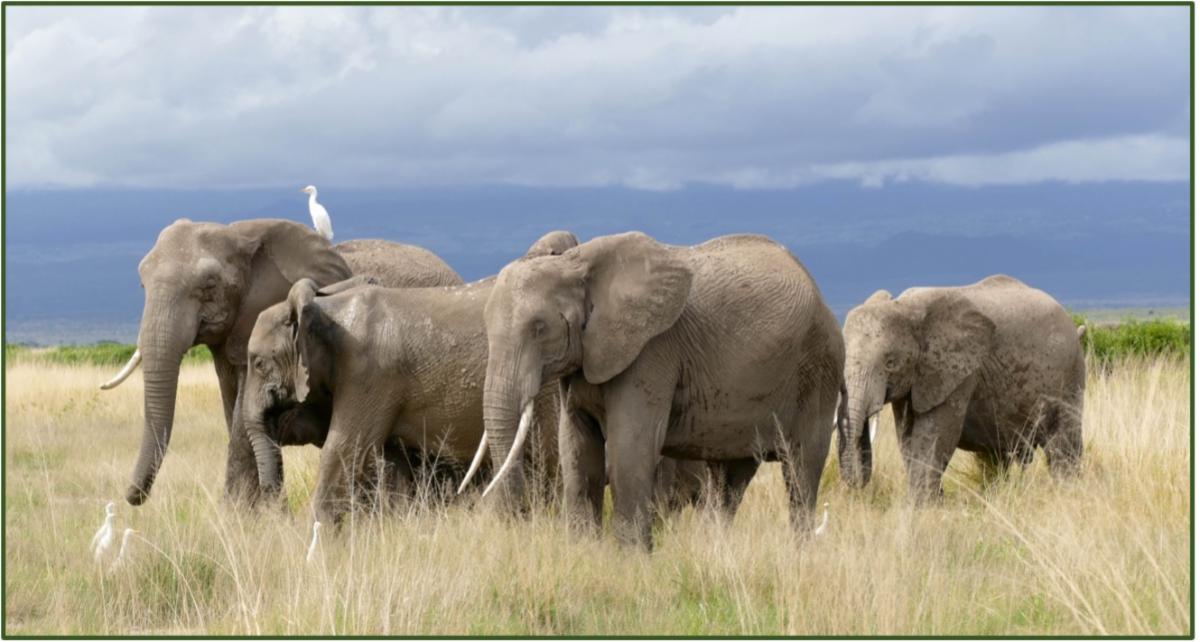
Part of the HA family (left to right): Hestia, Hecate, Hipolito, and Suri
with the smaller calves hidden behind
| | |
Not all the families in Amboseli are big and successful. Some have struggled and failed and have become extinct; the BA, DA, GA, NA, NB, QA and TB families no longer exist because there were no females to continue. Other families hold on by a thread. The HA family seems destined to be tiny. My colleague, Harvey Croze, and I first met the members on October 5, 1973. It was early morning and we found three elephants along the edge of the Enkongu Narok swamp. This small group consisted of a female and two calves. There were no other elephants in the immediate area. The female was large and handsome. The two calves were both females, one about three years old and the other just reaching puberty at approximately 11 years old. We were sure the younger calf was the big female's because she suckled from her; the older one was probably her daughter as well, but we could only guess that by their behavior.
It was unusual to find such a small family and I wondered what their history was. Of course, I could never know. However, I did get to know these animals very well over the next few years. The family did, indeed, only consist of those three animals. They were assigned the code letters HA and I named the adult female "Harriet" and her older daughter "Hannah"; a few years later the younger calf was named "Hilda". I saw them two more times in 1973, only once in 1974, but then in 1975 I saw them frequently. Once I set up my camp in the Park in September 1975, I found them several times each month from then on.
To read the full updated history Click Here
| |
Iain Douglas-Hamilton 1942-2026
Cynthia Moss
The pioneer elephant researcher and my original mentor, Iain Douglas-Hamilton, died peacefully on December 8. His contribution to elephant conservation was immense and without him there would be far fewer elephants in Africa today. Also, without Iain there would probably not be an Amboseli Elephant Research Project.
I met Iain in Lake Manyara National Park in 1967 when I was travelling with a friend in East Africa. Iain took us out to the elephants in his beat up Land Rover and terrified us by switching off the engine and letting the huge matriarch, Boadicea, charge us at full speed before skidding to a halt in a cloud of dust a few meters away. It is a wonder I ever wanted to see an elephant again after that encounter, but Iain invited me to come back to Manyara as a volunteer. I took him up on the offer and of course fell in love with elephants and the study of them.
Iain did so much in terms of elephant protection—aerial surveys and fighting the ivory trade and the poachers—that we forget he was also an excellent scientist. He was the first person to identify elephants by the nicks, holes and vein patterns of their ears. Instead of looking at elephants on a population level he studied elephants individually. He confirmed that the basis of elephant social organization is the family unit and that each family is led by the oldest female—the matriarch. Up until then most people believed that there was a “herd bull” that was in charge. Iain also showed that elephant families had close relationships with other families and that elephant social life was rich and complex.
Iain’s impact on elephants and elephant research will endure forever
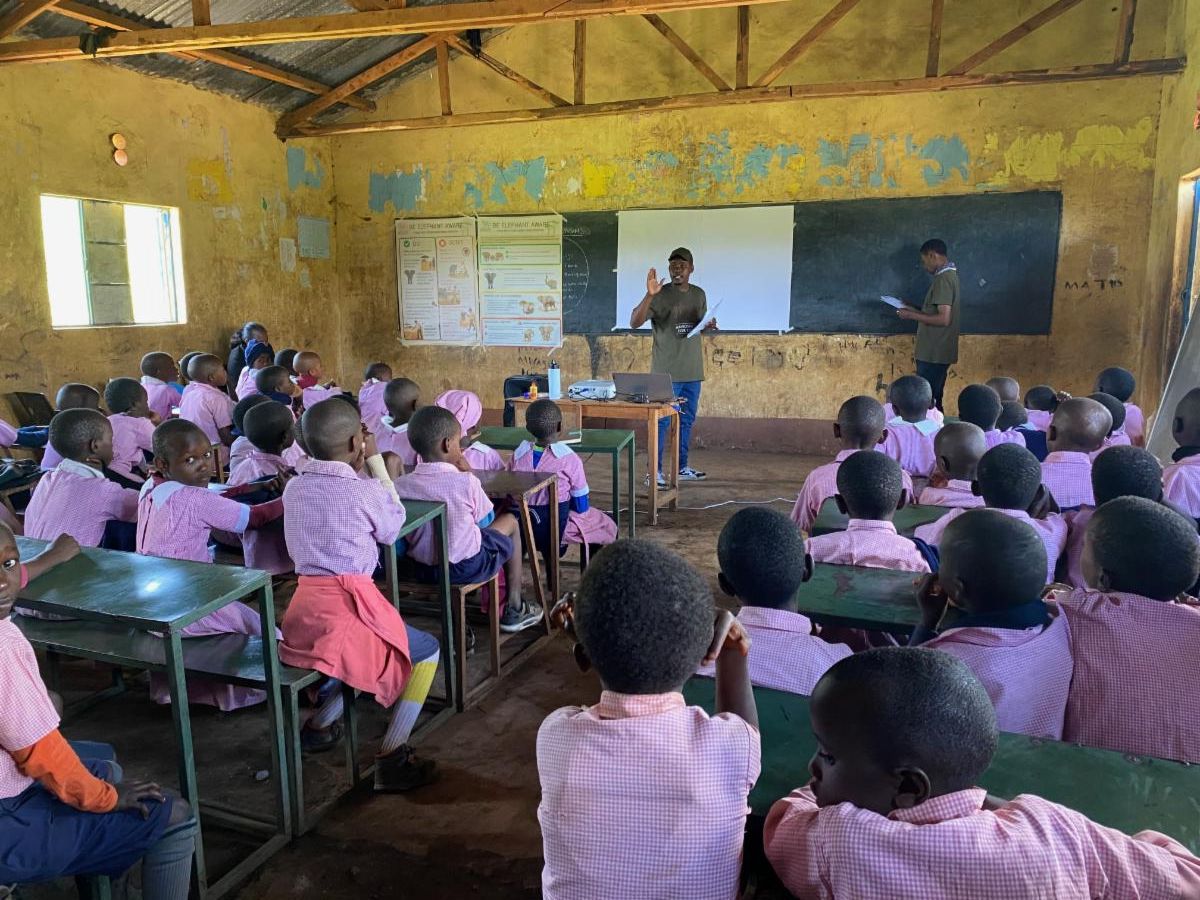
| | | | Our team teaching safety around elephants to school children | Safety Through Knowledge: Introducing Be Elephant Aware | |
In March, our Human–Elephant Coexistence team launched the first pilot of ATE’s Be Elephant Aware campaign. Developed in response to the growing need for practical safety knowledge, the program focuses on helping communities live safely alongside elephants.
We began with a school pilot at Loormeuti Primary School, using engaging posters, two short films created for the campaign, and age-appropriate lesson plans developed with the Oakland Zoo education team. The sessions were a great success, with students responding enthusiastically and quickly grasping key messages.
We are hugely grateful to Oakland Zoo for helping us develop the children's lesson plans.
As we expand this program across the Amboseli ecosystem, we are seeking donor support to scale its impact. If you would like to contribute, please contact us for further details.
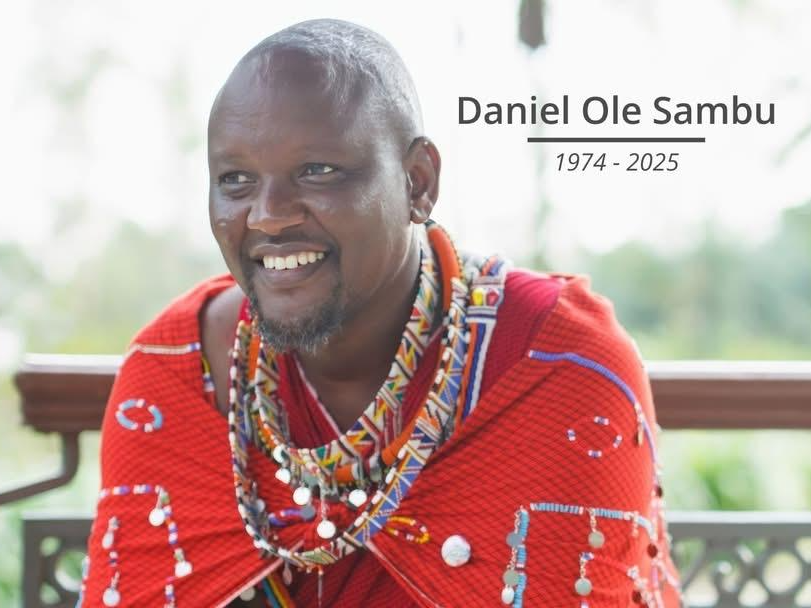
| |  | Daniel Ole Sambu (photo from Big Life Foundation) | Remembering Daniel Ole Sambu | |
We extend our heartfelt condolences to Michael Tiapashina, a member of the ATE team in our Human–Elephant Coexistence Program, and to his family following the passing of his father, Daniel Ole Sambu.
Daniel was a dedicated conservationist in Amboseli, working with Big Life Foundation, and a deeply respected member of the community. Known for his commitment, integrity, and leadership, he played an important role in protecting wildlife while supporting the people who share this landscape.
His passing is a great loss to the Amboseli conservation community. As we mourn, we also honour the enduring influence he leaves behind - one of service, resilience, and care for both people and nature. His legacy will continue to inspire all who work towards coexistence in Amboseli.
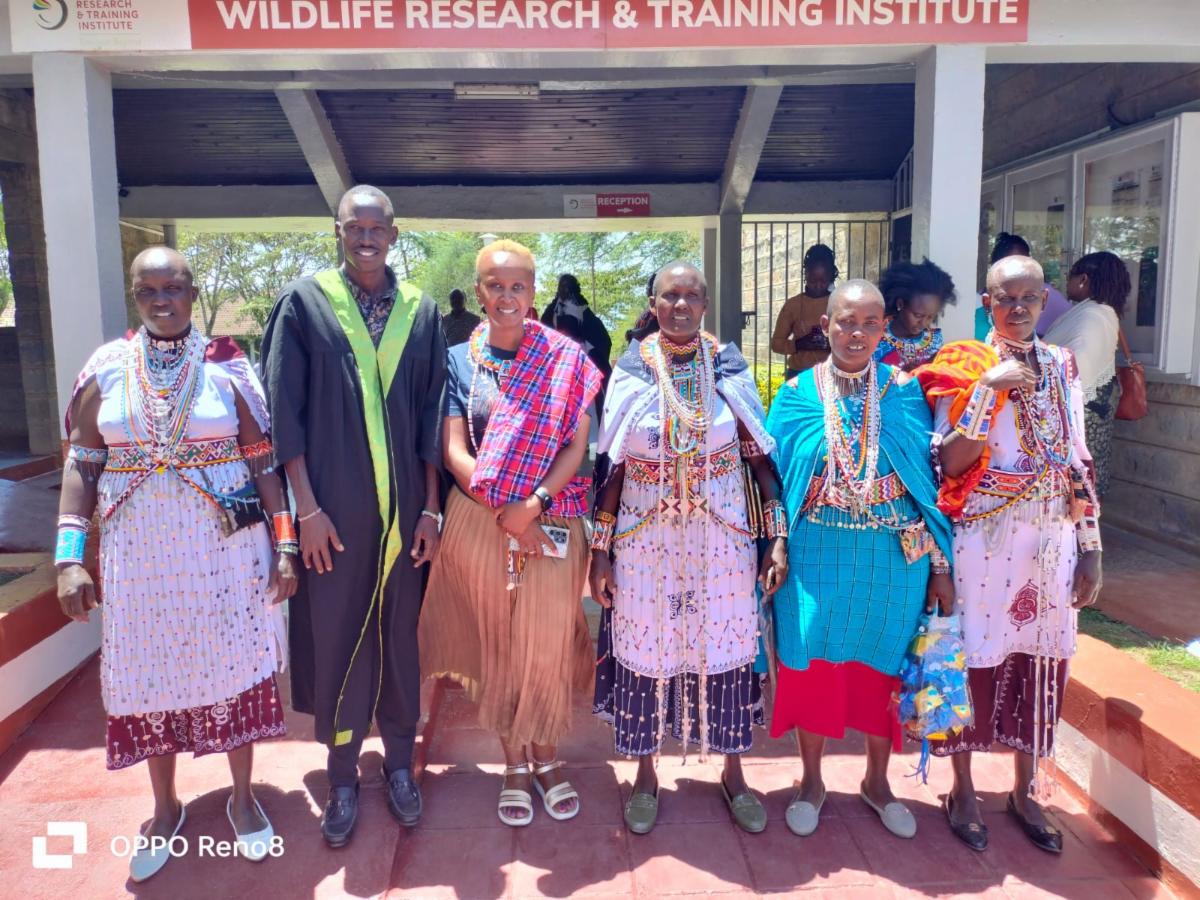
| | | Job with his family and Sylvi Nyambura from the ATE team during his graduation | Congratulations to our Scholarship Student, Job Oyiare | |
Congratulations to Job Oyiare! After joining our scholarship program in 2024, Job has successfully completed his studies at the Kenya Wildlife Service Training Institute, graduating with a Diploma in Wildlife Management.
We are proud to support him at the start of his career and look forward to seeing his contribution to conservation in the years ahead.
Our scholarship program is made possible through the generosity of our donors. Thank you for helping create opportunities for members of the Amboseli community and helping to invest in their futures.
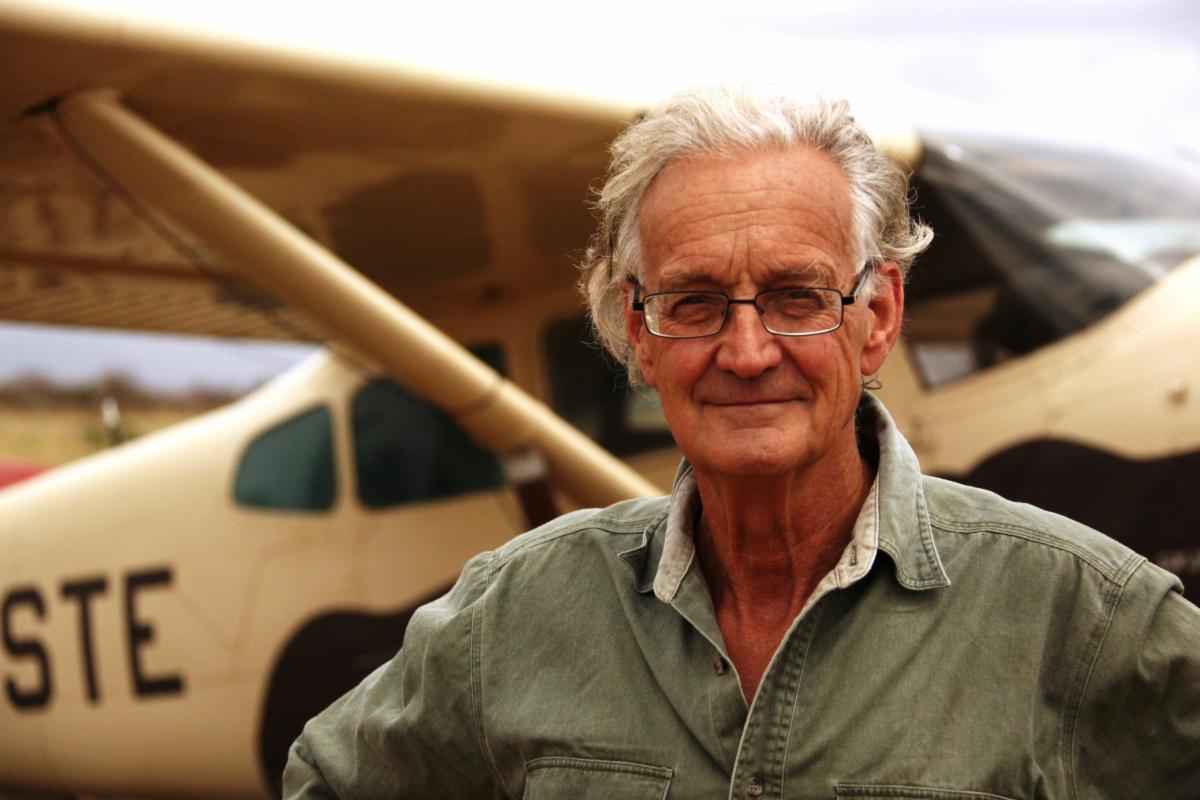
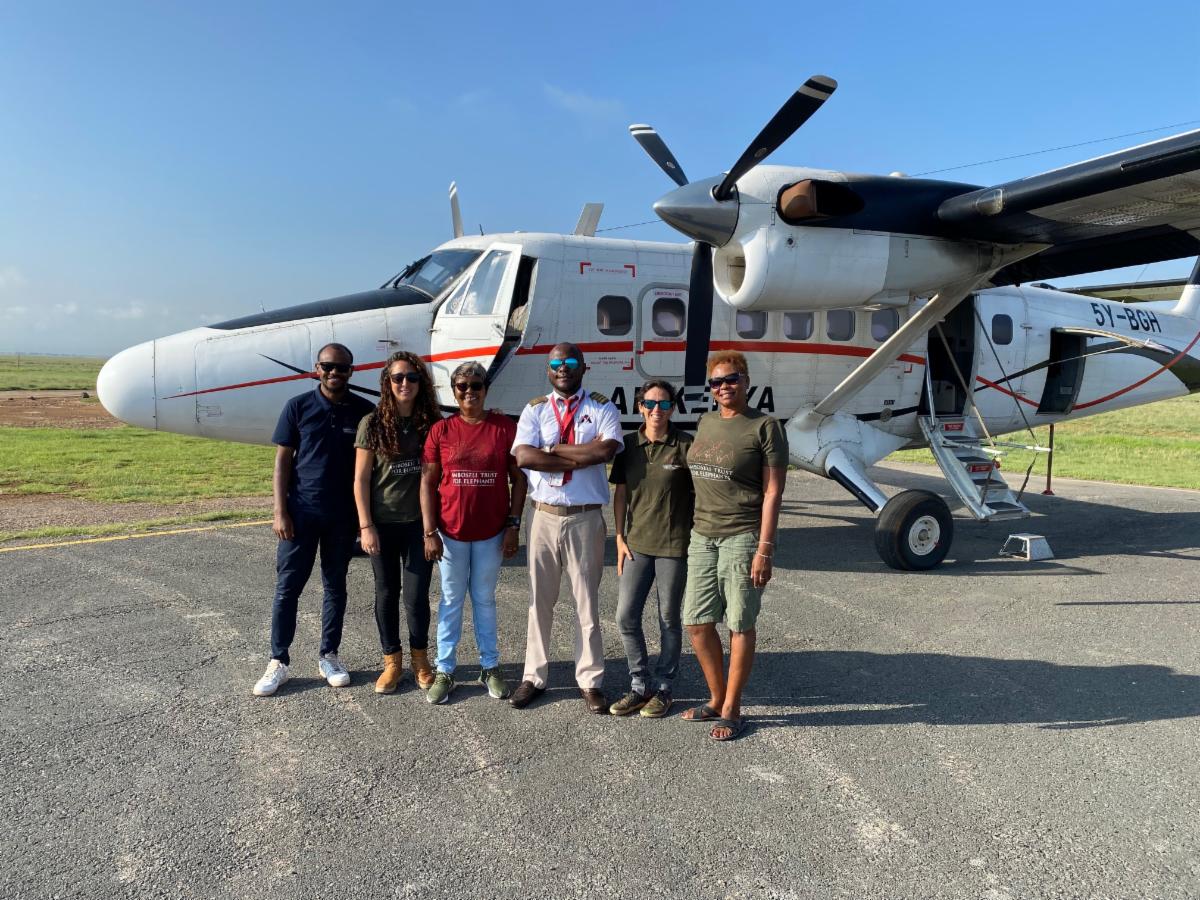
| | | ATE team members with an AirKenya pilot in Amboseli | AirKenya: A Partner in Conservation | |
We would like to extend our sincere thanks to AirKenya for their continued support, providing flights to Amboseli for another year. With our team based between the field in Amboseli and our administrative office in Nairobi, regular travel is essential for meetings, workshops, and coordination.
AirKenya’s support makes this possible, and we are truly grateful. Their team knows us by name, and we are always met with warmth, professionalism, and exceptional care.
Thank you, AirKenya, for your support of conservation. Your partnership makes a real difference.
| | | Thanking our Loyal Donors who Contributed Generously in Recent Months | | |
Doug Aja
Pradeep Bansal
Jane Beckwith
G.A. Binney Conservation Foundation
David Breskin
Nancy Camp
Florence M. Chase (in memory of Lynn Chase)
George and Leslie Conant
Thomas Cornwell
Susan Chase Culver (in memory of Lynn Chase)
Fair Play Foundation
Fay Forman
John and Abby Garland
Helen Grube Gifford
Gary Gonzalez
Deanna Gursky
Harley Family Foundation
Jerri Hatch
Neil Heath
Kathryn and John Heminway
Willa Kahn
Cara Kamerman
Leanne Lachman
| | | |
Allison Lefere
Lorin Lindner
Barbara Maltby
March to the Top
Linda McLaughlin
Jim and Beth Miller
Joscelyn Minton
Jeffrey Mora
Hatsy Moore
Oakland Zoo
Joyce Poole
Dr. Gordon R. Ray
Rosenthal Family Foundation
Janet Rosner
Joan Russo
Stephen Shelley
Larry and Diane Stern
Larry Strear
John Sturtevant
Kevin Thompson
Estate of Diann Thunderfyre
Jay Trivedi
Karen Washburn
Maxine Weinstein
Richard Weiskopf
| | The KB2 family under Kilimanjaro. It is one of six families in our Elatia program. You can choose one or more of the families to join the program. You will receive regular updates, which include photos and videos and news of what is going on in the family. To learn more about Elatia go to: this link or contact us on: info@elephanttrust.org | | | This is Ann and her newborn calf in 2022. Ann was named by a donor many years ago and now her daughter has recently been named Anita by a new donor. You too can name a calf and you will be able to follow the life of this calf. The name you give "your calf" forms a part of the Amboseli dataset for all time. For more information write to us at: info@elephanttrust.org | | | Give a Gift that Lasts Forever | |
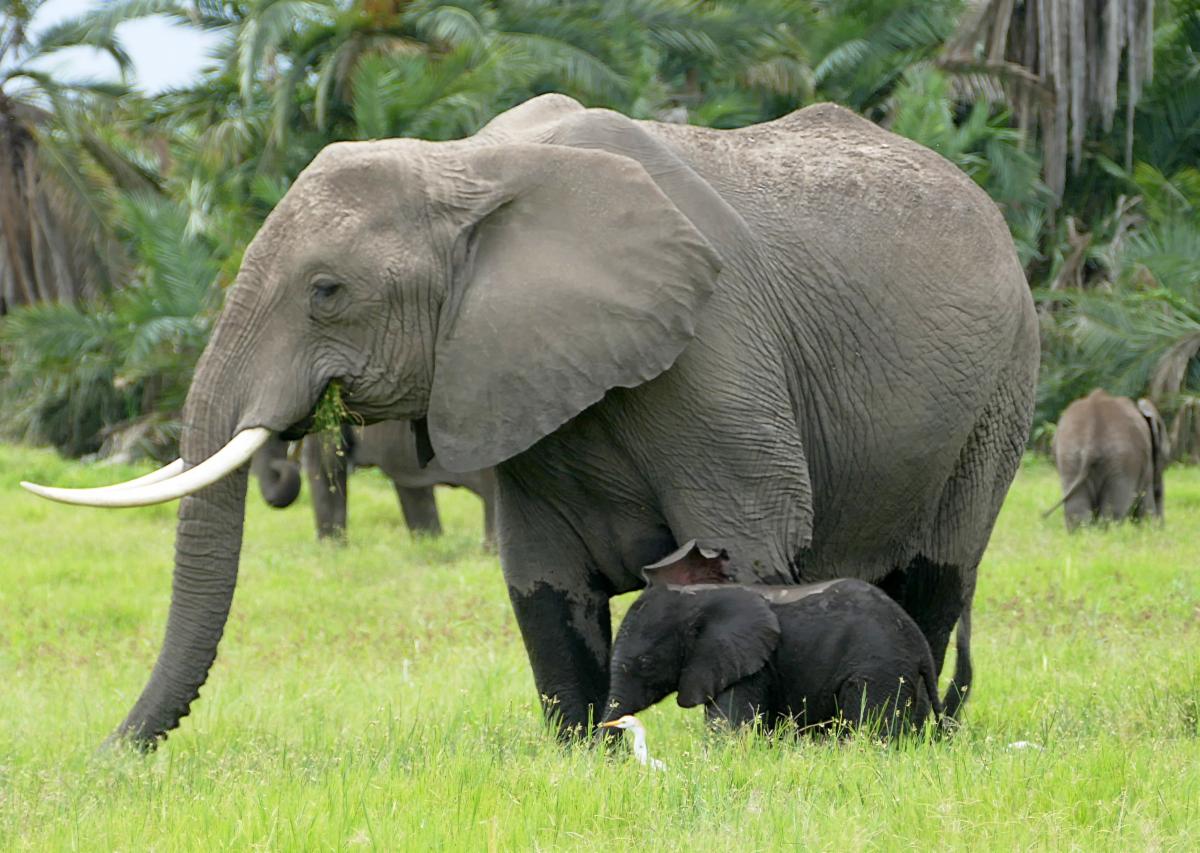
One of the more than 200 calves born to the Amboseli population in 2025, this calf belongs to the LD family. We want him to have a long and peaceful life. You can assure that his world remains secure by designating ATE as a beneficiary of your will, individual retirement account, or life insurance policy. To learn more about planned giving, contact ATE's Executive Director, Betsy Swart: eswart@elephanttrust.org
Tel: +1-508-783-8308
| | | Cynodon is one of Amboseli's up-and-coming males. Born in 1991 he is 35 years old and just entering his prime. He is from the same family, the CBs, as Craig was. Help us keep Cynodon, the CBs, and all the elephants in Amboseli safe by making your online purchases through iGive. If you sign up the Amboseli Trust for Elephants as your recipient organization, we will get a small percentage of the sale. www.igive.com | | |
Make a Donation
We use a secure online system on which you can make your donation with a credit or debit card. All donations exclusively support our not-for-profit organization.
| | | | |