|
Amboseli Trust for Elephants
July - September 2024
| |
30th September 2024 | Newsletter | |
Note from our Director
Dear Cynthia,
I wish I had definite news about the status of the trophy hunting of elephants in the Tanzania region bordering Kenya and Amboseli. Five large males were killed in the area by sport hunters in the period from September 2023 to April 2024. We, along with our colleagues from Big Life, ElephantVoices, Save the Elephants, and Wildlife Direct have been protesting this activity for the past year. A petition was created and it was signed by more than 500,000 people.
For months we thought that our voices were being ignored, but no new hunting licenses have been issued and we have been told that the Kenyan and Tanzanian governments are in high-level discussions. This information gives us hope. I want to thank all our friends and supporters who have signed petitions, written letters, and posted about the tragedy that was occurring. We will let you know as soon as we hear anything definite.
We will never give up.
Cynthia Moss
Director
| | | |
|
What do Elephants do at Night
by Cynthia Moss
| | |
|
|
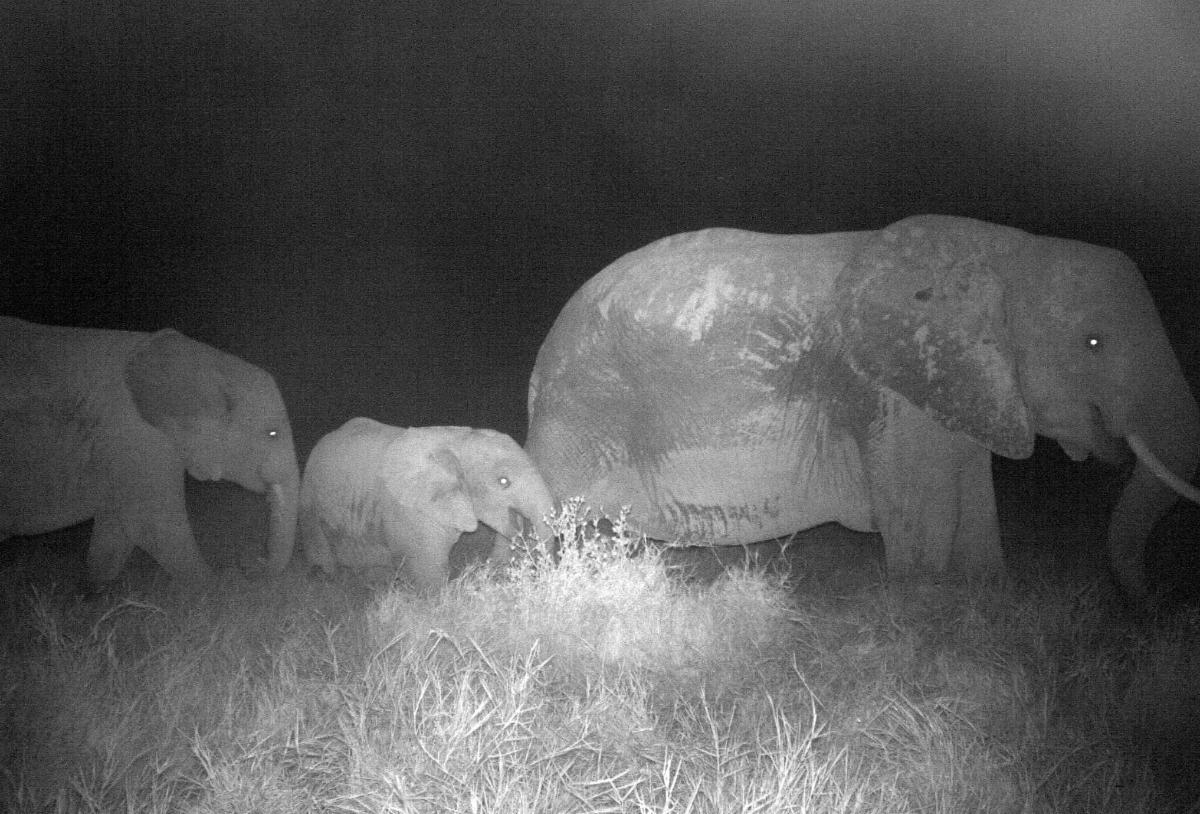
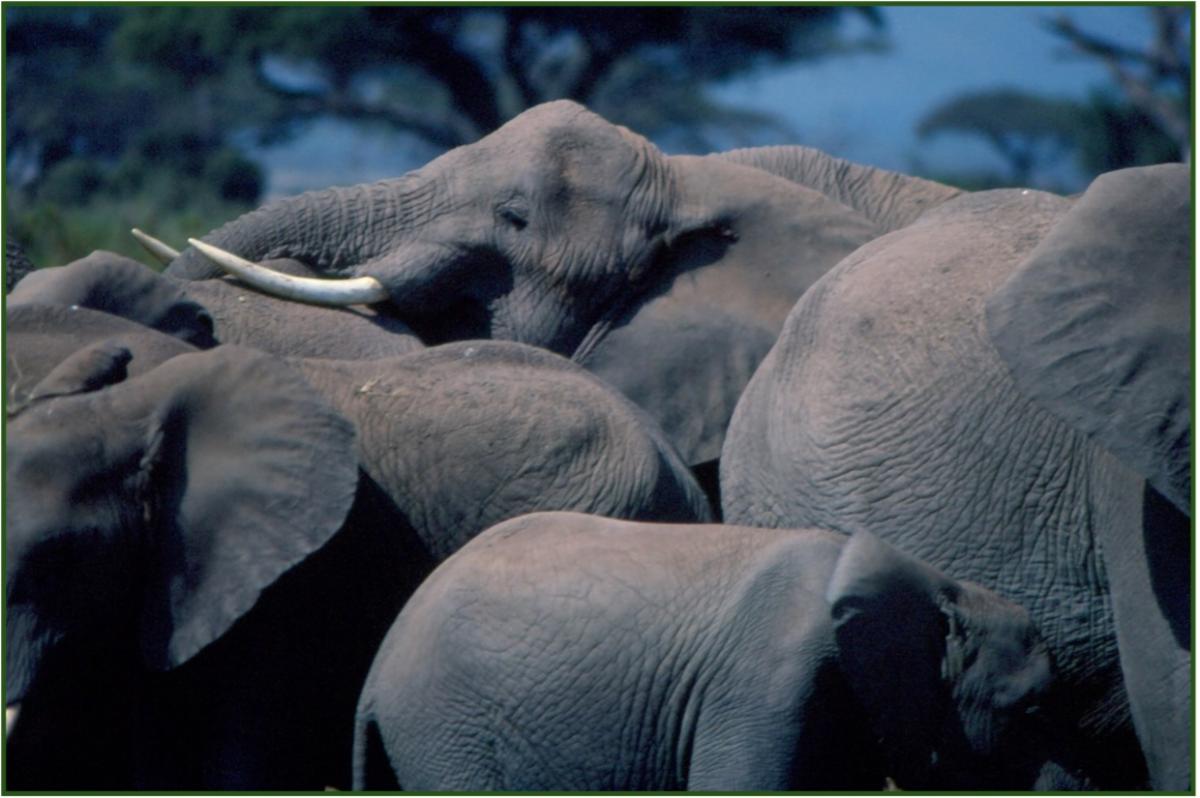
I’ve said it many times: elephants don’t fit into neat boxes. Elephants are flexible, adaptable and idiosyncratic. I only know a bit about what elephants do at night in Amboseli. What they do in other places and other habitats could be very different.
Many years ago, when I was making a film about Echo and her family, the cameraman, Martyn Colbeck, and I followed the EB family for 18 days and nights.
| | |
|
There was a reason: we knew that Echo had been in oestrus and mated 21 months before and we wanted to film the birth of her calf. I estimated that 99% percent of elephant births occur at night and thus we knew we had to be with her throughout the night.
In Amboseli, the elephants have a pattern of leaving the central swamps and Park at night. They move out to the basin ridge to the north and east, to the lower slopes of Kilimanjaro to the south, and across the dry Amboseli lakebed to the west. Radio and satellite tracking over the years has confirmed these patterns. The tracking also showed that some families stay in the Park woodlands at night and even on islands in the middle of Longinye Swamp.
Echo and her family did leave the Park on a few of the nights, but for most of those 18 days she stayed in the Park and particularly around the Ol Tukai Orok palm woodland. We were not surprised; she was heavily pregnant and being the matriarch she was the one making the decisions.
What we found was that the family slowly moved and fed from sunset (around 6:30 in East Africa) to about midnight. Then one by one they all lay down and went to sleep. There was no sentry left standing. They slept heavily even snoring. (We observers had a very hard time staying awake.) After about three hours they got up, stretched, yawned, rubbed their eyes, and began to move and feed again.
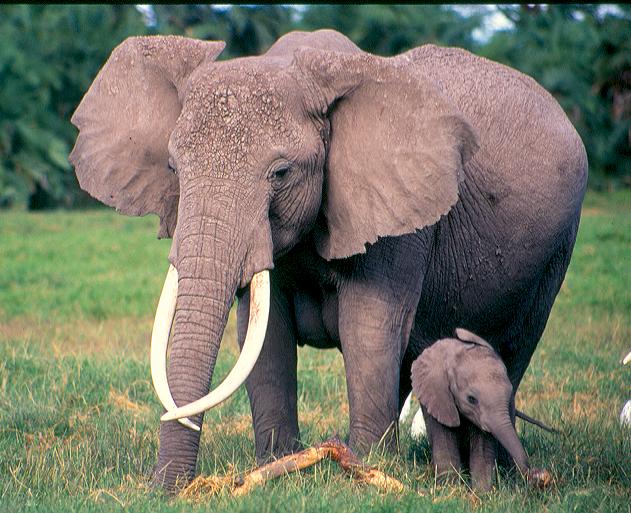
On the 18th night Echo gave birth to Ebony at around 6:45pm. No one slept that night.
|  | |
|
Human-Elephant Coexistence Surveys
by Lydia Tiller
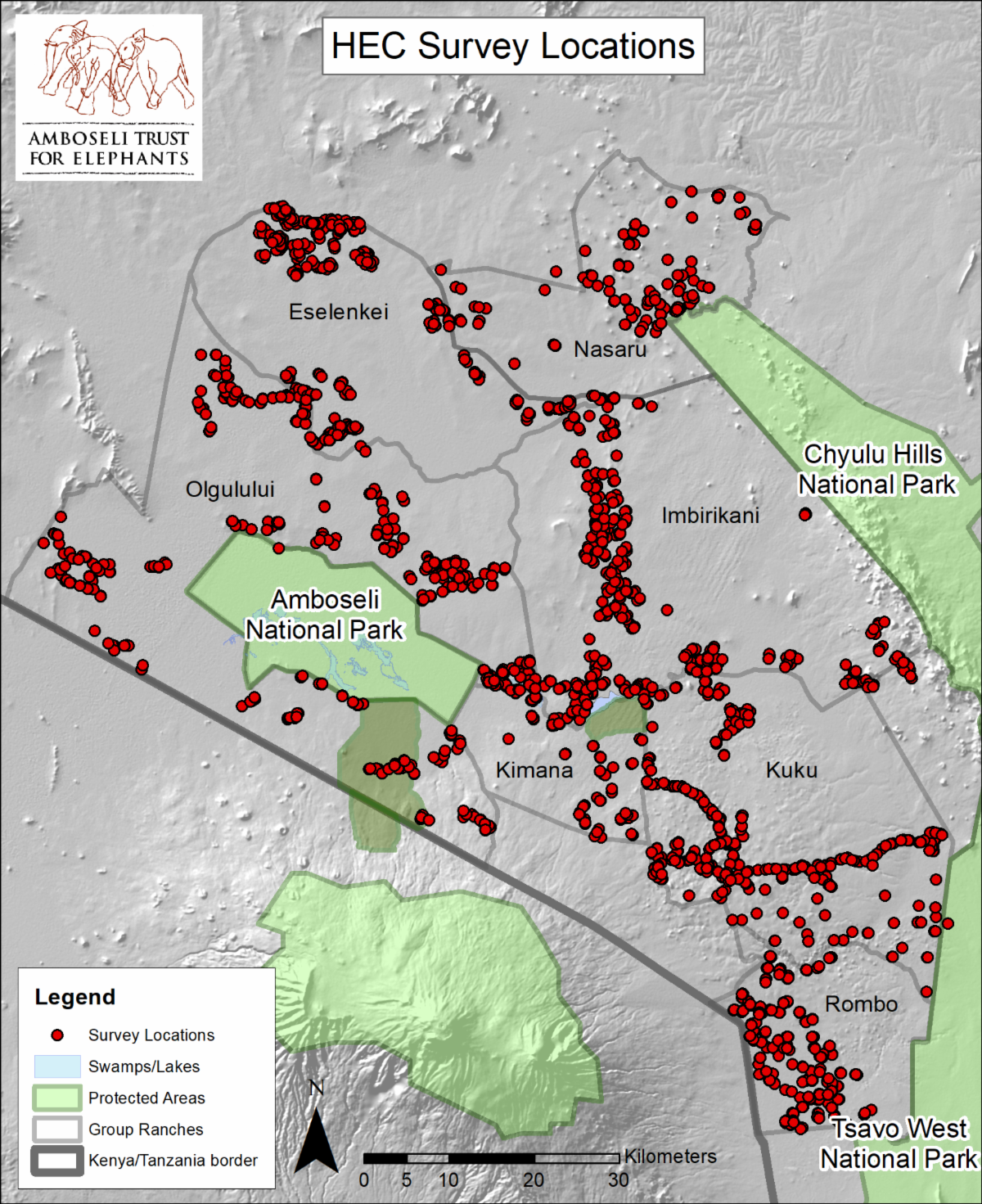
At the end of April this year, we successfully completed our ecosystem wide survey on Human-Elephant Coexistence, conducted by a dedicated team of 16 Maasai enumerators—both men and women—from across the Amboseli region. Despite challenging conditions including heavy rains, difficult roads, and close encounters with wildlife, the team worked tirelessly and managed to reach over 3,000 respondents.
In total the survey engaged 1,031 women and 1,950 men (including young men known as morans), with 92% of respondents being Maasai and the remainder from other ethnic groups. The average age of respondents was 42, with the youngest participant being 17 and the oldest 95.
| |
|
|
Our findings revealed that attitudes towards elephants significantly vary by community, gender, age, and education level. Respondents expressed that elephant awareness training (36% of responses) and crop protection deterrents (31% of responses) would be the most helpful measures to support them in managing future interactions with elephants. Top community priorities were reducing the risk to students on their way to school (39% of responses), and ensuring the safety of people while grazing their livestock (47% of responses).
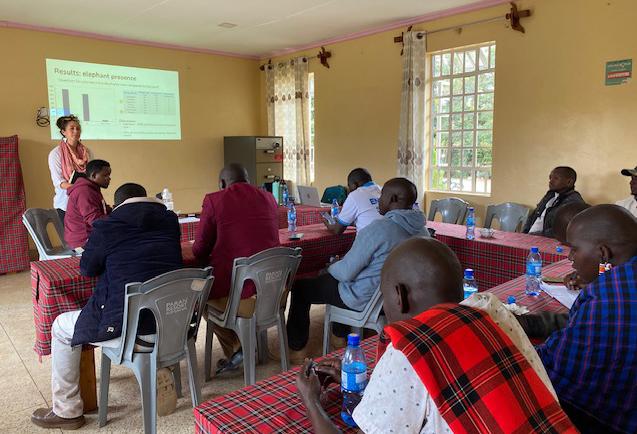
In July, we conducted seven meetings around the ecosystem with key representatives from the surveyed communities—Olgulului, Kimana, Imbirikani, Eselenkei, Kuku, Rombo, and Nasaru. These meetings were held to present the initial findings of the survey, discuss the results, and gather feedback from the communities.
| |
|
This important data set is proving to be extremely valuable in shaping the next stage of ATE’s Human-Elephant Coexistence (HECx) Programme and will also assist other organizations in refining their strategies to promote coexistence. The full survey results will be shared during a stakeholder meeting planned for October, and we continue to work on analysing the datstet for different rights holder and partner organisation.
A huge thank you to our enumerator team for your tremendous efforts in completing this important survey. We are also extremely grateful to WWF Kenya, whose funding allowed us to scale this study to cover all communitied in the ecosystem.
| |
The History of the CB Family - Updated | |
Matriarch Chloe with her family | |
|
I first met the CB family on October 20, 1973. They were in a large aggregation of over 100 animals and all I could do was just photograph individuals. It took many more sightings over the next few years to begin to sort out who made up the family. In fact, I did not see the family again until March 1975, but from that point on I began to see them regularly.
I have to admit that the CB family has always been one of my favorites. When I first got to know the family, it had a marvelous old matriarch who had large, droopy ears. She was eventually named Cassandra, but I always called her "Droopy Ears". What I liked so much about her was that she was a very fierce defender of her family. Even as early as 1972 when I started the study in Amboseli, the elephants were very tolerant of vehicles. Having worked with Iain Douglas‑Hamilton in Lake Manyara I was accustomed to being charged by the much more aggressive elephants there. I did not like being charged, but I did admire the bravery of those big females. In Amboseli the elephants hardly looked at my car when I drove up. Some of the families that used the Park less frequently ran away when I tried to approach, but the only family that responded by charging was Droopy Ears's. Something unpleasant associated with a vehicle must have happened to her in her long life and she was determined to defend her family from the danger she perceived. I liked her spirit.
| |
Training Serengeti Elephant Project | |
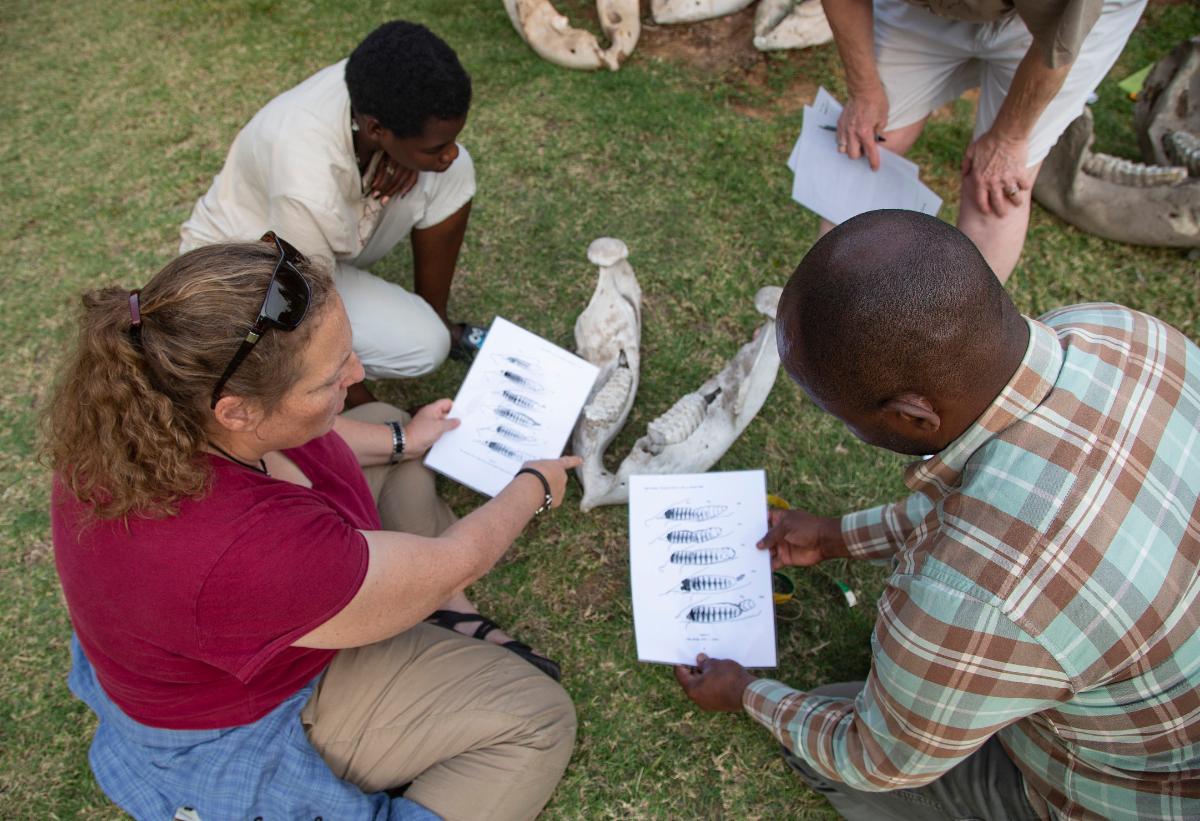
In August our Training Coordinator, Norah Njiraini, facilitated a three-day workshop for the Serengeti Elephant Project; Dr Anna Estes and her Research Assistant John Mkindi, who were joined by ATE intern Cecilia Parsae. Anna is a distinguished elephant biologist who leads the Serengeti Elephant Project and she is also the Assistant Professor of Environmental Studies at Carleton College.
The Serengeti Elephant Project already contains a comprehensive database with over 1,000 identified elephants. Anna was looking for a known population to test her and John's ageing skills, a vital component of any study, and we were delighted to host them and make sure they felt confident allocating age estimates.
| In September we were delighted to welcome back Thomas Topfer, Chairman of Rettet die Elefanten afrikas e.V. REAeV have supported us for many years with programme funding and equipment donations. On this visit Tom brought us a new camera and GPS unit, and it was great to spend a couple of days with him in the field. | |  |
|
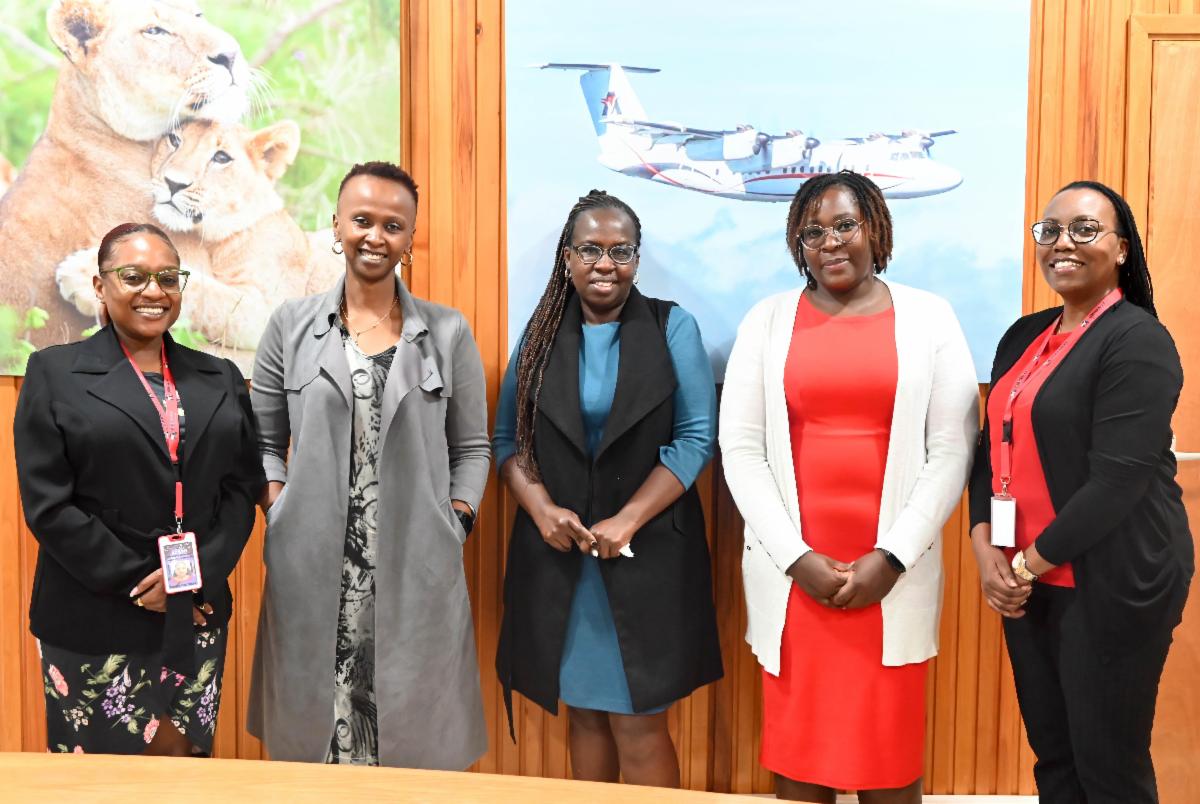
In a joint effort to enhance wildlife conservation, AirKenya and The Amboseli Trust for Elephants have launched a CSR partnership, combining resources and expertise to safeguard elephants and their habitats for future generations. It's the start of a meaningful journey for both organizations.
AirKenya was represented by: Marketing Manager, Jean Uku; Reservations Manager, Maryanne Nganga: and Vanessa Lumbasio from Digital. ATE was represented by: Operations Director, Sylvi Nyambura; and Celestine Mmboga from Finance.
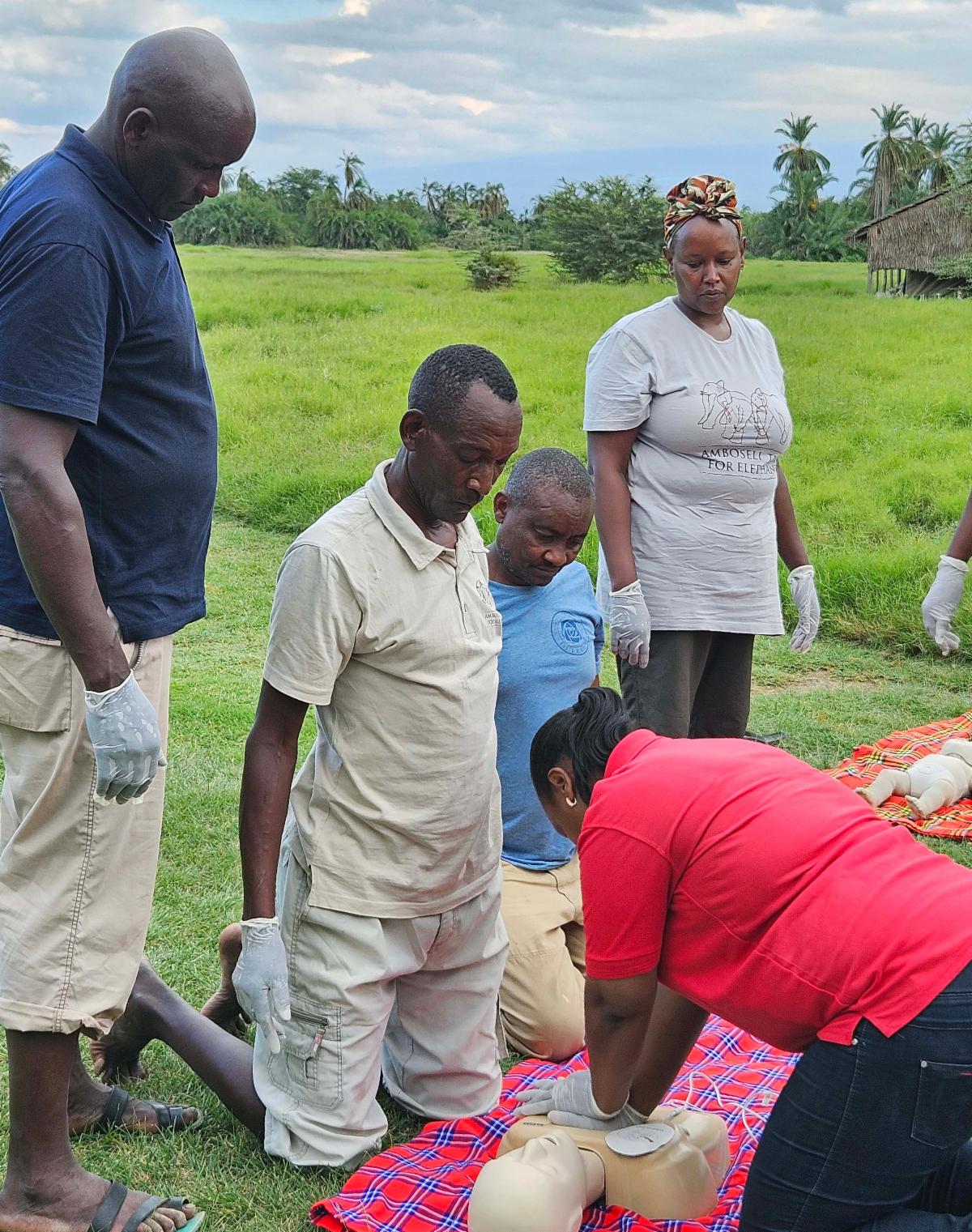
| First Aid Training in Amboseli | After many attempts at trying to organise a First Aid course for our staff in Amboseli, we were finally able to have two full days of training with Response-Med. Our staff were thrilled and very happy to acquire new life skills. | | |
|
We greatly appreciate all our donors who contributed during the third quarter of 2024. Your support is very important to us. With it we can continue to follow the Amboseli elephant families and the independent males, learning more about them every year. This quarter we particularly thank:
Barbara Crecelius
Field Family Foundation
Ralph Hammelbacher
Maue Kay Foundation
Shashidhar Reddy Nagireddy
William Ralston
Dr Gordon Ray
Rolf and Elizabeth Rosenthal Family Foundation
Alice M. Schaeffer
Daniel Wilson
| |
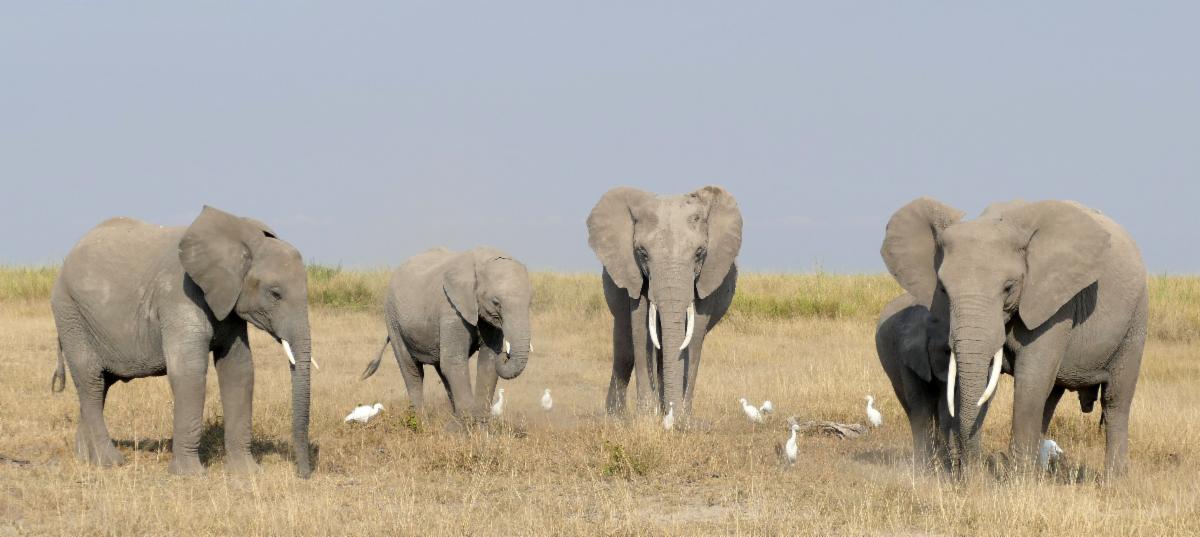
Farida, Floppy and their calves are members of the FB family, which is one of six families you can follow through our Elatia program. When you join you will receive regular updates, which include photos and videos and news of what is going on in the family. To learn more about Elatia go to: this link or contact us directly on: info@elephanttrust.org | | |
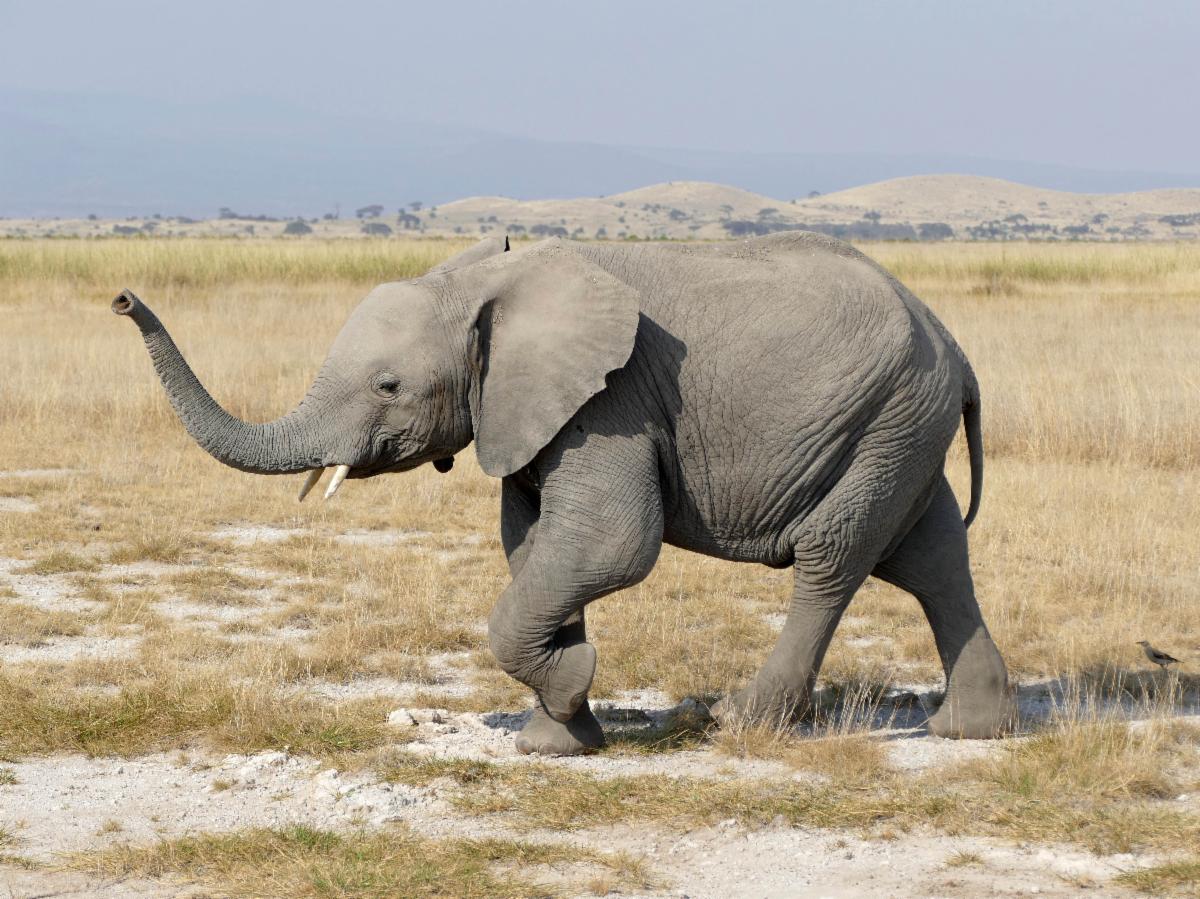
Jordan's daughter born in April 2020 has been named by a donor. She will now be been able to follow her and her family's lives for many years to come. You too can name a calf and follow its life. The name you give "your calf" forms a part of the Amboseli dataset for all time. For more information write to us at: info@elephanttrust.org | | |
Give a Gift that Lasts Forever | |
Carefree calves playing in a mud wallow. We are doing everything we can to keep them safe. You can help us by designating ATE as a beneficiary of your will, individual retirement account, or life insurance policy. To learn more about planned giving, contact Betsy Swart: eswart@elephanttrust.org
Tel: +1-508-783-8308
| | |
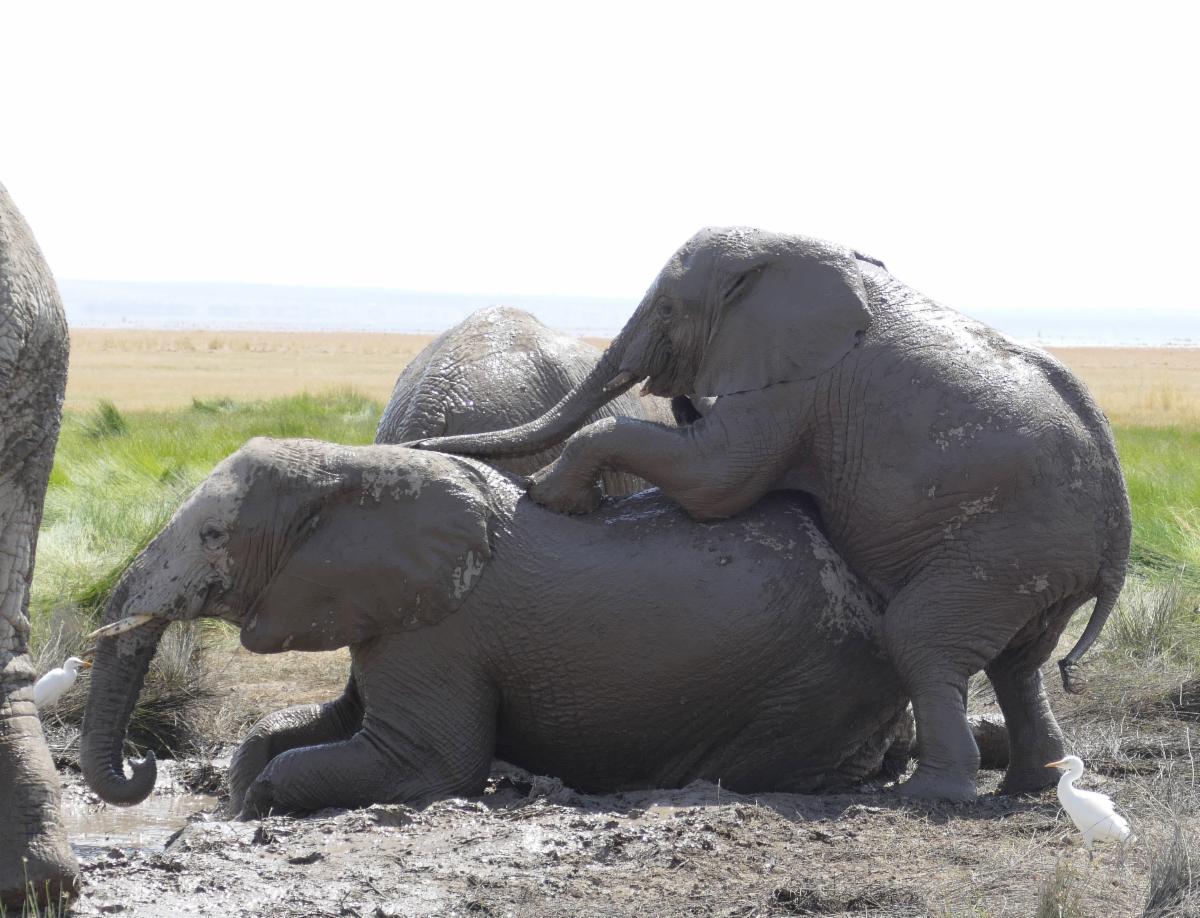
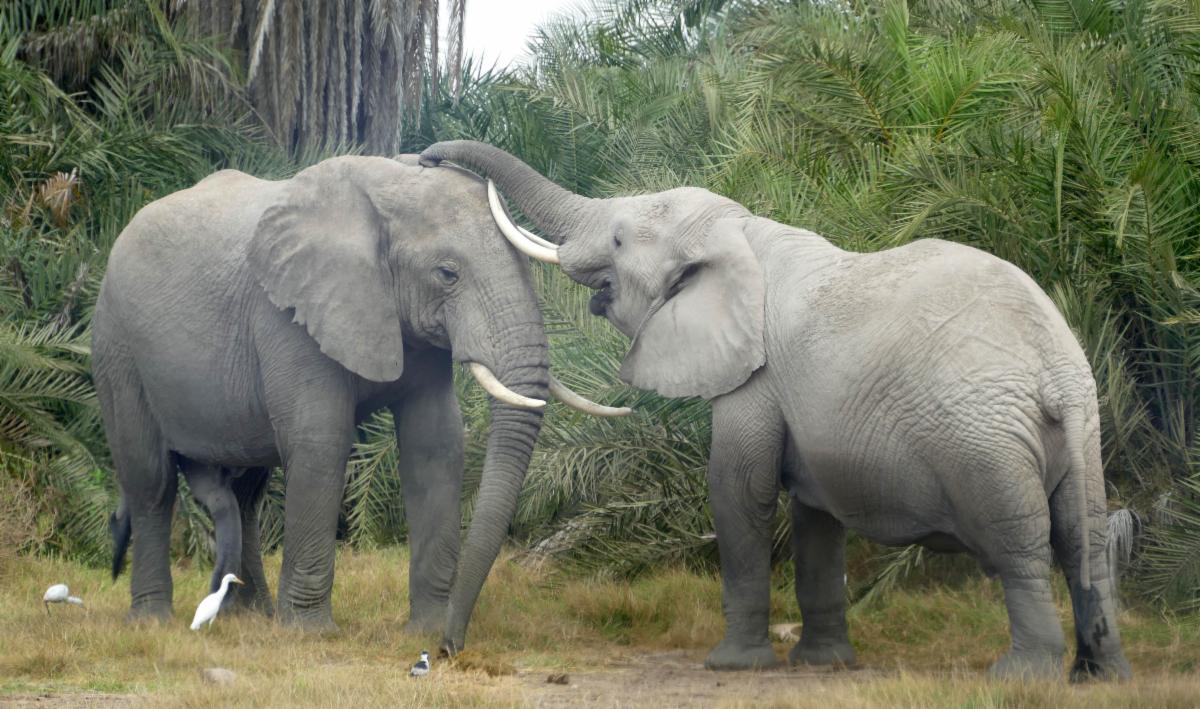
This is a special photo -- adults playing--here a male and female. One of the ways you can assure that our elephants feel safe enough to play is to support ATE by making your online purchases through iGive. If you sign up the Amboseli Trust for Elephants as your recipient organization, we will get a small percentage of the sale. www.igive.com | | |
Make a Donation
We use a secure online system on which you can make your donation with a credit or debit card. All donations exclusively support our not-for-profit organization.
| | | | |