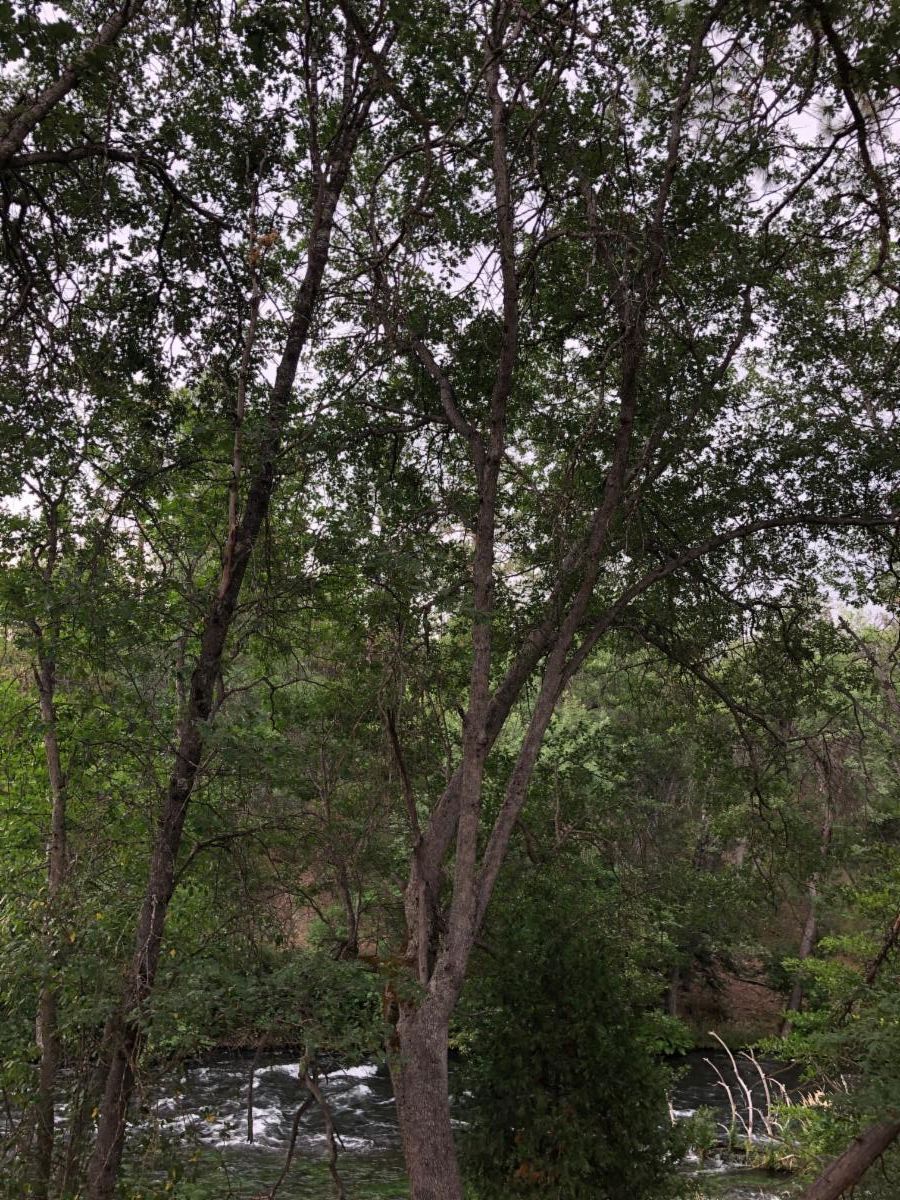
Oaks along Hat Creek, Shasta County |
|
California Wildlife Foundation/California Oaks (CWF/CO) continues to wish our readers health and perseverance through the Coronavirus pandemic, and to extend our heartfelt wishes to all who have been impacted by the ferocious fire season. We also wish our readers safe and enjoyable winter holidays. |
|
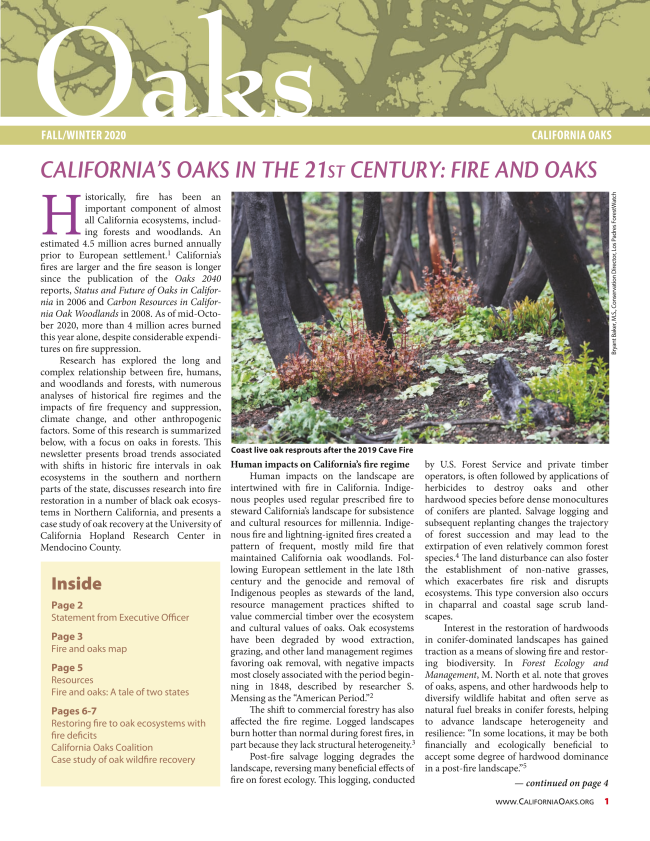
Read about fire and oaks in the Fall-Winter Oaks newsletter. Download a PDF of this publication, the first in a series of California’s Oaks in the 21st Century reports. The newsletter includes a map of California that overlays this century's wildfires of 100 acres or greater on oak woodlands and forests, information on research about oaks and fire in forested lands, research findings on restoration of fire in black oak ecosystems, and a case study about recovery of oaks after severe wildfire. The report provides other informational resources, and highlights members of California Oaks Coalition that have information about fire on their websites and/or conduct research on fire.
Subsequent reports will cover habitat values of oaks—including threatened and endangered species that utilize oak habitat, statewide acreage of major oak species, carbon sequestration in oak ecosystems, trends for oaks, and opportunities to restore oaks and build water resilience.
|
|
Updates from California Oaks Coalition |
|
Rancho Jamul land exchange denial is major environmental victory
In a 5:1 vote, California's Wildlife Conservation Board (WCB) turned down a land exchange proposal that would have led to loss of public confidence in the permanence of conserved lands. If the proposal had gone forward, part of the Rancho Jamul Ecological Reserve in San Diego would have become part of a housing development in exchange for land of lesser biological value. An underlying dispute over compliance with the San Diego County Multiple Species Conservation Program will now have to be resolved in a different manner. The vote, on December 8, 2020, re-affirms WCB’s commitment to its mission to protect, restore and enhance California’s spectacular natural resources for wildlife and for the public’s use and enjoyment in partnership with conservation groups, government agencies, and the people of California.
A broad coalition of conservation organizations and land trusts, including California Wildlife Foundation and California Oaks Coalition members California Native Plant Society, Center for Biological Diversity, Endangered Habitats League, Hills For Everyone, and Planning and Conservation League, opposed the land exchange.
|
|
Watch Amah Mutsun Land Trust Fire Symposium
Click here to watch a Fire Symposium that California Oaks Coalition member Amah Mutsun Land Trust presented on November 19, 2020. The symposium shares traditional knowledge and results of research about how Native people used fire to steward Central Coast landscapes and shares how Tribes are working to revitalize cultural/prescribed burning as a land management tool.
Speakers and topics:
Amah Mutsun Tribal Band’s Land Stewardship Traditions
Valentin Lopez, Chair, Amah Mutsun Tribal Band
Eco-Archaeological Research on Indigenous Cultural Burning
Kent G. Lightfoot, PhD, Professor, Department of Anthropology, University of California (UC) Berkeley
Rob Q. Cuthrell, PhD, Director of Archaeological Resource Management, Amah Mutsun Land Trust
Indigenous Fire Stewardship in Central California
Don Hankins, PhD, Professor, Department of Geography and Planning, California State University, Chico
Long-term Fire History and New Research in the Santa Cruz Mountains
Scott Stephens, PhD, Professor, Department of Environmental Science, Policy, and Management, UC Berkeley
Amah Mutsun Land Trust’s Work to Revitalize Indigenous Fire Stewardship
Sara French, Interim Executive Director, Amah Mutsun Land Trust
|
|
Rodenticide legislation enacted to protect wildlife
A number of members of California Oaks Coalition, including Center for Biological Diversity (CBD), Environmental Protection Information Center (EPIC), Hills For Everyone, Los Padres ForestWatch, and Planning and Conservation League (PCL), were engaged in the passage of legislation, AB 1788 (Bloom), signed by Governor Newsom on September 29, 2020. The bill, co-sponsored by CBD, strongly limits second-generation anticoagulant rodenticides (SGARs) throughout California until state agencies can develop better safeguards to protect wildlife from these dangerous, long-lasting poisons. SGARs contain slow-acting chemicals that prevent blood from clotting. According to Los Padres ForestWatch, the California Department of Fish and Wildlife found SGARs in 70-90% of wildlife tested between 2014 and 2018. Biologists documented anticoagulant rodenticide compounds in 26 out of 27 local mountain lions they tested, including a three-month-old kitten. An animal might eat additional SGARs over the several days that it takes to die, accumulating many times the lethal dose of the chemicals in its body. This poison is then carried up the food chain and can sicken or kill other animals.
SGARs have been banned from commercial sale in California, but continue to be in legal use by licensed pest control companies. The legislation strictly limits the use of SGARs without completely banning them—it makes exceptions for public health and other reasons. The bill also mandates further study and the adoption of additional restrictions if limited use continues to harm non-target wildlife. Learn more by reading CBD's press release, EPIC's blog, Hills For Everyone's web communiques about the bill, Los Padres ForestWatch's article, and PCL's State Legislation Watchlist.
|
|
Global Conservation Consortium for Oak newsletter
Read the October 2020 electronic newsletter of the Global Conservation Consortium for Oak (GCCO). The consortium brings together oak experts, conservationists, and the botanic garden community to work collaboratively to develop and implement a comprehensive conservation strategy to prevent extinction of the world's oak species. Led by The Morton Arboretum, in collaboration with Botanic Gardens Conservation International and dozens of other partners, GCCO works to achieve the following objectives:
- Establish and foster a network of experts
- Identify and prioritize species of greatest conservation concern
-
Establish and manage coordinated ex situ collections of high conservation value
- Undertake and facilitate applied research (e.g. conservation biology, population genetics, taxonomy)
-
Ensure that threatened species are conserved in situ
- Build capacity to empower and mobilize in-country partners in centers of diversity
- Increase public awareness and engagement
- Raise funding to scale up conservation actions
GCCO was initially established with a focus on the United States, but is expanding to include collaborators from around the world, with a focus on other diversity hotspots of oaks—Mexico, China, and Southeast Asia. For questions, or information on how to join, please contact Amy Byrne, Oak Consortium Coordinator.
|
|
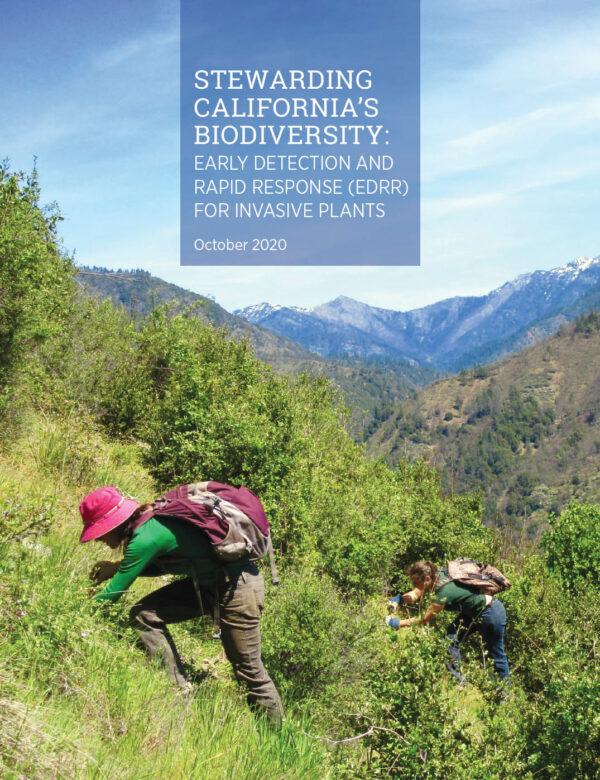
California Oaks Coalition member California Invasive Plant Council (Cal-IPC) recently issued a white paper on Early Detection Rapid Response (EDRR), a strategic approach to stopping the spread of invasive plants. Though not complicated conceptually, implementing it effectively at the landscape level requires a high degree of coordination, steady funding over time, and detailed tracking. While California has many important pieces in place, the state's response to invasive plants is not as strong as it needs to be to protect biodiversity, agriculture, recreation, water supply, and improve fire safety. This publication provides background, a description of existing efforts, and recommendations for strengthening the state’s EDRR capacity.
|
|
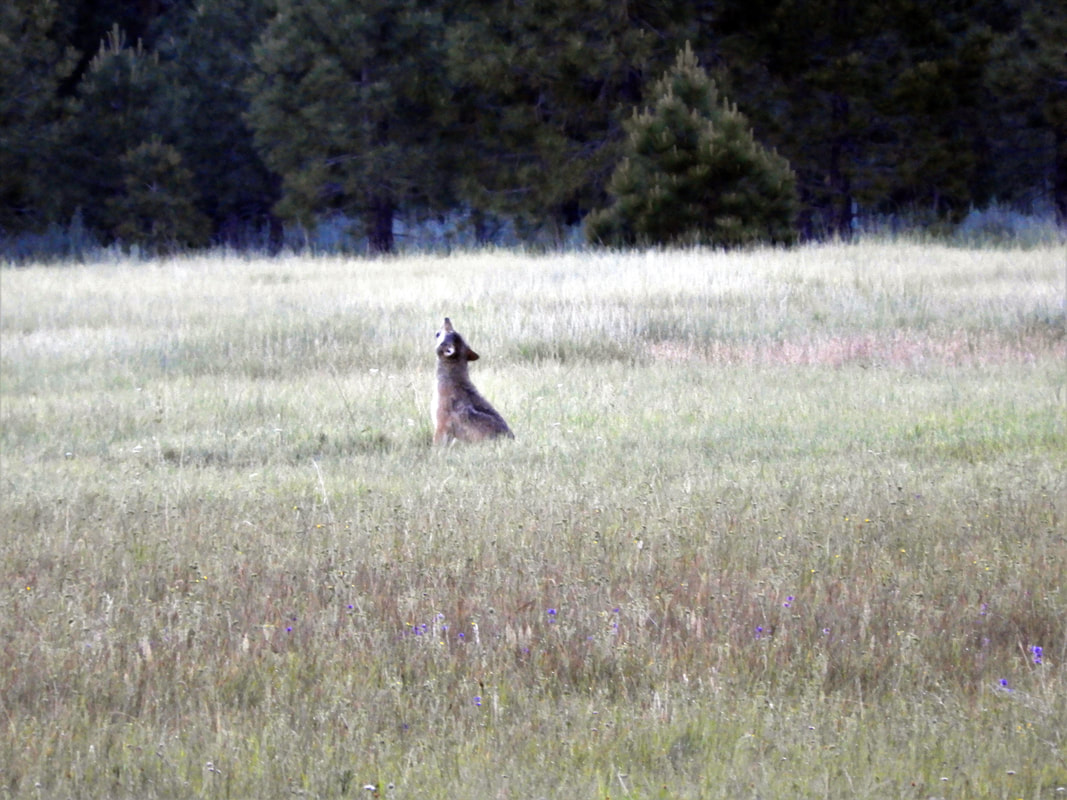
Endangered Species Act protections stripped from gray wolves
The U.S. Fish and Wildlife Service finalized a rule that removes federal Environmental Species Act protection from gray wolves in the lower 48 states, with the exception of a small population of Mexican gray wolves in Arizona and New Mexico. The protections, which had been in place since 1978, helped to recover populations of the wolves, yet the wolves only occupy a fraction of their former range.
|
|
California floristics, taxonomy, and phylogenetics
Saturday, June 5, 2021, 1:00-5:00 PM
Floristic studies provide a detailed inventory of the plants occurring in a particular area. Phylogenetics, the study of evolutionary relationships among organisms, and taxonomy, the science of classifying organisms, come together in reference guides such as The Jepson Manual and the online Jepson eFlora. This workshop will review recent and upcoming taxonomic changes in the Jepson eFlora, the phylogenetic basis for such revisions, and describe evidence for recent changes, as well as a more general discussion of how California plant taxonomy has evolved with the rise of phylogenetic tools and approaches.
Course Fee: $75 general public and $50 for members of the Friends of the Jepson Herbarium.
Register for this workshop here.
Click here to review other Jepson Herbarium Workshops.
|
|
Black oak at Big Sur. Photo courtesy of Tom Gaman.
|
|
California Oaks Coalition
Amah Mutsun Land Trust; American River Conservancy; American River Watershed Institute; AquAlliance; Banning Ranch Conservancy; Butte Environmental Council; Canopy; California Invasive Plant Council (Cal-IPC); California Native Plant Society (CNPS), including CNPS Dorothy King Young Chapter, CNPS San Diego Restoration Committee, and CNPS Sanhedrin Chapter; California Rangeland Trust; California Water Impact Network (C-WIN); California Wilderness Coalition (CalWild); Californians for Western Wilderness (CalUWild); Carpe Diem West; Center for Biological Diversity; Chimineas Ranch Foundation; Clover Valley Foundation; Conejo Oak Advocates; Dumbarton Oaks Park Conservancy; Elder Creek Oak Sanctuary; Endangered Habitats Conservancy; Endangered Habitats League; Environmental Defense Center; Environmental Protection Information Center (EPIC); Environmental Water Caucus; Foothill Conservancy; Forests Forever; Friends of the Richmond Hills; Friends of Spenceville; Hills For Everyone; Laguna de Santa Rosa Foundation; Lomakatsi Restoration Project; Los Padres ForestWatch; Lower Kings River Association; Napa County Water, Forest and Oak Woodland Protection Committee; Northern California Regional Land Trust; Planning and Conservation League; Redlands Conservancy; Resource Conservation District of Santa Monica Mountains; River Partners; River Ridge Institute; Rural Communities United; Sacramento Tree Foundation; Santa Clarita Organization for Planning and the Environment (SCOPE); Save Lafayette Trees; Shasta Environmental Alliance; Sierra Club Placer County; Sierra Foothill Conservancy; Tejon Ranch Conservancy; Templeton Heritage Tree Foundation; Tuleyome; Tuolumne River Trust; and University of California Los Angeles Botanical Garden are among the groups partnering with California Oaks to conserve oak woodlands and oak-forested lands for future generations.
|
|
|
©2020, California Wildlife Foundation/California Oaks. Please feel free to share this e-newsletter and reprint after providing notice. |
|
|
|
|
|
|