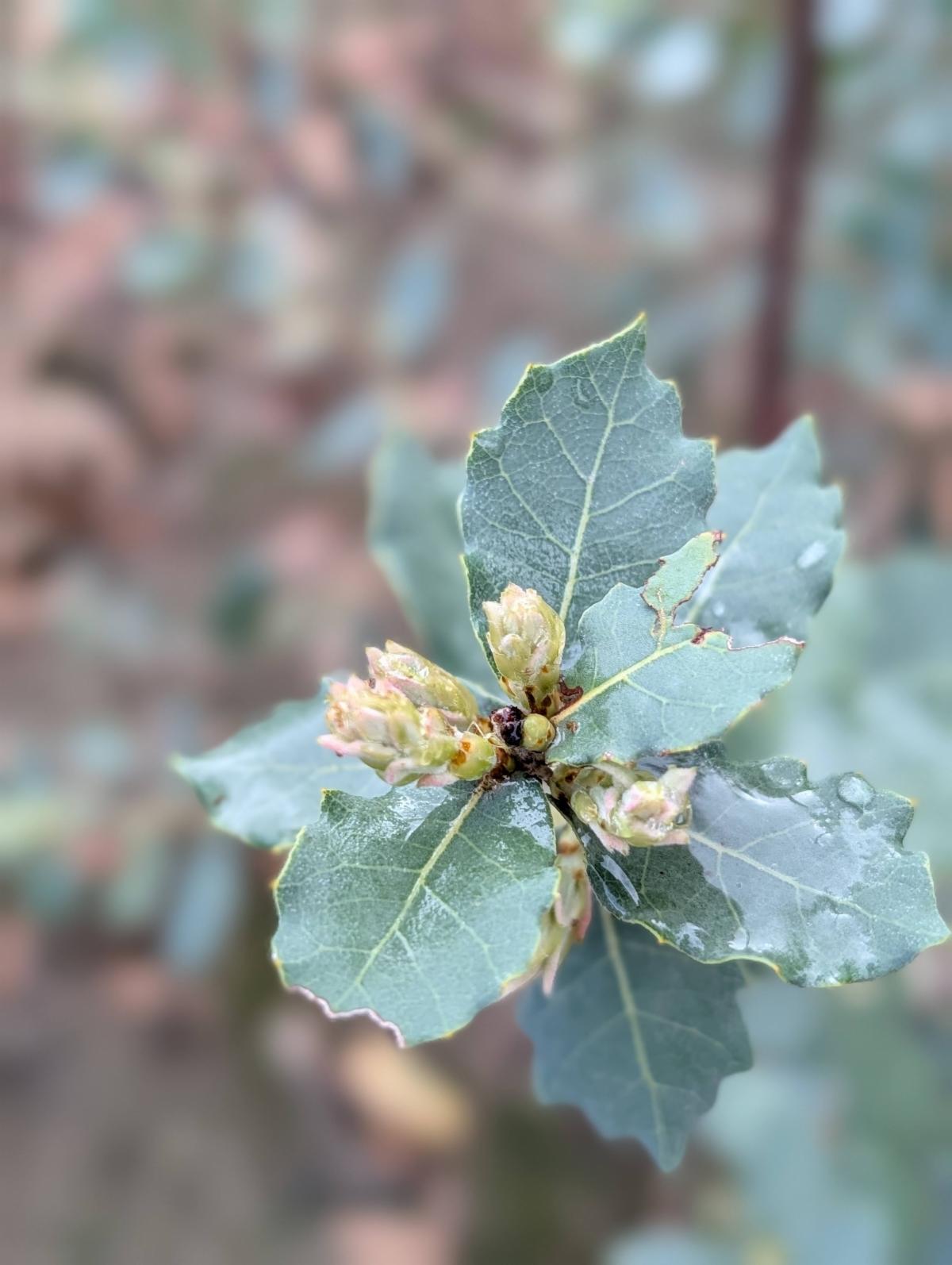
A young Engelmann oak growing at El Monte Ecological Preserve, San Diego County. © Photo courtesy of Veronica Cuadras, Earth Discovery Institute. | | |
The Fall-Winter 2026 issue of Oaks reports on recent activities of the California Oaks program, in partnership with California Oaks Coalition and the Blue and Valley Oak Workgroup to protect and perpetuate California's native oaks. It also reports on important activities of California Wildlife Foundation, the institutional home of California Oaks, which is working throughout the state to conserve, restore, expand, and maintain habitat and corridor linkages.
Last Tuesday's election included Proposition 45, which many members of California Oaks Coalition, including the Planning and Conservation League, actively and effectively opposed. We congratulate them for educating the electorate about how the measure, which appears to be losing, would have dramatically altered California Environmental Quality Act protections.
During the prior week the State Water Resources Control Board adopted Phase 2 of the Bay Delta Plan. A number of California Oaks Coalition members provided extensive critical input as part of these deliberations, as summarized below.
This e-newsletter also includes information about upcoming opportunities to help detect Goldspotted Oak Borer in Los Angeles County. And, for those interested in galls, we invite you to scroll down to view a video about making oak gall ink and for information on purchasing copies of Plant Galls of the Western United States authored by Ron Russo at a 70% discount.
| | |
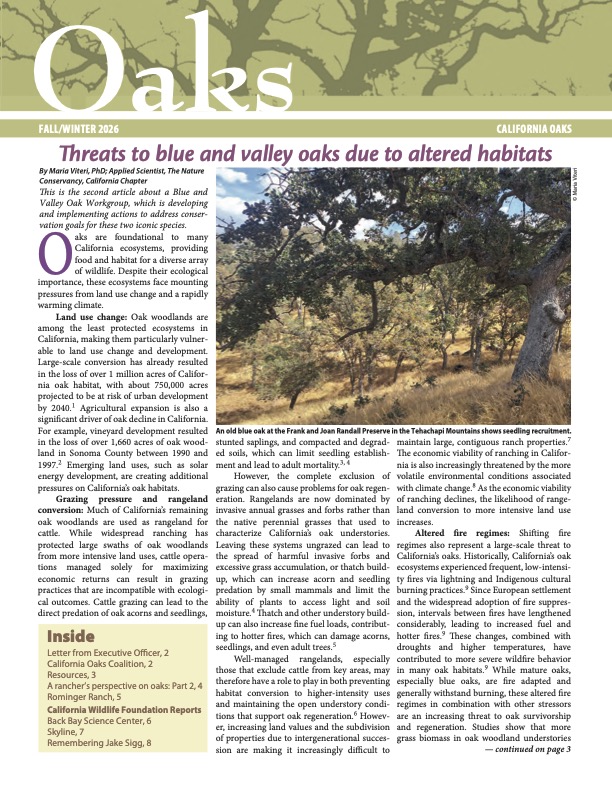
The Fall-Winter 2026 Oaks print newsletter is available to download as a PDF. This is the second newsletter that highlights key information linked to the Blue and Valley Oak Conservation Action Plan that is nearing completion by the Blue and Valley Oak Workgroup. The issue reports on oaks on working lands, with a comprehensive article by Maria Vitari, PhD, who leads the Blue and Valley Oak Altered Habitats subgroup, an article by California Rangeland Trust, a member of California Oaks Coalition, on the Rominger Ranch in Yolo County, and the second part of an article on grazing and oaks.
This issue also includes an overview of Back Bay Science Center's opportunities for young environmental professionals, a report by coalition member Endangered Habitats Conservancy on the conservation and restoration of the Skyline complex in San Diego County to benefit threatened and endangered species, and an in memoriam about Jake Sigg.
The links in the PDF of the newsletter can be tricky. Click at the bottom of the links to activate them.
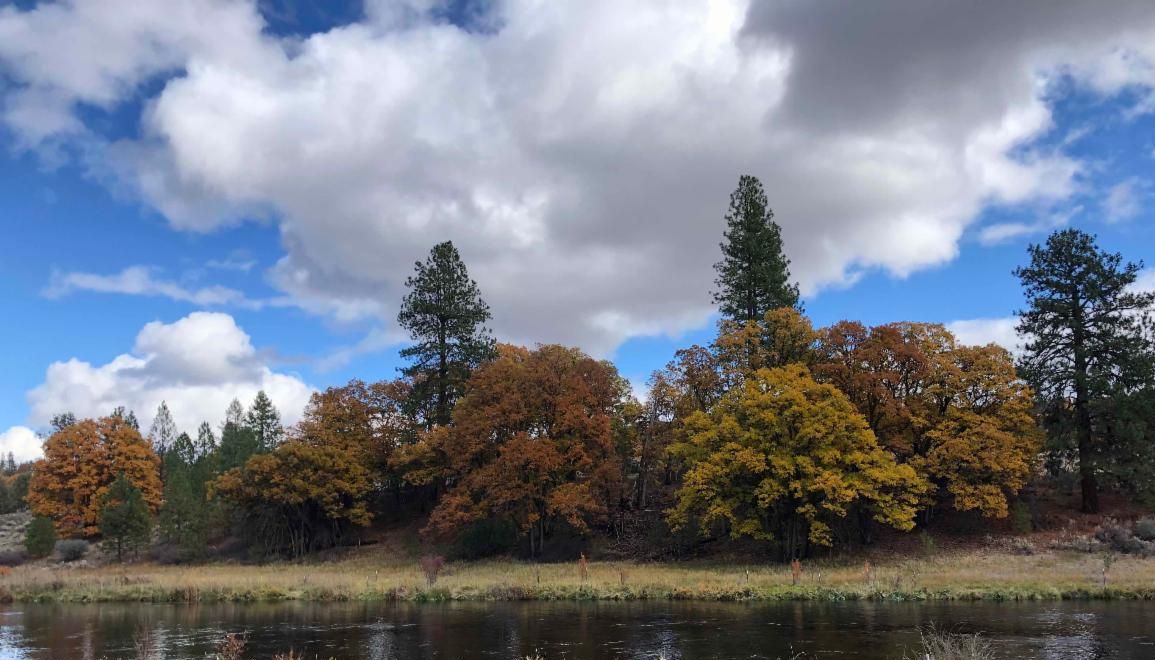
| | Oaks are vital to the health of many of California's watersheds. © Photo courtesy of John J. Lyons. | | |
Diminished regulatory requirements for Bay Delta Plan Phase 2
The State Water Resources Control Board adopted Phase 2 of the Bay Delta Plan on October 29. The plan, which received 4 votes from the 5-member board, applies to the Sacramento River and its tributaries, the eastside Delta tributaries (the Cosumnes, Mokelumne, and Calaveras rivers), and Delta inflow and outflow. Titled the Healthy Rivers and Landscapes Program, the plan is controversial because it shifts from the requirement that water agencies limit pumping to maintain required minimum levels of water in rivers and the estuary to "voluntary agreements," which are negotiated deals that allow water districts to offer habitat restoration projects and limited flow commitments in exchange for exemptions from stronger, enforceable regulatory requirements. Tribal leaders and many environmental organizations, including California Oaks Coalition members Yosemite Rivers Alliance and California Water Impact Network (C-WIN), criticize the plan's reliance on voluntary agreements for lacking enforceable protections informed by science to safeguard threatened fish species, restore critical freshwater flows, and address harmful algal blooms.
To learn more: Click here for Yosemite Rivers Alliance's reports on the decision, next steps, and to take action. Read the Communities United for Water Protection Blog, California Promises Klamath/Trinity River Staff Workshop after Protests and Testimony from Tribal communities at Bay Delta Plan Hearing posted on C-WIN's website. Read the Golden Gate Salmon Association's Guest Commentary in Maven's Notebook for detailed information on the opposition to the plan that was adopted. C-WIN also provided Guest Commentary in Maven's Notebook about deficiencies of the plan.
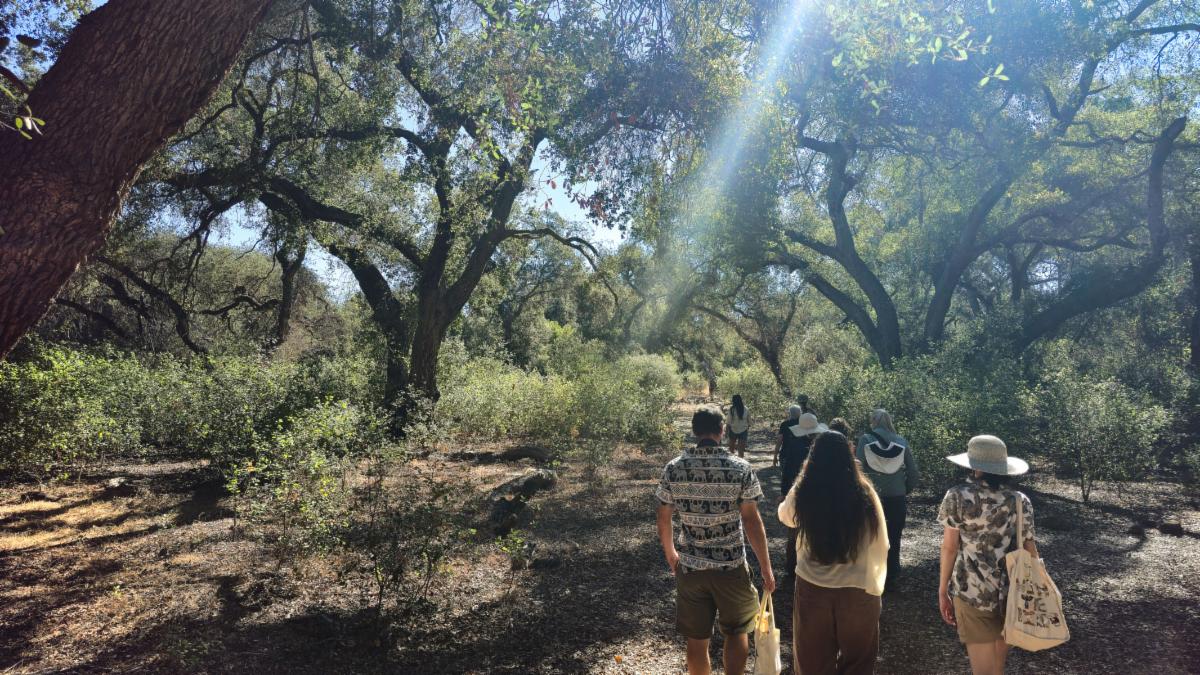
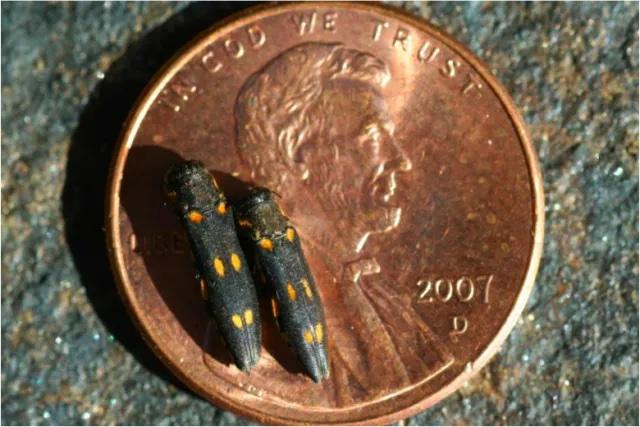
| | Participants in a native oak workshop conducted by Earth Discovery Institute, a member of California Oaks Coalition, in October. © Photo courtesy of Nathaniel Thomas-Stevens. | | Help detect Goldspotted Oak Borer in Los Angeles County | | Photo (copied from GSOB.org) by Tom Coleman, U.S. Forest Service Entomologist | | |
Learn how to detect the Goldspotted Oak Borer and help survey oak trees in your area. Data collected will be publicly shared on the GSOB Blitz Dashboard.
Click here for more details (including details about pre-workshop training) and to register. Also consult GSOB.org to learn more.
The following events are scheduled in Los Angeles County:
-
Saturday, November 14 - AltadenaWild - Loma Alta Park, Altadena
-
Saturday, November 14 - Santa Monica Mountains Fire Safe Council/California Climate Action Corp Fellows - Malibu Creek State Park, Calabasas
-
Thursday, December 3 - Los Angeles County Department of Parks and Recreation - Placerita Canyon Natural Area, Newhall
-
Saturday, December 5 - Teranga Ranch - Cold Creek Valley Preserve, Calabasas
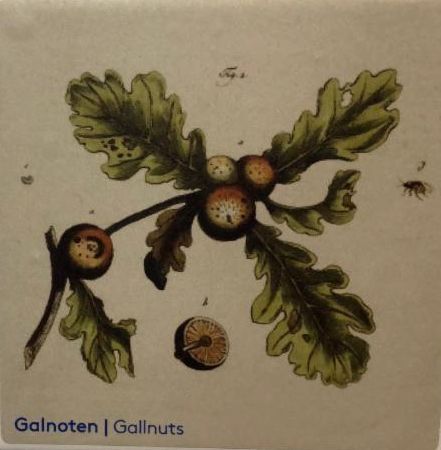
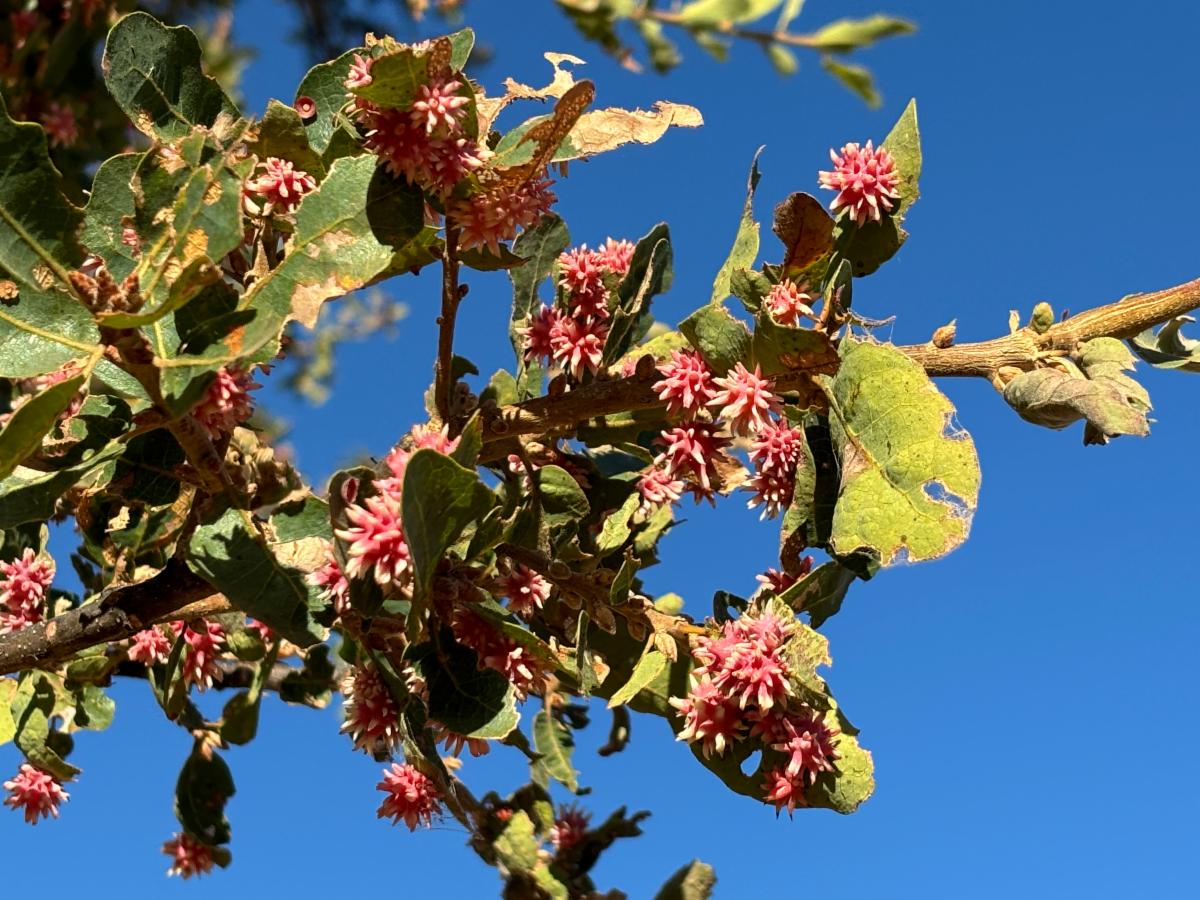
| | A tile depicting oak galls from a display at Rembrandt House Museum in Amsterdam, the Netherlands. Rembrandt used iron gall ink for most of his drawings. It was also used for manuscripts and other important documents. | | Galls on blue oak leaves at Far View Ranch. © Photo courtesy of Alex Palmerlee. | |
Plant Galls of the Western United States available at a bargain price
The latest book by Ron Russo, the renowned gall researcher and author, Plant Galls of the Western United States, is available at the sale price of $8.99, a 70% discount for orders in the United States, Canada, Latin America, Asia, and Australia. Visit the publisher's website and use the code BOOKS70 to activate the discount.
Proceeds will help to fund a revision of the book.
| |
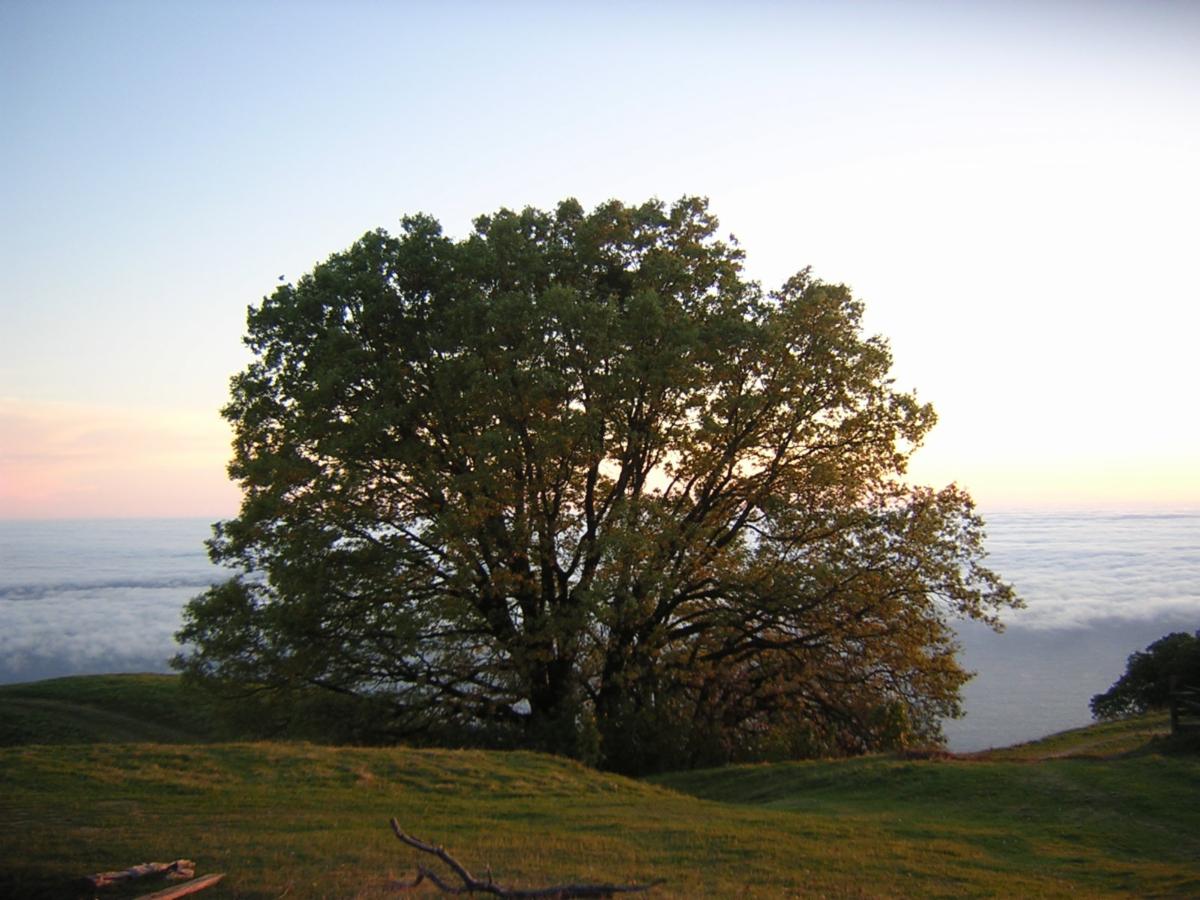
Black oak at Big Sur. © Photo courtesy of Tom Gaman.
| | |
California Oaks Coalition
Organizations partnering with California Oaks to protect and conserve oak woodlands and oak-forested lands for future generations: Agricultural Institute of Marin (AIM); Alameda County Resource Conservation District (ACRCD); Alameda Native History Project; Amah Mutsun Land Trust; American River Conservancy; American River Watershed Institute; Anderson Valley Land Trust; AquAlliance; Audubon California; Baduwa't Watershed Council; Butte Environmental Council; Calaveras County Resource Conservation District; California Institute for Biodiversity; California Invasive Plant Council (Cal-IPC); California Native Plant Society (CNPS), including Dorothy King Young Chapter, El Dorado Chapter, San Diego Restoration Committee, Sanhedrin Chapter, and Yerba Buena Chapter; California Rangeland Conservation Coalition; California Rangeland Trust; California State University Chico Ecological Reserves; California Water Impact Network (C-WIN); California Wilderness Coalition (CalWild); Californians for Western Wilderness (CalUWild); Canopy; Carrizo Plain Conservancy; Center for Biological Diversity; Central Coast Heritage Tree Foundation; Chimineas Ranch Foundation; Clover Valley Foundation; Coastal Corridor Alliance; Conejo Oak Tree Advocates; Confluence West; Dumbarton Oaks Park Conservancy; Earth Discovery Institute; El Cerrito Trail Trekkers; Endangered Habitats Conservancy; Endangered Habitats League; Environmental Defense Center; Environmental Protection Information Center (EPIC); Environmental Water Caucus; The Fire Restoration Group; Foothill Conservancy; Forest Unlimited; Forests Forever; Friends of Harbors, Beaches and Parks; Friends of Olompali; Friends of Spenceville; Friends of the Richmond Hills; Global Conservation Consortium for Oak; Hills For Everyone; Laguna de Santa Rosa Foundation; LandPaths; Loma Prieta Resource Conservation District; Lomakatsi Restoration Project; Los Angeles Audubon Society; Los Padres ForestWatch; Lower Kings River Association; Micke Grove Zoo; Mother Lode Land Trust; Mountains Recreation and Conservation Authority; Northern California Regional Land Trust; Ojai Trees; Old-Growth Forest Network; 100K Trees for Humanity; Pacific Birds Habitat Joint Venture; Placer Land Trust; Planning and Conservation League; Point Blue Conservation Science; Redbud Audubon Society–Lake County; Redlands Conservancy; Regrounding; ReLeaf Petaluma; Resource Conservation District of Santa Monica Mountains; River Partners; River Ridge Institute; Rural Communities United; Sacramento Tree Foundation; Sacramento Valley Conservancy; Santa Barbara Botanic Garden; Santa Clarita Organization for Planning and the Environment (SCOPE); Save Lafayette Trees; Save Napa Valley Foundation; Sequoia Riverlands Trust; Shasta Environmental Alliance; Sierra Club Northern California Forest Committee–Oak Woodland Subcommittee; Sierra Club Placer Group; Sierra Foothill Conservancy; Smith River Alliance; Stewards of the Arroyo Seco; Tejon Ranch Conservancy; Tending the Ancient Shoreline Hill; The Urban Wildlands Group; Tuleyome; Universidade de Trás-os-Montes e Alto Douro, Department of Forest Sciences and Landscape Architecture (Vila Real, Portugal); University of California Botanical Garden at Berkeley; University of California Los Angeles Mildred E. Mathias Botanical Garden; Ventura Land Trust; Western Shasta Resource Conservation District; Woodland Tree Foundation; and Yosemite Rivers Alliance.
| | | © 2026, California Wildlife Foundation/California Oaks. Please feel free to share this e-newsletter and reprint after providing notice. | | | | |