Thanks for making this a great year at the DHRC@FHI! As the semester draws to a close, we'd like to share some of the highlights from 2019. We appreciate collaborating with so many amazing people across campus and with communities near and far. Thank you for your ongoing support of our work and for everything you do to stand for human rights. We look forward to seeing you in the new year.
|
|
The Duke Human Rights Center@FHI and the Nicholas School of the Environment began partnering with Ms. Catherine Coleman Flowers and Alabama Center for Rural Enterprise (ACRE) in the fall of 2014 to understand the reasons for the lack of proper sanitation in Lowndes County and explore racial and economic injustice in rural America. This year marks our five year partnership that has grown to include Ms. Flowers being the FHI Practitioner in Residence for three years, a Bass Connections Project that produced an
Environmental Justice Timelin
e
, interviews with EJ scholars and activists, and
much more
.
Earlier this year Brandon Hunter
traveled to Washington, D.C.
to see Ms. Flowers testify in a Congressional hearing on issues involving rural wastewater infrastructure. Students also coordinated a
Climate Justice training
at Duke with the Climate Reality Project and traveled to Atlanta in March for the
Climate Reality Corps Leadership Training
. Some of the students involved in the partnership received a Interdisciplinary Graduate Network grant to form a Duke University Environmental Justice Network. Read more about the Duke-ACRE partnership
here
.
|
|
Dangerous Work: A Study of Reprisals against Environmental Defenders in the former Soviet Union and the United States
|
|
On October 15 students and faculty gathered with environmental defenders and Crude Accountability to attend the public launch of the report on
Dangerous Work.
Dangerous Work
is a compilation of stories of reprisals against environmental defenders, describing the multitude of ways that governments and corporations and their watchdogs retaliate against activists, particularly those working in the extractive sector. It also describes the disturbing trends of increasing threats to environmental defenders in each of the countries highlighted in the report.
|
|
|
Access to Safe Water: A Human Rights and Civil Rights Perspective
|
|
In February the Duke Human Rights Center@FHI and Franklin Humanities Institute hosted the inaugural Human Rights and the Humanities Lecture. Sharmila L. Murthy presented "Access to Safe Water: A Human Rights and Civil Rights Perspective". Most Americans expect that clean and affordable water will be available from their taps at all times. However, an increasing number of people in the U.S. now realize that access to safe water cannot be taken for granted. This problem has been a long-standing challenge in developing countries, prompting consideration of water as a human right under international law. This lecture charted the rise of the human rights to safe drinking water and sanitation under international law and explore how access to water has become a critical environmental and civil rights issue in the United States. You can watch the complete lecture
here
.
|
|
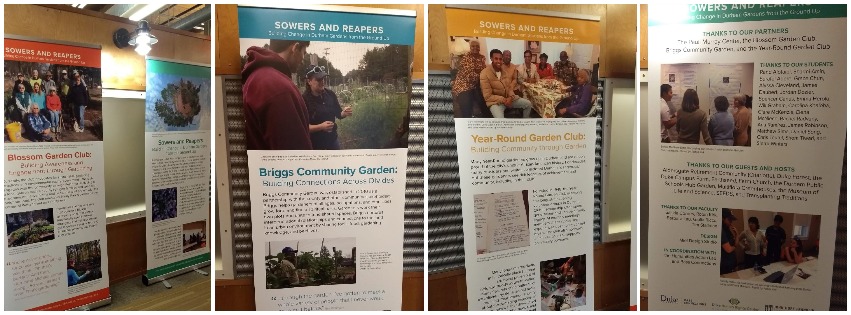
Last April the DHRC@FHI concluded a yearlong project working with the blossom Garden Club, the Briggs Avenue Community Garden, and the Year-Round Garden Club to find out why gardeners garden and what they think about new challenges including gentrification and climate change. Students conducted interviews, took photographs, researched in the archives, tilled gardens and prepared maps condensing all the information they found. The final event featured banner prototypes that the partners viewed and commented on. Read more about it
here
.
|
|
Immigration and Human Rights
|
|
Human Rights @ Duke Annual Lecture, “Human Rights, Faith, and the Border” w/ Imam Omar Suleiman
|
|
By Zac Johnson, '22
Over 150 students and community members filed into White Lecture Hall on Monday, September 23rd to hear Muslim advocate, professor, and leader, Imam Omar Suleiman speak on “Human Rights, Faith, and the Border”. His talk focused on the injustices at the southern U.S. border with Mexico and similar crises around the world, such as the migration crisis at the Syrian-Jordinian border. Read the full reflection
here
and w
atch the video that has over 28,000 views!
|
|
|
Are Concentration Camps Back? And What Can We Do?
|
|
By Srishti Saha, Masters in Interdisciplinary Data Science, ‘21
On September 11
the DHRC@FHI and the Forum for Scholars and Publics held an event that asked “Are Concentration Camps Back? And What Can We Do About It?” The panelists included Claudia Koonz, Peabody Family Professor Emeritus of History; James Chappel, Hunt Family Assistant Professor of History; and Roxana Bendezú, founder of Migrant Roots Media. The discussion was moderated by Robin Kirk, Senior Lecturer of Cultural Anthropology and Co-Director of the Duke Human Rights Center@FHI.
You can read more about the event
here
.
|
|
On the Border: Student and Community Activism
|
|
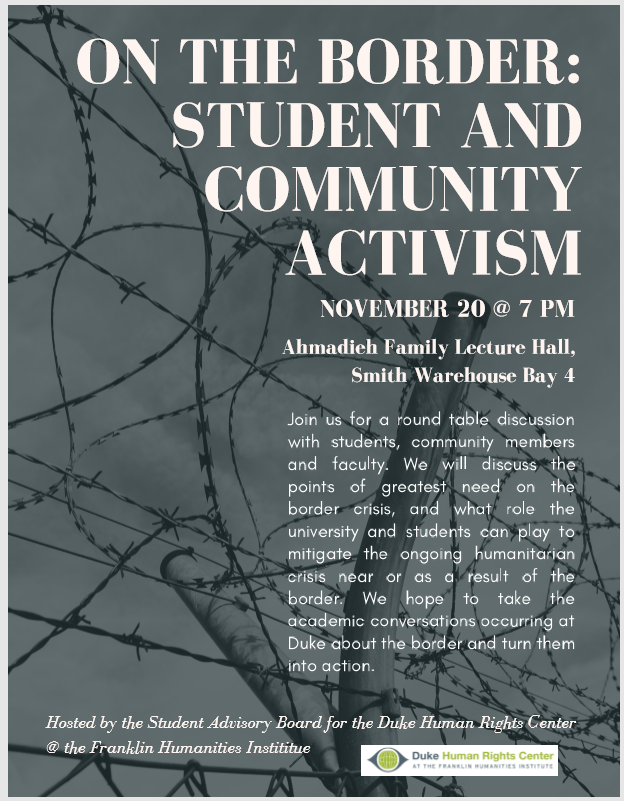
Last month the Student Advisory Board hosted a round table discussion with students, community members and faculty on the points of greatest need on the border crisis, and what role the university and students can play to mitigate the ongoing humanitarian crisis near or as a result of the border. The event included HLP Director,
Gunther Peck
.
Panelists at the discussion included:
- Maryam Kanna and Cassidy Bolt from the Duke Immigrant and Refugee Project
- Professor Gunther Peck from Duke University
- Edgar Vergara from NCCUMC
- Marian Abernathy from Judeo Reform
- Juliana de Groot from La Siembra
- Damjan Denoble from Frontera Tech
|
|
Rights!Camera!Action! The Unafraid
|
|
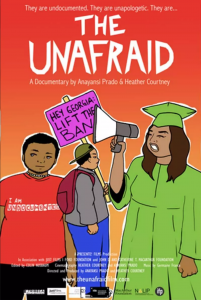
In November the DHRC@FHI hosted a screening of the film
The Unafraid
as a part of the annual Rights! Camera! Action! film Series.
The Unafraid
(2018) is a feature-length documentary that follows the personal lives of three DACA students in Georgia, a state that has banned them from attending their state universities and disqualifies them from receiving in-state tuition at any other public college. Shot in an observational style over a period of four years, this film takes an intimate look at the lives of Alejandro, Silvia and Aldo as they navigate activism, pursuing their right to education, and fighting for the rights of their families and communities. There was a panel discussion after the film with
Ana Trejo
, a representative of Define America, a Duke organization, and
Christopher Briggs,
a diversity and recruitment specialist harnessing more than ten years of experience through university admissions.
|
|
2019-2020 Teaching for Equity Fellows
Health Professions Educators
|
|
In August the
Teaching for Equity Fellows program
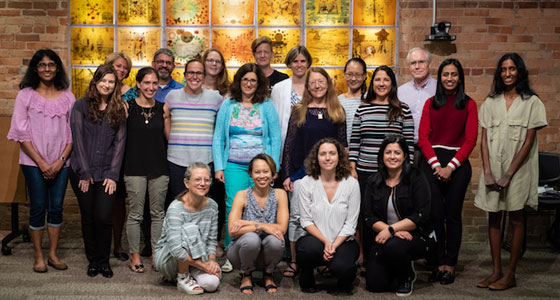
welcomed 18 faculty from the School of Medicine and School and School of Nursing into the Health Professions Educators cohort. Fellows participated in a two-and-a-half day framework session in Foundations in Equity. The fellowship includes monthly workshops that are specifically designed to address a number of teaching and mentoring topics that may arise around race and identity. Faculty fellows gain specific skills and strategies to create a culture that improves learning for all our students and create a learning community to collaborate and network with. If you are interested in learning more about the program, or applying for the 2020-2021 academic year, read
here
.
|
|
Racial Equity Learning Arc
|
|
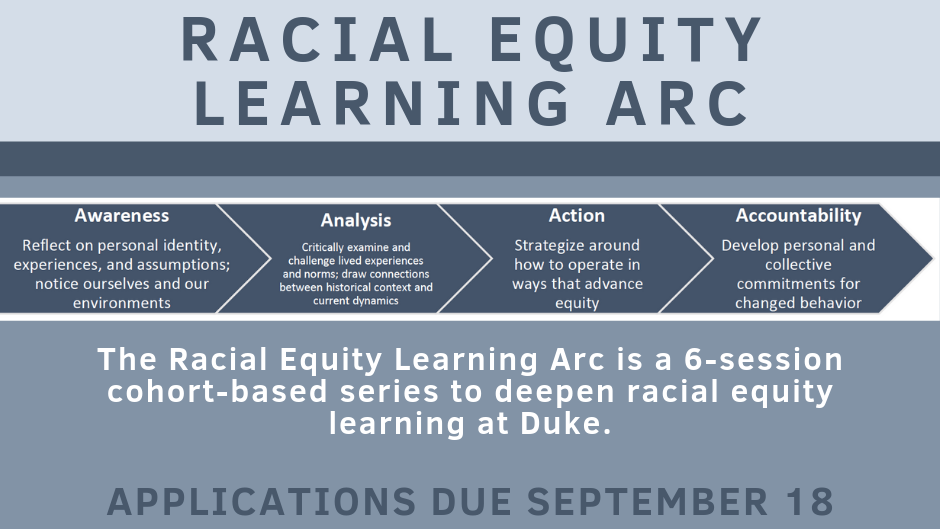
This was the second year that the DHRC@FHI cosponsored The Racial Equity Learning Arc with the Office of Civic Engagement. This program is a cohort-based series of workshops led by Alexa Broderick of The Equity Paradigm that is open to Duke staff and faculty who have completed the Racial Equity Institute’s Phase I workshop (or a near equivalent). This six-session series is intended to connect people within a community to build on foundational knowledge to further develop critical consciousness around issues of race. You can read more about it
here
.
|
|
Annual DHRC@FHI Programming
|
|
Global Ideas, Local Impact
|
|
The Student Advisory Board of the DHRC@FHI hosted the annual
Global Ideas, Local Impact
event on March 27, 2019. Global Ideas, Local Impact is the Duke Human Rights Center’s annual celebration of human rights opportunities at Duke and in the world. The event includes a research slam and an alumni panel. The 2019 panelists were Damjan Denoble, Karen Stauss and James Tager. Students presented research on the Duke-ACRE partnership, sexual violence on Duke's campus, reentry housing in Durham county for people returning from prison and the effects of female genital mutilation (FGM). You can watch the video and read more about the Student Advisory Board
here
.
|
|
|
Oliver W. Koonz Human Rights Prize Winners
|
|
Every year, Duke undergraduates are invited to enter essays or alternative projects regarding global human rights issues in our annual Oliver W. Koonz Human Rights Prize competition. The Oliver W. Koonz Human Rights Prize honors Oliver W. Koonz (1910-2009), who was the father of Claudia Koonz, the Peabody Family Professor Emeritus in the History Department and a founding member of the Duke Human Rights Center@FHI. In 2019, the recipients of the prize were
Anna Chulak, Christiana Oshotse, and Erin Williams
.
Anna Chulack’s “How and to what extent did the Nature of Civil Rights Activism perpetuate Gender Oppression and Hinder the work of Black Female Activists?” documents the pervasiveness of misogyny in the civil rights organizations of the 1960s and in the traditions of the black church.
Christiana Oshotse’s examination of “The Medical Brain Drain: Impact on Sub-Saharan African Countries,” situates two case studies, Nigeria and Malawi, within a global economic system that not only extracts wealth, minerals, and crops from Africa, but also incentivizes African doctors to leave their homelands and practice in richer countries.
In Erin Williams’s film, Silent no More, women in the Oglala Lakota and Northern Cheyenne communities mourn the loss of three young women (two were murdered and one is still “missing”).
Learn more.
|
|
The Human Rights Certificate
|
|
The Human Rights Certificate offers students an in-depth and rigorous interdisciplinary study of human rights history, theory and practice, cultivating life-long learners and engaged citizens who have a deep and nuanced understanding of human rights. Through their studies, students engage not only with histories and ideas, but also the people who do human rights work or who see themselves as in need of human rights protection. .
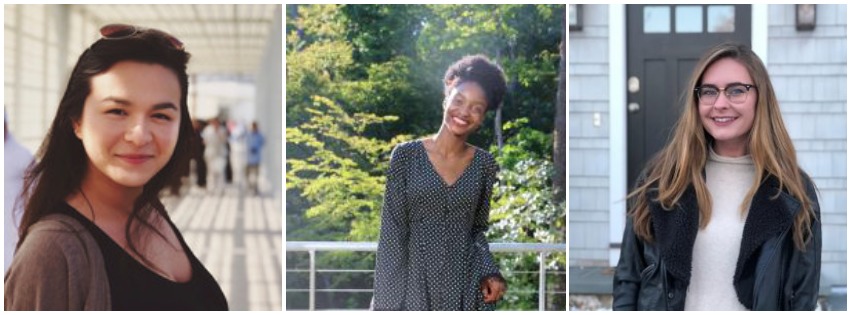
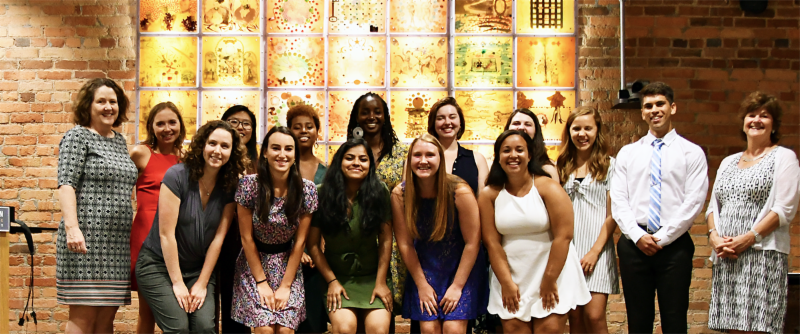
In May we graduated an amazing group of students including: Mumbi Kanyogo, Rebecca Hall, Isabella Arbelaez, Likhitha Butchireddygari, Trey Walk, Hannah Collins, Isabel Gutenplan, Jair Oballe, Elina Rodriguez, Kristina Smith, Elle Winfield, Cara Leigh Downey, Grace Cai, and Mary Aline Fertin. Read more about 2019's graduates and their experiences
here
.
|
|
Human Rights Summer Research Grant Recipients
|
|
Currently enrolled Duke undergraduate and graduate students are invited to apply for summer research funding from the Duke Human Rights Center@FHI. The goals of the grants are to strengthen research opportunities for students interested in developing, implementing and working in human rights.
The recipients of the grant in 2019 were:
Ester Kwarteng
,
Anisha Watwe
,
Selin Ocal
,
Ivan Robles
and
Gino Nuzzolillo
.
Ester
partnered with Shoulder to Shoulder, an NGO in Camasca, Honduras, to conduct field research investigated the perceptions of body image amongst young adolescents and older women and analyzed how these perceptions affect levels of self-esteem.
Anisha
, along with Shoulder to Shoulder investigated women’s reproductive health and the barriers that prevent contraceptive use.
Selin's
research focussed on studies to better understand and explain the implications of Hepatitis C in the North Carolina prison population.
Ivan
invested his efforts in constructing an understanding of how Hurricane Maria as a disaster event has impacted frameworks for community organizing and development in Puerto Rico.
Gino
travelled to Atlanta and New York City to research Southern urban development in Atlanta, Georgia, in the period following the official end of Reconstruction to the beginning of the Great Depression.To read more about their experiences and work, visit the DHRC website
here
.
|
|
Juan Méndez Human Rights Book Award Winner:
María McFarland Sánchez-Moreno
|
|
Duke University named Maria McFarland Sánchez-Moreno’s book,
There Are No Dead Here: A Story of Murder and Denial in Colombia
(Nation Books, 2018) as the winner of the 2018 Juan E. Méndez Book Award for Human Rights in Latin America. McFarland was in the Duke Campus in February 2019 to receive the award and discuss her book. You can read her interview
here
.
"There Are No Dead Here," is a deep dive into key human rights cases that exposed the murderous nexus between right-wing paramilitaries, drug lords, and Colombia's military and political establishment. Through dogged reporting, in part as a Human Rights Watch researcher, McFarland unravels the links that led to the murders of Colombian rights investigators by powerful interests that reached as high as military leadership and even the Colombian presidency. You can also watch the video of the complete event
here
.
|
|
Rights and Identities in the Americas
|
|
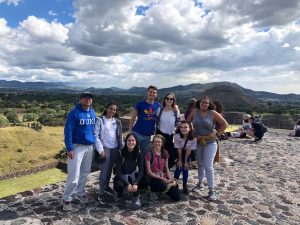
The Duke Immerse program on
Rights and Identities in the Americas
was offered this fall. The program occurs every two years under the leadership of professors Sally Deutsch, Liliana Paredes, and Robin Kirk. Students, alongside partners at Universidad de las Américas Puebla conducted research in Mexico culminating in a final research project, a personal essay and infographic.
|
|
Pauli Murray Center for History and Social Justice
|
|
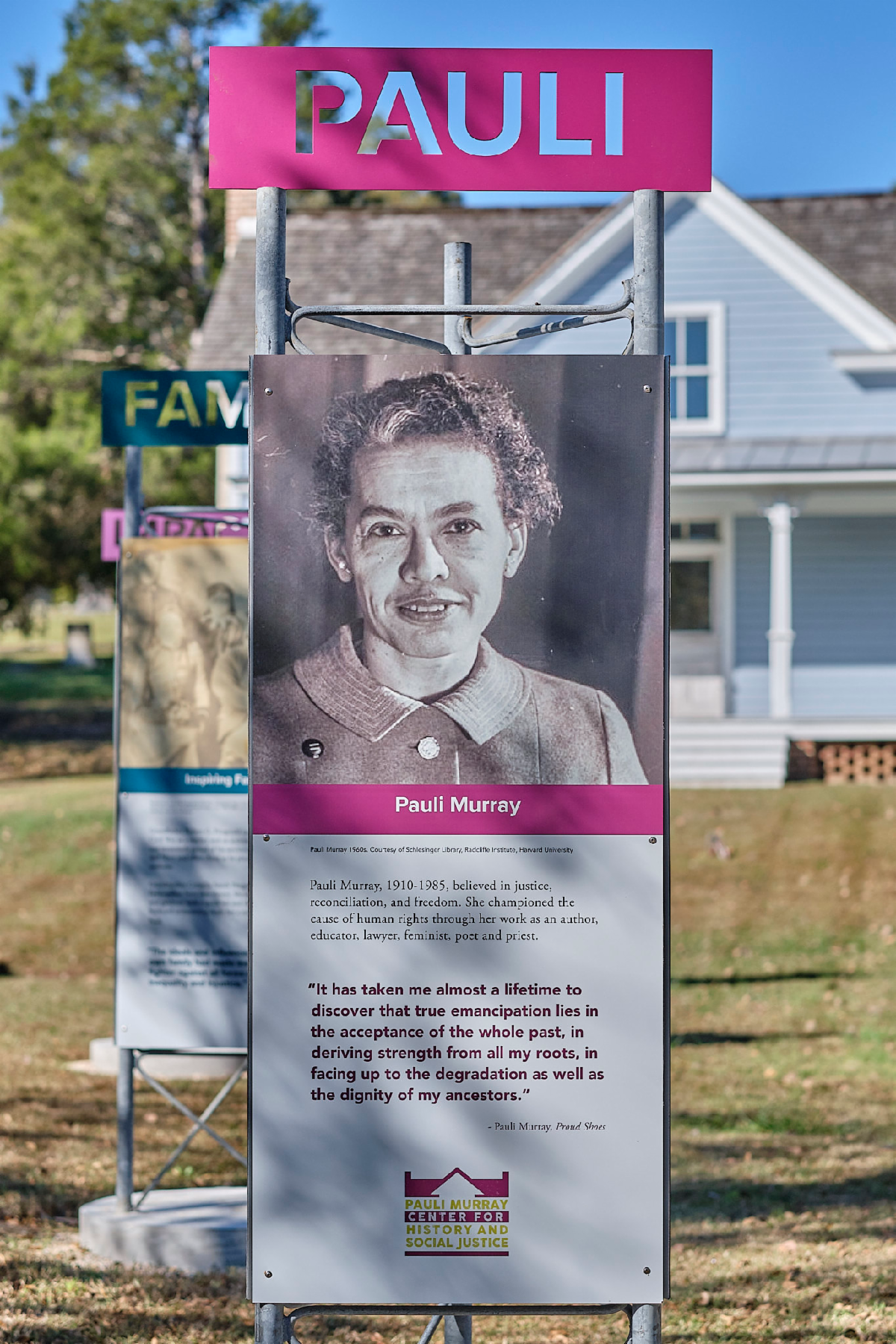
Growth. Impact. Inclusivity. These words describe the 2019 year-in-review for the Pauli Murray Center for History and Social Justice. PMC welcomed new staff, enjoyed increasing visitation and social media traffic, and embarked on planning for future public programs. The new public art exhibit on the lawn introduces Pauli, her family, her impact and her homeplace. And its accessible 24-7-365. The PMC hosted more than 50 programs and spread the news about Pauli Murray in features on
WTVD Channel 11
, and in Durham Magazine. The increased visibility has also led to a 64% increase in donations over 2018! Everyone is looking forward to an exciting 2020 when rehabilitation of the National Historic Landmark site will ramp up again.
|
|
The Duke Human Rights Center @ the Franklin Humanities Institute brings together an interdisciplinary group of scholars, staff and students to promote new understandings about global human rights issues.
|
|
|
|
|
|
|