|
Welcome to our October emailing!
Greetings, birding friends, and Happy Halloween! Fall is in full swing, bringing crisp morning air, trickles of late-season migrants, and the steady movement of sparrows, waterfowl, and raptors across the continent. For many of us, autumn offers some of the most rewarding birding of the year—and a frightening (boo!) reminder that winter is looming. Fortunately, we have a few tricks up our sleeves to keep the winter blues at bay. Read on to see what's brewing!
As you read this, our guides are staying busy across the globe. We currently have tour groups in Argentina, Australia, Sri Lanka, Namibia & Botswana, and Brazil, with upcoming departures heading out to Louisiana and Madagascar in just a day or two.
This month, we’re highlighting a variety of destinations, with help from some of our leaders. Doug Gochfeld has penned an enticing description of birding Borneo. Jesse Fagan has contributed a pitch for our two-lodge adventure in Western Panama. Bret Whitney has provided a description of a revamped itinerary of one of our Brazil tours, as well as a seasonal change for the dates of another. We’re also hoping to get a few more folks signed up on our two-part Costa Rica: Birding the Edges tour, guided by Megan Edwards Crewe. Lastly, we have a few spaces on our popular Jamaica tour that we'll tell you about.
As always, we've also included our monthly Recent Photos Gallery, with about 130 images from 13 tours to ten countries on three continents. We also have ten reports from recent tours, as well as 11 just-released itineraries, two new trip videos, and a list of departures over the next six months that still have space available.
Thanks to Doug Gochfeld for the spiderweb at sunrise photo above. It was taken in the Everglades during our most recent Florida: Mangroves & Migrants tour.
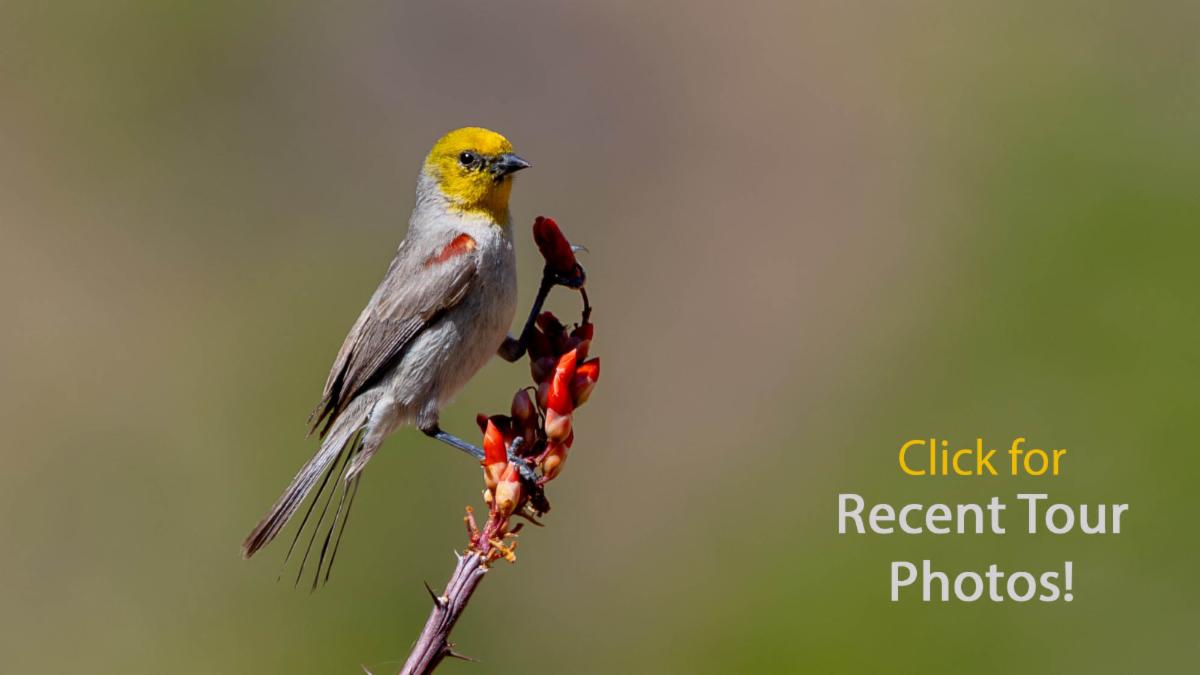
Our thanks as well to tour participant Amy Padgett for the great shot below of a Verdin seen on our recent Arizona: Birding the Border tour.
| | |
Borneo I
Mar 31–April 17 | Doug Gochfeld & Phil Chaon
Hey everyone! Doug Gochfeld here.
In all my global guiding travels, Borneo is in the rarefied air at the top of my list of favorite places on the planet to visit. One of the world’s most ancient rainforests. A bottomless well of bizarre and unique animals (and plants!), each more interesting than the last. Lovely, welcoming lodges nestled in the wilderness. Delicious food. And a truly breathtaking mountain.
I’ll focus here on the animals, though I’d need to write an entire book (or several) to truly do them justice. Colugos (also called “flying lemurs”) are our closest non-primate relatives and have “wings” that allow them to glide up to 200 feet between enormous old-growth trees—so they don't have to travel on the ground, where several species of rare cats (including Clouded Leopard) may prowl. Pocket-sized tarsiers, which have the largest eye-to-body-size ratio of any mammal (each eye is bigger than its brain!), are a possibility, as are several species of flying squirrels, ranging from small, poorly known endemics to huge, charismatic ones.
I’d be remiss not to mention Borneo’s most famous primate: Sabah is the best place in the world to see Orangutans in the wild, and most years we see multiples across several locations, including males with their remarkable facial flanges and mothers holding babies. Bug diversity is truly off the charts—from incredible mothing potential at middle and high elevations to gaudy leafhoppers, camouflaged moss mantises, and a seemingly unlimited supply of other strange creatures to look at between bird sightings.
| | |
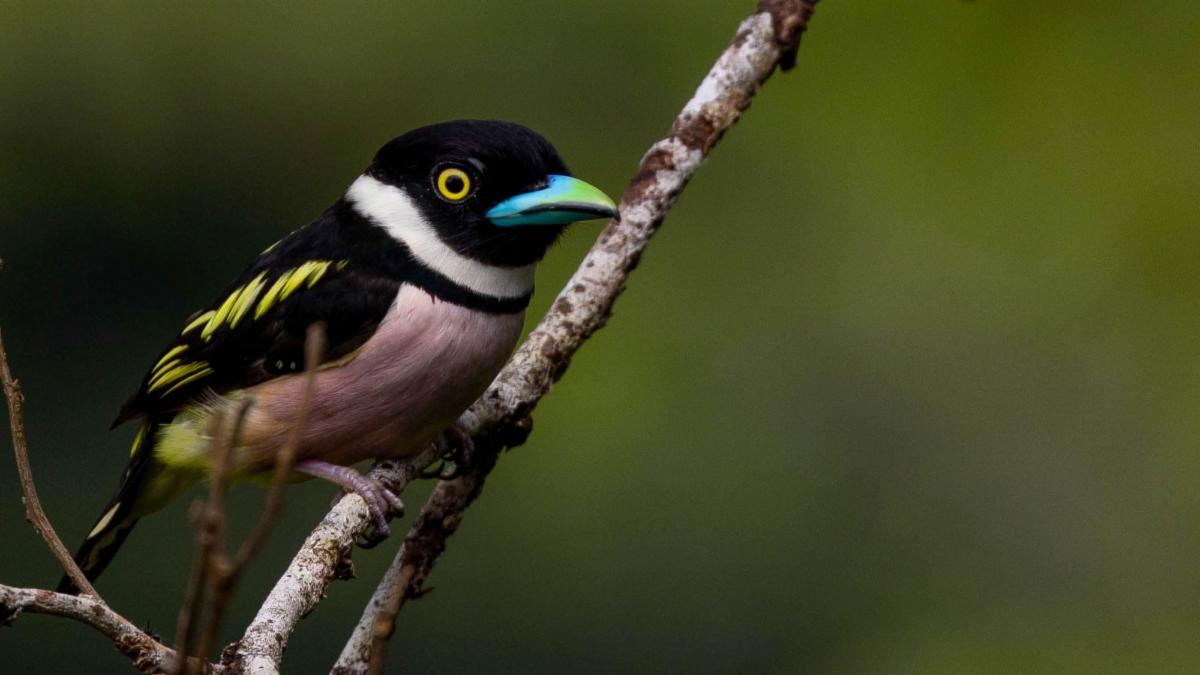
And since this is, of course, a birding tour, the birds are fantastic as well! We have a chance to see several dozen Bornean endemics on our route, including the Bornean Bristlehead, placed in its own monotypic family. Whitehead’s Trogon is sometimes considered as the most beautiful trogon in the world, and we can encounter several eye-popping species of broadbill (perhaps my personal favorite group of birds in Southeast Asia), headlined by the high-elevation endemic Whitehead’s Broadbill, which looks like a neon-green, arboreal Nerf football.
For those who love a broad natural history perspective, we also aim to visit the Gomantong Caves—a massive cave system where we can see multiple species of "edible-nest" swiftlets nesting, as well as a dusk flyout of hundreds of thousands of bats being opportunistically snatched by several species of raptors (and sometimes hornbills). For breathtaking scenery, we’ll also witness the majesty of Mt. Kinabalu (a UNESCO World Heritage Site)—the tallest peak in Borneo and Malaysia, and one of the most recognizable mountain profiles on Earth.
| | |
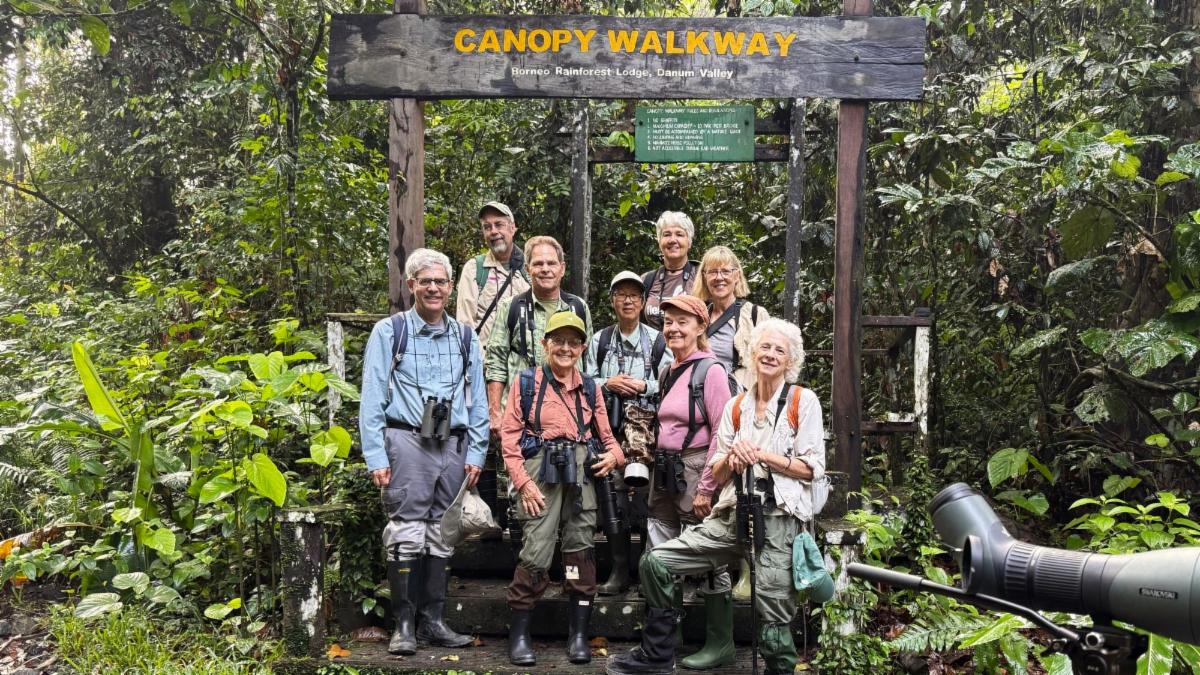
This March, you’ll have the additional treat of a second Field Guides leader, a great friend of mine and another Borneo lover: Phil Chaon, co-author of the Habitats of the World and Habitats of North America field guide series. Come join us on our exploration of this wild corner of the world’s third-largest island! We’ll journey to four world-renowned wildlife hubs—Sepilok, the Kinabatangan River, Danum Valley, and Mt. Kinabalu—traveling in a comfortable bus, staying at excellent lodges, enjoying varied and delicious food, and immersing ourselves in exceptional wildlife habitat. Borneo is beckoning!
For more information, please contact our office and we'll be happy to assist.
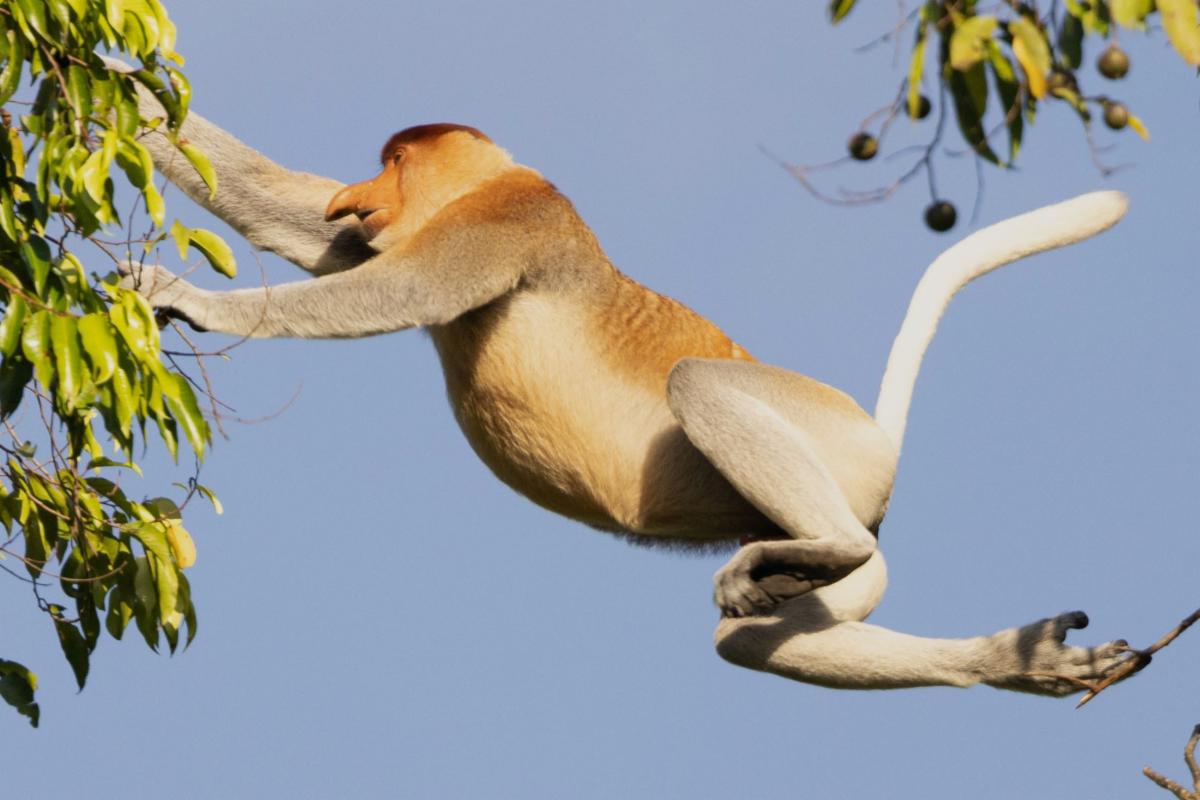
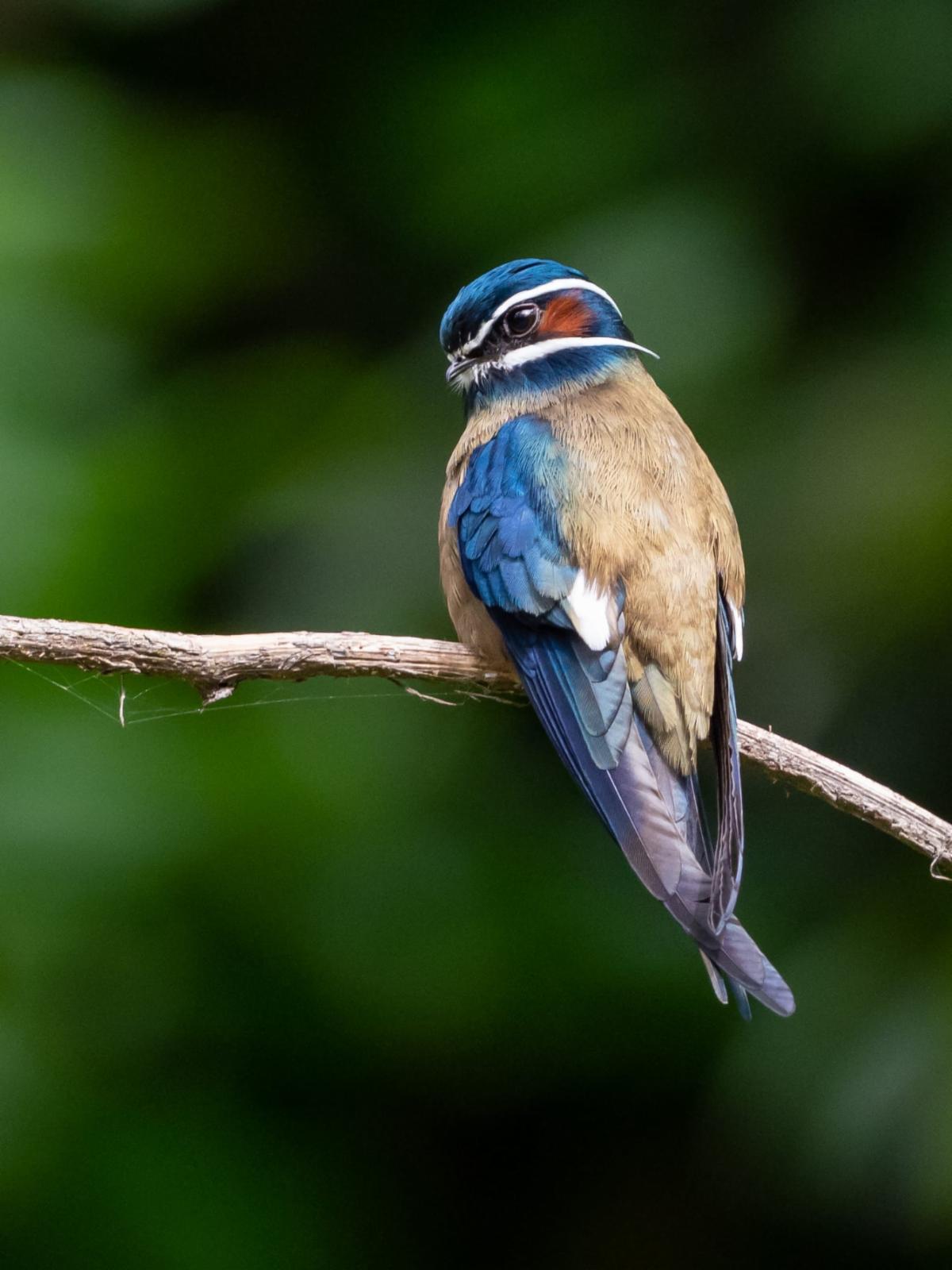
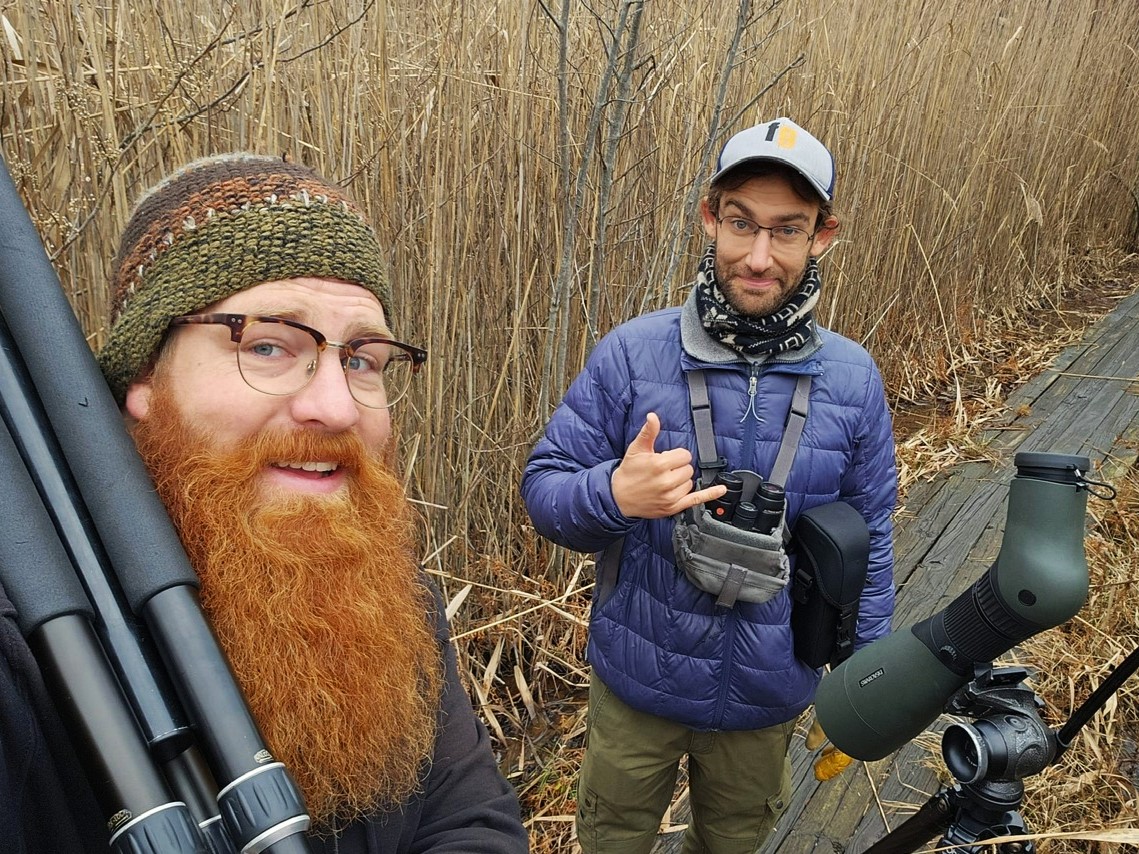
(Top photos: Black-and-yellow Broadbill and a Proboscis Monkey in flight, both by Doug Gochfeld. Whiskered Treeswift and photo of guides Phil Chaon [left] & Doug Gochfeld both by Phil Chaon.)
| | |
The Roosevelt remains among the most remote and least-disturbed rivers in Amazonia. That said, we have witnessed some distressing effects of climate change over the past decade, increasingly so in recent years. To address these realities, we are updating our traditional Rio Roosevelt tour. There are two relatively new, very comfortable lodges well downriver from the one we have traditionally visited, both of which cater mostly to high-end, catch-and-release sport fishermen.
The Pousada Amazon Roosevelt is right at the mouth where the Roosevelt joins the Rio Aripuanã, affording the unique advantage of birding both banks of these biogeographically important rivers! A few years ago, Bret helped design a trail system there that is now fully in place. A couple of hours upriver on the Aripuanã is the Pousada PiraAçu, where different terra firme forest types dominate. From 2027 forward, our new, revitalized Brazil’s Roosevelt & Aripuanã Rivers: Beyond the River of Doubt tour will include five nights at each of these pousadas!
Some of the highlight birds we’ll be after are Nocturnal Curassow (good chance!), Zigzag Heron, Gould’s Toucanet, Scaled Ground-Cuckoo, Long-tailed, White-winged, and Rufous potoos, Crimson-bellied and Santarem Parakeets, Kawall’s Amazon, Hoffmanns’s and Uniform woodcreepers, Tapajos Scythebill, Rondonia Bushbird (yes!), Aripuana Antwren, Alta Floresta and Tapajos antpittas, Black-bellied and Black-breasted gnateaters, Buff-cheeked Tody-Flycatcher, Snow-capped and Flame-crowned manakins, and Klages’s Gnatcatcher. Army ant swarms on the Aripuanã may attract Dark-winged Trumpeters, White-breasted Antbirds, and Pale-faced Bare-eyes (yee-haw!). Big raptors could show up at just about any moment, and these remote forests harbor a diverse set of primates and other beasts.
| | |
Rio Negro Paradise: Manaus, Brazil
May 9-24 | Marcelo Barreiros & Bret Whitney
Bret Whitney and Marcelo Barreiros returned from leading our Rio Paradise: Manaus tour last month. It was, once again, a fabulous birding and natural history experience, and they are already looking forward to next year’s departure.
But they had a surprise for us! In addition to our traditional September tour, which is provisionally full with a waitlist, they want to co-lead a new Rio Negro Paradise tour next year—in May!
It’s going to be a differently wonderful adventure. Mid-May is typically on the cusp of the annual wet-dry cycle, and the rivers are just starting to drop from peak levels. Thus, we expect that nearly all of our birding along the rivers will be done from boats—either from the top deck of our big live-aboard “mothership,” Dorinha, or, quite often, from our two canoes with 15-hp motors.
In contrast to the September period, which is typically dry with no rain or just an occasional passing shower, we expect the May tour to have more frequent rains, mostly late in the day. More rain, we think, falls on the positive side of the ledger and may play to our advantage. More cloud cover throughout the day will make for overall milder temperatures in May, and we are hoping for heightened activity from mixed-species flocks and army ant swarms.
At the end of the day, however, we expect our bird lists for these two tours to be quite comparable. Both will be fantastic birding adventures into the heart of the Amazon, and Bret and Marcelo are certainly looking forward to sharing them with you!
Now a shout-out to the many of you who have already taken the September tour: Come back for the May departure—it’s going to be a remarkably different but equally rewarding experience!
Please contact our office for more information or to sign up.
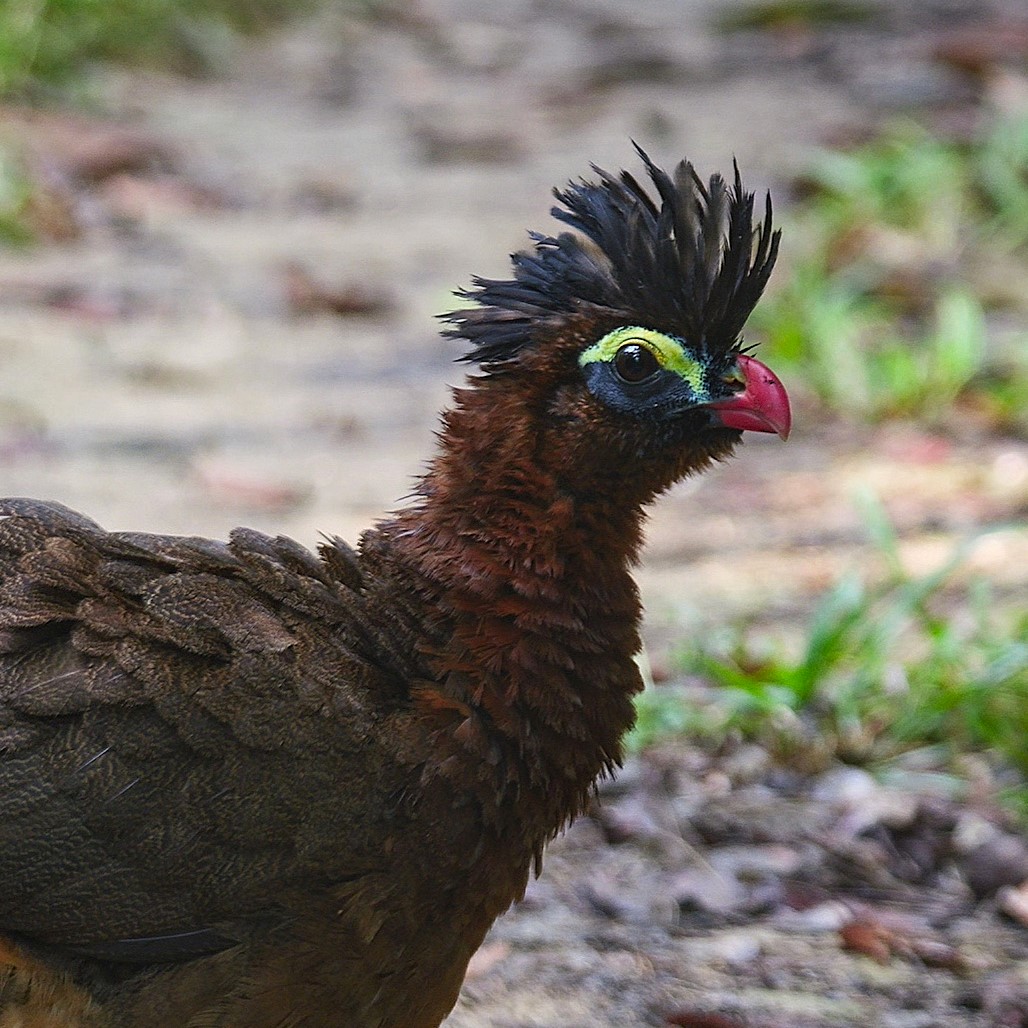
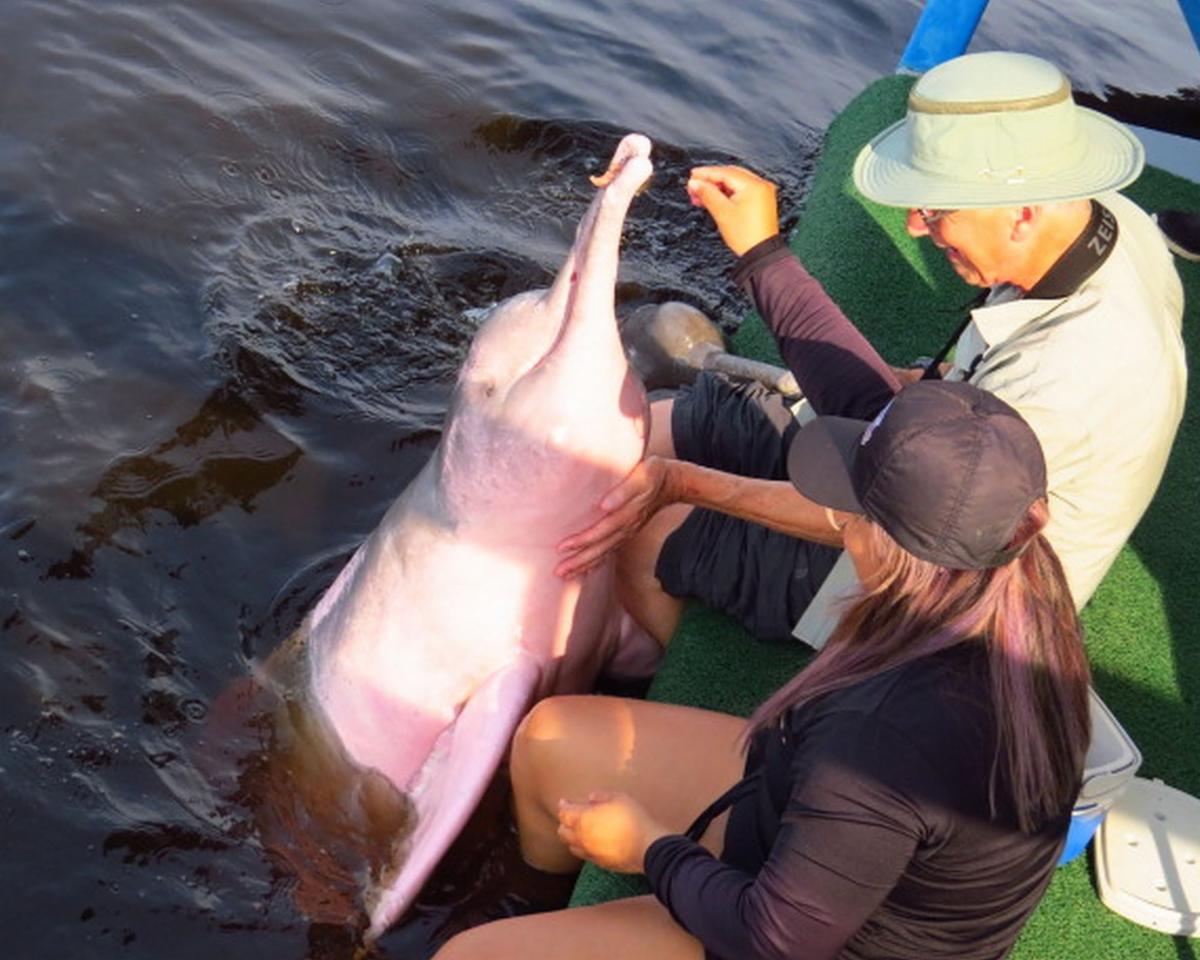
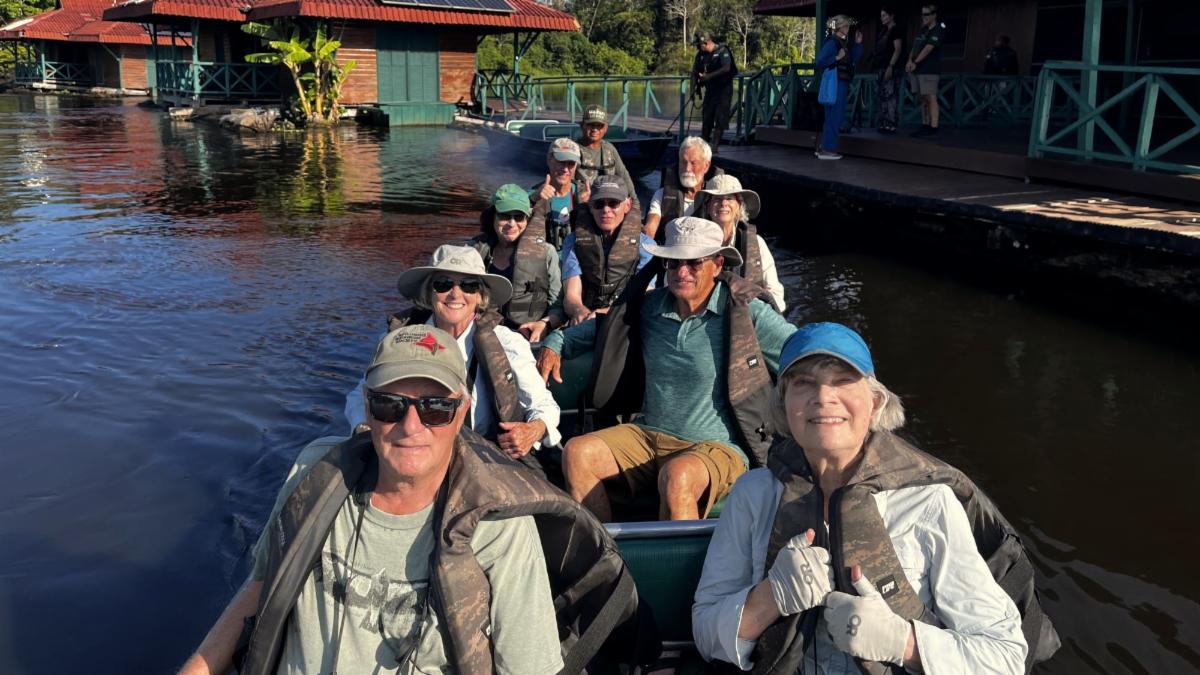
(Top photos: Mouth of the Rio Jau and our ship; Middle photo: Nocturnal Curassow, all photos by Bret Whitney. Bottom photo: Interacting with Amazon River Dolphins by group member Terry Harrison.)
| | |
Happy Fall, everyone! Now, Jesse Fagan here!
Fall and winter are especially busy seasons for us at Field Guides. It makes sense: many birders are eager to escape colder northern temperatures in search of tropical adventures and exciting new birds. If you're still looking for a getaway near the equator, we have the perfect opportunity for you!
From February 26–March 7, 2027, I'll be leading our Western Panama tour, which visits two of the finest birding lodges in Central America. Each lodge is situated in a distinct habitat: one in the Chiriquí Highlands, where cloud forests and Resplendent Quetzals reign supreme, and the other in the Caribbean lowlands, home to palm-lined landscapes and specialties such as the Snowy Cotinga.
Mount Totumas Cloud Forest Lodge is an outstanding base for finding Chiriquí Highland endemics, including Prong-billed Barbet, Flame-throated Warbler, and Sulphur-winged Parakeet. This is also an excellent time of year for nesting Resplendent Quetzals and displaying Three-wattled Bellbirds, offering some truly memorable birding opportunities.
On the Caribbean side, near Bocas del Toro, we'll stay at the delightful Tranquilo Bay Lodge on Bastimentos Island. It is most definitely tranquilo (peaceful), but the birding can be as active and exciting as you want it to be. This region offers an impressive variety of species, including Black-and-white Owl, Keel-billed Toucan, Golden-collared Manakin, Snowy Cotinga, Nicaraguan Seed-Finch, and Dusky-faced Tanager, to name just a few. A healthy mix of wintering migrants will add even more variety to an already spectacular bird list.
With four nights at each lodge, this two-lodge itinerary provides plenty of time to settle in, spread out your gear, and thoroughly enjoy each location without feeling rushed. The accommodations are comfortable, the food is excellent and internationally inspired, and the hospitality is second to none.
We still have a few spaces available on this tour, so if Western Panama has been on your birding wishlist, we'd love to have you join us. Come experience some of Central America's finest birding, spectacular scenery, and wonderful hospitality!
—Jesse Fagan (“Motmot”)
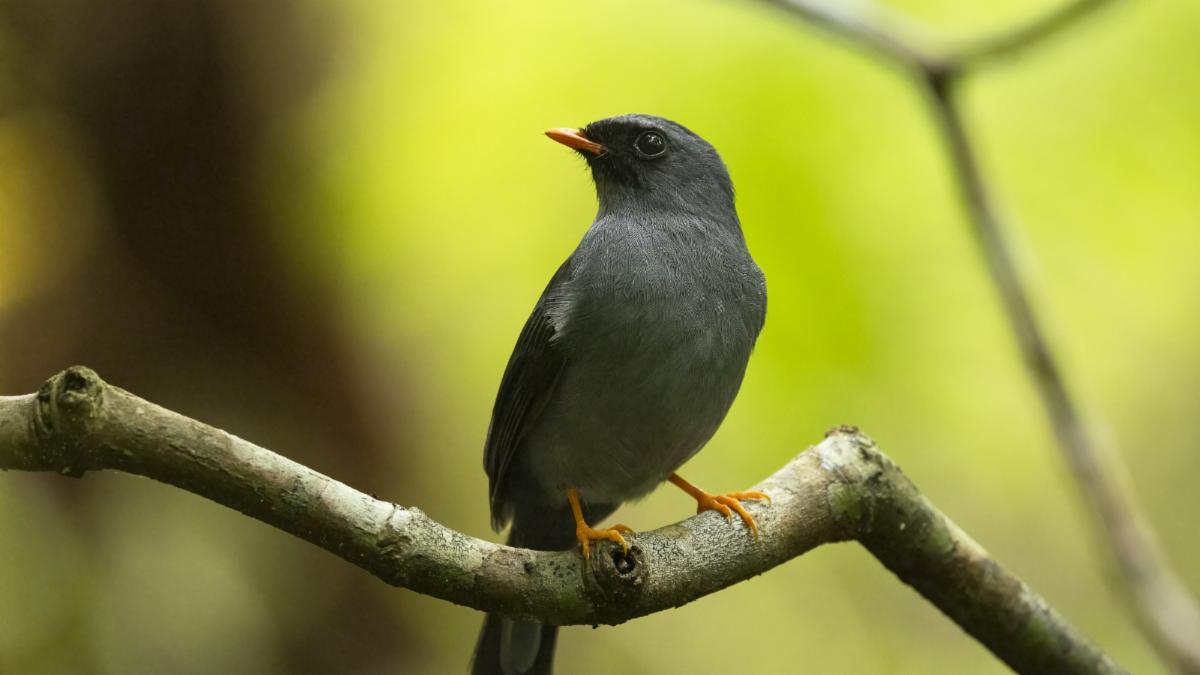
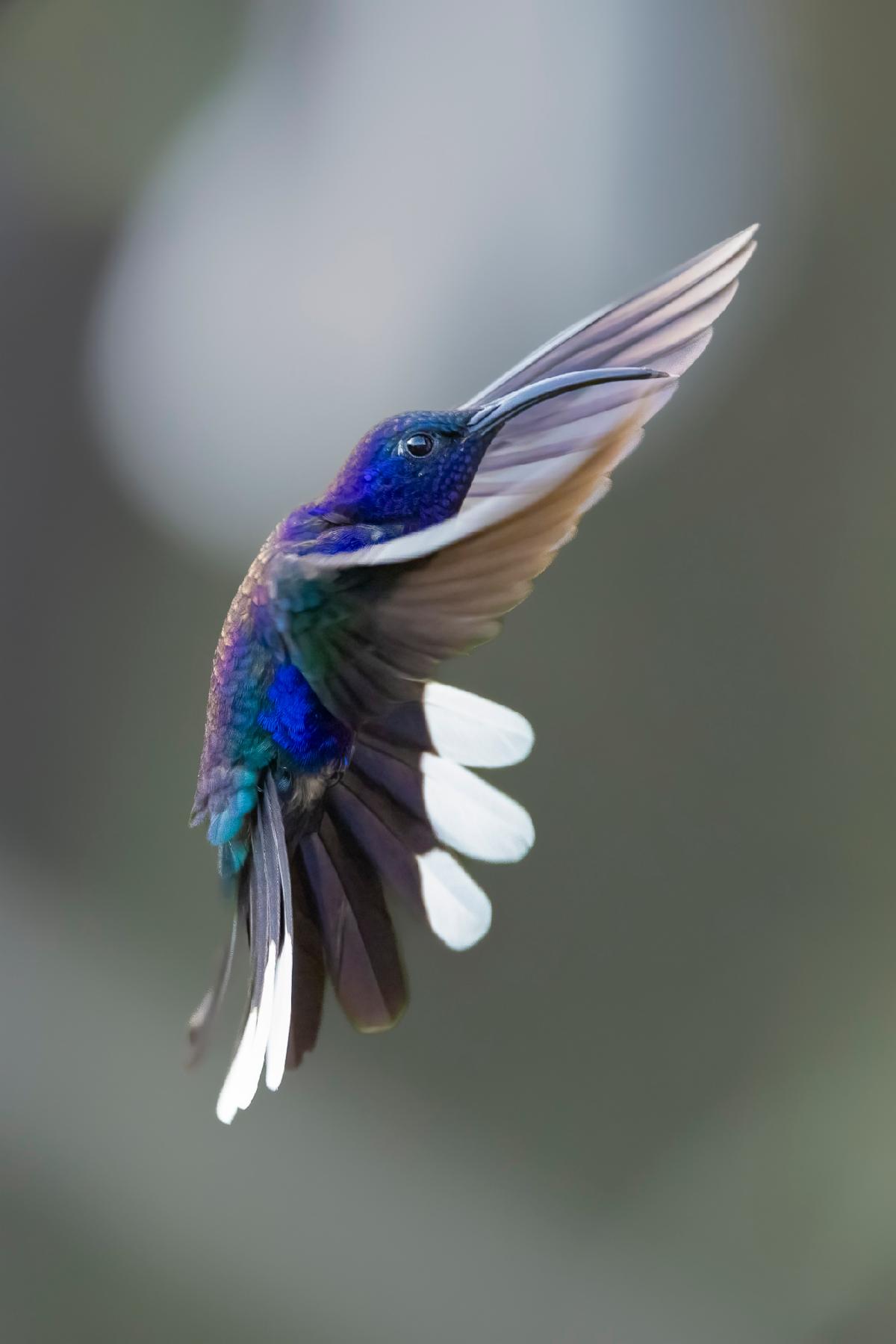
(Top photo: Black-faced Solitaire; Second photo: Violet Sabrewing, both by participant Kirsten Tucker.)
| | |
Looking for a midwinter tropical getaway with extraordinary bird diversity? Costa Rica packs over 900 species into an area smaller than most U.S. states! Specially designed to target premier habitats and regional specialties not visited on our Classic Costa Rica tour, this two-part winter adventure is guided by Megan Edwards Crewe and offers an exceptional opportunity to expand your neotropical birding—take either segment individually or combine both for an unforgettable visit to Central America.
Part One: Talamanca Mountains to the Pacific Deep South Journeying south from San José along the spine of the Talamanca Mountains, we’ll bird the high-altitude paramo of Cerro de la Muerte for prized Chiriqui highland endemics. Down in San Isidro, we’ll explore Alexander Skutch’s historic Los Cusingos reserve for showy Fiery-billed Aracaris and the dazzling Turquoise Cotinga. Near the Panamanian border, we split our time between the mid-elevation Wilson Botanical Gardens (home to hummers like the White-crested Coquette and specialties like Ruddy and Chiriquí foliage-gleaners) and the lush Pacific lowlands of Esquinas Rainforest Lodge. Here, we'll hunt for the region's star endemic—Black-cheeked Ant-Tanager—alongside Orange-collared Manakin, Baird's Trogon, Golden-naped Woodpecker, and Crested Oropendola.
Part Two: Northern Cloudforests, Cano Negro Wetlands & Arenal Heading north toward Nicaragua, we begin with a hummingbird extravaganza at Poas Volcano and La Paz Waterfall Gardens, where we could see nearly 15 hummer species on day one alone—including the massive Violet Sabrewing and tiny endemic Coppery-headed Emerald! We’ll explore the cloudforests of Bosque de Paz for rare Black-banded Woodcreeper, Golden-browed Chlorophonia, and Black Guan, before embarking on scenic wetland boat trips at Cano Negro for the localized Nicaraguan Grackle, Sungrebe, Agami Heron, and American Pygmy Kingfisher. We wrap up beneath the picturesque backdrop of Arenal Volcano, searching Caribbean foothill forests for the range-restricted Keel-billed Motmot, White-ruffed Manakin, and multi-species antbird flocks.
Please contact our office for more information or to sign up.
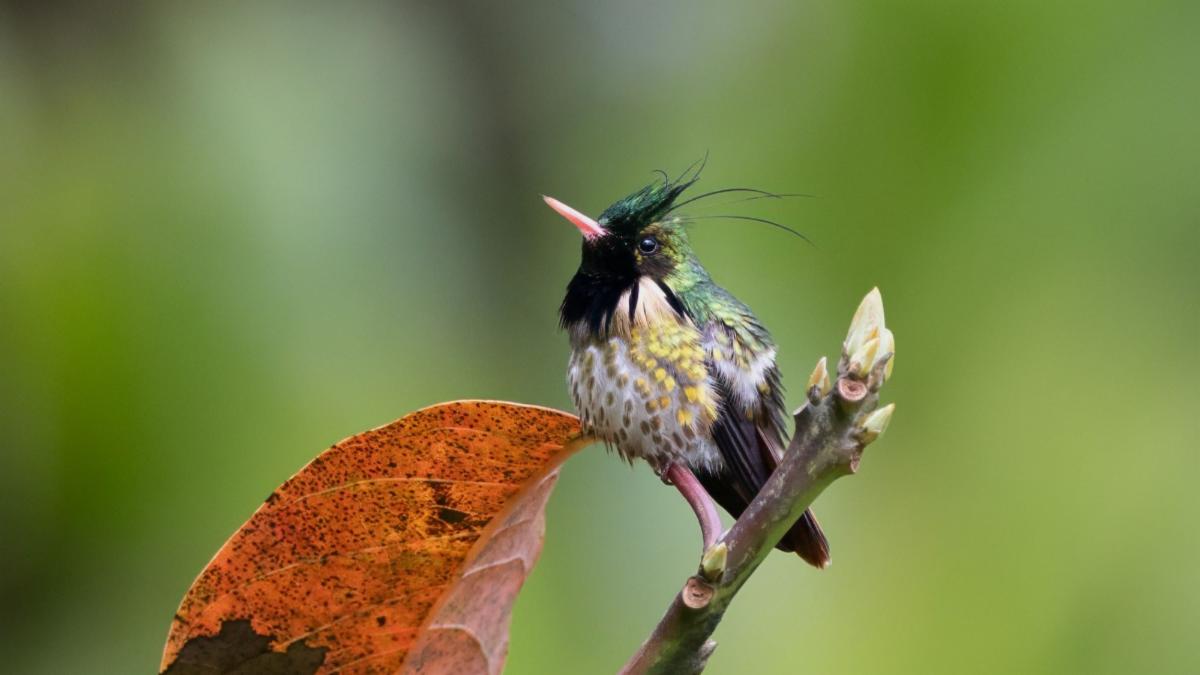
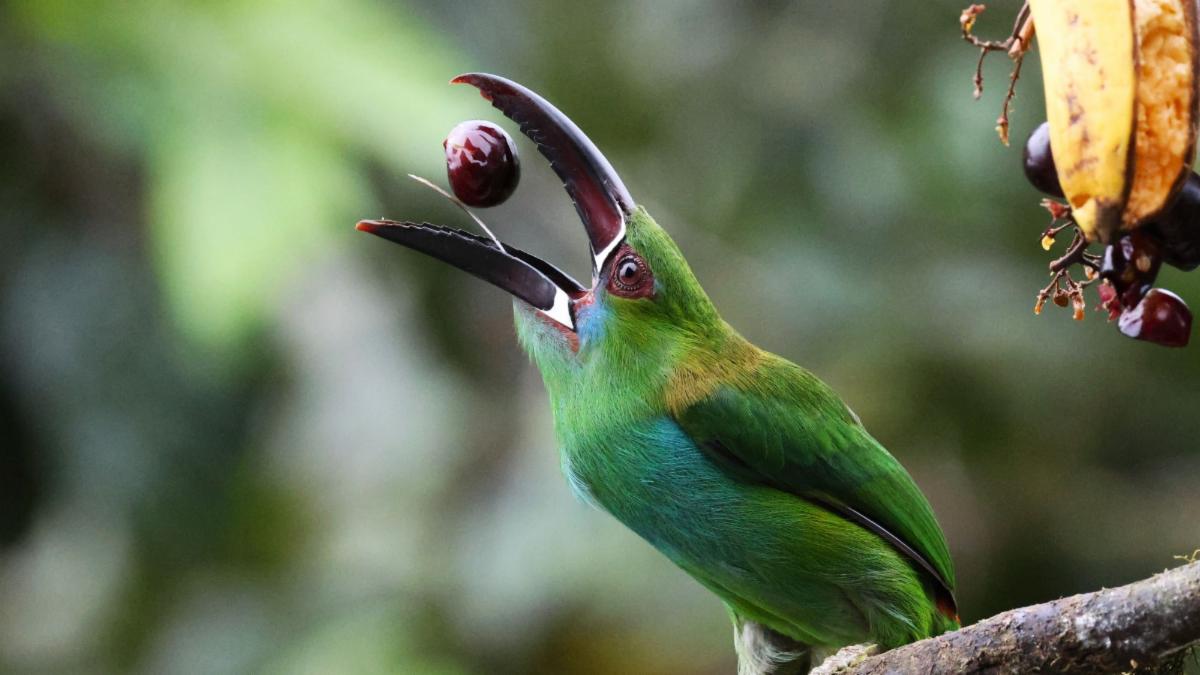
(Photo above of a Black-crested Coquette by guide Chris Benesh.)
| | |
Jamaica
Nov 21–28, 2026 | Cory Gregory
Mar 18–25, 2027 | Marcelo Barreiros
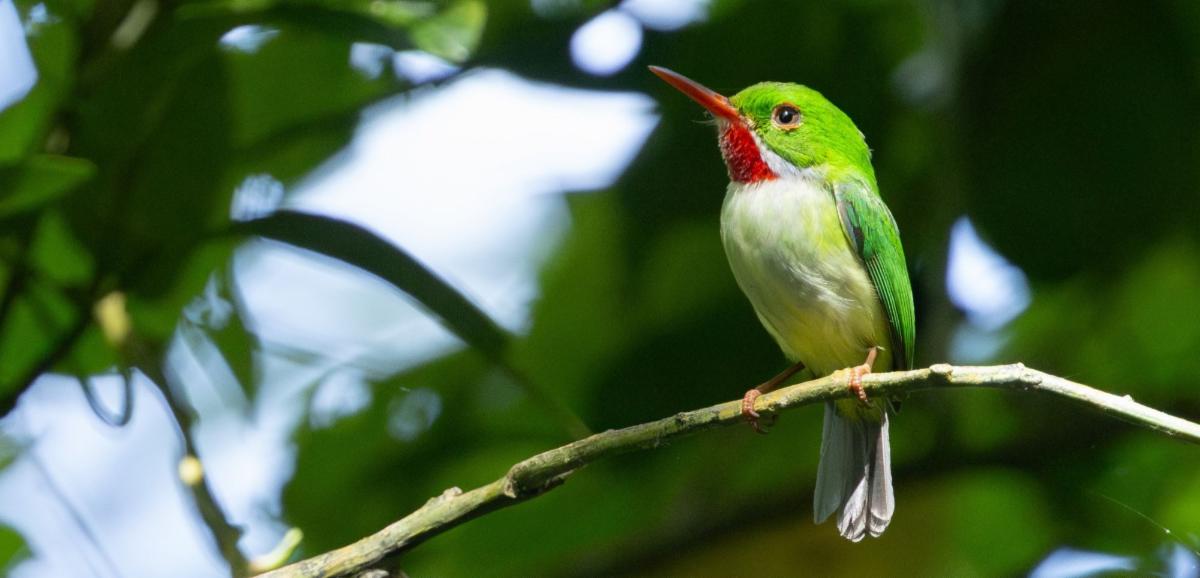
As one of the Caribbean’s premier birding hotbeds, Jamaica boasts at least 28 endemic species and a host of regional specialties. Based largely out of Goblin Hill, our weeklong tour explores the island's lush habitats at a relaxed pace, targeting localized species such as Red-billed and Black-billed streamertails, Jamaican Tody, Chestnut-bellied Cuckoo, and Orangequit. Excursions into the John Crow and Blue mountains offer opportunities for Blue Mountain Vireo, Crested Quail-Dove, Yellow-billed Amazon, and the rare Jamaican Blackbird, while a visit to Rocklands Bird Sanctuary provides memorable up-close views.
We have three upcoming departures between now and late March. While our February tour is full, space remains on our November 21–28 departure with Cory Gregory, as well as our March 18–25 tour led by Marcelo Barreiros. You can read the full description and view the complete itinerary on our Jamaica page.
Please contact our office for more details or to hold a space.
(Photo above of a Jamaican Tody by guide Cory Gregory.)
| | eBird taxonomy update released | | |
For longtime users of eBird, October means more than just a time of year to look for fun sparrows—it also means the annual eBird taxonomy update is upon us. That implies splits, lumps, and all sorts of temporary eBird wonkiness with our life lists and statistics. For the latter, the folks at eBird remind us that patience is key, and that these behind-the-scenes adjustments get ironed out quickly.
As for the splits and lumps, the North American headliners this year are Willets (finally!) and Marsh Wrens.
Willets have been split into Prairie Willet and Saltmarsh Willet, while Marsh Wrens have been divided into Eastern Marsh Wren and Western Marsh Wren. Overall, the 2026 update includes 39 species gained through splits, 7 species lost through lumps, and 2 newly described species, resulting in a net gain of 34 species and a new global total of 11,201 species.
You can read about the whole shebang by clicking here: 2026 eBird Taxonomy Update.
| | Short videos from recent tours | | |
Our tour reports frequently feature video highlights—bringing the birds, wildlife, landscapes, and culture of each itinerary to life. We have two of them below.
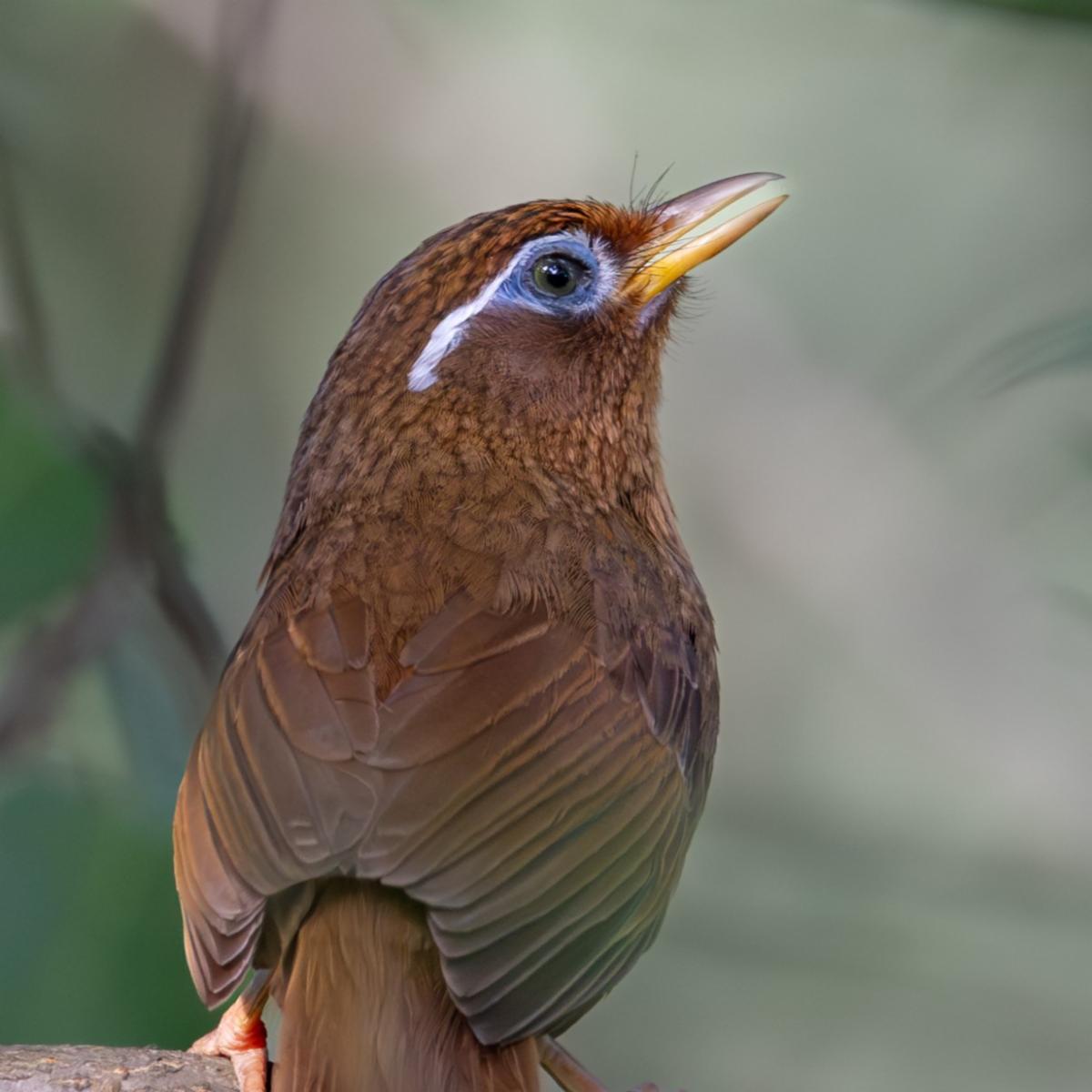
The first is a five-minute highlights video from our China's Sichuan Province tour, guided by Doug Gochfeld (and Doug also produced the clip). Click here or on the Chinese Hwamei below to watch. (Photo by participant Becky Hansen.)
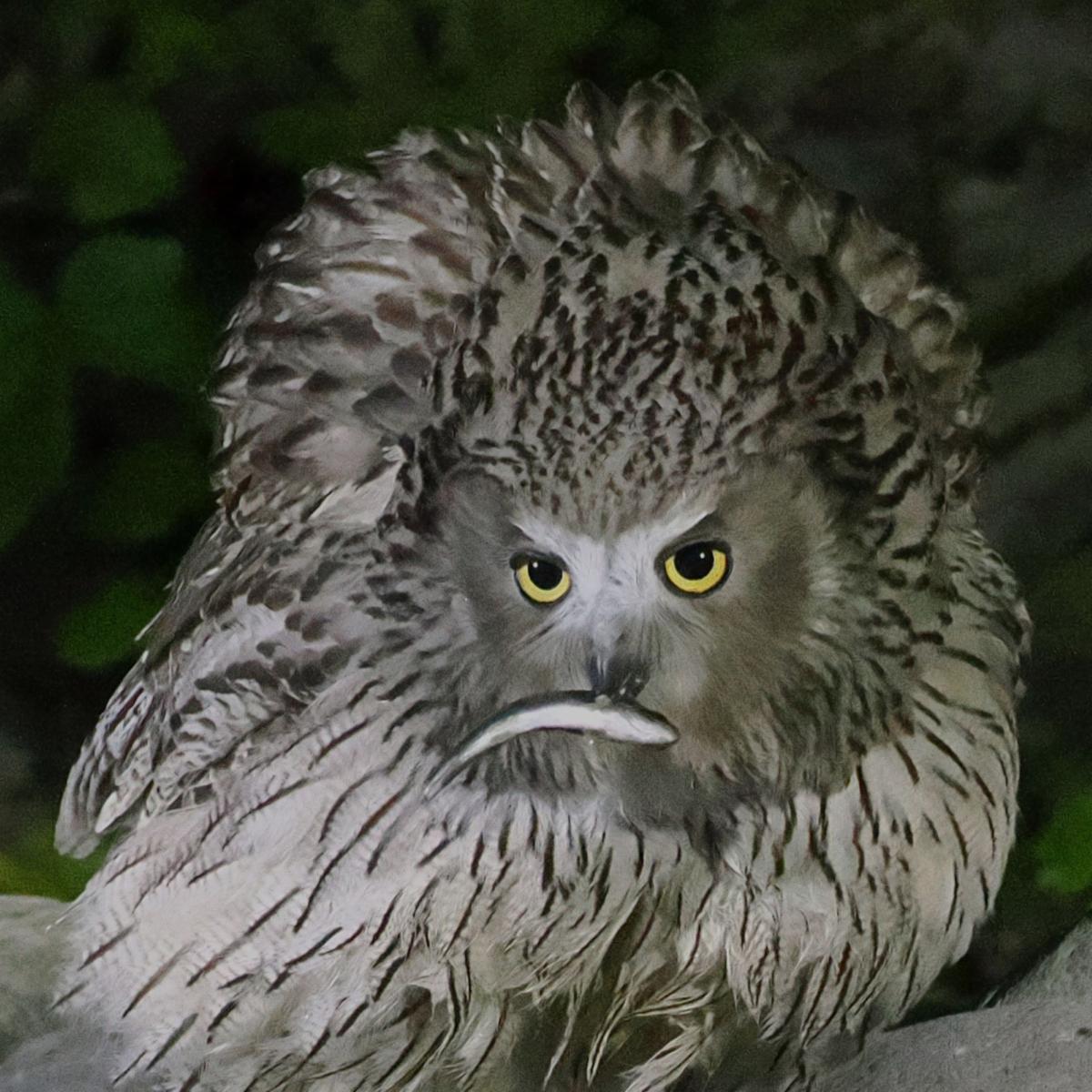
The second video is a fun, minute-long clip of Blakiston's Fish-Owl doing its thing and then interacting with another of its species from our recent Japan in Spring tour, guided by Phil Gregory. The video is courtesy of local guide Jun Matsui. Click here or on the photo of the owl below to watch the video. (Photo courtesy of participant Donna Pomeroy.)
| | Looking for field-ready gear or a comfortable layer for your next trip? The Field Guides Store offers shirts, hats, hoodies, mugs, totes, and accessories. Browse the collection online at the Field Guides Store. | | Reports from recent tours | | We have annotated and illustrated reports from recently completed tours linked below, each with some lovely images and some with video clips, and all with great write-ups by our guides. Enjoy! | | Comments from participants | | |
We carefully read each post-tour evaluation we receive from our participants, so that we can continue to offer the best possible birding experiences and service on Field Guides birding tours. Here are two representative recent comments. From all of us at Field Guides, our thanks for all your valuable feedback.
“Another excellent Field Guides tour! A well-planned itinerary covering different habitats with an excellent, knowledgeable guide. Micah Riegner’s consistent energy level, enthusiasm, and patience make for a fun and productive birding trip. I signed up for this particular tour because I’m familiar with and enjoy Field Guides tours, it is an area I have not birded or visited, and Micah is one of my favorite guides. I would absolutely travel with him again!” K.H., Slice of California II, 2026
"I had heard good things about Field Guides and have always wanted to go on safari; after doing some research, I decided that if I was going to go, why not choose a tour with the person leading who literally wrote the book on the birds of Africa? Terry Stevenson was prompt, organized, well-versed on the birds, mammals, and history of Kenya, and quite humorous. The whole tour was pretty seamless. Our tour manager, Sharon Mackie, was beyond prompt with any response to questions I had and disseminated relevant information in a timely manner. I had a great group experience; having gone solo on this trip, I was very fortunate to have lucked out with a great group of people." K.D., Wild Kenya: A Tented Camp Safari I, 2026
| | Tours with openings through MARCH | | Each month we list in this section the Field Guides departures over the next six months that still have at least two spaces available (unless otherwise noted). | | |
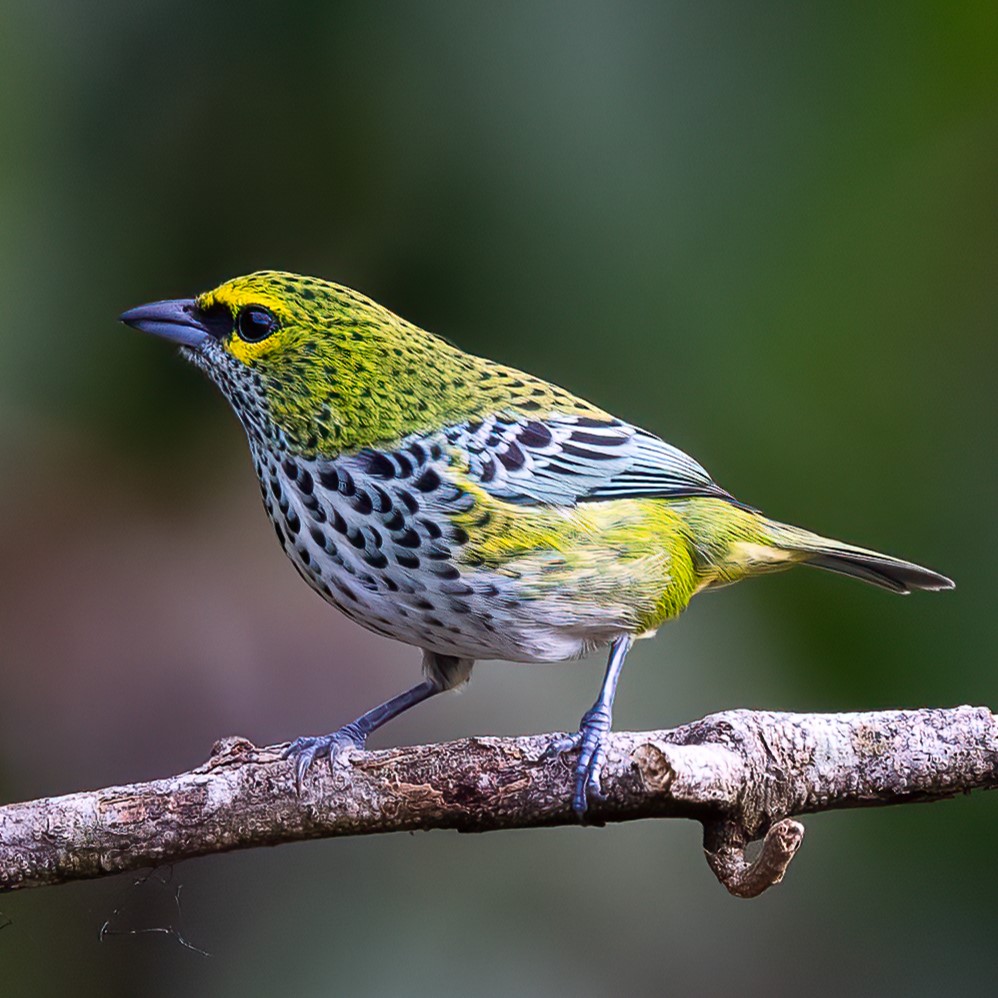
If you’re looking to spend Christmas somewhere truly special this year, our Holiday Costa Rica: Rancho Naturalista tour with Jay VanderGaast (December 19–27) offers a marvelous tropical escape. Based at one of Costa Rica’s premier birding lodges on the lush Caribbean slope, we’ll enjoy a relaxed pace, savoring morning coffee on a balcony alive with tanagers, motmots, and hummingbirds. Between excursions, we'll enjoy the lodge's famous home-cooked meals and welcoming, spring-like climate. Day trips will take us through pristine cloud forests and volcanic highlands in search of regional specialties like Resplendent Quetzal, Snowcap, and Bare-necked Umbrellabird, all while returning each evening to the comfort of the lodge—a wonderful way to celebrate the season and welcome the new year afield. (Photo of a Speckled Tanager by guide Sam Wilson.)
SOUTH AMERICA
-
Uruguay: Birds & Wines in the Land of the Gauchos, Nov 8-20, with Marcelo Padua
-
Colombia's Inirida: Land of Many Waters, Nov 21-29, with Jesse Fagan (1 space)
-
NEW TOUR! Emperor Penguins in the Weddell Sea: In search of Antarctica's most iconic bird, Nov 23-Dec 6, with Doug Gochfeld
-
Ecuador's Wildsumaco Lodge, Dec 28-Jan 7, with Willy Perez (1 space)
-
Colombia's Marvelous Magdalena Valley, Jan 23-Feb 2, with Dan Lane (1 space)
-
Brazil: Bahia Birding Bonanza, Jan 31-Feb 14, with Marcelo Barreiros
-
Southwestern Ecuador Specialties: Jocotoco Foundation Reserves, Feb 11-23, with Willy Perez (1 space)
NORTH AMERICA
MIDDLE AMERICA & WEST INDIES
-
Belize: Tropical Birding, Short and Sweet II, Nov 20-28, with Chris Benesh & Sam Wilson
-
Jamaica, Nov 21-28, with Cory Gregory
-
Mexico: Oaxaca Valley II, Dec 19-26, with Dan Lane & Alex Sundvall (1 space)
-
Holiday Costa Rica: Rancho Naturalista I, Dec 19-27, with Jay VanderGaast & Vernon Campos
-
Panama's Canopy Camp: Lowland Darien, Dec 27-Jan 4, with John Coons
-
Costa Rica: Birding the Edges (Part I), Jan 8-17, with Megan Edwards Crewe
-
Costa Rica: Birding the Edges (Part II), Jan 16-25, with Megan Edwards Crewe
-
Belize: Tropical Birding, Short and Sweet I, Feb 6-14, with Chris Benesh
-
Central Mexico & Baja: Birds, Butterflies & Whales, Feb 7-18, with Micah Riegner & Jorge Montejo-Diaz (1 space)
-
Western Panama: Chiriqui & Bocas del Toro, Feb 26-Mar 7, with Jesse Fagan
-
Mexico: Oaxaca Valley I, Feb 28-Mar 7, Alex Sundvall & Sam Wilson
-
Mexico: Enchanted Chiapas, Mar 5-14, with Micah Riegner & Jorge Montejo-Diaz
-
Panama's Canopy Tower & Lodge II, Mar 6-14, with Chris Benesh
-
Mexico: Oaxaca's Atlantic & Pacific Slopes, Mar 7-18, with Dan Lane & Alex Sundvall
-
Classic Costa Rica, Mar 13-28, with Megan Edwards Crewe & Alyssa DeRubeis
-
Jamaica II, May 18-25, with Marcelo Barreiros
AFRICA
,
EUROPE
ASIA & AUSTRALASIA
To learn more about any of these tours or to hold a space, please contact our office.
| | Recently posted upcoming itineraries | | Click on any image or link below to see the detailed itinerary for the following tours in 2027. All of these itineraries are packed with information (and have a few nice photos as well). | |
Field Guides Incorporated, 4425 South Mopac Expy, Bldg 3-Ste 505, Austin, TX 78735
1+800-728-4953 • 1+512-263-7295
| | | | |