| |
|
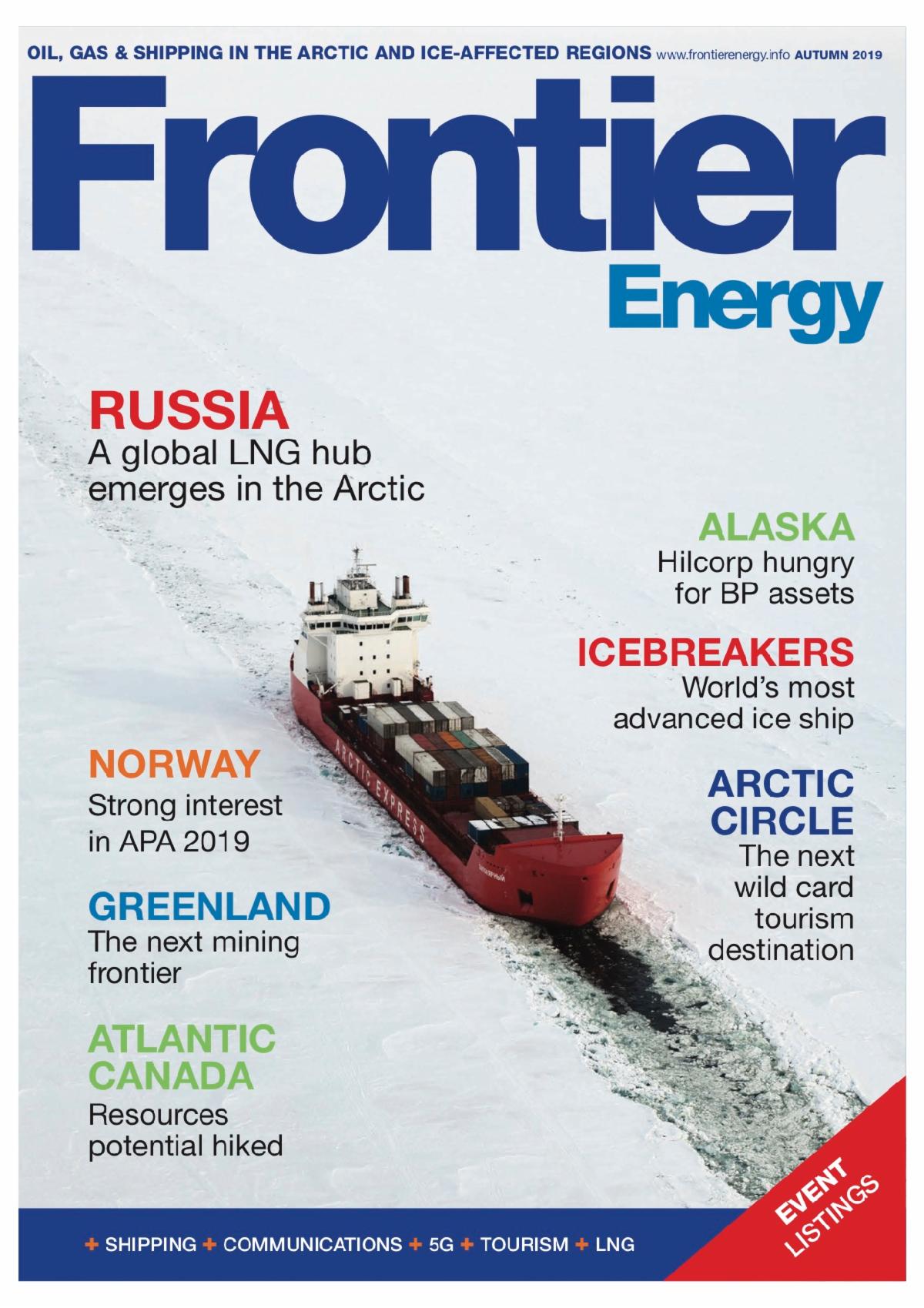
NEW ISSUE - Autumn 2019
Unique news and features including ...
*
RUSSIA -
New LNG hub in the Arctic
* ICEBREAKERS - M
ost advanced ice ship
*
NORWAY -
Strong interest in APA 2019
* ARCTIC CIRCLE
- The next wild card tourism destination
* GREENLAND -
The next mining frontier
Click
HERE
to read the latest issue
of Frontier Energy magazine!
In the light of the Covid-19 pandemic, our industry is facing unprecedented challenges. We will continue to report on events and wish that you, your families and work colleagues stay well and healthy during these difficult times.
|
 |
Sternula to lead new Danish VDE-SAT partnership
Small low-orbit satellites shall ensure that vessels in difficult waters will have better onboard communications options says Danish satellite company Sternula, adding that this will save the vessels thousands of miles of travel time and increase the level of safety to the crew. A new partnership project aims to develop a solution for Denmark's first commercial satellite operator, Sternula, to launch the first out of 50 satellites for distribution of ice charts and other maritime digital services in 2022. The new research project, which is named MARIOT (Maritime Internet-of -Things), will demonstrate that micro satellites in low orbit can provide cheap data exchange for maritime safety and navigational services even in difficult waters. Initially, the project will focus on Arctic demands because the diminishing sea ice around the North Pole opens for new sea routes saving thousands of miles of sailing compared to the traditional inter-continental routes.The next step will be common safety and navigational services such as maritime safety information and coastal surveyance. In the long term, the system will provide connectivity for a range of industrial services including e.g. preventive monitoring of ship engines and critical systems onboard.
|
 |
|
Increasingly mobile sea ice risks polluting Arctic neighbours
The movement of sea ice between Arctic countries is expected to significantly increase this century, raising the risk of more widely transporting pollutants like microplastics and oil between neighbouring coastal states, according to new research from McGill University in collaboration with University of Colorado Boulder, Columbia University, and Arizona State University.
The study in the American Geophysical Union journal Earth's Future predicts that by mid-century, the average time it takes for sea ice to travel from one region to another will decrease by more than half, and the amount of sea ice exchanged between Arctic countries such as Russia, Norway, Canada, and the United States will more than triple. Increased interest in off-shore Arctic development, as well as shipping through the Central Arctic Ocean, may increase the amount of pollutants present in Arctic waters. And contaminants in ice can travel much faster than those in open water moved by ocean currents.
The full report can be seen
here.
|
 |
Yamal LNG returns to ship-to-ship transfer in Norway
Yamal LNG, controlled by Russia's largest liquefied natural gas (LNG) producer Novatek, is resuming ship-to-ship transfers in Norway, a Novatek spokesman said, after plans to shift the operations to Russia fell through due to coronavirus, reports Reuters.
Novatek suspended transfers in Norway in June last year due to what it termed "pressure from the West".
According to Refinitiv Eikon data, the Arc7 tanker Vladimir Vize is due to arrive at the Norwegian Arctic port of Honningsvag on April 1, carrying a cargo from Yamal LNG.
The data also showed that an empty Arc4 tanker, Yamal Spirit, had departed from the port of Rotterdam last week and is scheduled to arrive at Honningsvag on April 1.
Novatek had planned to start ship-to-ship transfers in the Murmansk region in north-west Russia, but said that such operations needed foreign specialists, whose travel has been restricted due to the coronavirus pandemic.
|
|
Murmansk universities to boost ARCTIC training
 |
|
|
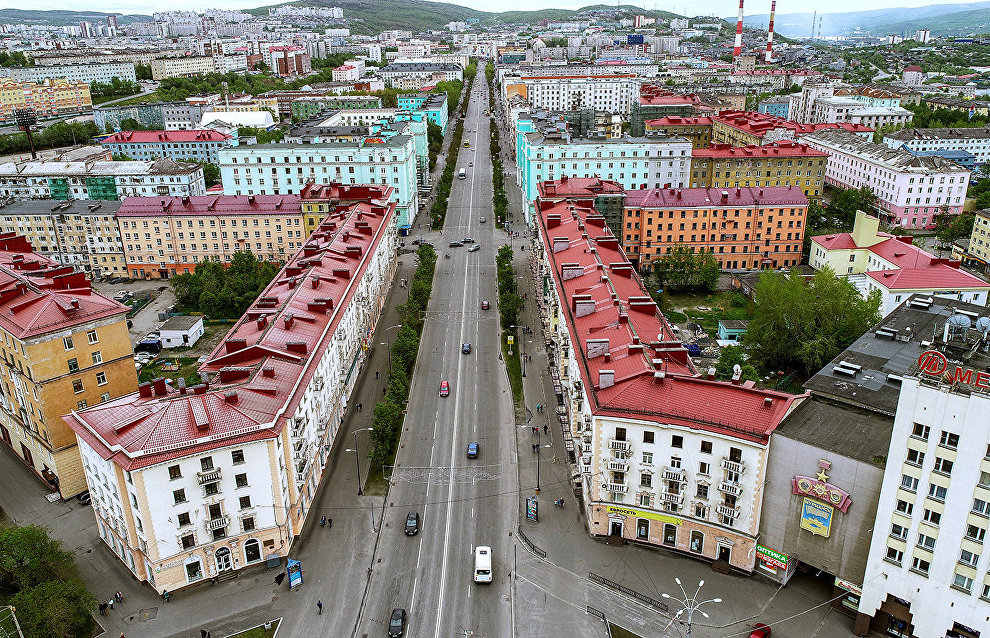
Russian city Murmansk lies above the Arcitc Ciricle (c) RIA Novosti. Pavel Lvov
|
Murmansk universities and the regional education ministry are to develop a new strategy within a month for training professionals for Arctic projects. The new strategy must rule out the need for retraining as much as possible. Governor Andrei Chibis has issued this instruction today following a meeting with the leadership of Murmansk State Technical University and Murmansk Arctic State University (UArctic).
"The university leadership must choose their training spheres so as to be able to train skilled professionals for various industries but primarily for the Arctic. The Murmansk Region Ministry of Education and Science will be instructed to coordinate this work and to provide as much support as possible to the universities' development. Our goal is to give our young people an opportunity to receive quality education in the region, attract students from other regions and turn Murmansk into a real student city. The more young people we have, the higher is our economic activity," Chibis noted.
|
|
 |
Russian scientists seeking to reinforce ice in Arctic region
|
|
|
|
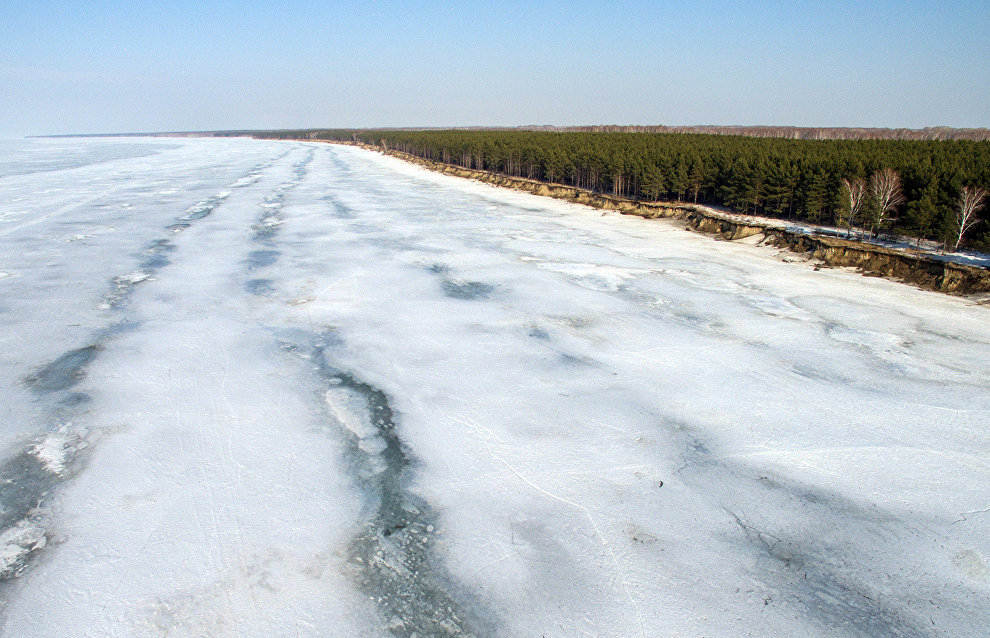
Russia scientists working on ice structure (c) RIA Novosti. Aleksandr Kryazhev
|
Researches at Russia's Altai State Technical University (AltSTU) are developing a system to reinforce ice in the Arctic regions. Eventually the results could be used for winter vehicle crossings in the Altai Territory.
"The ultimate objective of this research is to find a material that can reinforce ice, make it stronger structurally, change the fracture properties and allow us to define a reinforcement structure, that is, the arrangement of an alien element in the ice that can provide a more durable ice structure. There are villages and settlements in the Altai Territory that typically wait for the onset of ice to keep in contact with the mainland, and this Arctic research project could be used there. When ice crossings are formed, one of our goals in the Altai Territory is how to wash up the ice and make it stronger," said Head of the Scientific Department at the AltSTU, PhD in Engineering Science, Yelena Ananyeva.
|
New incentives for Arctic oil industry
Russia's government through the State Duma adopted a bill amending the law On the Export of Gas. These amendments are expected to give an additional boost to the hydrocarbon extraction on the shelf, production of the liquefied natural gas (LNG), the development of gas chemistry and the exploration of new oil and gas regions in the Arctic.
According to the bill, a zero tax rate will be used once the accumulated volume of gas extraction reaches 250 billion cubic meters or during 12 years after the first raw materials are sold. The incentive is only viable for new production capacities. These projects will also be able to receive regional incentives. However, regions can set lower income tax rates for regional budgets for them.
The amendments will provide incentives to projects of hydrocarbon extraction on the shelf. The largest incentives will be provided for the development of new offshore fields in the northern part of the Sea of Okhotsk, the southern part of the Barents Sea, the Pechora Sea, the Sea of Japan, and the White Sea, where the oil MET will be five percent and the gas MET will be one percent during the first 15 years of commercial development.
|
|
News in Brief ...
* Anniken Hauglie has been appointed new Director General of The Norwegian Oil and Gas Association.
She was educated at the University of Oslo and the Norwegian Business School (BI) and has a wide experience from various political work, including City Council of Oslo, and more than four years as Minister for Labour and Social Affairs.
* Security and EU Affairs expert Louise Calais has been appointed the new Senior Arctic Official for Sweden. She started her position in January 2020, bu the corona pandemic put a sudden halt to most of these gatherings. In the meantime, Calais is working closely with the Swedish Arctic team to get up to speed on Arctic issues.
* COP26, The UN Climate Change Conference UK2020, has been postponed due to COVID-19. This decision has been taken jointly by the COP Bureau of the UNFCCC. We will set out revised plans for a rescheduled conference in due course. The event was being hosted by the UK, in Glasgow, and had previously faced criticism for the lack of planning by the UK government.
|
|
REACH YOUR TARGET MARKET VIA THIS eNEWSLETTER
|
Advertise on this unique eNewsletter and reach thousands of senior, decision-making oil, gas and shipping executives; government officials and energy policy makers!
CONTACT our team at
publisher@frontierenergy.info for further information, and other unique sponsorship opportunities.
|
|
Frontier Energy magazine is distributed to an international readership of key decision makers, senior oil company E&P and shipping company executives; contractors and suppliers; technologists; government policy makers and NGO officials; classification societies and consultants. It brings you focussed news, features, comment and key industry trends in a unique one-stop place for Arctic and ice-affected locations. Frontier Energy's magazine, website and eNewsletter connects you with independent, quality information to move your business forward! (c) 2016
|
|
|
|
Issue 375 Thursday
April 9, 2020
|
|
|
The global Covid-19 Pandemic crisis has caused many conferences to be cancelled or postponed. Please check with the organisers for any updates.
Arctic Circle Assembly
Oct 9 - 11
Reykjavík, Iceland
The annual Arctic Circle Assembly is the largest annual international gathering on the Arctic, attended by more than 2000 participants from 60 countries. It is attended by heads of states and governments, ministers, members of parliaments, officials, experts, scientists, entrepreneurs, business leaders, indigenous representatives, environmentalists, students, activists and others from the growing international community of partners and participants interested in the future of the Arctic.
|
|
|