| |
|
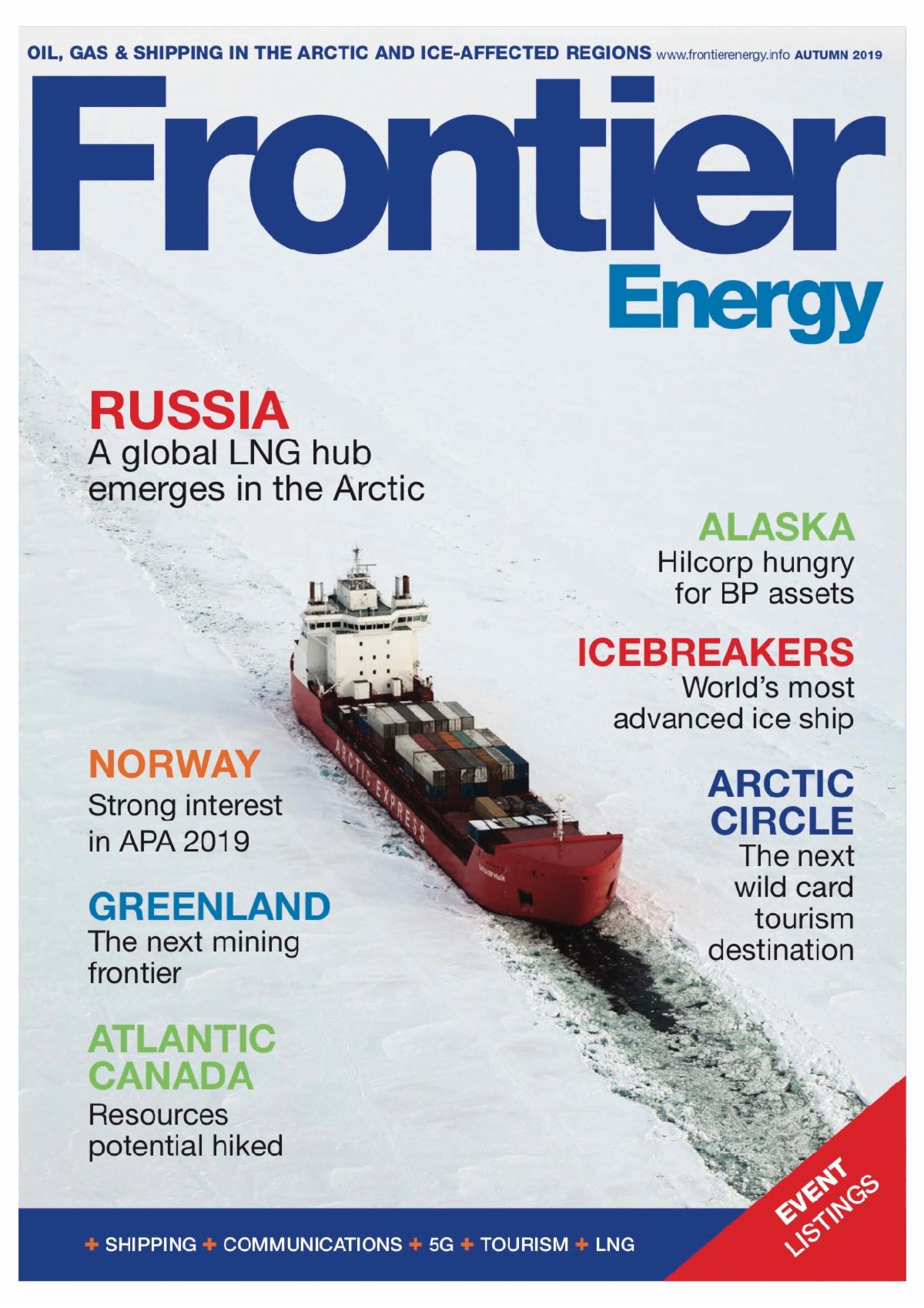
NEW ISSUE - Autumn 2019
Unique news and features including ...
*
RUSSIA -
New LNG hub in the Arctic
* ICEBREAKERS - M
ost advanced ice ship
*
NORWAY -
Strong interest in APA 2019
* ARCTIC CIRCLE
- The next wild card tourism destination
* GREENLAND -
The next mining frontier
Click
HERE
to read the latest issue
of Frontier Energy magazine!
|
 |
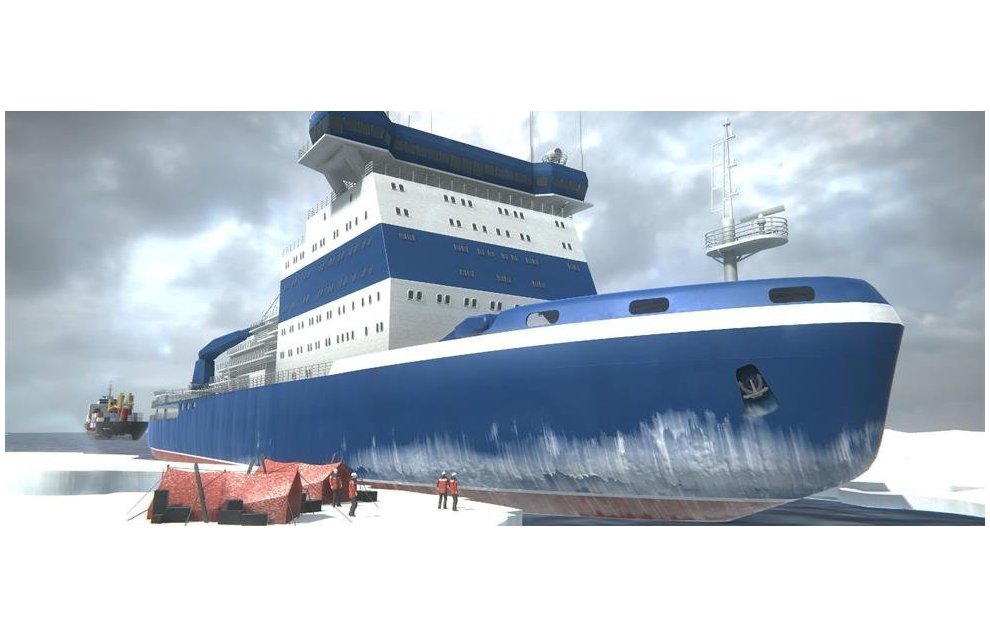
RIA Novosti's AR rendering of the icebreaker Arktika
 |
|
|
An artist's rendering of the Arktika icebreaker |
RIA Novosti has presented an augmented reality project How It Is Made: Nuclear Icebreaker Arktika. Users will be able to look at the fifth-generation icebreaker, learn how it was constructed and what its distinguishing features are, as well as see its nuclear reactor.
Arktika is the world's largest and most powerful icebreaker. The users will be able to judge the size and power of the icebreaker by watching a 3D image of the vessel moving close by. This is complemented with the sounds of water, breaking ice and polar bears growling. In addition to information about the engineering and technical solutions used for building the icebreaker, viewers will be able to learn about the Northern Sea Route and the role of icebreakers in navigation.
"Augmented reality is one of the most promising modern technologies. Active experiments are being held to create and introduce AR projects in widely different spheres. Work is underway on perception devices, which would make this format really popular. Our objective is to make the best possible content by the time new-generation AR glasses hit the market," said Natalya Loseva, Deputy Editor-in-Chief of Rossiya Segodnya. TAR rendering is available on the РИА.Lab application, which can be downloaded to iOS from
AppStore and to Android from
Google Play. No other equipment is needed to watch the project.
|
 |
|
Norway to set new limits for Arctic offshore drilling
Norway may restrict oil firms' access to offshore resources in the Arctic by moving the so-called ice edge, a line that sets a legal limit on the extent to which companies can go north in search of oil, reports Reuters.
The ice edge is a legally drawn boundary that is meant to approximate the constantly changing southern fringe of the permanent ice sheet. Anything north of that legal line is off-limits to oil drilling under Norwegian law.
However, instead of redrawing the line further north to reflect the retreating ice sheet, the ruling coalition may move it further south as it responds to political pressure to extend the environmental protection of the Arctic.
The ice cover in the Barents Sea has halved over the past 40 years. In practice, it would be ice-free year-round by 2050 given the current trend, Tor Eldevik, a professor at the Bjerknes Centre for Climate Research at the University of Bergen told Reuters.
"It's one of the difficult issues (for the government to decide on)," Prime Minister Erna Solberg told Reuters in an interview.
"The ice cap is moving, it's been moving upwards ... You can't measure it every year, so you have to put the line, and have a discussion where that line would have to be."
"If you take it too far down then it would cross some areas that are already being explored."
|
Carbon black fears for Arctic shipping emmissions
The International Maritime Organization (IMO) mandate of using very low sulphur fuel oil (VLSFO) in marine shipping starting January 1, 2020 is chanign . This regulation is part of IMO's 2020 programme aimed at reducing sulphur emissions from marine transport by 80 percent. In contrast to heavy fuel oil (HFO), which contains up to 3.5% sulphur, VLSFO may only contain 0.5%.
Less than a month into these rules, a new study funded by Germany and Finland, in cooperation with DNV GL and marine engine manufacturer MAN, indicates that the switch from sulphur-rich HFO to VLSFO may have unintended negative consequences as it can increase black carbon emission by up to 85%.
"The results clearly indicate that new blends of marine fuels with 0.5% sulphur content can contain a large percentage of aromatic compounds which have a direct impact on black carbon emissions," the study concludes.
|
|
USGS estimates recoverable oil & gas in Alaska's North Slope
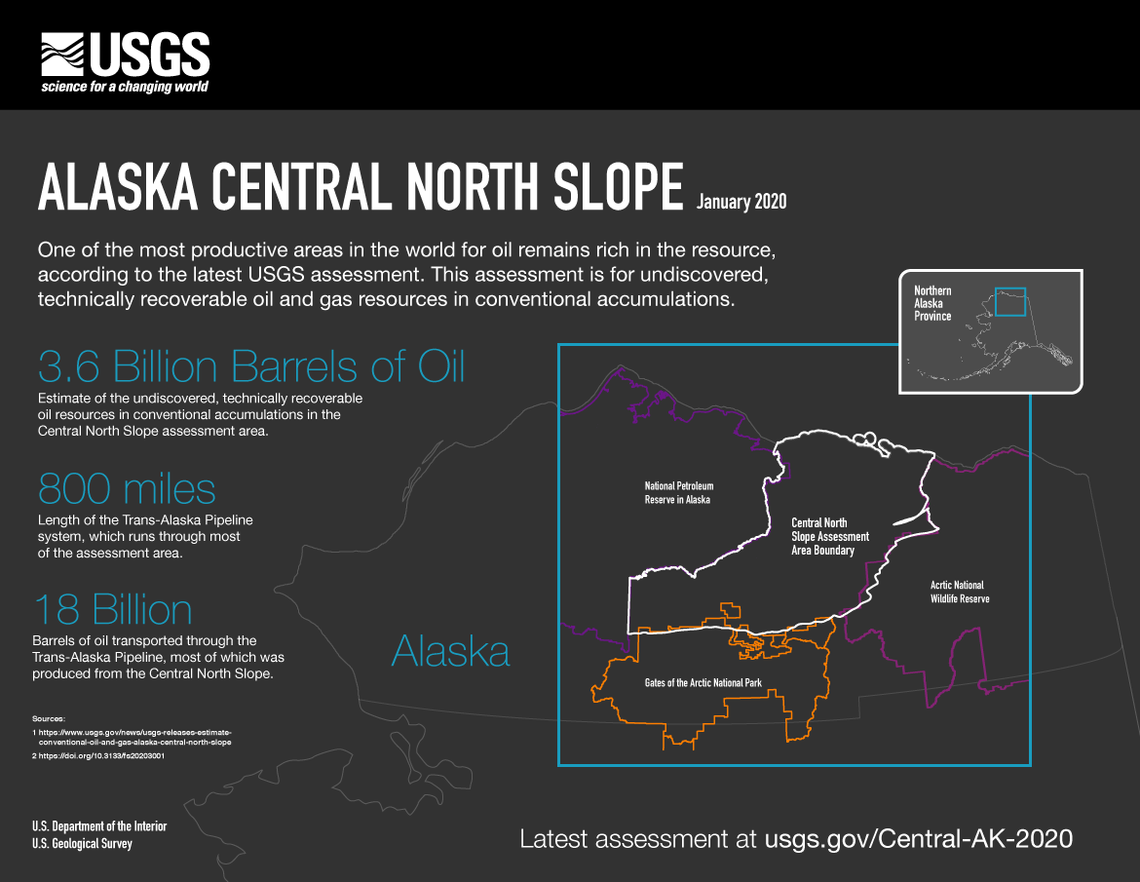 The USGS, the US government's geological survey organisation, of the most productive areas in the world for oil remains rich in the resource, according to the latest USGS assessment.
The USGS estimates 3.6 billion barrels of oil and 8.9 trillion cubic feet of natural gas conventional resources in Alaska's Central North Slope. This assessment does not include discoveries made by industry between 2013 and 2017.
"Alaska is synonymous with energy, and this assessment just reinforces that," said USGS Director Jim Reilly. "The State of Alaska and its industry partners have responsibly produced billions of barrels of oil from Prudhoe Bay, and we think there are still billions more in this region that can be produced."
|
Russia incentives for Arctic investors
The Government has approved a legislative package on Arctic development that includes incentives for regional investment projects. It was drafted by the Ministry for the Development of the Far East and the Arctic.
"The bills in this package should create favourable conditions for attracting investment to the Arctic, for developing the unique mineral deposits, for promoting rapid development of the Northern Sea Route and, of course, for creating jobs," Russian prime minister Mikhail Mishustin said.
Under the documents, any company or business that is registered in Arctic regions and that is ready to implement a new investment project or to start a new type of business and can invest at least 10 million rubles in an Arctic territory can obtain resident status and will be eligible for tax benefits and non-tax incentives.
"We tried to balance economic performance incentives and budget revenue while developing this incentive package. As practice shows, both goals can be accomplished with an appropriate balance, a targeted approach, and by accurately evaluating the real influence of incentives on investment decisions, rather than by total incentive volumes. We addressed regulation in exactly this way," minister for the development of the far east and the Arctic Alexander Kozlov said.
|
|
News in Brief ...
*
ConocoPhillips has abandoned its plan to build a temporary island as a staging area for its oil discovery project on Alaska's North Slope, an official said.
The oil company has instead proposed to rely more heavily on ice roads to move infrastructure to its remote Willow site, reports Alaska's Energy Desk.
The change came in response to criticism from North Slope residents and groups opposed to the construction of the island, including the Arctic village of Nuiqsut, said Connor Dunn, Conoco development manager for the Willow project.
* Russia's Novatek Arcticgas, a joint venture between Novatek and PAO Gazprom Neft, expanded the gas condensate treatment facility's capacity at the Samburgskiy license area to accommodate the increased volumes of gas condensate from developing the Achimov horizons. Pilot operation started at the facility's third stage with a capacity of 1.2 million tonnes of gas condensate per annum.
* The Russian government has proposed changing the criteria for administering the mineral extraction tax (MET) in the Arctic. In particular, the new legislation calls for amending the Tax Code to stimulate oil and gas exploration and prospecting in some areas of the Russian Arctic zone. It also proposes optimizing taxation for companies that are exploring new offshore fields in the northern part of the Sea of Okhotsk, the southern part of the Barents Sea, as well as in the Pechora Sea, White Sea and Sea of Japan.
|
|
REACH YOUR TARGET MARKET VIA THIS eNEWSLETTER
|
Advertise on this unique eNewsletter and reach thousands of senior, decision-making oil, gas and shipping executives; government officials and energy policy makers!
CONTACT our team at
publisher@frontierenergy.info for further information, and other unique sponsorship opportunities.
|
|
Frontier Energy magazine is distributed to an international readership of key decision makers, senior oil company E&P and shipping company executives; contractors and suppliers; technologists; government policy makers and NGO officials; classification societies and consultants. It brings you focussed news, features, comment and key industry trends in a unique one-stop place for Arctic and ice-affected locations. Frontier Energy's magazine, website and eNewsletter connects you with independent, quality information to move your business forward! (c) 2016
|
|
|
|
Issue 371 Thursday
February 13, 2020
|
|
|
2020
February 20
university-industry research roundtable will hold a webinar on the National Science Foundation's Navigating the New Arctic (NNA) program. Conceived as one of NSF's 10 Big Ideas in 2016, Navigating the New Arctic embodies the Foundation's forward-looking response to profound challenges and opportunities presented by warming Arctic temperatures and wide-scale changes to natural, social, economic, and political systems of the Arctic and across the globe.
Click
here for more.
Arctic Oil & Gas Symposium
March 18-19
Hotel Arts,
Calgary, Canada
Building on a legacy of 20 successful years, this anticipated event brings together political leaders and senior decision makers from government and Northern communities, as well as executives from the resource industry for candid discussions on the future of oil and gas development in Canada's north.
Arctic Science Summit Week
Mar 27 - Apr 2
Akureyri, Iceland
The Arctic Science Summit Week (ASSW) and the 5th Arctic Observing Summit (AOS) will be arranged during March 27-30 and March 30 to April 2 in Akureyri, in the facilities of the University of Akureyri.
For more information click
here.
Neftegaz 2020
Moscow, Russia
April 13 - 16
20th Anniversary International Exhibition for Equipment and Technologies for Oil and Gas Industries.
Click here for more information.
Arctic Circle Assembly
Oct 9 - 11
Reykjavík, Iceland
The annual Arctic Circle Assembly is the largest annual international gathering on the Arctic, attended by more than 2000 participants from 60 countries. It is attended by heads of states and governments, ministers, members of parliaments, officials, experts, scientists, entrepreneurs, business leaders, indigenous representatives, environmentalists, students, activists and others from the growing international community of partners and participants interested in the future of the Arctic.
|
|
|