| |
|
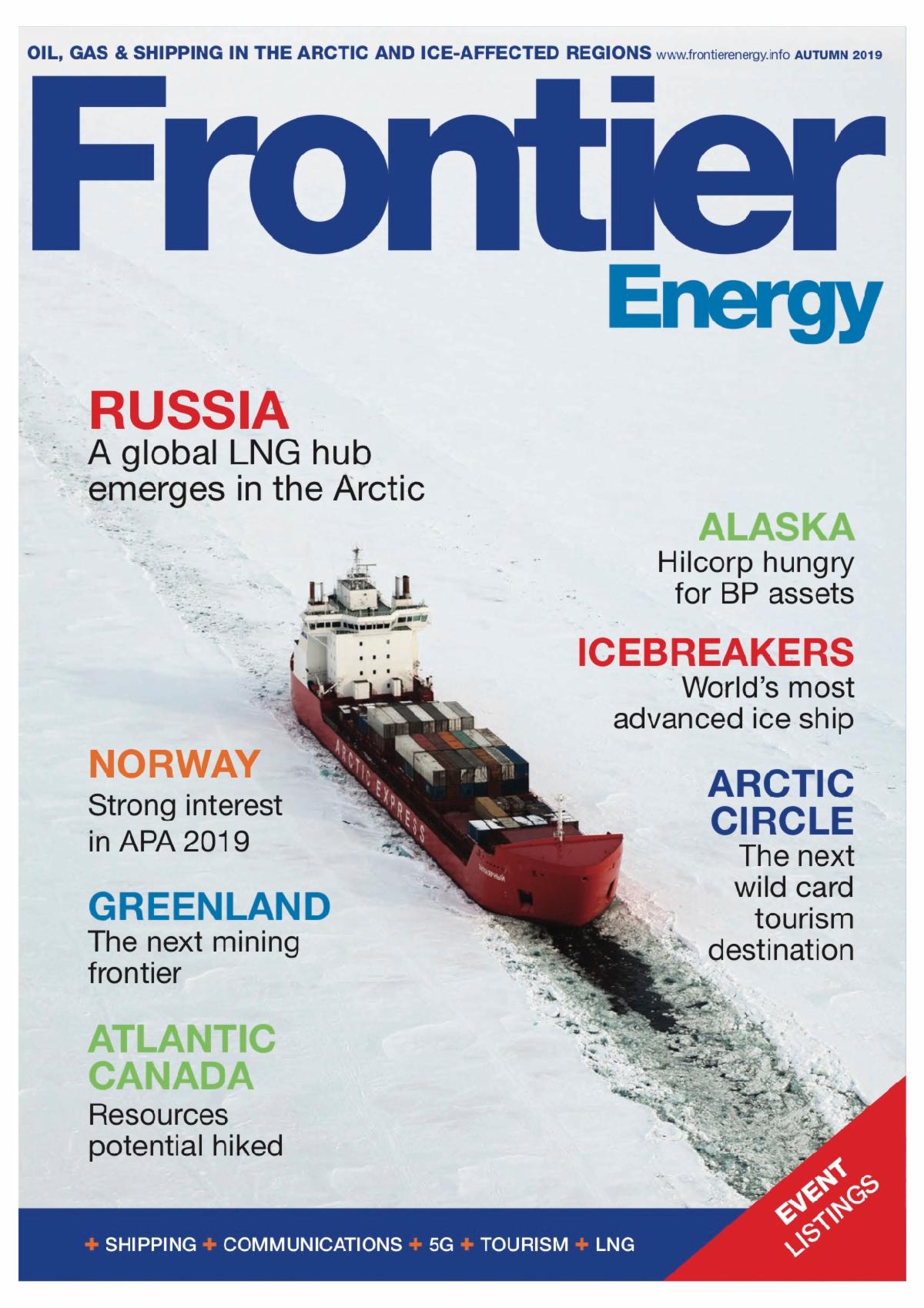
NEW ISSUE - Autumn 2019
Unique news and features including ...
*
RUSSIA -
New LNG hub in the Arctic
* ICEBREAKERS - M
ost advanced ice ship
*
NORWAY -
Strong interest in APA 2019
* ARCTIC CIRCLE
- The next wild card tourism destination
* GREENLAND -
The next mining frontier
Click
HERE
to read the latest issue
of Frontier Energy magazine!
In the light of the Covid-19 pandemic, our industry is facing unprecedented challenges. We will continue to report on events and wish that you, your families and work colleagues stay well and healthy during these difficult times.
|
US Coast Guard cutter getting Macgregor deck gear
 |
|
|
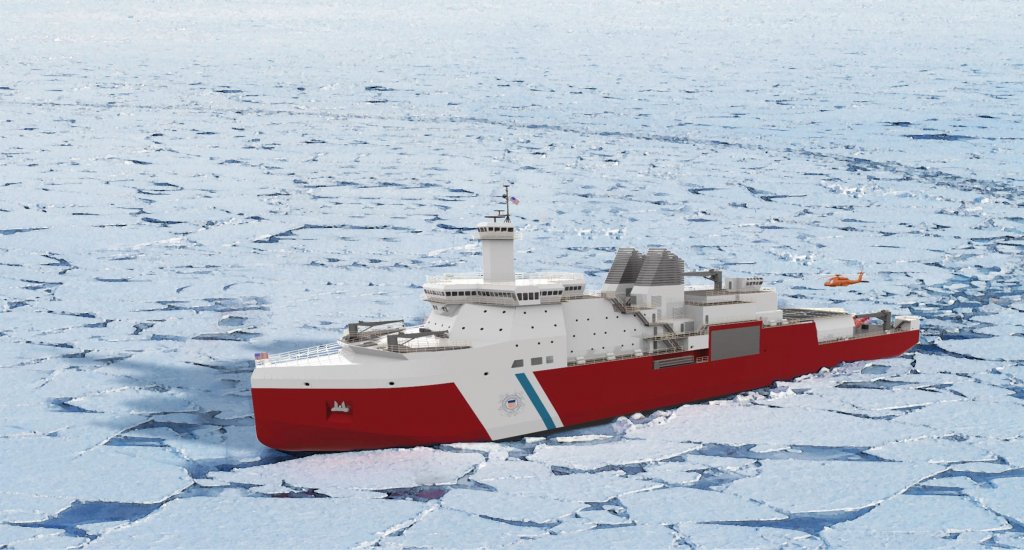
The new US Coast Guard cutter (artists impression)
|
Maritime engineering company MacGregor, part of Cargotec, has received an order from VT Halter Marine Inc to supply deck machinery and cargo handling equipment to the US Coast Guard Polar Security Cutter (PSC) programme. The order is booked into Cargotec's fourth quarter 2019 order intake, with delivery planned to take place in Q3 2021.
The scope of supply comprises anchor windlass, mooring winches and capstans, main towing winch, offshore cranes, oceanographic winch, hanger overhead crane and cargo access equipment. The contract also provides for two further options for delivery to a second PSC in 2025, and the third vessel in late 2027.
The Polar Security Cutter programme (PSC) is planned to replace the United States Coast Guard's existing fleet of icebreakers. The new fleet will allow the USCG to perform missions in the Arctic region, including defence and readiness operations, research assignments, search, rescue and logistic support and vessel escort.
The PSC will provide accommodation for 186 crew, scientists and others as part of the mission packages, with a capability to break through two metres of ice and operate for 80 days without replenishment
|
 |
Shell ditches Russian Arctic oil joint project
International energy major Shell has decided not to complete a deal on a Russian Arctic oil joint venture, Meretoyakha Neftegaz, it was expected to enter with Gazprom Neft, because of some "external" factors, reports Reuters.
Total resources at fields of Meretoyakha Neftegaz were valued by Gazprom Neft at 1.1 billion tonnes (over 8 billion barrels of oil).
The decision has been taken against the background of falling global investments into energy projects over weak oil and gas demand and prices amid the global economic downturn, overproduction and the spread of the coronavirus.
"Due to challenging external environment Shell will not pursue the completion of the deal to create a joint venture on the basis of Meretoyakha Neftegaz," Shell said in a comment sent to Reuters.
The Yamal region is key for Russian oil and gas production. It accounts for more than one fifth of global natural gas reserves.
|
 |
|
PAME report on shipping traffic in the Arctic published
The first Arctic Shipping Status Report prepared by the working group of the Protection of the Arctic Marine Environment (PAME) and based on the Arctic Ship Traffic Data (ASTD) has been published
on the official website of the Arctic Council. The document presents information on the general trends of the Arctic shipping in 2013-2019.
The researchers note that the exploration of oil and gas fields and the production of raw materials as well as the development of sea tourism together with the changing ecological, social and economic models result in more intensive shipping traffic in the Arctic. Changes in the naval environment, including thinning and melting of sea ice, also have a significant impact on the length of the shipping season and provide access to previously inaccessible coastal areas.
Click
here to access more information about the report.
For more information on the Arctic Shipping Status Reports, click
here.
|
 |
Norwegian court to hear lawsuit against Arctic oil exploration
The Norwegian supreme court will hear a lawsuit against Arctic oil exploration brought by Greenpeace and other green groups, the court said this week, in a landmark case for western Europe's largest oil and gas producer.
The environmental groups argue that the Norwegian government's decision to grant oil exploration licenses in 2016 in the Arctic Barents Sea to oil firms, including Equinor , was illegal.
Two lower courts have found the government's decision was legal, rejecting the environmentalists' claim it breached the Norwegian people's constitutional right to a healthy environment.
|
|
Russian law expanding LNG exporters list adopted
|
|
|
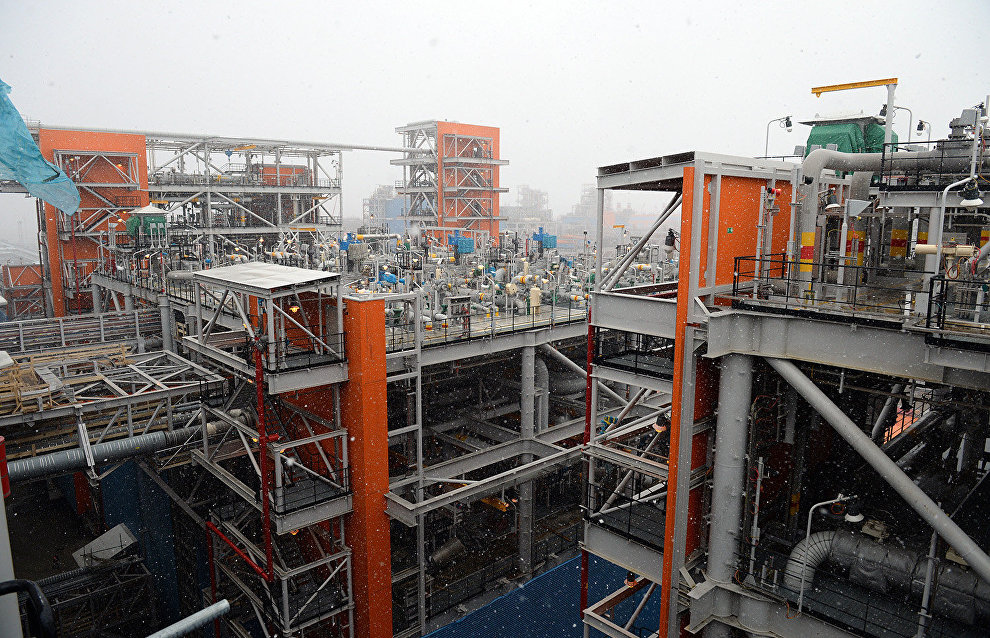
LNG exporting companies now work to legislation adopted by the federal government
|
Russia's State Duma has adopted in the second and third readings amendments to the law on gas export. The new legislation will expand the list of companies entitled to export liquefied natural gas.
The law has been amended with a view to boosting LNG production in the Arctic by granting the right to export LNG from fields that were licensed after January 1, 2013.
The amendments will make it possible to carry out LNG production at four gas fields - the Verkhnetiuteyskoye, Zapadno-Seyakhinskoye, Shtormovoye and Soletsko-Khanaveiskoye fields - with aggregate resources estimated at over 1.5 trillion cubic meters of gas. They will also help increase shipping along the Northern Sea Route, which could handle at least 70 million metric tons of LNG by 2030.
|
|
 |
Norway reports reduced exploration activity
Exploration activity on the Norwegian continental shelf has been reduced, and production will be maintained for the time being, in spite of the corona outbreak and the decline in oil price. At the same time, the companies have announced and initiated several measures that could have long-term consequences for production and overall resource extraction.
The corona pandemic combined with the stalemate among the world's most powerful oil producers has created a serious situation for the petroleum industry, both globally and in Norway. The oil market is flooded with oil, demand is down and oil prices are low.
The Norwegian oil and gas industry has reduced its activities just like the rest of society. Offshore installations have reduced staffing, and non-essential crew have been sent to shore. Projects have been stopped or put on hold, and planned revision shutdowns have been postponed.
All of this in an effort to reduce the risk of corona infection on the installations and ensure that the fields continue to produce.
|
|
News in Brief ...
* N
orwegian oil and gas company Equinor says its executive vice president Exploration Tim Dodson will step down as executive vice president Exploration, a role he held since 2011.
Dodson will move to the job of vice president Strategy Execution in Global Strategy and Business Development (GSB) from June 1, 2020 in what Equinor said was a planned change to the leadership of Exploration.
* Russian s
cientists have discovered bacteria which can serve as the basis for a preparation to clean up oil-contaminated soil under temperatures of 2 to 6°С. These micro-organisms can be used to produce bio-products to remediate soil contaminated with petroleum products in the Arctic.
"Since the amount of oil pollution may be immense and the soil self-cleaning process takes a long time, the biotechnology methods of soil remediation which we are studying in Franz Josef Land are exceptionally important," said Dmitry Kryukov, head of the Clean Arctic comprehensive scientific project. Experts from the Rosneft Oil Company and Russian Arctic National Park in the Arkhangelsk Region, while working jointly as part of the Clean Arctic project.
* Russia's Ministry for the Development of the Russian Far East and Arctic will provide state support for building energy, road or other surface infrastructure in the country's Arctic zone. Investors planning to implement such projects can submit applications starting April 15, 2020, a statement on the Ministry's website said.
The Russian Government approved the rules for selecting investment projects in March. The basic criteria include focus on social and economic advancement and creating new jobs. The total necessary investment in a project should amount to at least 300 million rubles, with the project stipulating construction or modernization of infrastructure facilities.
|
|
REACH YOUR TARGET MARKET VIA THIS eNEWSLETTER
|
Advertise on this unique eNewsletter and reach thousands of senior, decision-making oil, gas and shipping executives; government officials and energy policy makers!
CONTACT our team at
publisher@frontierenergy.info for further information, and other unique sponsorship opportunities.
|
|
Frontier Energy magazine is distributed to an international readership of key decision makers, senior oil company E&P and shipping company executives; contractors and suppliers; technologists; government policy makers and NGO officials; classification societies and consultants. It brings you focussed news, features, comment and key industry trends in a unique one-stop place for Arctic and ice-affected locations. Frontier Energy's magazine, website and eNewsletter connects you with independent, quality information to move your business forward! (c) 2016
|
|
|
|
Issue 376 Thursday
April 23, 2020
|
|
|
The global Covid-19 Pandemic crisis has caused many conferences to be cancelled or postponed. Please check with the organisers for any updates.
Arctic Circle Assembly
Oct 9 - 11
Reykjavík, Iceland
The annual Arctic Circle Assembly is the largest annual international gathering on the Arctic, attended by more than 2000 participants from 60 countries. It is attended by heads of states and governments, ministers, members of parliaments, officials, experts, scientists, entrepreneurs, business leaders, indigenous representatives, environmentalists, students, activists and others from the growing international community of partners and participants interested in the future of the Arctic.
|
|
|