 |
Trust-Based Relational Intervention®
What is it?
TBRI
® is an attachment-based, trauma-informed intervention that is designed to meet the complex needs of vulnerable children. TBRI® uses Empowering Principles to address physical needs, Connecting Principles for attachment needs, and Correcting Principles to disarm fear-based behaviors. While the intervention is based on years of attachment, sensory processing, and neuroscience research, the heartbeat of TBRI®
is connection.
"When you connect to the heart of a child, everything is possible."
- Dr. Karyn Purvis
TBRI® is designed for children from "hard places" such as abuse, neglect, and/or trauma. Because of their histories, it is often difficult for these children to trust the loving adults in their lives, which often results in perplexing behaviors. TBRI®
offers practical
tools for parents, caregivers, teachers, or anyone who works with children, to see the "whole child" in their care and help that child reach his highest potential.
Because of their histories, children from hard places have changes in their bodies, brains, behaviors, and belief systems. While a variety of parenting strategies may be successful in typical circumstances, children from hard places need caregiving that meets their unique needs and addresses the whole child.
Purvis, K. B., Cross, D. R., & Sunshine, W. L. (2007). The Connected
Child: Bringing hope and healing to your adoptive family. New York, NY:
McGraw-Hill.
Purvis, K. B., Cross, D. R., Dansereau, D. F., & Parris, S. R. (2013).
Trust-based relational intervention (TBRI®): A systematic approach to
complex developmental trauma. Child & Youth Services, 34(4), 1-28.
Purvis, K. B., Cross, D. R., & Pennings, J. S. (2009). Trust-based
relational intervention: Interactive principles for adopted children with
special social-emotional needs. Journal of Humanistic Counseling,
Education, and Development, 48, 3-22.
Purvis, K. B., Parris, S. R., & Cross, D. R. (2011). Trust-based
relational intervention: Principles and practices. In Rosman, E. A.,
Johnson, C. E., & Callahan, N. M. (Eds.), Adoption factbook V (pp.
485-489). Alexandria, VA: National Council for Adoption.
|
 |
|
TBRI training will be provided statewide through the NM FIESTA Project.
|
|
|
 |
|
We hope your fall season is off to a wonderful start! We are thrilled to announce that NM FIESTA Project has been refunded through 2020! In this newsletter, you'll find dates and locations of events, helpful tips on parenting kids with a trauma history and ideas for making positive memories with your family.
|
 |
Dear School... |
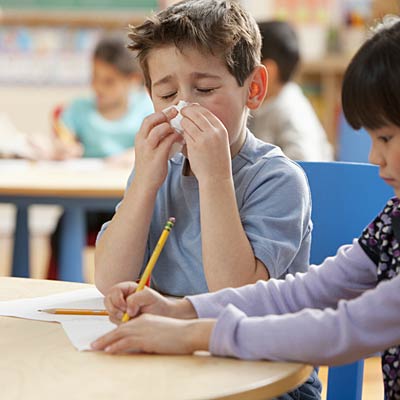 Do you have a kiddo who struggles in school? It can be a big challenge for kiddos that are struggling to deal with lots of different expectations and personalities in the school environment. Popular blogger and adoptive parent, Lindsay Crapo writes, "First off. If I could and it be socially acceptable, I would like to begin every phone call with these two sentences, and every IEP, 504, behavioral planning meeting with them written in sharpie, on my face. So it is the first thing you hear or see. Do you have a kiddo who struggles in school? It can be a big challenge for kiddos that are struggling to deal with lots of different expectations and personalities in the school environment. Popular blogger and adoptive parent, Lindsay Crapo writes, "First off. If I could and it be socially acceptable, I would like to begin every phone call with these two sentences, and every IEP, 504, behavioral planning meeting with them written in sharpie, on my face. So it is the first thing you hear or see.
Before we begin.
I DID NOT DO THIS TO MY CHILD.
MY CHILD DID NOT CHOOSE THIS FOR THEMSELVES." Read more on Lindsey's blog, Home a Soft Place to Fall
|
|
What is FIESTA???
|
|
FIESTA 101
About 10 years ago, a group of adoption professionals, seeing the
need, decided to create a program to support adoptive parents. They wanted to make it available to all adoptive families, not just those who had adopted through the state, but also privately, internationally, and within their existing family structure. They wanted to provide services to the entire family, including biological children with adopted siblings. They wanted to tackle tough issues like grief and loss. Difficult behavior. Race and culture. Mental health. Fiesta was the result. FIESTA is an acronym for Family Activities, Information, Education, Support, and Training.
In the five regions throughout the state, there are "Family Advocates," who are parents in family's formed through adoption that organize at least four opportunities for families to get together each quarter. These events are sometimes called, "Coffee and Chat," or "Snack and Chat" or may be something like attending a community event together, meeting at a park or having a family game night. During a typical "Coffee and Chat," child care is provided free of charge for all of the children in the family, adopted or not (because of liability, we are not allowed to provide this service to kids in treatment foster care). Our child care staff has strict guidelines like never being alone with a child, never putting a child in "time out," keeping confidentiality, and most importantly, facilitating a planned schedule of activities so that each child has the opportunity to have fun. The plan includes a short lesson or theme, a small motor activity like a craft, a large motor activity like a relay race, and plenty of time to socialize. Staff is prepared to engage with babies to teens. While the kids are busy, the adults can get to know one another, exchange stories and contact information to support each other through the month. Other family activities allow the families to enjoy and participate in a shared experience. Many long-lasting friendships have been formed through these activities. This is the "F" in FIESTA.
The "I" stands for information. Fiesta has a huge lending library of books and videos for parents, children and professionals who serve adoptive families. We'll even pay for the shipping back and forth if you live outside of Albuquerque. You can find the list of resources on our website, nmfiestaproject.org
"
E" is for education. We have workshops in every region once a month. Topics include attachment and trauma, connected parenting, discipline and nurture, understanding behavior, and self-care. Workshops that have been helpful in the past few months have touched on topics such as internet safety, IEPs, helping extended families to understand adoption issues, the challenges of FASD, and respite. Our respite co-op is a group of families who have attended this training and learned ways to be an effective "sending parent" as well as a "receiving parent." After this required training, families are entered into a co-op where they can arrange respite among themselves. All of our trainings count as required hours for CYFD families.
The "S" stands for support. Besides the monthly networking events, Family Advocates are available by phone to help parents find answers to questions about everything from challenging behavior strategies to homework struggles. These fellow adoptive parents don't have all of the answers, but can help guide you to professional help when needed, suggest a new idea or supply a listening ear. They can attend school meetings as an advocate and note-taker, sit beside you in difficult meetings, and sometimes even go to your home to brain-storm with you about situations you may be facing. Other supports that families rely on are our Face book group and blog.
T is for Training. Once a year we provide a training in each region for professionals who work with adoptive families. We all know that professionals serving our family have to understand trauma and they have to be able to support us as parents. Free CEUs are offered.
The "A" means that all families are welcome and we have family advocates specifically focused on some family situations- singles, kinship, LGBT, Spanish-speaking and the people who support them. We have a family advocate that is designated to support families who have members with disabilities. As soon as your homestudy is approved, you can participate!!! Pre-adoptive parents are always welcome.
New Mexico Fiesta Project exists with only one purpose- to support, encourage, and equip adoptive families in this state. Everything that we offer is free of charge and the project is fully staffed by adoptive parents. Please browse our site and borrow a book, plan to attend an event or training, or check us out on Face book. We'd love to meet you!
|
|
|
|
|
Family Advocates |
Farmington Katie Bustamante
Gallup Brian Kruis & Sheila Kruis
Rio Rancho Margo Pena
Taos/Espanola/Raton Katie Bustamante
Santa Fe Pam Michaels
ABQ Metro Monica Cohu
Carol Gloetzner
Liz Baca
Roswell/Artesia Arlas Blackwell
Hobbs/Lovington Robin Seaman
Clovis/Tucumcari April Chavez
Las Cruces/Silver Phyllis Radtke
Alamogordo Angelica Chavez
for direct contact info for your local family advocate!!!
|
|
Home Nurture Group |
Most parents report that they want their children to be able to give and receive nurture in healthy ways and studies show that trait greatly impacts adult relationships. Nurture groups give us the opportunity to model and practice these important behaviors in the home environment.
Things to help you stay regulated: chewing gum, sucking on a sucker, playing with a fidget, holding a weighted object, magic mustache, chair/floor push-ups (Have these items available)
Format for Home Nurture Groups
1. Review Family Rules (
Stick Together, No Hurts, Have Fun)
2. Family Check-in - Ask a nonthreatening question and let everyone take turns answering. (pick one or make one up)
- Best part of the day/worst part of the day (do both)
- If I could be any animal I would be?
- Silliest thing I have ever done...
- When I grow up I want to be (parents answer from when you were a kid or dream job)
3. Nurture - take turns giving and receiving nurture. Each person asks another person if he/she can do one of the following for them:
- Put a band-aid on a hurt (emotional hurt could be symbolized by band-aid on the heart)
- Back/foot massage
- Lotion on hands
4. Fun With Teaching (Pick one)
- wrong way/right way- either using puppets or acting out show the "wrong way" and the "right way" to do something. For example, what is the wrong way to respond when mom/dad asks you to clean your room? What is the right way? What is the wrong way/right way to act when told you can't do something you want to do? Pick some things that you see your family doing/saying often and use this part to practice doing them right/wrong in a silly exaggerated way! Be careful not to target a specific child's behavior. For the first time, it's helpful to pick a mistake a parent made recently.
- Feelings- take turns talking about feelings by tossing or rolling a ball and sharing something that makes you sad, disappointed, frustrated..etc to teach naming feelings
5. Feeding - Take turns feeding each other (candy, pretzels, anything small and yummy) Each person takes a turn with the bowl and says to the person next to them, "Would you like a _______" and the person responds with "Yes, please" or "No, thank you". Make sure everyone gets a turn at both roles.
6. Closure - Close by reviewing the rules and making a plan for next time! It's important to keep a playful attitude and not get pulled into power struggles. If a child doesn't want to participate, let them observe and you'll be surprised how quickly they come around if you are able to stay playful and engaged.
|
|
|
What's New in the Lending Library
We have lots of new titles including great resources for parents, therapists and educators! Send Melissa Gomez your name and email address at mgromero@swcp.com to get registered for our online lending library request system! Hundreds of helpful books and videos are available free of charge to all adoptive parents and professionals in New Mexico!!!
For Adults:
Discipline without Damage
by Dr. Vanessa Lapointe
Discover a new connection based approach to discipline that allows kids to grow up in the best possible way. What's really happening inside your child during a timeout? Learn the See it, Fell it, Be it approach to navigate challenging moments, the importance of the "Hulk Swagger" and how to get it! Learn how to discipline your children without power struggles, manipulation or control.
For Kids:
In My Heart
by Jo Witek
A vibrant celebration of feelings, in all their shapes and sizes!
A complete listing of lending library items can be found at the FIESTA website
Email Melissa Gomez at mgromero@swcp.com to borrow these items or any others!
The goal of the NM FIESTA Project is to provide families formed through adoption with a supportive, encouraging, educated community determined to enhance the stability of adoptive families throughout the state of New Mexico. Please join us!
Megan Walsh
La Familia, Inc.
NM FIESTA Project Program Manager
|
|
|