Human Resources & Business Consulting Newsletter

March 2026

Employee Engagement Continues to Decline from 2020 Peak: What Leaders Can Do in 2026


The percentage of U.S. employees who are actively engaged at work averaged 31% in 2025, unchanged from 2024, according to Gallup’s employee engagement survey. Employee engagement has declined after a decade of steady improvement (from a high of 36% in 2020) leading up to the COVID-19 pandemic. The data suggests that many of the gains organizations made in clarifying role expectations, developing people and improving the day-to-day experience at work have stalled - and, in some cases, have begun to reverse.


The data shows that Generation Z and young millennials are reporting the biggest drops in feeling cared about, having opportunities to learn and being developed at work. Organizations with employee engagement initiatives that restore overall clarity in performance objectives within roles will be better positioned to improve and sustain engagement over time.


Read the Gallup article HERE


Employer-facing videos have been published by the U.S. Department of Labor about the Family and Medical Leave Act (FMLA):


  1. Covered Employer
  2. Employee Eligibility
  3. Qualifying Reasons
  4. Certification Process
  5. Military Related Leave
  6. During Employee's Leave
  7. FMLA Prohibitions


Employers looking for a quick overview of various aspects of the FMLA may find the new videos helpful.


Fun Fact: FMLA is celebrating it's 33rd Anniversary


EEOC Rescinds Enforcement Guidance on Harassment in the Workplace


Summary:

April 29, 2024 - the EEOC updated the Enforcement Guidance which added protections for gender identity and sexual orientation harassment to incorporate case law including the Supreme Court's 2020 decision in Bostock v. Clayton County.


May 15, 2025 - the U.S. District Court for the Northern District of Texas ruled that the EEOC exceeded its authority in expanding the definition of "sex" to include "sexual orientation" and "gender identity" and vacated related elements of the Enforcement Guidance.


January 22, 2026 - the EEOC voted to rescind the Enforcement Guidance in its entirety.


Read the Legal Update HERE


HHS Increases Civil Penalty Amounts


On Jan. 28, 2026, the U.S. Department of Health and Human Services (HHS) published a final rule increasing key penalties affecting group health plans. HHS adjusts these penalty amounts for inflation each year to maintain their effectiveness and deterrent value (although the prior adjustment had not occurred since 2024). Because these penalties are substantial, health insurers and employers with group health plans should periodically review their benefit plan administration protocols to ensure full compliance.


Penalties for non-compliance are broken down into tiers.


Read Article HERE


DOL Releases AI Literacy Framework


The framework, which outlines five foundational content areas and seven delivery principles for AI literacy, is intended to be a resource to guide program design and deployment of AI literacy efforts, while allowing for flexibility and adaptation across industries, roles, educational sectors, and other workforce-related contexts.


The release of the framework follows the department's recent guidance promoting the use of Workforce Innovation and Opportunity Act funding and governor's reserve monies to help participants develop AI skills.


Read the DOL News Release HERE


IRS Issues Proposed Rules on $1,000 Pilot Program for 530A ("Trump") Accounts for Children


On March 6, 2026, the U.S. Department of the Treasury and the IRS issued proposed rules regarding the $1,000 pilot program for Trump Accounts. Created by the One Big Beautiful Bill Act (OBBBA), Trump Accounts are a new type of tax-favored savings account for children under the age of 18 that will be available later in 2026.


Under the pilot program, children born between 2025 and 2028 may be eligible to receive a special $1,000 contribution to their Trump Accounts from the federal government if certain requirements are met. Employers can contribute up to $2,500 to the Trump Account of an employee or an employee's dependent. These contributions are not included in the employee's income for federal tax purposes.


The proposed rules address how the IRS will make the one-time $1,000 pilot program contributions for eligible children.


Read all the details HERE


March is Problem Gambling Awareness Month


Problem Gambling Awareness Month is a nationwide grassroots campaign held annually in March. Many people are aware of various addictions and negative life choices involving drugs and alcohol; however, certain behaviors can also have drastic consequences for overall well-being. Gambling disorder, also known as gambling addiction and problem gambling, has become a prominent issue in today’s digital world as online tools and apps make placing bets more accessible.


What Is Gambling Disorder?


Gambling issues can manifest in many ways. The term “problem gambling” may conjure images of people spending hours sitting at slot machines and picking out lottery ticket numbers, but there are many other scenarios that might prove problematic. These include sports betting apps, online poker and electronic gaming machines, such as those in bars.


Employee Assistance Programs (EAPs) offered by employers address a variety of areas including gambling addiction.


Learn the Signs and How to Manage a Gambling Disorder


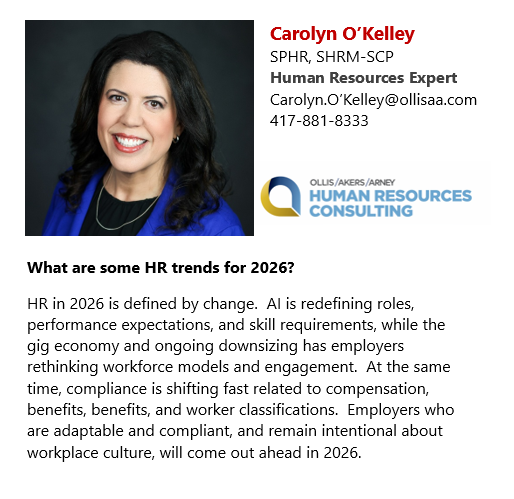
As seen in Springfield Business Journal's Ask the Experts


Contact Us


HR Hotline

800-256-7310


Carolyn O'Kelley

Director, HR & Business Consulting

417-881-8333, ext. 126

Carolyn.OKelley@ollisaa.com


Kenya Pearman

Human Resources Consultant

417-881-8333, ext. 125

Kenya.Pearman@ollisaa.com


Victoria Ramsey

Human Resources Consultant

417-881-8333, ext. 124

Victoria.Ramsey@ollisaa.com


Sherry Coker

Organizational Development Advisor

417-881-8333, ext. 133

Sherry.Coker@ollisaa.com


Visit our Human Resources page at

OllisAkersArney.com