|
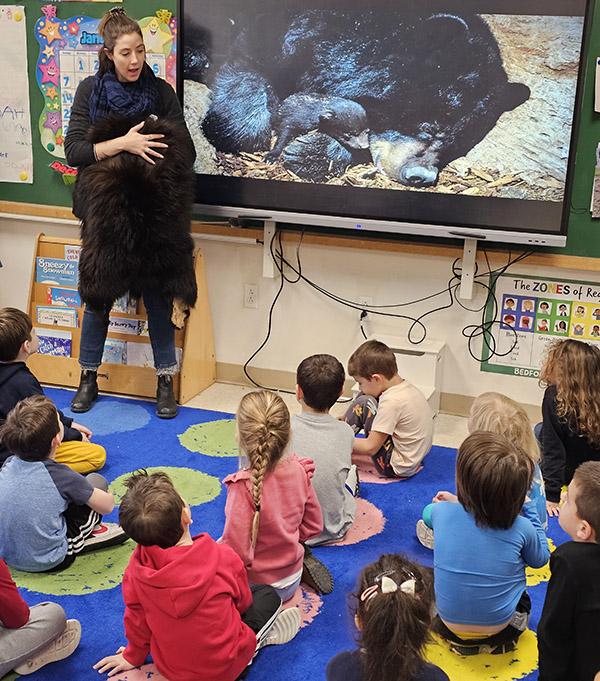
Kindergarteners at Bedford Road School learned how animals survive through the winter when Julia King, a naturalist with Putnam | Northern Westchester BOCES Center for Environmental Education, visited their classrooms last week. She explained how animals engage in three primary behaviors to get through the cold months: dormancy, migration or staying active. While many were familiar with hibernation, King clarified the different types of sleep, and which animals engaged in each.
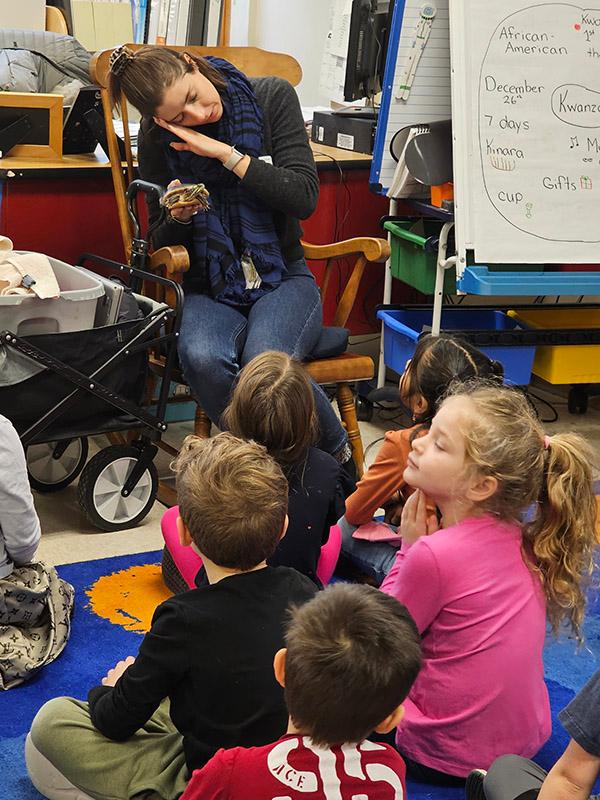
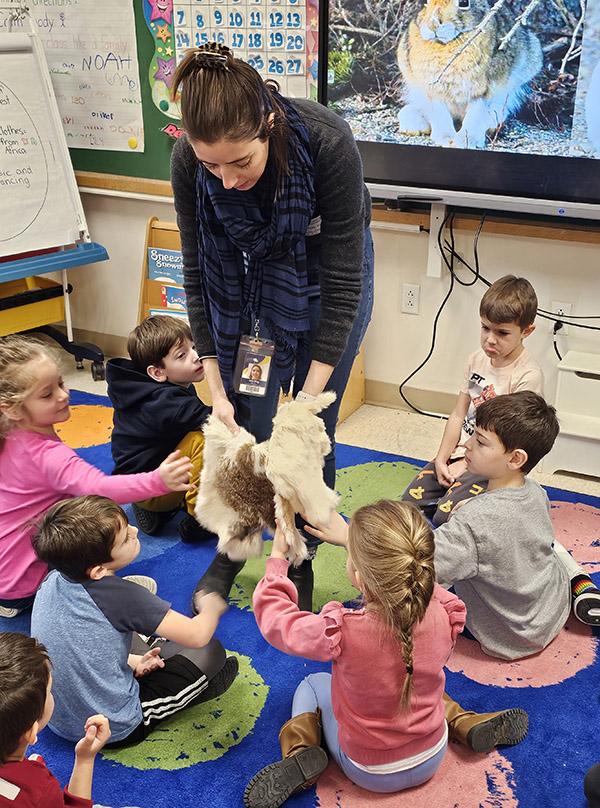
Sharing a painted turtle named Mona, Kim Vecchiariello’s class mimicked sleeping while King allowed students to gently caress the shell of the shy reptile. Students were able to touch bear, rabbit and deer skin, from animals who had died of natural causes. The curious class wanted to know details about deer antlers (did you know they shed antlers every year?) and why foxes eat rabbits (they are carnivores).
In case your curiosity is piqued, hibernation is a deep sleep from which animals do not awaken, and it is how bats and groundhogs spend their coldest seasons. Though many believe that bears hibernate in the winter, they actually engage in torpor, sleeping and waking up frequently. (As King pointed out, how else would the mama bear feed her cubs?) The final napping pattern is one adopted by reptiles and amphibians called brumation. It is like hibernation and is characterized by a slow heart rate.
|