|
In This Issue:
Federal Focus
On The Marble
New Legislator Spotlight
Municipal Roundup
CT Agency Corner
This Day in CT History
| |
|
Federal Focus
Zach Dendas
| |
|
|
Chaos and Confusion
This week marked the first full week of the new administration in Washington. For those that follow the federal budget process in hopes of better understanding Connecticut’s dependence on money from Washington, this was a huge week. Monday and Tuesday brought chaos and confusion as the Trump Administration, through their budget office, announced they would be freezing federal grants including federal programs that have already been partially funded. This is a historic decision that tugs at the legal strings around the congressional appropriations process. The deep connection between state and federal dollars is something In the Loop discusses frequently. What happened this week caused panic among those who get federal dollars in Connecticut? From nonprofits to Medicaid systems, this federal “memo” sent shockwaves throughout the country. Housing dollars were shut down, USDA grants were frozen, FEMA dollars stopped flowing and stakeholder groups were notified that their programmatic funding was no more. It’s been a tough week for those dependent on the federal government for money. Let’s dive in.
The announcement of the federal freeze brought a rare event to the Connecticut state capitol, a joint press conference with the Governor, Congressional leaders, State Representatives, State Senators, and Constitutional Officers. These leaders brought anecdotal stories from constituents across the state. The Attorney General announced he would be partnering with 21 other states to sue the Trump Administration challenging the constitutionality of the order, with the Speaker of the House Matt Ritter D-Hartford calling the order “illegal.” Two separate judges put temporary “stays” on the order citing its constitutionality. The Trump Administration then rescinded the memo and the freeze, reversing their course. This contributes to even more confusion. The White House sent another follow-up memo on Tuesday clarifying that benefits to individuals, such as food stamps and student loans, would not be affected by the freeze. Most importantly, the memo asked agencies to pause funding for activities that violate one of several of the President’s new executive orders, including those relating to curtailing foreign aid, ending diversity, equity and inclusion efforts and halting environmental spending approved by Congress during the Biden administration. While the order has been blocked for now, President Trump’s administration believes the order served part of its purpose around asking federal agencies to take a step back from sending out dollars to stakeholders the administration does not agree with.
Democrats were caught flat footed on this issue. Republicans seemed to be caught off guard on the impact. The White House sowed some serious confusion that is not over yet: the federal funding freeze and the yet to be confirmed White House nominee to lead the budget office. While this issue has not come to a close, there is a powerful lesson for those who depend on federal dollars - stay vigilant and be ready for quite literally anything.
| |
On The Marble
Mike Johnson
| |
|
|
The E-Cert Process
Headlines this week were dominated by federal news that changed by the hour. Zach from our team will take the lead on summarizing a wildly unpredictable week in DC in his article while I share some important takeaways from the legislative session that took place this week:
The E-Cert
In Connecticut there is a way that brand new concepts can be introduced for votes by both the House and Senate without a public hearing. The tool is called the emergency certification process (E-Cert for short) and is allowed to be executed by the majority party with a waiving of the rules of the session.
To no one’s surprise, the process is extremely “inside baseball” with a Jenga block set of pitfalls attached to it making it a process that is not often used during session. This week the legislature had, among other things on their docket, a brand new e-cert bill that was tied to the hospital license of the now bankrupt Prospect Medical Holdings. Yale New Haven Health has been in pursuit of purchasing Prospect for the past 18 months, but financial audits revealed the level of debt held by the group was more dire than anyone realized.
The E-Cert would have essentially allowed Prospect to exit their Certificate of Need license obligations (called a CON) with no penalty to clear the pathway for another health system to come into the market. The news of this E-Cert started like all E-Certs do with rumors and then an immediate call to action just days before the session convened. Timing was not on the side of the CON e-cert this week, but it is more than likely to come up next week when the legislature is prepared to receive Governor Lamont’s budget.
| |
New Legislator Spotlight
Sydney Garrison
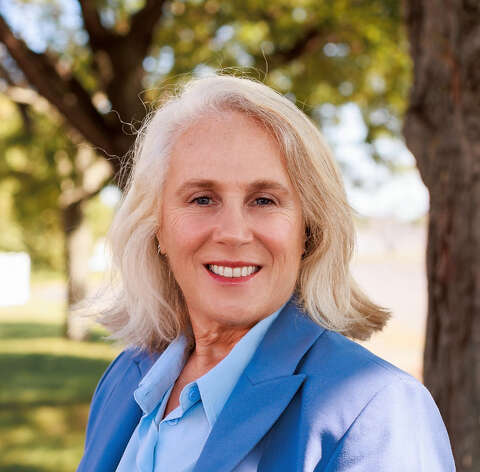
| In this interview, we have the privilege of speaking with Representative Renee LaMark Muir, a dedicated legislator who brings a wealth of experience from her two decades working in the State Capitol. Representative LaMark Muir shares the journey that led her to become a legislator, the leadership principles that guide her, and her passion for evidence-based policy. | |
|
|
Representative Renee LaMark Muir
District 36
| |
|
What inspired you to pursue a career as a legislator?
Renee LaMark Muir: “I worked in the State Capitol for 20 years as a non-partisan professional staff, at the Legislative Program Review and Investigation Committee. I did criminal justice policy research and development for the state, so I was familiar with the process. Also, over the past few years, I worked as a public policy consultant, so I was in and out of the legislature. The reason I ran was because I was involved in our local town politics, and I think that experience matched well with my legislative experience. At the same time, a door opened up in my district when the current state representative decided not to run again, and I walked through.”
Is there something that you previously thought about the state capitol that changed when you took office?
Renee LaMark Muir: “As non-partisan staff, there was a very clear line between partisan and non-partisan, so while I was intimately involved with the process and I knew all the legislators, when the door closed, we were not allowed in there. So, I am finding it fascinating and interesting to now be behind the doors of the partisan world.”
Who are some of your role models or people who have influenced your approach to leadership?
Renee LaMark Muir: “The director of program review and investigations for the majority of the time I was there, I still think in some situations, “Hmm what would Mike do?” He’s a good leader for me in terms of management style. Additionally, I have always admired Nancy Pelosi and her approach to politics and getting things done.”
What are some of your interests outside of politics?
Renee LaMark Muir: “I have been riding horses my whole life, I used to compete pretty seriously in the equestrian sport. I live on a little farm, so I like being around animals of all kinds. Additionally, I like paddle boarding, anything beach related, reading and yoga.”
Is there anything else you would like people to know about you as a legislator?
Renee LaMark Muir: “Having worked in a non-partisan way for so long, I think I’m good at seeing both sides to an issue. I realize that while a lot of things seem simple, in implementation they can get complex and there is built in unintended consequences. So I always want to hear what the support and opposition of the issue are and based on that, I want to know how it is going to be implemented. Also, having worked as a policy analyst for a long time, I am big on data. Having been a police officer for a long time, I want evidence. I want data and evidence that something is going to work, I don’t want to muck up the statutes just to muck up the statutes, there has to be a problem and a solution and prove that it’s the right solution.”
| |
Municipal Roundup
Ryan Bingham
| |
|
|
Republican Mayor, Erin Stewart of New Britain, announced her exploratory bid for Connecticut governor, emphasizing her experience in transforming the city and her connection to the working class. Highlighting concerns about affordability and state leadership under Democrats, she criticized Gov. Ned Lamont's policies, including his failed highway toll plan and framed herself as a decisive leader. Stewart distanced herself from diving into Donald Trump-related controversies but praised his straightforward leadership style, drawing parallels to her own. Launching early to improve fundraising efforts, Stewart plans to decide by fall whether to officially enter the 2026 gubernatorial race.
In Middletown, plans have been submitted to implement traffic cameras in high-risk areas to address speeding and reduce traffic-related injuries and fatalities. Police Chief Erik Costa highlighted the dangers of reckless driving, including personal accounts of crashes, like Allan Poole’s tractor accident on Route 66 and studies showing vehicles reaching excessive speeds in residential and school zones. Initial warnings will precede fines of $50 for first-time offenders and $75 for repeat violations. Cameras will capture vehicle data, not personal information, and aim to improve safety without taxpayer funding. The program is part of the Vision Zero initiative to eliminate transportation-related deaths. Residents and officials alike have emphasized the urgent need for these measures to curb dangerous driving.
| |
Agency Corner
Lindsay Seti
| |
|
|
As the Trump administration issued their directive to pause trillions of dollars in federal financial assistance on Monday night, Connecticut’s state agencies scrambled to figure out the immediate ramifications. The reaction was similar across the board: nobody knows. The Office of Early Childhood, CTDOT, CSCU, DEEP, DCF – these are just a few state agencies that rely on significant federal funding to operate. By Tuesday mid-morning, there were reports that healthcare providers were unable to access the Medicaid reimbursement portal, and that the reimbursement system for Head Start was down.
By Tuesday evening, Attorney General William Tong added Connecticut to a lawsuit with 21 other states seeking an immediate hold on the order. Shortly before the suspension on grants and loans went into effect, a federal judge successfully blocked the funding freeze (for now). As state agencies prepare to lobby their budget to the legislature in the coming weeks, there’s no doubt that this week’s fire drill will help drive the conversation.
| |
|
January 31: A Double Dam Disaster Devastates Danbury
In 1860, residents living in Danbury, Connecticut banded together to build a large, earthen dam to create a reservoir that would provide a steady water supply for the town’s steadily-increasing population and burgeoning factories. A few years later, they built a second dam about a mile downriver, and the structures became known as the Upper and Lower Kohanza Dams, named for the Kohanza Brook that flowed from the newly-built reservoirs into the heart of downtown Danbury two miles away.
In late 1868, a slight crack had been discovered in the Upper Kohanza Dam, but no action was taken as residents were confident that such a small fault would have no effect on the massive earthwork. On the frigid evening of January 31, 1869, however, disaster struck as the upper dam collapsed under the pressure of the ice-choked body of water it was designed to hold back. As the wall of icy water roared downstream, it completely washed away the Lower Kohanza Dam. Minutes later, a massive wave containing two reservoirs’ worth of water, as well as ice chunks, boulders, and tree trunks, slammed into downtown Danbury. A February report in Harper’s Weekly described the terrible moment in sensational detail:
“With terrible velocity [the floodwaters] struck the houses on Main Street near the river bank, instantly sweeping them from their foundations. …The water seethed and roared fifteen feet above the bed of the river; the noise of wrecked houses mingled with the screams of drowning men, women, and children; and what the water did not overwhelm was demolished by the rushing ice and timber.”
At least eleven people were confirmed killed by the flash flood, which had come and gone in less than 30 minutes. Bridges, railroad tracks, and factory buildings were completely destroyed, ensuring a long and painful rebuilding process for the town. By all accounts, the flood caused by the broken Kohanza dam was the worst recorded disaster in Danbury’s long history, in terms of lives lost and property destroyed. In spite of the disaster, the Kohanza dams were eventually rebuilt, though on a much smaller scale than before. A disastrous night to remember in Danbury, today in Connecticut history.
To view the full story on the CT Historian's website, click here.
| |
Sullivan & LeShane, Inc.
www.ctlobby.com | (860) 560-0000
| | | | |