As the summer winds down, the sense of time passing ever faster and faster becomes apparent. Remember the carefree days of summer spent swimming in a lake or at a beach? Late family dinners outside in the fresh, cool air?
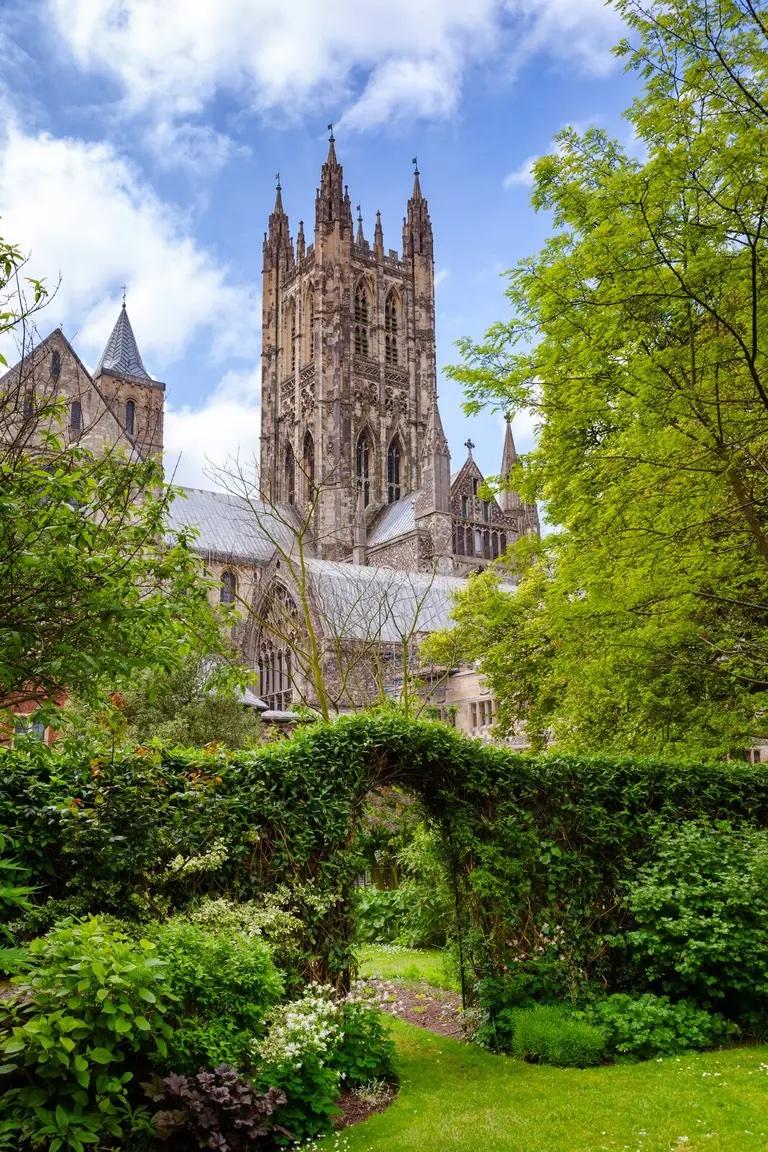
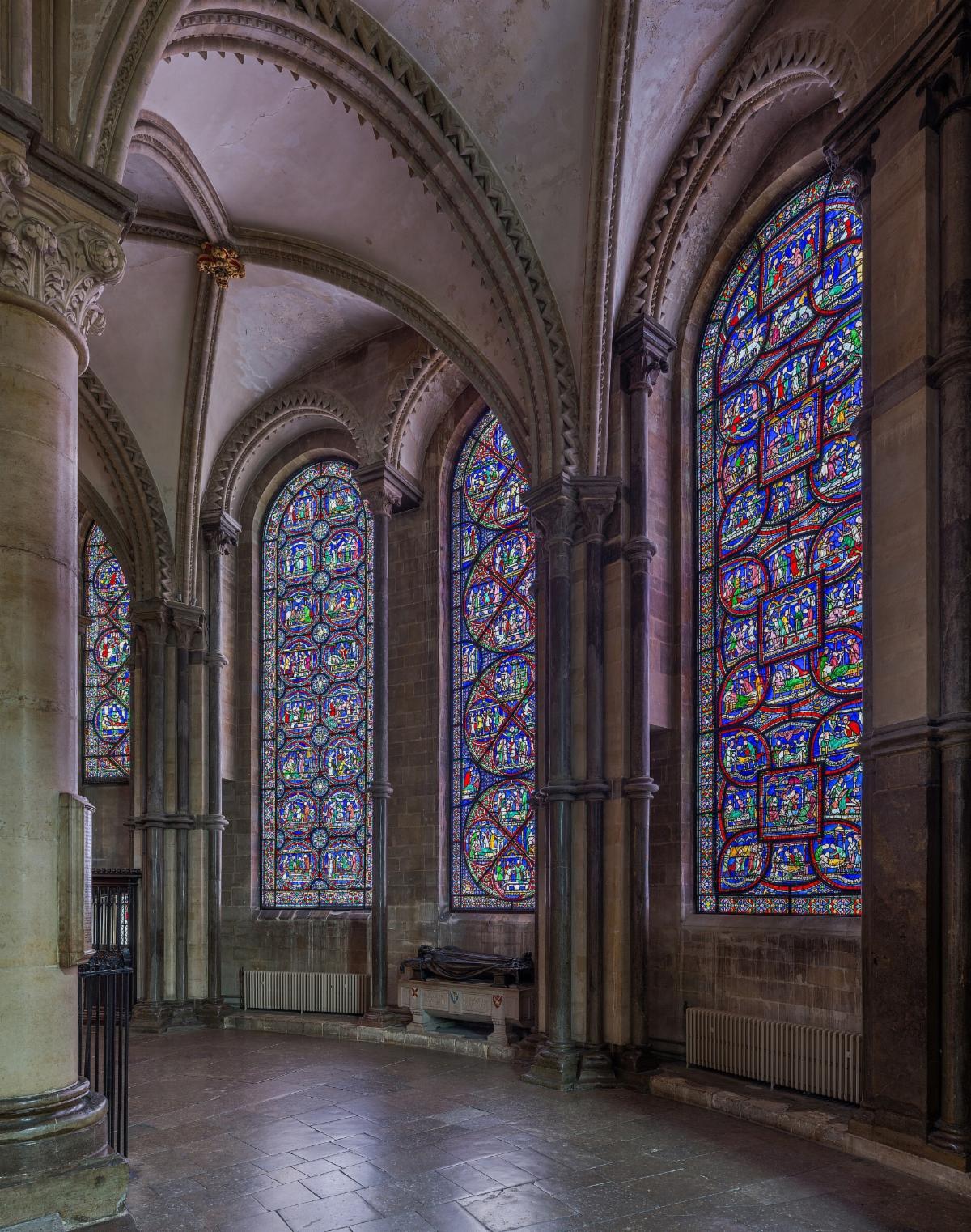
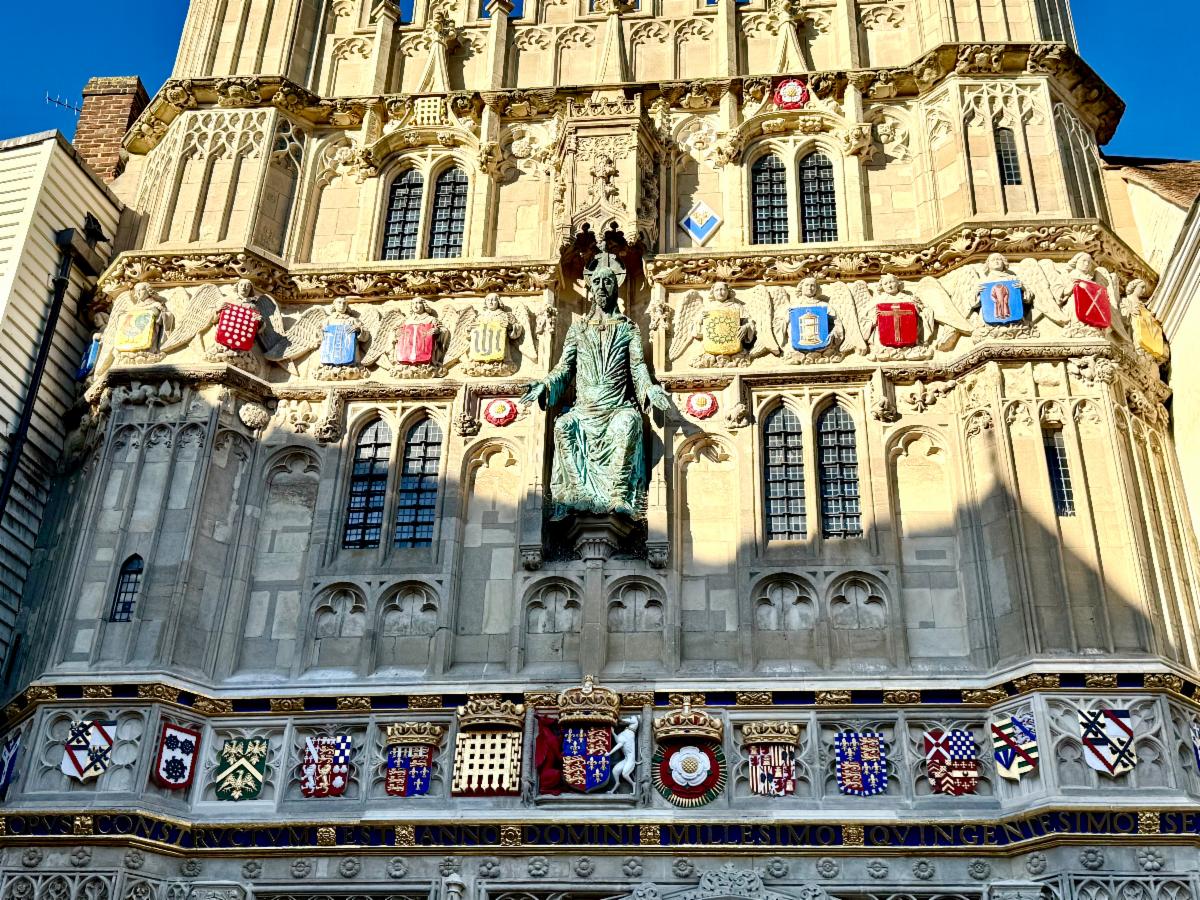
Churches remain. Not only the physical buildings but the rhythm of the liturgical year. There is comfort in walking into a church and knowing what you will find. Stopping by and taking the time to find peace and quiet awakens the feeling of time standing still. When I walk into Canterbury Cathedral, I'm flooded with visions of pilgrims throughout the centuries who have come to the Cathedral for solace. The stone, the stained-glass windows, the cool air, and the lingering scent of incense bring me into a sense of peace and quiet.
Click on the photo of Trinity Chapel below to revisit Canterbury or to prepare for your first or next visit.
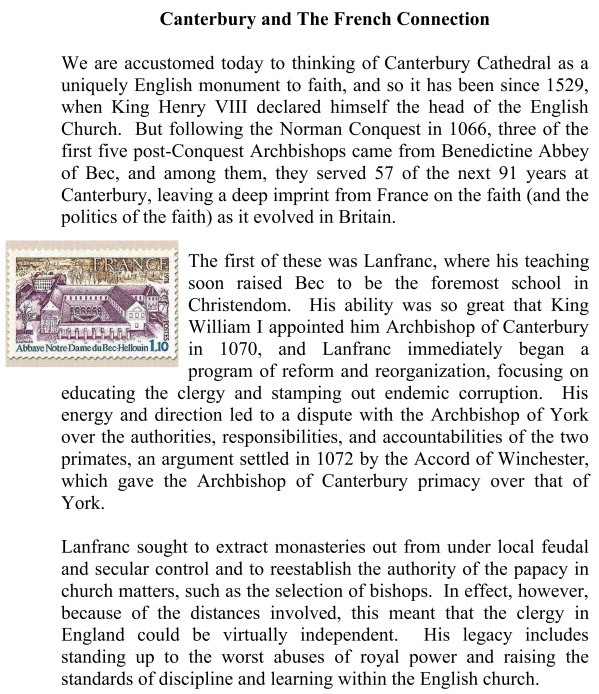
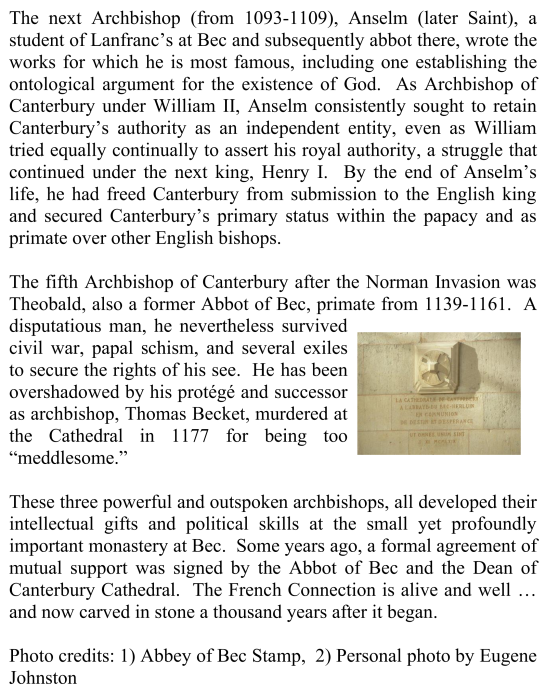
Canterbury and the French Connection
In the decades following the Norman Conquest of 1066, Canterbury Cathedral was transformed from an Anglo-Saxon diocese into an intellectual and architectural church with close ties to continental Europe. This transformation was headed by three French-trained archbishops, Lanfranc, Anselm, and Theobald. All three were from the same influential Benedictine monastery, Bec in Normandy.
Below is an article by Col. Powell Hutton, FOCCUS Trustee, detailing this transformation by the three French archbishops.
Liturgical music continues to be composed and commissioned for the church. Appointed by Queen Elizabeth II, Judith Weir was the first woman to serve as Master of the Queen's Music from 2014 to 2024. The piece Love Bade Me Welcome by Judith Weir and words by the Welsh poet and priest George Herbert, is especially moving. Read the lyrics below and then click on the link of the Boys and Lay Clerks of Canterbury singing Judith Weir's Love Bade Me Welcome.