|
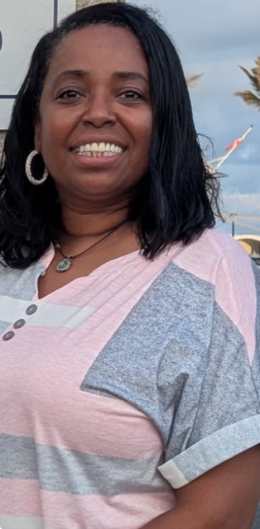
Rose Armstrong
Rose recently started an Administrative Assistant position at the University of Maryland Extension (UME). She has more than 42 years of administrative and customer service experience. She has also supported several senior level officials in the Federal Government, and recently retired with more than 28 years of Federal service.
Rose states she is excited about her appointment at UME and the support she will provide to the Area Extension Director, Ms. Shelley King-Curry and her team.
Rose can be reached at rarmstr4@umd.edu , or 301-226-7516.
| | |
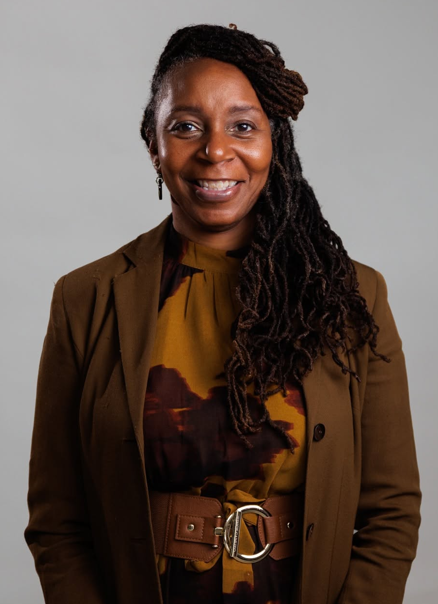
Denise M. Joseph, Phd, PMP
Dr. Joseph is an educator, researcher, and community-focused leader who is passionate about connecting research, education, and service to improve lives. Guided by a commitment to strong families, lifelong learning, and service to others, she brings both professional expertise and personal passion to helping communities thrive.
Her background spans K-12 and higher education, federal service, and nonprofit leadership, including work with the U.S. Department of Education. Denise is excited to join University of Maryland Extension and support financial wellness, community partnerships, and lifelong learning across Maryland.
Outside of work, Denise enjoys traveling, reading, and exploring Maryland's unique communities with her husband, their teenage son, and their exchange student from Germany. She also shares her home with Picassa, a very confident cat who believes she runs the household.
Denise can be reached at dmjoseph@umd.edu, or 301-226-7512.
| | Congratulations Rose and Denise, and welcome aboard! | | |
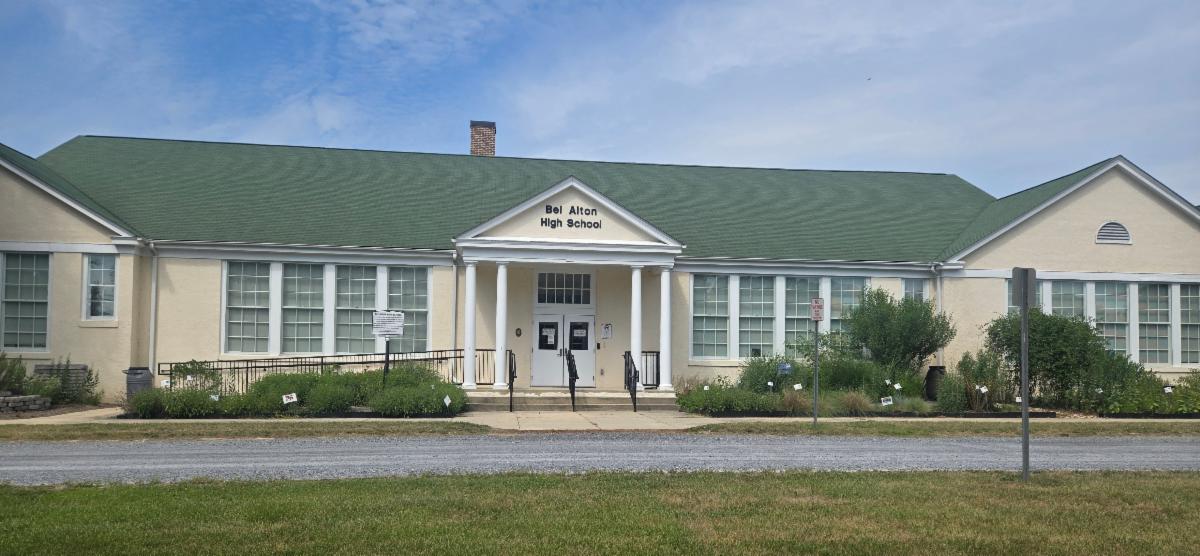
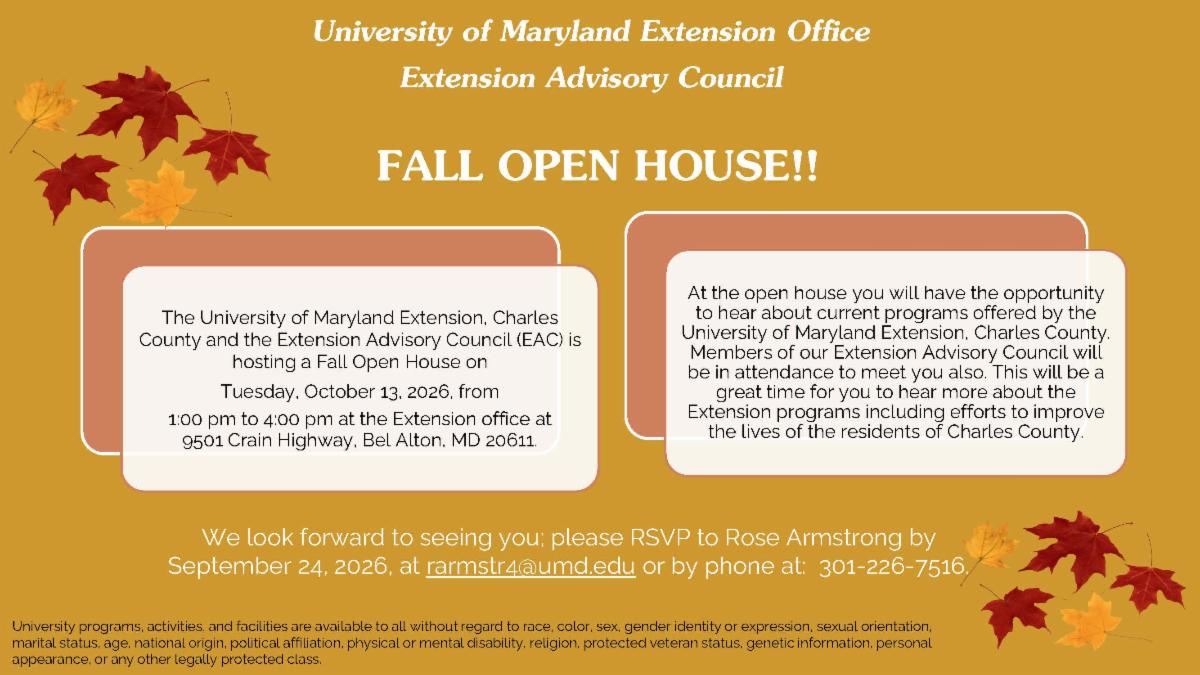
You are Invited!!! Open House on Tuesday, October 13,
from 1:00 - 4:00 pm
RSVP to Rose Armstrong at rarmstr4@umd.edu
| | |
From Barn to Block: 4-H Kids Reap Rewards
of a Year's Hard Work
Bonnie Boyden
4-H Program Management Specialist
| | |
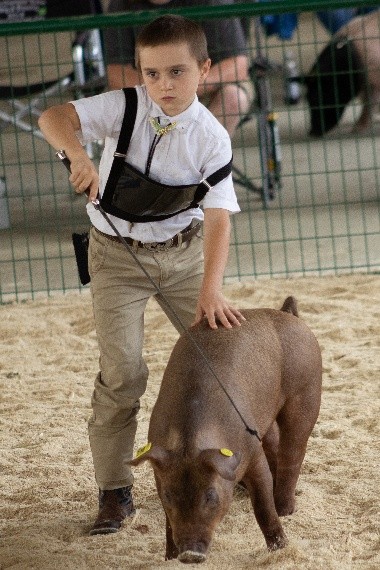
The Livestock project is a Positive Youth Development tool unique to the 4-H program. Raising animals helps youth members develop important life skills and familiarize them with many aspects of food production and agriculture. These experiences can be a foundational part of youth growing up to be thriving and contributing members of their community.
Without the financial opportunity livestock auctions create, many families would be unable to participate in livestock programs due to the financial requirements. In addition to recouping these costs, the sale is also an opportunity for youth to financially plan for their continued participation in livestock projects and the agricultural industry. The following information can help you navigate through purchasing an animal from a 4-H at the county fair.
What is the 4-H Livestock Auction?
The 4-H Livestock Auction is the culmination of many 4-H members’ yearlong project efforts. This is the time when animals they have cared for all year are sold to the public. It is the final step in their livestock project where the educational marketing aspects come to life.
Why should I purchase an animal from the 4-H Livestock Auction?
You will receive personal satisfaction through:
1. Helping a youngster who has worked hard on his/her projects.
2. A nice way of saying thank you to parents of 4-H members who do business with you.
3. Free advertising you will receive as a buyer by having your name as a buyer on our buyers' banner for the following year and your name as a buyer in our annual livestock book that is distributed to over 500 people. You also receive tax deductions for any amount over market price. But most importantly, you are getting high quality meat for your freezer.
As a potential buyer, should I plan to arrive early?
It is a good idea to arrive early enough to review the sale animals and/or talk to 4-H members/buyers. Sale sheets will be available at the clerk’s table at 2:30 pm prior to the sale. We recommend you arrive at least an hour and half prior to the start at 4 pm.
What types of animals will be sold?
On Saturday, September 19, 2026, at 4 pm, we will be selling sheep, beef, swine and goats.
Who will handle my payment and/or billing questions?
Registration begins at 2:30 pm at the clerk’s table. You will need to provide your name, address and phone number. You will then receive a buyer’s number. This number needs to be completely visible to the auctioneer during bidding.
Can more than one person purchase the same animal?
Yes, just be sure that you provide all of the necessary names and addresses to the clerk for billing purposes.
How do I bid?
When an animal you would like to buy is in the ring and at a price you desire, signal the auctioneer by raising your hand or bid number. If you receive the final bid, make sure the auctioneer has your name or number so that it can be announced and recorded. All animals are sold by the pound.
I have bought an animal, now what?
Report to the clerk’s table, as soon as possible, once you have completed all your purchases OR at the end of the auction. At the clerk’s table you will need to:
1. Indicate whether you would like to pick the animal up on Sunday (after 6 pm) OR send to be processed from our list of butchers. Cut sheets will be available for you to fill out for the processor. You will be responsible for picking up your meat after processing. If you do not want the meat, then you may ship it to the market and the money from the sale at the market can be returned to you or the 4-H’er.
2. Indicate method of payment either cash or check.
Within the following week, you will receive a call that your meat is ready for pickup. You will then be able to enjoy some of the most flavorful meat you've ever eaten, thanks to the amazing 4-H’ers.
We invite you to come and purchase an animal on Saturday, September 19 at 4:00 pm at the showring at the Charles County Fair. For more information email Bonnie at bboyden@umd.edu
| | |
Charles County 4-H Youth Showcase Livestock at the
250th Great American State Fair
Kelly Bryant
Charles County 4-H Educator
kmbryant@umd.edu
| | |
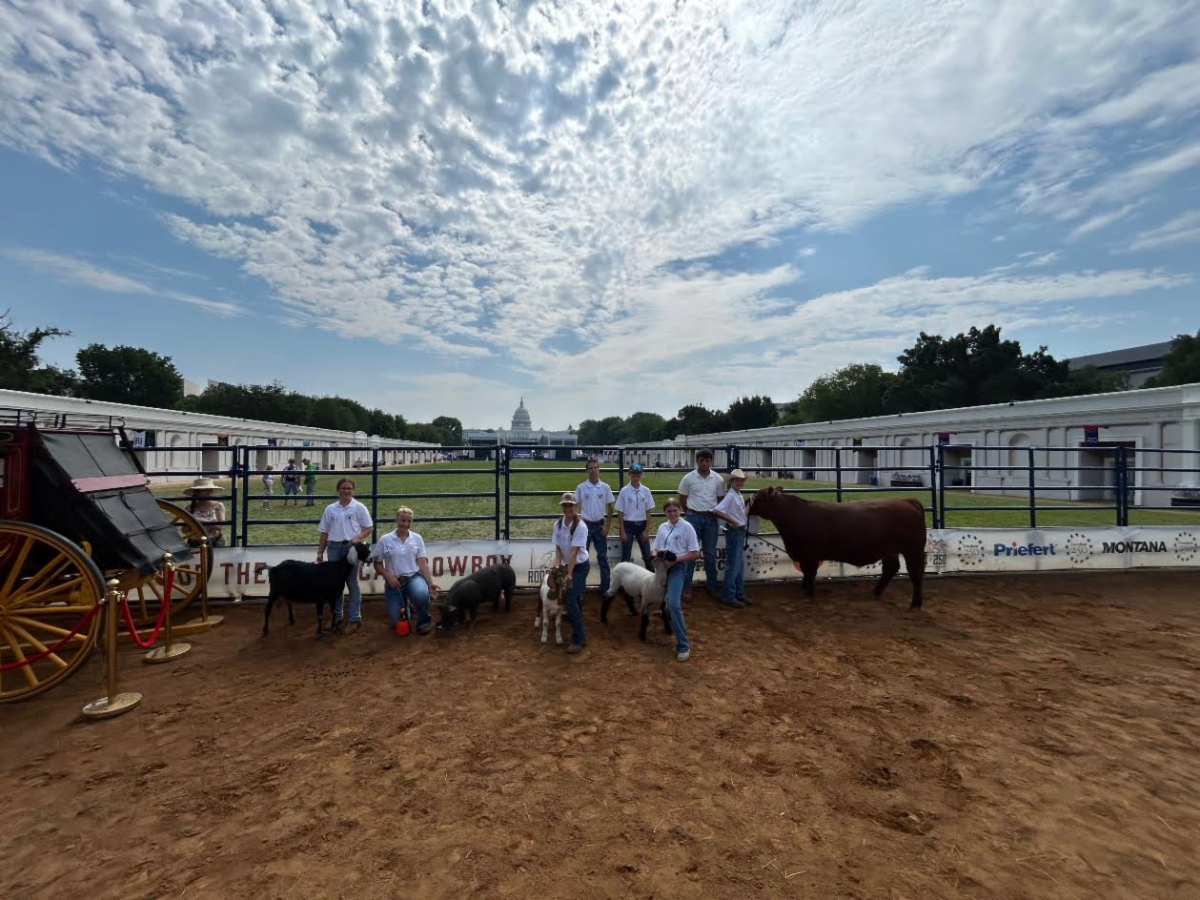
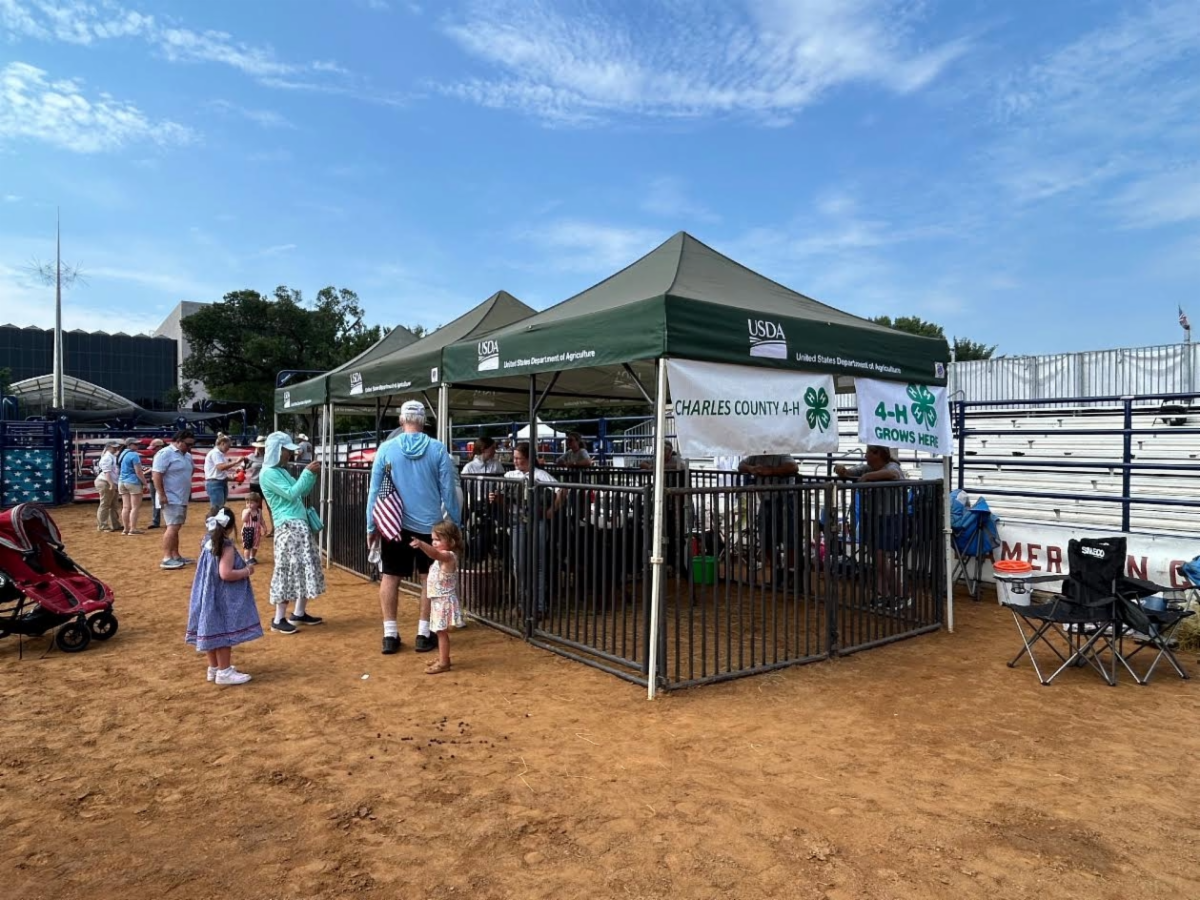
Charles County 4-H youth had the unique opportunity to represent Maryland agriculture and the 4-H program at the 250th Great American State Fair held on the National Mall in Washington, D.C., on July 5 and 6. Youth exhibitors brought a variety of livestock, including steers, hogs, lambs, and goats, to help educate thousands of visitors about livestock husbandry and the important role livestock producers play in feeding our communities.
Throughout the event, 4-H members participated in livestock exhibitions, answered questions from the public, and shared their knowledge and experiences raising animals. The event provided a valuable platform for youth to demonstrate the skills, responsibility, and leadership they develop through their involvement in 4-H livestock projects.
"It was very cool for our Charles County 4-H program to be a part of it and educate others about the importance of livestock and agriculture," said intermediate 4-H member Lizzy Winkler.
For many participants, the experience was truly one-of-a-kind. Samuel Swann described it as a "very memorable opportunity."
Piper Hayden appreciated the chance to represent 4-H on a national stage. "It was a great way to show what 4-H has to offer with everyone at our Nation's Capital," she said.
Olive Swann reflected on the significance of the event and the educational opportunities it provided. "Having the honor of bringing and showing our livestock at the 250th American State Fair was truly an honor and an unforgettable experience. All of the rodeo and livestock staff from USDA were incredible! The judge asked us questions, many similar to what we are asked in the 4-H Livestock Skillathon contest. It was fun meeting new people and seeing everyone come out to celebrate our country."
The Charles County 4-H program extends its sincere appreciation to the youth and families who dedicated their time and effort to participate in this historic event. Participating youth included Cole Barrett, Elizabeth Bowling, Layla Hayden, Piper Hayden, Brooklyn Kilinski, Olive Swann, Samuel Swann, and Elizabeth Winkler. Special thanks also go to the livestock haulers, Charlie Hayden and Bill Kilinski, whose support helped make this opportunity possible and to Sarah Swann for all the coordination.
By showcasing their livestock and agricultural knowledge at our nation's capital, these outstanding Charles County 4-H members served as ambassadors for 4-H, agriculture, and youth leadership, helping visitors gain a deeper understanding of the importance of livestock production and the future of agriculture.
Congratulations to all participants on representing Charles County 4-H with excellence at the 250th Great American State Fair!
| | Photo credits: Lisa Barrett | | |
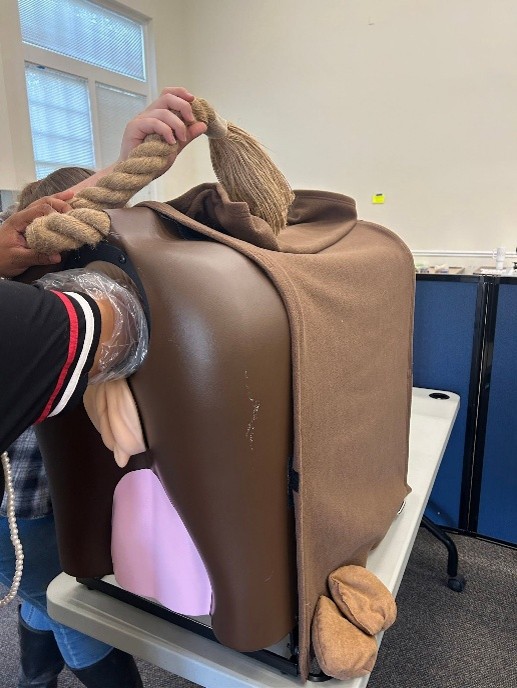
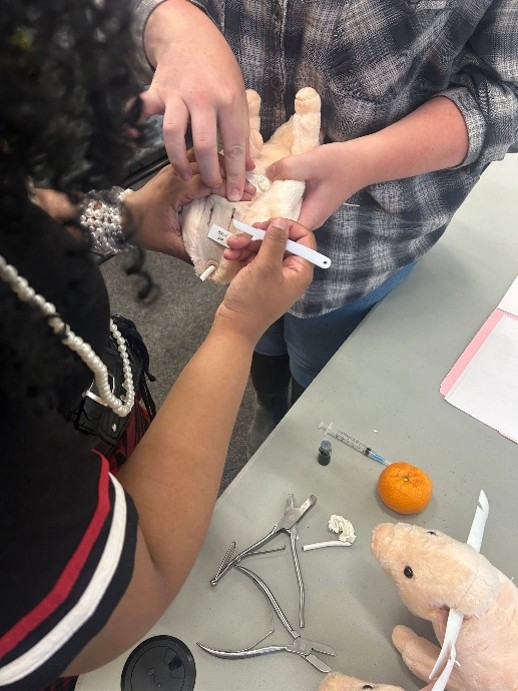
4-H'ers Experience Hands-On Veterinary Skills
Jeanne Williams
Charles County 4-H Program Assistant, Shooting Sports Coordinator
jeannhh@umd.edu
| |
This was the second year for the Veterinary Science Workshop; the focus was on the livestock industry.
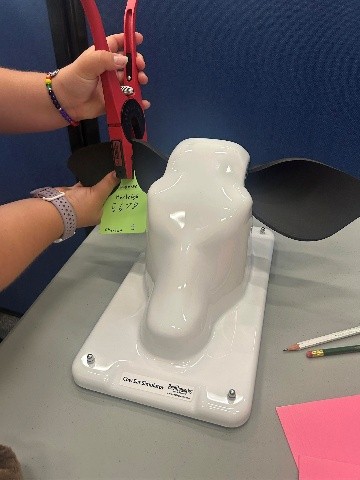
Youth in the program began with learning what “normal” is for livestock species, then went through all the stages of life from breeding to birthing to weaning. They learned how to eartag, castrate, pull calves, clean and treat wounds, and so much more.
These youth ended with a “clinical” session where they practiced what they learned. Most of the kids are looking forward to what they will learn next year!
All photos by Jeanne Williams. Above: Ear Tagging
| | Cattle pregnancy palpation | | | |
Crop Scouting School Helps Grow Better Scouts
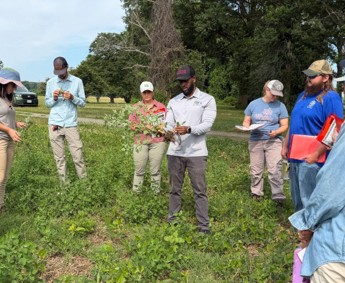
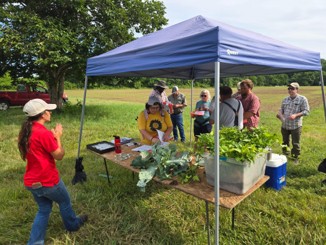
The first University of Maryland Extension Crop Scouting School of the season was held on June 25 at the Wye Research and Education Center. The program brought together farmers, crop consultants, agricultural professionals, and students for a full day of hands-on learning focused on improving crop scouting skills and making more informed management decisions.
Successful crop scouting is one of the most valuable tools available to producers and one of the hardest to master. Regular scouting allows growers to detect insects, diseases, weeds, and deficiencies early, before they become more serious and thus costly problems. It also helps determine whether treatment is actually needed, saving both time and costs while supporting sound integrated pest management (IPM) practices.
Throughout the day, participants rotated through field-based stations led by University of Maryland Extension specialists and educators. Topics included row crop insect identification, vegetable insect identification, weed identification and management, plant disease diagnosis, drone technology, and general scouting techniques. Rather than learning in a classroom, participants spent the day working directly in field plots where they could examine real examples of pests, diseases, and crop issues (when available) while discussing management recommendations with Extension specialists.
| | |
We had a great turnout and received positive feedback from participants, many of whom appreciated the hands-on format and the opportunity to ask questions while looking at actual field conditions. Programs like this are designed to build confidence in scouting and provide practical information that can be applied immediately throughout the growing season.
If you missed the June program, there will be another opportunity to attend this fall. Our next Crop Scouting School will be held on September 24 at the Clarksville Research Facility. The fall program will feature new scouting topics and seasonal crop issues for those interested.
Photo credits: Hayden Schug
| |
|
Hayden Schug
Agriculture and Food Systems Educator
hschug@umd.edu
| | | | |
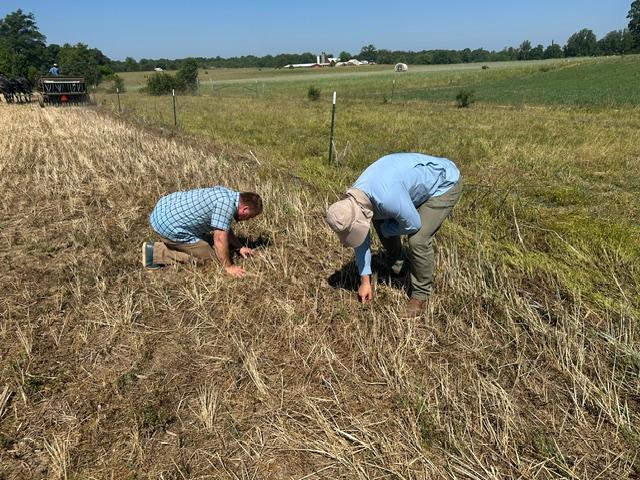
During the past several months, nutrient management programming in Charles County focused on providing technical assistance and developing nutrient management plans that support both agricultural productivity and environmental stewardship.
Nutrient management plans were completed and updated for a diverse group of producers, encompassing thousands of acres of cropland and ensuring compliance with Maryland nutrient management regulations. Individual consultations with new and returning farmers addressed nutrient recommendations, manure management, crop rotations, and recordkeeping to improve nutrient use efficiency and water quality protection.
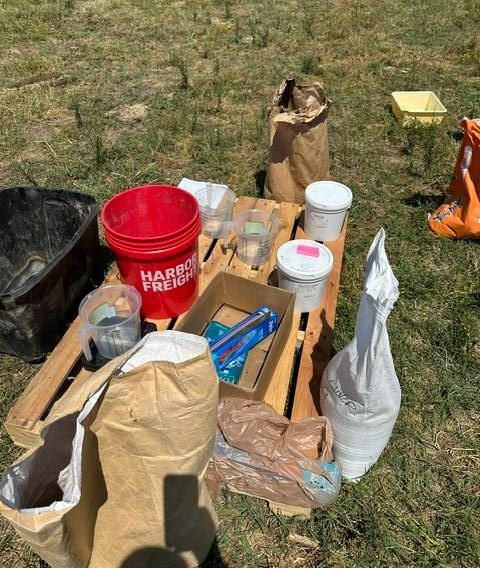
Field activities included collaboration with Extension colleagues on research and demonstration plots to evaluate crop performance and nutrient management practices under local growing conditions. These efforts provided valuable opportunities to share research-based recommendations with producers and strengthen partnerships across Extension programs.
Continued outreach and one-on-one education helped producers make informed nutrient management decisions while supporting the long-term sustainability and profitability of their farming operations.
These activities reinforce the University of Maryland Extension's commitment to delivering science-based solutions that benefit agriculture, protect natural resources, and serve the needs of Charles County producers.
| | Photo credits: BJ Bowling | |
| |
Gilbert (BJ) Bowling
Nutrient Management Advisor
Gbowlin1@umd.edu
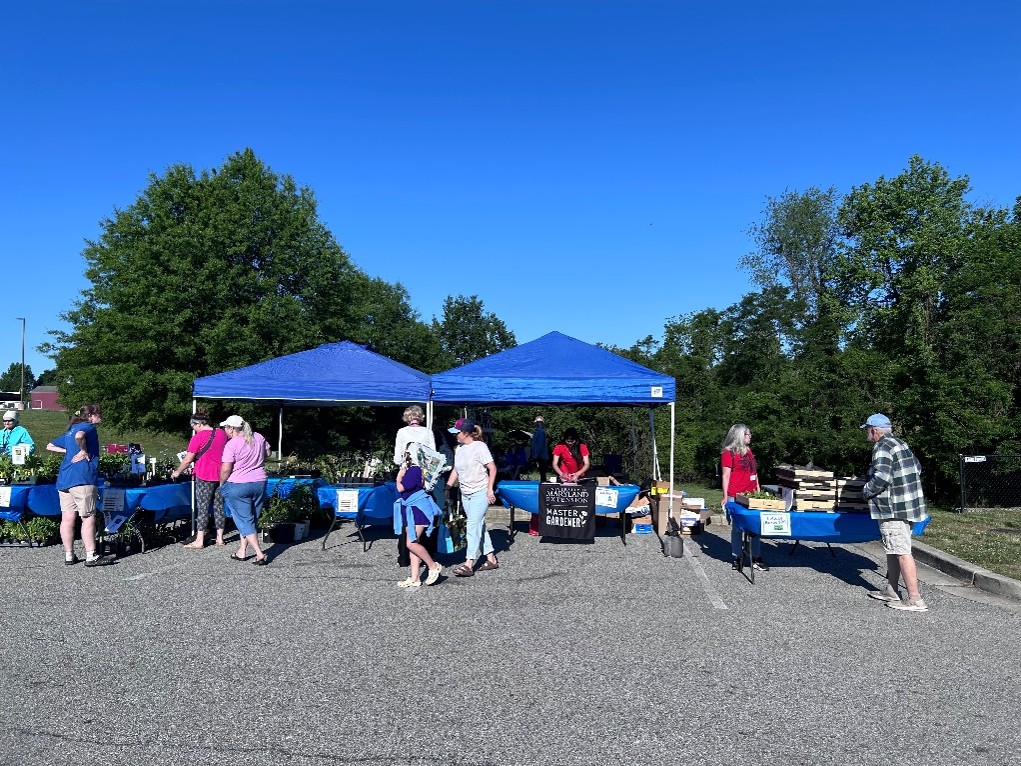
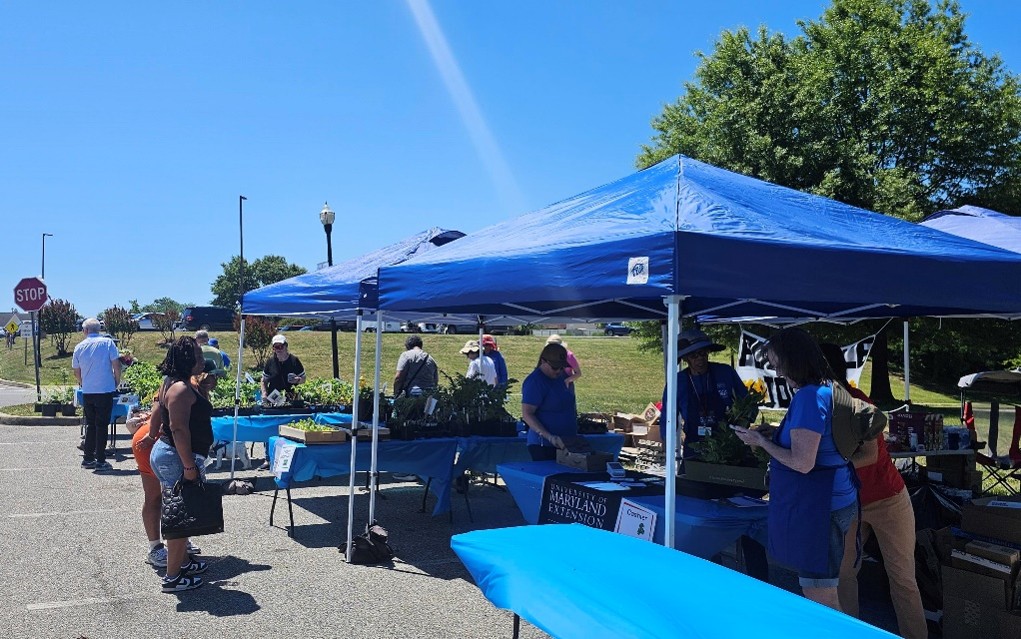
| | | | It's been a busy season for the Master Gardeners of Charles County! Here are some highlights of their recent activities | | The Plant Sale fundraiser, held in May, allows the Master Gardener Program to buy materials for workshops and outreach events so that our programs are at low or no cost to the community. Plants sold included vegetables, potato slips, lettuce boxes, shade plants, and many species of native plants. | | |
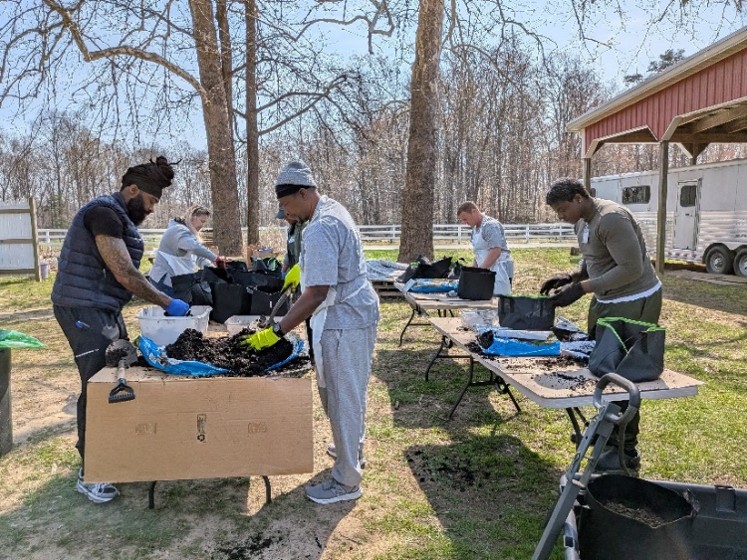
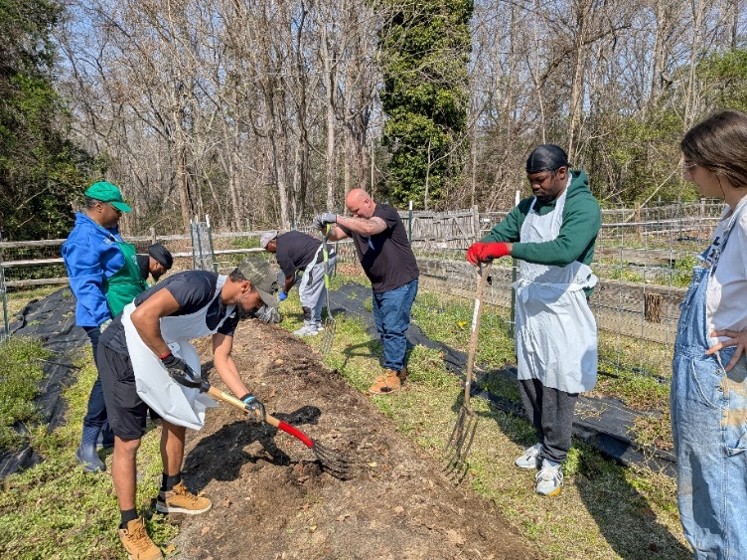
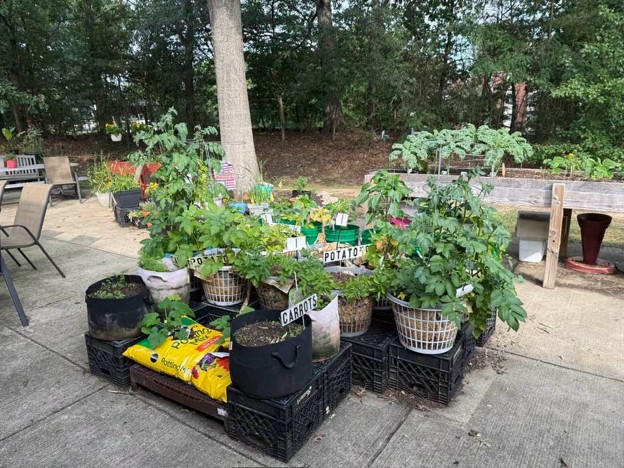
Seed to Supper is a beginning food gardening education program designed for adults on a budget. In 2025, several counties in Maryland did a pilot program, and this year it was attempted in Charles County in collaboration with Melwood Community Services, the Jude House and UME.
The Jude House presented the opportunity for their patients with twelve individuals participating. The program was split between some formal instruction by PowerPoint followed by hands-on activities in the Melwood Learning Garden.
For the last class, a former SNAP-Ed educator was invited to speak on how to use the food they grow in their cooking. The post class survey revealed that the participants really enjoyed the course and getting out in the garden but wished that the course was longer.
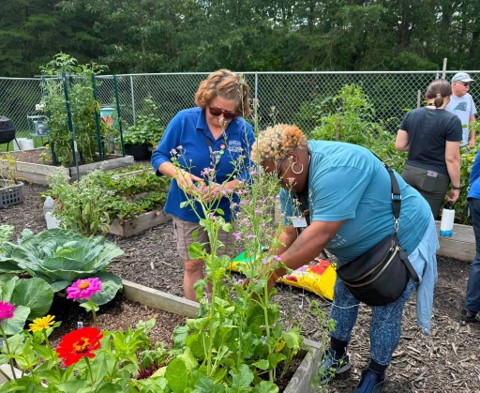
| | Participants preparing soil for potatoes and grow bags for strawberries. Photo: Julia Rycyna | | At the Southern Maryland Food Bank, the “Seeds of Hope” Community Learning Garden have harvested 233 pounds of produce this year. Produce includes kale, Swiss Chard, spinach, strawberries, snap peas, mustard greens, cabbage, garlic, onions, tomatoes, potatoes, zucchini, yellow summer squash, scalloped squash, cucumbers, cantaloupes, a variety of hot peppers, green peppers, radishes, eggplant (“Fairy Tale” and Japanese), okra, green beans, basil (Genovese, purple, lemon, and cinnamon), oregano, chives, sage, parsley, cilantro, thyme, mint, blackberries, and blueberries. | | The Grow It Eat It Education Project presented on Vegetable Garden Problems at Waldorf West Library and invited participants to come and see the “Seeds of Hope” Community Learning Garden to see live examples. | | Master Gardener Volunteers Kay and Ebony look at greens in the garden. Photo: Terry Thir | | |
The Senior Education Programs give monthly presentations to the Senior Center Plus group about birth month flowers and maintains the education garden at the Clark Senior Center. The Resilience Authority has planted around the Waldorf Senior and Recreation Center and the Master Gardeners are working with them to develop the gardens.
The Senior Education Programs also help with Arbor Day activities at Nanjemoy, Earth Day activities at Waldorf, and connecting Family Consumer Science educator Dr. Deon Littles with programming at the senior centers.
| | Education Garden at Clark Senior Center. Photo: Terry Thir | | |
Master Gardeners participated in several community events including Market Day at Port Tobacco, The Jude House Resources & Craft Fair, Community Health Fair by Ivy Pearls of Southern Maryland, and NatureFest.
We look forward to connecting with the community at the many fall events, such as the County Fair, Monarch Mania, and other festivals happening this year.
| | Visit the Home & Garden Information Center’s (HGIC) webpage for more gardening information and to submit your questions. You can find more tips and tricks for taking photos here at Ask Extension. You can also follow HGIC on social media- Facebook page, YouTube channel, or Instagram (@umdhgic)HC). | | |
Julia Rycyna
Home Horticulture Educator
Master Gardener Coordinator
jrycyna@umd.edu
| |
Feel free to contact our staff with any questions
or ideas you have to help make our community better.
Please send an email to jcrawfo4@umd.edu or visit our website.
| | University programs, activities, and facilities are available to all without regard to race, color, sex, gender identity or expression, sexual orientation, marital status, age, national origin, political affiliation, physical or mental disability, religion, protected veteran status, genetic information, personal appearance, or any other legally protected class.This institution is an equal opportunity provider. If you need a reasonable accommodation to participate in any event or activity, please contact us at (301) 226-7500. | | | | |