We are living through an extraordinary moment in American history. Eight months into a global pandemic with no available vaccine or cure, following a highly consequential election, our nation is suddenly undertaking the most searching examination of racial inequality since the civil rights movement of the 1960s. In both bad ways and good ways, it’s enough to make your head explode.
In this issue of Baltimore Law, you’ll read about some of the ways our law school makes a positive impact on the world around us. You will read about the 30-year history of our nationally renowned clinical law program and its mission to bring justice to those on the margins of society. You will learn about alumni who are working to define the legal impact of technology, in particular artificial intelligence, which offers many benefits but which may threaten privacy.
And you will meet young alumni volunteering with the National Lawyers Guild, monitoring law enforcement activity at public protests and advising protestors of their rights.
I hope this issue of Baltimore Law reminds you that UB is more than a law school; it is a vibrant, accomplished and passionate community. Never content to sit on the sidelines, our students, faculty and alumni are rolling up their sleeves to make a difference. Now more than ever, we welcome their labors.
|
|
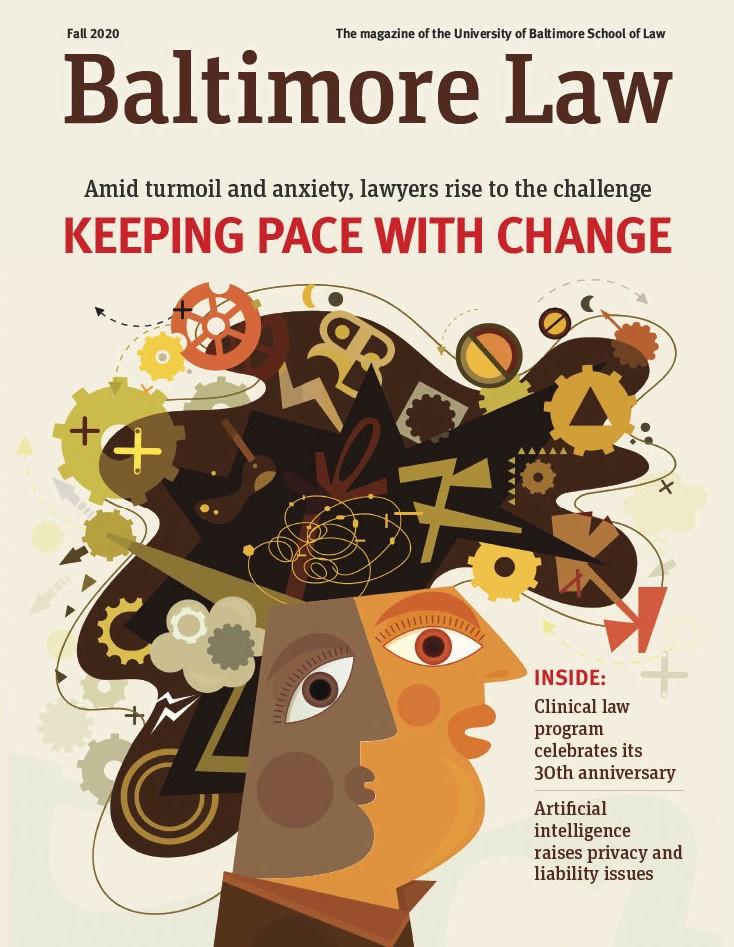
The current issue of Baltimore Law examines how the legal community adapts to rapid change. Our cover story looks at how artificial intelligence is changing the practice of law -- from IP, privacy and liability perspectives as well as how automation changes the way lawyers function.
Check out some other important stories below.
|
|
|
Meet Our Four New Faculty Members |
|
 |
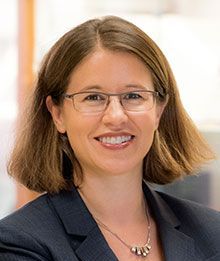
Professor Jamie Abrams is visiting professor for the full academic year, teaching Torts/ILS, Family Law, and Rules & Reasoning.
Abrams’ research focuses on reproductive and birthing decision-making, gendered violence, legal protections for immigrant victims of domestic violence, and legal education pedagogy.
She previously taught at the University of Louisville Brandeis School of Law, where she received two teaching awards. She has also taught at Hofstra University School of Law and American University Washington College of Law.
In 2014, while at Louisville, Abrams founded the Brandeis Human Rights Advocacy Program to advance the human rights of immigrants and refugees. Prior to entering law teaching, she was in private practice, specializing in complex civil litigation, white-collar criminal defense and environmental law.
Abrams has a J.D. from American University and an LL.M. from Columbia University, both with highest honors. She earned her B.A. from Indiana University at Bloomington.
|
|
|
|
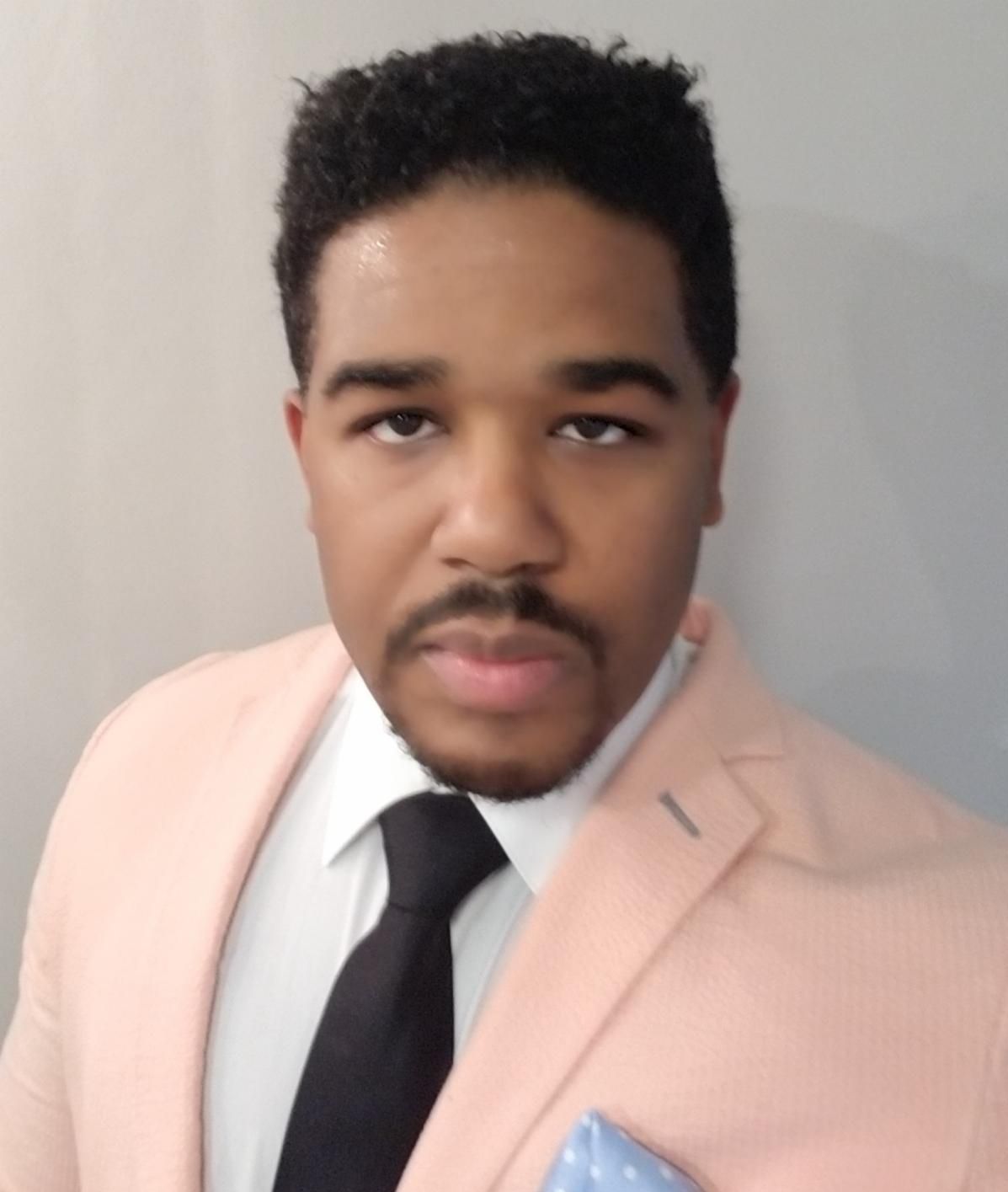
Associate Professor Sheldon Bernard Lyke is teaching Property, Trusts and Estates, and Critical Race Theory. His research focuses on anti-discrimination laws regarding racial and sexual minorities in a comparative context. His current research explores anti-affirmative-action practices in higher education.
His work is increasingly observing property law institutions in our shared social world — particularly the realms of higher education, fashion and natural resources (i.e., parks, commons and shared green spaces) — and understanding their role in creating and ameliorating social inequality.
Before joining the UB Law faculty, Lyke was an assistant professor at Northern Kentucky University Chase College of Law and Whittier Law School. He has also been a visiting assistant professor at University of California Irvine School of Law (Fall 2016) and Northwestern University School of Law (2012 through 2013).
Lyke received a Ph.D. in Sociology from the University of Chicago, a J.D. from Northwestern University School of Law, and an A.B. cum laude in Sociology from Princeton University.
|
|
|
|
|
Assistant Professor Matthew Sipe’s teaching interests include Intellectual Property, Property, Civil Procedure, Privacy, and Antitrust Law. His research focuses on the relationship among law, innovation and ownership. His work has been published in academic journals such as the Wisconsin Law Review, the Harvard Journal of Law & Technology and the American University Law Review.
Prior to joining the UB Law faculty, Sipe taught at George Washington University Law School as the Frank H. Marks Visiting Associate Professor in Intellectual Property. His previous position was at the U.S. Supreme Court, serving an appointment as a Supreme Court Fellow.
Sipe received his J.D. from Yale Law School, where he was an editor and author for the Yale Law Journal and the Yale Journal on Regulation. Following law school, he clerked for the Hon. Kathleen O’Malley, of the U.S. Court of Appeals for the Federal Circuit, and the Hon. Samuel Mays, of the U.S. District Court for the Western District of Tennessee.
He received his undergraduate degree in Mathematics and Economics from the University of Virginia.
|
|
|
|
Assistant Professor Sonya Ziaja teaches Environmental Law; Climate Adaptation, Law and Equity; and Property. Her research interests focus on the overlapping areas of environmental governance and law, technology and society: How can environmental law and institutions sustainably adjust to rapidly changing bio-geophysical conditions and societal demands associated with climate change? And with what consequences for equity and democratic participation?
Her approach to these questions draws on her interdisciplinary background in geography, water policy and law, as well as her practical knowledge of energy regulation.
Before coming to UB Law, she worked in energy regulation at the California Public Utilities Commission and was the research lead for the Water, Energy, Climate Nexus at the California Energy Commission.
Ziaja holds a Ph.D. in Geography from the University of Arizona, an M.Sc. in Water Science, Policy and Management from the University of Oxford, and J.D. from the University of California, Hastings College of the Law.
|
|
|
|
Seeds of Change: Clinical Law Program at 30 |
|
The 1970s were a pivotal time in America. Grassroots movements from civil rights and gender equity to environmentalism galvanized into culture and policy change. Conventional ways of doing things were questioned, and law school was not immune.
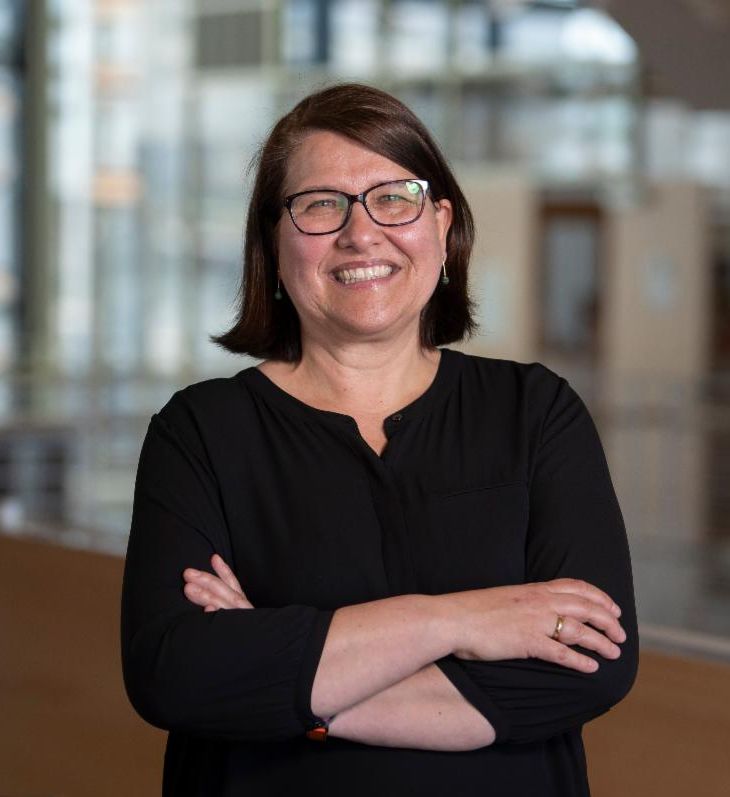
“There was a recognition that using the Langdellian casebook method was not sufficient to help students learn and understand law and law practice,” explains Margaret Johnson, at right, professor of law and associate dean for experiential learning at UB Law.
Just as medical students undertake residencies, there was a push for law students to work with clients on actual casework to breathe life into the concepts taught in lecture. Not only would students gain experience, but the low-income communities they would serve would have legal representation they might otherwise lack. The idea of clinical education began to form.
In its infancy, students were generally placed in a legal services office to get hands-on experience. “As the clinical movement developed, it was realized that a pedagogy needed to be developed. “We couldn’t just thrust students into a high-volume setting to try to extract learning,” says Johnson. Read the full article.
|
|
A Holistic and Therapeutic Approach to Family Law |
|
For 20 years, CFCC’s founder and director, Prof. Barbara Babb, and CFCC staff have worked to improve the practice of family law and to reform the family justice system. CFCC advocates for and applies two key interdisciplinary theories to all of its initiatives: therapeutic jurisprudence, from the law, and the ecology of human development, from the social sciences.
These approaches emphasize a goal of achieving positive outcomes for families and children, as well as a holistic focus to understand and resolve family legal matters. Read the full article.
|
|
|
|
University of Baltimore School of Law
1420 N. Charles St., Baltimore MD 21201
|
|
|
|
|
|
|