|
FMMC REPORT
Sept/Oct 2026
| | Command Medical Products Expands Platform with Acquisition of IMATS | |
|
Wayne, PA, and Ormond Beach, FL – Command Medical Products (“Command”), a medical device contract manufacturer and an Argosy Healthcare Partners (“AHP”) portfolio company, announced the acquisition of Injection Moulding & Tooling Services S.A. (“IMATS”), a Costa Rica based provider of injection molding and tooling services. The acquisition extends Command’s capabilities across the medical device manufacturing value chain and establishes a third manufacturing site for the company in the medical device hub of Costa Rica.
By adding IMATS’ expertise in injection molding and tooling, Command now offers a uniquely integrated suite of services spanning component production through finished device assembly, including tooling design and fabrication, injection molding, tube extrusion, RF welding, clean room assembly and packaging. The expanded capabilities position Command to more comprehensively support customers in developing and manufacturing its medical device products.
“We are excited to welcome IMATS to the Command family,” said Command Medical Products CEO Mike Fillion. “IMATS adds important injection molding and tooling capabilities that complement Command’s existing extrusion, welding, and assembly operations. The combination expands the manufacturing solutions we can provide customers and enhances our ability to serve as a single-source partner across a broader range of projects.”
[Full Press Release HERE]
| |  | USF Selected as Site of New U.S. Patent and Trademark Office Serving Florida, Southeast Region | |
Inventors, entrepreneurs and small businesses across Florida and the southeast will have greater access to resources to protecting their ideas, inventions and brands through a new U.S. Patent and Trademark Office community engagement office at the University of South Florida.
The USPTO selected USF for its new office, which will expand access to intellectual property resources across the Florida High Tech Corridor and the broader Southeast Region.
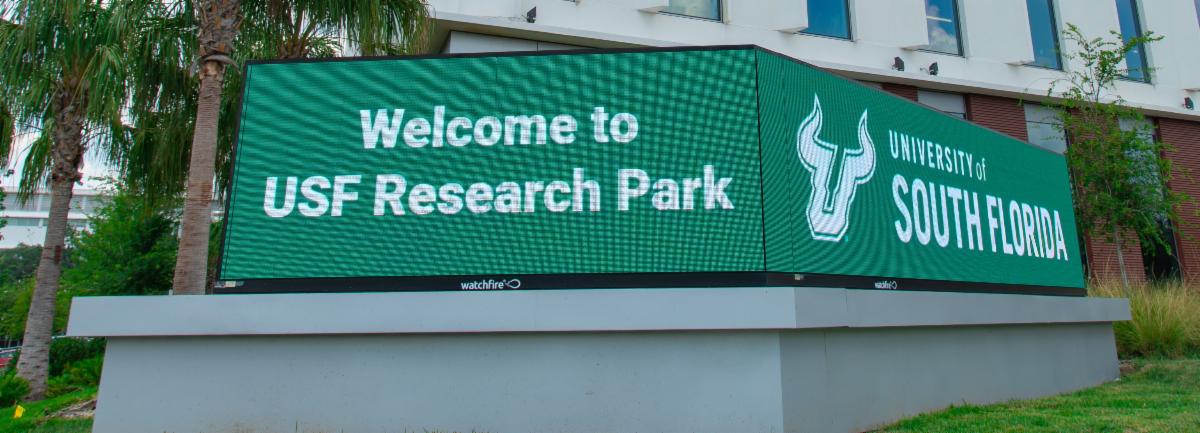
As a leading Tier 1 research university, USF will host the new community engagement office in the USF Research Park on the Tampa campus. From this location, the office will serve the Corridor’s 23 counties, helping a broad base of people and organizations better understand how to protect their inventions, ideas and brands and take the next steps toward bringing them to market.
USPTO community engagement offices are designed to make patent and trademark information more accessible, particularly for individual inventors, small businesses, veterans, students, and communities that may not otherwise have convenient access to the agency’s services. In addition to patent filing assistance, the office will provide entrepreneurs and small businesses with information about federal trademark registration. [Full Article HERE]
| |
|
Mercury Medical Has Joined Bound Tree and Tri-anim
Mercury Medical joined the Sarnova family of companies, marking an exciting new chapter for our organization and the customers we serve. By combining Mercury Medical’s decades of clinical innovation and manufacturing expertise with Sarnova’s resources and industry leadership, we’re strengthening our ability to support healthcare providers across the continuum of care. In the future, Mercury Medical products will be distributed through Bound Tree Medical for EMS, first response, and military customers and through Tri-anim Health Services for hospital and surgery center customers. [Full Release HERE]
| | | | |
Regulatory Alignment for Predictable and Immediate Device Coverage Pathway
The Centers for Medicare & Medicaid Services (CMS) recently released a procedural notice on its new pathway to expedite access to certain Food and Drug Administration-designated Class II and Class III devices for Medicare beneficiaries. The Regulatory Alignment for Predictable and Immediate Device coverage pathway (RAPID) is designed to reduce delays between FDA market authorization and Medicare national coverage determinations. CMS is accepting public comments on the proposed RAPID pathway, including comments concerning eligibility and treatment of devices that have already moved beyond IDE Pre-Submission. See “RAPID Device Coverage: A Narrow Bridge Over Medicare’s Coverage Gap” (FDA Law Blog) for a deeper dive.
Robotically-Assisted Surgical Devices
The U.S. Food and Drug Administration (FDA) recently announced draft guidance, Robotically-Assisted Surgical Devices — Premarket Submissions. This draft guidance, when finalized, provides recommendations on non-clinical testing, clinical data, and labeling to support premarket submissions for certain robotically-assisted surgical devices (RASDs). This guidance does not address remotely teleoperated RASDs, or autonomous robots that perform significant aspects of operative procedures independent of qualified practitioners. Submit comments regarding the draft guidance under docket number FDA-2026-N-9505 by November 24, 2026.
Public Workshop on Autonomous or Remote Robotic Devices
The FDA is also hosting a public workshop on Evaluating Benefit-Risk in Robotic Medical Devices with Autonomous or Remote Teleoperation Capabilities on December 2–3, 2026. The workshop is open to all and will explore a broad range of robotic medical devices both inside and outside the operating room, including those with autonomous and remote teleoperation capabilities.
IMDRF Publishes “Essential Principles” for Adoption of PCCPs
The International Medical Device Regulators Forum (IMDRF) recently finalized a technical document addressing the adoption of predetermined change control plans (PCCPs) by regulatory authorities. The document identifies key principles for regulators to consider when establishing PCCP frameworks, as well as the essential elements that manufacturers should incorporate into their PCCPs. The Food and Drug Administration (FDA) received explicit statutory authority to accept PCCPs under the 2022 Food and Drug Omnibus Reform Act (FDORA).
FDA Launches CDRH Regulatory Reliance Portal
The FDA’s Center for Devices and Radiological Health (CDRH) has launched the CDRH Regulatory Reliance Portal, a new resource for regulatory authorities interested in learning about or considering regulatory reliance for medical devices. The portal centralizes existing FDA resources so regulatory authorities can more easily access useful information.
Medical Devices that Incorporate Digital Health Technology
The FDA recently updated its searchable lists of medical devices that incorporate digital health technology authorized for marketing in the United States, including artificial intelligence; augmented reality and virtual reality; and sensor-based digital health technology. The FDA lists are not comprehensive and include medical devices that have been identified primarily based on information provided in the summary descriptions of their marketing authorization documents.
PFAS in Medical Devices
The FDA recently updated its webpage about PFAS (per- and polyfluoroalkyl substances) in medical devices to include new Frequently Asked Questions (FAQs) to help consumers understand what these materials are, why they are used, and how the FDA evaluates the safety and effectiveness of devices that contain these materials.
Breakthrough Devices Program Metrics and Marketing Authorizations
The FDA recently updated the Breakthrough Device designations data, which includes the number of breakthrough devices that have received marketing authorizations. From the launch of the Breakthrough Devices Program through June 30, 2026, the FDA has granted a total of 1,320 Breakthrough Device designations. Of those designations, the Center for Devices and Radiological Health granted 1,299 and the Center for Biologics Evaluation and Research granted 21. The agency has also granted 210 marketing authorizations for breakthrough devices since the launch of the Breakthrough Devices Program, including 25 authorizations granted in the first half of 2026.
Participants Selected for READI-Home Innovation Challenge
The FDA recently selected the initial participants to advance to the interaction phase of the READI-Home Innovation Challenge, an effort to accelerate patient access to home use medical device technologies that may help reduce hospital readmissions. Participants selected to advance to the interaction phase of the Innovation Challenge will receive: Early engagement with the FDA through sprint discussions; more frequent interactions and feedback to help refine device design and/or relevant testing for home use indications; and an opportunity to demonstrate their technology at the FDA’s research facilities.
Regulatory Approach for Generative AI-Enabled Medical Devices: Public Feedback Sought
The FDA recently issued a discussion paper on considerations for the regulation of generative artificial intelligence (GenAI)-enabled medical devices, seeking feedback from interested parties on risk assessment, premarket evaluation, postmarket monitoring, and other topics relevant to the regulation of GenAI-enabled medical devices. The discussion paper begins by outlining a possible two-axis framework for risk assessment that might be used to inform regulatory expectations. It then discusses a potential approach to premarket evaluation built on the concept of competency assessment, inspired at a high level by how physicians are trained and evaluated, consisting of non-clinical device benchmarking and clinical confirmation to evaluate whether a GenAI-enabled medical device performs as intended before reaching patients. The FDA encourages feedback on the discussion paper from device manufacturers, clinicians, consumers, researchers, the public, and other interested parties, to be submitted under the docket FDA-2026-N-7874 on Regulations.gov by October 19, 2026.
FDA Grand Rounds – Real-World Evidence Series
This session (October 22nd) will highlight the Real-World Evidence (RWE) Program at the FDA’s Center for Devices and Radiological Health (CDRH), with a focus on recent RWE examples involving digital health technologies. Through presentations and a panel discussion with CDRH experts, participants will gain practical insight into CDRH's RWE Program and explore how these principles could support evidence generation. This event will be offered in a hybrid format, with options to attend in person at the FDA White Oak Campus or virtually via webcast.
| | |
Congressional Action Going Forward
Congressional activity for the remainder of 2026 will be shaped by the outcomes of the November midterm elections, the approaching year-end adjournment, and the need to complete federal funding for fiscal year 2027. The Senate is scheduled to return for legislative business on November 9. The election results will determine the balance of power in the House and Senate and influence the parties’ negotiating strategies during the post-election lame-duck session. Lawmakers will have a limited window before the end of the year to advance outstanding legislation, address funding disputes, and consider pending nominations and oversight matters.
The highest legislative priority is funding the federal government beyond December 11, when the current continuing resolution expires. Congress must enact the remaining appropriations bills or approve another temporary funding measure to avert a funding lapse by December 12. Other potential areas of action include the must-pass National Defense Authorization Act (NDAA), immigration and border security, permitting reform, and additional tax and healthcare measures. The most significant healthcare extender issues include a temporary 2.5% Medicare physician payment increase, mandatory funding for community health centers and the National Health Service Corps, support for rural and low-volume hospitals, and several public health and laboratory payment provisions. The December 11th federal funding deadline creates a potential legislative vehicle for addressing these issues before several authorizations at the end of the calendar year.
Waiting on Section 232 Tariffs on MedTech
The U.S. Department of Commerce has concluded its Section 232 investigation into the national security risks of importing medical consumables, medical equipment, and personal protective equipment. The initial report of this Section 232 investigation was transmitted to the White House over the summer, triggering a 90-day clock for the President to issue a proclamation on new tariff rates and mitigations. But no announcement of action has occurred, and things have been very quiet. Some Administration sources are signaling that the 90-day clock was paused due to recent government shutdowns; thus, official action from the White House is now expected mid-November.
Medtech industry groups are advocating for exemptions, offsets and mitigations unique to the medtech ecosystem and supply chains. According to our medtech national partners, manufacturers are preparing for several possible outcomes: significantly higher tariffs on selected product categories rather than all devices, product-specific exclusions for lifesaving technologies, country-specific measures, especially affecting Chinese-origin products; and requirements or incentives to expand U.S. manufacturing instead of—or alongside—tariffs.
MDUFA VI Update
The recent FDA public meeting on MDUFA VI focused on the proposed medical-device user-fee agreement for FY 2028–2032. FDA emphasized maintaining existing review timelines while improving consistency, transparency, communication, and predictability throughout the regulatory process. Key proposals included changes to the Pre-Submission and De Novo programs, supervisory review of inconsistent FDA feedback, expanded electronic submission tracking and communication, continuation of the TAP program as “TAP 2.0,” and expanded use of real-world evidence, digital health tools, and consensus standards. The proposal also includes revised fee structures and a revenue target of approximately $580 million. Public comments from industry, patient groups, healthcare professionals, and other stakeholders were considered as FDA prepared the proposal for Congressional reauthorization before the current MDUFA authority expires September 30, 2027.
FDA Nominee Dr. Heidi Overton
During her two-hour confirmation hearing before the Senate HELP Committee last month, FDA nominee Dr. Heidi Overton faced intense bipartisan scrutiny over vaccine safety and reproductive health. Breaking from past rhetoric by President Trump and HHS Secretary Robert F. Kennedy Jr., Overton explicitly testified that "every vaccine on the market right now" is safe and effective, though Committee Chairman Bill Cassidy (R-La.) sharply questioned her involvement in a White House plan to break up childhood vaccine schedules. On reproductive rights, Overton drew criticism from Democrats for being evasive on mifepristone and refusing to clarify whether she considers intrauterine devices (IUDs) a form of abortion. Beyond these flashpoints, she addressed food safety challenges, floating a proposal to leverage foreign facility user fees to offset resource shortages and help fund federal food inspections.
FDA Deputy Commissioner for Technology and Artificial Intelligence
Also last month, the Department of Health and Human Services appointed Jared Seehafer as the FDA's first-ever Deputy Commissioner for Technology and Artificial Intelligence. Because this newly created executive position does not require Senate confirmation, Seehafer immediately assumed the role of establishing agency-wide regulatory frameworks for software and artificial intelligence. A medical technology veteran, Seehafer previously co-founded the compliance software firm Enzyme Corporation and served as an FDA senior advisor, where he helped author the agency’s white paper on generative AI device regulation.
| | |
MDMA Submits Recommendations to Strengthen the “RAPID” Coverage Pathway for Breakthrough MedTech
The Medical Device Manufacturers Association (MDMA) submitted recommendations to the Centers for Medicare & Medicaid Services (CMS) on strengthening and improving the proposed “Regulatory Alignment for Predictable and Immediate Device” (RAPID) coverage pathway. RAPID is intended to accelerate Medicare coverage for certain medical devices that have received Breakthrough Device designation from the FDA by aligning CMS coverage review with FDA premarket review before market authorization. MDMA stressed that to fully realize the potential of the RAPID coverage pathway, eligibility should not be based on a device's regulatory pathway or product category. All breakthrough medical technologies that otherwise meet RAPID's requirements should be eligible, including in vitro diagnostics. MDMA also recommended that CMS establish a temporary transition pathway for breakthrough products that are past the IDE presubmission stage, including those that had sought TCET participation, so they have an opportunity for RAPID consideration.
Beneficial Ownership Information (BOI) Reporting Repealed
The U.S. Department of the Treasury’s Financial Crimes Enforcement Network (FinCEN) has issued a final rule that permanently eliminates beneficial ownership information (BOI) reporting for U.S. companies and persons under the Corporate Transparency Act. Under this new regulation, domestic entities and U.S. beneficial owners are completely exempt from filing requirements, and FinCEN will delete all previously collected U.S. BOI data from its database. Additionally, U.S. individuals holding FinCEN IDs are no longer required to update their information, and details regarding U.S. company applicants are no longer mandated.
CMS Repeals Alternative Payment Pathways
The Centers for Medicare & Medicaid Services (CMS) recently released the Fiscal Year (FY) 2027 Hospital Inpatient Prospective Payment System (IPPS) final rule. The rule updates Medicare payment rates and policies for acute care hospitals and makes significant changes to the new technology add-on payment program. The fact sheet is linked here. In the rule, CMS finalized its proposal to repeal the New Technology Add-On Payments (NTAP) and OPPS Transitional Pass-Through Payment (TPT) alternative pathways beginning with FY 2028 applications. Notably, responding to concerns raised by MDMA and others, the agency adopted a transitional approach for this change in policy. Overall, both alternative pathways will remain in place through the 2029 FY/CY rulemaking cycle for devices that receive breakthrough designation by September 30 of this year.
| | |
FDA and SEC Compare Notes: What the New MOU Means for FDA-Regulated Public Companies
By Sarah Wicks & Deborah L. Livornese & Michelle L. Butler
| |
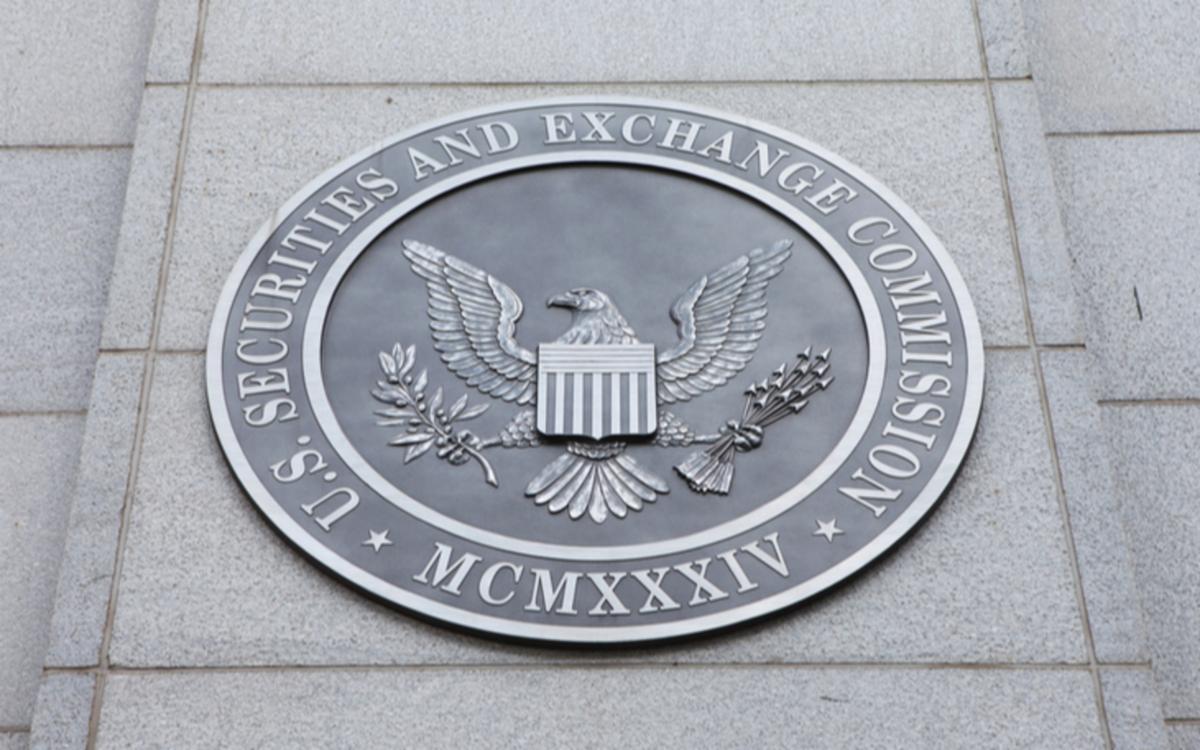
On August 31, 2026, FDA and the Securities and Exchange Commission (SEC) announced a new Memorandum of Understanding (MOU) intended to enhance cooperation between the agencies and facilitate the exchange of non-public information relevant to their respective oversight and enforcement responsibilities. The agreement runs for three years and can be extended.
For publicly traded life sciences companies, the immediate implication seems obvious: SEC may have an easier way to learn what FDA knows when evaluating what a company has told investors about clinical trial results, regulatory interactions, product approvals, or other FDA-related developments.
But FDA and SEC have been sharing this kind of information for more than two decades. So, what exactly is new?
An Old Relationship Gets a New Framework
In 2004, the agencies exchanged letters formalizing procedures for coordinating when public companies made potentially false or misleading statements about FDA review or other matters within FDA’s authority (see here and here). FDA agreed to establish a centralized referral procedure, while emphasizing that its employees would not routinely police public-company statements in the ordinary course of their work. The arrangement also established FDA-designated contacts throughout the Agency to respond to SEC requests for information, contemplated FDA review of FDA-related statements in SEC filings, and provided a “blanket” authorization to certain employees to share non-public information with SEC without obtaining case-by-case authorization.
The new MOU does not suddenly open a door between agencies that previously operated in separate silos. Its significance may instead be in making an existing information-sharing relationship more formal, systematic, and easier to use. Specifically, the MOU establishes designated points of contact and mechanisms for requesting and securely transmitting information and contemplates development of standardized procedures for information sharing. It also permits information obtained from FDA to inform SEC’s review of public-company filings as well as enforcement matters. Procedures for handling Freedom of Information Act (FOIA) requests received by one agency for materials related to the other are also established. These procedures should ensure that information about the activities of one agency is not inadvertently released by the other agency in response to a FOIA request. For example, a broad request by a third party to the FDA about information related to an FDA-regulated company should not lead to the disclosure of information in FDA’s files that reveals the SEC is investigating that company about issues within FDA’s purview.
Would FDA Tell the Same Story?
Much of the early attention to the MOU has focused on whether it will give SEC greater visibility into clinical trial data. There are important limitations on what FDA can share. Although the federal Food, Drug, and Cosmetic Act (FD&C Act) generally permits the Agency to share nonpublic records with other federal agencies subject to appropriate confidentiality protections, in certain FD&C Act provisions, it expressly prohibits FDA from sharing trade secrets and certain confidential commercial or financial information obtained under those provisions except where disclosure is authorized by them. Most notably for drugs and biologics, the FD&C Act prohibits FDA from disclosing information obtained through the drug approval and related regulatory processes concerning a method or process entitled to trade secret protection. Similar statutory protections apply to certain confidential information concerning medical devices, tobacco products, and electronic products. Thus, the MOU does not give SEC unfettered access to all nonpublic information in FDA’s possession. The more interesting issue may be whether the MOU makes it easier for SEC to obtain FDA’s side of the regulatory story.
Public companies routinely characterize FDA interactions in press releases, investor presentations, earnings calls, and SEC filings. FDA was “supportive” of a development program. The company “reached alignment” with FDA on an endpoint. A meeting was “positive and productive.” The company remains “on track” for submission or approval. However, those statements often summarize regulatory interactions that were considerably more nuanced. FDA’s meeting minutes, correspondence, review comments, or other records may identify qualifications or unresolved issues that do not fit neatly into a brief press release or other investor-facing description.
FDA regulatory lawyers know that there can be considerable daylight between FDA “agreeing” with an approach, “not objecting” to it, and simply discussing it. The new MOU reminds companies to pay close attention to those adjectives.
That does not mean companies must disclose every question or concern raised by FDA, nor does the MOU change the legal standards governing what public companies must disclose. Determining what must be disclosed remains a securities law question, but one that benefits from close coordination with experienced regulatory counsel. Regulatory teams are particularly well positioned to assess the significance of an FDA interaction and whether a proposed public characterization accurately reflects the underlying regulatory record.
[CONTINUE READING]
Reprinted with permission of Hyman, Phelps & McNamara, P.C.
| | |
EAAR 2026: Key EU Regulatory Developments
By Roxana Cernescu and Annette van Raamsdonk
| | |
Outlook on future regulations in the European Union
The 10th annual European Association of Authorized Representatives (EAAR) conference took place Sept. 8-9, 2026, in Brussels, with Emergo by UL participating in the event’s organization. Speakers included Flora Giorio, head of unit for Medical Devices at the European Commission (EC), and Nada Alkhayat, an EC policy officer specializing in emerging technologies, including AI-enabled devices. Representatives from the EC, the Belgian Competent Authority (CA), the Federal Agency for Medicines and Health Products (FAMHP), Notified Bodies (NBs) and industry shared perspectives on key regulatory developments affecting the European medical device sector. Discussions focused on Implementing Regulation (EU) 2026/977, the proposed revisions to the Medical Devices Regulation (EU) 2017/745 (MDR) and In Vitro Diagnostic Medical Devices Regulation (EU) 2017/746 (IVDR), efforts to simplify the EU regulatory framework, and updates on the European Database on Medical Devices (EUDAMED) and national registration requirements.
Simplification of the regulations
While the panelists, including representatives from the EC, NBs and industry, agree on the need to reduce the regulatory burden in the EU while maintaining a high level of patient safety, their views on how to achieve this differ.
NBs are concerned that reduced oversight of lower-risk-class devices and the decreased sampling and surveillance requirements may negatively affect patient safety and increase NB liability. They support a “risk-adaptive surveillance” approach that is performance-based and supports a life cycle approach. Sebastian Fischer described the concept as “rewarding sustained regulatory compliance and high-quality manufacturer performance while maintaining a preventive surveillance system.”
NBs do, however, welcome aspects of the proposals that would allow manufacturers to make greater use of NB expertise, including participation in expert panels, earlier structured dialogue with NBs and a formalized role for the NB Coordination Group (NBCG-MED).
Digitalization of the conformity assessment process and market surveillance
One of the pillars of the new proposals is to reduce the administrative burden and harmonize NB assessments. For example, the proposal enables NBs to perform remote conformity assessments. In the meantime, while stakeholders are waiting for the proposals to be adopted, they are already working on further digitalization.
This month, the European Horizon Project DIGICAP launched with a main goal of creating formats for structured machine-readable data and data exchange. This goal should lead to more harmonized and efficient conformity assessments for manufacturers and NBs. Contributors include competent authorities of member states, the EC, NBs and industry representatives.
Aside from digitalization, the EC is looking into best practices from other jurisdictions and international cooperation and is assessing how it can make a more resilient and adaptable legal framework. Such a framework will, for example, allow regulators to adopt implementing regulations or binding common specifications when necessary. The EC is currently working on setting up a horizon scanning system for medical devices and in vitro diagnostic devices (IVDs) to maintain an up-to-date overview of new and emerging technologies.
Finally, the FAMHP shared insights from inspections of Authorized Representatives (ARs) located in Belgium, which related to, among other things, incomplete mandates and lack of access to manufacturers’ technical documentation. Additionally, the FAMHP shared how CAs from different member states perform joint inspections.
An EU-wide pilot on Reinforced Market Surveillance of Medical Devices and In Vitro Medical Devices (JAMS 2.0) will come to an end this year. The aim of JAMS 2.0 is to harmonize the way CA inspections take place and to create common guidelines and templates.
[CONTINUE READING]
| |
Florida Medical Manufacturers Consortium
(850) 270-3158
| | | | | |