Outdoor Learning Highlights | | | | |
In order for the next generation to love and care about the environment, we must teach our students to touch dirt, smell fresh air after the rain, step in the mud, feel its coolness, plant and taste their own produce.
Loni Nguyen, Teacher
Mather School, Dorchester
| | | Outdoor Classroom Spotlight | | | | |
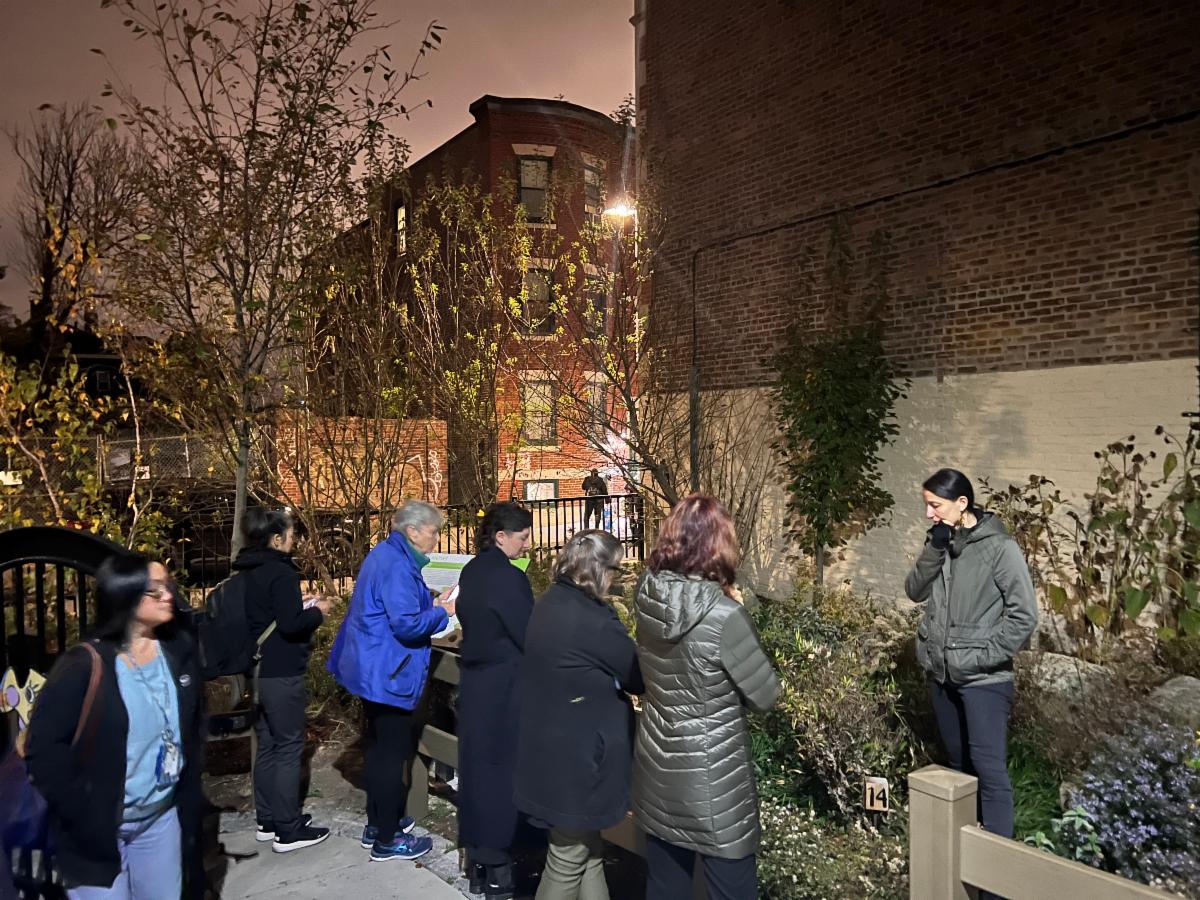
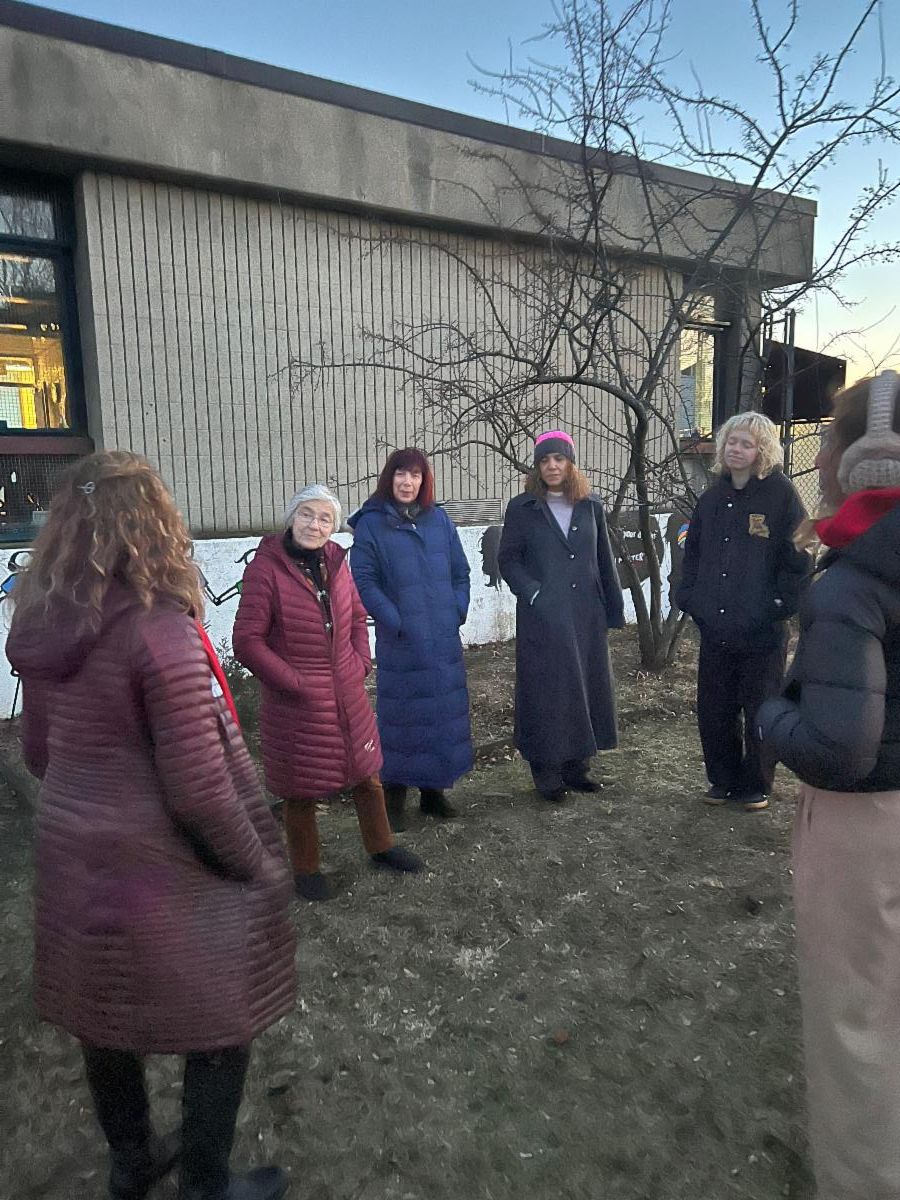
On a chilly day in November, Cindy Ballenger and Alicia Zipp from Friends of the Boston Schoolyards met with Loni Nguyen to discuss the outdoor classroom and garden project at the Mather School in Dorchester. The school, the first public elementary school in all of North America, is now home to a two-language K-5 Vietnamese-English program, as well as classes for children with learning disabilities. In addition to being a teacher at the Mather, Loni coordinates the outdoor learning program.
| | | |
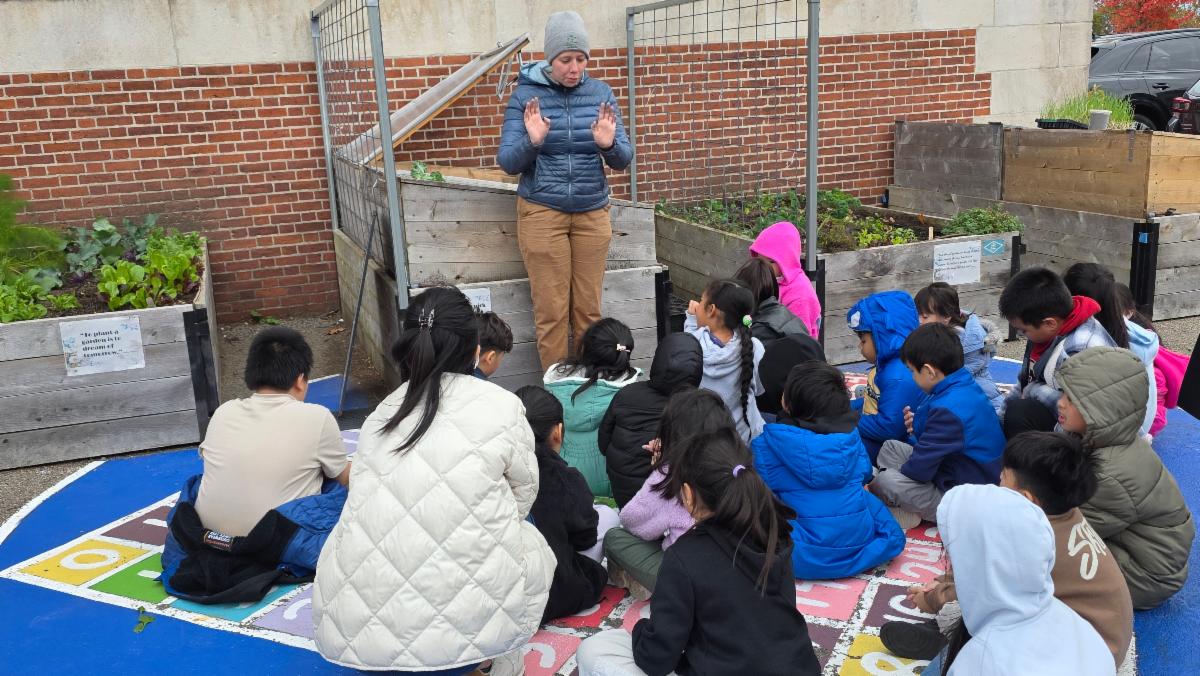
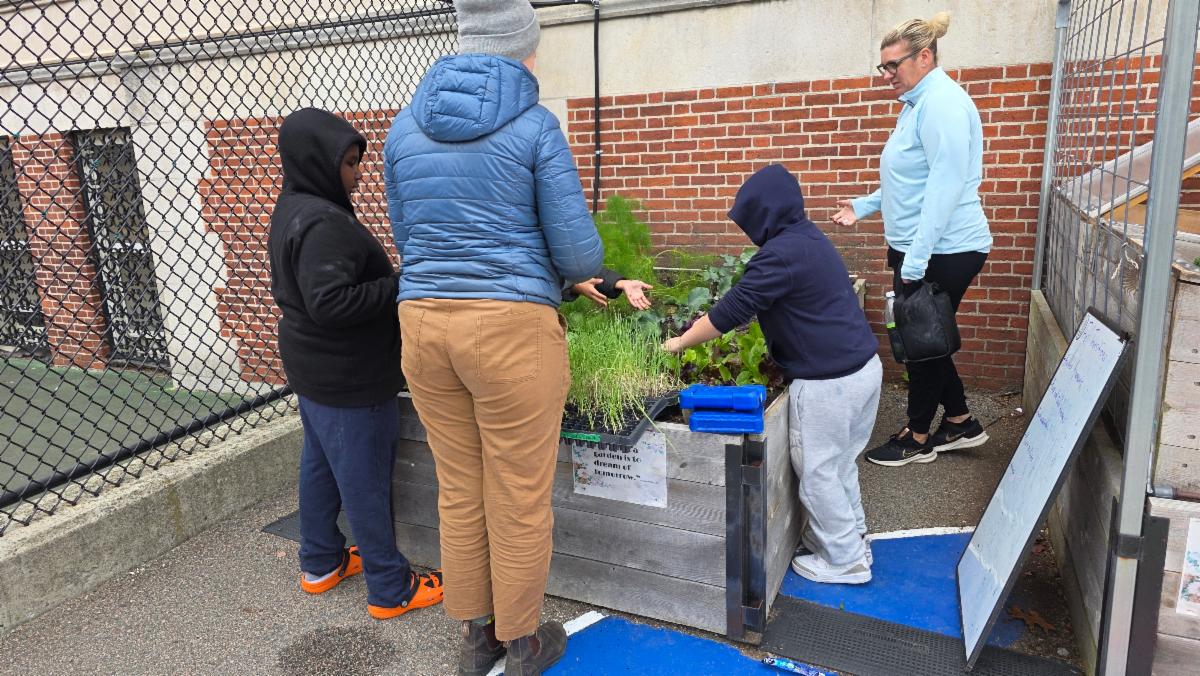
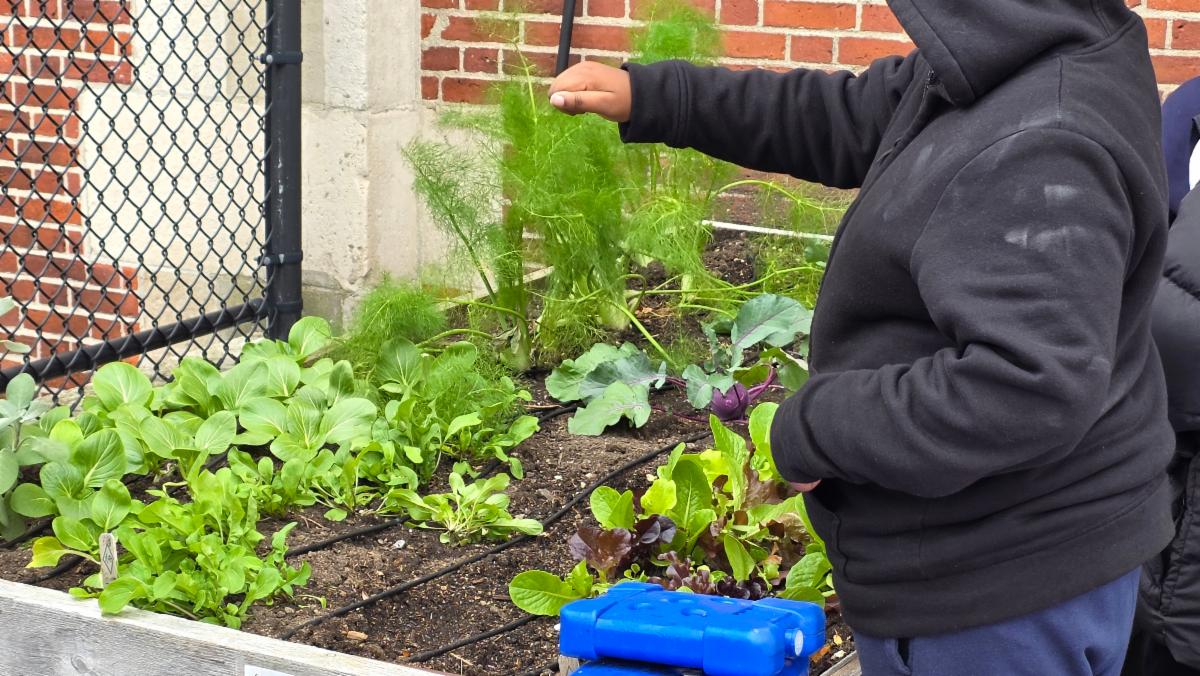
The garden itself is two cold frames built on supports to make them high enough for children to reach the plants easily. The Green City Growers farmer, Kate Nash, explained that the cold frames are located against the wall of the school so that west and southern sun exposure and warmth is held by the bricks. Thus, even though many gardens in Massachusetts are finished by this date in November, the Mather School had lettuce coming up.
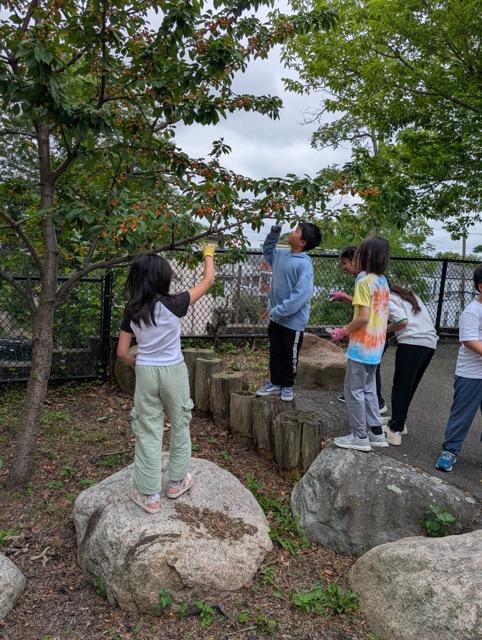
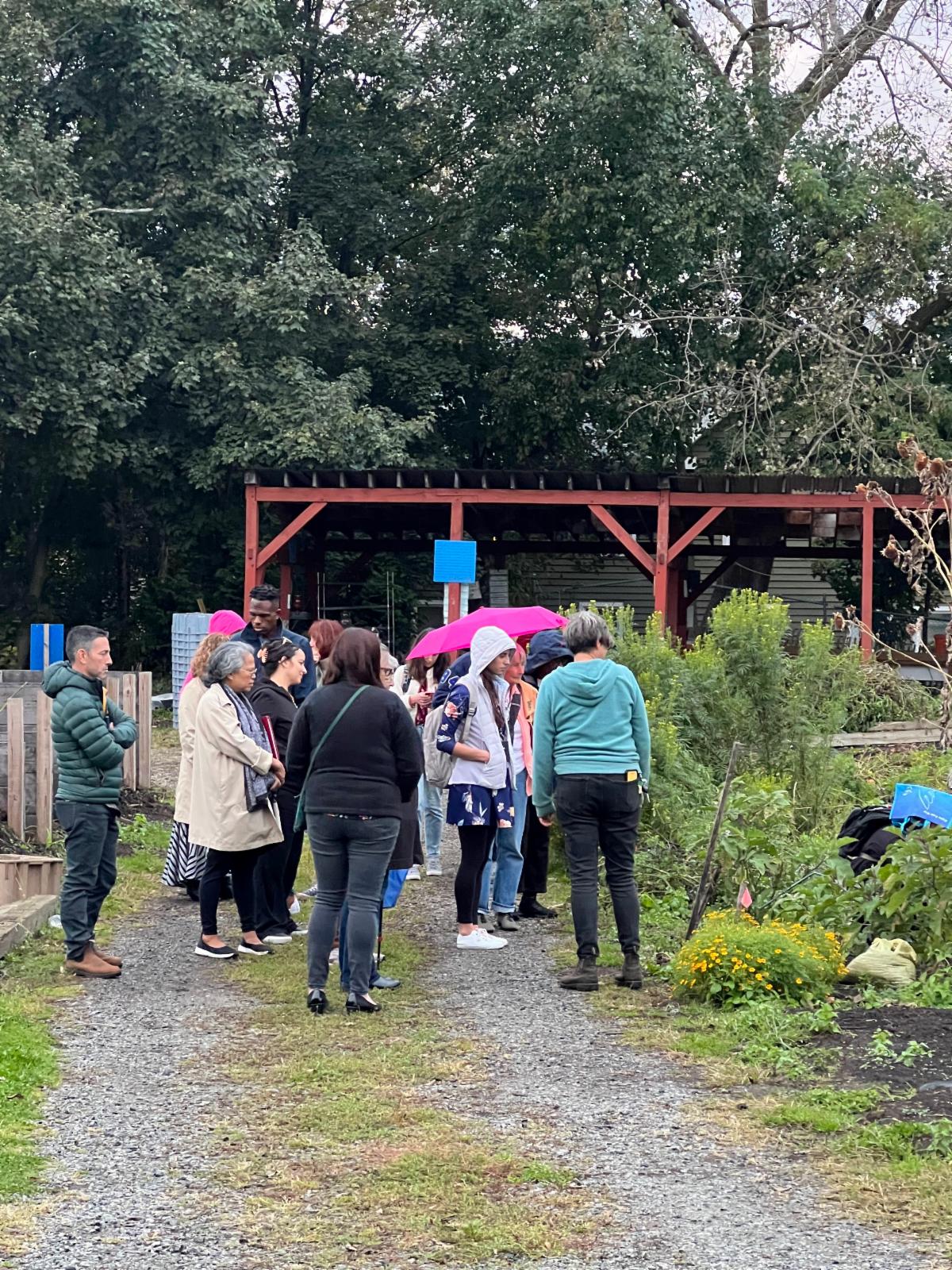
There is also an enclosed garden down the hill where Alicia and Cindy visited. There the school has an additional five raised beds. Each raised bed was assigned to different grade levels about two years ago. Some classes planted tomatoes, lettuce, flowers, and herbs. Today they are not as lush because some classrooms are having difficulty finding the time to care for them. Nevertheless, according to Loni, many of the plants survive based on what Mother Nature provides. There is also a cherry tree that produces fruits and three apple trees that have fruit in the spring. Unfortunately the fruit didn't make it to the harvesting time: birds perhaps, or neighbors? The trees too need more attention and care.
| | |
Loni tells us that when she takes a group out she makes sure to instruct them as to how loud and how often they can shout – she says they are that excited! She explains that, if they live with grandparents, then they may have a garden at home, but otherwise in general the children’s parents are working too hard and are too busy for gardening. The children therefore have little experience with plants.
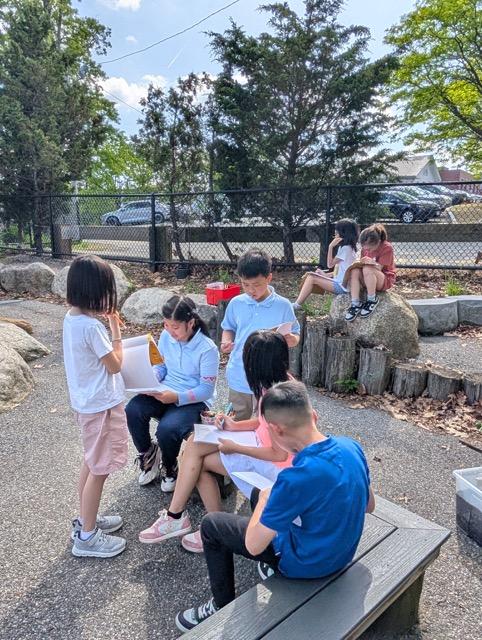
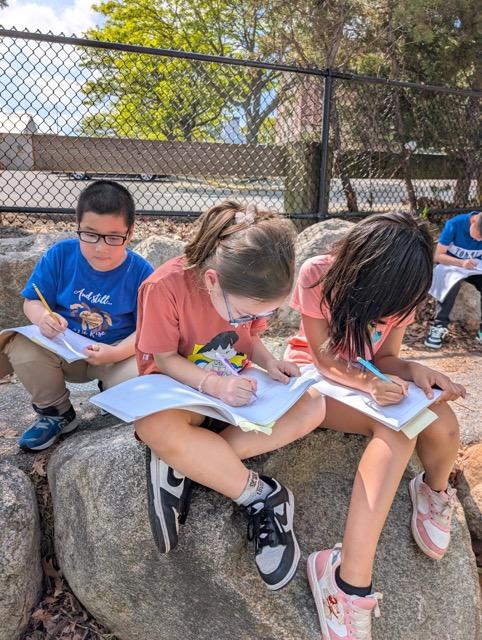
Many teachers bring their classes outside to explore, write, and sketch. Other staff members eat lunch out there. The coaches and administrators hold their meetings in the gardens. The neighbors enjoy the space as well. The harvest is shared with them. The children are amazed and excited by everything: from worms, to grubs, as well as the plants. The students explain that they feel relaxed and happy in the garden. As they look for bugs, they are sketching pictures, and writing about their sketch.
| |
We watch as children come out to the cold frame gardens. The children in Songkhla Nguyen’s 2nd grade came out first. They reminded Farmer Kate about harvesting the potatoes – they had done this in a previous class and remembered it excitedly. Then they discussed the coming cold. They watched as one leaf was placed between two cold packs and another one was not. At the end of class they observed the difference that the cold packs had made on that one leaf.
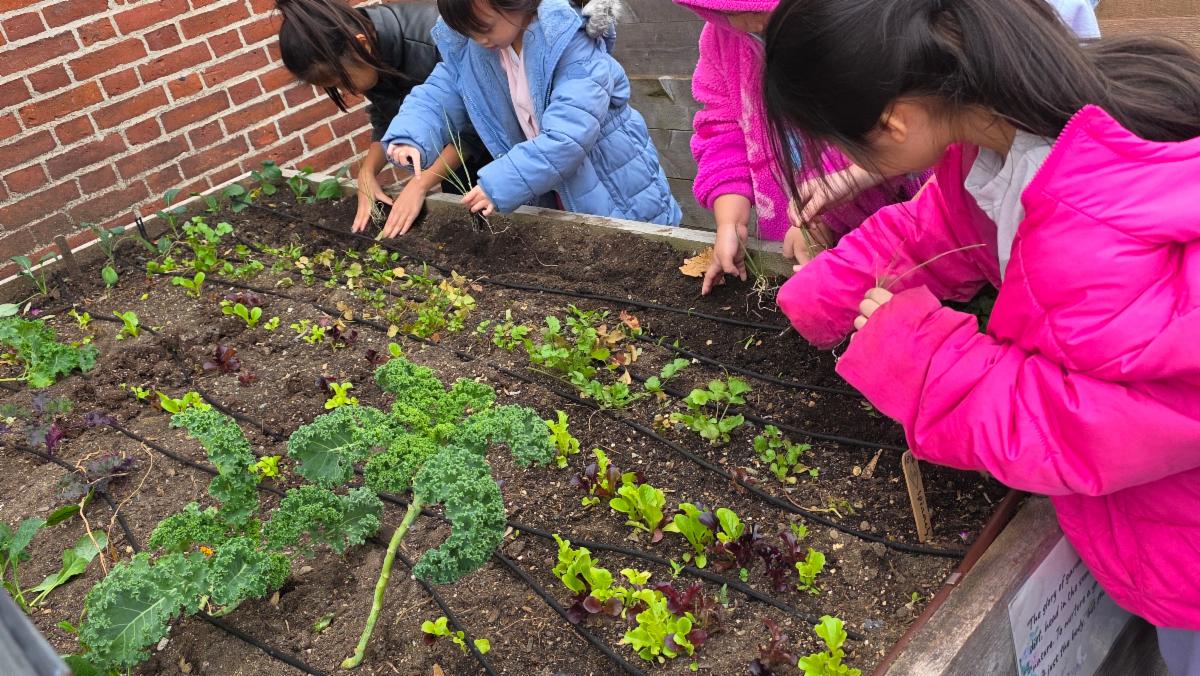
The class planted scallion seedlings. All the students were gentle with the seedlings, carefully placing them in the dirt. They dug with “the two finger touch” as instructed to avoid hurting other plants already there. They all got dirty hands and showed each other how much dirt! Some spoke affectionately with the seedlings: “You’ll grow up like your father, like your baby cousin.” They noticed that the leaves were changing in the garden. After they fertilized the cold frames with tiny pellets, this group returned inside.
| | Then Mary Kate McKinnon’s 2nd and 3rd grade Learning Disabilities class came out. They were careful to notice that the bees they had seen on an earlier visit were not there now. They were excited, yelling “Yay! Yay!” as they saw the plants they would put in the earth. They too put scallion seedlings in the dirt, getting nice and dirty, and then they pulled up radishes. They compared the sizes of the radishes: some were very big, some tiny. Later, after they wash their hands inside, they will see if they like the taste. | | |
All the children were very relaxed as they went about their tasks. They were affectionate and careful with the plants and yet organized as they sought the right spot for the next seedling. A nice experience for all.
Loni has designed a pop-up classroom with materials stored in a nearby shed. She is working to make it possible for more teachers to bring their classes outside to the garden and make learning more joyful.
| | |
Partner Highlights--BPS Science Department
Interview with Elizabeth Hadly and Molly Rovenko
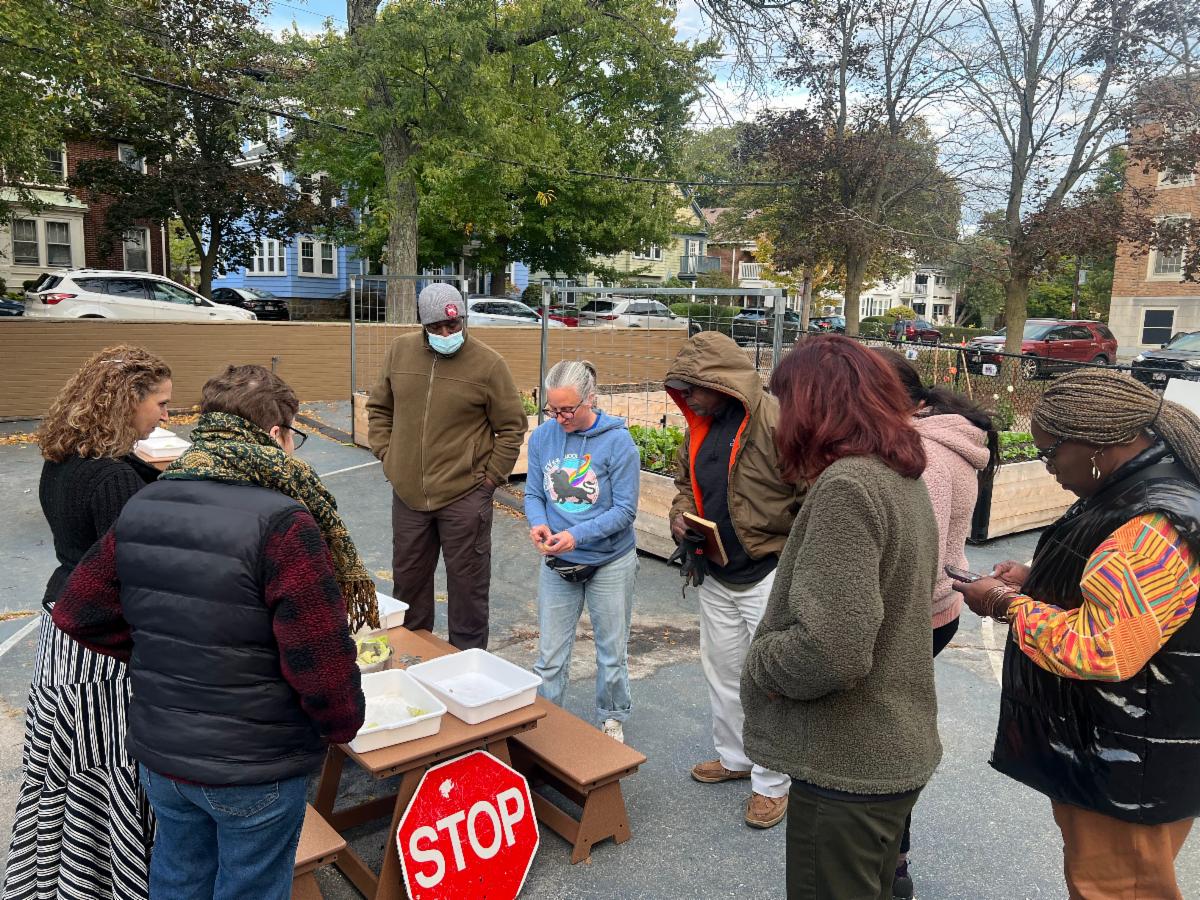
| | Sara Gardner and Barbara McLaughlin had the opportunity recently to meet with Elizabeth Hadly and Molly Peters, program directors in the Boston Public Schools (BPS) Science Department. We were interested in learning more about their perspective on the Teaching & Learning Outdoors (TLO) Champions program which was highlighted in the December 2025 Friends of the Boston Schoolyards Newsletter. The teacher champions overwhelmingly praised the program and the impact it has had on their teaching and the confidence it has given them as educators. | Molly and Elizabeth worked with Michelle Martinat, Schoolyard Improvement Project Manager in Facilities, to structure and plan the program which is in its third year of existence. The goal of Champions is to support science learning in outdoor spaces and to help students make a connection with the earth. Molly and Elizabeth were both teachers in the district. Molly primarily supports teachers in K0/K1 to grade 2 and Elizabeth supports teachers in grades 3 to 5. Michelle’s background is in landscape architecture and gardening, and she also was a teacher. Each one brings a wealth of knowledge, experience, and enthusiasm to the project. | | Thinking of starting a garden? Mass Agriculture in the Classroom has the resources you need. | | Friends of the Boston Schoolyards | info@friendsofthebostonschoolyards.org | | | | |