Outdoor Learning Highlights | | | | We are pleased to feature the Samual Adams School in East Boston as the outdoor learning highlight this month. For many of our city students, their primary access to nature and diverse cultural experiences is through their school. The Adams school recognizes this fact, embraces its urban environment, and provides its students with rich learning experiences. It was a joy to visit their outdoor classroom and speak with the students, teachers, and principal. We hope that you will find it inspirational as well. | |
"My heart wants me to live outside."
Shyanne, Edward Everett K-1
| | | Outdoor Classroom Spotlight | | Hard is Not Bad-A Morning at the Samuel Adams School | | |
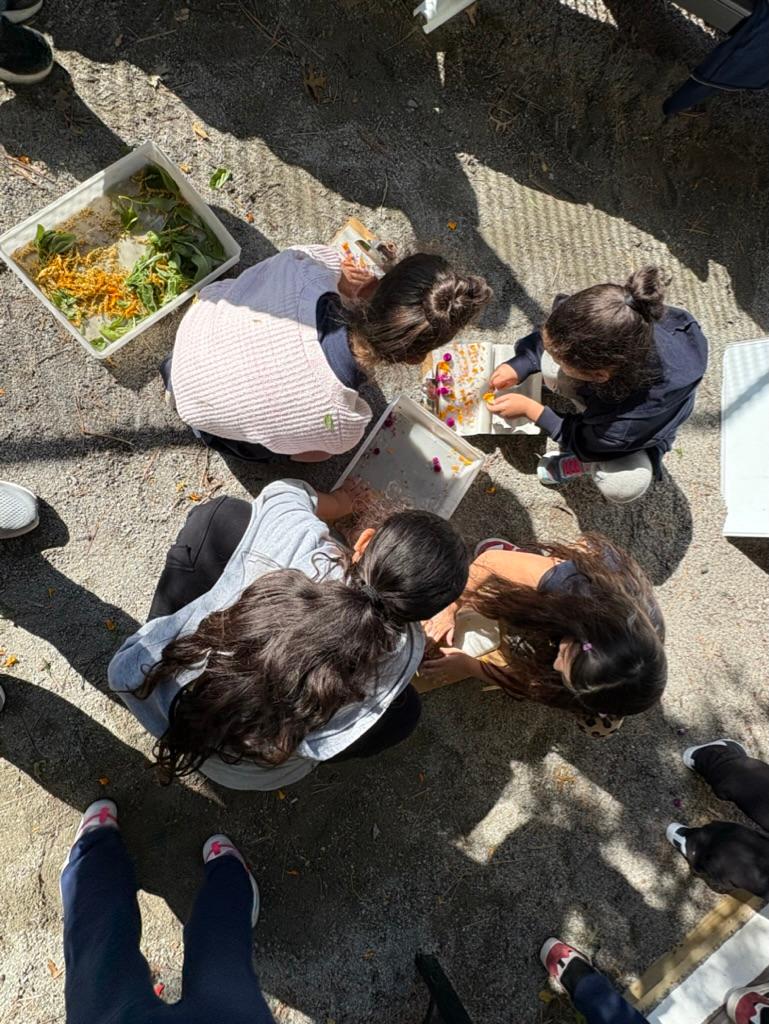
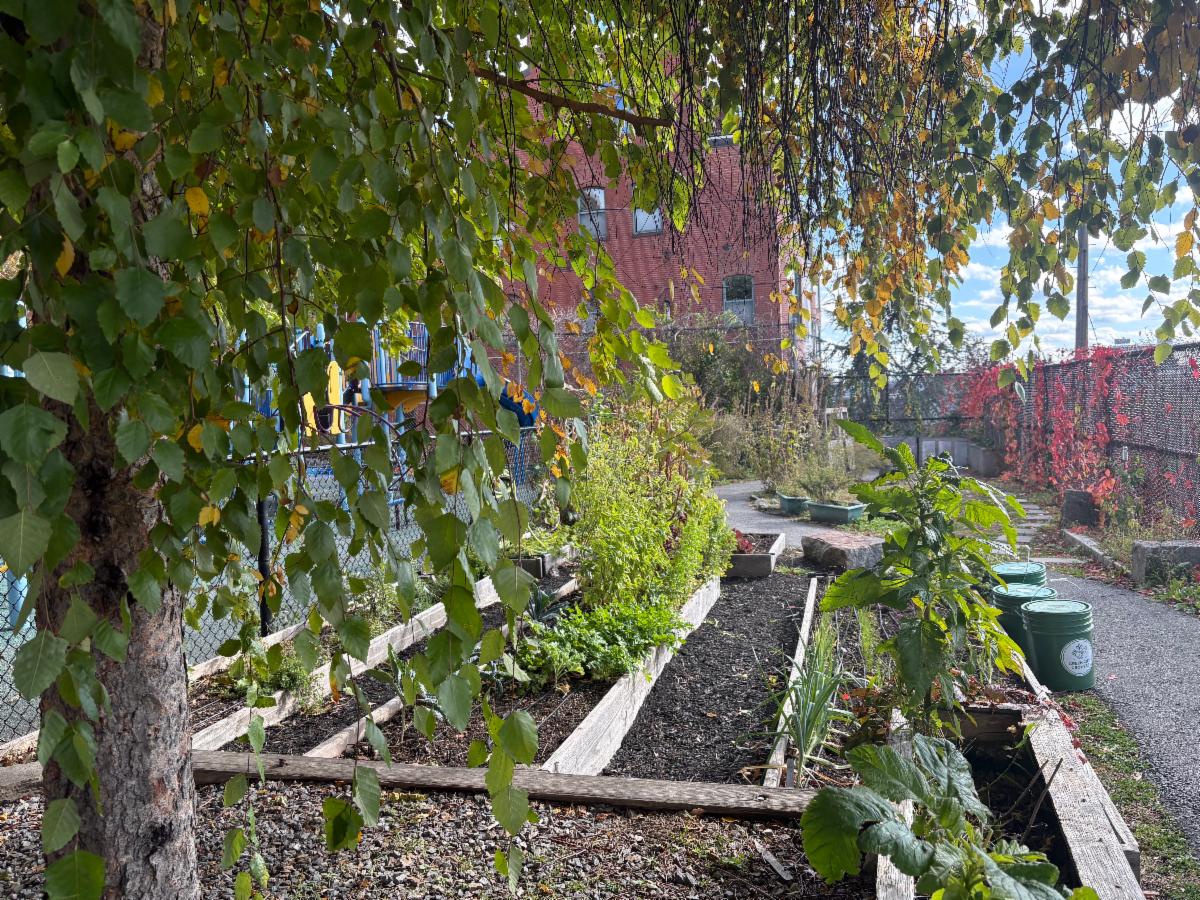
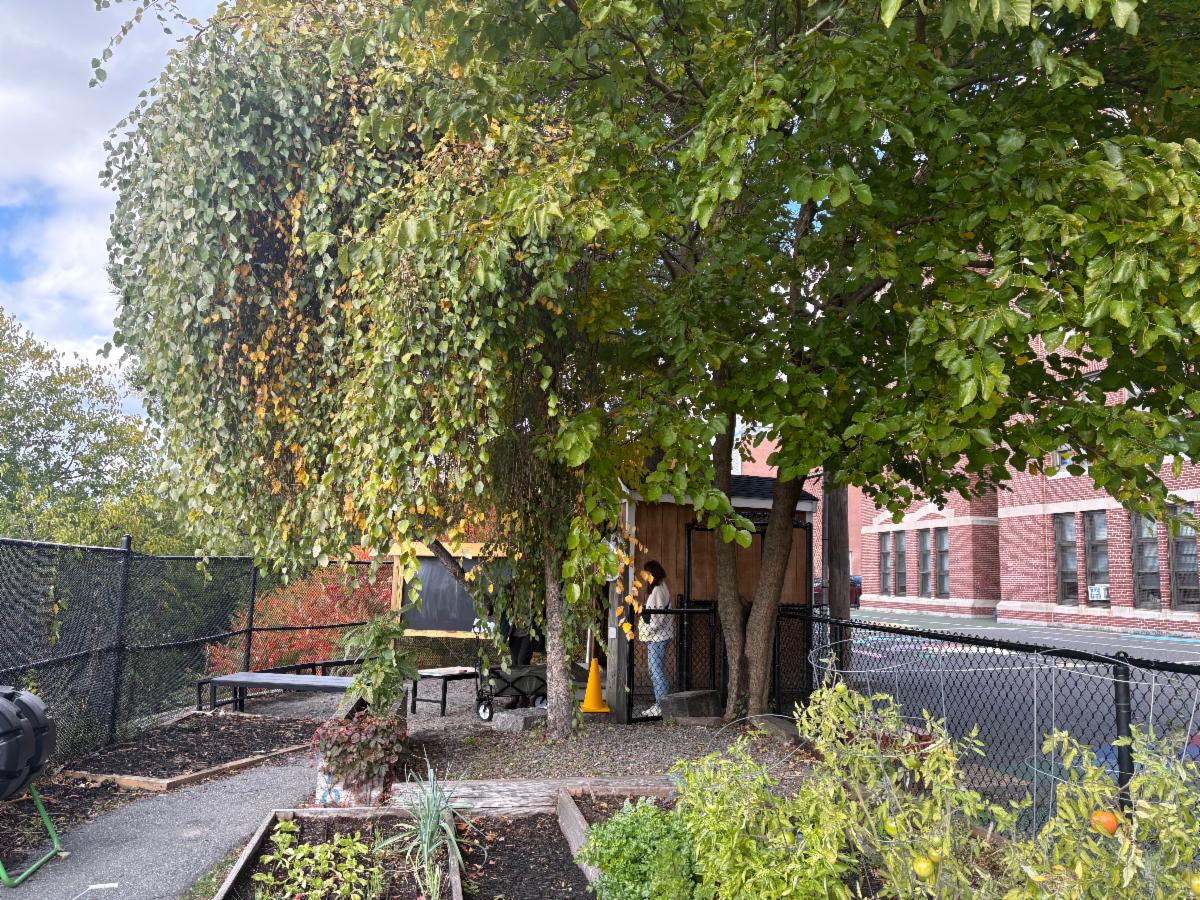
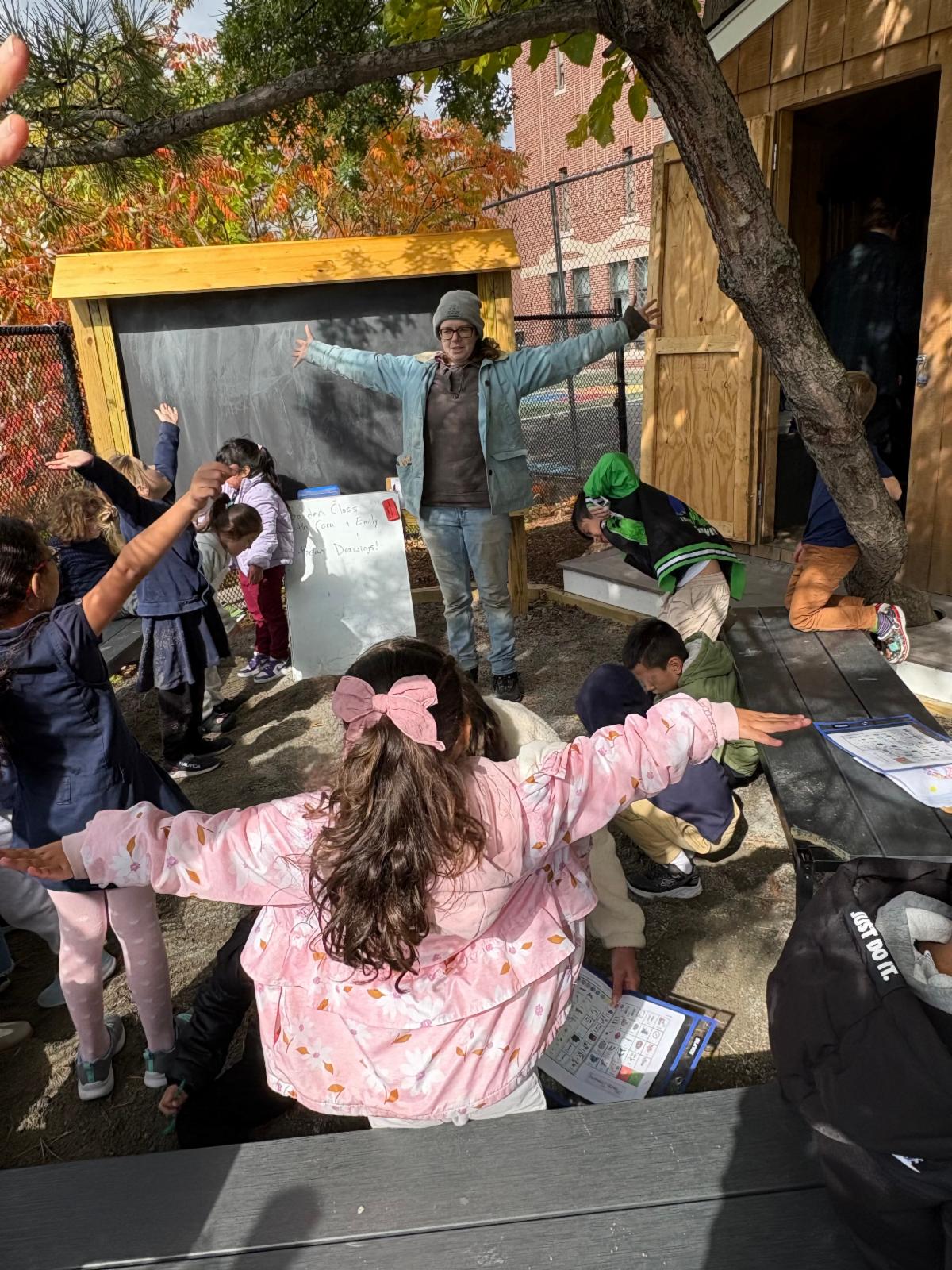
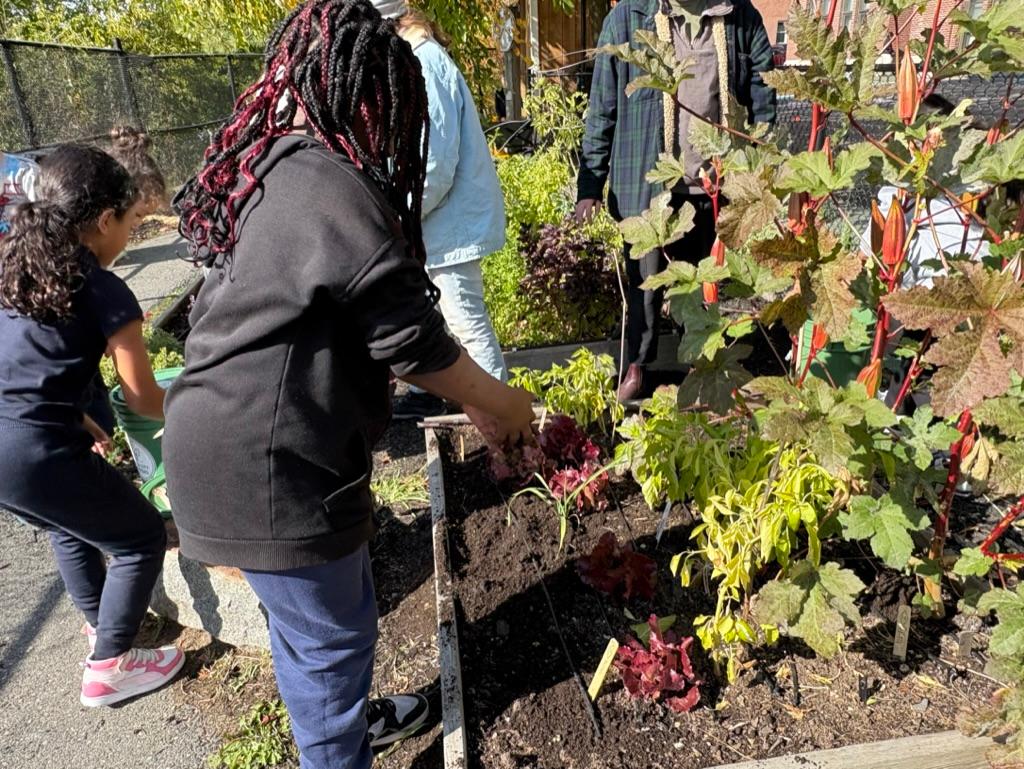
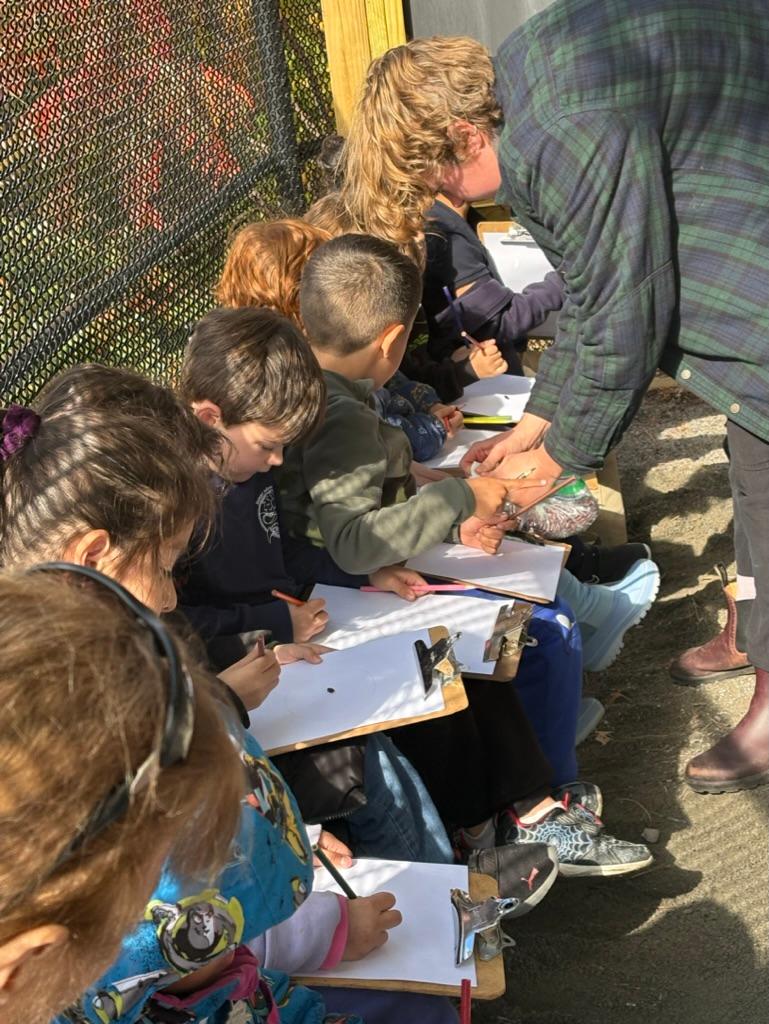
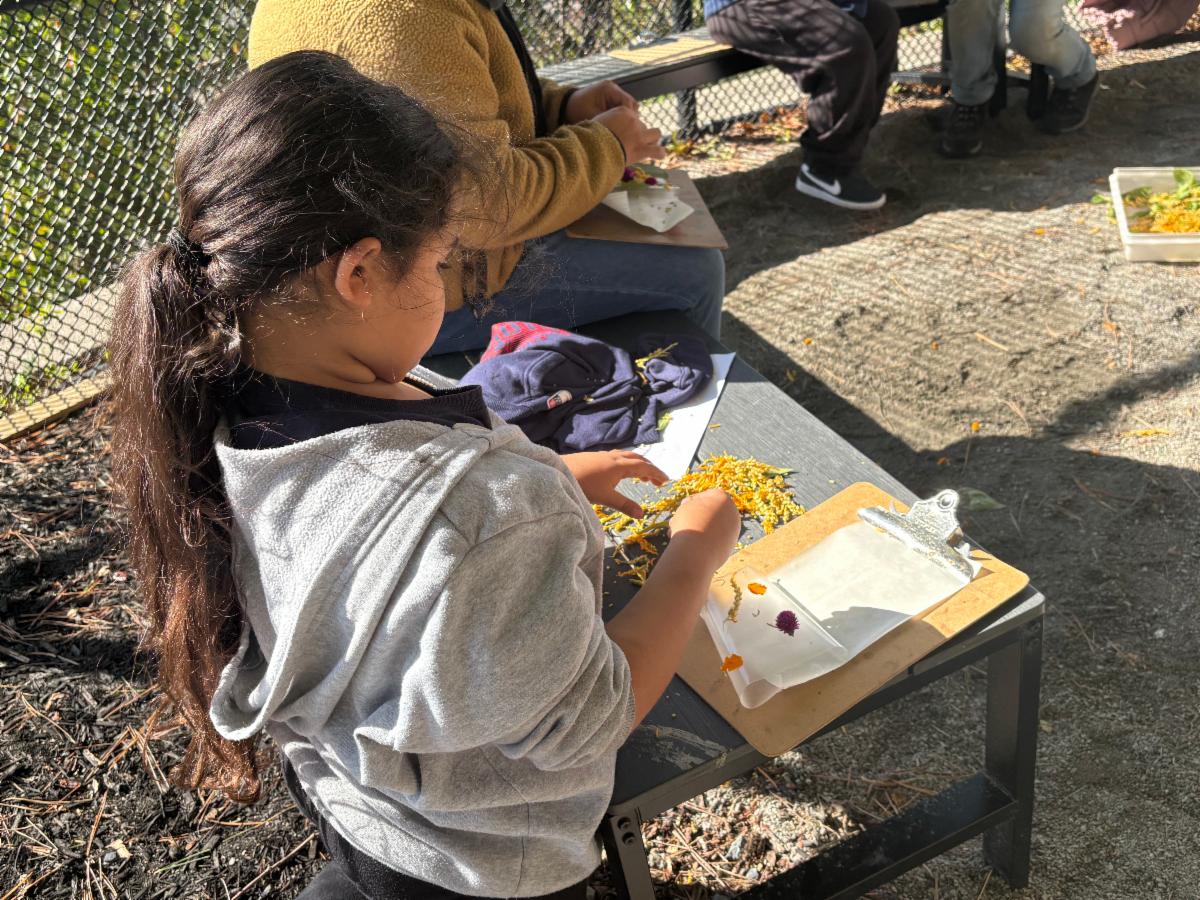
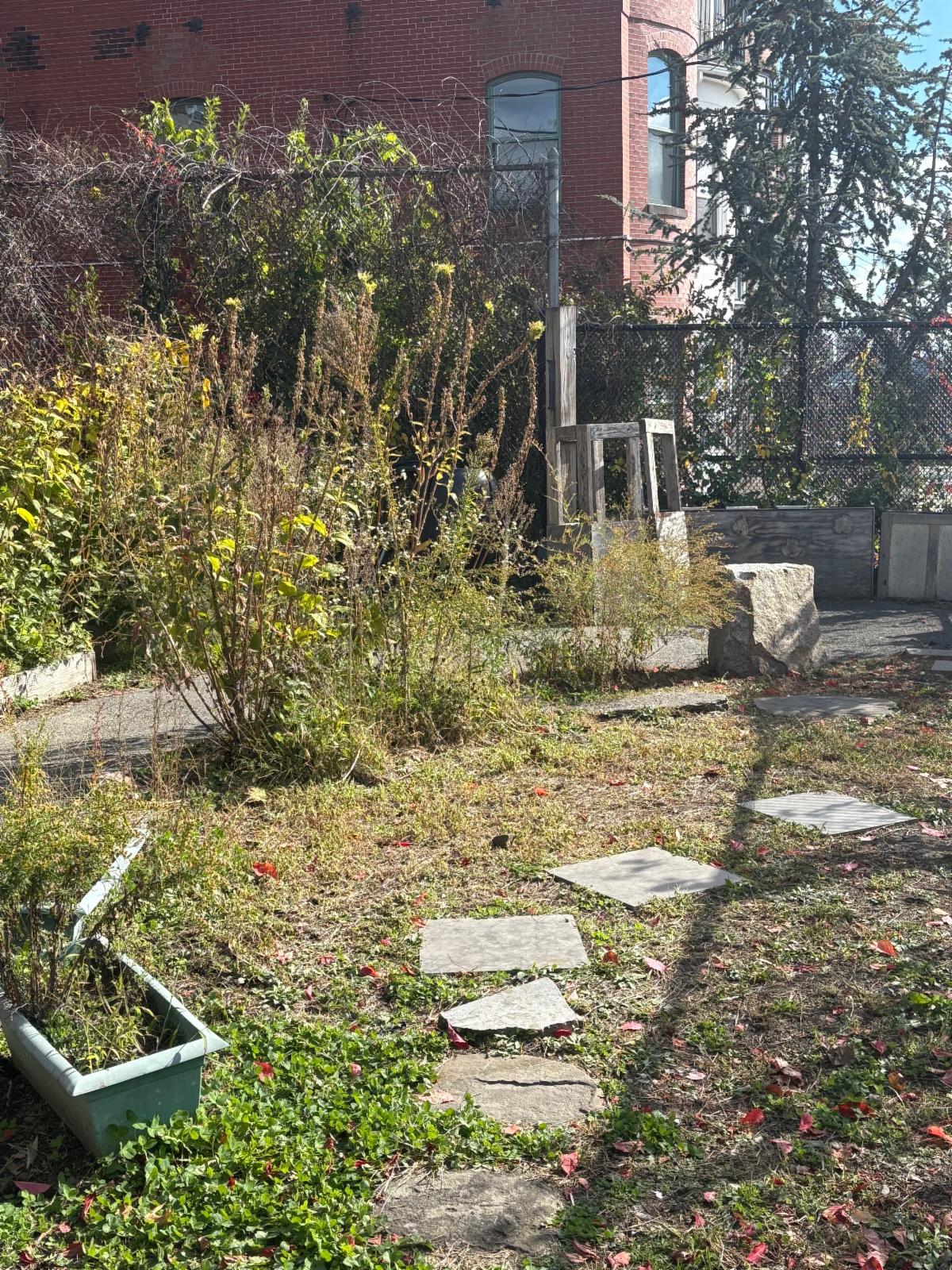
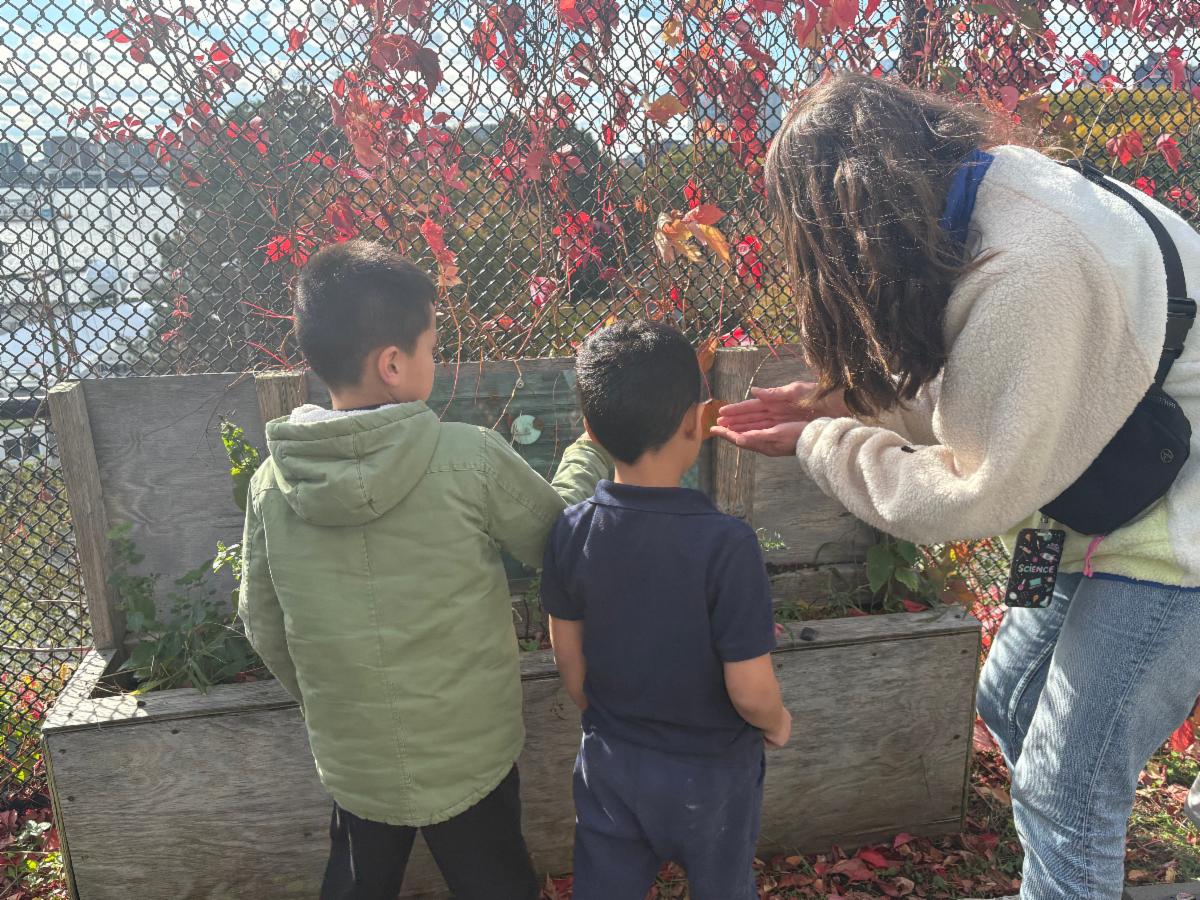
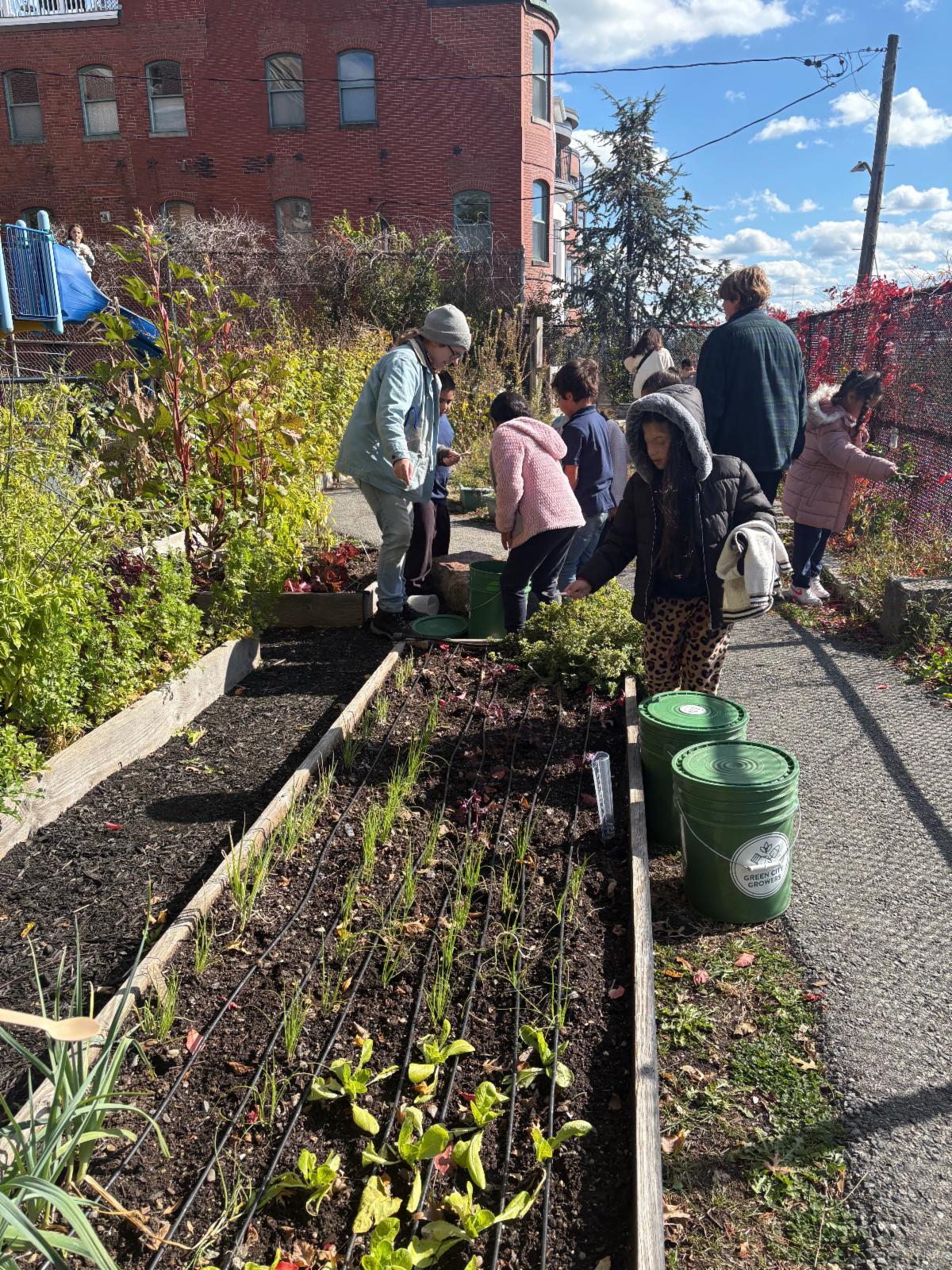
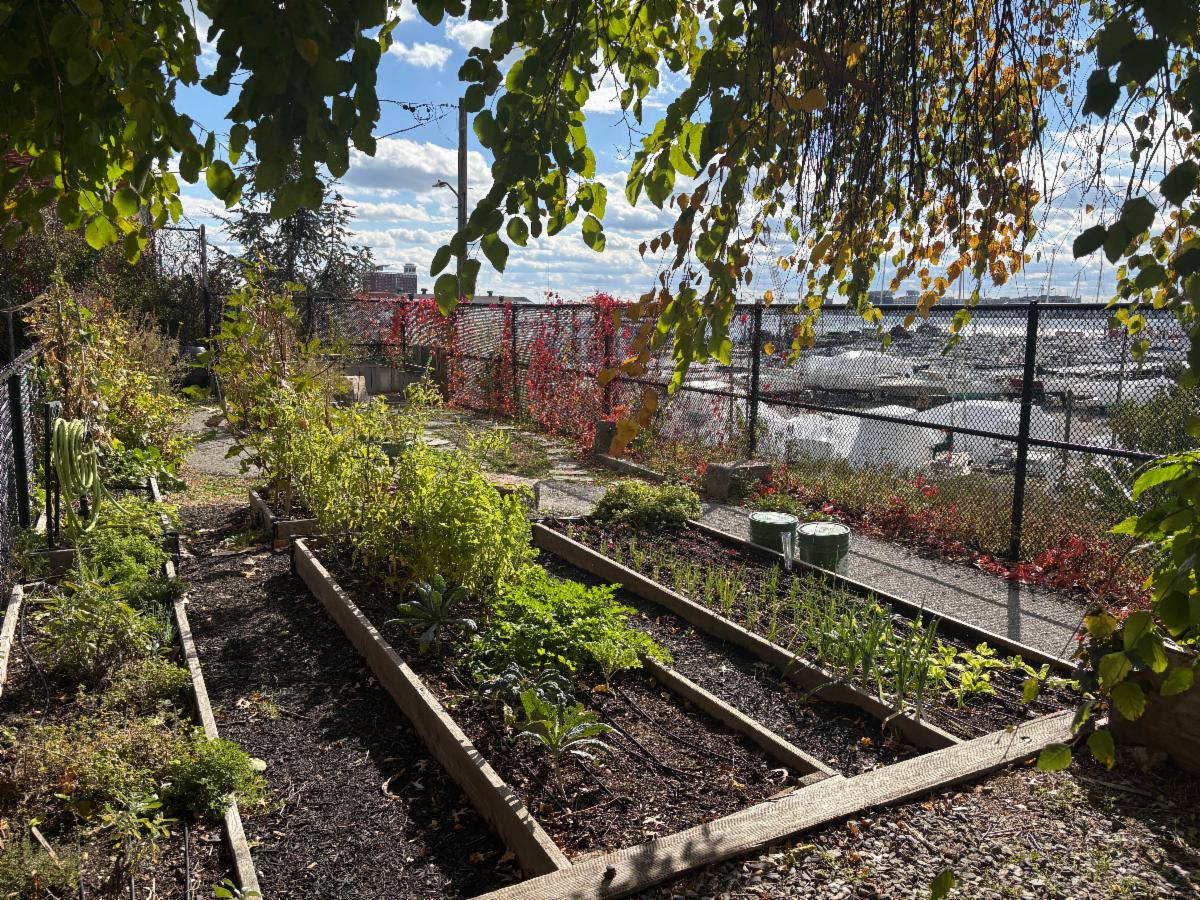
On a warm day this Fall, Sara Gardner and Cindy Ballenger from the Friends of the Boston Schoolyard visited the Adams School in East Boston as two inclusion kindergartens enjoyed the garden. At this urban school the teachers and their partners, Green City Growers, have developed a garden. They have done so in a tiny pocket of land, overlooking the Bay in the midst of the city, very securely fenced so no one tumbles down into the bay and yet, just large enough for some freedom of movement and for the teachers and children to manage.
This spot of greenery is enjoyed by the students on a regular basis. They say this year they had an excellent crop of tomatoes, good lettuce, beans, and kale. There are a few remaining beans drying on the vine which will be used for seeds for the following Spring.
| | |
Principal Interview
Joanna McKeigue Cruz
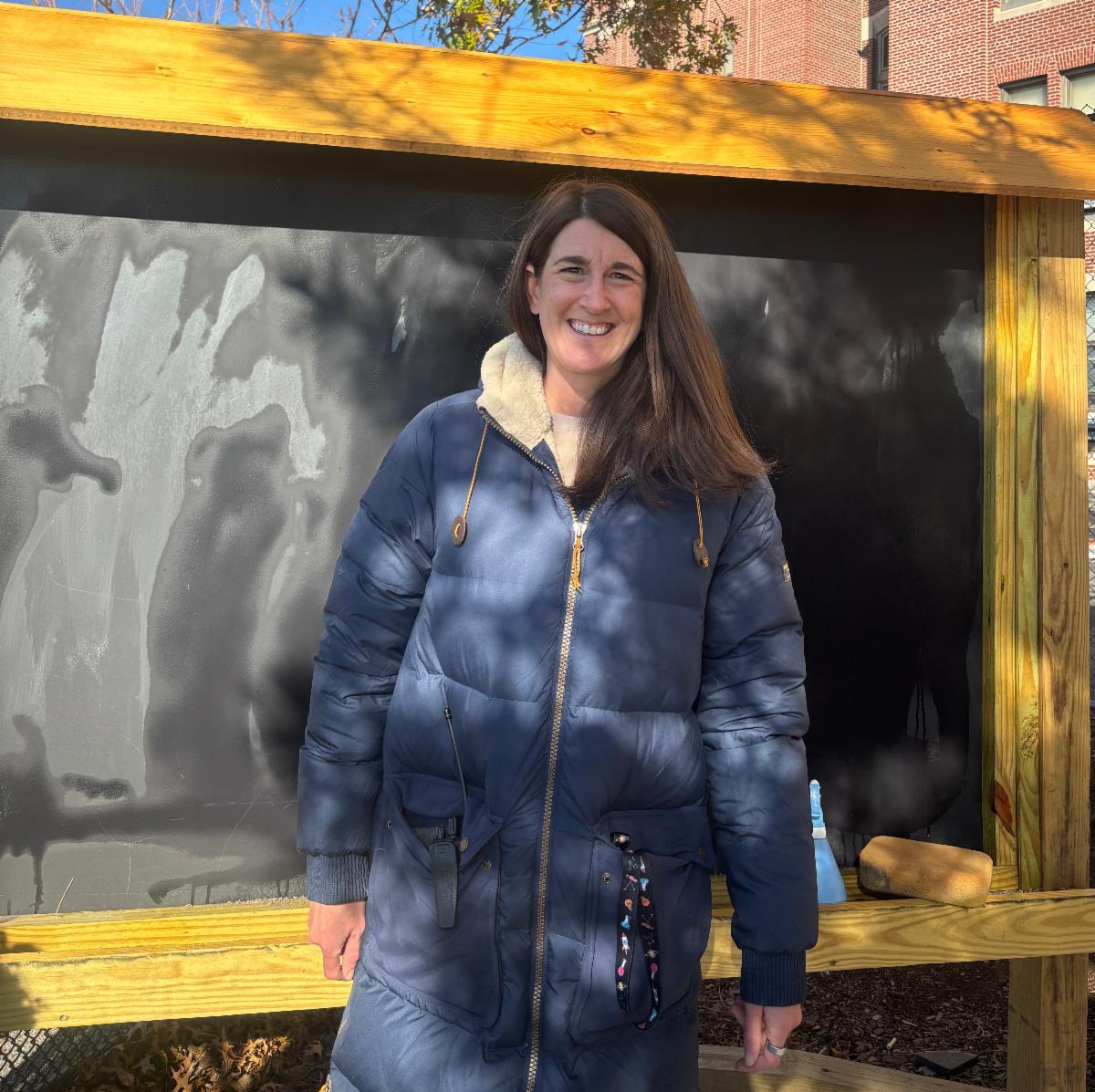
| | Walking up to the Samuel Adams Elementary school, one is struck by the beauty of its iconic site on an East Boston hilltop overlooking the Boston Harbor and surrounded by garden beds and fruit trees. Walking into the school, one is enveloped by the vibrant, joyful atmosphere and welcomed by the smiling faces of students and teachers. This is in no small part, due to the influence of the principal, Joanna McKeigue Cruz. With deep roots in Boston Public Schools, Ms. Cruz grew up in Jamaica Plain, where she still lives, and was educated at the Trotter, Lewenburg, and Boston Latin, as well as Boston College. Her mother, Jeanne Sullivan McKeigue, served on the Boston School Committee for four years. Ms.Cruz, herself, has been a teacher or administrator in BPS for 20 years. We deeply appreciate her taking some time from her busy schedule to talk about outdoor teaching and learning with us. | | |
FOTBS: We see that you have a lot of diversity in your programs here at the Adams. What can you tell us about how that has developed over time and the importance of partners?
JMC: We encourage as many partners as will participate with us. We have a great partnership with Piers Park Sailing, the ICA, Boston Ballet, Green City Growers, Tufts, Tree Eastie, whatever we can find that’s going to give our children a wide range of experiences is really important to us. Obviously, we tie these into the curriculum and align them with the standards, but it is so great for our students to experience these different things. The teachers are really great at finding different partners. When they come to me and say "What do you think?’, I say, absolutely, because it is going to be enriching for our kids.
| | |
FOTBS: We are so grateful that you are speaking with us, because at Friends of the Boston Schoolyards, we’ve observed that the role of the principal is key in a school developing outside learning experiences for students. Can you talk a little about your philosophy and the importance of encouraging these programs?
JMC: I’m a firm believer that school goes beyond these four walls and that education goes beyond these four walls. It’s important for students to understand that it’s not just the reading and writing and being in the classroom with the books:that education is about the world around them and the things that grow from the ground, the things that live in the ground, is also part of their learning as well. I think that giving the students the experience of being in the garden and being able to explore things is one of the highlights of my week. It’s also an opportunity to do a lot of inclusion during the gardening time. It’s a great opportunity for students to be able to work together.
| | | |
FOTBS: At FOTBS we often hear from teachers that they are afraid to go outside. That someone will think that they are not really teaching. What have you done to encourage teachers to go outside?
JMC: I think my own philosophy of teaching is that you teach and learn through experiences, and that when students have the opportunity to touch things and feel things, they are more likely to write about it, to talk about it and to engage in discourse about it. When teachers ask me ‘Can I go on this field trip?’ or do this project outside, I say ‘Yes’. That’s going to give kids the experiences that will make them want to read, write, and learn about something. So I’ve always encouraged them. It’s just good teaching.
| | |
FOTBS: Do you have most of your classes going outside?
JMC: Yes, we have all of our students going outside in Science with our most amazing science teacher, Jessica McNiff. Our Kindergarten teachers also bring their students outside regularly to observe. Part of their growth is talking about what they are seeing, feeling, smelling, sensing. It’s a big part of what they do.
FOTBS: And what about other subject areas?
JMC: Yes, for example, in fifth grade the students read a book entitled Seed Folks at the beginning of the year. Since the book is about planting, harvesting, and growing, there is an awesome opportunity for them to go down to the garden and tie what is happening there into their classroom learning. The Kindergarten does a unit on Construction and Building. It was so fun last year when the shed was being built. The kids got to see building in motion. There are so many different ways that we have been able to tie going outside into our curriculum.
| | | | | |
FOTBS: What are some of your ideas about how we can make a cultural shift in BPS? How can we make outdoor teaching and learning an integral part of our schools?
JMC: As far as changing the culture, it’s really important to understand that this is what kids enjoy writing about. This is what they enjoy reading about. When they have something that they can connect to, that’s what gets their interest. If we want to be responsive to our students, this is how we can be responsive to our students: connecting it to our curriculum, connecting it to their learning. It is what makes their understanding go deeper.
| | | |
FOTBS: How about keeping these programs going? How have you managed to build this momentum?
JMC: I think having really strong teachers who are invested in this work and know the value of it. For example, Jessica McNiff will continue to connect with other people. We’re trying to get some more beds built and the engineers from Tufts are trying to put together new beds for us. It’s great because it’s not only an experience for us, it’s an opportunity for students at the university to see that what they are doing is going to have an impact on kids. As I said, education goes far beyond these four walls, and it’s really important for us to connect and build as many experiences for our kids as possible.
| | | | |
FOTBS: What are the challenges in having the students learning outside?
JMC: The weather and being dressed appropriately. We do get some free coats, so that is helpful. We give away some coats every year–between 75 and 100 coats. Gloves, hats, mittens–these are all challenges as well. Taking care of it over the summer can be a challenge. Our neighbors will jump in and help out if they need to. Green City Growers takes care of their beds. Making sure we are keeping up with everything because it can overgrow very quickly. When I came, the garden was completely overgrown. I got some volunteers to come in and clean it up. From there, Jessica started to work with the schoolyard.
| |
FOTBS: Is there anything else that you would like to say about outdoor teaching and learning at the Adams School?
JMC: One of the things that we might be looking for is how to get parent volunteers to support and to come in during the times that classes are out there. That is another layer that we would like to go into. That takes a lot of work and organization, but that is a next step for us.
| | |
FOTBS: What other benefits for students do you see in outdoor teaching and learning?
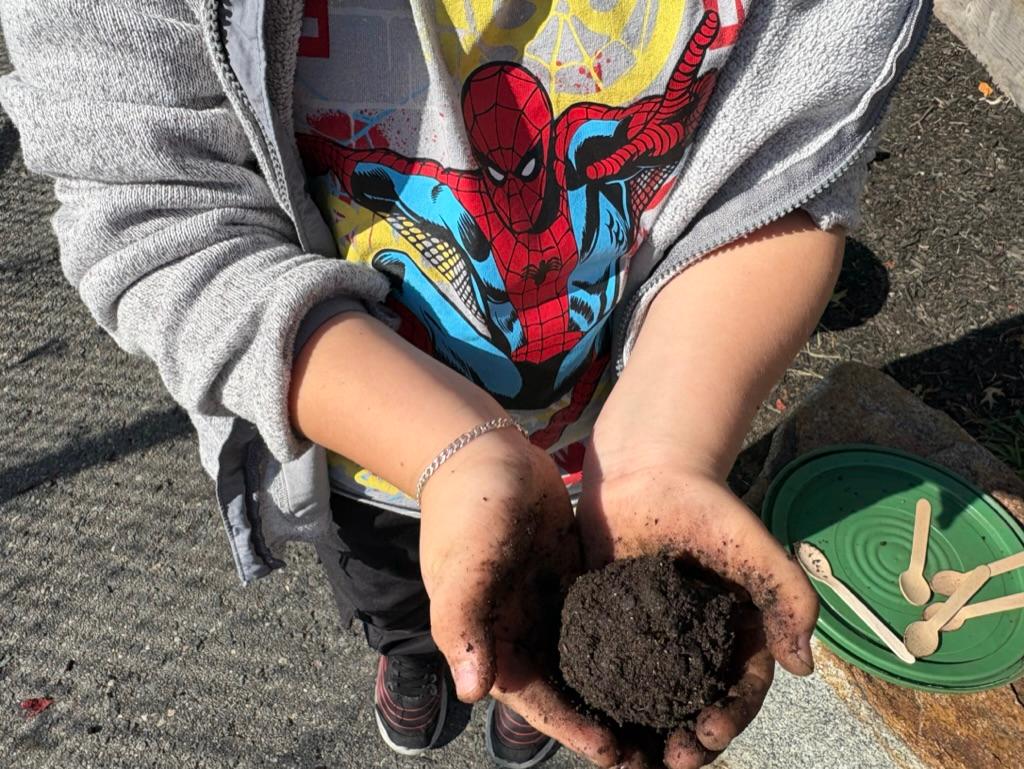
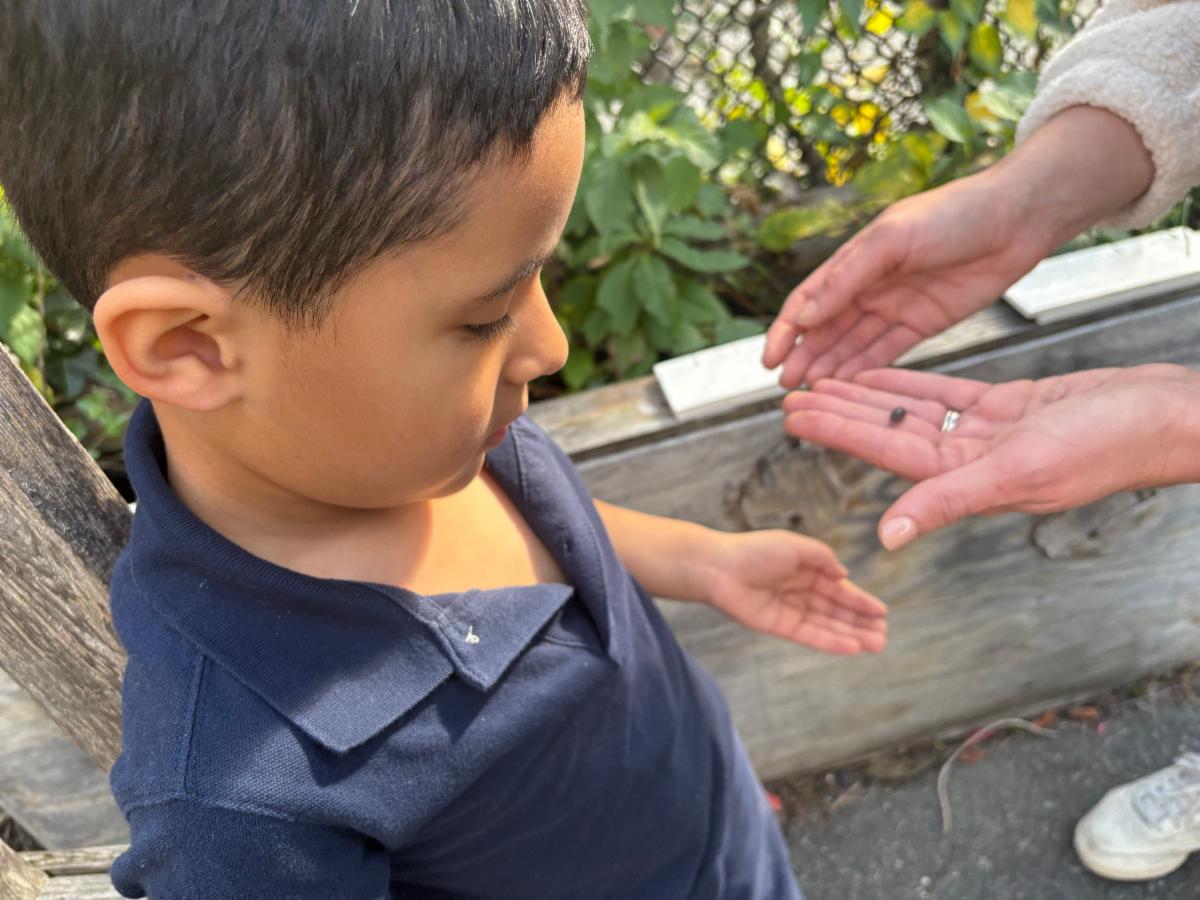
JMC: I’ve talked about the benefits of giving them something they can write about, that they have experienced, and that they’ve experienced with the teachers. So when the child says ‘I don’t know,’ the teachers can go back and say ‘Well, do you remember the other day when you were finding and touching the worms. What did that feel like? How did the worms feel? Were they slimy or were they dry?’ It gives them a shared experience to talk about. I’ve also mentioned the benefits of inclusion. The shared experiences give the students a lot to talk about with each other–what they did, how it felt for them, ideas. Being in the outdoor classroom provides a great opportunity to engage in discourse, which is one of our goals.
| |
FOTBS: What about garden partners? Lots of schools have been telling us that this is key to their success.
JMC: Green City Growers’ presence is huge. They plant and take care of the beds. On Thursdays, they do lessons with the kids, which the kids love. It’s been a great way to develop the teachers’ comfort level and knowledge, so they can continue and build on the learning.
FOTBS: So you find the support is carrying over?
JMC 100%. I can’t say enough good things about our science teacher who makes sure that the staff know that this is not just for science. They know they have access to the gardens and where to get the key. It’s fun for the kids. She has done family programs as well after school, which the families have really enjoyed.
| It was a pleasure to visit the Adams school, to speak with Ms. Cruz, the teachers and students, and to learn about the wonderful variety of outdoor learning and enrichment programs that the school offers to its students. | | | Partner Spotlight Tree Eastie | | |
🌳 Planting the Seeds of Knowledge at Sam Adams Elementary! 🌱
Outdoor classrooms provide students with an opportunity to learn about and connect with nature in a safe and healthy environment. This type of learning is experiential and offers lessons that cannot be found in books.
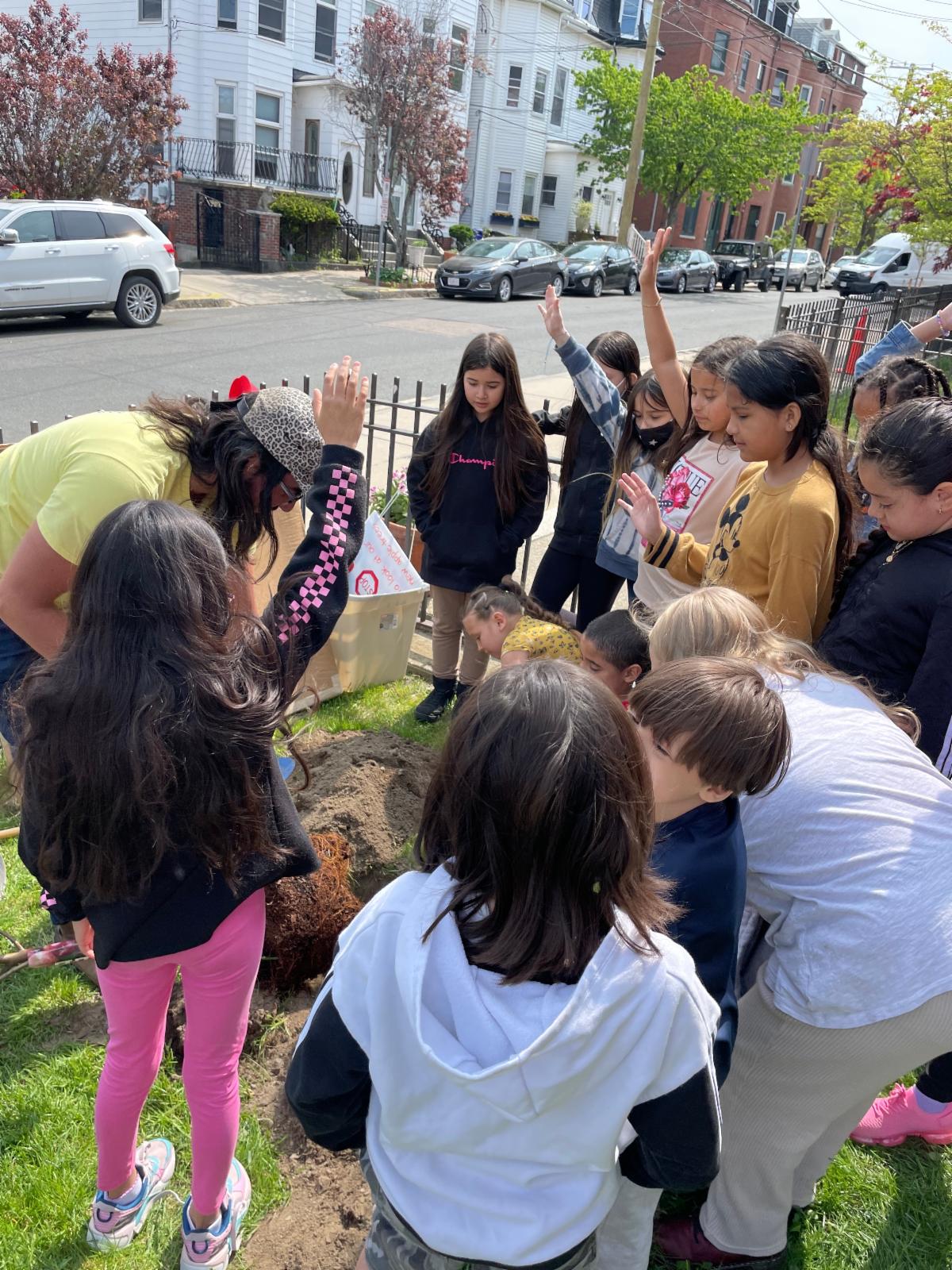
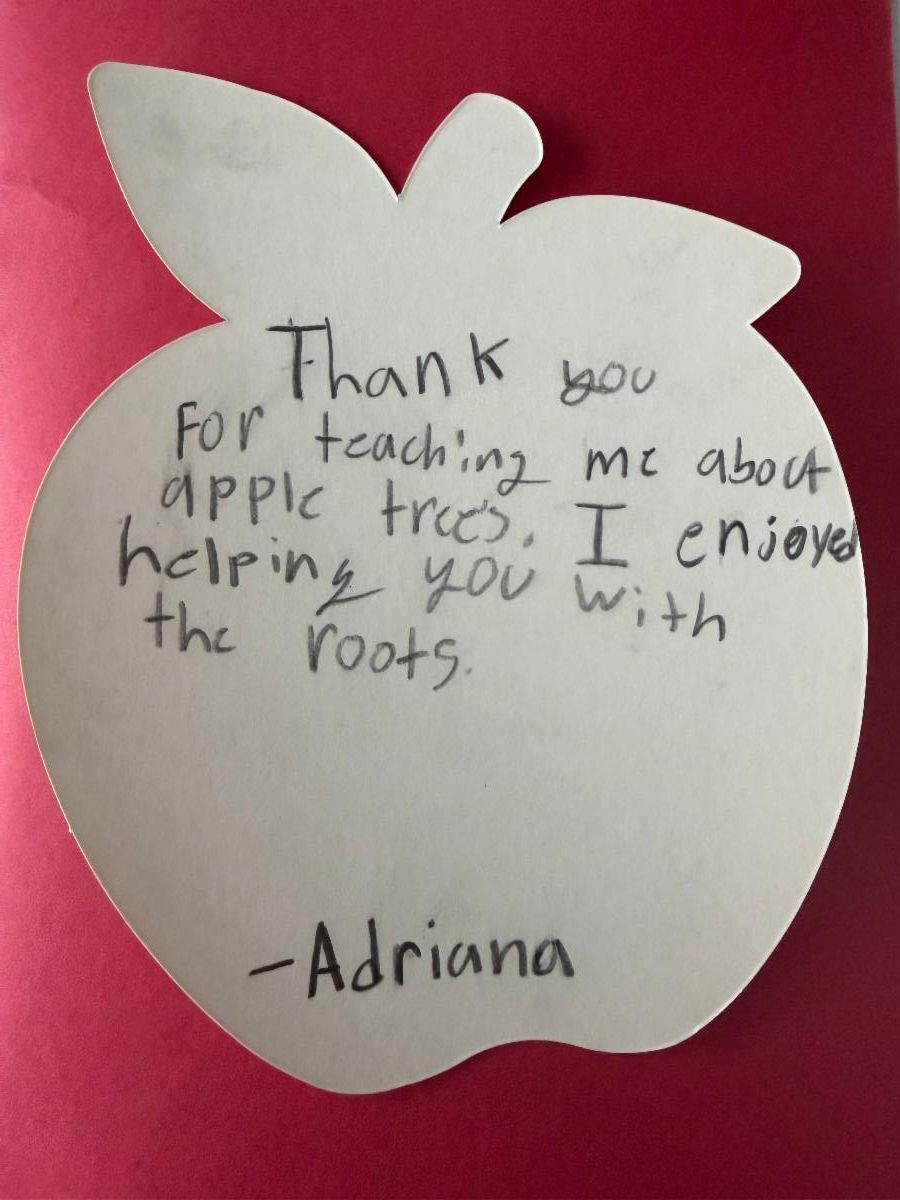
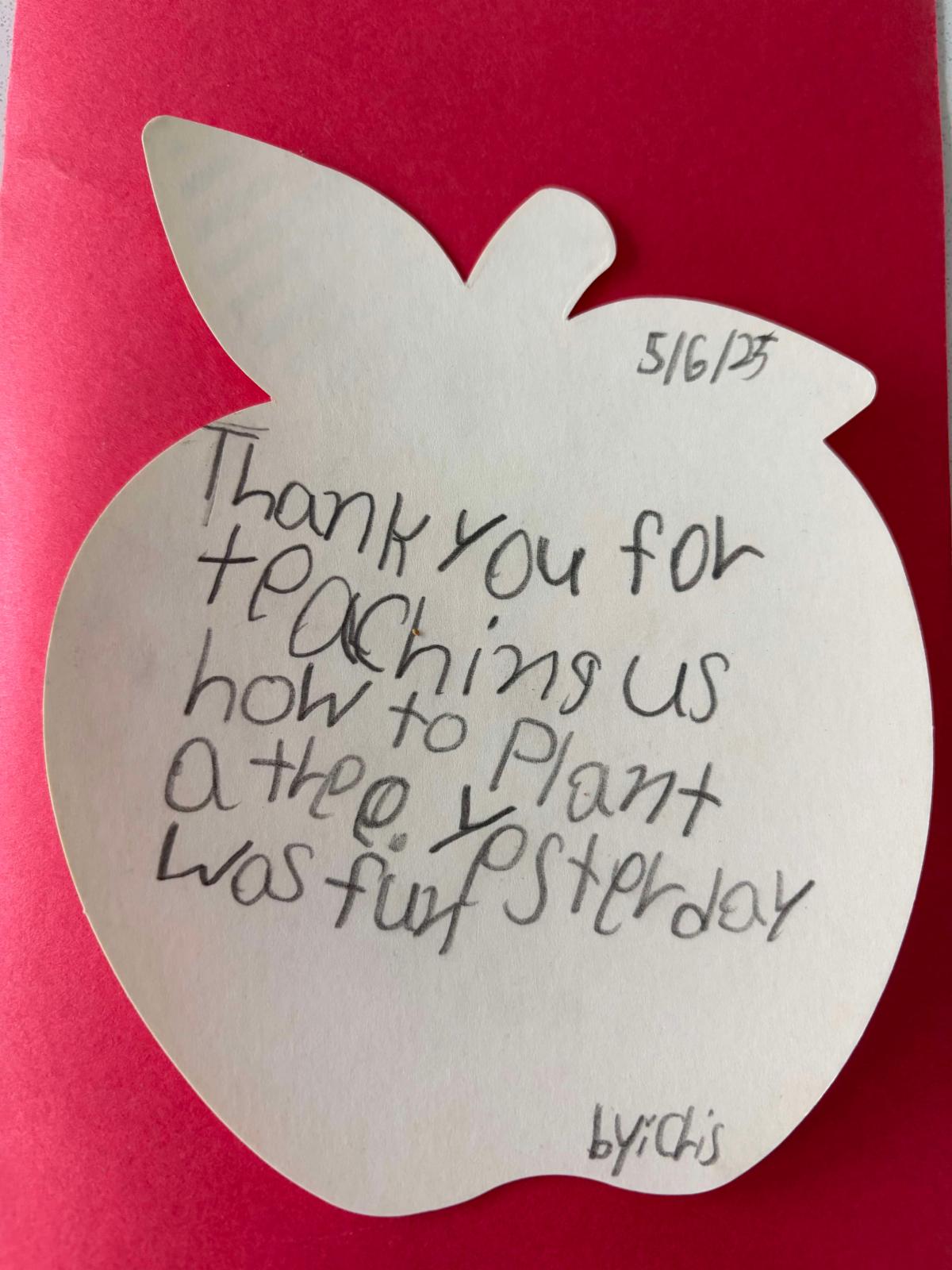
Students at Sam Adams Elementary School in East Boston got a special hands-on lesson in nature by planting apple trees in front of their school. With shovels, soil, and lots of enthusiasm, students learned what trees do for our community and why they matter in our everyday lives.
Not only do trees make our neighborhoods more beautiful, they also help clean the air, reduce noise, provide homes for wildlife, relieve stress, and even raise property values. And fruit trees give us something extra special: healthy, delicious food grown right in our own backyard!
This fun and educational experience was organized by teacher Jessica McNiff in partnership with Tree Eastie, a local volunteer group dedicated to planting and caring for trees across East Boston. Tree Eastie’s team—including Founder Bill Masterson and community leader Roberto Gomez—guided about 25 students as they learned about different types of trees, how they help insects, animals, and people, and how fruit trees can support food security.
| | |
Tree Eastie has been busy over the past four years—volunteers have planted more than 700 trees in streets, parks, yards, and schoolyards across the neighborhood. They’ve partnered with several local schools, including Umana Academy, McKay Elementary as well as Brooke and Excel Academy Charter Schools.
The Adams School community’s efforts drew praise from Michelle Martinat, BPS Outdoor Teaching and Learning Manager, who celebrated the school for creating a welcoming and vibrant outdoor learning space. She shared her hope that more schools will build these kinds of meaningful partnerships.
For students, it was a day of discovery, teamwork, and muddy hands—and a chance to leave a lasting mark on their school for years to come. The apple trees they planted today will grow right alongside them!
| | Friends of the Boston Schoolyards | info@friendsofthebostonschoolyards.org | | | | |