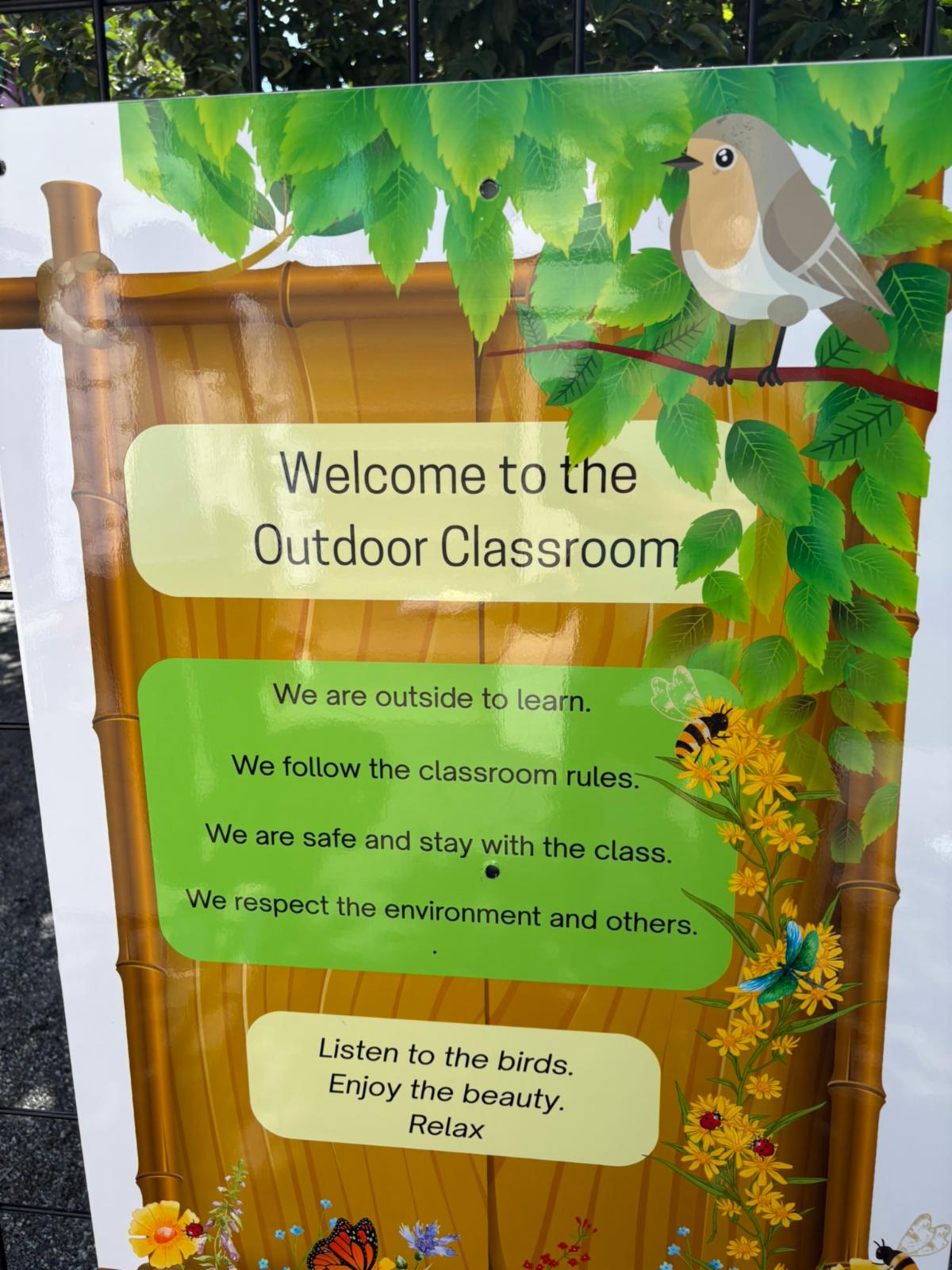
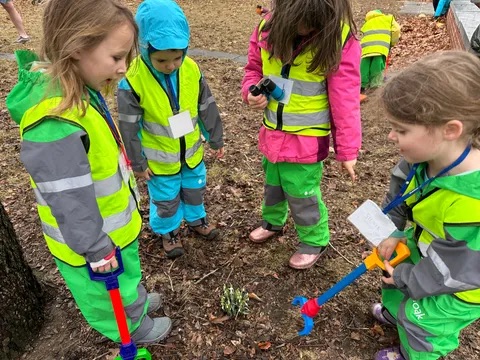
Outdoor Learning Highlights | | | | As we welcome students, families and teachers back to our schools and outdoor classrooms, we are reminded of the fragility of our maintenance systems and funding options for these important spaces. We continue to be inspired by the thoughtfulness of the lessons we see, the teachers’ commitment to creating these outdoor learning experiences for students, and the engagement and curiosity of the students. We also see the challenges that teachers face, giving of their time, expertise, and often personal resources to ensure the outdoor learning spaces are welcoming for all.. Real financial support is needed for these efforts and for the development and maintenance of these vital spaces. If you live and/or teach in Boston, please contact your city councilors and union representatives, and let them know how important you feel outdoor learning spaces are for the development of our children’s mental and physical health, as well as their curiosity, wisdom, and knowledge. | |
"It is such an added delight to our school community to have an outdoor space-/garden to unwind and an open classroom to learn and be yourself in nature."
Carol Perez, Martin Luther King K-8
| | | | | |
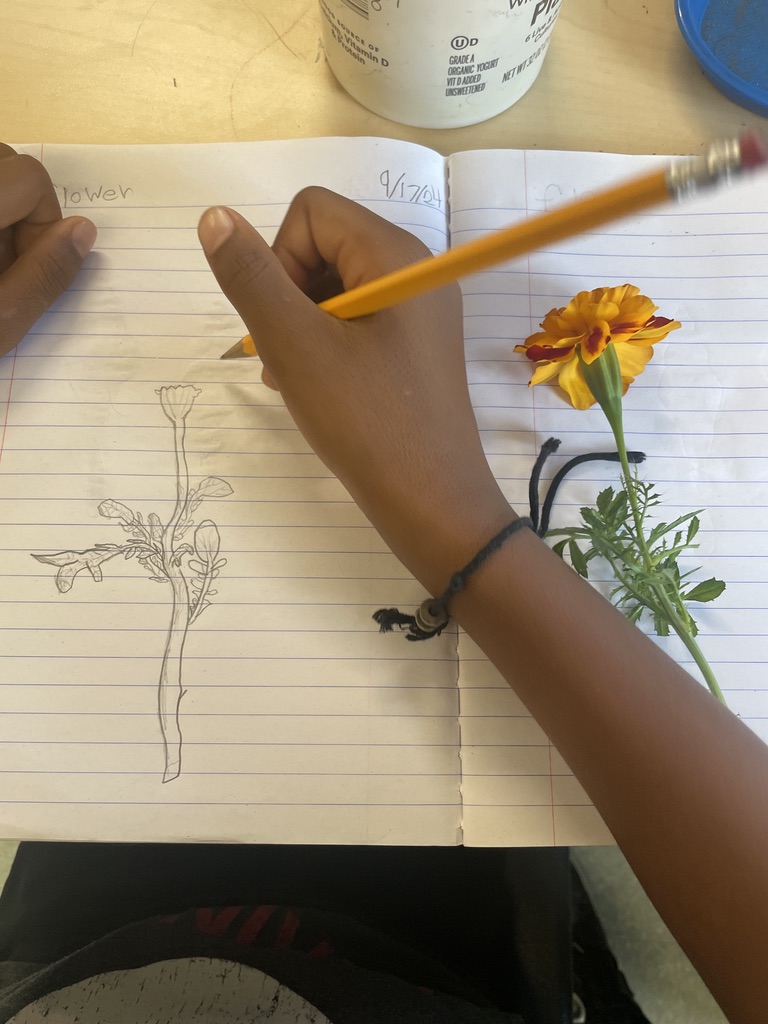
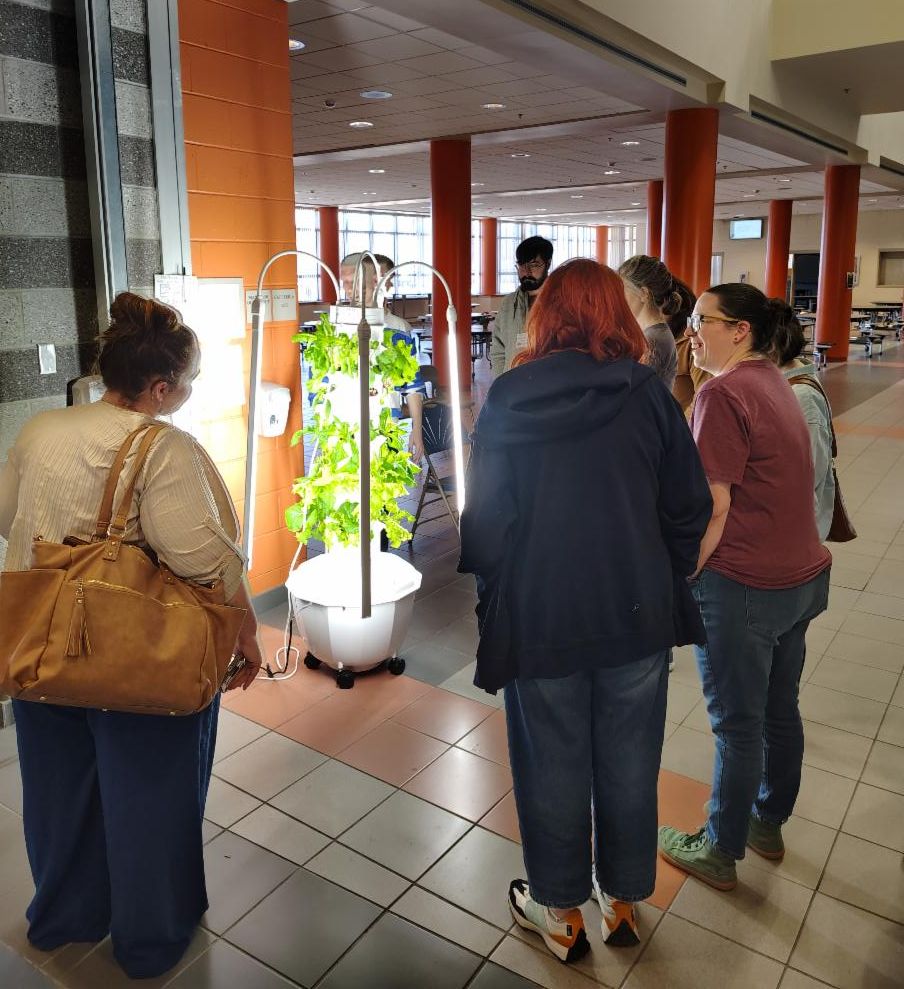
Friends of the Boston Schoolyards is in our 6th season of distributing Joy of Learning grants to Boston teachers. This year we gave out 11 grants of up to $600. From chemistry to gardening, Boston teachers find creative ways to incorporate outdoor learning and joyful engagement into their curriculums.
Please enjoy viewing their projects on our Padlet.
| | | Outdoor Classroom Spotlight | | |
Outdoor Learning at the Lee Academy Pilot School
by Barbara McLaughlin
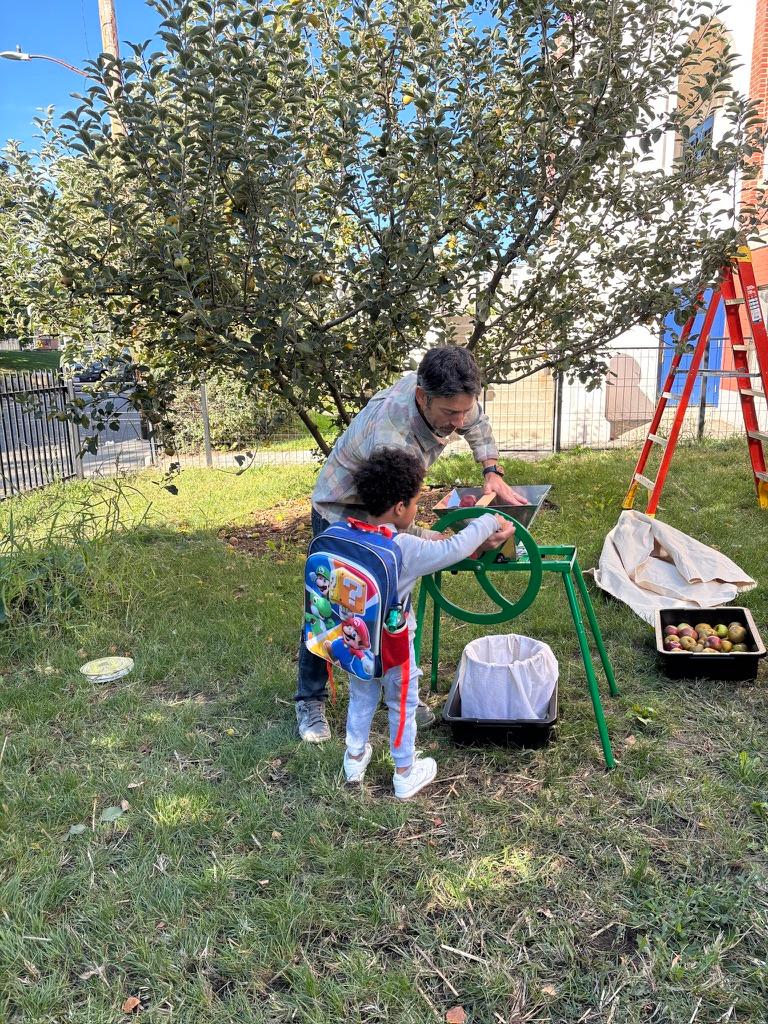
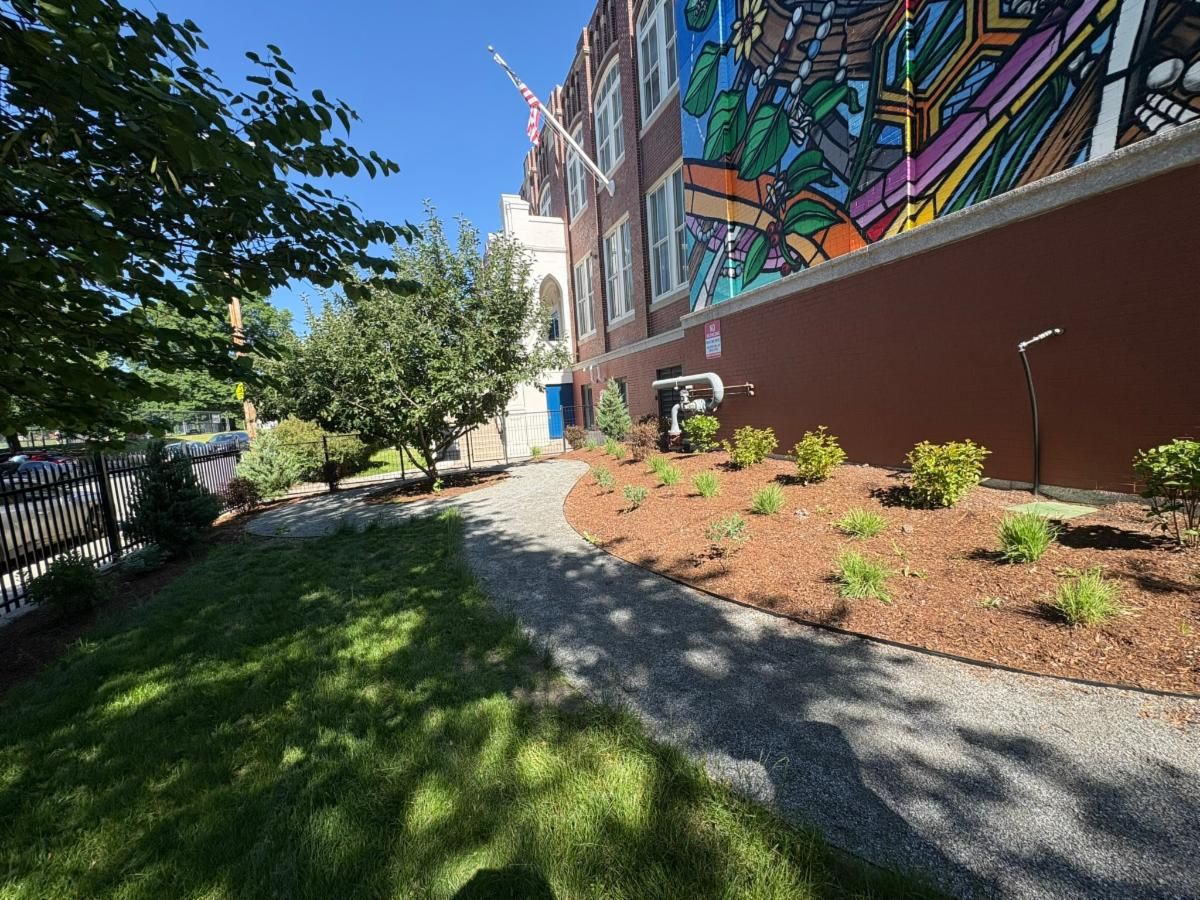
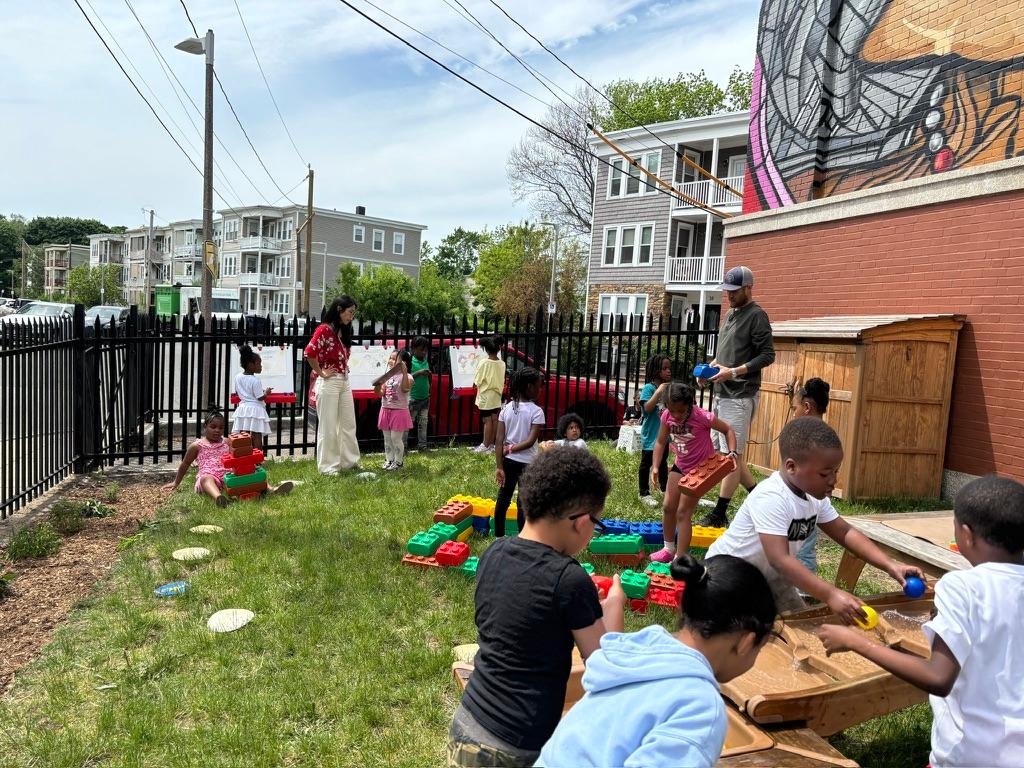
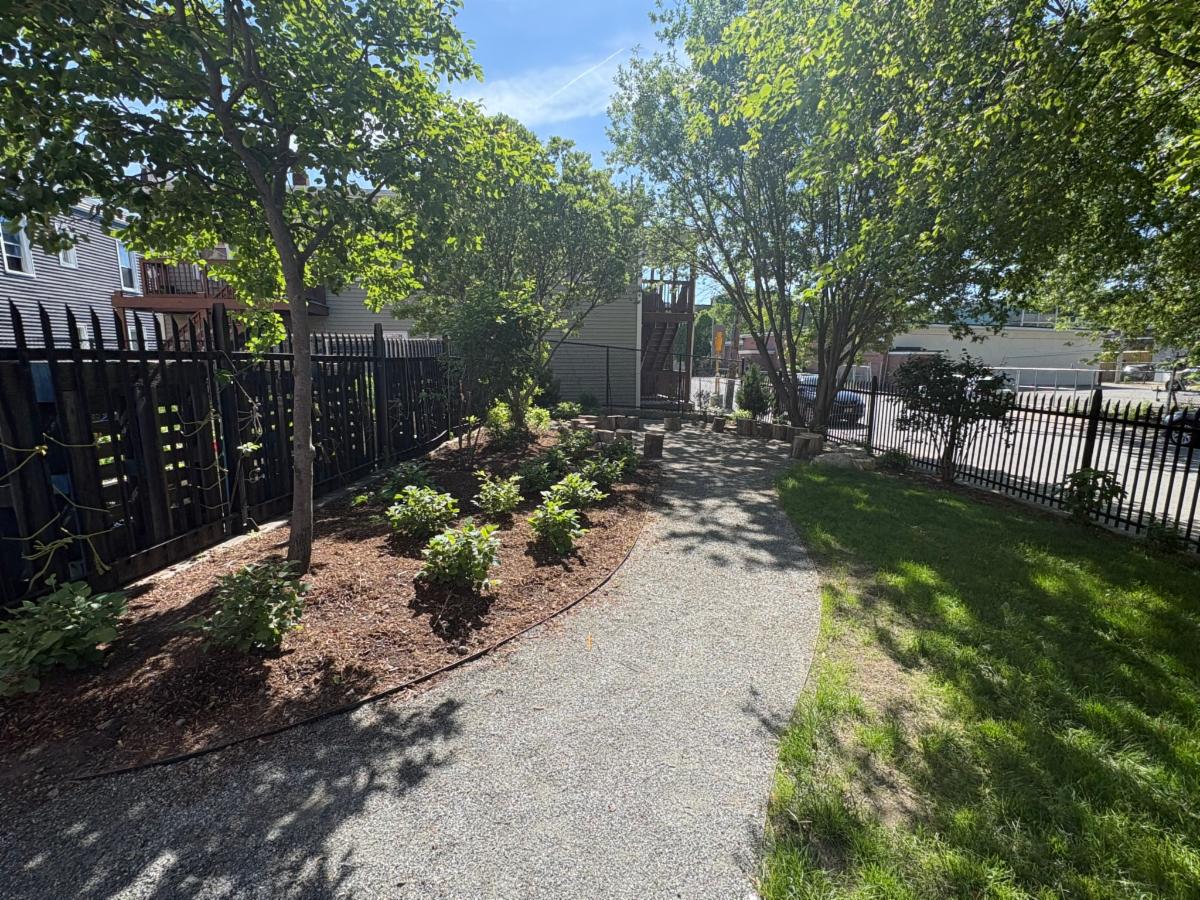
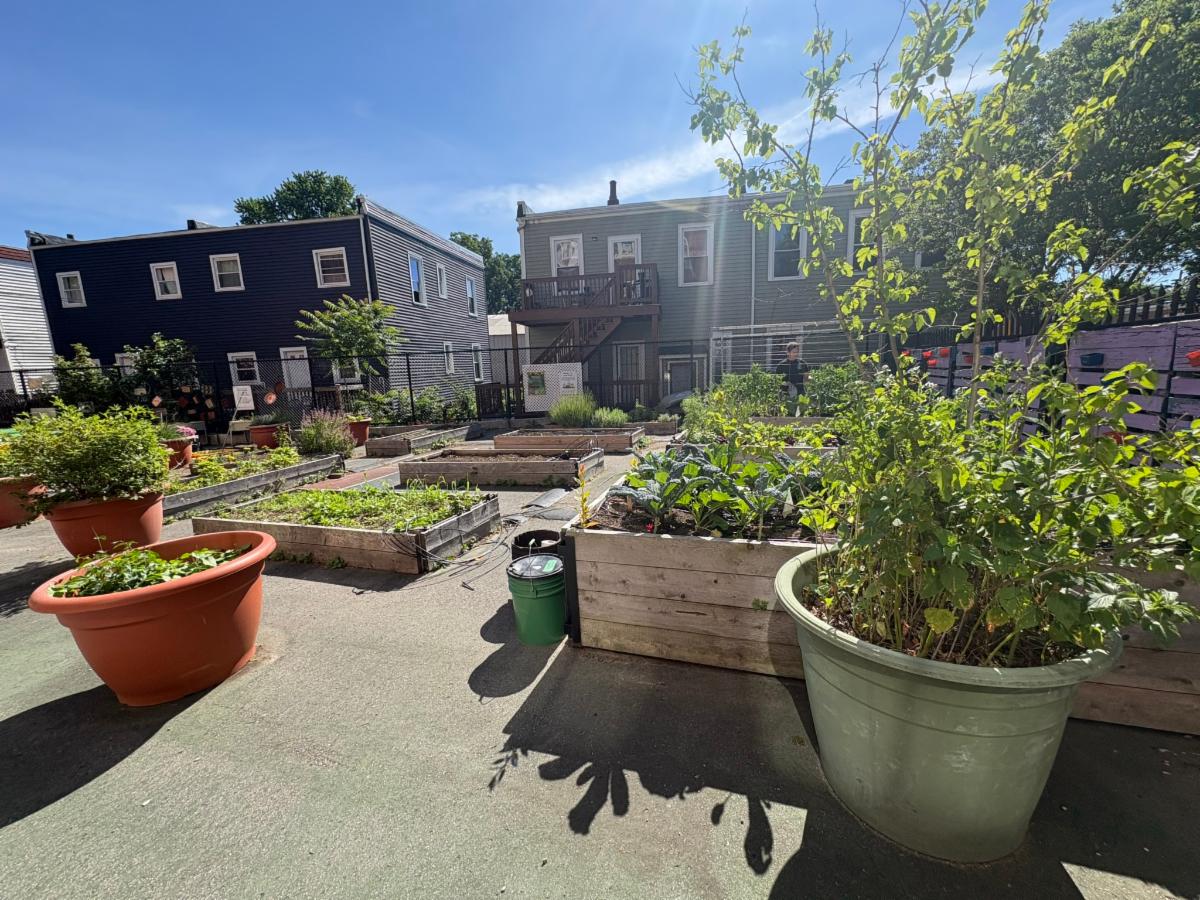
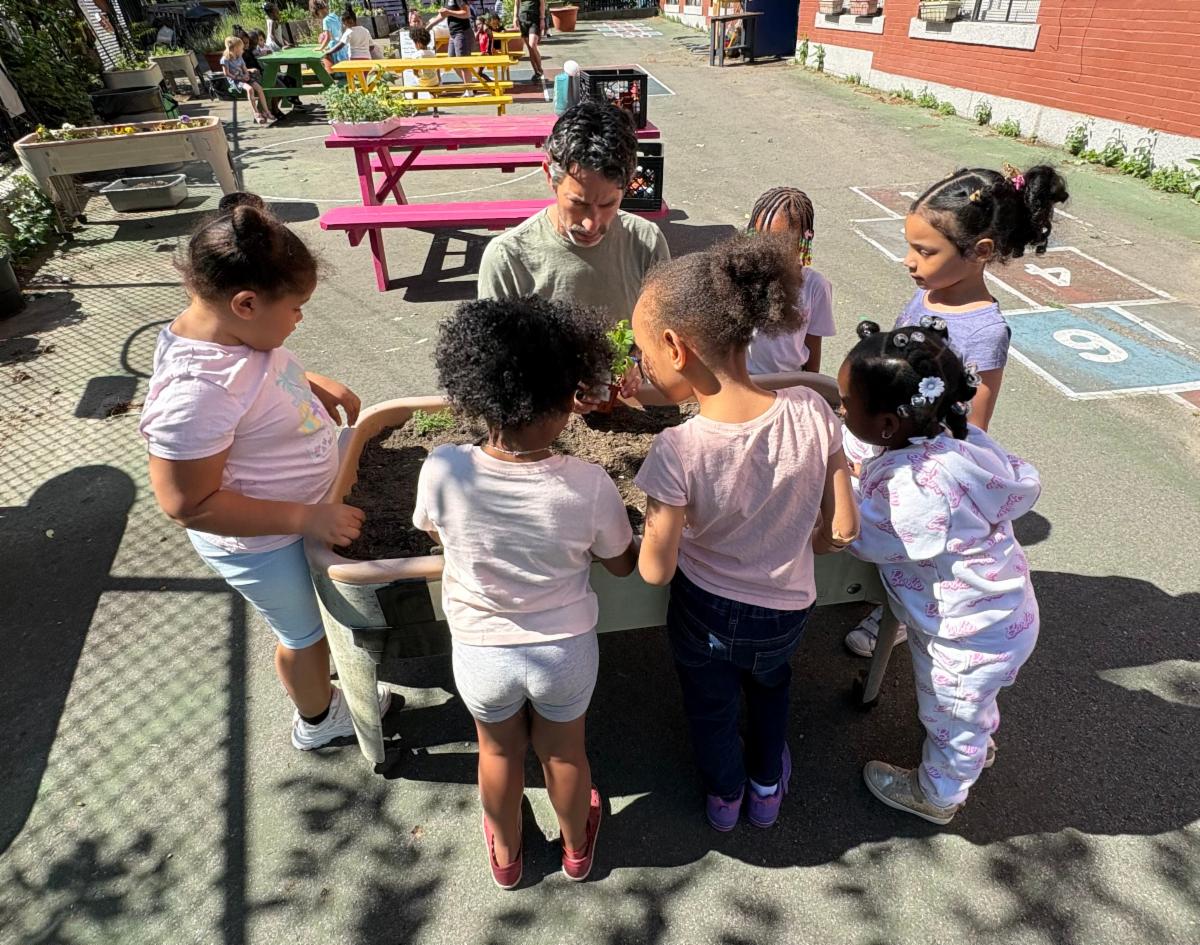
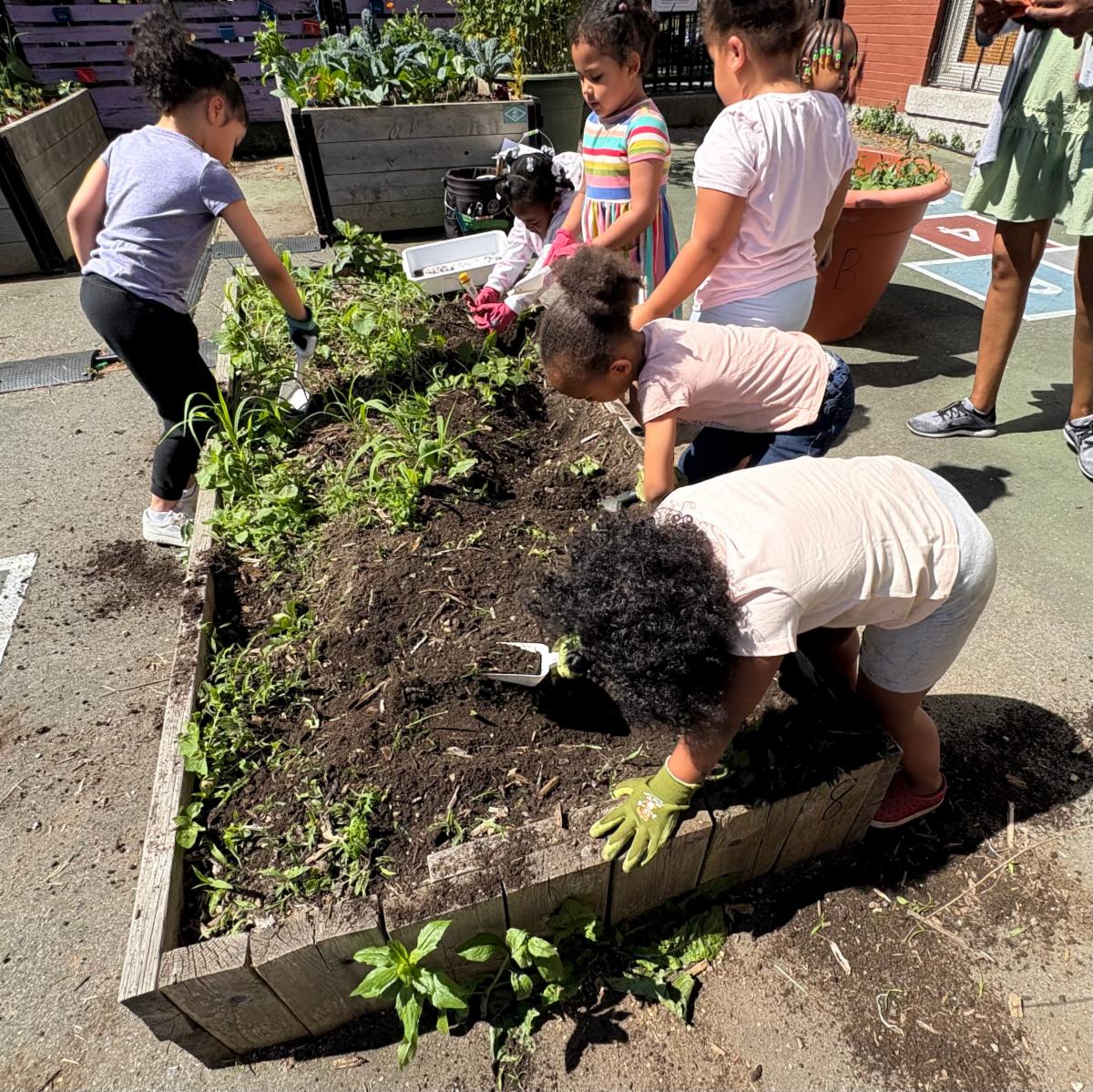
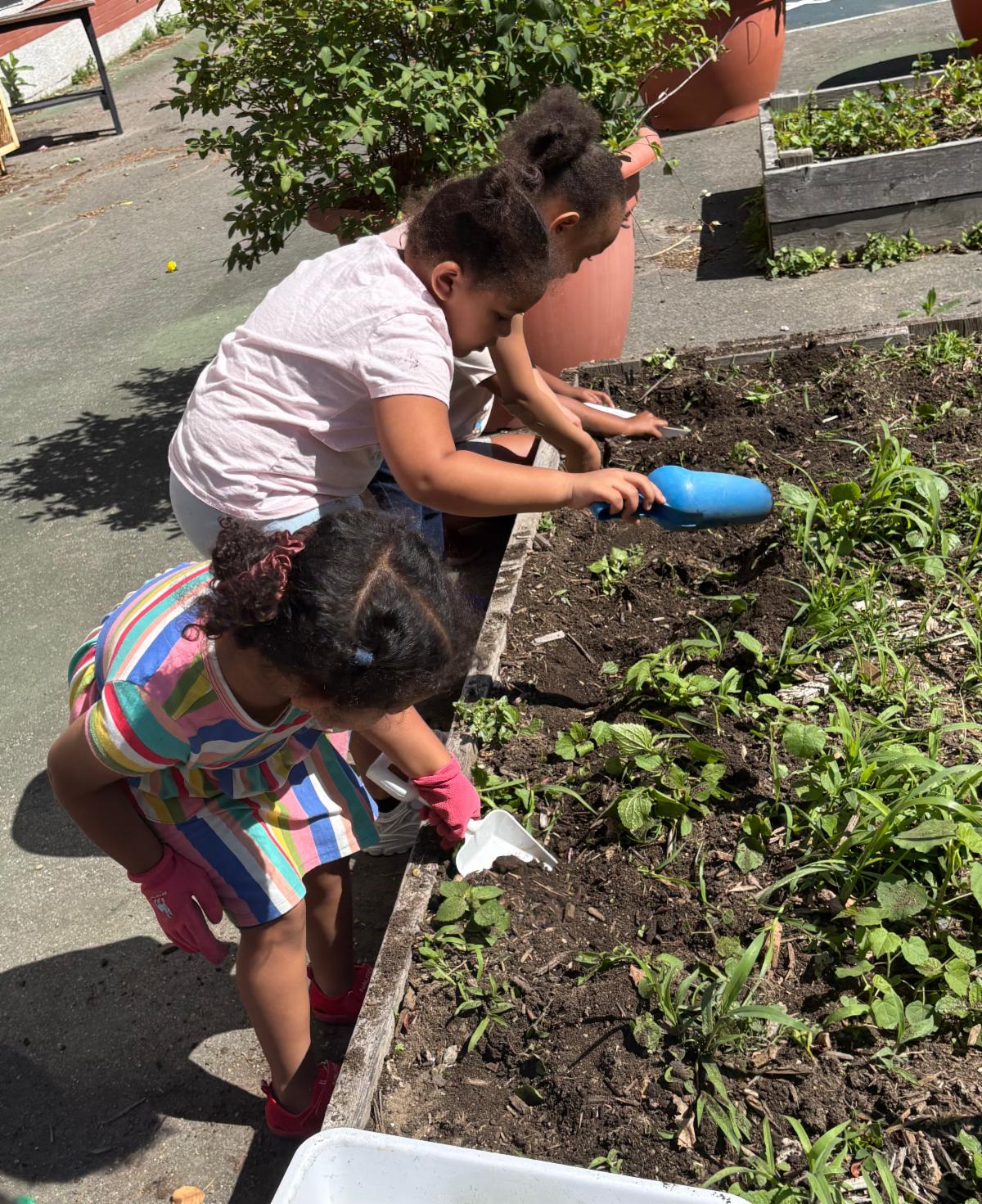
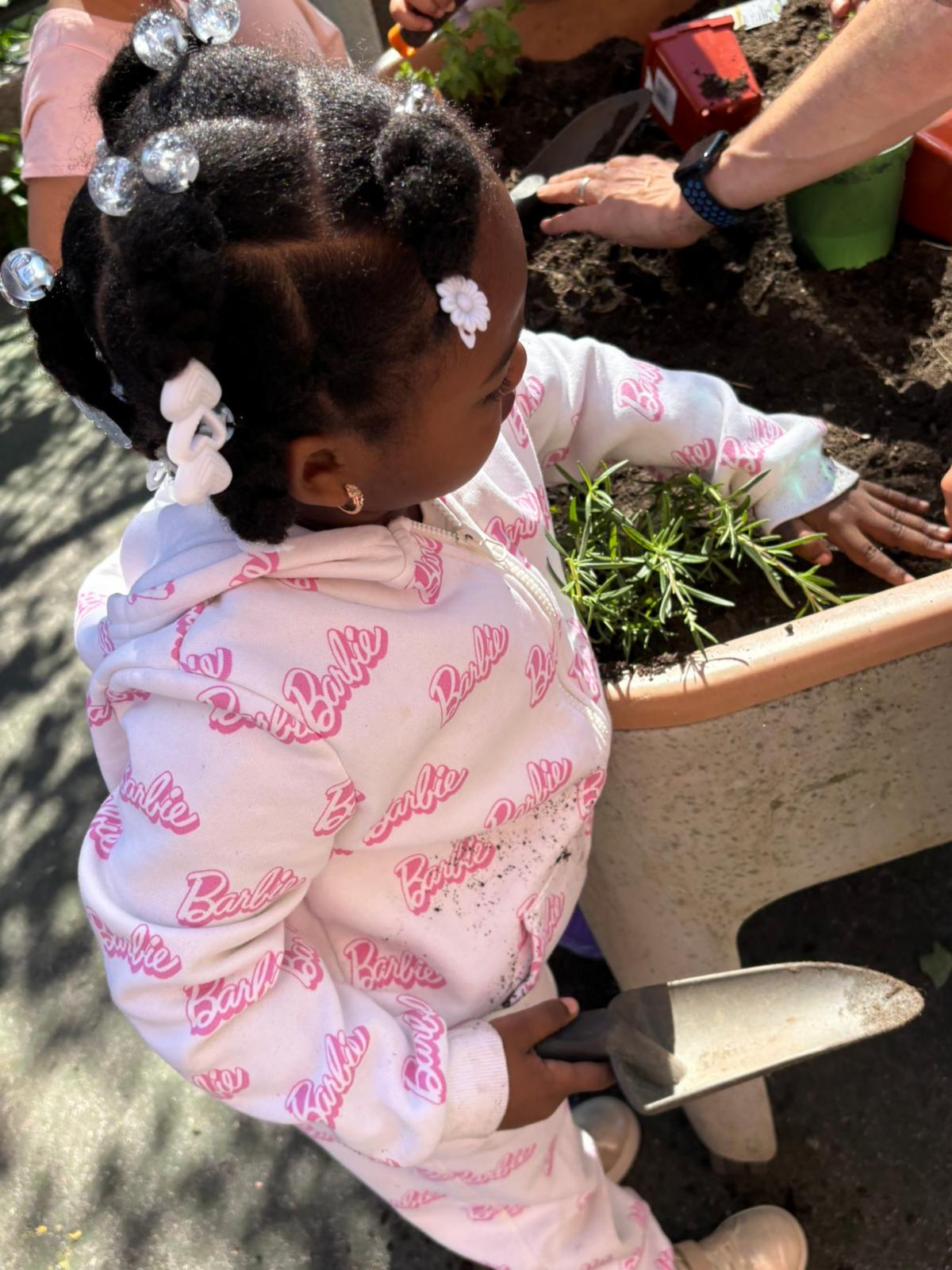
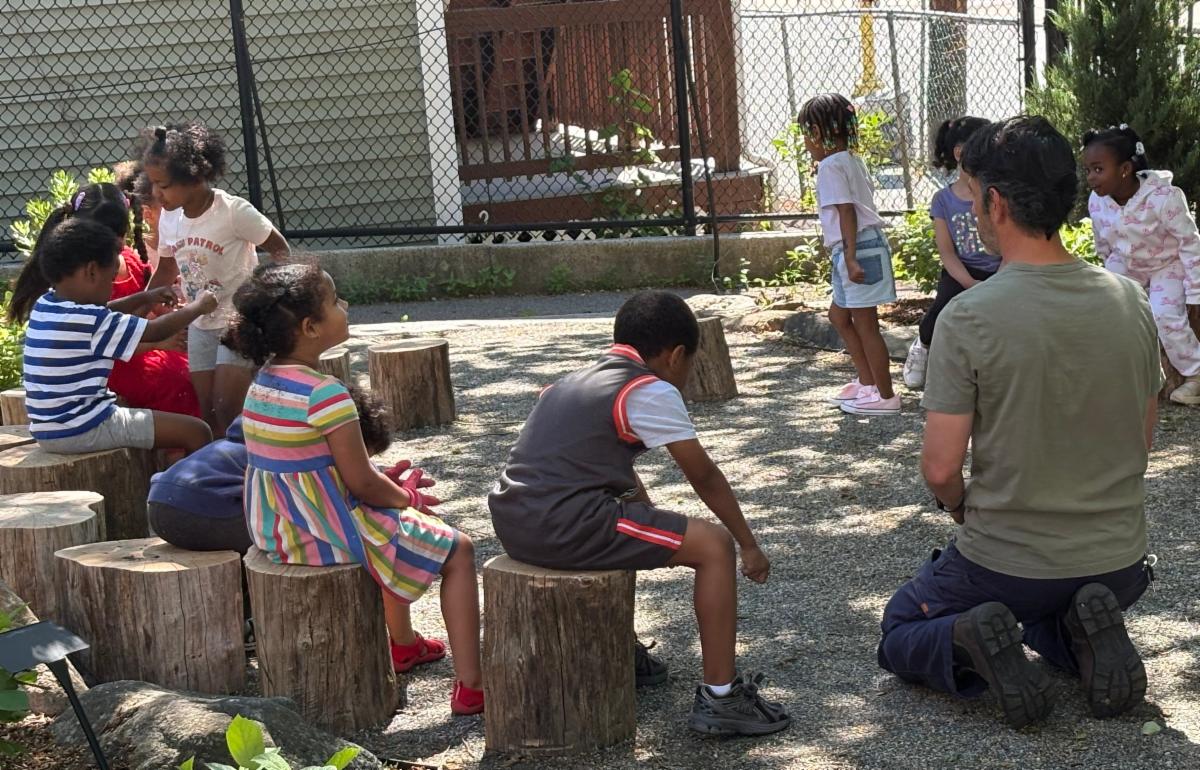
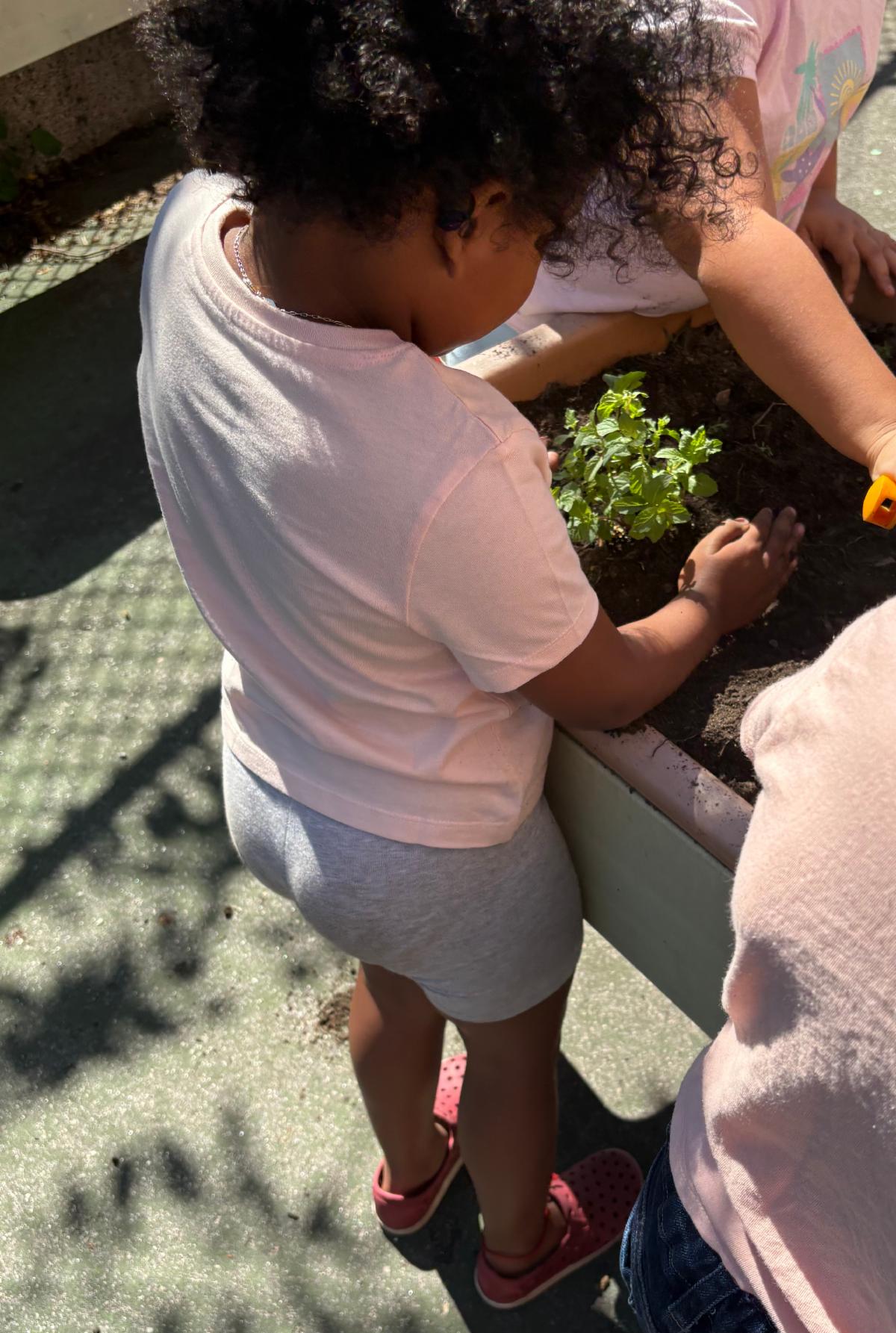
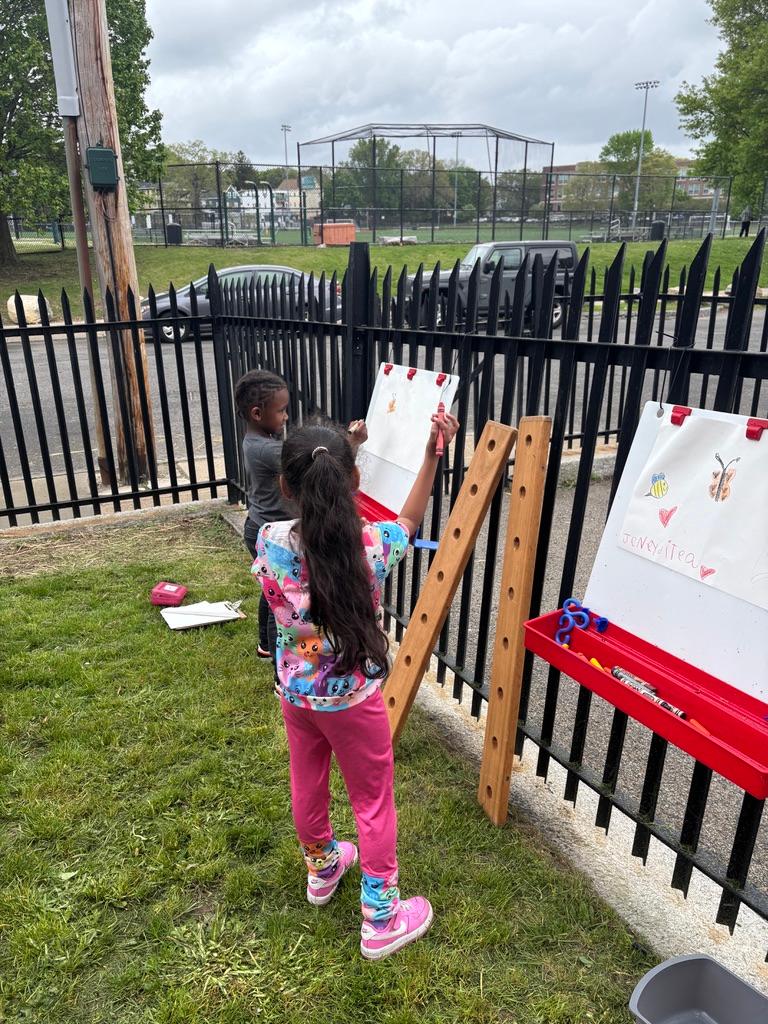
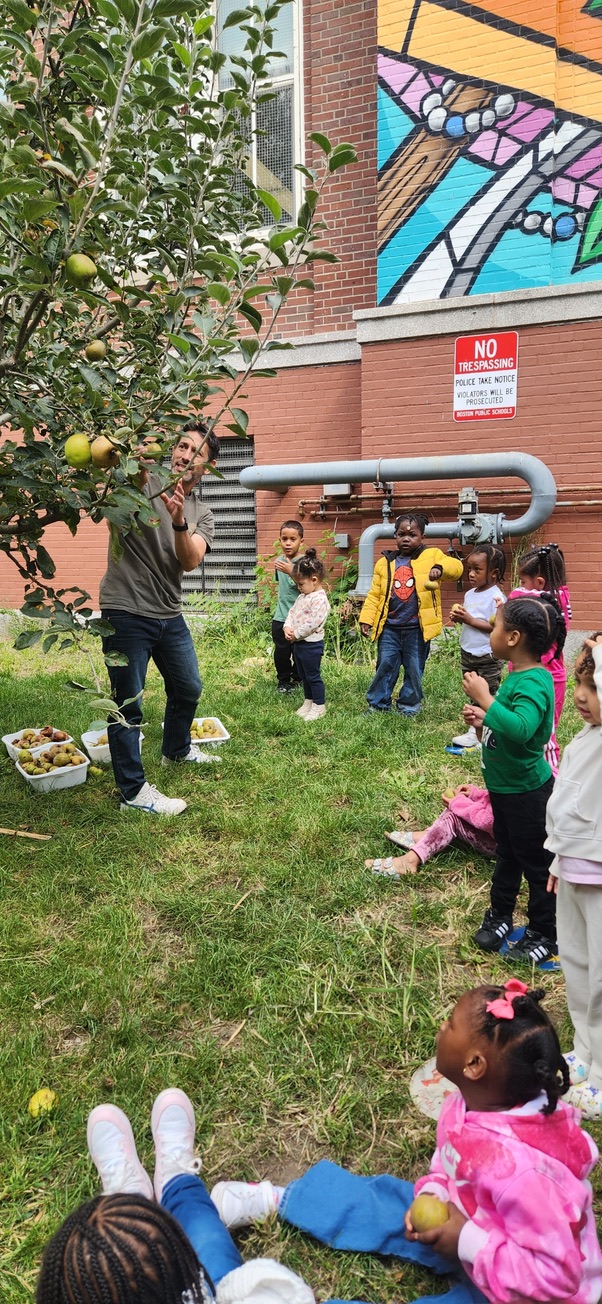
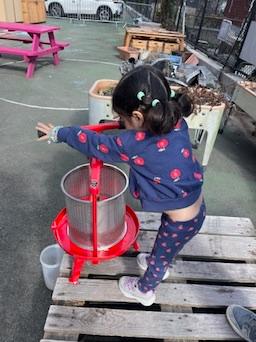
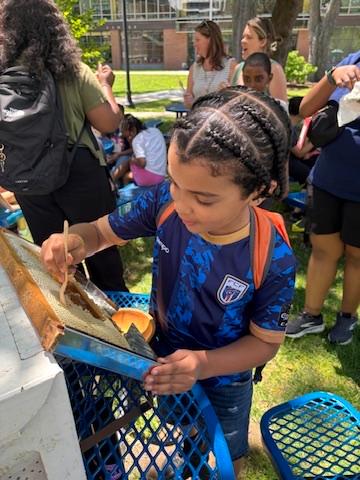
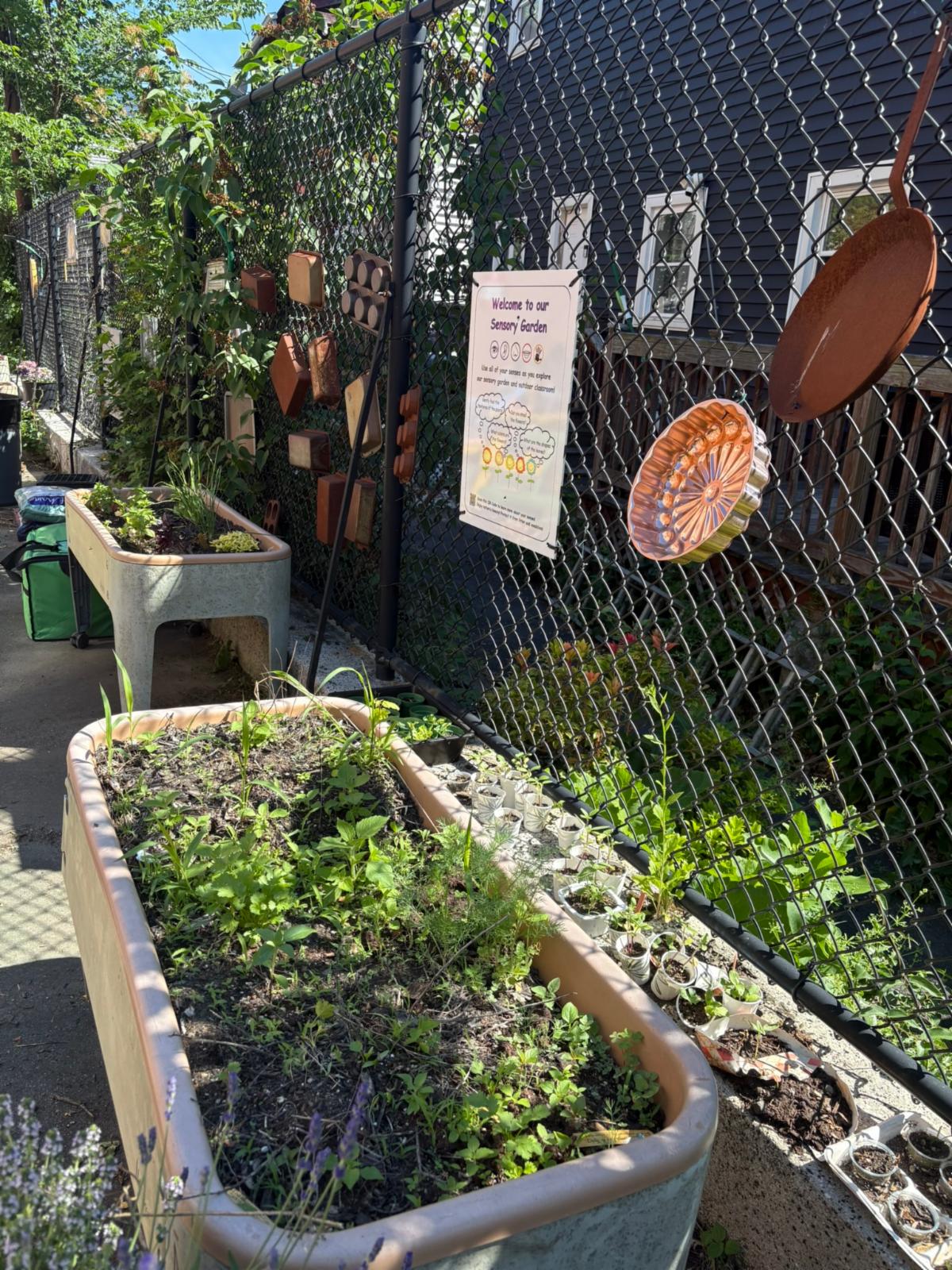
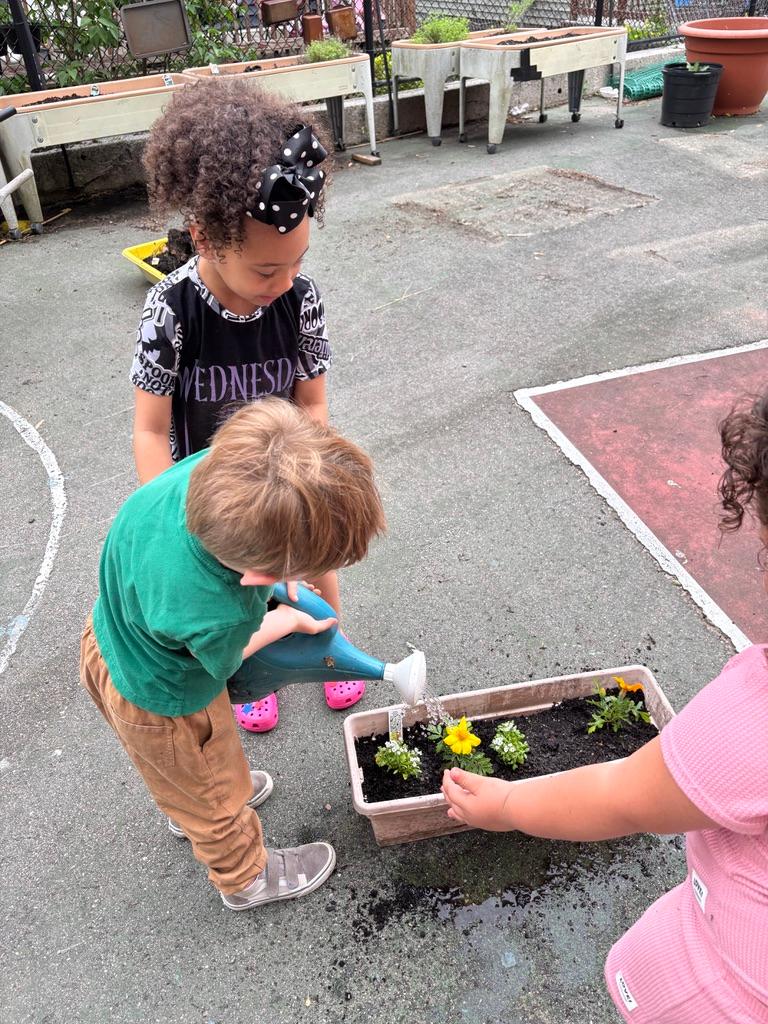
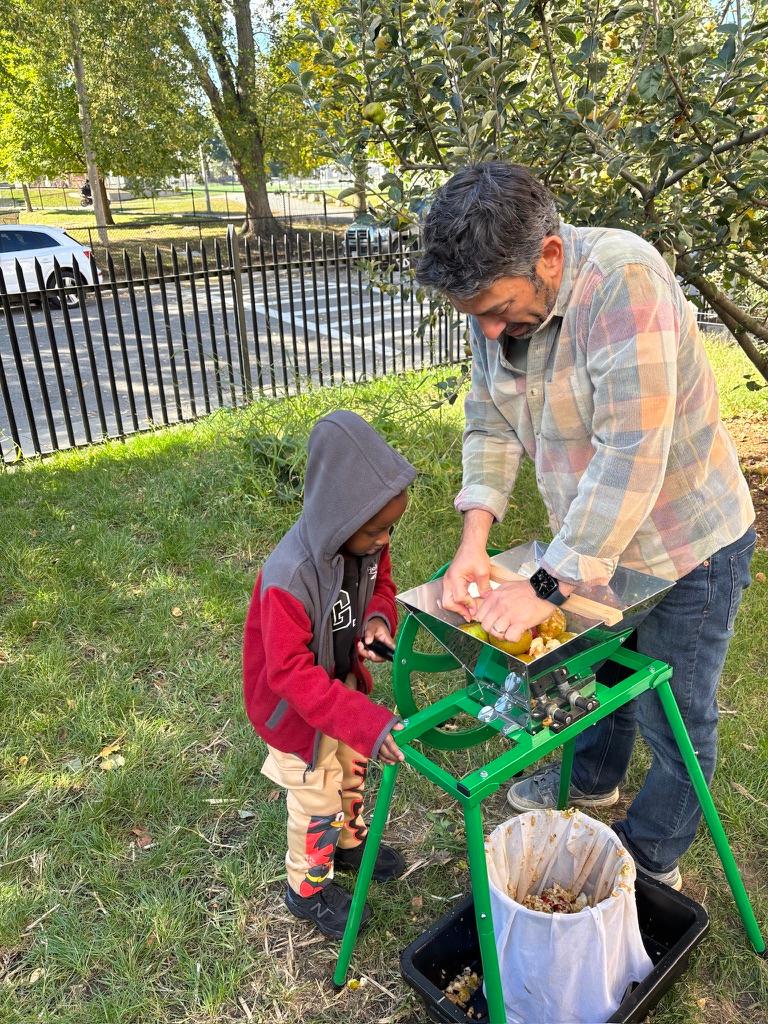
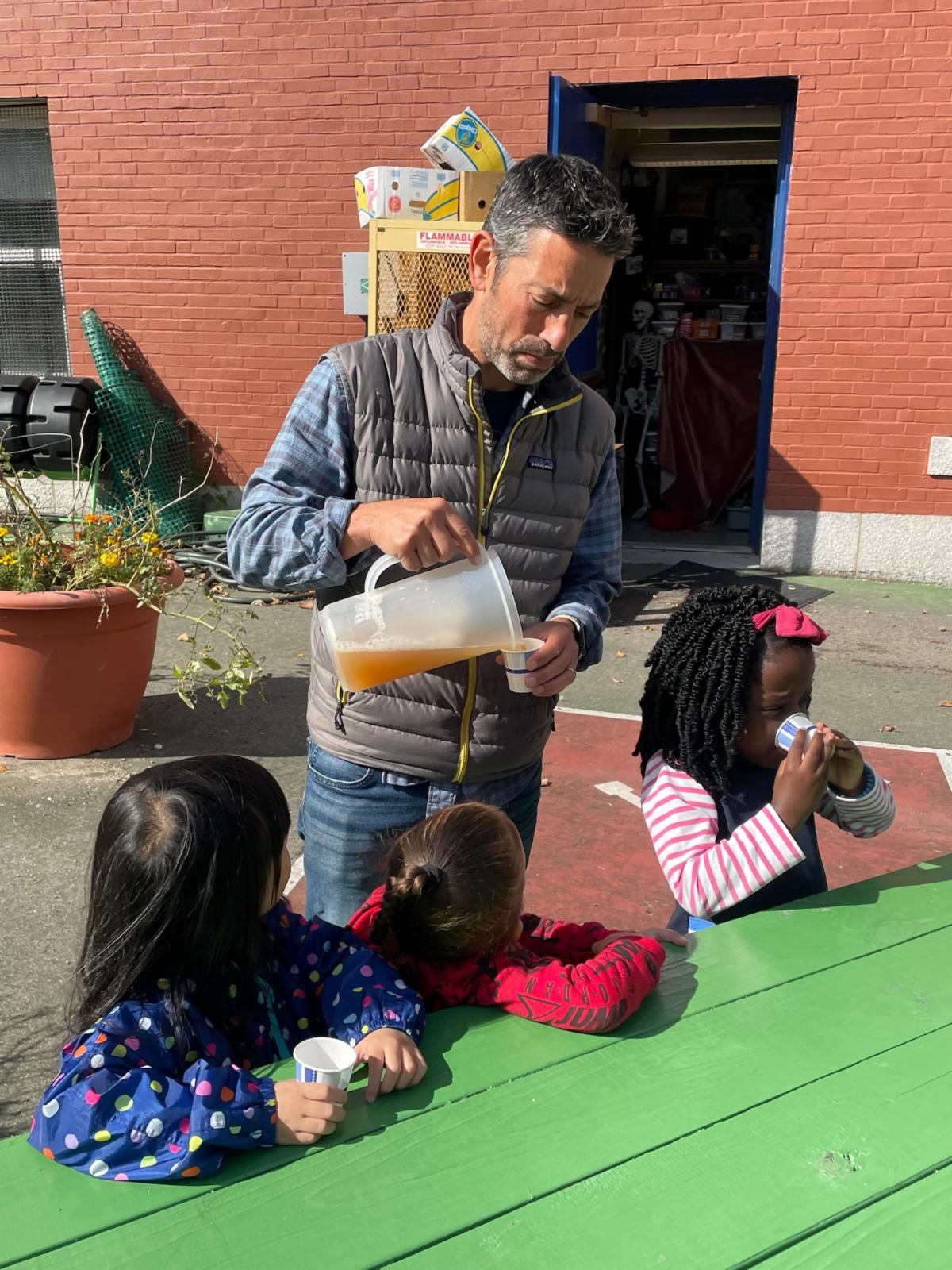
| On June 9th, Sara Gardner and I visited Lee Academy Pilot School and science teacher Marc Abelson. It was a lovely, sunny day, a perfect day to visit the beautiful outdoor spaces and observe students learning about plants. With the help of Michelle Martinat from BPS Facilities and outside partners, the school has created three discrete outside areas for learning and playing. In front of the building on the left there is a fenced-in play area for Pre-K and Kindergarten students. There are water tables, blocks, easels, magnetic boards, and other materials students use to explore and learn through play with others. Roses climb the fence at the entrance to the garden in the front of the school on the right. | | | An apple tree and other trees and shrubs line the walkway that winds through this space, providing beauty and shade. At the end is a learning space with boulders and tree stumps grouped in a circle for seating. The stumps were donated by the Boston Nature Center from trees they had chopped down on their grounds. | | This garden leads to a large outside classroom area along the side of the building. There are raised planters containing flowers, herbs, and vegetables as well as tables and benches for lessons. Mr. Abelson teaches his science classes outdoors whenever possible. | | We observed pre-K science classes. Students worked in small groups and rotated through different activities. Mr. Abelson worked with students at a raised garden plot where they planted lemon balm, rosemary, and peppermint. Students had experience planting and they already knew how to shake the roots free before planting and how deep to make each hole. Mr. Abelson had them rub a leaf in their hands to release its smell. One student thought rosemary smelled like broccoli. Another thought peppermint smelled like bubble gum. They finished by placing a label next to each plant and gave the garden a good soaking. | | Farmer Leila and Farmer Avery from Green City Growers guided groups of students on a sensory walk through the garden looking at and naming the different flowers and herbs. Each student had a garden bracelet with sticky tape on their wrists. Farmer Leila and Farmer Avery attached a leaf or a flower to their bracelets. Students described their artifacts, the shapes, colors, smells, and how they felt. Groups worked with another teacher digging holes in the dirt to find worms and roly-polys and other creatures. They had learned how important insects, arthropods, and worms were to a healthy garden. | | Then Mr. Abelson gathered the students in the circle area under the trees. He had made three pitchers of ice water. Each had a sprig of one of the plants they had planted: lemon balm, rosemary, and peppermint. Students had a drink from each and described its taste. When asked to rate which flavor they liked the best, most decided they were all their favorites! The shade and the cold water were very much appreciated by the students after their work in the sun. | | It was evident that the students have benefited from the garden in multiple ways. Experiential learning has developed their ability to care about plants and animals, not only to gain knowledge about them, but to learn how to care for them and become true stewards of nature. It meets the learning needs and social needs of all students, including those with special needs. Behavioral issues are reduced. The needs of the whole child are met. | | We had a chance to talk with Mr. Abelson after class and hear about the work he and other teachers do around science. He explained that he adapts his garden curriculum to the science curriculum (Foss Kits for Pre-K to grade 2 and OpenSciEd for grade 3). Pre-Kindergarten classes plant in the spring. Kindergartners harvest in the fall and cook some of what they’ve grown, including foster-fungi mushrooms and garlic. Scavenger hunts are a big favorite. Students also learn about tree development, especially with their apple tree, noticing seasonal changes: buds, leaves, flowers, fruit. A favorite activity is making cider in the fall from the apples on their tree. | | Grade 1 students learn about how plants grow, about root vegetables, and how to grow new plants from clippings and cuttings. This continues even during the winter. Other teachers at the school often donate clippings from their house plants for students to plant in the classroom. As part of Grade 2’s pollinator unit, students learned about bees. They recently went on a field trip to Emmanuel College. There they spent time in the library learning about the life cycles of insects, pollinator gardens, and had a chance to view the observation hive. When they went outside, Mr. Abelson’s friend, a beekeeper, had brought drones and the students were able to hold them. He also had honey frames, and each student had a spoon to taste the honey. Grade 3 had a grant that allowed them to have four sessions with the New England Wildlife Center in Weymouth, including two field trips. They learned about animal stewardship and visited an animal hospital at the center. All grades participate during planting and harvesting seasons. | | Mr. Abelson is committed to providing hands-on learning experiences for his students, outside, whenever possible. He said that the outdoor areas are very conducive to using many spaces at once: multiple kids, multiple stations, multiple groups. Students can be immersed in nature and experience wildlife. Students go outdoors even in the winter to observe the sleeping garden. The space is used by other teachers as well. Lee Academy Pilot School has created a beautiful space for students to learn and grow and enjoy nature. We were inspired by Mr. Abelson’s commitment to bringing science to life for his students through experiential learning and the outdoors. | | Partner Highlights--Massachusetts Agriculture in the Classroom | | Growing Young Minds: Massachusetts Agriculture in the Classroom | | |
We're delighted to introduce ourselves as a partner organization of Friends of the Boston Schoolyards.
Since 1983, MAC has worked to weave agriculture into the fabric of everyday learning across the Commonwealth. What began as a handful of educators and state agriculture officials meeting to close a gap in classroom curricula has grown into a statewide network that has reached more than 13,000 teachers and other educators through hands-on educational initiatives. Our mission is simple but far-reaching: to help students, and the teachers who guide them, understand how deeply agriculture is woven into daily life, from the food on their lunch trays to the fibers in their clothing to the economy of the state and world around them.
| | |
What We Offer Teachers
MAC's programs are designed to make agricultural learning accessible and practical for educators, whether they're working with a sprawling rural campus or a single raised bed tucked into a city schoolyard. Our core offerings include:
- Mini-grants that help teachers fund garden beds, farm visits, incubators, compost systems, and other hands-on projects. This program has been running since 1994 and has supported hundreds of classroom initiatives statewide.
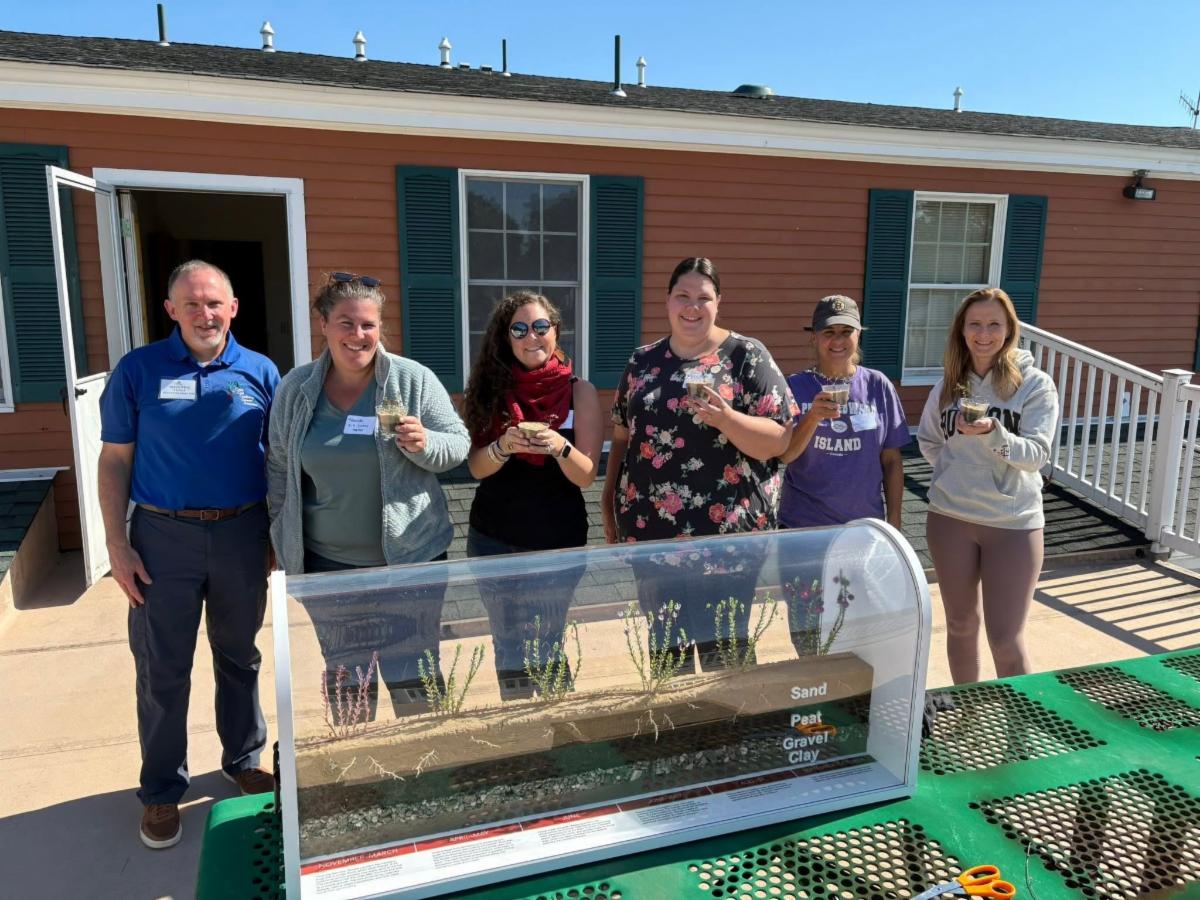
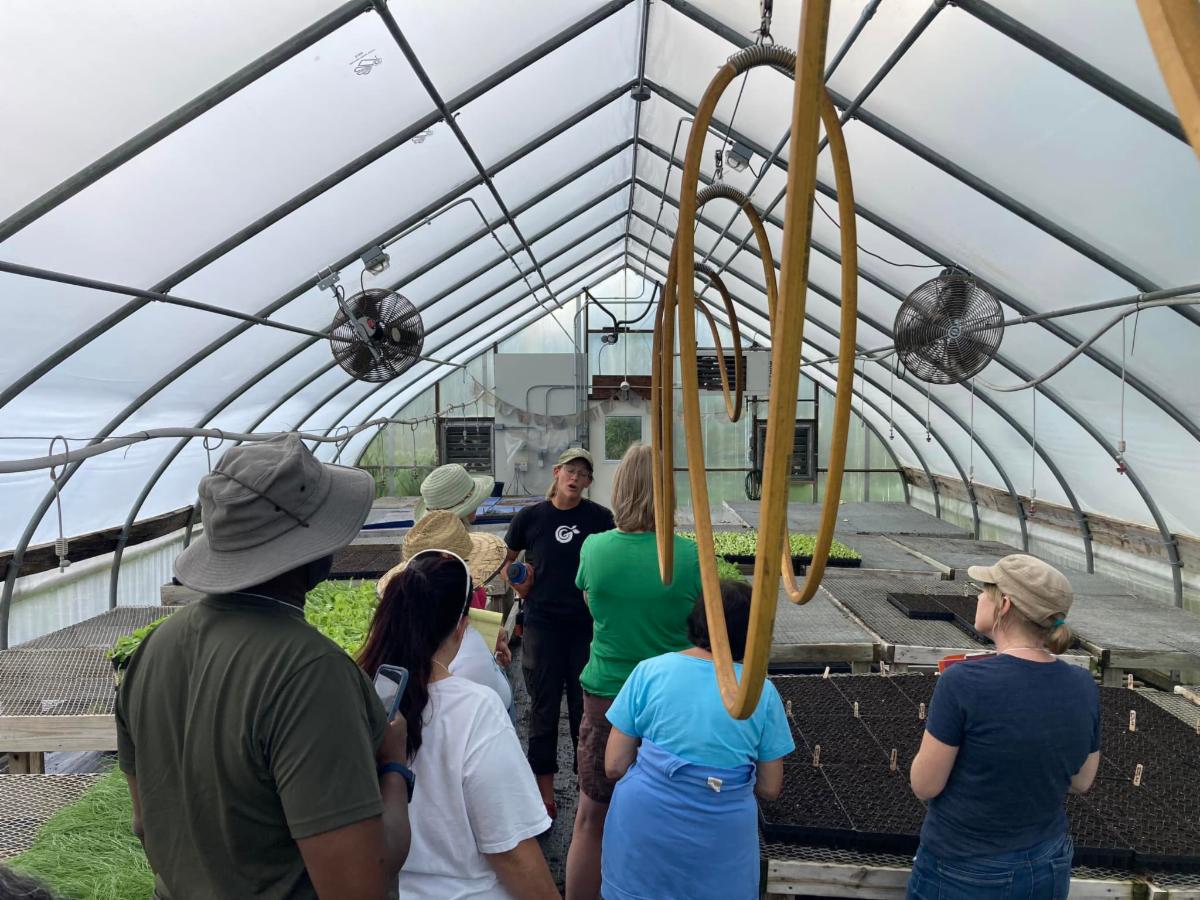
- Workshops, conferences, and farm-based training days, where teachers spend time on working farms learning techniques and lessons they can bring directly back to their students.
- Free, standards-aligned lesson plans and resources, available through our website, connecting agriculture to Massachusetts curriculum frameworks across subjects, such as science, math, history, health, and more.
- The annual Massachusetts Agriculture Calendar, produced with the Department of Agricultural Resources, featuring classroom-ready “fun facts” and teaching tips for every month of the year.
- We're also an approved Professional Development Provider through the Massachusetts Department of Elementary and Secondary Education, so participating in MAC programming can count toward educators' licensure requirements.
| | |
Why This Matters in Boston
Urban students often have the least direct contact with the sources of their food which makes agricultural literacy especially valuable in city classrooms. A single garden bed or even a lesson on where an apple comes from can spark curiosity that carries into science, nutrition, and environmental stewardship. Partnering with Friends of the Boston Schoolyards has been a natural fit: they have spent years transforming Boston schoolyards into vibrant outdoor learning spaces, and we'd love to help teachers put those to work as living agricultural classrooms.
How Boston Teachers Can Get Involved
Boston educators are warmly invited to:
- Apply for a MAC mini-grant to launch or expand a garden, composting, or farm-connection project
- Attend an upcoming farm workshop or teacher training
- Browse and download free lesson plans at www.aginclassroom.org
We can't wait to continue growing with Boston's teachers and students. Check out our website for more resources and information about upcoming events.
| | Friends of the Boston Schoolyards | info@friendsofthebostonschoolyards.org | | | | |