Dear GWP Friends and Colleagues, | | |
The new year is off to a great start!
In late February, the GWP chaired the first meeting of the Counter Wildlife Trafficking Competencies Working Group in Bangkok, Thailand. The working group is convened by the GWP and the International Consortium on Combating Wildlife Crime (ICCWC), with technical support from the Wildlife Conservation Society (WCS). It will provide technical inputs to the development of standardized global competencies that can be embedded into national training programs and capacity-building evaluations across governments, international organizations, and civil society. We are excited by this collaboration.
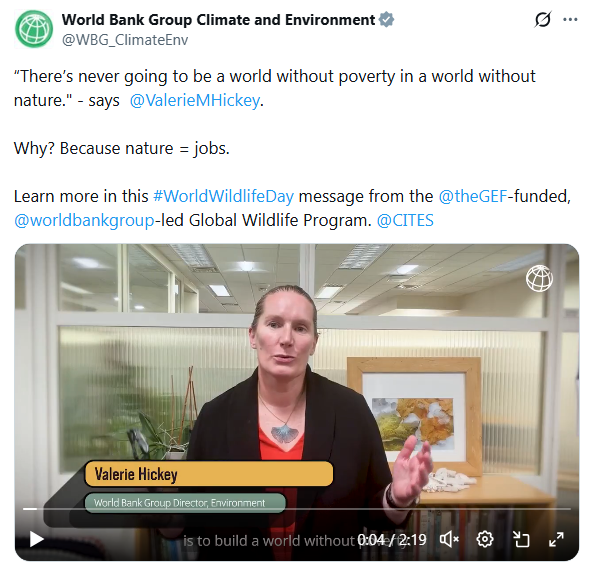
The GWP marked World Wildlife Day on March 3 with a feature story highlighting the work of GWP projects to strengthen value chains for medicinal and aromatic plants (MAPs)—this year’s theme. The Convention on International Trade in Endangered Species of Wild Fauna and Flora (CITES) also captured messages from Valerie Hickey, Environment Director at The World Bank Group and Claude Gascon, Interim CEO and Chairperson at the Global Environment Facility (GEF).
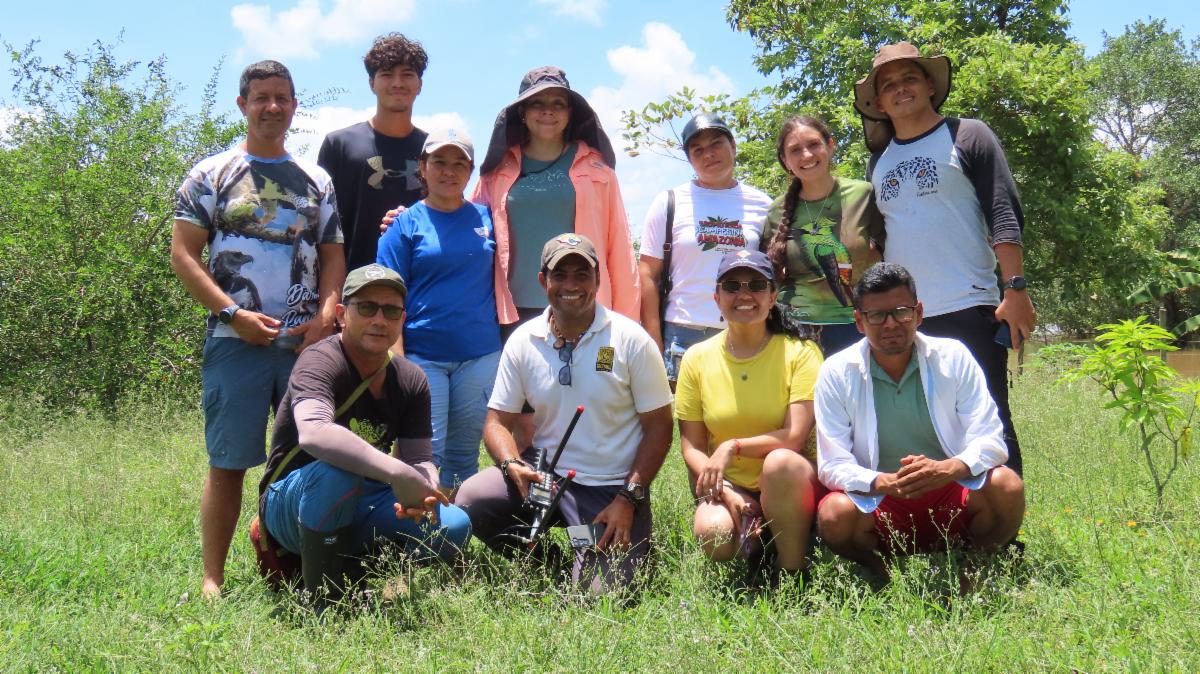
This quarter, the GWP is supporting more “twinning” exchanges. The following pairs of GWP participating countries are engaging in peer-learning exchanges to strengthen international collaboration on wildlife conservation: Zambia and Kenya, Uganda and Tanzania, Bhutan and Cambodia, and Malaysia and Thailand. You can read more about the GWP "twinning" program in a recent feature story about the first round of participants.
The Fifteenth Session of the Conference of the Parties to the Convention on the Conservation of Migratory Species of Wild Animals, also known as CMS COP15, is currently underway in Campo Grande, Mato Grosso do Sul, Brazil. We look forward to the solutions that will emerge to address urgent conservation challenges facing migratory species that cross international boundaries.
The GWP delivered several events over the past quarter, including two legacy series webinars and webinars about the gendered dimensions of human-wildlife conflict and innovative instruments for financing wildlife landscapes.
Keep reading for more information on these and other updates from the GWP.
| | |
Warm regards,
The GWP Coordination Team
The World Bank Group
| |
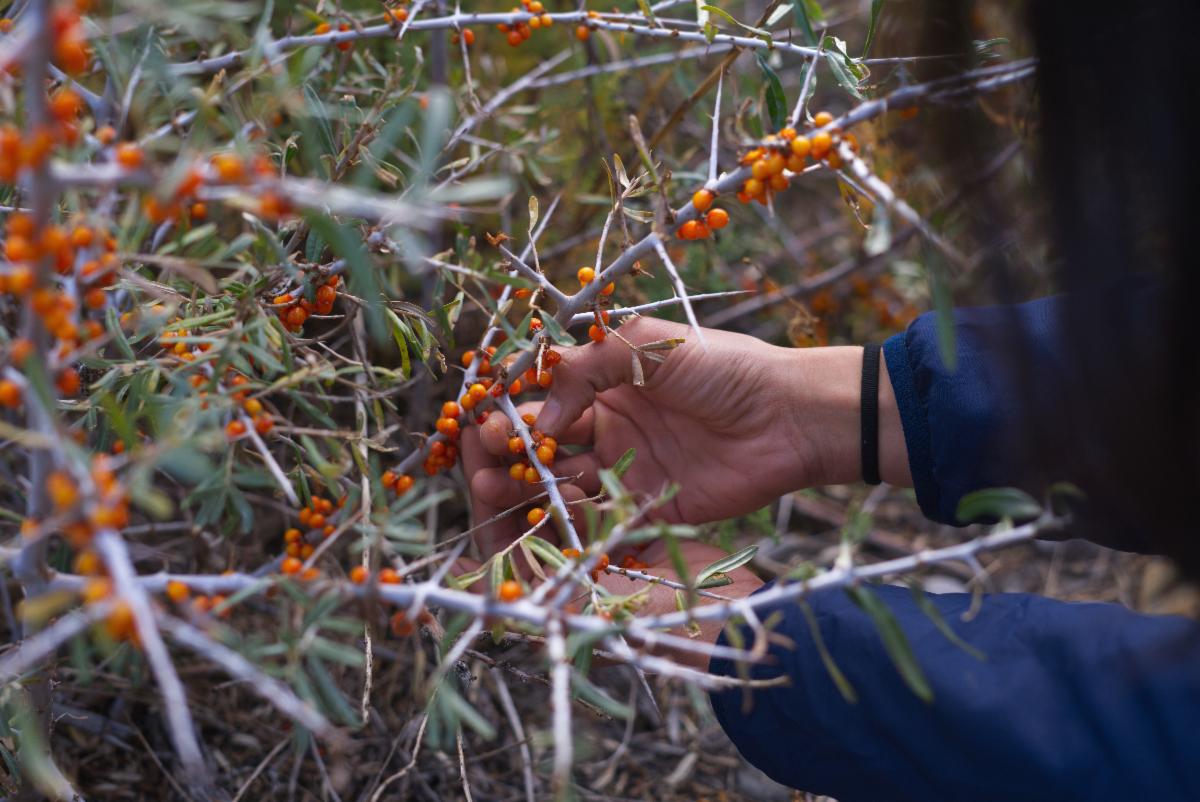
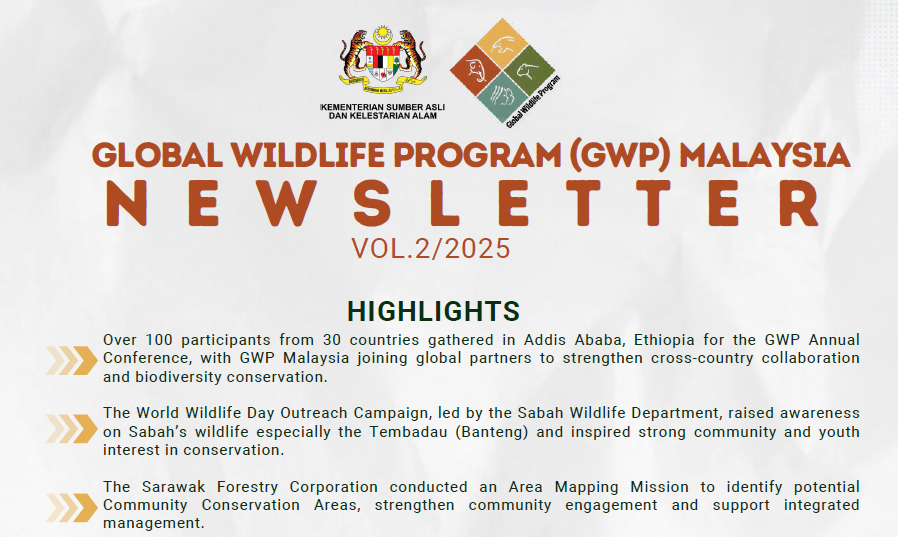
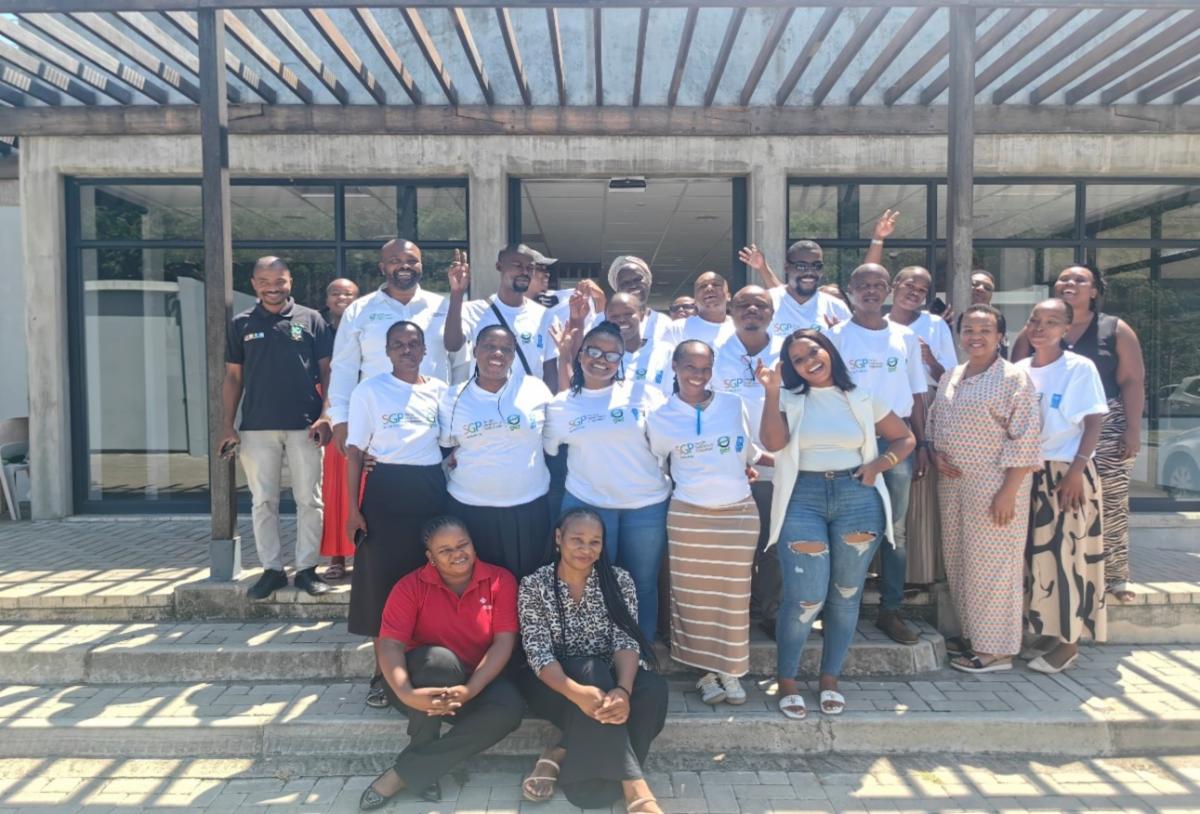
GWP India Project Strengthened Value Chains for Sea Buckthorn to Benefit Local Communities in the Himalaya | | | | Millions of people around the world rely on MAPs and other non-timber forest products as sources of food, medicine, and income. In India, sea buckthorn is cultivated by local and tribal communities living in the Himalaya. The GWP India SECURE Himalaya project, which was executed by India’s Ministry of Environment, Forest, and Climate Change and supported by the United Nations Development Programme (UNDP), strengthened value chains for MAPs like sea buckthorn and other non-timber forest products to support opportunities for ecotourism and wildlife-based economies while also conserving snow leopard habitats. | | GWP “Twinning” Exchanges Pair Projects Tackling Similar Challenges | | It is essential for teams to work together across international trafficking chains and transboundary landscapes to protect wildlife. That’s why the GWP's "twinning" peer learning exercise supports projects to conduct an in-person visit to strengthen collaboration on shared wildlife conservation challenges. GWP projects in Bhutan, Chad, Colombia, Panama, South Africa, and Uganda participated in the GWP’s inaugural “twinning” exchanges. | | | GWP Malaysia Shares Next Edition of Project Newsletter | | | | The GWP Malaysia project published the second edition of its newsletter. This volume highlights the project’s participation in the annual conference, a successful World Wildlife Day campaign, a mapping mission to locate potential conservation areas, and much more. | | GWP South Africa Wildlife-Based Economy Project Hosts Workshop for New Grantees | | New recipients of grant funding for community-based wildlife economy projects in South Africa participated in a report-writing workshop at iSimangaliso Wetland Park in late February 2025. The two-day workshop was convened by the iSimangaliso Small Grants Programme, which is part of the GWP South Africa Catalyzing Financing and Capacity for the Biodiversity Economy around Protected Areas project. The grantees are now better equipped to implement their wildlife economy initiatives to strengthen livelihoods and contribute to community-led conservation and development. | | | PROGREEN Landscape Governance Assessment E-Course Available | | |
PROGREEN—a global partnership for sustainable and resilient landscapes administered by the World Bank Group—provides an e-course to teach learners about integrated landscape management. This self-paced, free course distills lessons from the World Bank’s forests and landscapes work into practical tools for assessing governance challenges and strengthening institutions at the landscape level. The two modules apply key themes related to landscape governance to a fictional region to demonstrate how to use integrated landscape management to address environmental, economic, and social problems in rural areas.
| | New Ungulate Migration Maps Online | | |
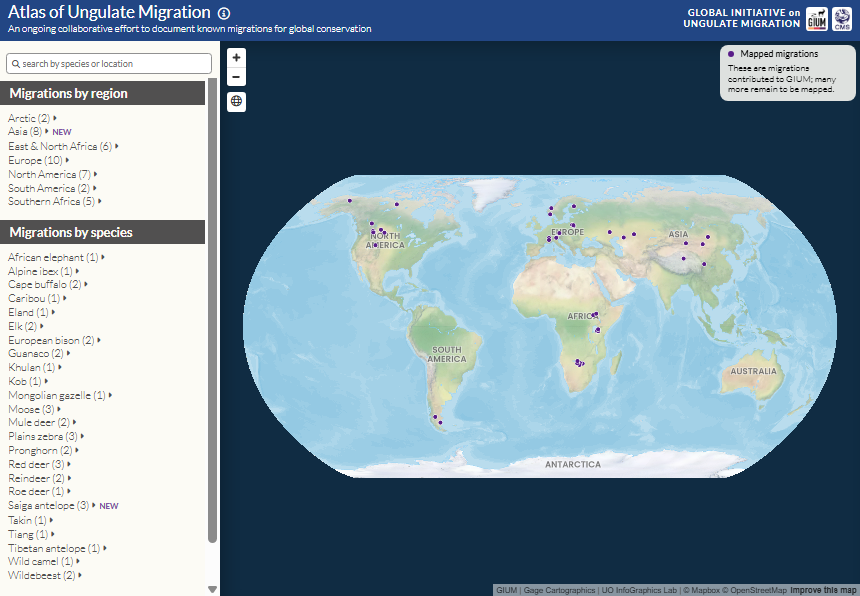
The Global Initiative on Ungulate Migration (GIUM) published three new migration maps this quarter, bringing the total number of maps in the Atlas of Ungulate Migration to 40. The maps, which are viewable by region and species, detail high-, medium-, and low-use migration corridors for a range of ungulate species. By illustrating where critical migration routes intersect with linear barriers like roads or railways, they can be used to inform conservation planning, infrastructure development, policy making, and more. GIUM works in partnership with the Convention on the Conservation of Migratory Species of Wild Animals (CMS) to provide this valuable information.
| | BIOFIN 2026 Knowledge Exchange on Nature Finance Series Under Way | | |
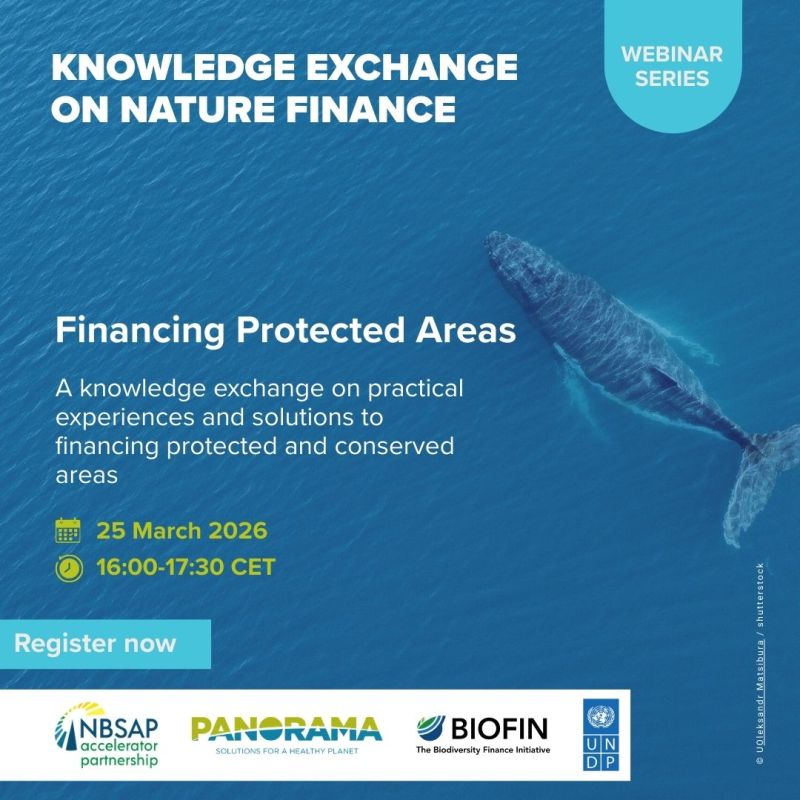
The UNDP Biodiversity Finance Initiative (BIOFIN) announced the first webinar in its 2026 Knowledge Exchange on Nature Finance series. This free online event scheduled for March 25 will provide the opportunity to hear directly from practitioners and policy makers implementing finance solutions for protected areas around the world. Future series topics include subnational finance for nature, inclusive nature finance, and private finance for nature.
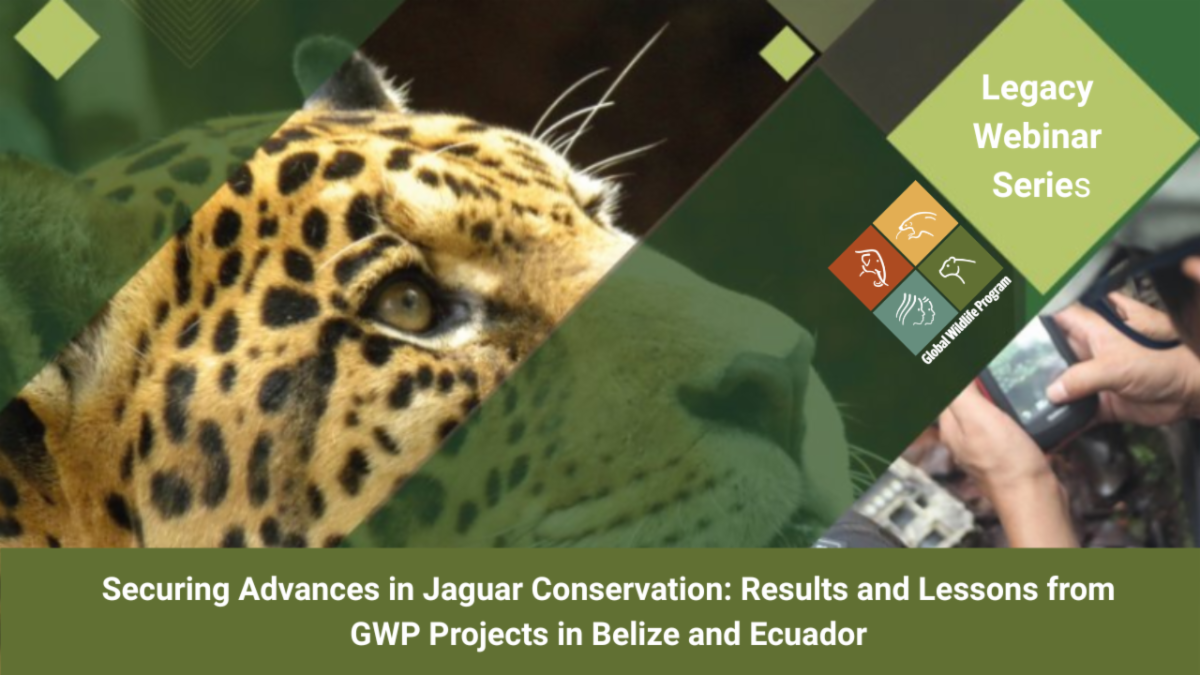
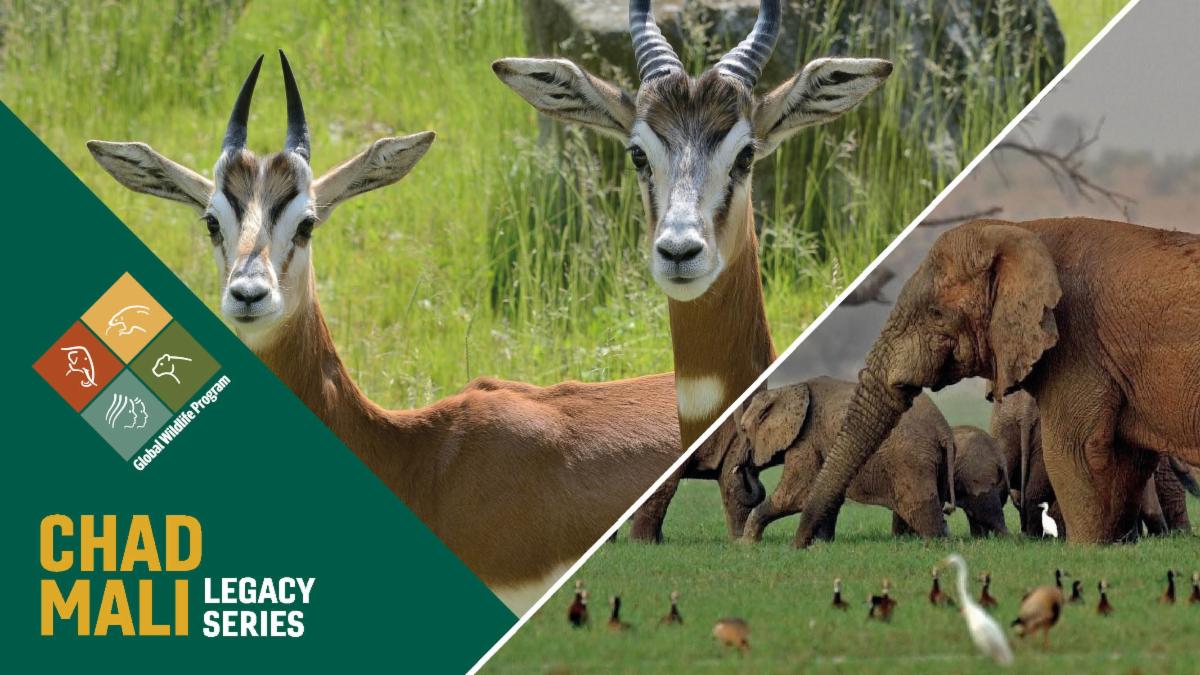
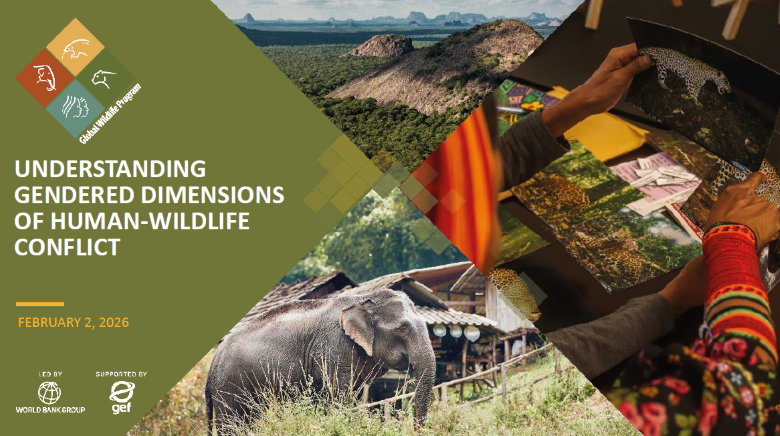
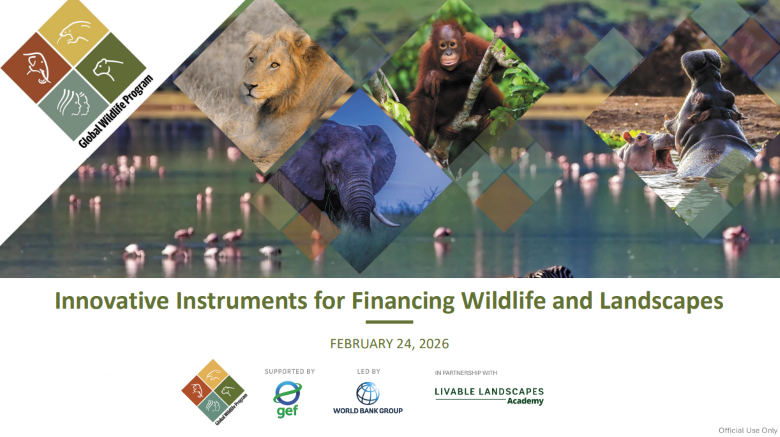
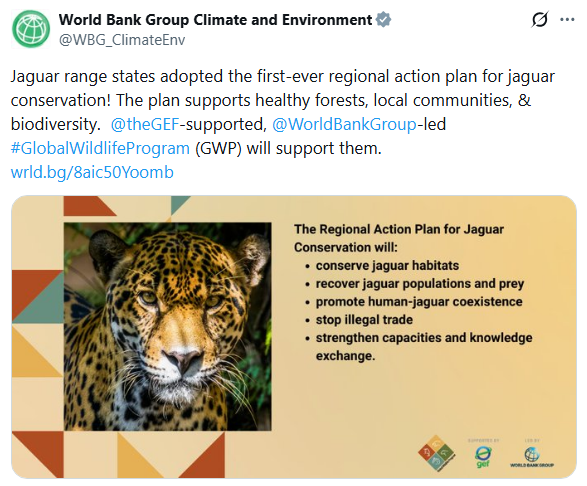
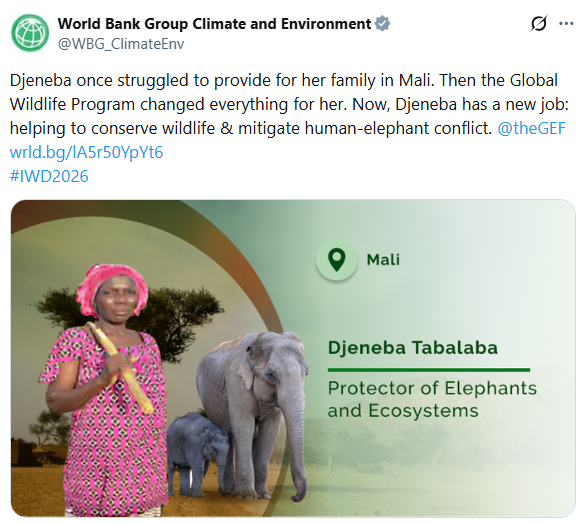
| | Legacy Webinar Series: Securing Advances in Jaguar Conservation: Results and Lessons from GWP Projects in Belize and Ecuador | The GWP projects in Belize and Ecuador delivered significant results in jaguar conservation, landscape-level management, community empowerment, and biodiversity protection. | | Legacy Webinar Series: Building Resilience Across Water, Wildlife, and Communities in the Sahel: Lessons from GWP Projects in Chad and Mali | The lessons learned by GWP projects in Chad and Mali on how to respond to fragile ecosystems, climate pressures, and complex social and security challenges can inform replication and scale-up across the Sahel and other fragile and conflict-affected contexts. | | Understanding Gendered Dimensions of Human-Wildlife Conflict | | Women, men, and gender-diverse groups often play different roles in their communities, with varying responsibilities, access to resources, and decision-making power. These differences shape how people interact with wildlife and natural ecosystems—and influence whose knowledge is recognized, whose safety is prioritized, and whose livelihoods are taken into account in conservation policies and responses. | | Innovative Instruments for Financing Wildlife and Landscapes | | Despite the world’s deep dependence on healthy ecosystems, global financial flows remain overwhelmingly misaligned with biodiversity and ecosystem goals. However, the tide is turning. Emerging financial instruments, such as debt-for-nature transactions, outcome-based and blended finance structures, and institutional investment strategies, are beginning to overcome constraints. | | | | International Women's Day | | |
This newsletter is published by the GWP Coordination Team.
We welcome your submissions of news, events, and publications at
gwp-info@worldbank.org.
| | | | |