News and Research Findings
from Across the ECHO Program
| | |
2026 NIH ECHO Science to Action Symposium Next Week: Register Now
ECHO Workshop Highlights Research Potential of Shed Baby Teeth
ECHO Research Spotlight
Recent Research Results
Upcoming ECHO Discovery Webinar
Past ECHO Discovery Webinars: March and April
With a Childlike Wonder
| | |
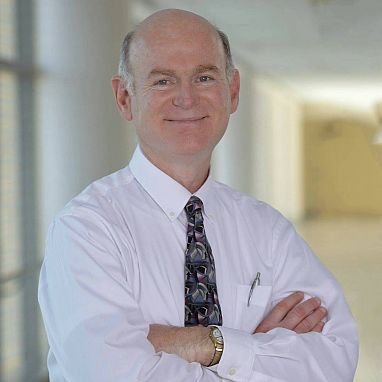
I plan to retire from federal service on May 31, 2026. It is a singular privilege to serve as the inaugural Director of the NIH ECHO Program since its inception in July 2016. After almost 10 years, the ECHO Cohort and the ECHO IDeA States Pediatric Clinical Trials Network (ISPCTN) are mature, productive, and impactful. Today, ECHO is a leading source of evidence on the root causes and prevention of common chronic childhood conditions, and it is well positioned to expand its impact through continued rigorous, solution-oriented research, broad access to data and biospecimens, and translation of science into action.
While NIH actively searches for a new permanent director, ECHO Deputy Director Dr. S. Sonia Arteaga will continue to serve in a leadership role. Dr. Josh Denny will serve as acting director and Dr. Sara van Driest as senior advisor, each half time. Josh and Sara are, respectively, CEO and Director of Pediatrics for the All of Us Research Program, a sister program at NIH with a flagship adult cohort. Together, they will help advance alignment with the All of Us Research Program, but importantly, the programs will remain independent.
I encourage you to join the ECHO Symposium: Translating Science to Action on May 6, 2026, on the NIH campus in Bethesda, Maryland, and online. This free event will bring together researchers, policymakers, health professionals, advocates, and others to examine how chemical exposures affect child health and development—and how science is translated into meaningful action.
Thank you so much for your ongoing support for the ECHO Program, which is poised to substantially expand its impact on child health over the next few years.
Matthew Gillman, MD, SM
Director of the ECHO Program
| | 2026 NIH ECHO Science to Action Symposium Next Week: Register Now | | |
Registration is open for the NIH ECHO Translating Science to Action Symposium on May 6, 2026.
The symposium will focus on two critical areas of chemical exposure: plastics and air quality. Through expert-led sessions and a crosscutting panel discussion, participants will explore how evidence on chemical exposures is informing programs, policy, and practice. Panelists will also address strategies for building trust and communicating scientific findings to policymakers, health care providers, parents, communities, and more.
This is a hybrid event, with a robust in-person networking experience designed to support connection and collaboration. Attendees joining onsite will have the opportunity to engage and network at interactive information stations hosted by researchers, advocates, professional organizations, and community partners.
Whether you attend in person or virtually, the symposium offers evidence-based insights and practical perspectives to support healthier futures for children.
Visit the event website to register and explore the full agenda and speaker lineup.
| | ECHO Workshop Highlights Research Potential of Shed Baby Teeth | |
On April 22, 2026, the ECHO Program hosted the workshop “Maximizing the Research Potential of Shed Teeth,” highlighting innovative approaches to using naturally shed baby teeth and other limited use biospecimens to study environmental influences on child health.
Slides and a recording of the workshop will be available in the coming weeks.
| | ECHO Topic of Interest Video: Chemical Exposures | | |
ECHO research includes investigation of chemical exposures and examines the ways that chemicals that we encounter daily in our water, air, food, and household products affect the health and well-being of children and families.
In this new video, Dr. Jessie P. Buckley discusses how ECHO collects and studies data on chemical exposures and the importance of improving knowledge and regulation of chemical exposures. Dr. Buckley also highlights findings from ECHO studies showing that exposure during pregnancy to organophosphate esters (OPEs) can be associated with complications like preterm birth, obesity, and behavior problems in offspring.
| | Smoking During Pregnancy Linked to Mental Health Challenges in Children | |
ECHO studied how mothers smoking during pregnancy might be associated with their children’s behavioral and emotional challenges. Children exposed to smoking before birth were more likely to experience multiple, co-occurring emotional and behavioral symptoms. They were also more likely to show externalizing problems, such as struggles with attention, aggressive behavior, and rule breaking. The strongest effects on mental health symptoms showed in children under age 7 and during ages 9-12. Boys and girls were affected in similar ways.
| Exposure to Flame-retardant Chemicals During Pregnancy Associated with Differences in Child Growth Patterns | |
ECHO studied how mothers’ exposure to flame-retardant chemicals in household and industrial products during pregnancy was associated with growth patterns beyond their children’s infancy. Exposure to specific flame-retardant chemicals during pregnancy was associated with differences in child growth rates between ages 2 and 10. Higher prenatal exposure to bis (1,3-dichloro-2-propyl) phosphate (BDCPP) was associated with faster increases in weight and height during early childhood (ages 2-5). Higher prenatal exposure to diphenyl phosphate (DPHP) was associated with faster increases in body mass index and weight during mid-childhood (ages 6-10). In contrast, prenatal exposure to bis (1-chloro-2-propyl) phosphate (BCPP) was associated with slower growth across multiple development periods.
| Stress During Pregnancy and Adverse Experiences in Mom’s Own Childhood May Be Associated with Child Mental Health | |
ECHO studied how adverse experiences in a mother’s childhood and stress during pregnancy might be associated with mental health problems in their children. Adverse experiences during mothers’ childhood and stress during pregnancy were each associated with a higher risk of mental health problems in their children. The results were similar between boys and girls and were seen throughout their childhood and adolescence.
| Perceived Stress During Pregnancy Associated with Autism-related Traits in Children | |
ECHO studied the potential association between perceived stress during pregnancy and autism-related traits in children. At higher prenatal perceived stress levels, children had slightly higher scores on tests measuring social and behavioral traits related to autism. The link between pregnancy stress and autism‑related traits did not differ between boys and girls. The relationship between prenatal stress and autism‑related traits remained consistent even when the researchers accounted for mothers’ co-occurring prenatal depressive symptoms.
| |
ECHO Discovery
ECHO Discovery is a monthly webinar series of educational presentations for the ECHO community and anyone else interested in environmental influences on child health. Keep an eye on the ECHO Discovery webpage for upcoming webinars, as well as content from past ones.
| | Upcoming ECHO Discovery Webinar | | |
The next ECHO Discovery Webinar will take place on May 13, 2026, at 1pm ET.
The webinar will feature Linda Adair, PhD, of the University of North Carolina at Chapel Hill presenting “ECHO OIF Accomplishments.” Dr. Adair will provide an overview of the ECHO Opportunities and Innovation Fund (OIF) and the accomplishments of OIF awardees over seven cycles of funding. The session will include brief presentations by former OIF recipients that highlight their contributions to ECHO and provide insights into how the OIF has benefitted their career development.
| | Past ECHO Discovery webinars | | |
April
Participant Experience in Longitudinal Research
In April, Elissa Z. Faro, PhD, of Hackensack Meridian School of Medicine, presented on how ECHO participants felt about their participation in research. Dr. Faro presented the results of a survey given to parents and adolescent participants. Respectful, family-centered interpersonal relationships with staff, as well as practical aspects such as efficient scheduling, manageable survey lengths, and clear communication, are equally crucial for maintaining participant engagement and satisfaction. Dr. Faro also reflected on how participant engagement efforts in ECHO Cycle 2 reflect these principles.
| | | |
March
Early Life PFAS Exposure and Child Health: Evidence from the ECHO Cohort
In March, Alicia Peterson, PhD, of Kaiser Permanente Northern California, presented on PFAS exposure and child health research in the ECHO Cohort. Dr. Peterson highlighted PFAS exposure data available through ECHO, summarized key findings from ECHO-supported studies, and examined evidence linking prenatal and early life PFAS exposure to a variety of health outcomes. She also discussed the research strengths and gaps of the ECHO platform to advance future understanding and prevention of PFAS-related health impacts in children.
| | | |
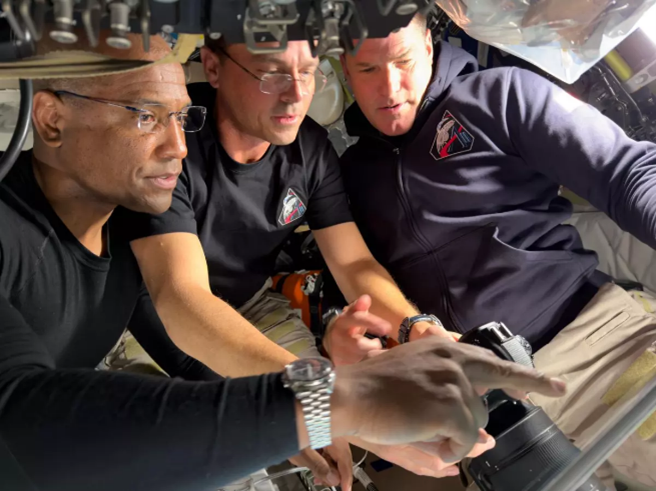
The recent Artemis II mission was the first time humans have been near the moon since the Apollo 17 mission in 1972, when astronauts landed on the lunar surface. In addition to being the result of over 20 years of preparation, Artemis II set the record for a crew’s maximum distance from Earth at 252,756 miles away from home. The mission crew themselves also set milestones. The four-person crew included the first woman (Christina Koch), first person of color (Victor Glover), and first non-American (Jeremy Hansen) to go out to the moon.
They flew to the far side of the moon and saw parts of it that had never been seen before. They relayed their observations and awe to Mission Control. Read about all the things they saw and said. It’s truly amazing to hear people describe this previously unseen sight in their own words!
| | (From left) Victor Glover, Reid Wiseman, and Jeremy Hansen configure their camera equipment before their lunar flyby observations. Credit: NASA | | | | |