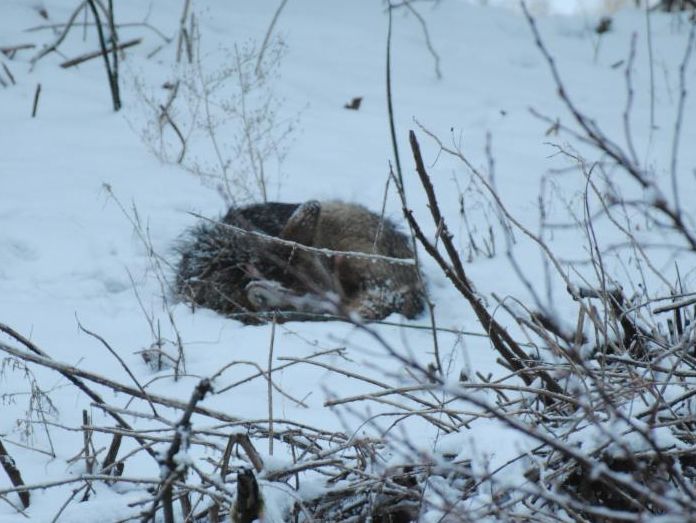
News & Updates on Portland Harbor Restoration | | Winter/Spring Updates from the Restoration Projects | | Sleeping Coyote curled up in the snow at Rinearson Natural Area, Debbie Talarsky, Feb 2025. | | |
Before industrialization in the 19th century, Portland Harbor was part of a threaded network of channels, creating habitat supporting various fish, wildlife, and native plant species. Following years of industrial pollution, the Trustee Council is working to restore habitat that benefits these natural resources. To date, four ecological restoration projects were constructed by independent project developers. As part of sharing the restoration projects' success, our last newsletter (summer 2024) highlighted some of the fish and wildlife that use the four projects, and now that we’ve made it through winter, we are revisiting these critters to learn more about how they use the restoration sites to survive the colder temperatures.
Animals that don’t hibernate during the winter are likely to be found along the river corridor of the Willamette. Riparian areas near rivers and streams are typically warmer than higher elevated areas due to water and vegetation which help moderate temperatures, offering more food resources than other habitats. Predatory animals, such as bald eagles and mink, depend on these areas during the winter months to be able to nest and forage. Some of the critters using the four restoration projects during the winter include:
| | |
Beaver
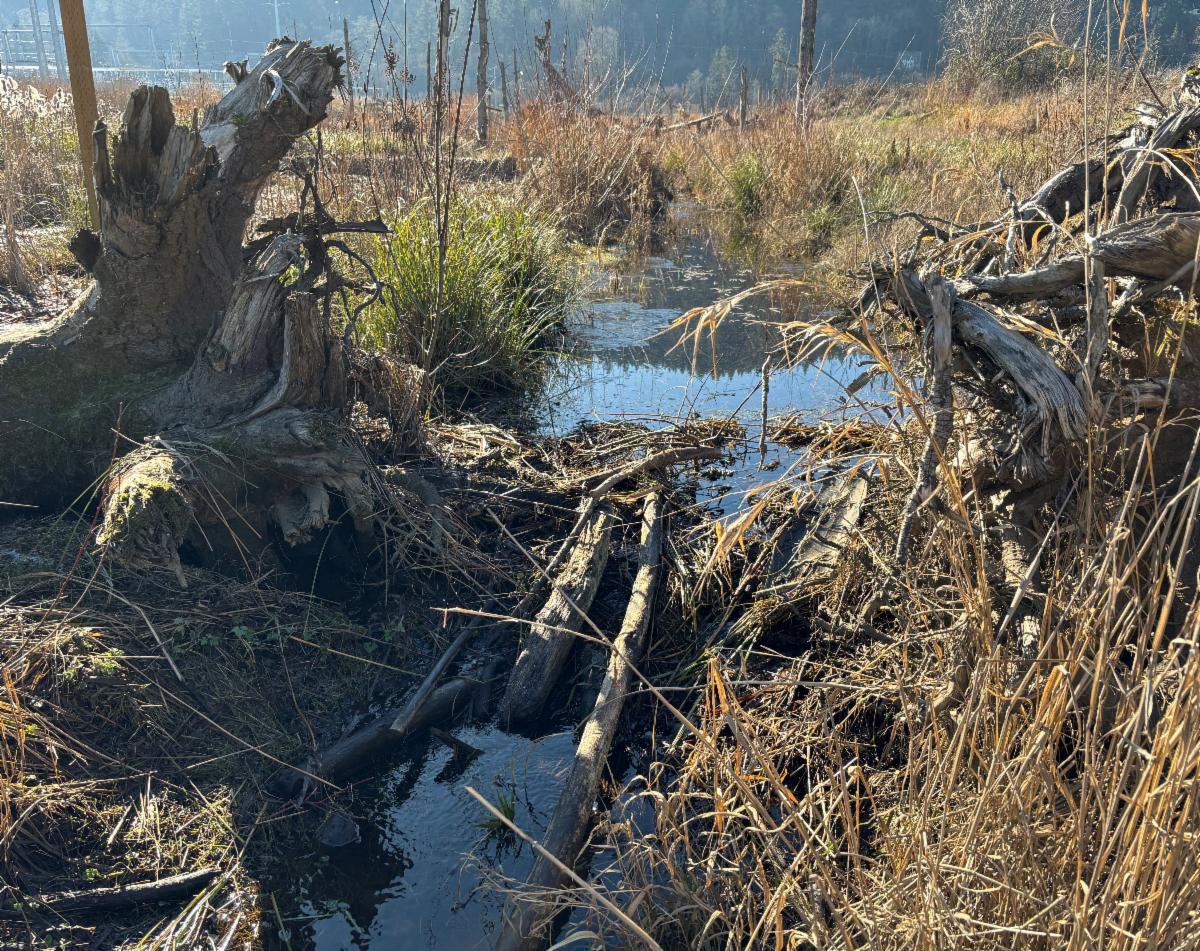
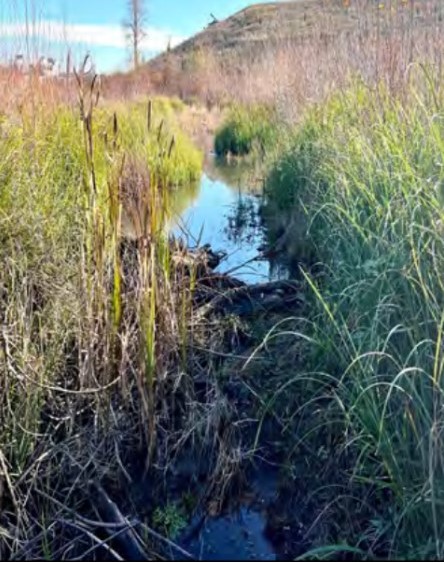
Beaver do not hibernate in the winter, instead they are usually active in building and maintaining their dams, which we’ve seen pop up at some of the restoration projects this winter. The deep ponds that beaver dams create offer refuge from predators. Beaver activity also keeps water from freezing so they can continue to access their dens which often have underwater entrances. Beaver have co-evolved with salmon and other native fish. Their dams are generally not considered barriers to fish passage, but actually provide benefits like cleaner water and more protection for fish.
| | |
Beaver Dam at PGE Harborton,
Image: PGE, January 2025.
| | Beaver Dam at Linnton Mill, Image:RestorCap, December 2024 | | |
Mink
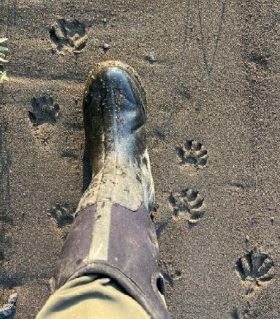
Mink are active year round, but in the winter they may stay in their dens near the river banks for days at a time while continuing to forage for food and stock up. While they might not be easy for the field cameras to photograph, we know that they are there.
Photo to the right: Mink Tracks at Alder Creek Restoration Site,
Image: Wildlands, Fall 2022
| | | | | |
Bald Eagle
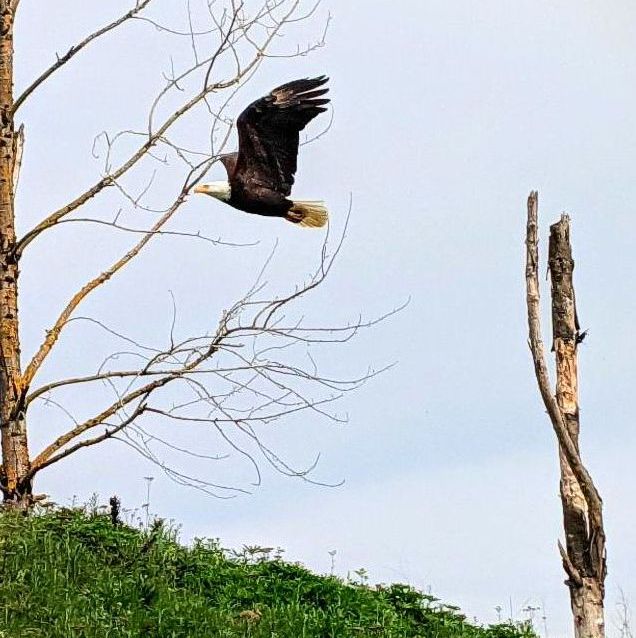
Bald eagles are most easily seen during the late winter and early spring foraging for available food. They have visited all four restoration sites to forage. This past year, a local pair of breeding adults and their offspring have been surveyed using the Linnton Mill Restoration site for foraging for food and nesting material, and PGE Harborton restoration appears to have a new bald eagle nest.
Photo to the left: Bald Eagle in flight at Linnton Mill, Image: RestorCap, April 2021
| | |
Pond Turtles
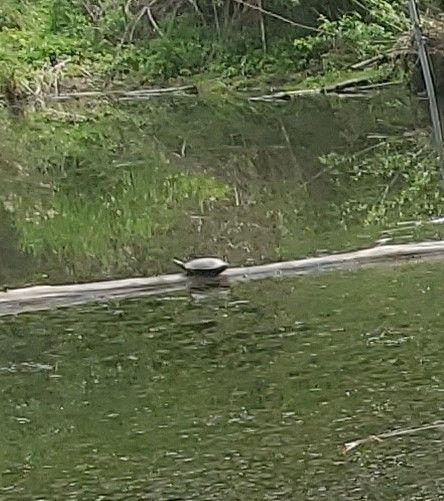
During the winter, native turtles don’t hibernate, instead they brumate. This means that they bury themselves into muddy river banks and slow their heart rates to rest for months at a time. Western painted turtles and Northwestern pond turtles wake up intermittently on warm winter days to sun bathe and look for food. Habitat structures at the restoration sites give these turtles access to sunbathing on these rare sunny winter days, especially at the PGE Harborton and Rinearson sites.
Photo to the right: Native turtle resting on a log at Rinearson Natural Area, Image: NOAA, April 2024.
| | | |
Other Wildlife
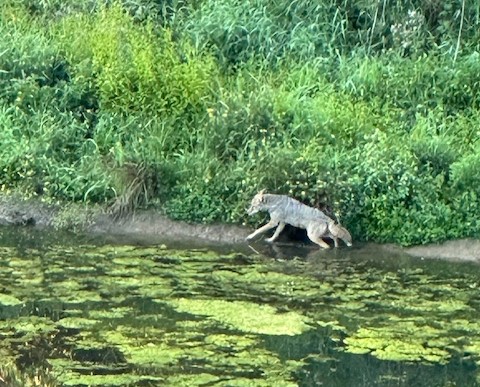
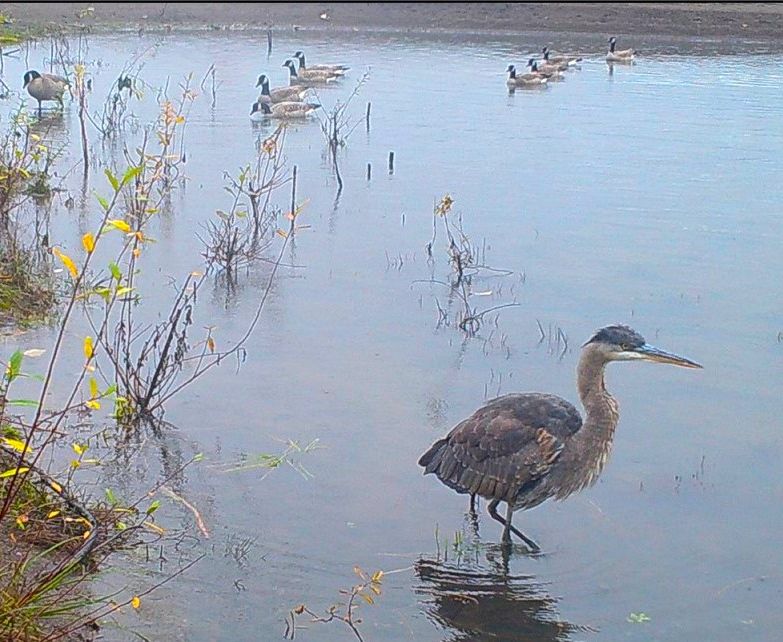
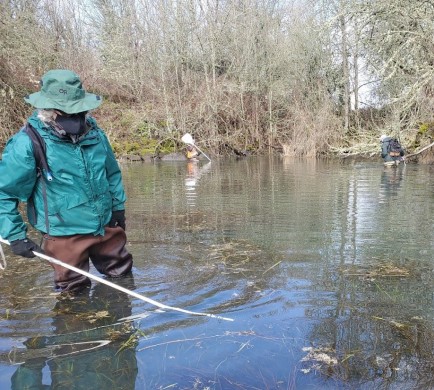
Deer and coyotes actively use the sites year-round for foraging and hunting. Migrating and non-migrating birds alike stop by the restoration sites to rest. In the wetland areas of PGE Harborton, frog egg-mass surveys have been underway as the project provides optimal habitat for Northern red-legged frogs to deposit their eggs as the ice melts.
| | Images Clockwise from top left: Coyote at Rinearson Natural Area, Dorothy Haynie, 2025. Blue Heron at Linnton Mill, RestorCap, Dec 2021. Biologist conducting egg-mass surveys at PGE Harborton, James Holley, Feb 2024. | | |
Interested in helping wildlife get through next winter? Give them space for a restful season and start thinking about ways you can create a safe habitat in your own space. Winter and spring is a great time to start designing your own wildlife friendly landscape for backyards or home gardens. Plant native plants, build shelters for birds, provide water and avoid pesticides.
The Columbia Land Trust and the Bird Alliance of Oregon offer a unique program providing assistance to create urban natural habitats through your own habitat project at home or local community greenspaces. Use this program to find resources or have your greenspace certified as backyard habitat. Learn more here.
| | |
Portland Harbor Community Advisory Group: Public Meetings
May 14th The Portland Harbor Community Advisory Group (CAG) is made up of representatives of diverse community interests. Its purpose is to provide a public forum for community members to present and discuss their needs and concerns related to the Superfund decision-making process. Additional information can be found here.
| |
Community Survey
DEQ invites community members to share their thoughts on reuse of McCormick and Baxter.
Community input will be taken into consideration as DEQ continues conversations with Portland Botanical Gardens on its Prospective Purchaser Agreement proposal. It will also help improve our community engagement process. Find the community survey here. You can also find out more about EPA’s work around McCormick and Baxter here.
| | |
Portland Harbor in the News
| |
The Portland Harbor Natural Resource Trustee Council is responsible for restoring natural resources that have been impacted by contamination in the Portland Harbor Superfund site. The purpose of this newsletter is to share information about the Trustee Council's work with those who are interested in our assessment and restoration efforts.
| | | | |