DOE Finalizes Major Accreditation Rule | |
On October 29, the U.S. Department of Education (DOE) announced its final Accreditation, Innovation, and Modernization (AIM) rule, which was published in the Federal Register on October 30.The final rule largely retains the provisions outlined in the August proposal and will take effect July 1, 2027, with additional implementation timelines for accrediting agencies.
AAVMC submitted comments during the rulemaking process addressing potential implications for veterinary medical education, including competency-based education frameworks, institutional participation in accreditation standards, and implementation timelines.
AAVMC will continue reviewing the final regulations and working with higher education partners to assess their implications for veterinary medical education and accreditation. Access the statement from the Council for Higher Education Accreditation here.
| Midterm Elections and the 120th Congress | | |
Election night 2026 has produced major changes in the makeup of what will be the 120th Congress. Currently, Democrats have won 54 Senate seats to 44 for Republicans. Two races remain uncalled, in Alaska and Mississippi, with the Democrat leading in both of them.
On the House side, Democrats have won 247 seats, to 152 for Republicans, with 36 races still uncalled. It is projected that Democrats will ultimately control between 245-260 seats in the House of Representatives.
Members in both chambers will meet next week to elect new leadership for the new Congress, and decide on the new chairs and ranking members for key committees. There will be at least 75 new Members of Congress, including one veterinarian, Rep. Elect Charlie Hatcher (R-TN) from the 5th District of Tennessee.
AAVMC looks forward to working with all of the new Members on issues vital to academic veterinary medicine.
| | Congress Faces December 11 Deadline to Finalize FY2027 Funding | |
Congress must reach an agreement on FY2027 federal funding by December 11, as the government continues to operate under a continuing resolution.
With few legislative days remaining, lawmakers must decide whether to pass full-year appropriations or extend temporary funding into 2027.
| Federal Court Decisions Halt Proposed PSLF Restrictions | | |
In October, the U.S. Department of Justice dropped its appeals of two federal court rulings that blocked restrictions on employer eligibility under the Public Service Loan Forgiveness (PSLF) program. The DOE's earlier rule would have allowed the agency to disqualify employers determined to have engaged in activities involving a "substantial illegal purpose," potentially affecting borrowers employed by certain nonprofit and public service organizations.
The decision leaves the challenged restrictions blocked, preserving existing employer eligibility protections under PSLF. The development is particularly relevant to graduates and employees of qualifying public and nonprofit institutions, including veterinary medical colleges, universities, and research organizations.
| | J-1 Rule Could Affect International Academic Exchange | | |
The U.S. Department of State has proposed changes to the J-1 Exchange Visitor Program that would expand the circumstances under which an exchange visitor's participation may be terminated. The proposal could affect international professors, researchers, postdoctoral scholars, and other exchange visitors participating in academic programs at U.S. institutions.
On September 30, AAVMC joined other higher education associations in submitting comments on the proposed changes.
| | Proposed H-1B Visa Fee Raises Questions for Higher Education | | |
The Department of Homeland Security proposed a new $103,265 fee for certain H-1B visa petitions in August, following a federal court decision affecting an earlier fee requirement. The proposal would primarily affect cap-subject employers, while colleges, universities, and qualifying nonprofit research institutions would generally remain exempt.
In September, AAVMC joined other higher education associations in submitting comments addressing the potential effects on universities and the academic workforce.
| | VET CARE Act Introduced to Expand Veterinary Training Opportunities | | |
On September 28, the Veterinary Expansion and Training for Comprehensive Animal Resources and Education (VET CARE) Act (H.R. 10617) was introduced in the House of Representatives. The legislation would establish a federal demonstration grant program supporting work-based learning opportunities in veterinary medicine to strengthen veterinary education and workforce development.
The bill has been referred to the House Committee on Agriculture for consideration. If enacted, the program could create additional opportunities for veterinary institutions and partners to expand practical training experiences and strengthen veterinary workforce pathways.
| | Federal Agencies Propose Changes to Grantmaking Requirements | | |
The National Science Foundation (NSF) and DOE have proposed changes to federal grantmaking requirements that could affect how colleges and universities apply for, administer, and maintain federal funding. The proposals address grant termination authority, award selection criteria, financial oversight, and restrictions affecting international research collaborations.
AAVMC joined other higher education associations in submitting comments on both proposals, emphasizing the importance of transparent grantmaking processes and consistent federal funding requirements.
| | AAVMC Connects with Veterinary Leaders in Wisconsin | | |
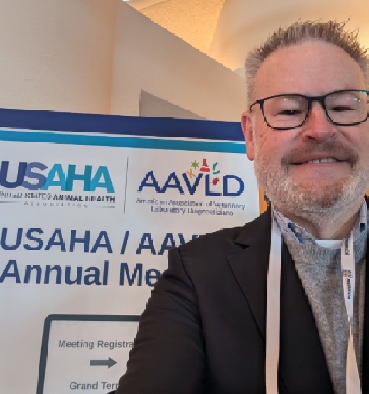
Senior Director for Governmental Affairs Kevin Cain attended the United States Animal Health Association (USAHA) / American Association of Veterinary Laboratory Diagnosticians (AAVLD) annual meeting on behalf of AAVMC.
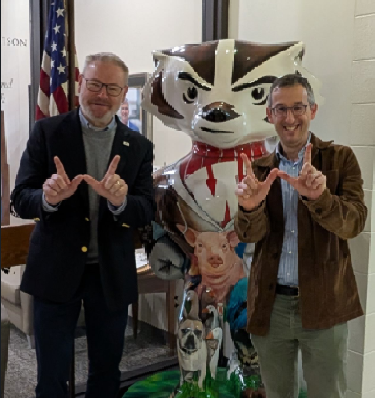
The USAHA/AAVLD meeting took place in Madison, WI, so Cain also had the opportunity to visit AAVMC Institutional Member University of Wisconsin School of Veterinary Medicine while he was there.
Dean Jonathan Levine, DVM, DACVIM (Neurology), is pictured here with Cain during the visit. Levine serves as chair of the Advocacy Committee and treasurer of the AAVMC Board of Directors.
|
Tick Act Reauthorization Signed into Law
The AAVMC-supported Kay Hagan Tick Act reauthorization was signed into law, extending key federal programs addressing Lyme disease and other tick-borne diseases through FY2030. The legislation supports Regional Centers of Excellence and state and local surveillance and prevention efforts. Its enactment reinforces the importance of sustained public health coordination and One Health approaches to vector-borne disease.
|
USDA Awards $300,000 to Expand Veterinary Student Training
The U.S. Department of Agriculture (USDA)'s National Institute of Food and Agriculture (NIFA) awarded nearly $300,000 through the Veterinary Services Grant Program to expand veterinary student training in regulatory medicine. Led by the National Association of State Departments of Agriculture Foundation, the three-year initiative will provide nine veterinary students with paid internships in state animal health offices, offering hands-on experience in disease surveillance, emergency preparedness, and animal health policy.
|
USDA Begins Awarding Research Facilities Act Grants
The USDA's NIFA has begun announcing awards through the Research Facilities Act Program (RFAP), which supports improvements to agricultural research facilities at eligible institutions. The program provides competitive grants for the construction, renovation, and modernization of research infrastructure, helping institutions expand their capacity to conduct agricultural and related scientific research.
Arkansas State University is among the institutions receiving support through the program, highlighting opportunities for federal investment in research infrastructure. For veterinary medical colleges and other agricultural research institutions, RFAP funding could support facility improvements, strengthen interdisciplinary research capabilities, and expand opportunities for faculty and students.
| | |
Advocacy Letters
AAVMC works closely with organizations interested in advancing academic veterinary medicine, food security, and public health. The letters below reflect some of that recent activity.
| | |
Get Involved: AAVMC Governmental Affairs
Members of the academic veterinary medicine community play an important role in shaping federal policy.
Ways to Engage
- Participate in AAVMC advocacy initiatives.
- Meet with congressional offices.
- Share research and institutional impact stories.
- Attend policy briefings and advocacy events.
Track Key Legislation
Contact Kevin Cain, AAVMC Senior Director for Governmental Affairs, with any comments, questions, or suggestions about our program.
| | |
Stay Up-to-Date with AAVMC
-
Subscribe to AAVMC Advocacy Insights newsletter here. Read past issues here.
-
Sign up to receive Vet-Med Educator in your inbox here. See past issues here.
| | AAVMC is dedicated to building a thriving community where everyone in academic veterinary medicine feels valued, welcomed, and fully engaged. To support this vision, the photography and artwork across our communications represent the culture we are actively striving toward, rather than just a mirror of where things stand today. | | | | |