|
Product Stewardship Updates
November 14, 2024
| |
|
WASHINGTON SEEKS TO DELAY
SOLAR EPR LAW IMPLEMENTATION
| |
|
In October, the Washington State Department of Ecology submitted a legislative proposal to extend the implementation timeline of the state’s solar panel EPR law. The extension will provide the agency and solar panel stakeholders with more time to address implementation challenges, while allowing manufacturers to continue operating in the state. Two previous amendments in 2020 and 2021 also extended the implementation deadlines for the 2017 Washington law, which was the first such law in the U.S. for solar panels.
Under the current law, manufacturers were required to submit a program plan by July 1, 2024, but many missed the deadline. Now they are facing another deadline; as of July 1, 2025, manufacturers that are not part of an approved plan will be prohibited from selling solar panels in Washington State. Rather than comply with the law, many solar panel manufacturers have decided to not sell in Washington, which threatens the state’s transition to clean energy. Agency stakeholder meetings identified several issues with the law, but not everyone with solar interests participated in those discussions, and the discussions focused on implementation of the current law, not on seeking workable solutions.
The legislative proposal, an agency priority for 2025, seeks to delay the stewardship plan submittal deadline to January 31, 2028, and the do-not-sell provision to January 31, 2029. It also calls for the creation of a multi-stakeholder photovoltaic module advisory committee, to be professionally facilitated by a third-party, which would identify issues with the law and develop recommended solutions. The work of the advisory committee would culminate in a report to the Legislature, to be submitted by December 2026, that includes recommendations for the solar program and changes to the law.
| |
|
MORE ON SOLAR PANELS:
AN INCREASINGLY URGENT CONCERN
| |
|
Solar panel management is an issue of increasing urgency for state and local governments, which have begun to receive inquiries from residents and businesses about how to dispose of or recycle their old panels. Without adequate recycling infrastructure, many solar panels coming out of service now are being sent to landfill, resulting in risk of pollution and loss of valuable materials like silver, aluminum, solar glass, and silicon. The Minnesota Pollution Control Agency (MPCA), which launched a solar panel Policy Working Group in 2019, recently commissioned PSI and Eunomia Research and Consulting to evaluate end-of-life solar panel policy options for the state. The report evaluates five policy scenarios, developed with stakeholder input, by how well they address best practices for recycling programs and the agency’s goals. The report, which will be available before the end of the year, will inform recommendations of the Policy Working Group and MPCA’s subsequent report to the legislature, due in January 2025. The Connecticut Green Bank also recently conducted a study on end-of-life policy options for solar panels and battery energy storage systems (BESS), which are increasingly paired with solar system installations. PSI developed an EPR policy model for BESS for the Connecticut Green Bank in 2023, which laid the groundwork for the report’s recommendations for EPR for BESS.
PSI holds national policy working groups on high-priority waste streams based on interest from our government members. If you are interested in participating in a solar panel policy work group or in our battery work group, contact info@productstewardship.us.
| |
|
CONNECTICUT TIRE STEWARDSHIP
PRESENTS DRAFT PLAN IN CONNECTICUT
| |
|
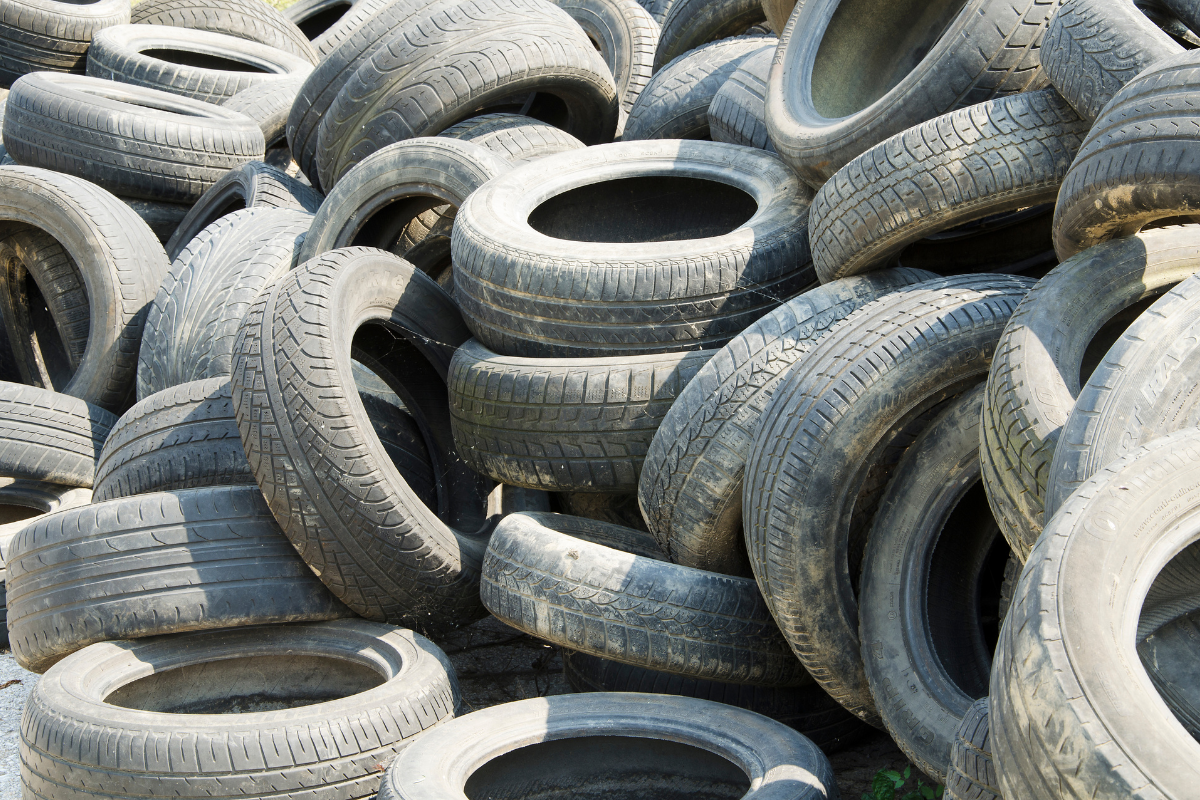
In 2023, Connecticut became the first state to establish an EPR law for tires in the United States after the Exeter Energy tire-derived fuel (TDF) incineration plant in Sterling, Connecticut closed, resulting in fewer end-of-life management options and increased illegal dumping. Unlike state-run tire programs, Connecticut’s law places the financial and managerial responsibility of managing used tires on the manufacturers, removing the burden from government.
In September, Connecticut Tire Stewardship (CTS) – the nonprofit tire stewardship organization established by the U.S. Tire Manufacturers Association to run the EPR program – submitted a draft plan to the Connecticut Department of Energy and Environmental Protection (DEEP) and held a public meeting to present the plan and solicit stakeholder feedback. CTS is expected to resubmit a revised stewardship plan to DEEP based on stakeholder input.
DEEP and other tire stakeholders are also exploring options to strengthen the law, including closing a loophole that allows retailers who don’t participate in the CTS program to continue charging consumers a disposal fee on tires. Prohibiting such consumer fees would eliminate the incentive for retailers to abstain from participating in the program, which negatively affects the program’s convenience and exposes consumers to unnecessary costs.
PSI Members interested in participating in a tire work group should contact info@productstewardship.us.
| |
CAMPAIGN IN OKLAHOMA CONNECTS
RESIDENTS WITH SAFE DISPOSAL RESOURCES | |
|
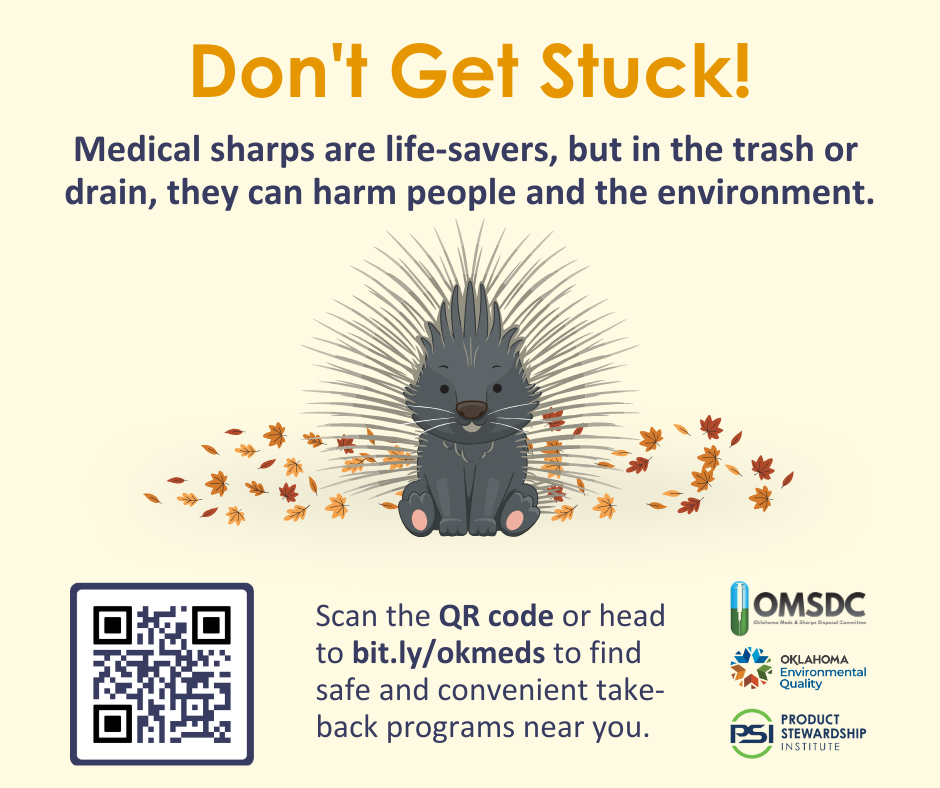
In October, PSI and the Oklahoma Meds and Sharps Disposal Committee (OMSDC) conducted a public education campaign about safe disposal practices for medical sharps and leftover medication. Timed to coincide with the U.S. Drug Enforcement Administration’s National Prescription Drug Take Back Day on October 26, the campaign reached over 110,000 residents and connected nearly 2,000 individuals with safe take-back sites through an interactive take-back site map. Several OMSDC members also hosted collections within their communities this past month, which were highlighted in PSI’s campaign launch press release.
The campaign, which was funded by a grant from PSI member agency the Oklahoma Department of Environmental Quality (DEQ), builds on prior work to expand safe pharmaceuticals and sharps disposal infrastructure in Oklahoma. In 2023, with grant funding from the U.S. EPA Region 6, PSI and OMSDC worked with DEQ, Reworld, and Native Nations in Oklahoma to add 15 new medical sharps take-back sites, increasing by 28% statewide access to sharps disposal services within a 30-minute drive.
| |
|
MISSOURI PSC EXPANDS SAFE MEDICINE
DISPOSAL RESOURCES WITH MAIL-BACK PILOT
| |
|
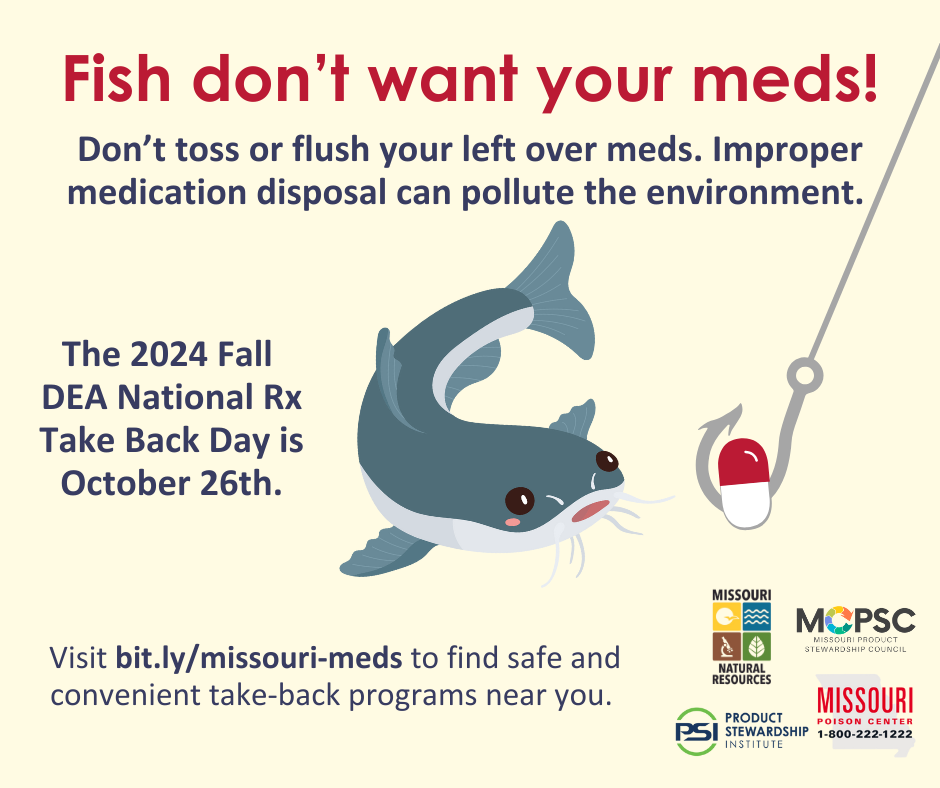
This month, PSI and the Missouri Product Stewardship Council (MO PSC) launched a pilot program to expand safe medicine disposal options in Missouri. Designed to support rural and home-bound residents, the pilot offers free mail-back envelopes as an alternative to in-home disposal pouches and kiosks. Fifteen participating pharmacies and public health partners in Springfield, Dexter, Malden, Cameron, Washington, and North Central Missouri’s Green Hills Region will be distributing medicine mail-back envelopes to patients free of charge. The pilot, which is funded by a grant from Solid Waste Management District O, launched on the heels of the Missouri PSC’s successful state-wide education campaign, which connected Missourians with convenient medication take-back sites. Read more in our press release.
PSI members interested in participating in PSI’s pharmaceutical and sharps national work group calls can contact info@productstewardship.us for more information and become a PSI member.
| |
REWORLD FACILITY TRANSITIONS HIGHLIGHT SHIFT AND INNOVATIONS IN WASTE-TO-ENERGY PRACTICES | |
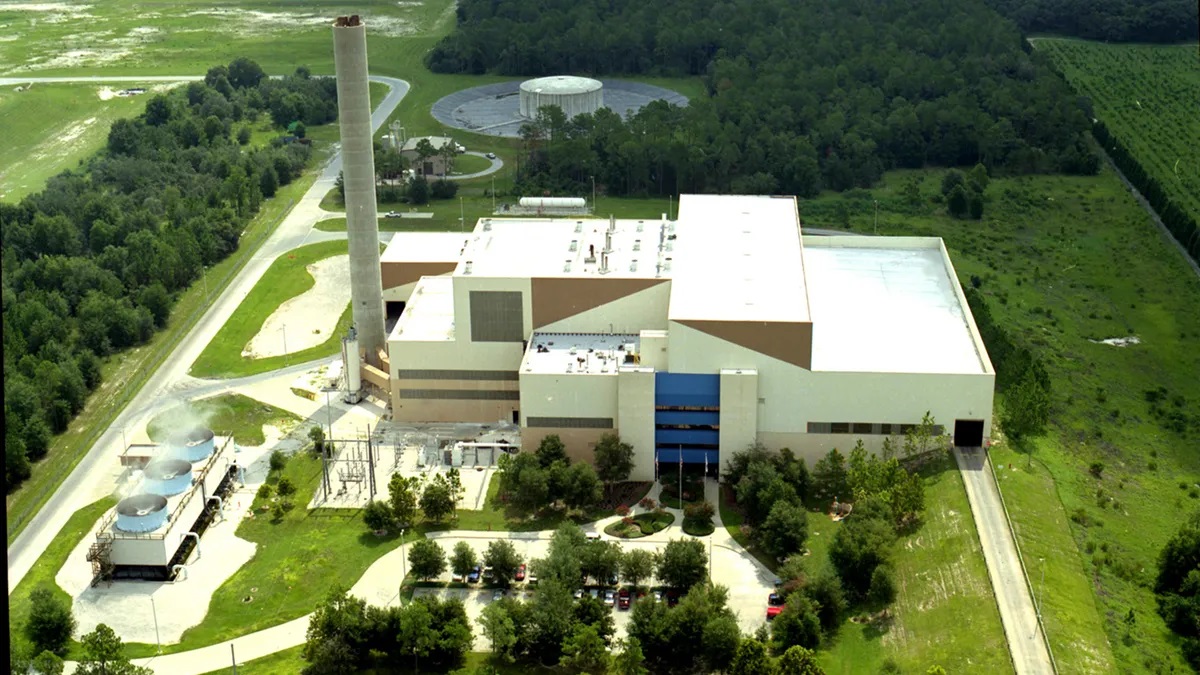
Image: The Pasco County RRF in Spring Hill, Florida. Photo credit: Florica Waste-to-Energy Coalition | |
As part of its strategic transition in facility operations, Reworld™ (formerly Covanta), a PSI Partner, will close its waste-to-energy (WTE) facility in Stanislaus County, CA on December 2 and its Oregon WTE facility on December 31. The closures are part of Reworld’s broader strategy to enhance WTE practices and expand its portfolio of services, focusing on solutions such as medical waste treatment, wastewater treatment, metals recycling, and logistical support for reuse and recycling. At the same time, Reworld™ is also expanding its facilities that use WTE technology in Pasco County, FL. These strategic facility adaptations are part of Reworld’s interest in advancing waste management solutions that are responsive to regulatory developments and community needs. | |
|
EXPRA PUBLISHES REPORT ON
PACKAGING EPR BEST PRACTICES
| |
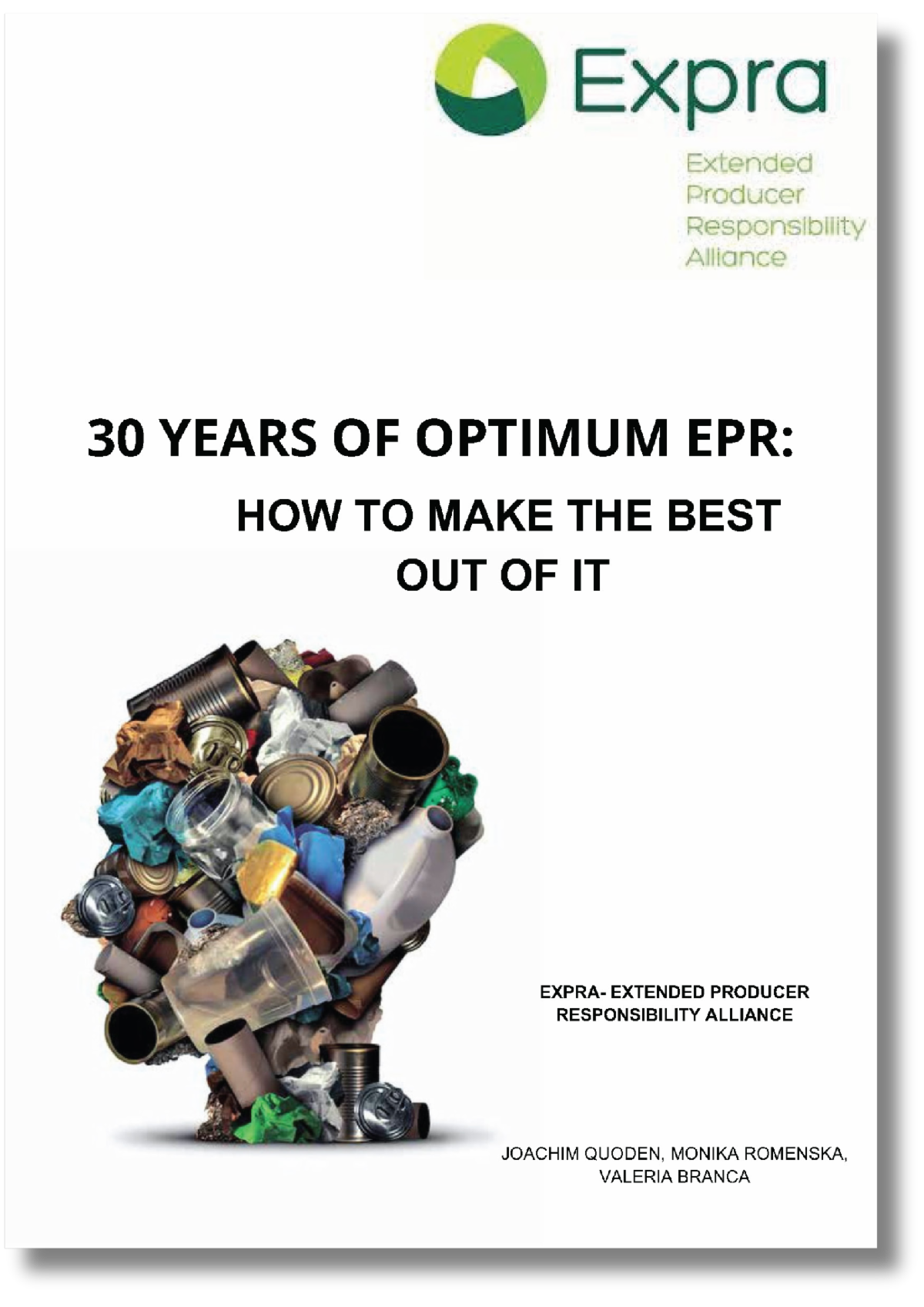
As Oregon and Colorado approach the launch of their packaging EPR programs, and three other states progress through the complexities of rulemaking and implementation, packaging stakeholders are increasingly shifting their focus to harmonization and best practices. In a timely development, longtime PSI partner and global EPR leader EXPRA has released a new report summarizing over 30 years of packaging EPR implementation and best practices “in the European Union and beyond.” The report shares valuable insights and success stories from established programs and offers crucial guidance for the U.S. and other countries in the early stages of packaging EPR program development. | |
|
GROWTH OF SODIUM-ION BATTERIES
AS A LITHIUM-ION ALTERNATIVE
| |
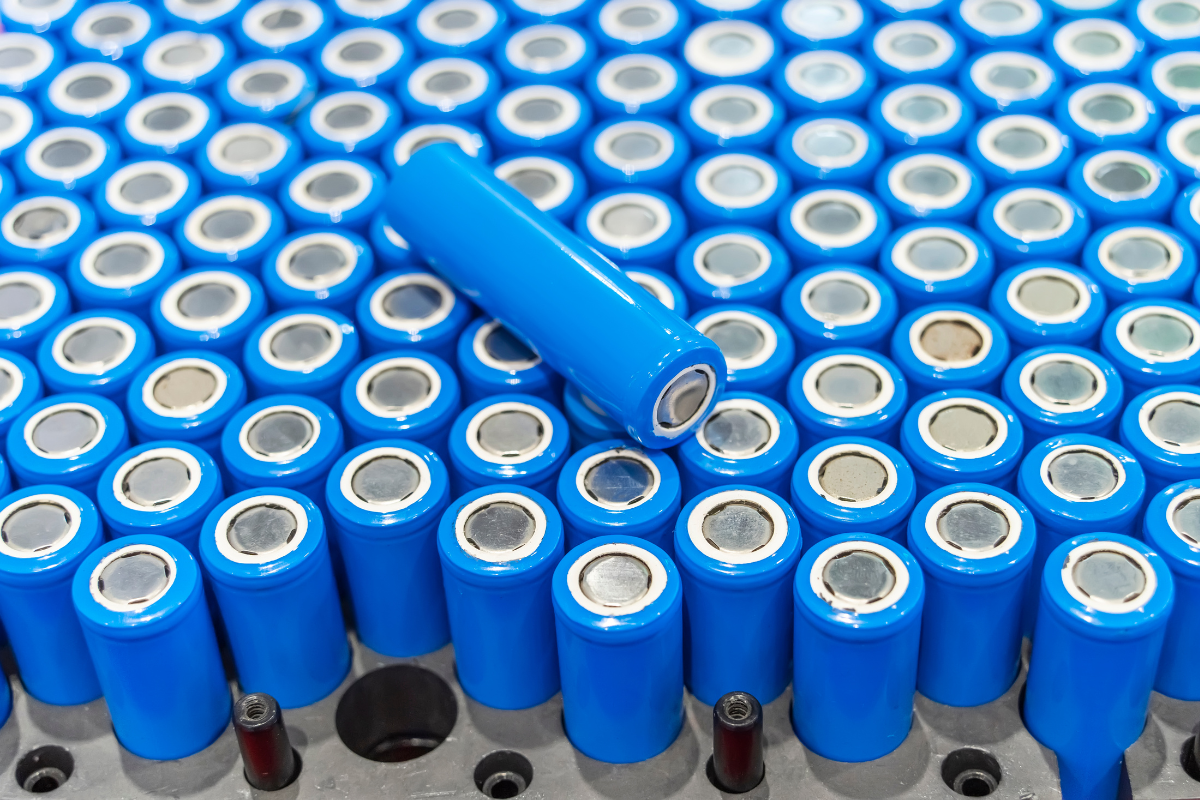
Sodium-ion batteries have emerged as a potential alternative to lithium-ion batteries, driven by the abundance and low cost of sodium compared to lithium. While sodium-ion batteries offer comparable performance in charging speed and cycle life, they currently have lower energy density than lithium-ion batteries. They also provide advantages in safety and low-temperature performance, making them particularly suitable for applications such as grid energy storage and electric vehicles. While it is unlikely sodium-ion batteries will fully replace lithium-ion ones, there is a strong focus on establishing a robust supply chain and advancing the technology for sodium-ion batteries to become mainstream applicable. Read more. | |
|
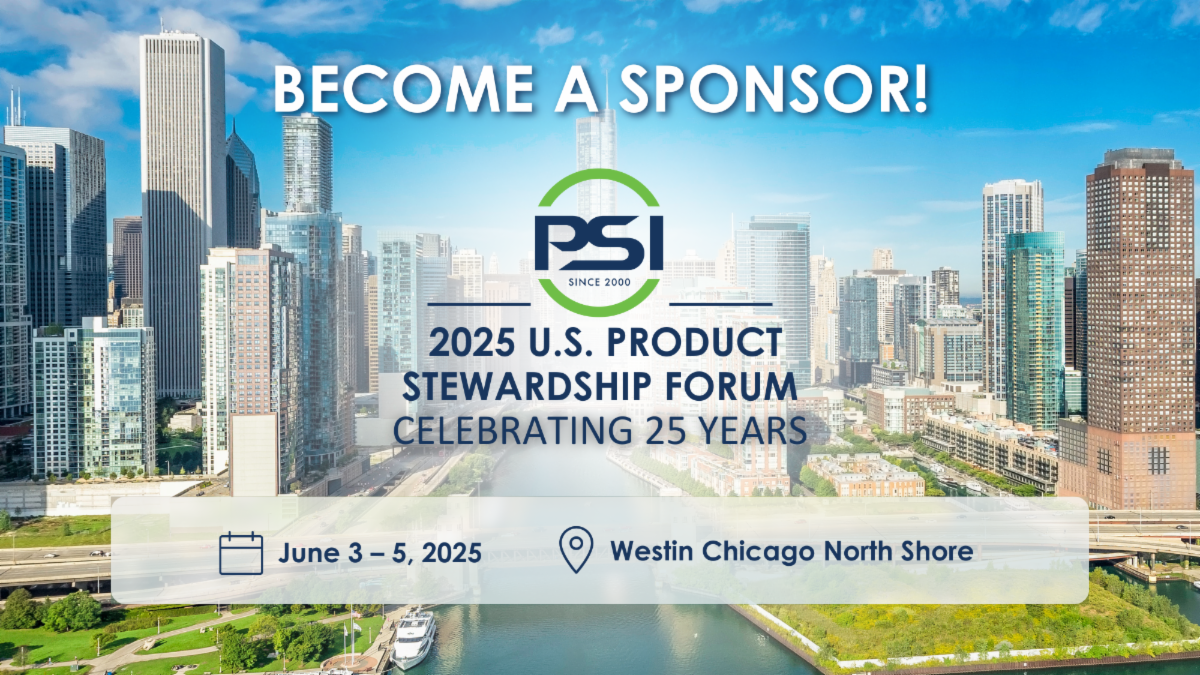
Celebrating 25 Years!
2025 U.S. PRODUCT STEWARDSHIP FORUM
June 3 - 5, 2025 | Westin Chicago North Shore
| |
|
For over two decades, PSI’s Forum has been the place to go for meaningful content and in-depth conversations on EPR issues that matter most. For our 25th anniversary conference, we expect more than 250 leaders from around the globe to convene for information sharing, cutting-edge EPR solutions development, and networking. We hope you will join us June 3-5, 2025, in Wheeling, Illinois (Chicago metro area).
Sponsorship information is also available on the event website. PSI’s 2025 U.S. Product Stewardship Forum is a valuable opportunity to connect meaningfully with government and private sector EPR leaders and communicate your brand’s commitment to building a more circular, sustainable, and equitable economy. Contact info@productstewardship.us.
| |
PARTNER SPOTLIGHT - EVNIA | |
|
Many companies feel overwhelmed by the complexity surrounding Extended Producer Responsibility (EPR). It doesn’t have to be this way! Don’t let constant changes in regulations hold back your growth.
With 20 years of experience, Evnia, a PSI Partner, streamlines obligations linked to environmental compliance and EPR. Our dual expertise in Canadian and U.S. regulations allows us to provide tailored solutions that meet the specific needs of companies for managing compliance programs in both countries. This enables Evnia to identify savings opportunities for your business, reduce your workload, and meet reporting deadlines. Your data will be safe and secure in our protected environment certified SOC 2 Type II.
Don't be left in the dark of compliance and regulations.
Trust Evnia to see clearly.
| |
A MUST-READ FOR ALL EPR PROFESSIONALS! | |
|
PERSPECTIVES ON PRODUCT STEWARDSHIP:
Navigating an extended producer
responsibility path to a circular economy
by Scott Cassel, CEO and Founder of PSI
| |
Learn about the emergence of the EPR movement in the U.S., Canada, and Europe; the basic elements of all effective EPR bills; how to build consensus with other stakeholders; and key definitions, terminology, and issues. Includes in-depth case studies on packaging, paint, and batteries. | |
|
If you are a PSI Member or Partner, contact
info@productstewardship.us for 30% discount code. Signed copies available.
Not a member or partner? Join online or email for more info.
| |
|
A recent Resource Recycling article highlights PSI’s E-Commerce and Online Retail Packaging webinar, part of the Preparing Producers for Oregon Packaging EPR series that PSI conducted in partnership with Circular Action Alliance and the Oregon Department of Environmental Quality (DEQ). The article draws on examples shared in the webinar by Nicole Portley from DEQ, illustrating how Oregon’s law will address various e-commerce scenarios and challenges.
Waste Advantage featured PSI’s press release announcing the launch of the Oklahoma campaign to promote safe, convenient disposal of leftover medications and used medical sharps.
| |
|
OECD REPORT: The Organization for Economic Co-operation and Development (OECD), an intergovernmental policy forum, recently released its report, Policy Scenarios for Eliminating Plastic Pollution by 2024, which highlights EPR as a strong policy approach to address multiple policy objectives and work in conjunction with other regulations such as product bans or bottle bills.
CHEMICAL RECYCLING: The National Recycling Coalition (NRC) released a draft policy entitled Chemical Recycling Is Not Recycling, arguing the term “chemical recycling” and associated terms (e.g., advanced recycling) are misleading, though the statement fell short of recommending alternatives. Currently, “chemical recycling” and “advanced recycling” are ill-defined terms that apply to various technologies, including those used to produce fuel. PSI’s report, Making Sense of “Chemical Recycling”- Criteria for Assessing Plastics-to-Plastics and Plastics-to-Fuel Technologies, sheds lights on the differences and offers criteria by which governments might assess non-mechanical recycling technologies.
EU PLASTICS: The EU now mandates that all single-use plastic bottles must have attached caps. Bottle caps are the third most common type of litter in the UK and this directive aims to reduce plastic litter and environmental harm. Read more.
NYC COMPOSTING: New York City has launched the nation’s largest curbside compost collection program, requiring residents to separate food waste from trash and recycling. The organic waste will be collected in a separate bin and managed through a mix of composting and anaerobic digestion facilities. Read more.
EV BATTERIES: Mercedes-Benz opened an electric vehicle battery recycling plant in Kuppenheim, Germany that aims to recover 96% of battery materials, supporting a circular economy and reducing reliance on primary resources. Read more.
DRUG MAIL-BACK: The U.S. Federal Drug Administration has approved a modification to the Opioid Analgesic Risk Evaluation and Mitigation Strategy (OA REMS) that requires participating companies to provide pre-paid drug mail-back envelopes to outpatient pharmacies and other dispensers of opioids. Read more.
SINGLE-USE VAPE BAN: The UK is set to ban the sale and supply of single-use vapes in England on June 1, 2025. The ban, which covers vape devices that are not rechargeable or refillable, is intended to support a more circular economy. Read more.
GFL ENVIRONMENTAL: This quarter, GFL Environmental, a PSI Partner, invested $96.4 million in growth initiatives with a focus on extended producer responsibility. Additionally, the company will welcome Billy Soffera, currently the Executive Vice President of Solid Waste Operations, as the new COO in 2025. Read more.
WM ACQUIRES STERICYCLE: WM has acquired Stericycle for $7.2 billion, incorporating Stericycle’s medical waste and destruction services into WM’s Healthcare Solutions division, positioning WM as a leader in the medical waste market. Read more.
SOLAR PANEL RECYCLING: SOLARCYCLE, a recycling company currently operating in Texas and Arizona, has announced it will open a new facility in Cedartown, Georgia in 2025 with the capacity to recycle 10 million solar panels a year. Read more.
| |
The Product Stewardship Institute is a policy expert and consulting nonprofit that pioneered product stewardship in the United States. Since 2000, PSI has helped enact 141 extended producer responsibility (EPR) laws across 20 product categories in 33 states — the bedrock on which the circular economy is built. We work with businesses, nonprofits, academia, and governments to ensure that products are responsibly managed from design to end of life. Join us at www.productstewardship.us. | |
|
The Product Stewardship Institute, Inc. is an equal opportunity employer and provider. Persons with disabilities who require alternatively formatted materials to ensure effective communication should contact Amanda Nicholson at info@productstewardship.us or 617.236.4855.
| | | | |