October 12 ------ Mr. Constitution/Douglas V. Gibbs ------ 2026

These Truths are Self-Evident

The Laws of Nature and of Nature's God

Self-Evident Truths

By Douglas V. Gibbs


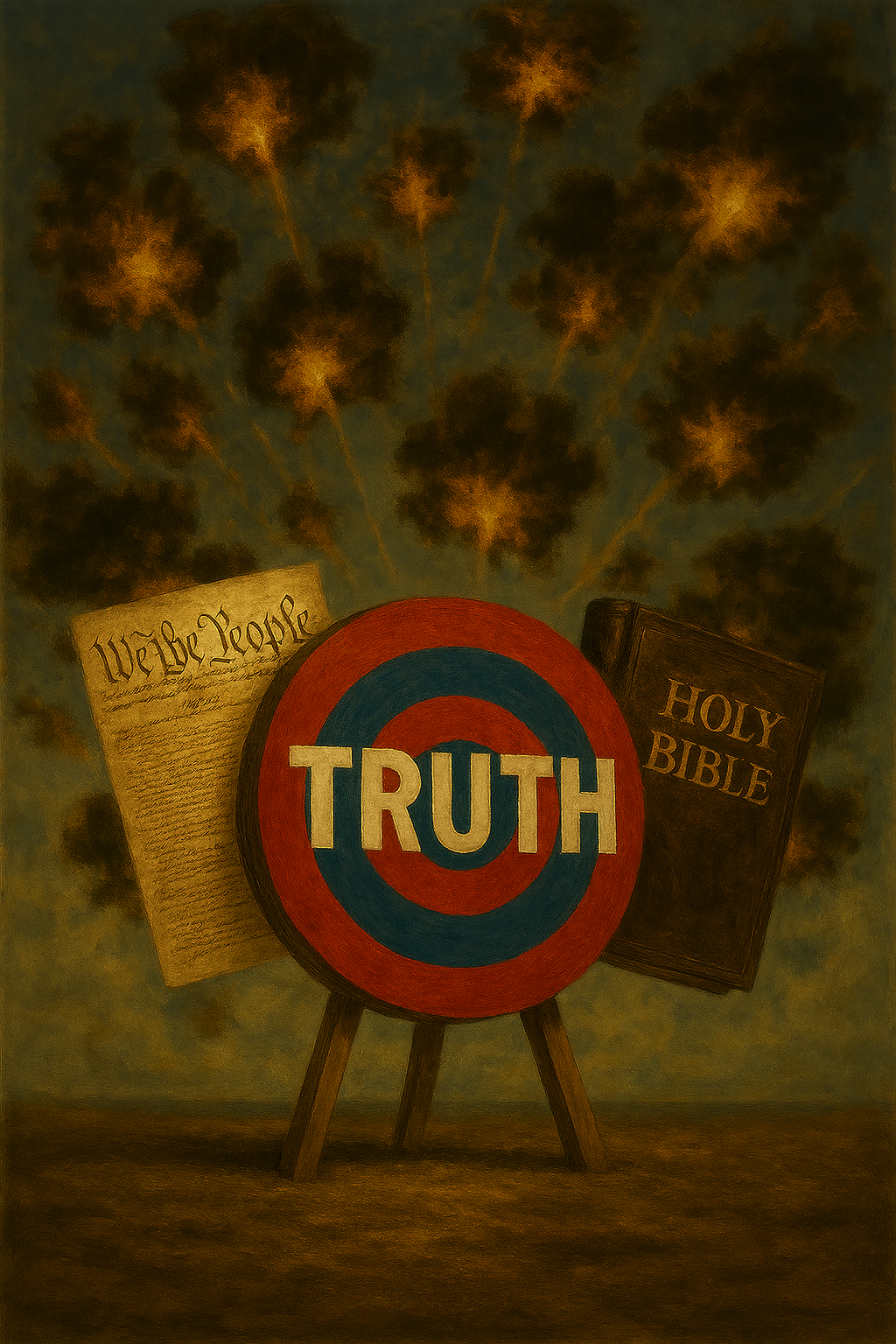
There is a phrase in the American Declaration of Independence that carries more weight than almost any other sentence in our republic’s founding: “We hold these truths to be self-evident, that all men are created equal, that they are endowed by their Creator with certain unalienable Rights, that among these are Life, Liberty and the pursuit of Happiness.”


In today’s social media obsessed culture it sounds like some archaic slogan. Read it carefully. As an American who believes in God-given Natural Rights, we should take those words very seriously. It is much more than a mere creed.


In 1776, there was a certain political wisdom that I am not sure many of us possess today. Now, we have politicians and lawmakers. Back then we had statesmen guided by wisdom and their godly foundation. An originalist reads these words and finds himself asking, “What did these words mean to the people who wrote and ratified them?” We must set aside our modern perspective that we are plagued with, and truly look at those words from the point of view of those who wrote and honored them.


To a member of society in the eighteenth-century the moral philosophy that Jefferson and his contemporaries inherited, be it from Locke, Blackstone, Scottish common-sense thinkers, or their Christian and Saxon heritage, a “self-evident” truth was not a claim that everyone already agrees with. It was a claim about knowability. A self-evident proposition is one that does not depend on a chain of prior proofs; it is grasped directly by a rightly ordered mind, the way we grasp that a whole is greater than its part, or that cruelty is not the same as kindness.


The signers were making a bold epistemological wager: that the moral order is real, and that it is accessible to ordinary human reason. They were not inventing rights. They were announcing that rights had been there all along, and that the British crown had trampled them.


Note, too, what the document does before it reaches that sentence. It appeals to “the Laws of Nature and of Nature’s God,” and it closes by resting its case before “the Supreme Judge of the world.” This is not some kind of secular manifesto, or an attempt to make it look good with a little sprinkling of religious garnish. It is a document whose entire logic depends on a Creator who stands above kings.


For an originalist, the Declaration is not a statute to be parsed in a courtroom, but it is a petititon and charter of first principles. It is based on the same philosophical soil in which the Constitution was later planted. Its original public meaning is plain enough:


 -------------------------------------------------------------

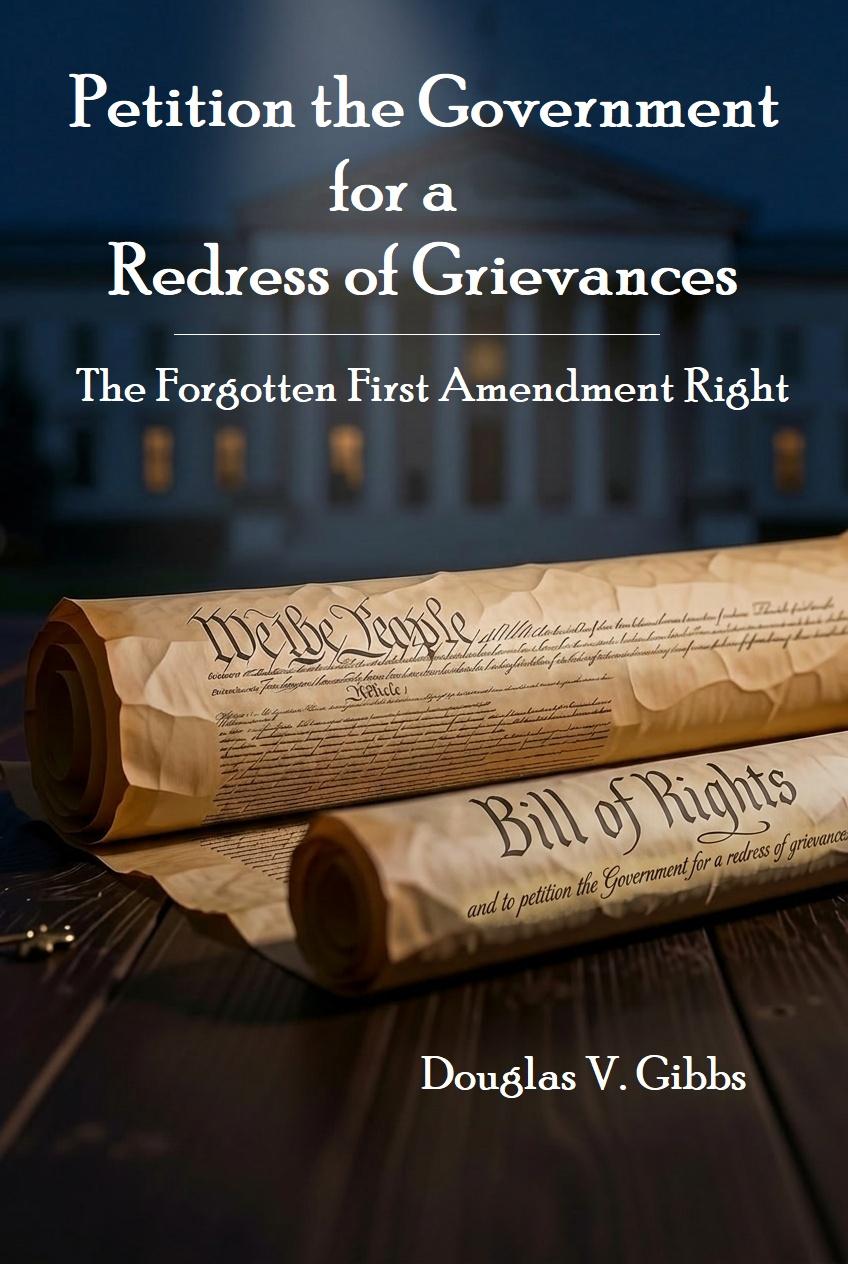
HAVE YOU PURCHASED DOUG’S LATEST BOOK, YET? PETITITON THE GOVERNMENT FOR A REDRESS OF GRIEVANCES IS AVAILABLE NOW!

 -------------------------------------------------------------


Our Natural Rights existed prior to the formation of even the first government in ancient history. Government does not grant our rights; it secures them.


Rights are unalienable. They cannot be legitimately surrendered or voted away.


The source of those rights is not the state, not the majority, and not the Crown, but the Creator.


That last point is decisive. If rights come from the Creator, then they are discovered, not manufactured. No legislature can redefine them out of existence.


From a Christian perspective, the Declaration’s most famous sentence is a paraphrase of Genesis. “All men are created equal” is the imago Dei – the image of God stamped on every human being, slave and king alike (Genesis 1:27). “Endowed by their Creator” names the Giver. “Unalienable” reflects the fact that what God gives, man cannot rightfully revoke.


The self-evidence claim itself also has deep Christian roots. Paul writes that the Gentiles, who did not have the written law, nevertheless “show the work of the law written in their hearts” (Romans 2:15), and that God’s nature is “clearly seen” in creation (Romans 1:20). Thomas Aquinas called this natural law; the moral order readable by reason because it is authored by God. The Declaration’s “self-evident truths” are, in this tradition, the natural law stated in political form.


There is a tension worth naming. A fallen world does not always see the self-evident. The Bible may refer to such a condition as having scales over their eyes. Self-evidence, in a broken world, must be defended, but the application may not always be possible at that moment.


The great temptation of modern politics is to relocate the source of rights. From the Creator to the court, the ballot, or the bureaucracy. When that happens, rights become permissions: granted today, withdrawn tomorrow.


The Founding Fathers, reading both nature and Scripture, offered a sturdier foundation. They staked the fledgling Union’s existence on the conviction that certain truths are not opinions to be negotiated, but realities to be acknowledged. They are written into creation, they are legible to reason, and they are guaranteed by God who endows.


That is what makes the sentence dangerous to tyrants and comforting to the powerless. It is not the government that made you equal. It is your Creator. And what He has given, no crown and no congress may take away.


Click HERE to Read the Article at Political Pistachio


Living Water


Taken philosophically, "living water" is more than a promise about the afterlife. It is a description of how a life is meant to be powered. We have all been given the desire to seek God. Only He can fill that void. But, the world will tell you it is your desires and heart that will make your life complete. Your path to follow your heart is a cistern dug by your own hand, filled with stale contents. The Lord promises us a Spirit that arrives from a source outside of our frail human form that moves, cleanses, and keeps moving, so that the interior life becomes a spring rather than a stockpile. The human being is a conduit, not a reservoir, and virtue rots the moment it stops flowing. The Founding Fathers seem to have grasped exactly this, which is why their political vocabulary is so hydraulic — rights not granted but endowed, liberties flowing from a fountain antecedent to any government, a republic perpetually dependent on a renewal it could never manufacture or store up for itself. They were not building a machine that could run on its own momentum; they were digging channels for water they believed came from elsewhere... recognizing Jeremiah's warning that the moment a free people trusted the cistern instead of the fountain, they would find themselves thirsty in the middle of plenty.


Christopher Columbus: A Day Worth Celebrating


By Douglas V. Gibbs


Columbus Day used to be an American holiday everyone could agree on. It was a day to honor discovery and the courage to sail into the unknown. In 2026, it is a battlefield. Cities have renamed it.


Statues have come down. Schoolchildren are taught that the man at the center of the day was a monster. The indictment is long, and much of it rests on thin evidence and revisionist history dressed up as settled fact.


But the record tells a different story. It advises us that Christopher Columbus was an ordinary man whom God used to do extraordinary things.

Christopher Columbus began his life in poverty, with little to his name but a restless mind and a love of geography and the sea. As he matured, he read the Scriptures, which described a spherical earth long before the scholars of his day would concede it. From that conviction grew an idea: sail west, and you might reach the East. He believed it. And, more remarkably, the Spanish Crown believed him.


So he sailed out into a sea the civilized world knew only through rumor. He sailed past the stories of demons in the deep and a world’s edge that would swallow a ship whole. He faced the dragons, out-navigated the obstacles, and proved with his own keel that the earth is round. He discovered a place unknown to the civilized world, and he did it on nerve and navigation alone.


CLICK HERE TO READ THE ENTIRE ARTICLE


The Machine Didn’t Start with Jack Smith


By Douglas V. Gibbs


The Jack Smith documents reveal something more than the emergence of some rogue prosecutor. The whole scenario sheds light on the fact that a big government machine exists, and it’s been there since the beginning. It is, and it has been, a permanent machine that transcends political parties, and the people it has used as tools along the way. It’s a case that reveals that for the establishment, the Constitution is an obstacle rather than a boundary.


When a prosecutor names a target, the subpoenas are supposed to follow the target. That’s the promise of a criminal investigation: narrow, focused, aimed. What the documents released over the past several weeks actually show is something else entirely. The stated target was one man. The catch was the entire opposition ecosystem around him: members of Congress, thousands of small-dollar donors, journalists, campaign advisers, and the president’s own defense lawyers.


That gap between the stated target and the actual reach is the whole story. Everything else is evidence of it.


CLICK HERE TO READ THE ENTIRE ARTICLE


The Cornell 7 and the Oldest Wound


By Douglas V. Gibbs


Seven members of Cornell’s Chi Phi fraternity, accused in a civil suit by a woman identified only as Jane Doe of drugging and sexually assaulting her in October 2024, is among the latest trending stories. It brings back memories of the Duke lacrosse rape hoax in 2006 that turned out to be a false accusation and criminal case in Durham, North Carolina. One might say it was the case the later MeToo era kept reaching for as its proof text, and the one that keeps showing what happens when belief outruns evidence. That said, I do not want to suggest that the woman in the Cornell 7 case is not being honest. I am only suggesting that in the past, dishonesty has been an issue. As for the Cornell 7 case, the events surrounding the case present their own confused dilemma. We have a district attorney who declined to prosecute, and now the case has been reopened. We have a governor who has appointed the attorney general, Letitia James (you may remember from the Trump Lawfare onslaught) as special prosecutor. And then we have a university and a congresswoman who are now trading accusations over who said what and who is lying about it.


The truth is not typically easy to figure out. There are always many ways of looking at things. I tend to live by the belief that usually there are three sides to every story: What he said, what she said, and what really happened. The interesting thing about the Cornell 7 case is that the facts themselves have taken a life of their own, and they have all sides of the issue scrambling around in political circles and on well-worn narrative trails. Blaze TV Host Jason Whitlock says the case exposes “feminism’s sexual freedom lie.” The left says it exposes patriarchy. Sunny Hostin, a host on The View, and a former sex-crimes prosecutor, has broken from her co-hosts to argue the legal question, while they argue their perception of the moral one. AOC tells the story with a confidence the underlying complaint doesn’t fully carry. 


Everyone has a thesis, and the frat house is the evidence.


Here’s what I want to suggest: this case isn’t ultimately about consent law, or Greek life, or even Cornell. It’s about the oldest wound there is. And if we’re honest, more than likely both sides are reading it through a text most of them have never cracked open on purpose.


CLICK HERE TO READ THE ENTIRE ARTICLE

This Week's Programming


The last two Saturdays, we had to cancel Constitution Radio... we should be back this Saturday

Thursday: Mr. Constitution Hour


Friday: LIVE with Mr. & Mrs. Constitution


Saturday: Constitution Radio with

Douglas V. Gibbs, Alan Myers, & Dennis Jackson


Sunday: For the Republic with Alan Myers & Douglas V. Gibbs


Visit Doug's Radio Page

Nationalism versus Federalism


By Douglas V. Gibbs


In today’s vernacular, it seems we have a problem with words. The enemies of liberty have a long history of playing with language usage, and this one definitely needs to be addressed. And it’s interesting, because the way our modern understanding of Nationalism and Federalism have landed, it turns out that today the two words actually mean the opposite of what everyone thinks.


The Founding Fathers debated over these words for a decade.

Nationalism seems to be in the news constantly, and we rarely hear “federalism,” and if we do, it is used in a context of federal supremacy. The words in question, here, as a result get used as insults, as banners, and as confusion often by the same people in the same sentence.


So let me illuminate the whole situation a little better by defining them the way the men who wrote the Constitution defined them, because the meaning is not a matter of opinion. It’s a matter of record. And the record is unambiguous.


Finish Reading at Political Pistachio

 "We hold these truths to be self-evident, that all men are created equal, that they are endowed by their Creator with certain unalienable Rights, that among these are Life, Liberty and the pursuit of Happiness.—That to secure these rights, Governments are instituted among Men, deriving their just powers from the consent of the governed,—That whenever any Form of Government becomes destructive of these ends, it is the Right of the People to alter or to abolish it, and to institute new Government, laying its foundation on such principles and organizing its powers in such form, as to them shall seem most likely to effect their Safety and Happiness. Prudence, indeed, will dictate that Governments long established should not be changed for light and transient causes; and accordingly all experience hath shewn, that mankind are more disposed to suffer, while evils are sufferable, than to right themselves by abolishing the forms to which they are accustomed. But when a long train of abuses and usurpations, pursuing invariably the same Object evinces a design to reduce them under absolute Despotism, it is their right, it is their duty, to throw off such Government, and to provide new Guards for their future security."

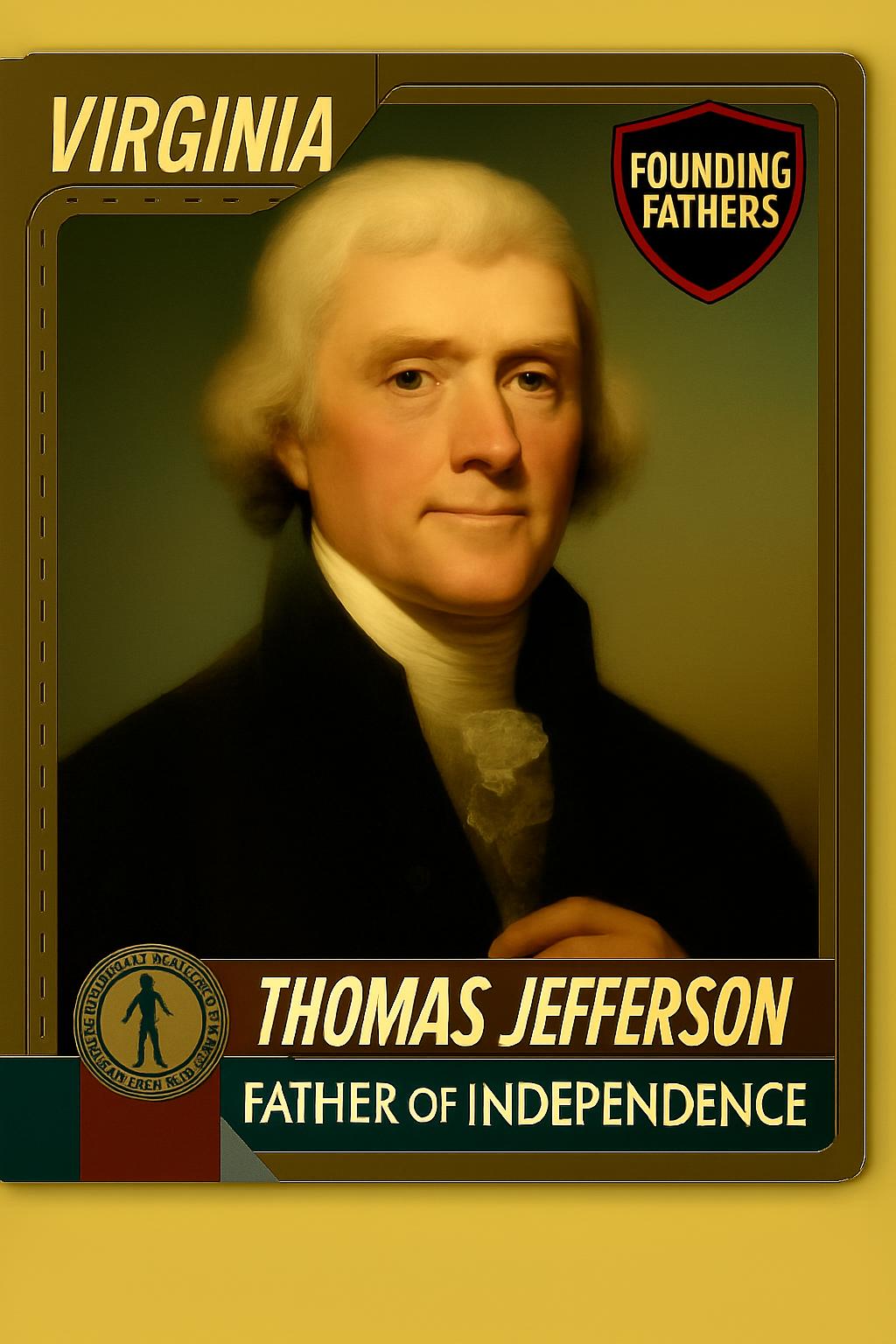
-- Thomas Jefferson, Declaration of Independence

On Sale Now: Petition the Government for a Redress of Grievances


For centuries, the right to petition the government for a redress of grievances was one of the most powerful tools of free people. It shaped English liberty, fueled colonial resistance, and helped launch the American Revolution. It once obligated Congress to receive, consider, and respond to the voice of the people.

Then it was silenced — and forgotten.


In Petition the Government for a Redress of Grievances, Douglas V. Gibbs uncovers the lost history of the Petition Clause, exposes the constitutional betrayal that hollowed it out, and reveals how modern Americans can revive this natural, God‑given right. Blending historical depth with practical instruction, Gibbs shows how petitioning can once again become the engine of accountability, civic engagement, and the consent of the governed.


This book is not just history. It is a roadmap for restoring the people’s voice in American government — and reclaiming the power we were never meant to lose.


https://amzn.to/4ciocIO

The Saxon Layer As The Foundation Beneath the Foundation


By Douglas V. Gibbs


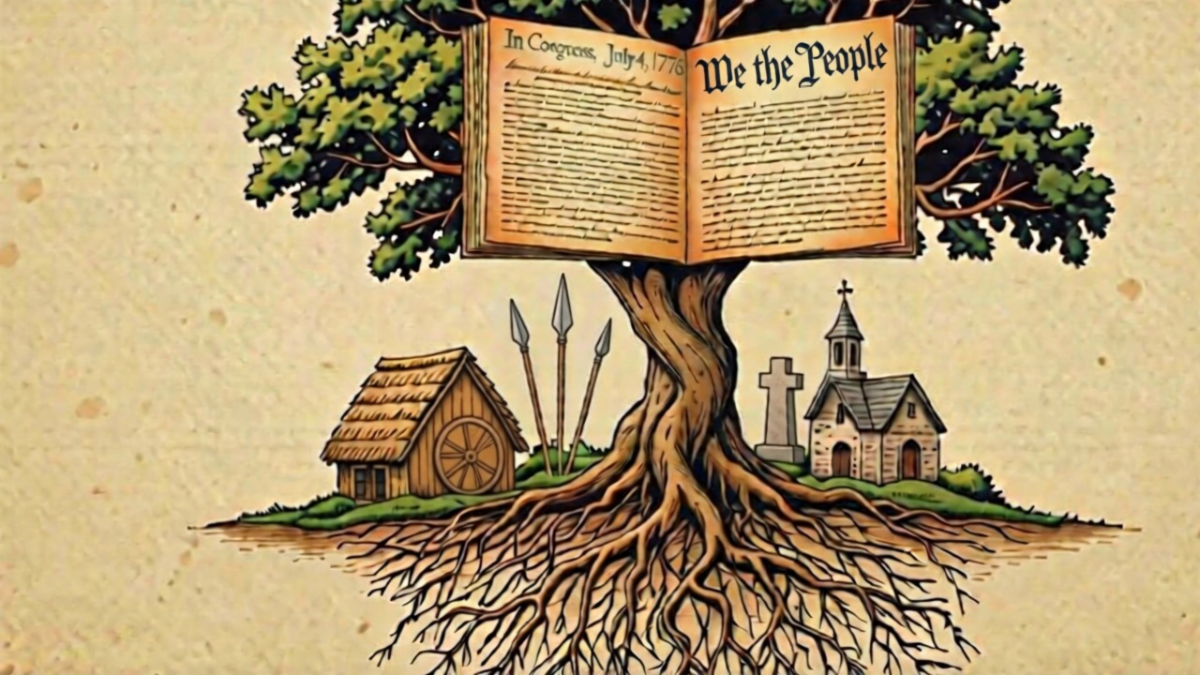
The American founding has two roots. The Saxons brought the first to Britain. Christianity completed it. And the Constitution is the child of both.


There is a popular way of talking about the American founding that traces it almost entirely to the Bible. It is a covenant that connects to Moses, the Ten Commandments, the pulpit, and the Great Awakening. That’s true as far as it goes, and it matters. But it’s only half the story, and the missing half is older than the printing press and deeper than the Reformation.

The other root is the Saxon. The Saxons brought a structure to Britain, a set of institutions and an instinct about law long before they met the Gospel. And when the two finally merged, the structure got its soul and the soul got its structure. Neither one alone produces America. Together, they do.


This is not a competition between the Bible and the Saxons. It’s a compliment. The Saxons supplied the skeleton. Christianity named the source of the rights the skeleton was built to secure.


Finish Reading at Political Pistachio


Facebook  X