News & Updates on Portland Harbor Restoration |
|
Updates from the Alder Creek Restoration Project |
|
The Alder Creek Restoration Project was constructed by Wildlands in 2014 and 2015 to restore habitat for salmon, lamprey, mink and other species injured by contamination in Portland Harbor. Like all the Portland Harbor NRDA restoration banks overseen by the Trustee Council, construction at Alder Creek is followed by 10 years of monitoring and adaptive management.
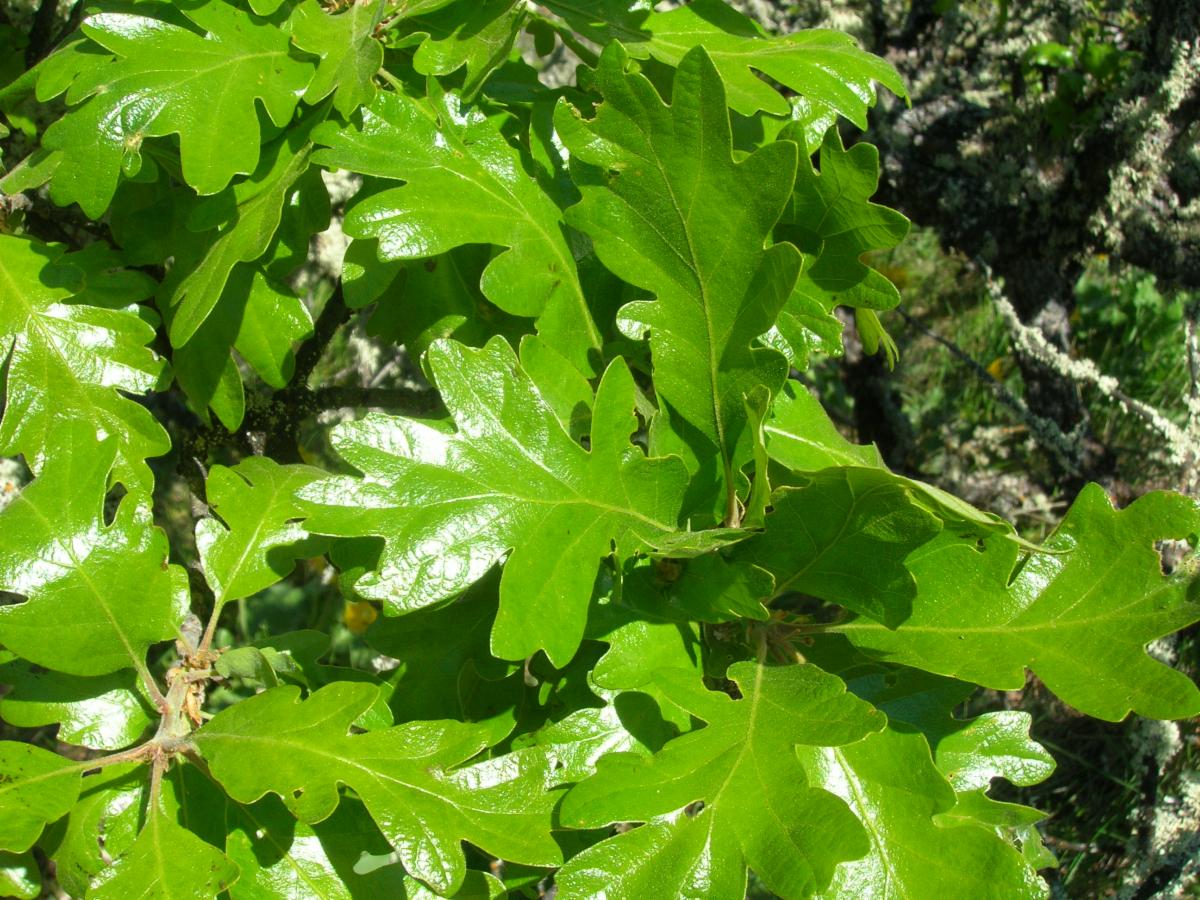
Monitoring of native and invasive plants is an important component of Alder Creek’s monitoring plan. In 2018, after an uncharacteristically hot and dry summer, monitoring results from the oak-dominated upland forest indicated a substantial loss of planted trees and shrubs. Wildlands and the Trustee Council decided that replanting the oak habitat was needed. In 2019, Wildlands planted 11,520 additional native plants including red alder, Oregon white oak, swamp rose, and snowberry within the area. Monitoring, irrigation, and the removal of invasive species will help this habitat continue to establish.
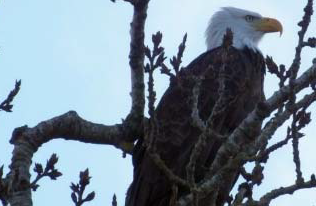
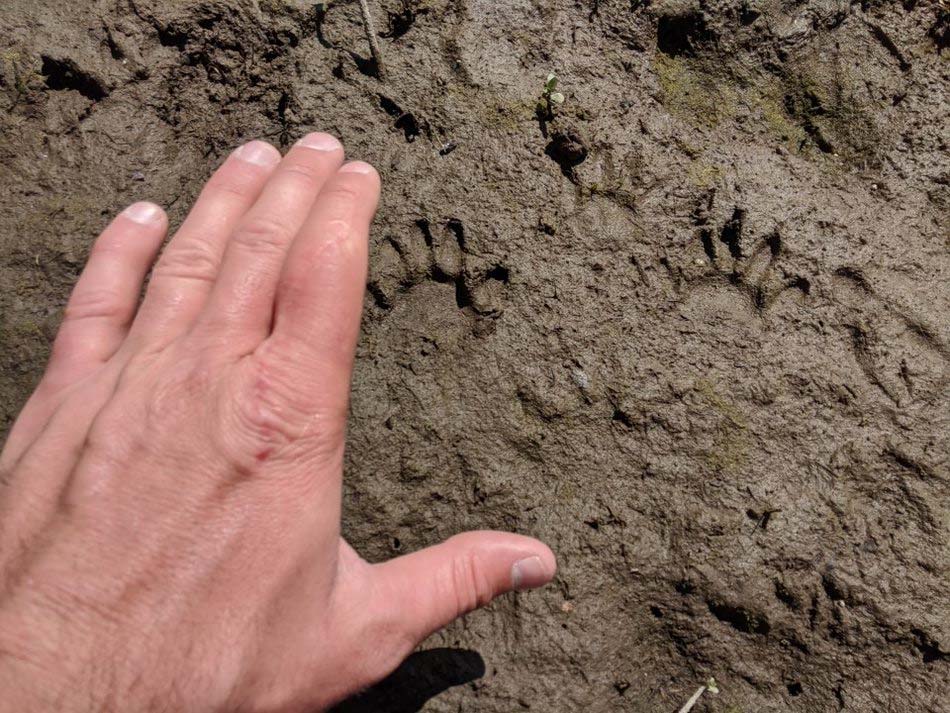
Recent monitoring results from Alder Creek have identified the presence of a diverse array of fish and wildlife using the site. During surveys, biologists noted salmon in the newly created side-channel, 46 bald eagle sightings, and the presence of mink had been documented by a trail camera and tracks observed along the mudflats. Other wildlife present at Alder Creek included black-tailed deer, raccoon, brush rabbit, coyote, great egret, western Canada goose, and 120 other raptor sightings. Habitat restoration has transformed the Alder Creek property from an old lumber mill to active fish and wildlife habitat.
The Alder Creek 2020 (Year 5) monitoring report is available here. For more information, visit Wildlands and check out the Alder Creek fact sheet here. |
|
Oregon white oak, photo: creative commons. |
Bald Eagle at Alder Creek, photo: Wildlands. |
Mink tracks at Alder Creek, photo: Wildlands. |
|
Restoration 101: Large Wood Structures |
|
Years of industrialization in Portland Harbor have hardened and channelized the Willamette River and reduced riparian habitat and floodplain connectivity. Habitat restoration taking place in Portland Harbor is intended to undo that damage and restore natural processes that support threatened species such as Chinook salmon and steelhead.
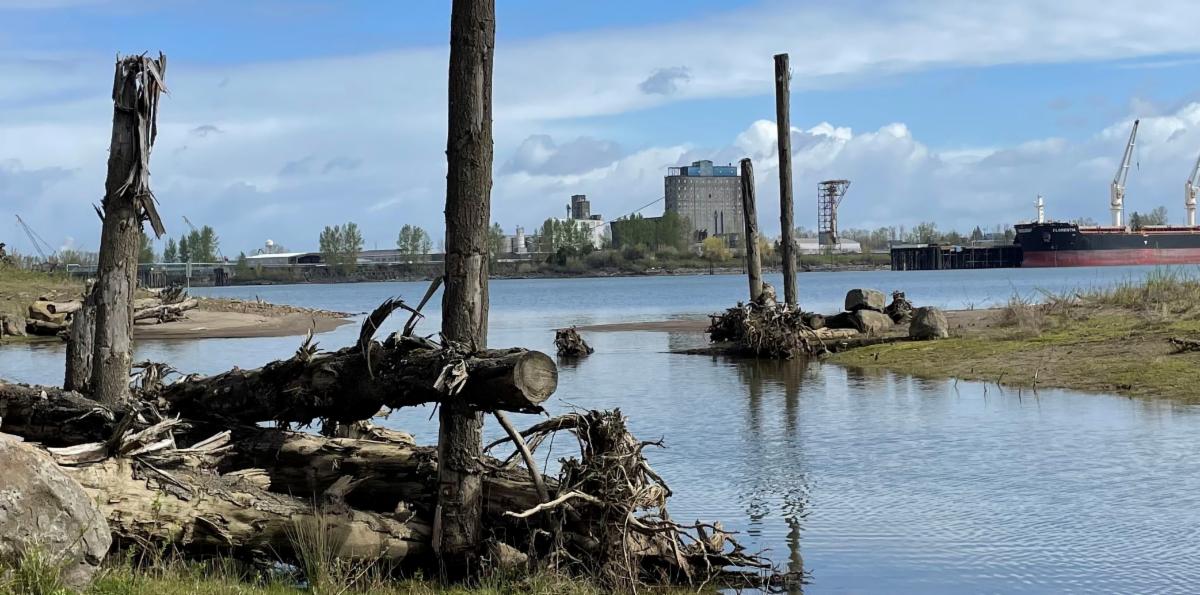
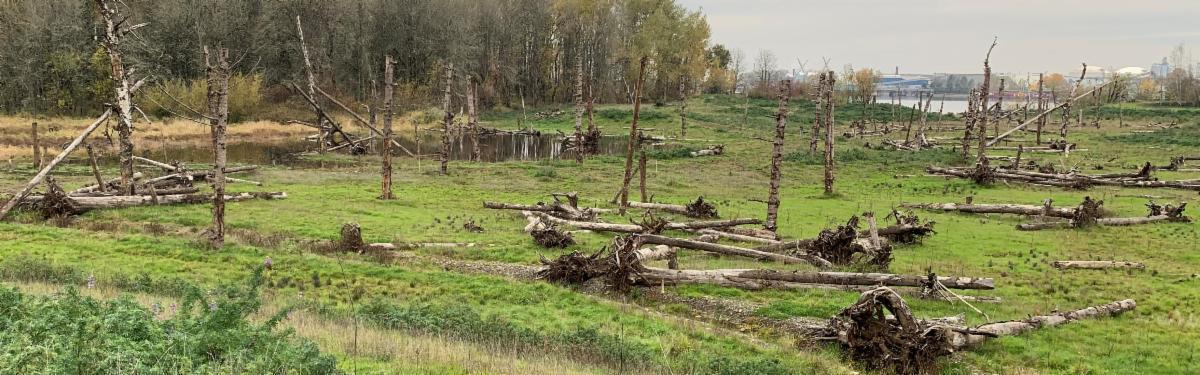
One effective restoration activity is the placement of large wood structures in side-channels and floodplains. These structures usually consist of two or more overlapping logs, often with root wads attached, that intrude into or lay entirely within a stream channel. Large wood adds complexity and gives juvenile salmonids a place to stop and rest as they move through the Portland Harbor section of the Willamette River. Normally, wood is deposited along streams and rivers through natural processes such as blowdowns, bank undercutting, and flooding. As wood enters the system, it creates log jams, forms pools and riffles, and reduces flow velocity which are important habitat qualities for migrating salmonids. Development has resulted in the loss of these natural structures in Portland Harbor. By restoring this habitat feature, restoration projects provide fish a place to seek refuge from predators, forage, and grow as they make their journey towards the Pacific Ocean
To date, the four restoration banks overseen by the Portland Harbor Natural Resource Trustee Council have installed nearly 100 large wood structures in off-channel and floodplain habitat. These structures are monitored regularly to confirm whether they have been retained on site or if new pieces of wood have been naturally recruited.
|
|
Large wood structures installed by RestorCap at the Linnton Mill restoration project, photo: NOAA |
|
The Big Float X
July 10, 11:00 AM Join the Human Access Project (HAP) for the 10th and final annual parade and float of the Willamette River in Portland. More information can be found at HAP's website here.
Portland Harbor CAG General Meeting
July 13, 6:30 PM Join the Portland Harbor Community Advisory Group (CAG) for an open meeting with public presentations regarding the Portland Harbor Superfund cleanup process and progress. More information on the CAG's website here.
Kelley Point Park Cleanup
July 19, 9:00 AM Join the Willamette Riverkeeper for an all-ages cleanup event at Kelly Point Park. More information and registration can be found here.
|
|
Portland Harbor in the News
|
|
Wood structures at PGE Harborton restoration project, photo: NOAA |
|
The Portland Harbor Natural Resource Trustee Council is responsible for restoring natural resources that have been impacted by contamination in the Portland Harbor Superfund site. The purpose of this newsletter is to share information about the Trustee Council's work with those who are interested in our assessment and restoration efforts.
|
|
|
|
|
|
|