Newton Climate News
May 14, 2025
| | | Stay Cool this Summer with Heat Pumps! | | |
It may not come as a surprise that, according to a NASA and NOAA report, 2024 was the third hottest year on record for Massachusetts, and the hottest year on record for the contiguous U.S. That doesn't bode well for this summer.
So, what can we do? In the short term, staying cool, comfortable, and healthy at home is top of mind for many.
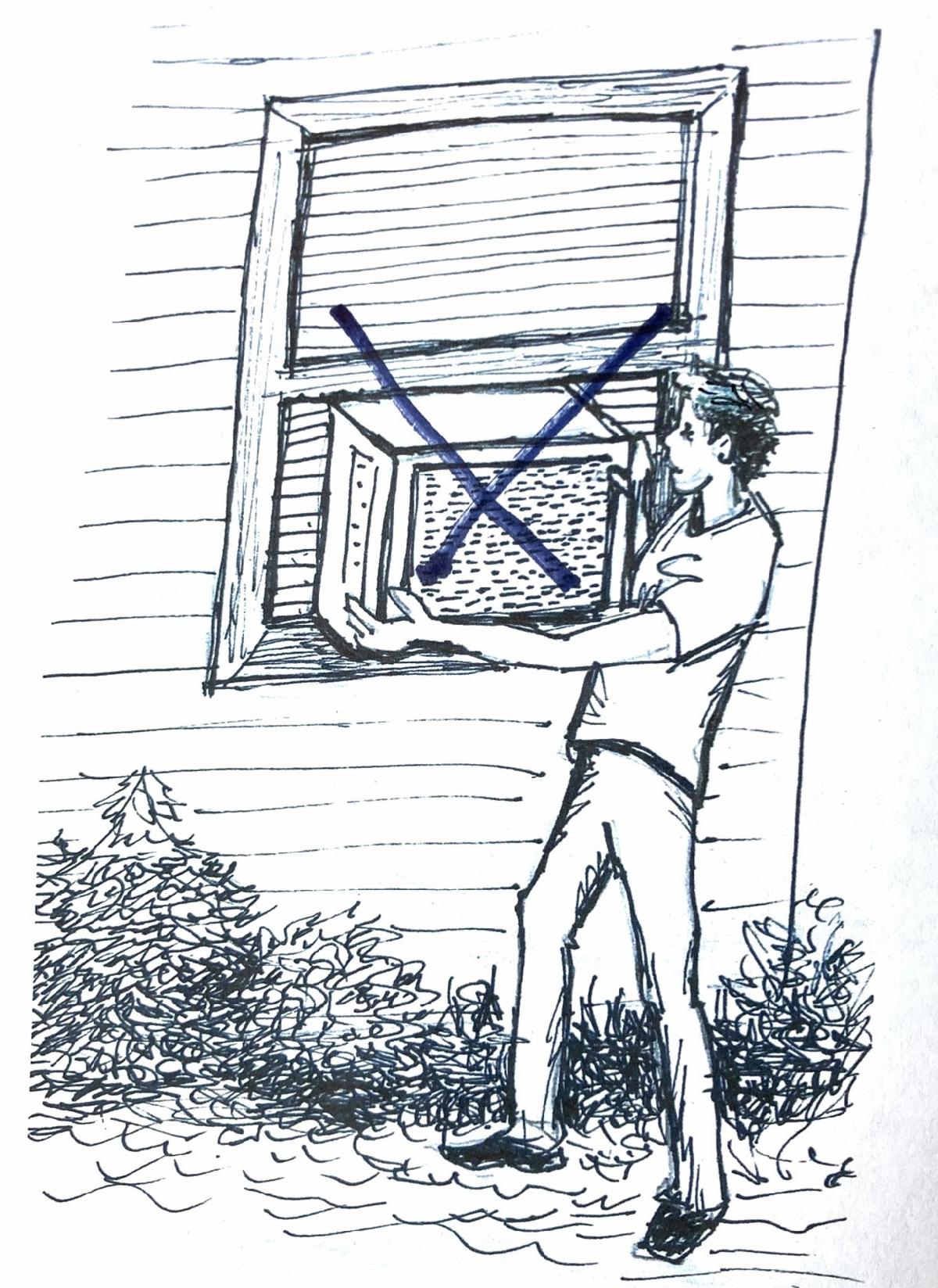
Next time you're considering buying a new air conditioner, you could take advantage of a more efficient, environmentally-friendly product that can both heat and cool your home: a heat pump, often referred to as a mini-split. In the summer, heat pumps function just like air conditioners — by moving heat from inside your home to outside, but use less energy to do so. In the winter, heat pumps do the reverse: they pump heat from the air outside to inside your home. Since they transfer rather than generate heat, heat pumps can more efficiently provide comfortable temperatures for your home than conventional heating and cooling technologies (Source: U.S. Department of Energy). Another advantage of heat pumps: no more lugging (inefficient and noisy) window air conditioners. Read more about how heat pumps work in this article from Rewiring America.
Learn more about heat pumps through HeatSmart Newton's website and resources. Have specific questions about heat pumps? Sign up for an energy coach consult today.
| | Image description: A man lugging a window air conditioner, with an "X" through the air conditioner. Thank you Marcia Cooper for this drawing! | | Join Our Climate Efforts | | |
The City of Newton is undergoing the busiest municipal and school building period since the response to the Baby Boom in the 1950s. We have construction nearing completion at the new Lincoln-Eliot Elementary School, and the new facility for older adults, the Cooper Center for Active Living. We just broke ground at Countryside Elementary School. We have begun the renovation and addition at Horace Mann Elementary School, and a new Franklin Elementary School will break ground later this year. Not only will each of these buildings be appropriately designed for the communities they serve – together they represent the cutting edge of the City’s efforts to fight climate change.
Each of these five projects will have fully electric heating, cooling, and hot water. At Lincoln-Eliot, the Cooper Center, and Horace Mann, air source heat pump systems will provide energy for these purposes, with backup natural gas boilers in the existing building at Horace Mann that were installed in 2014. At Countryside and Franklin, we are for the first time utilizing super-efficient ground source heat pumps to provide the heating, cooling, and domestic hot water.
The energy use intensity (EUI) scores for these five buildings are incredibly low, signifying high energy efficiency. One way to think of EUI statistics is akin to a “miles per gallon” metric for buildings: the lower the EUI, the more efficient the building is. Measured in kBtu (thousand British thermal units) per square foot, the EUIs for each of these projects are as follows: Lincoln-Eliot - 34kBtu/sq, Countryside - 24.7kBtu/sf, Franklin - 24.5 kBtu/sf, Horace Mann - 35kBtu/sf, Cooper Center - 33.6kBtu/sf.
| |
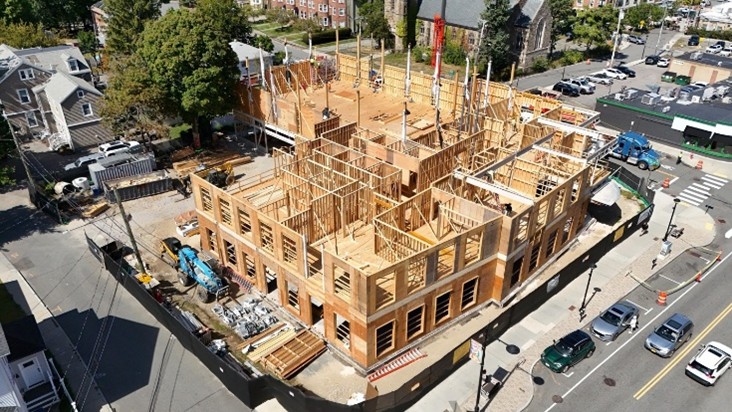
On all of our building projects, we pay close attention to embodied carbon throughout the entire design and construction process. This work begins with a whole building life cycle carbon analysis, followed by thoughtful steps like right-sizing the building spaces, minimizing the use of high-embodied-carbon materials, and designing efficient site layouts that reduce the amount of concrete and asphalt— benefiting both carbon reduction and stormwater management. We extend this attention to detail even to how we furnish the buildings. The Cooper Center for Active Living is particularly notable on this front, as it has an exceptionally low embodied carbon footprint thanks to its fully wood-framed structure (see image above).
Not only is the City of Newton leading by example on these building projects thanks to the work of the Public Buildings Department, but also the entire Newton community is joining in this work thanks to our progress on the policy front. As part of the Municipal Fossil Fuel Free Building Demonstration Program, all new building construction and major renovation projects in Newton are required to be fossil fuel-free. The City has also adopted the opt-in “Specialized” Building Code, the most progressive of the State’s building codes, meaning new construction and renovations will be highly efficient. We also recently passed a Building Emissions Reduction and Disclosure Ordinance, requiring large commercial buildings here in Newton to decarbonize by 2050.
| | |
Image descriptions: 1 - The team drilling a test geothermal well at the Countryside School.
2 - The Cooper Center Project was built primarily with wood-framed construction and was a runner up in the Massachusetts Clean Energy Challenge Embodied Carbon Reduction Challenge. More information about this award can be found here.
| | |
A new statewide energy-efficiency plan in Maine is focused on accelerating heat pump adoption by leveraging investments in efficiency and electrification. Read more here.
Governor Healey filed legislation on May 13th designed to reduce energy bills, in part by allowing customers to pay for heat pumps and weatherization through their utility bills over time. Learn more about this $10 billion energy relief plan in this article.
Read about "The Bright Future of the All-Electric Neighborhood" and how these housing developments are building climate resilience at this link.
The state Department of Public Utilities released an order outlining changes to the Gas System Enhancement Plan that it says will save ratepayers money, help reduce greenhouse gas emissions, and prioritize the most severe leaks. Learn more from this article.
The MIT Sustainable Design Lab and the Commonwealth of Massachusetts launched a model of approximately 2.5 million existing residential buildings in Massachusetts. This public web app estimates annual utility costs and related greenhouse gas emissions based on public data sets. Homeowners can look up their homes and learn about which energy-efficiency investments in their home are likely to result in the quickest payback or have the largest impact on the building's CO2 emissions. Approximate costs and links to further resources and next steps are also included. Learn more about this project in the press release.
| | | | |