Newton Climate News
June 10, 2025
| | | Four Tips for a Sustainable Summer | | |
As schools close for the summer, vacations are planned, and temperatures rise, a few tips can help you save money, make environmentally friendly choices, and stay comfortable this summer.
1. Reduce energy use and your bills.
- Pull shades down during the day, open windows during cooler nights, and wear loose clothes of lighter colors.
-
Turn off electric equipment when it’s not in use, such as lights, TVs, computers, and small kitchen appliances.
-
When tools and appliances need to be replaced – such as mowers, grills, and others – consider electric models that lower both air pollution and your carbon footprint.
-
Minimize electricity use during peak electricity demand. Using appliances such as washers, dryers and dishwashers later at night or earlier in the day reduces the need for the additional fossil fuel generated electricity that comes online during times of high demand. Try pre-cooling your home in the morning with AC and then using fans in the afternoon, charging your EVs overnight, and having cold meals on hot days. Sign up for peak alerts so you can plan ahead and reduce your electricity use (and avoid high demand charges!). Learn more about "shaving the peak" here.
- Learn more about saving on your summer energy bills from Eversource.
2. Stay heat-aware and hydrated.
- Keep an eye on the weather and plan for extreme heat.
-
Drink plenty of water and eat water-rich foods like melon, citrus fruits, and lettuce.
- Use fans and know where public air-conditioned spots are located. Seek shade and cool spots by visiting tree-filled parks, public pools, and public buildings like libraries and malls.
3. Take advantage of warmer weather to enjoy sustainable transportation options. Try walking, biking, using public transport, and carpooling this summer!
-
Check out Bluebikes, Newton's bikeshare system. There are 15 stations in Newton and many more in the dozen Bluebikes communities around the Boston area.
4. Enjoy summer activities without the cost: check out gear, games, tools, appliances, and more from the Library of Things! Available items include, but are not limited to:
- Bocce, cornhole, croquet, pickleball
- Garden kneeler/seat bench, garden tool set, induction cooktop, thermal leak detector
- Bicycle lock, bicycle pump, metal detector, tripod
- Beach tent, binoculars, birdwatching kit, camping chair, trekking poles
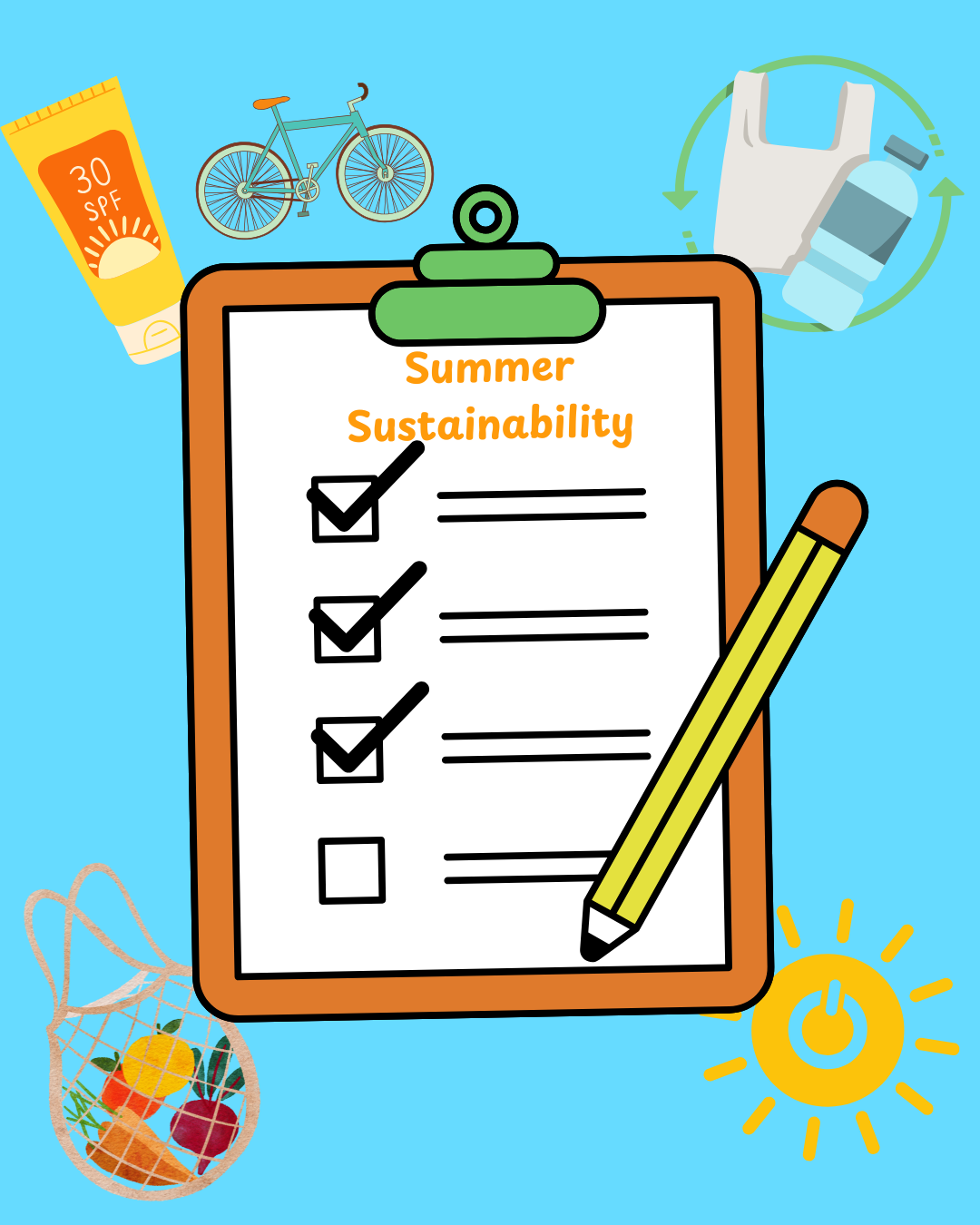
| | Image description: A graphic with a checklist headed with "Summer Sustainability" surrounded by images including a bike, reusable grocery bag, sunscreen, and symbols for energy efficiency and recycling. | | Join Our Climate Efforts: Reduce Food Waste | | |
The City’s Climate Action Plan is entitled “Use Less, Green the Rest.” “Using less” encompasses a host of actions—including insulating homes to use less energy, walking or biking instead of driving, and turning off the lights in empty rooms. And “greening the rest” means electrifying our energy use, by using heat pumps for heating and cooling and driving an electric vehicle. That’s because electricity can be generated using renewable resources like the sun and wind.
But these are not the only ways to reduce greenhouse gas (GHG) emissions. Changing food consumption habits, more specifically, eating less meat, is an effective approach we often hear about. And for good reason: according to a United Nations report, beef production produces more GHGs than the production of any other food product.
In addition to limiting meat consumption, there is another food-related approach to limiting GHG emissions that has a surprisingly large impact: limiting food waste.
Approximately one-third of the food intended for human consumption in this country is wasted. When food is wasted, all the inputs used in its production—processing, transporting, etc.—are also wasted. Food production and transport generate carbon dioxide emissions and, when food ends up in landfills it generates methane, which is an even more potent GHG. The U.S. Environmental Protection Agency estimated in a 2021 report that U.S. food loss and waste each year results in GHG emissions equal to the annual carbon dioxide emissions of 42 coal-fired power plants, and that’s without including the methane emissions from landfills. According to another United Nations report, food loss and waste account for 8-10% of annual global greenhouse gas emissions – nearly five times the total emissions from the aviation sector.
Limiting food waste is easy. The internet abounds with tips, like not grocery shopping while hungry, storing food properly, and using smaller plates to manage portion size. And to the extent that food waste cannot be completely eliminated, check out these Newton resources for managing food waste: the City's composting page and Black Earth Compost, a curbside subscription service.
There’s no silver bullet for limiting our individual contributions to climate change, but limiting food waste is one easy step to take.
| | | | |
Are you interested in helping your neighbors access information, resources, and incentives to make energy improvements to their homes? We are looking for more volunteer Energy Coaches for the City of Newton! Time commitment is flexible and can be discussed. Virtual and in-person opportunities available.
Reach out to cweiss@newtonma.gov to learn more about the program and volunteer opportunities.
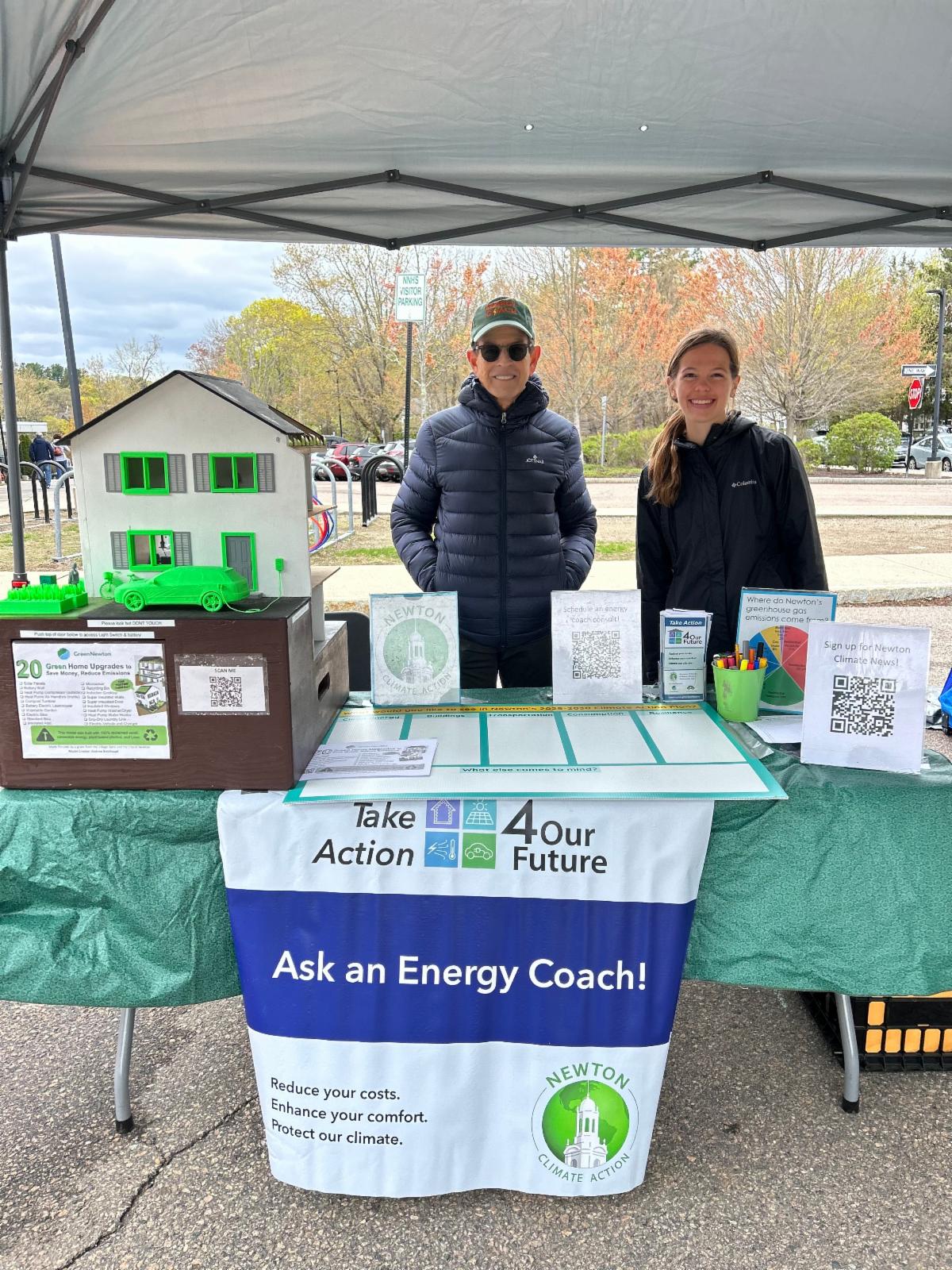
| | Image description - Energy Coach Phil Hanser and Climate Action Coordinator Caroline Weiss tabling at Newton's Earth Day Festival. | | |
Add your voice! The City of Newton is in the process of updating our Climate Action Plan for 2025-2030. We are looking for stories from Newton residents envisioning a sustainable, carbon neutral Newton in 2050. Please add your thoughts using this form!
Since the plan was written in 2019, the City has made significant progress. A few highlights recently presented to the City Council include:
Newton has come a long way and has a lot to celebrate, yet there is much more to do for climate mitigation and adaptation. The updated Climate Action Plan will provide a roadmap for our climate work from 2025-2030. The plan will also incorporate climate resilience, connect and integrate with existing plans, and focus on high-leverage actions.
As we draft the Climate Action Plan 2.0, there will be continued engagement opportunities. In the meantime, if you have questions or comments, please reach out Caroline Weiss, the City's Climate Action Coordinator, at cweiss@newtonma.gov.
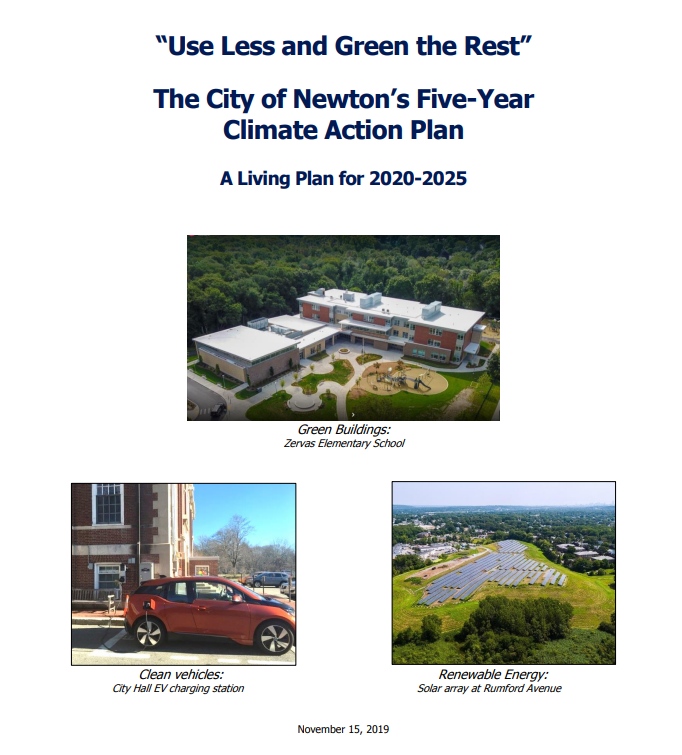
| | Image description - The cover page of the first Climate Action Plan. | | | | |