Newton Climate News
July 14, 2025
| | | Sustainable Yard & Garden Practices | | |
Transform your outdoor space into a climate-friendly haven this summer with sustainable yard and garden practices.
Consider planting (or preserving) trees. Trees create shade, absorb greenhouse gases, and naturally cool the air. They also support native wildlife, including important pollinators.
Consider choosing native plants that thrive in our local climate, requiring less water and naturally attracting essential pollinators like bees and butterflies. Learn about native plants and wildlife from the City's Conservation Office webpage. For more about how to start a pollinator garden, see this guide from the US Fish and Wildlife Service.
Compost your kitchen scraps and yard waste to help create nutrient-rich soil that can reduce the need for chemical fertilizers for your garden or lawn. Check out our resources on backyard composting here. While you're considering alternatives to chemical fertilizers and pesticides, learn more about integrated pest management with resources from Green Newton.
Consider switching from gas to electric lawn care equipment to reduce air pollution, greenhouse gas emissions, and noise. Electric tools are more efficient, require less maintenance, and are more convenient than gas alternatives – no more delay when your trimmer is out of gas. Mass Save also offers rebates up to $75 on electric lawn equipment!
These simple shifts not only create a healthier, more vibrant yard but also significantly reduce your home's environmental footprint, so you'll be contributing to Newton's climate goals.
| | |
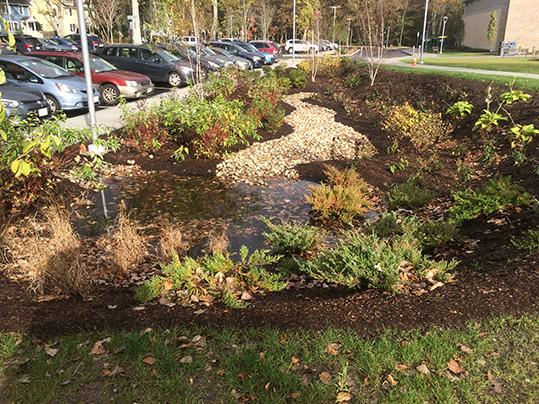
The City's Parks, Recreation, & Culture; Public Buildings; and Public Works Departments lead by example through their comprehensive approach to sustainable landscaping. Pollinator gardens are incorporated into the Public Buildings Department's stormwater bioswale designs to help promote biodiversity and address resiliency simultaneously. You can find these integrated pollinator gardens at the Zervas, Lincoln-Eliot, and Oak Hill Schools, and you will find them soon at the Countryside and Franklin Schools as well.
Beyond these school gardens, native and pollinator gardens are abundant on City property. The Newton Free Library, Louise Levingston Cove, City Hall, and Cold Spring Park are home to landscapes focused on pollinators that also provide additional habitat. The City is also working on various park improvements at Albemarle, Burr School and McGrath park that will provide naturalized, native landscapes along the Cheesecake Brook and at non-recreational areas within these parks and open spaces.
In addition, City departments promote native species tree planting. Planting trees helps with carbon sequestration, stormwater resiliency, reduced heat island effects, and much more. Currently, the City is planting 400-600 street trees/year in addition to the 200 trees planted annually in partnership with the Newton Tree Conservancy.
| | Image description: A pollinator garden and bioretention area outside Zervas Elementary School. | | Join Our Climate Efforts: Reduce Your Fast Fashion Footprint | | |
Think about the world’s largest polluting industries: what comes to mind? Probably not the fashion industry, but in fact, fashion production contributes 10% of global carbon emissions. The fashion industry’s share of carbon pollution is equivalent to emissions generated by the European Union! Its pollution is greater than the combined emissions from international flights and maritime shipping, according to a Business Insider analysis.
Why is the fashion industry so polluting? And why, despite the abundance of available cheap clothes, do we so often feel like we have nothing to wear? The answer is fast fashion: a business model characterized by the rapid production of inexpensive clothing – reliant on worker exploitation – that mimics the latest popular styles and brings them to retail while consumer demand is high. Essentially, this model encourages consumers to buy clothes often while they’re trendy, wear them a few times, and then discard them as new styles emerge.
What’s the problem? Fast fashion has a massive environmental impact. The production of one cotton shirt requires about 700 gallons of water; textile factories contribute around 20% of industrial water pollution.
Moreover, the lifecycle of clothing production is incredibly energy-intensive and reliant on fossil fuels. And when washed, synthetic fibers release microplastics into our rivers and oceans. In fact, an IUCN report estimates that 35% of all microplastics in the ocean come from the laundering of synthetic textiles.
What can we do to reduce the impacts of fast fashion? Most importantly, consume less. Think intentionally about each piece of clothing you purchase and consider prioritizing quality and durability over quantity and recent trends. You can also reduce your impact through reuse: buy second-hand, donate your unwanted items (try the Swap Shop or Helpsy textile recycling bins), share items with friends, and even rent clothes (check out Rent the Runway). Extending the life of your clothes is also a great way to lessen your impact: care for your clothes properly, repair items, and consider repurposing fabric.
| | Image description: A full clothing rack. | | Meet Armela Gjylsheni: Green Newton's New Energy Advocate | | |
With the support of the City’s Climate Action Coordinator, Green Newton is participating in the Community First Partnership – a Mass Save initiative focused on increasing participation in Mass Save energy efficiency programs.
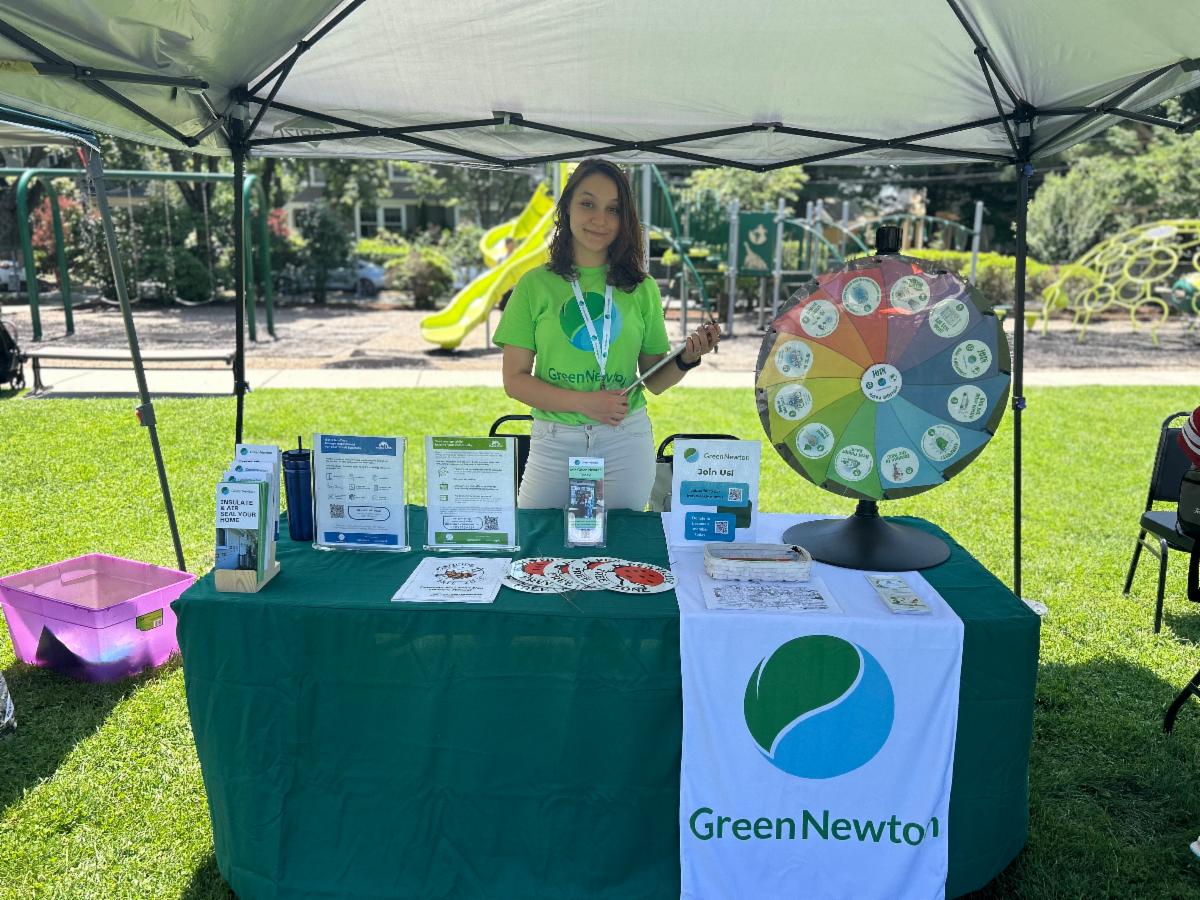
We’re thrilled to introduce Armela Gjylsheni as Green Newton’s new Energy Advocate, working to help residents take meaningful steps toward energy efficiency and climate action.
Armela brings a strong background in sustainability, renewable energy, and community outreach, and she is passionate about making clean energy solutions accessible to all. As Energy Advocate, Armela will serve as a trusted resource for Newton residents—offering one-on-one support, helping navigate programs like Mass Save, and connecting households to tools and incentives that reduce energy use and lower emissions.
Whether you're thinking about insulating your home or upgrading to heat pumps, or simply want to learn how to lower your energy bills, Armela is here to help. Her work plays a vital role in advancing Newton’s Climate Action Plan and building a more sustainable, resilient community. You can contact Armela at armela@greennewton.org with any energy efficiency/Mass Save questions or to express interest in showcasing your energy efficient home improvements at future events. You can also catch her at local events around Newton.
To get started with Mass Save, check out Newton's Community First webpage. Let’s work together toward a greener future!
| | Image description: Armela tabling at Newton's Juneteenth Celebration. | | |
Learn how to take advantage of clean energy tax credits – now set to expire by the end of 2025 – from this Grist article.
Behind-the-meter solar panels and an expanding battery network helped prevent blackouts and saved consumers money during a recent heat wave. Read more here.
Need air conditioning? Check out Canary Media's article about the benefits of heat pumps.
A new version of Massachusetts' solar incentive program, released in June, could boost the state's solar industry. Read more from Canary Media.
New plans for offshore wind in northern Maine and transmission lines to connect it to the New England grid are underway. Check out the article here.
Pornainen, Finland is now home to the world's largest sand battery, which stores clean energy and reduces the town's emissions by 70%. Learn more here.
A review of FERC data finds that solar and wind comprised almost 96% of new U.S. generation capacity added during the first third of 2025. Read the news release here.
| | | | |