Newton Climate News
May 5, 2026
| | | Mow Less, Do More: Embrace Nature-Based Solutions this May | | |
As spring feels more like a reality here in Newton, are you dreading the time, cost, and noise of mowing? Good news: reducing the number of times you mow and growing diverse native plants can create more biodiverse ecosystems, support pollinators, and store more carbon.
Lawns that are monoculture turf grass provide limited habitat value. Lawns with a diversity of plant types (clover, violets, blue-eyed grass, etc.) can support some insects and pollinators if they are allowed to grow and flower. Foregoing mowing in May can allow flowering lawn “weeds” to help sustain some biodiversity and will reduce energy used for mowing. Consider participating in the "No Mow May" movement, which originated in the United Kingdom by Plantlife and has since spread globally, by not mowing your lawn (or even a small section of it) for a month.
You can also take action to protect biodiversity and sequester carbon through these steps:
- Limit or eliminate chemical use, such as synthetic fertilizers, pesticides, and herbicides.
- Capture and retain rainwater by replacing impervious surfaces with permeable hardscaping or vegetated areas.
- Reduce artificial lighting to lower energy consumption and protect ecosystems.
- Plant biodiverse and native species.
- This climate-smart planting guide from the Boston Globe offers a useful resource for planting meadow, pollinator, rain, and shade gardens with resilient species. Also see this State web application to explore native plants.
- Remove invasive species; see this guide from Mass Audubon.
- Leave the leaves in the fall to support wildlife habitats, provide natural fertilizer/mulch to your soil, reduce emissions... and save time.
- Encourage your neighbors to do the same!
By prioritizing nature-based solutions at home, we can use our yards to strengthen Newton's resilience to climate change. Learn more about resilience in Newton on our climate dashboard.
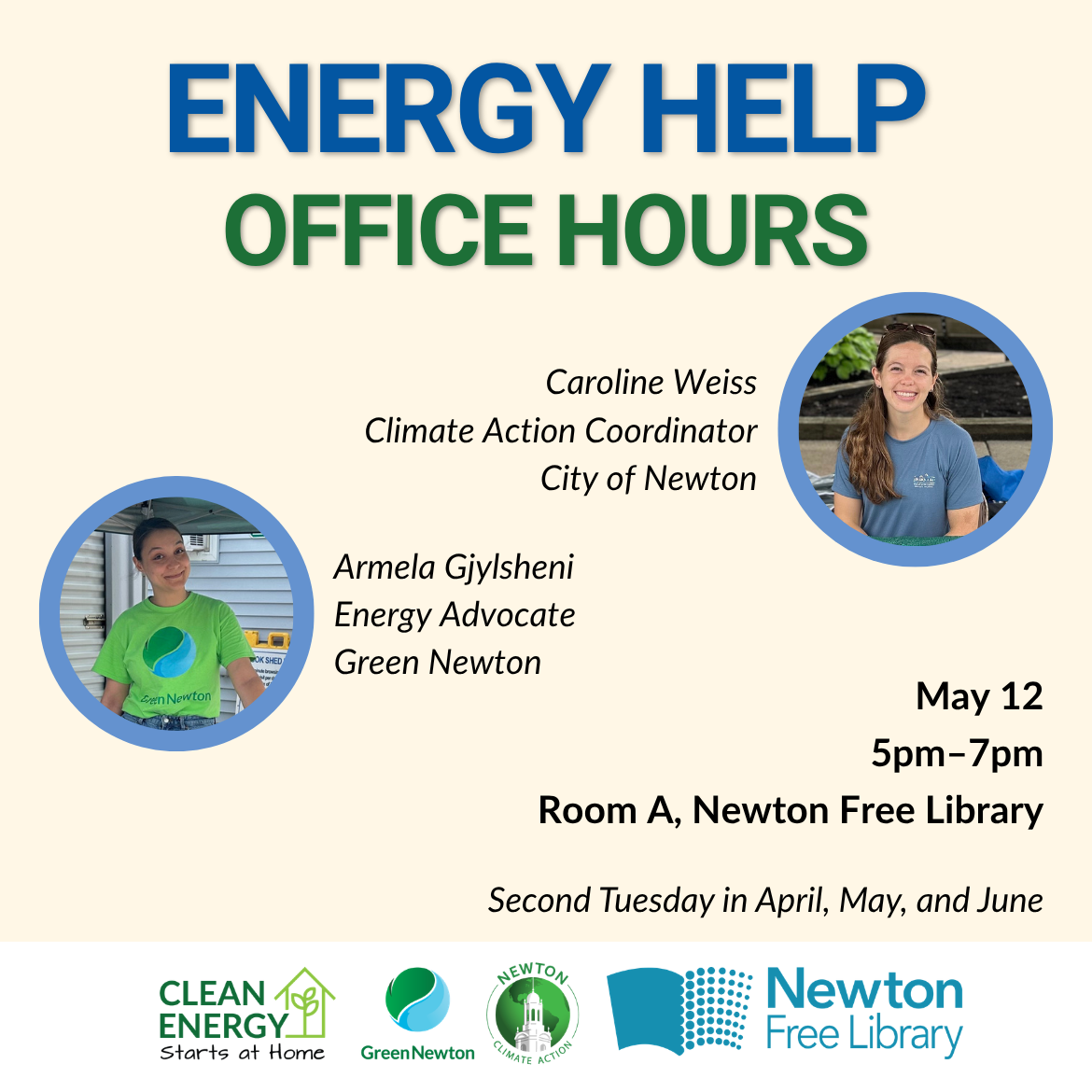
| | Image description: A mowed lawn with a slider transitioning it to a yard with native plants. | | Image description: MA Walk, Bike, and Roll to School flyer and Home Energy Help event graphic. | |
Join Our Climate Efforts:
Reduce Clothing Consumption & Donate Responsibly
| | |
We often see articles about the issues with textile production and textile recycling, such as a recent New Your Times article, "You Paid to Have Old Clothes Recycled. Here’s What That Really Means." Especially during spring cleaning season, as we're clearing out closets and dusting our shelves, knowing where to responsibly donate your unwanted items is important.
But in a world with too much clothing, the best action we can take is also better for our wallets: buy less clothing, take good care of it (and mend it when needed), and keep it longer. As Charles He, a Milton Academy student, explains in this thought-provoking article, "We must treat clothes like votes: choose wisely! Buy fewer, better pieces; choose certified-green garments or quality second-hand; and wear everything longer."
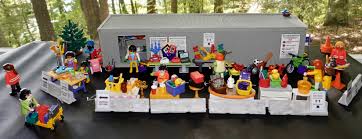
When you do need to donate clothing, try to extend its life locally. The Swap Shop at Newton's Resource Recovery Center (115 Rumford Ave, Auburndale) is now open for the season, and it's a great place to donate clean, wearable clothing. Also consider donating to Cradles to Crayons in Newtonville, the Goodwill donation center at 295 California St, Sister Thrift in Watertown, and Global Thrift in Waltham.
Credit for these great ideas go to Newton neighbors in a recent Newton Green Issues email thread!
| Image description: A miniature model of Newton's Swap Shop. | | The Cost of Competitive Supply and the Solution: Newton Power Choice | | |
For years, the City has been advising electricity customers to be wary of marketing by competitive electricity suppliers, and not to confuse the City’s Newton Power Choice program with these third-party supply offerings.
The Massachusetts Attorney General’s office recently released a new competitive electric supply report showing that over the last decade, Massachusetts residential customers who switched to competitive supply collectively paid over $738.7 million more on their electric bills than they would have paid if they had stayed on their utility’s basic service.
The AG’s report further indicates that the total consumer loss per month in Newton was $111,131, and the average monthly per household loss was almost $30, adding up to $360 per household on an annual basis.
By contrast, on average over the seven years that the Newton Power Choice program has been in place, electricity customers have saved money.
Data suggest that the issue with competitive supply in Massachusetts is not limited to a few rogue actors, but is driven by widespread, moderate overcharging. Suppliers charging 90% premiums represent less than 5% of total customer losses; in contrast, those charging 10% to 30% above the basic service rate represent more than 51% of the total financial loss.
We hope you participate in Newton Power Choice for a long-term, stable electric supply price. But equally important, don’t enroll in competitive electricity supply without carefully reviewing the supplier’s contract terms. Reach out to energycoach@newtonma.gov if you need help determining whether you’re on Newton Power Choice or competitive supply and/or would like assistance making the switch.
| | Image description: Newton Power Choice logo. | | |
New winter electric rates saved Massachusetts heat pump owners at least $37M. Read the full article from Canary Media.
Nearly all EVs have access to many of Tesla's Supercharger fast EV stations, making road trips with an EV even easier. See this Consumer Report article for information about which brands supply free adapters and more.
Check out Mass CEC's article "Make Your Home Work Smarter—For You and the Planet" for resources and guidance on improving energy efficiency, exploring solar, and upgrading to heat pumps.
The CommonWealth Beacon reports that the Senate Chair of the Joint Committee on Telecommunications, Utilities and Energy has indicated a departure from the House on a $1B cut to Mass Save.
| | | | |