|
The Newton Farmer
October 2022
| |
|
Dear Farm Friends,
Well, here we are. The very busy, very hot, very dry days of summer have come to an end, replaced by cooler, quieter days of reflection, planning, and work here at the Farm. I'm sure I speak for all the staff when I say that it's such an amazing feeling of accomplishment and gratitude that we had the fun, action-packed, crazy-busy months of summer, growing produce and creating and running programs for the community. But I feel a little melancholy, too. Fall is the time when we start saying goodbye to some great staff and volunteers, some who were seasonal helpers and others who are moving on to new adventures. When you work so much and so hard with the same small group of people, it can be difficult to see friends leave. But I remind myself that we will always be able to reflect on the great memories we made here. As Wallace Stegner wrote, "Another fall, another turned page."
| |
|
As we move into the last quarter of 2022, we are excited to offer favorite programs like the Late Fall CSA, Fall Family Party, and Thanksgiving Harvest Bag full of fresh produce from local farms. We'll be here working on getting heating and ventilation installed for the new greenhouse as well as the old one, planting and harvesting cool-weather crops, running the farm stand, selling at the farmers' market for a few more weeks, donating produce, and holding new interesting programs and educational experiences at the Farm, thanks to your support and interest. Stop by soon!
Sincerely,
Sue Bottino
Executive Director
| |
|
Look for Farmer Greg at the Newton Farmers' Market on Saturdays, 9:30 am–12:30 pm, through October 15. The Saturday market is at Newton North High School in the rear parking lot at 352 Lowell Avenue in Newtonville.
Visit our on-site farm stand on Winchester Street in the little red shed Thursdays and Fridays, 1:30–6 pm and Saturdays, 9:30 am–1 pm. We have carving pumpkins from Ward's Berry Farm in Sharon! Check out our website each week for updates.
Payment accepted:
Cash, credit card, check (with phone number), WIC, Senior Checks, SNAP (on Thursdays and Fridays at the farm stand and on Saturdays at the Newton Farmers' Market only), tokens (at the Farmer's Market)
| |
|
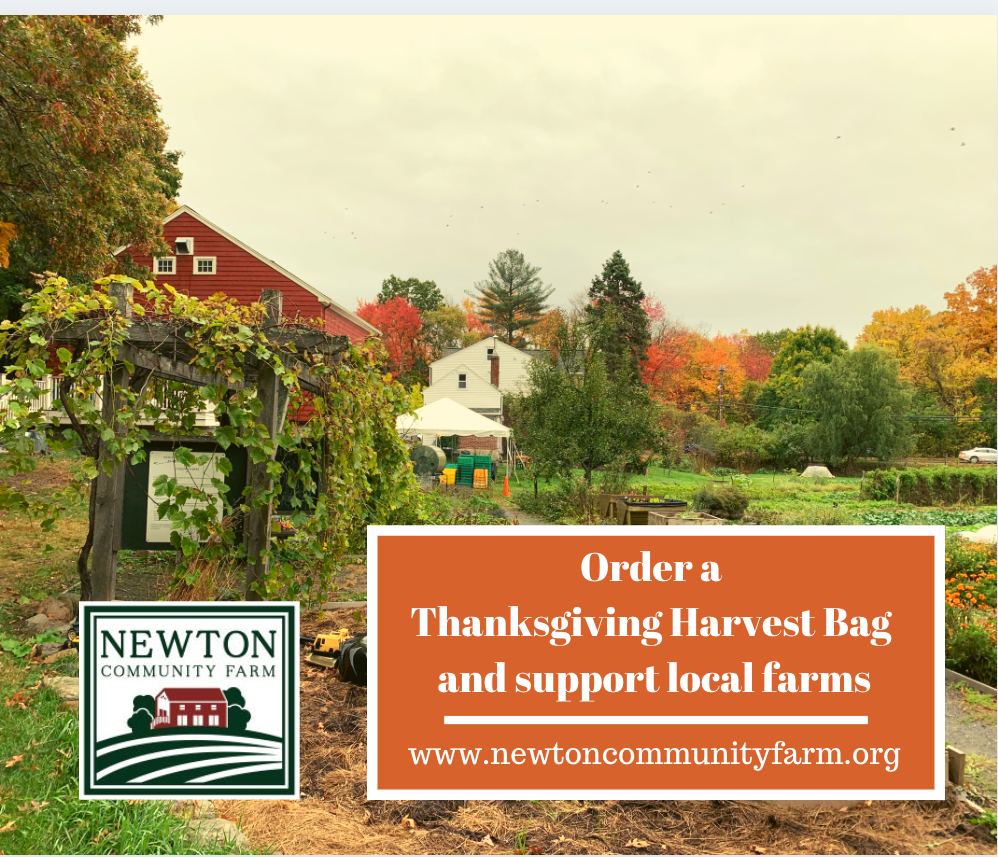
Thanksgiving Harvest Bags
Back by popular demand, our Thanksgiving Harvest Bags are full of fresh, seasonal produce for your holiday meal. Support the work of NCF and other local farms by ordering this amazing collection of fresh and nutritious ingredients. Please note, bags will be available for pickup between 3–5 pm on Monday, November 21, at the Farm in the lowest level of the big red barn (where the white tent is located). Produce bags that are not picked up will be donated.
Bags will have:
- 1 lb. native Massachusetts heirloom cranberries
- 5 lbs. organic white potatoes
- 3 lbs. organic sweet potatoes
- 2 lbs. organic yellow onions
- 2 sugar pumpkins
- 2 organic butternut squash
- 3 lbs. apples
- 1 lb. carrots
- 1 bunch of parsley
- 1 bunch of sage
Sorry, no substitutions are possible.
Price: $75 per bag
Enjoy the produce with your friends and family! If you're worried it's too much for your celebration, consider splitting a bag with a neighbor or you can set aside the potatoes, pumpkins, or squash to enjoy later.
Limited number of bags available. Reserve yours today!
| |
|
Community Event
Sunday, October 16, 11 am–4 pm: GreenEXPO organized by Green Newton at the Newton Centre Green parking lot. Working in conjunction with the City of Newton’s Harvest Fair, the GreenEXPO brings together businesses and community groups that work to help residents build a greener lifestyle. Stop by to visit the NCF table.
| | | |
On the Farm, in the Barn
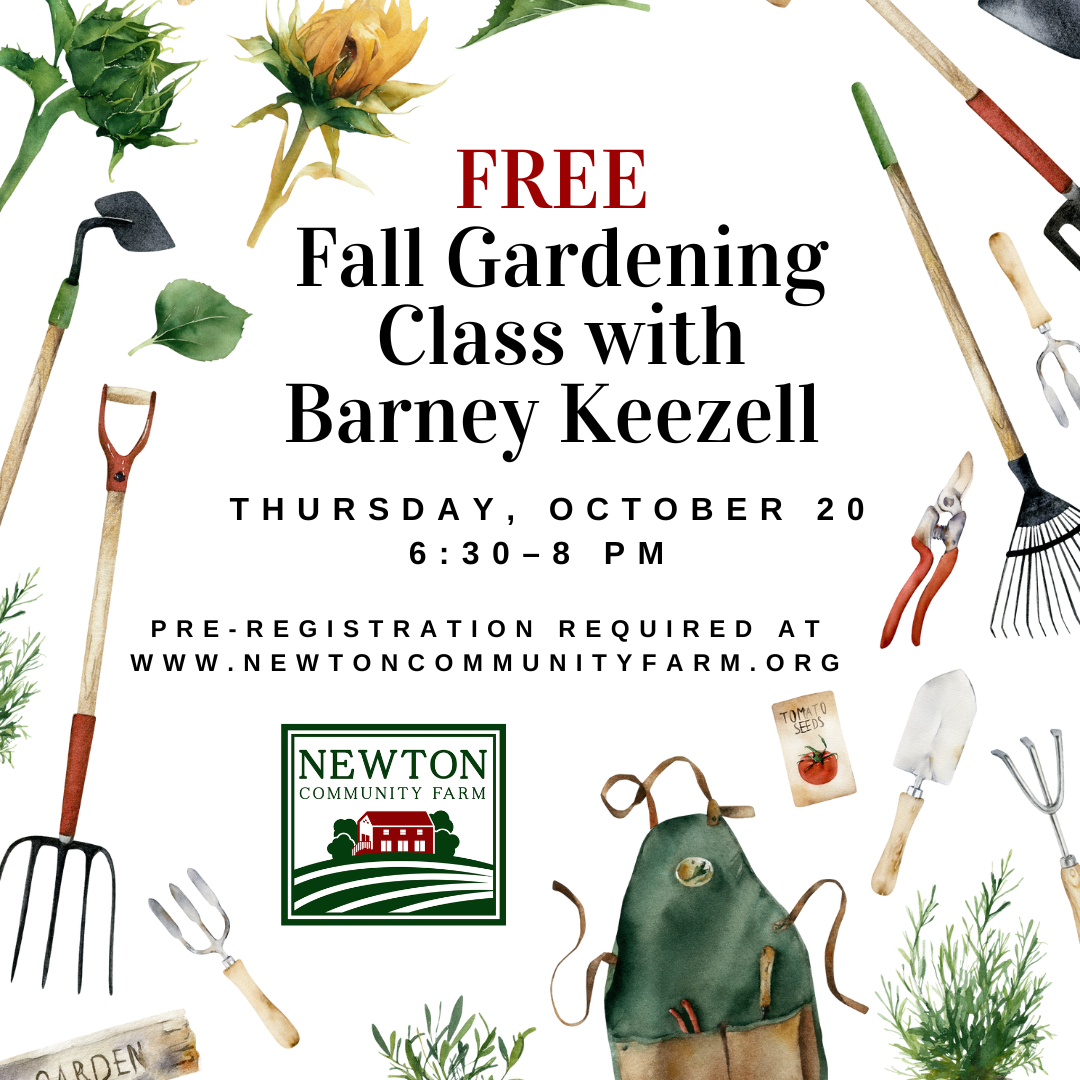
Thursday, October 20, 6:30–8 pm: Fall Gardening Class with Barney Keezell
Learn about:
- planting in the fall including garlic, bulbs
- soil health
- winter garden projects
- spring planning
FREE, pre-registration required, class is limited to 15 attendees. Click here to sign up!
| | | |
|
On the Farm
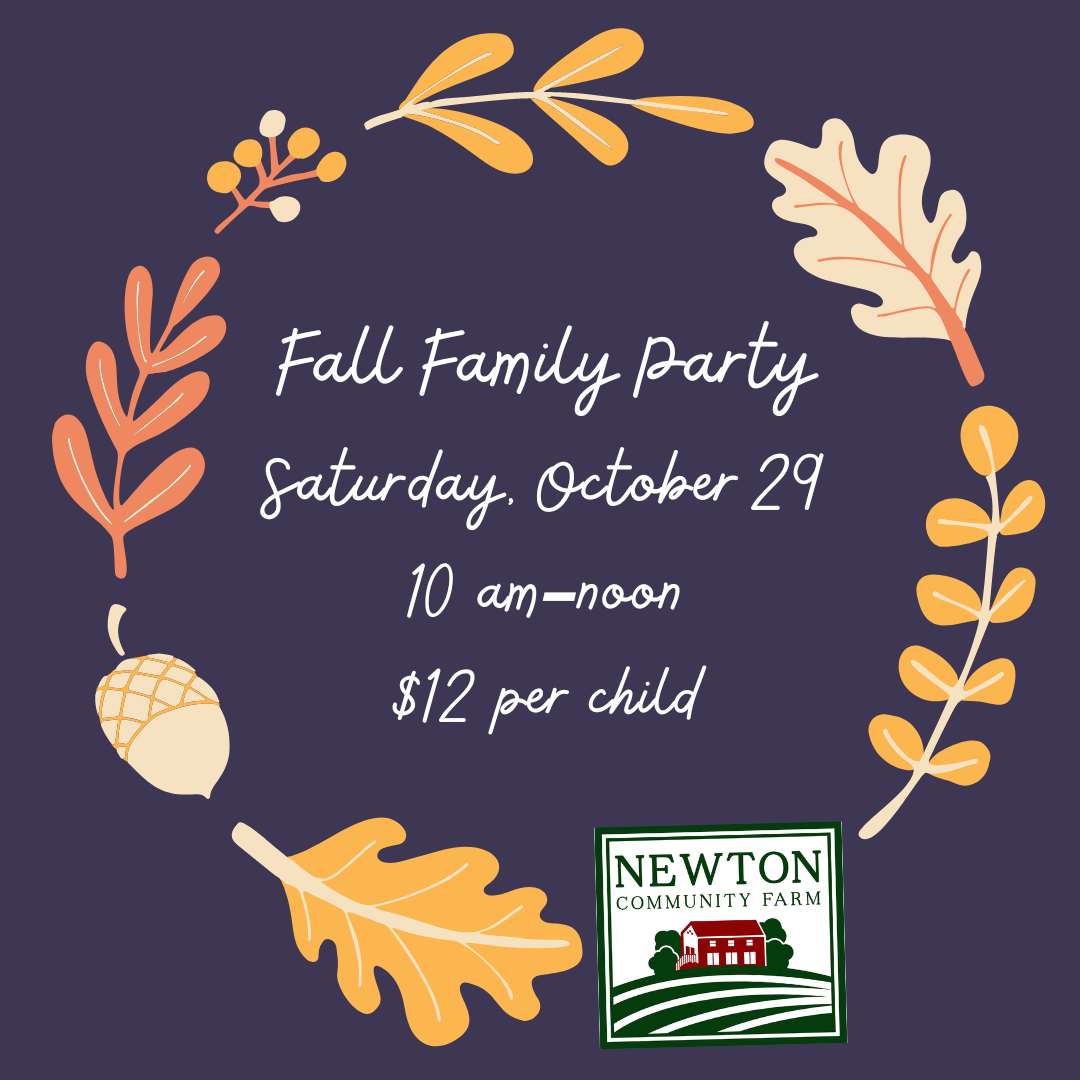
Saturday, October 29, 10 am–noon: Family Fall Party (Halloween costumes optional!) Pumpkin decorating, scavenger hunt, chicken facts, crafts, and more. Tickets are $12 per child and are on sale now. Volunteers needed. Please sign up to help!
| |  |
|
On the Farm
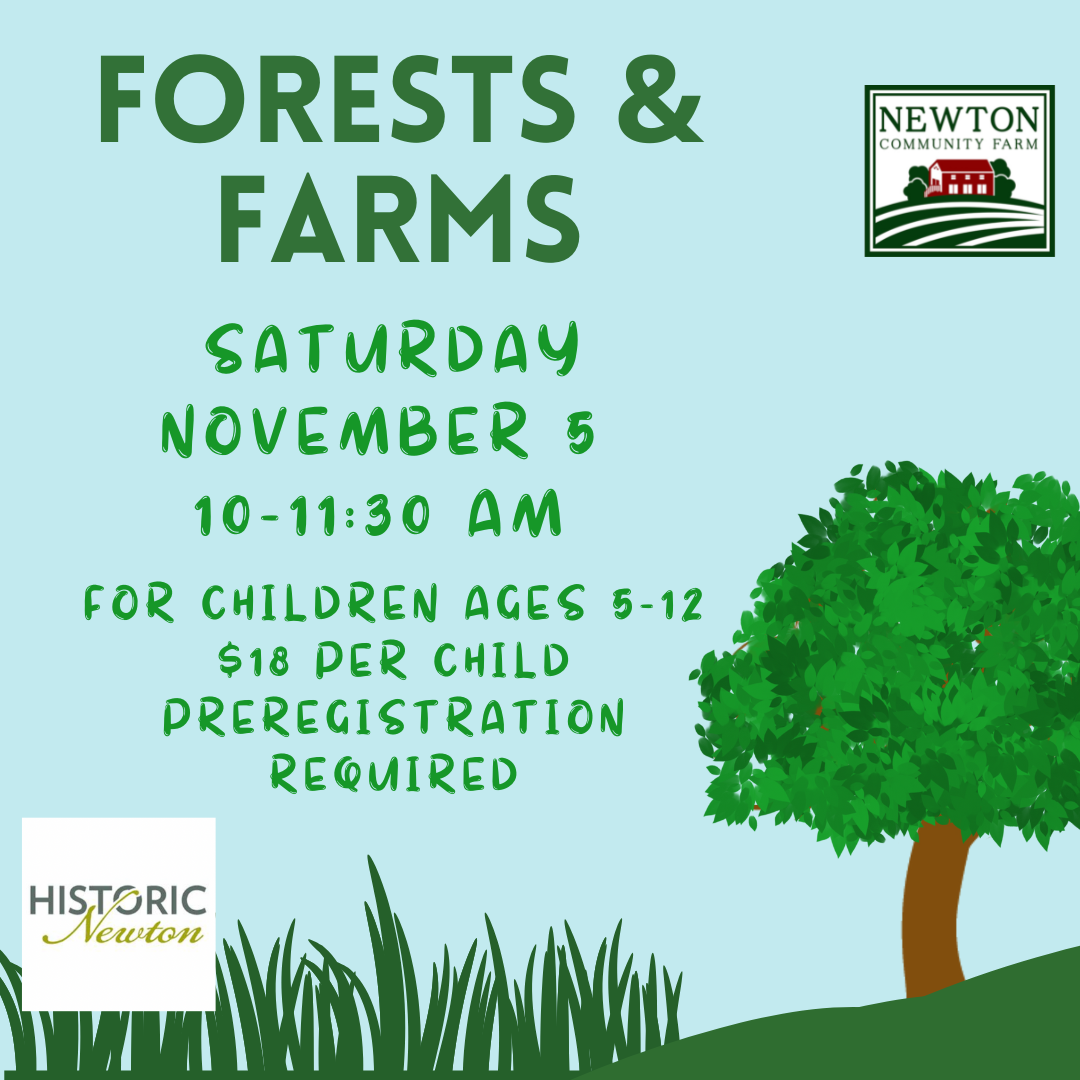
Saturday, November 5, 10–11:30 am: "Forests and Farms" a drop-off educational history program for children ages 5–12 with Historic Newton at the Farm. $18 per child. Click here to learn more and register.
| | |
|
Virtual
Thursday, November 10, 7–8 pm: virtual presentation of “The Fascinating Story of Where Our Vegetables Came From” with Master Gardener Bonnie Power. Bonnie will tell the story of 15 common vegetables and a fruit and how they spread around the world. $20 per household. More information here.
| | | |
|
Group Visits to the Farm
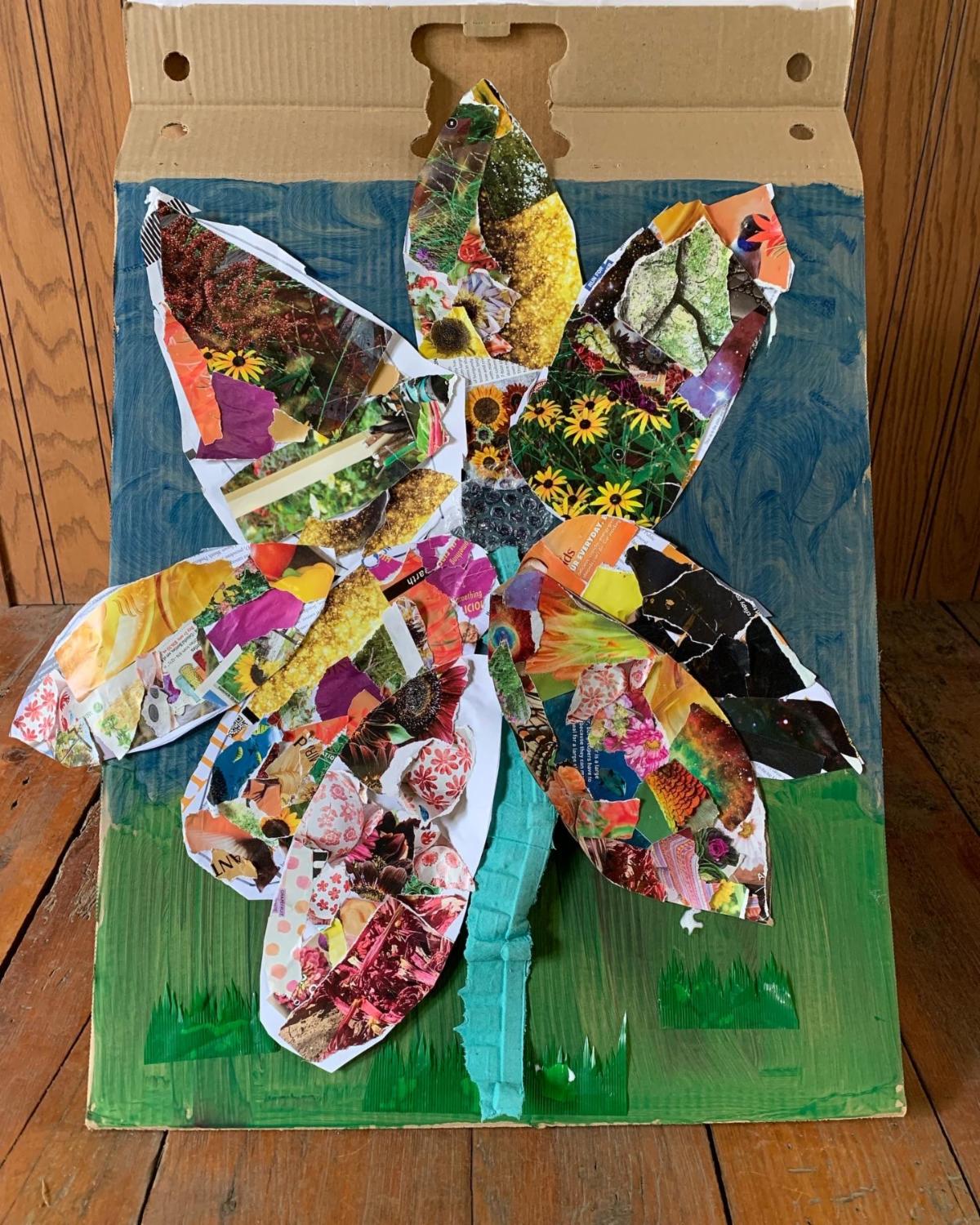
Contact us if you would like to bring a small group to the Farm for a field trip and craft activity or volunteering, depending on the season. Pictured here is a recent upcycled sunflower collage we made with a Girl Scout Daisy troop. We will take your group on a "noticing walk" of the Farm and can tailor your visit to your interests. We charge a modest fee, and scholarships are available. Reach out to sue@newtoncommunityfarm.org to discuss.
| |
Interview with Farm Manager Greg Maslowe | |
|
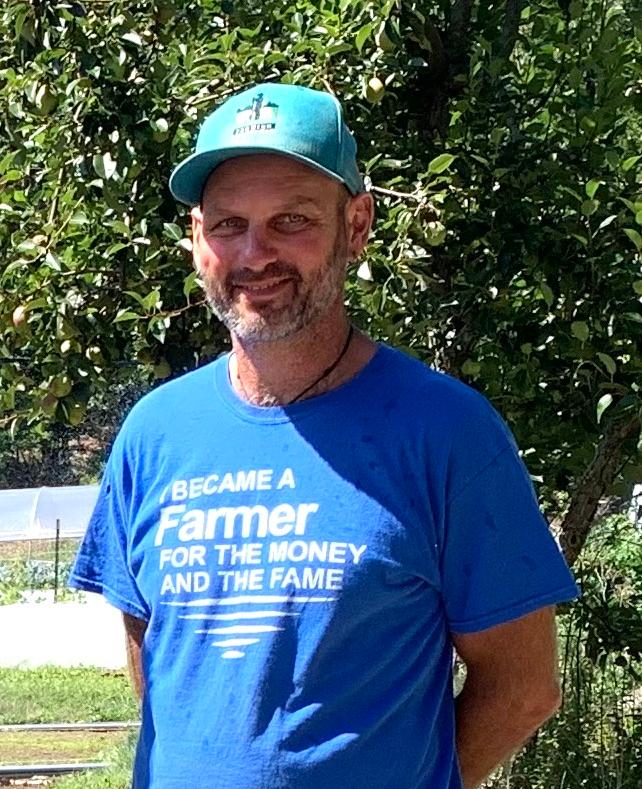
As the summer CSA wraps up this month and we begin the late fall CSA, we thought it would be interesting to hear from Farm Manager Greg Maslowe about his experience growing on the Farm this summer. Despite the drought and heat, Greg grew a bumper crop of produce again, for his 17th summer of farming.
What were some of the effects of the extreme drought and high temperatures with extended heat waves this summer on the crops?
As you can imagine, and as you might know from growing your own garden this summer, growing conditions were challenging. Our tomato plants were less productive than last year and our cucumbers succumbed earlier than usual due to lack of water. After great spring weather, our transplanted lettuce didn’t take and our carrots didn’t germinate this summer. Our fairytale eggplant didn't root well in the high tunnel, probably because it was too hot. And animals were desperate for water, which led to increased pest pressure as they ate some of the crops, not for the vegetables but for the moisture. Some vegetables did well with the extreme heat including all of our pepper plants and the Oriental and Nadia eggplant.
| |
What did you do to try to counteract these effects?
Unlike some summers when we don't need to irrigate at all for many weeks (such as last summer), this summer we had our irrigation running much of the day for many days. With our well, we can water seven beds at a time with our overhead irrigation. We run it in a given area for 1.5 hours and then move it to another seven beds starting at 9 am, 10:30 am, noon, 1:30 pm, 3 pm, and 4:30 pm. We have 140 beds so we water a quarter of the farm per day. We've never had to spend this much time irrigating at the Farm in 17 years. And overhead irrigation is inefficient due to evaporation and can, at best, mitigate losses but cannot replace adequate rainfall.
Other farms that were relying on ponds had problems when those ponds were running dry. Some local farmers even stopped planting this the summer due to loss of plants because of the heat and drought.
What lessons can we learn from this summer?
We are experiencing climate change, and we will have more severe weather in the future. Storms and droughts will occur more often and be more severe. The total amount of rainfall in any given year might not change. But the distribution makes a big difference. Soil desiccated by drought becomes hydrophobic and repels water, causing flash floods.
Our natural systems that we rely on to grow food and live are out of balance. Last year we had too much rain. We could experience different extremes next year. We try to hedge against these extremes by growing in greenhouses and moving tunnels. But we also don’t want to cover all crops and build with more plastic. We are also working to build our overall resilience with the installation of a solar array with battery back-up on the roof of the barn.
What can a home gardener do?
The most important step a home gardener can take is to build healthy soil. High-nutrient organic soil retains moisture in droughts and increases drainage during floods. Do soil tests to check organic material levels. (If your level is not at 7% or higher, add high quality compost.) Anyone can send in soil to be tested through the University of Massachusetts Amherst for a fee.
| |
|
Kale Chips
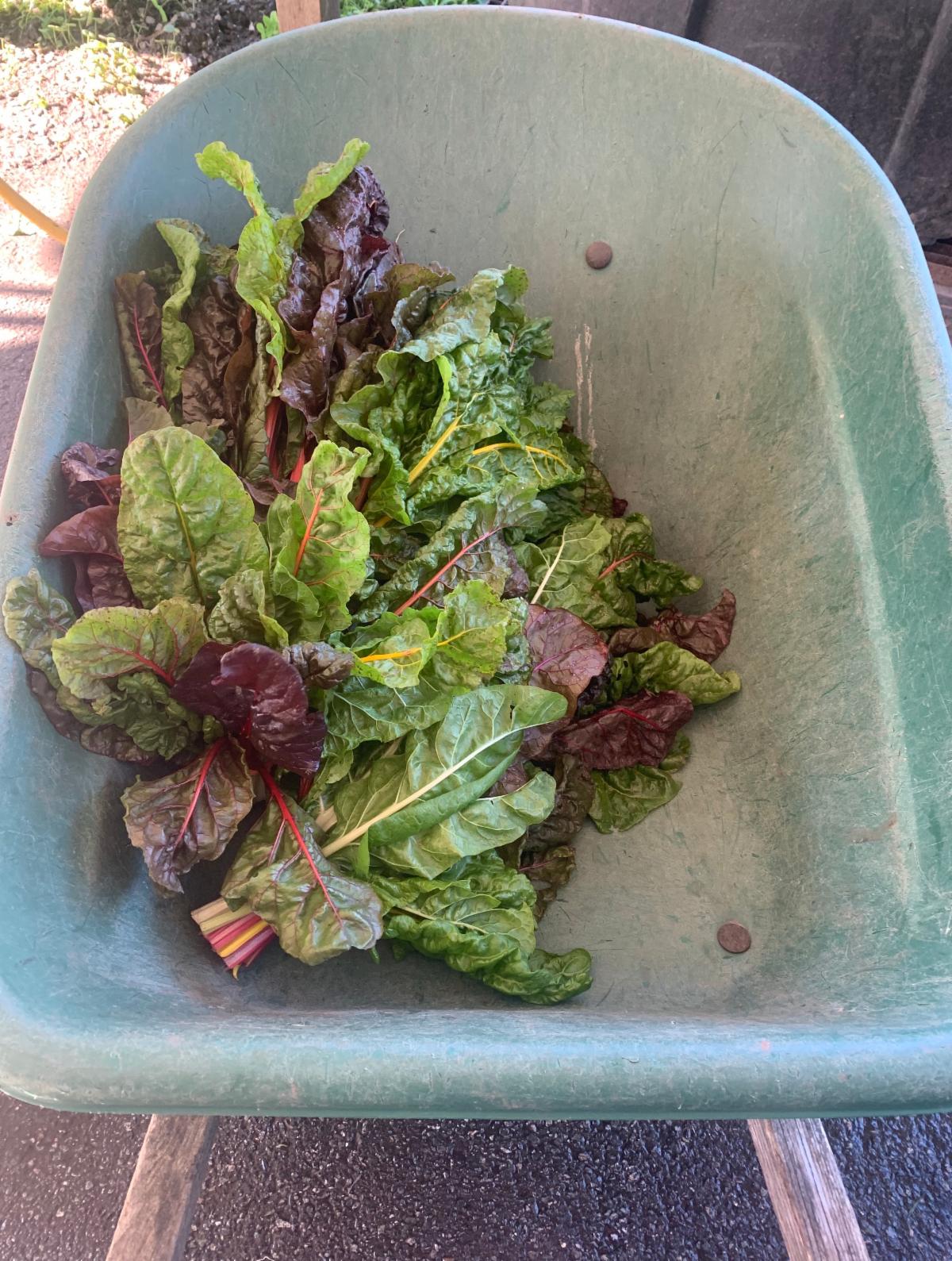
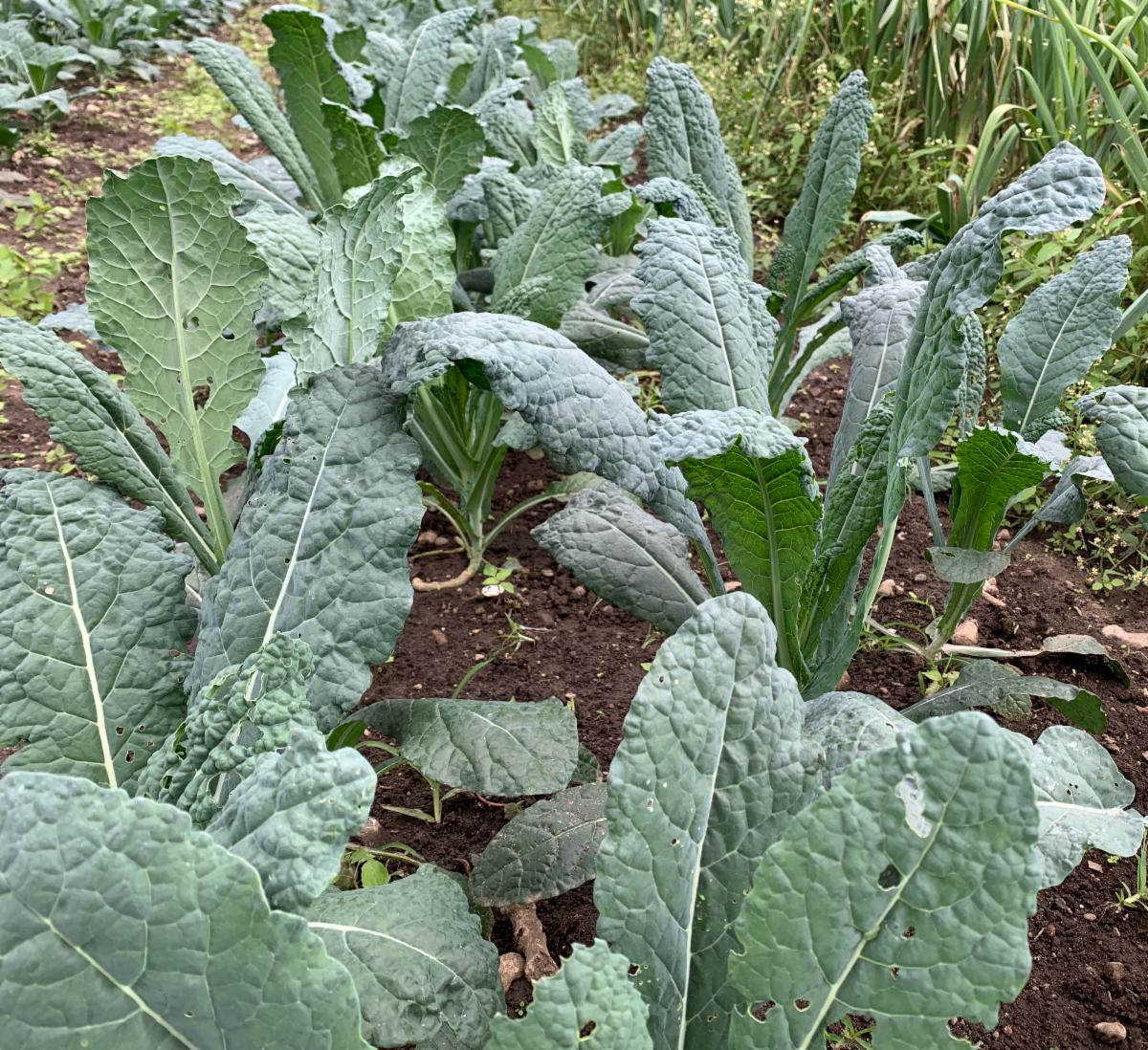
Not sure how to prepare an abundance of kale? Make oven-baked kale chips! Cut or pull away the green leaf from the center vein and compost the veins. Chop or tear the leaves into bite-sized pieces. Toss with olive oil, salt, and pepper. You can also add garlic powder for a tasty finish. Roast in a single layer on a baking sheet at 375 degrees F for approximately 5–10 minutes, or until you notice the kale pieces getting crispy.
Butternut Squash Mac & Cheese
This is an easy way to brighten up a delicious comfort meal and add in seasonal squash. Peel, seed, and cube the butternut squash, then place in a pot and fill with water. Cover and boil until tender, about 10 minutes. In a separate pot, cook your pasta of choice. When the butternut squash is done, add to a food processor or blender (or use an immersion blender right in the pot), and add one garlic clove, salt and pepper to taste, 1/4 cup milk or heavy cream, and 1/4 tsp each of dried basil and oregano. Blend until creamy, and toss with pasta until coated evenly. Top with cheese and enjoy.
| |
Leek and Potato Soup
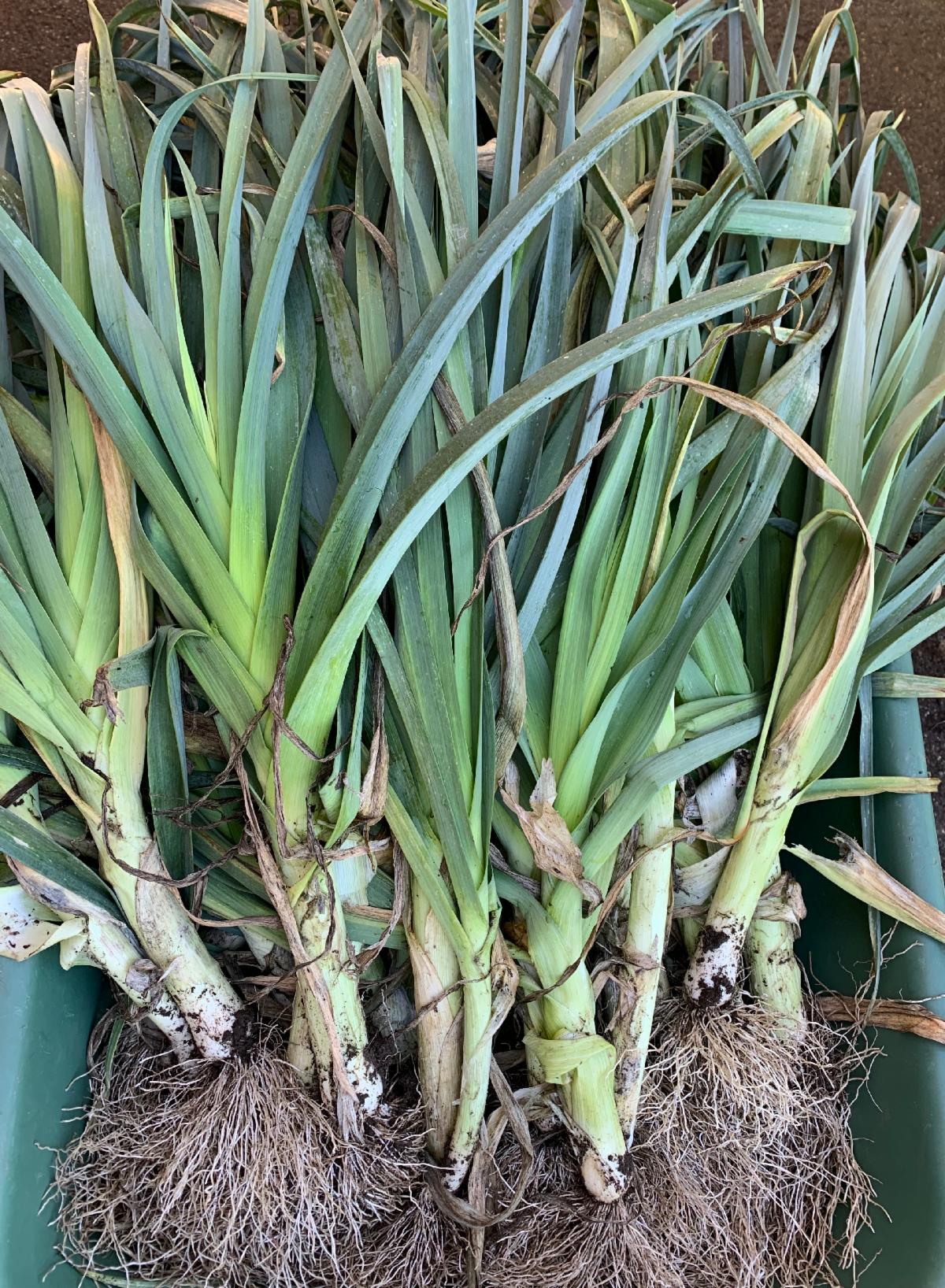
Gear up for cooler fall weather with this vegetarian, hearty soup. Thoroughly rinse 1–2 leeks and trim off the dark green leaves. Slice the remaining stem into thin rings, and sauté the rings with butter and minced garlic in a pot for 4–5 minutes until tender. Wash and cube 2–3 large potatoes, and toss them into the pot. Add 4 cups of broth, salt, pepper, and one bay leaf to the pot. Cover and cook on medium heat for 30–40 minutes, or until the potatoes are fork-tender. Top with grated parmesan cheese.
Recipes and photos by Inna Kagan, local Registered Dietitian Nutritionist
| |
|
You may have seen Farmer Greg's beautiful flock of chickens when you visited the Farm. Here are some interesting facts about them.
- All of the chickens that live at the Farm are hens. Roosters are not allowed in Newton.
- These chickens arrived in the mail as one-day-old chicks in March of 2019. Farmer Greg raised them in the barn until they could survive outside.
- Different breeds of chickens lay different- colored eggs. Did you know that a chicken's “earlobe” sometimes indicates what color eggs it lays? A red earlobe usually means a chicken will lay brown eggs, and chickens with white earlobes usually lay white eggs. Some of Farmer Greg's chickens lay blue eggs.
- The chickens have their feed supplemented with lots and lots of fresh produce. They also get a treat of cracked corn every day.
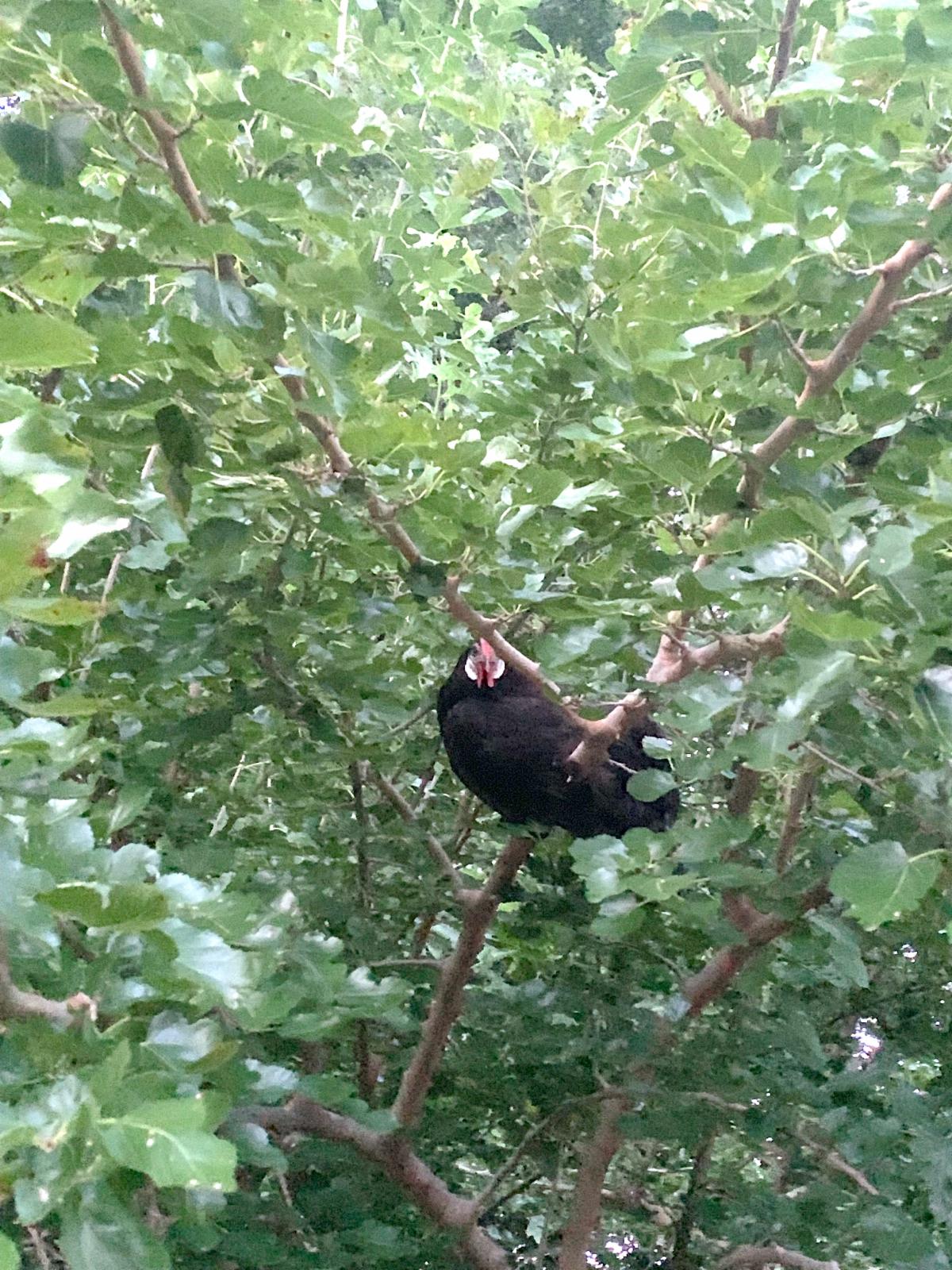
- Some of the chickens fly up into the mulberry tree in the coop run to sleep at night in the summer.
- The American Poultry Association recognizes 53 different breeds of chickens. Farmer Greg keeps multiple breeds of chickens at the Farm.
| |
|
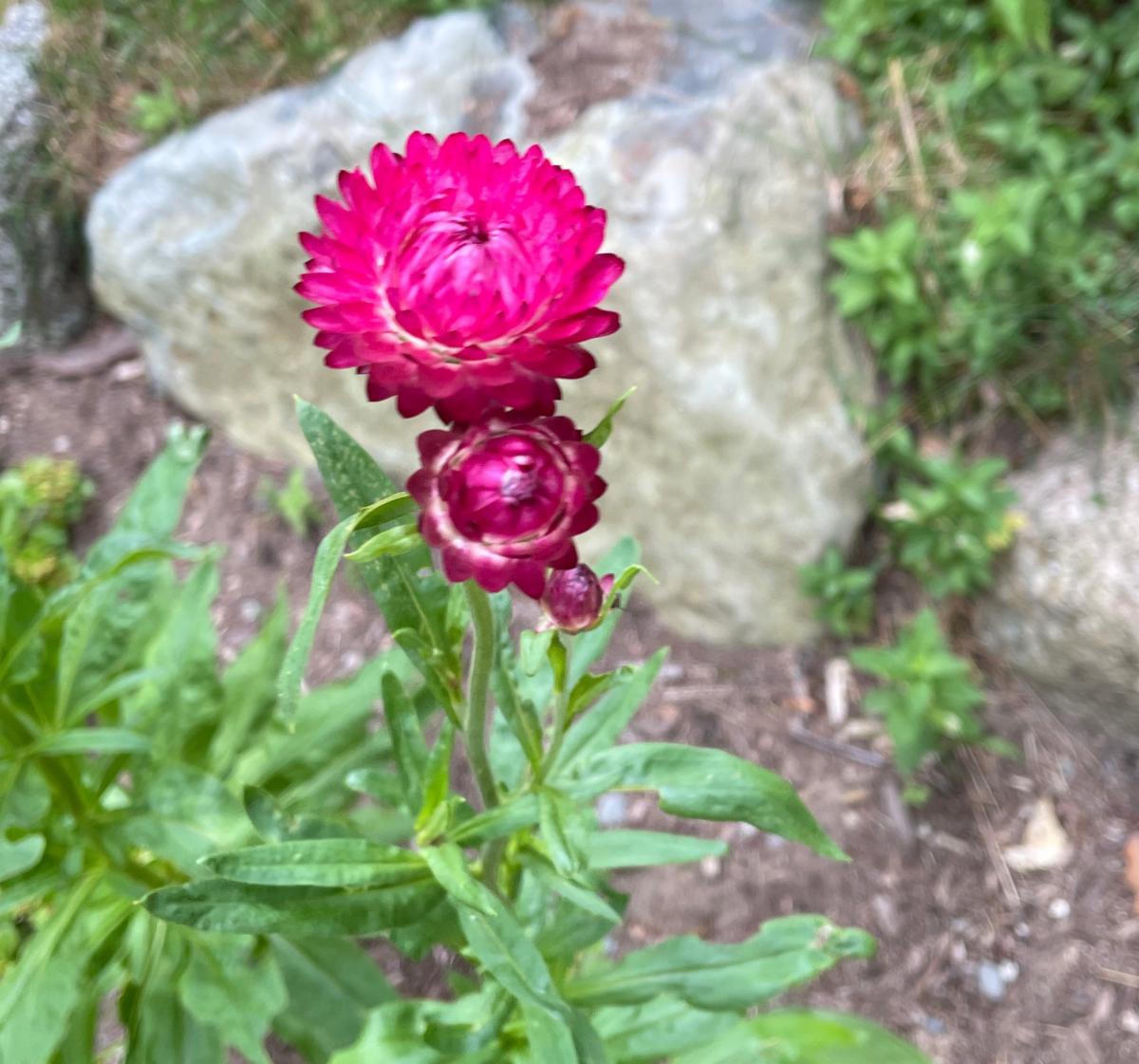
From Joanna, a home gardener in Newtonville:
“I loved planting strawflowers from the NCF seedling sale, and getting to enjoy them pop in the dog days of summer.
They also look great in small cut bouquets and brighten my office when I’m at work!"
| |
Newton Community Farm is a 501(c)3 nonprofit organization, EIN #20-2482452. If you would prefer to donate by mail, please send a check payable to Newton Community Farm at the address below. Don't forget to ask your employer if matching funds are available. | |
NEWTON COMMUNITY FARM
303 Nahanton Street
Newton, MA 02459
617-916-9655
| | | | | |