Upcoming Events

|

View as Webpage

78fe8e7b-25c2-44f1-ba88-0bd67401a22e image

Endotoxin contamination, primarily from lipopolysaccharides (LPS) of Gram-negative bacteria like E. coli, poses significant risks in pharmaceutical and medical device manufacturing. Even trace amounts can trigger severe immune reactions, emphasizing the need for accurate endotoxin detection.


Evolution of Endotoxin Detection

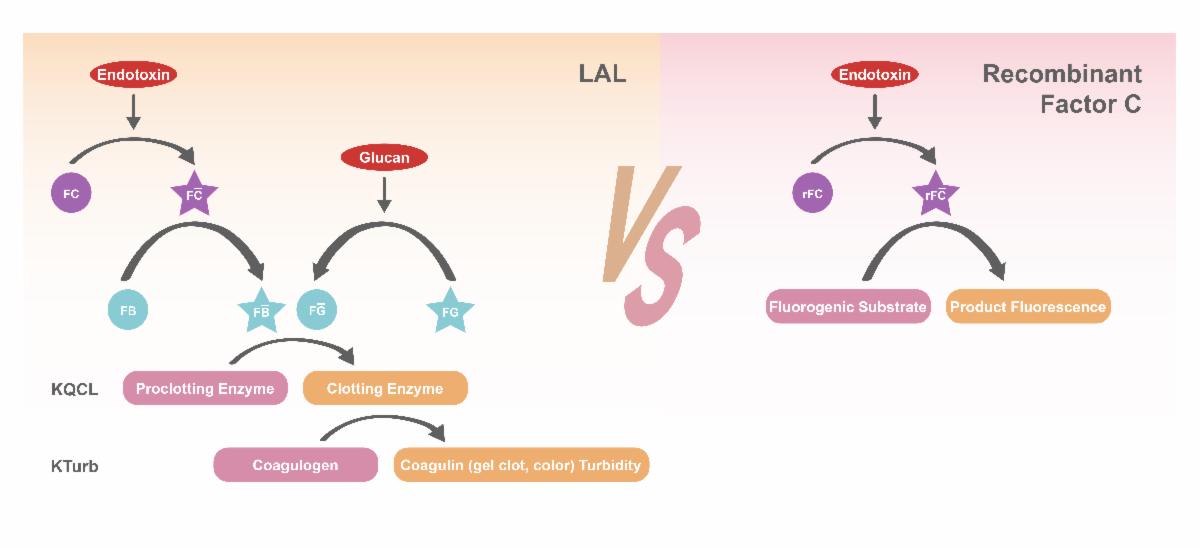
Endotoxin detection has evolved significantly, from the Rabbit Pyrogen Test to the Limulus Amebocyte Lysate (LAL) assay and the Recombinant Factor C (rFC) assay. While LAL, derived from horseshoe crab blood, is sensitive and widely used, concerns over animal welfare and variability have prompted the development of alternatives.

The New Standard: Recombinant Factor C (rFC) Assay

The rFC assay uses a recombinant protein to detect endotoxins via fluorescent signaling. It eliminates animal-derived components, provides consistent and reproducible results, and avoids β-glucan interference common in other assays.

ACROBiosystems' Recombinant Factor C Endotoxin Detection Kit (Cat. NO. RES-A056) is a sustainable, crab-free alternative to LAL. Developed using proprietary technology, this endpoint fluorescence assay delivers exceptional performance that meets the stringent demands of pharmaceutical, medical device, and biological product manufacturing.

 Free Samples Available 

Validation Data:

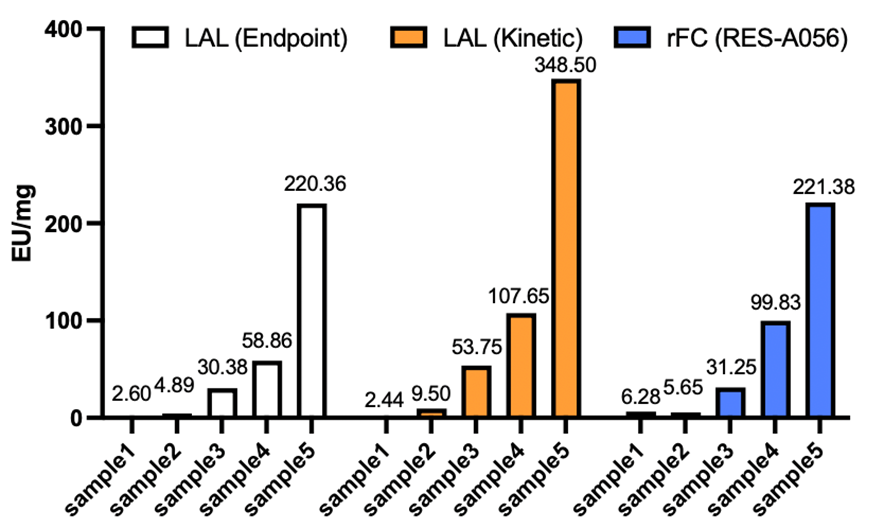
  • High sensitivity, with results within twofold compare to the LAL method.
  • Reliable, validated performance for endotoxin detection.

Different methods were used to detect endotoxin residues in five samples, and the deviation between the detection results of rFC method and LAL method is within twofold.

Immobilized Human NKG2D Protein, His Tag (Cat. No. NKD-H5245) at 2 μg/mL (100 μL/well) can bind Recombinant Human MICA Fc Chimera with a linear range of 0.2-4 ng/mL (QC tested).

 A Free Flyer for More Details 

Explore More Solutions:

>>>Comprehensive Residue Detection Solutions

Awards & Certifications