|
They called L’Escargot ‘The Wonder Horse’ but today, steeplechase barely remembers the American-owned Irish-bred and -based, globe-trotting champ
British author David Owen dug deep to turn his new release ‘No Snail’ into a page-turning thriller
| |
|
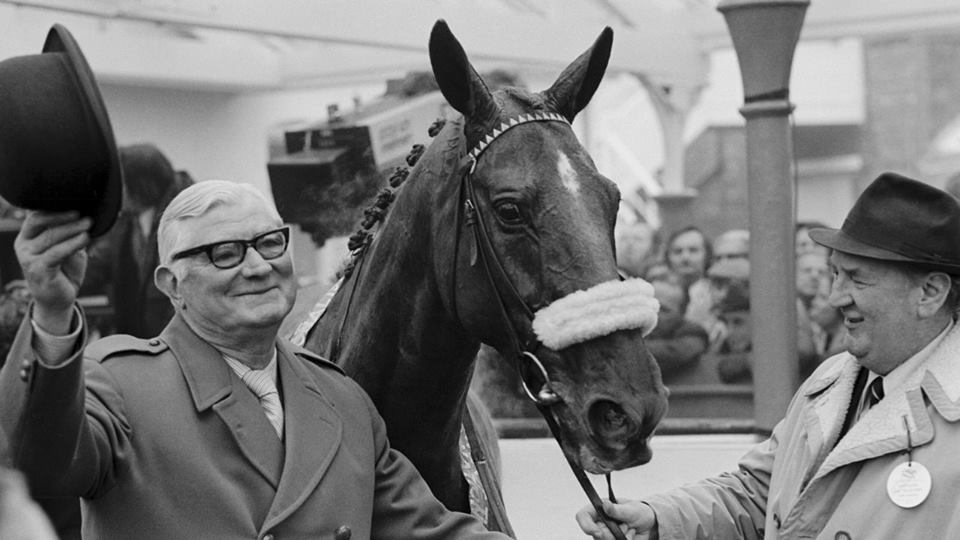
When L’Escargot sliced the Canal Turn late in the 1975 English Grand National to gain four lengths in the air, owner Ray Guest’s heart fluttered. It was looking like his beloved jumper was perfectly poised to bring the chocolate and pale blue silks to the winners’ enclosure at last. (WATCH the 1975 race)
Guest had won the Epsom Derby – twice, and almost all of racing’s marquis races on the flat and over fences. But in 12 previous tries, he’d not captured what he considered the most important prize of all.
In the end, the American diplomat could at last count the Aintree classic in his tally when L’Escargot won pulling up by 15.
But in doing so, L’Escargot beat two-time National winner Red Rum and instantly became what many were vilifying as racing’s biggest killjoy, and L’Escargot became a somewhat forgotten footnote in steeplechase lore.
Research writer David Owen wanted to right – and write, history.
Owen had learned of the largely unknown story of L’Escargot when researching for another book. He knew a good story-line when he saw it, though, so he dug deep. Owen began tracing the snail-trail of L’Escargot’s entourage, casting a wide web – a thrice-lucky breeder, a blueblood owner, his Irish trainer and more.
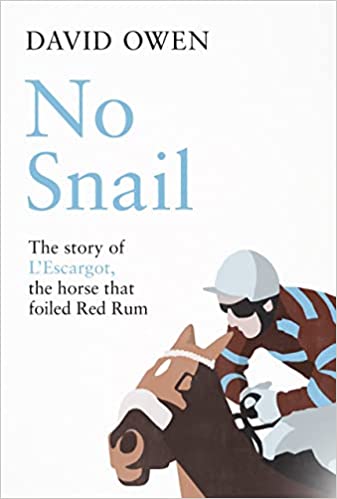
Last month marked the release of Owen’s latest racing biography – “No Snail – The story of L’Escargot, the horse that foiled Red Rum.”
“What persuaded me to write at length about the 1975 Grand National winner almost half a century after the event?” Owen asks in his forward. “There were many reasons. Firstly, I was surprised that no book-length account of his career exists.
“I have no doubt that it is a hole worth filling – in large part because he was so, so good.”
Even Robin Oakley’s 2012 book, “Britain and Ireland’s Top 100 Racehorses of all Time” ranked L’Escargot number 20 – seventh among steeplechasers.
Yet, Owen says, from L’Escargot’s first race to his National win, it was uncanny how often the media took more interest in his beaten opponent than in L’Escargot himself.
The clincher for Owen was L’Escargot’s U.S. championship – 1969, and his participation in what was at the time touted as the fledgling world ‘chase championship – the inaugural Colonial Cup in 1970.
It lent a transatlantic dimension weaving together the story of horseracing.
Available in hardcover and on Kindle, the 220-page “No Snail” reads fast, at times at page-turner with non-stop action. Owen weaves in carefully footnoted research stitched neatly with his own interviews with living members of L’Escargot’s entourage.
| |
|
Named for it, L'Escargot was no snail.
American-owned, Irish-based and from a line of French champion producers, 1970’s steeplechaser L’Escargot underlines the global nature of horse racing, wins on two continents in three countries all the more impressive born into the era when international racing was still headline news.
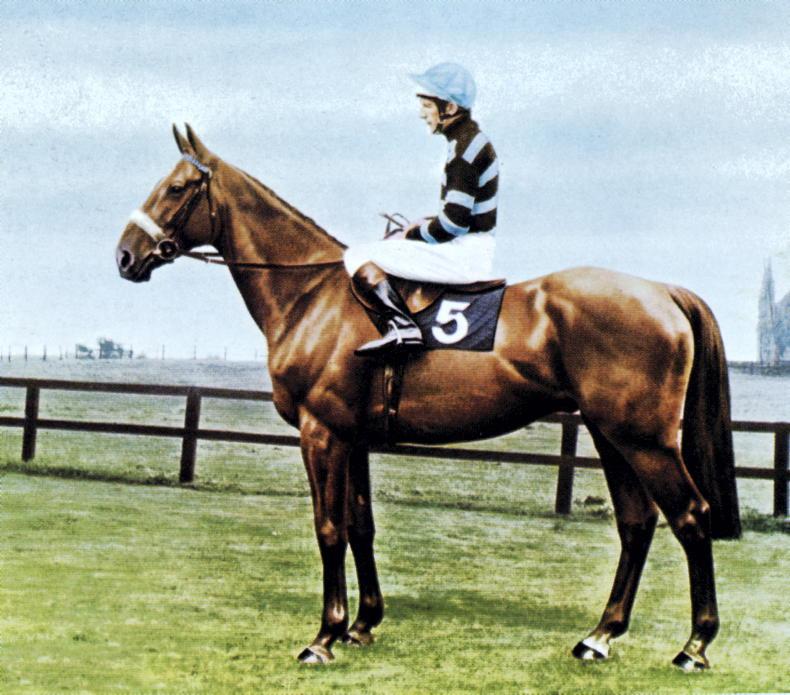
A beautiful, athletic chestnut with the tiniest of white stars on his forehead, L’Escargot was a winner from the very start – a gorgeous foal that was sales-topper when sold at auction at 3. On the training grounds and on the racecourse, L’Escargot possessed that magical combination of tactical speed and jumping ability, athletic good looks and charisma. He was fleet enough to win Cheltenham’s supreme novice hurdle, classy enough to win two Cheltenham Gold Cups and tough enough to be placed in two English Grand Nationals before winning the great race in 1975.
With the Aintree victory, L’Escargot became one of just two horses to ever complete the Gold Cup-National double – the legendary Golden Miller is the other.
But when British research writer David Owen dug into L’Escargot’s story a few years ago, he found a largely forgotten and never comprehensively connected story. L’Escargot’s victories spanned nine seasons, with wins on the flat, over hurdles and over fences, at distances from two miles to the National’s grueling four miles and 856 yards.
“I was surprised to discover that no book-length account of his career existed,” Owen adds, his career coming soon after the incomparable Arkle’s that L’Escargot was probably “caught up in an attempt to identify the next Arkle, like footballers were once labeled ‘the next Pelé’, or cricketers ‘the next Bradman’.”
| |
|
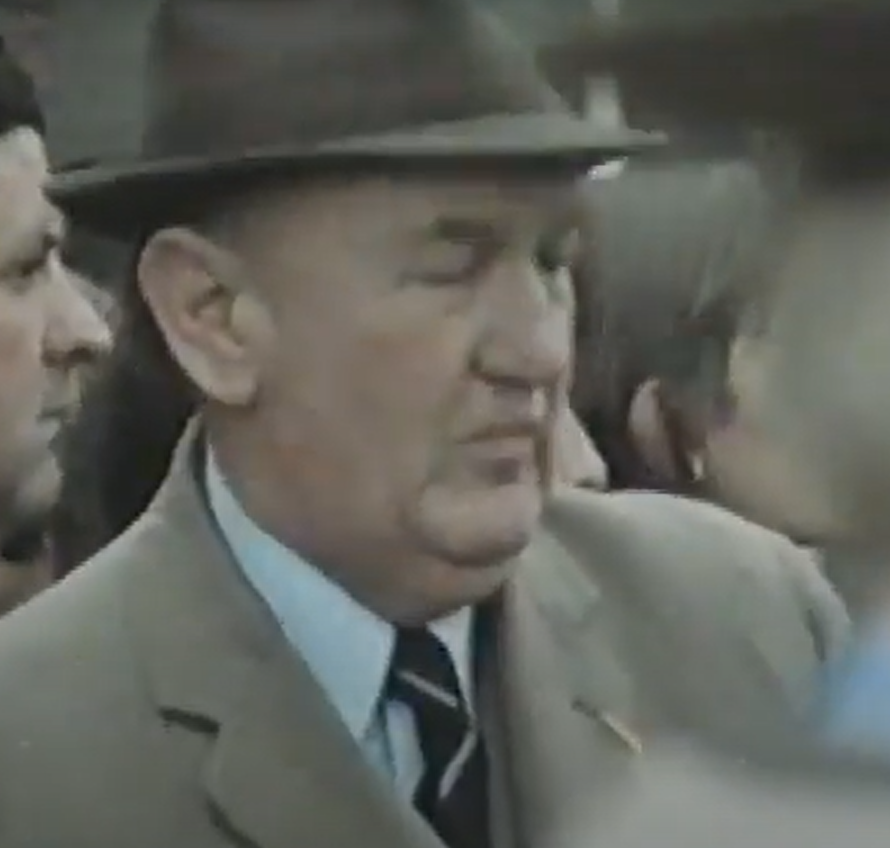
Trainer tidbits: Dan Moore
Before his training career, first near Fairyhouse, later at the Curragh, Dan Moore rode races in England and Ireland.
For many years it appeared as if Grand National glory as either rider or trainer may elude Dan Moore: As a rider, Moore had just missed out in 1938, when Royal Danieli was judged – an era before the photo-finish camera, to have been beaten a head by U.S.-owned Battleship.
Moore had also handled future National winners Freebooter and Team Spirit early in their careers before selling them on.
Moore also had the golden touch with another American invader - dual 1973 Cheltenham winner, Inkslinger Maryland-bred and owned by Martie Sanger (then Martie Jenney.)
| |  |
|
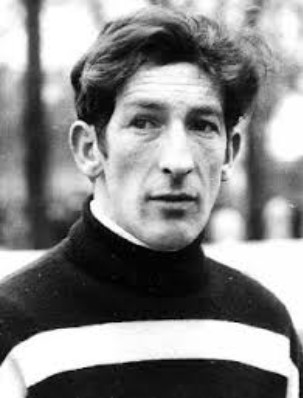
Rider tidbits: Tommy Carberry
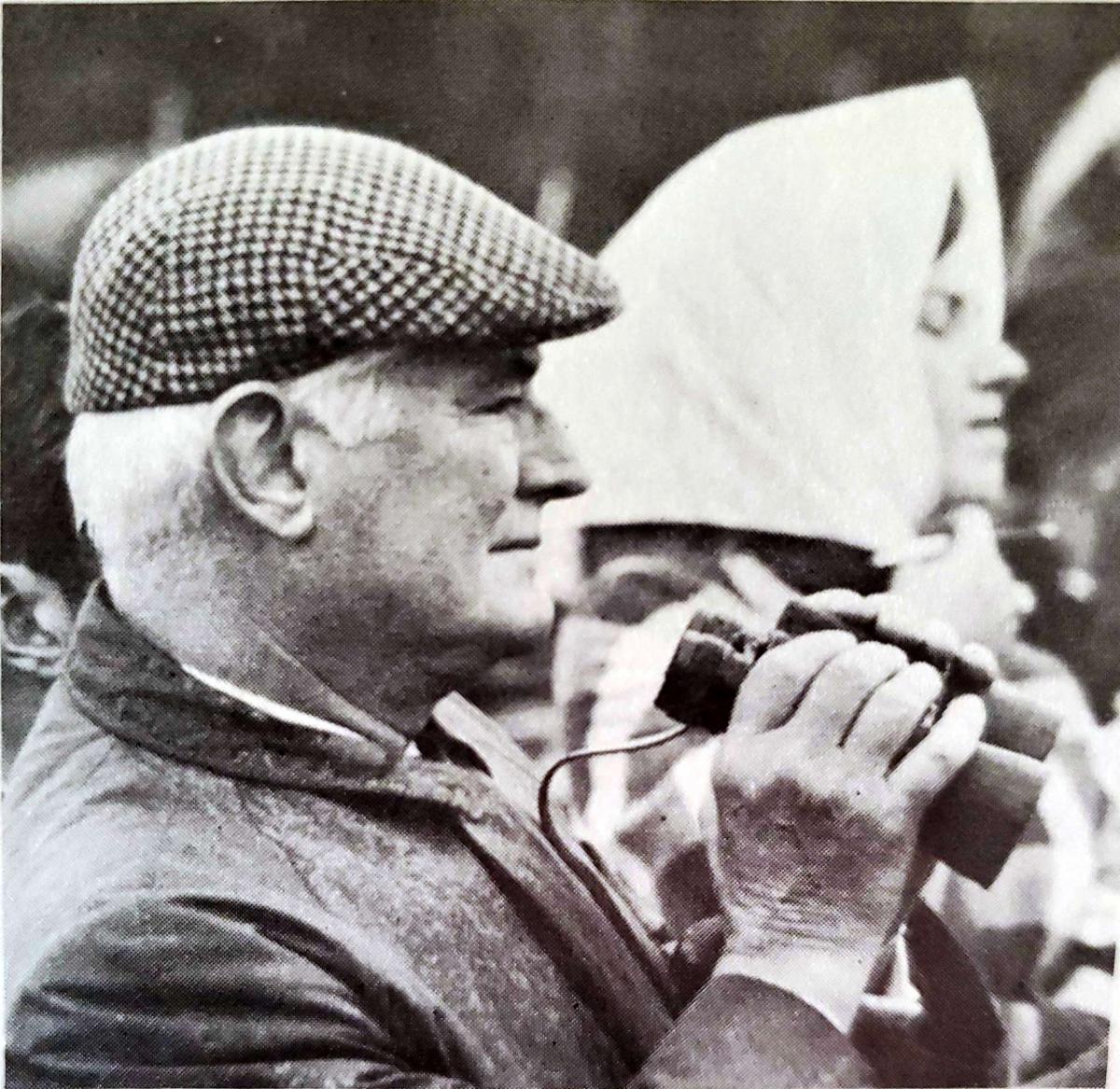
Tommy Carberry, who was Dan Moore’s son-in-law, rode in the English Grand National 10 times, with one win aboard L’Escargot, fifth on Ray Guest’s Packed Home in 1967 and eight times failed to finish.
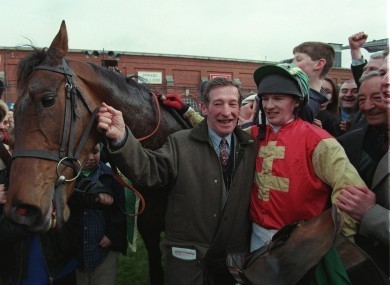
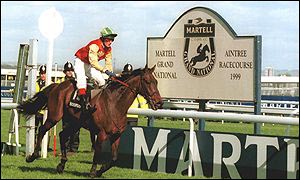
Carberry went on to train 1999 winner Bobbyjo, who was ridden by his son Paul.
| Tommy and Paul Carberry with Bobbyjo. | | |
L'Escargot was owned by Raymond Guest, Winston Churchill's cousin and U.S. ambassador to Ireland in the 1960s. By the time L’Escargot was active on the racecourse, Guest’s chocolate and pale blue hooped silks had already been carried to Derby glory by the Vincent O'Brien-trained Larkspur and Sir Ivor. | |
|
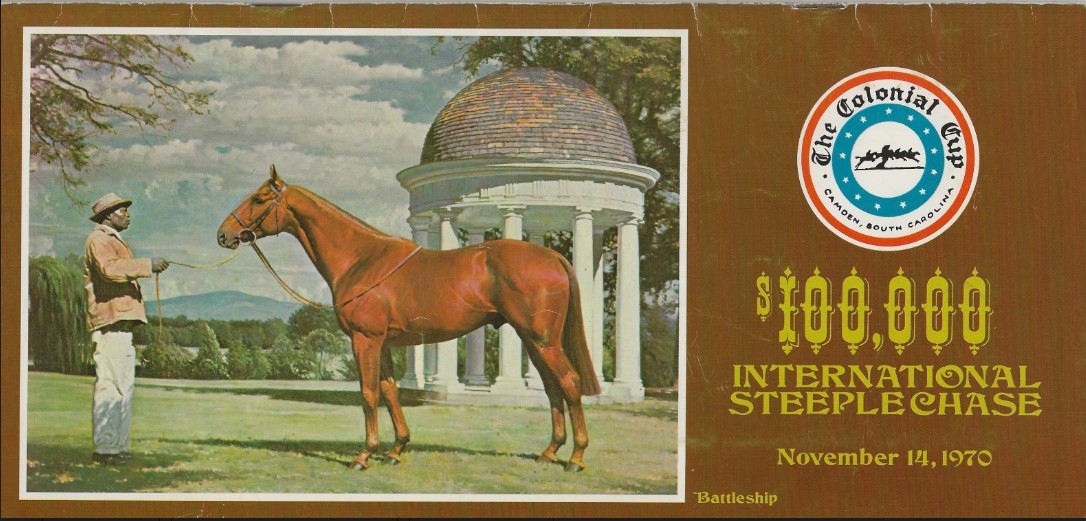
L’Escargot was invited to take part in the inaugural Colonial Cup in Camden, South Carolina. Race founder and one of steeplechasing’s leading ladies, hostess Marion duPont Scott personally paid the fare for some dozen European horses and their entourages to take part in the November 14 race. Pundits were calling the $100,000 race the start of a true steeplechase world championship. A New York Times report trumpeted that the new race “could challenge England’s Grand National as the world’s premier event in a few years.”
One can only speculate as to trainer Dan Moore’s reaction on first seeing the Colonial Cup race program – on the cover was a portrait of Scott’s Battleship, the little chestnut stallion who had so narrowly deprived Moore of what would have been his greatest victory as a jockey in the 1938 Grand National at Aintree.
| |
|
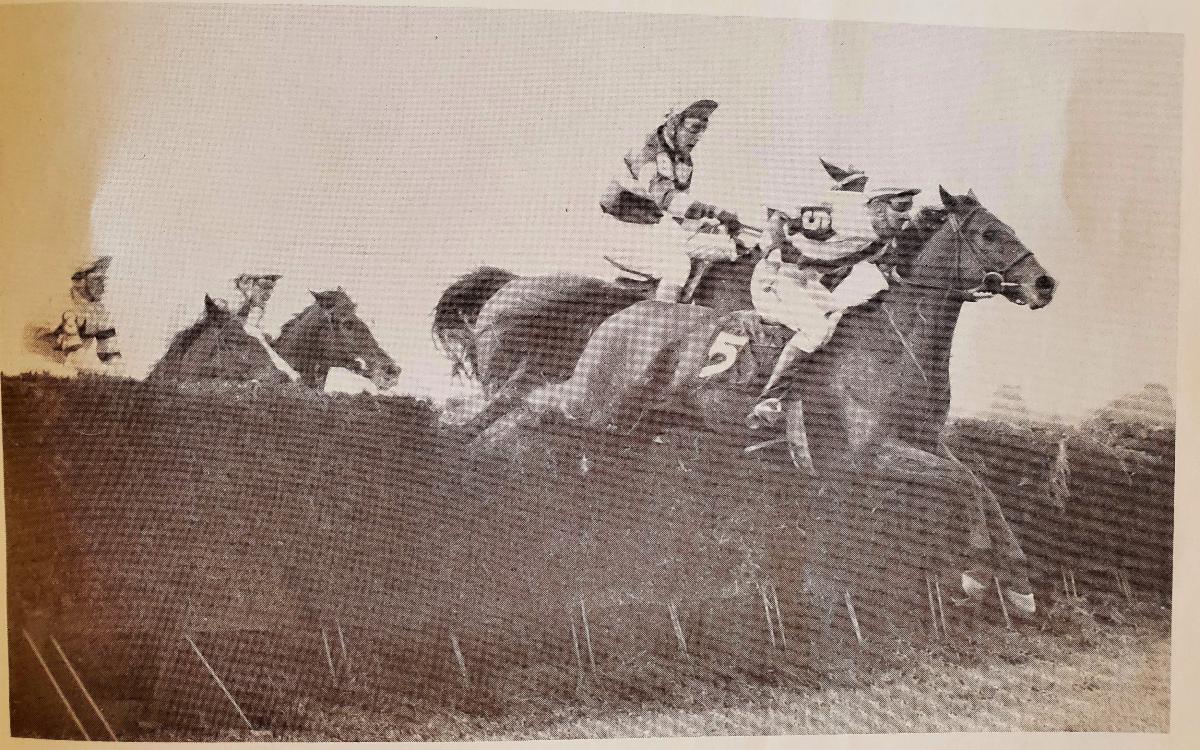
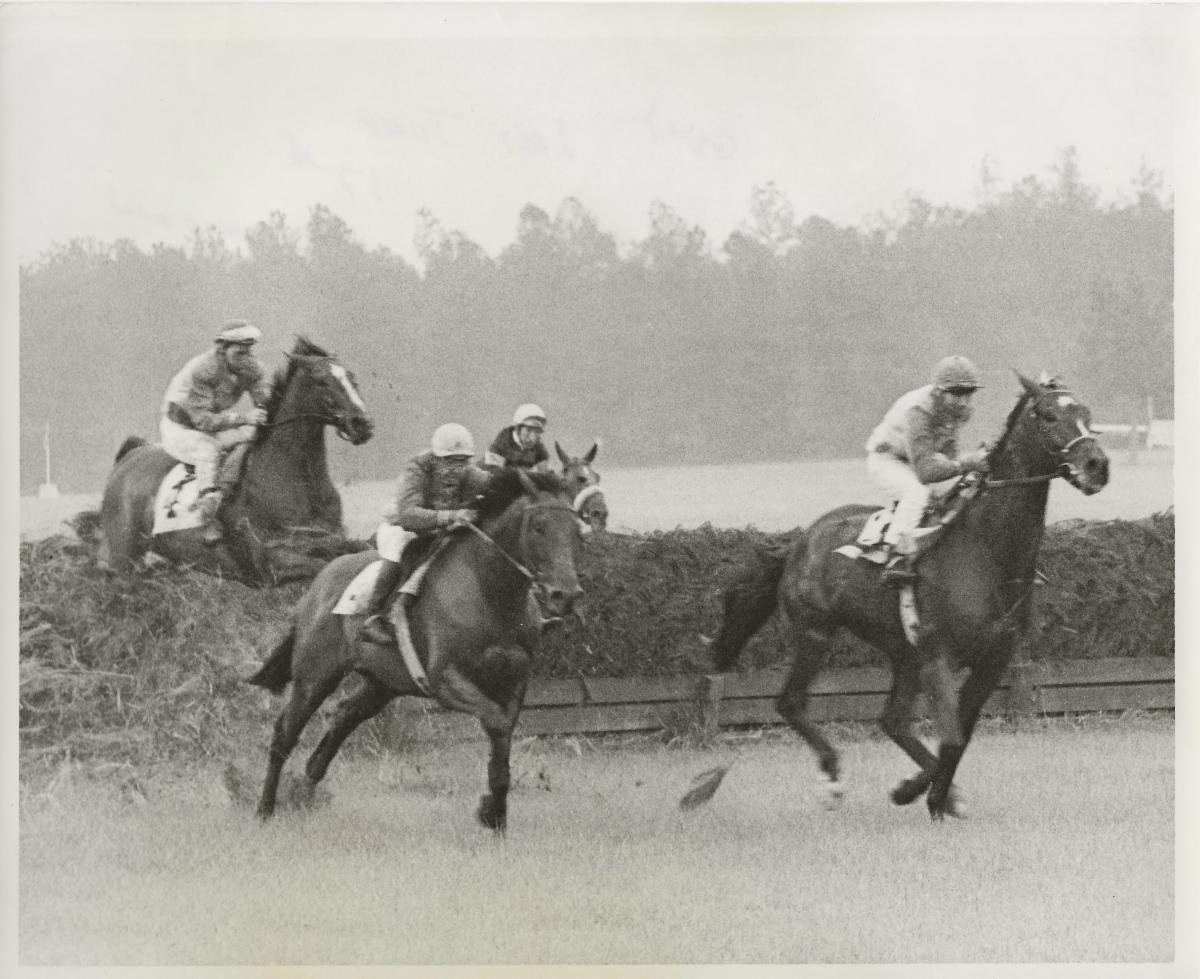
For a while, Crisp and Young Ash Leaf shared pace-making duties with an American runner called Peach II ridden by Ronnie Armstrong, but both had dropped back well before Leo O’Brien and Shadow Brook made the first serious move.
It wasn’t enough, though, with Joe Aitcheson and Top Bid closing late, a perfectly timed run to hit the line first for trainer Mike Smithwick, a cousin of L’Escargot’s trainer Dan Moore. (photo: final fence of the 1970 Colonial Cup, courtesy of the National Steeplechase Museum)
L’Escargot finished as the best of the Europeans – far from disgraced in fourth.
The next two Colonial Cup winners – Inkslinger, a Smithwick-trainee that won with Carberry in the irons in 1971, and 1972 winner Soothsayer – would carry on the increased interest in international campaigns to go on to become Cheltenham festival winners. (Read more about Inkslinger's Cheltenham successes in 1973 HERE and HERE from This is Horse Racing)
L’Escargot won his second Cheltenham Gold Cup in 1971, claimed the Sundew Chase at Haydock in 1972 and was third in the 1973 English Grand National. He was third in the 1974 Irish Grand National and the 1975 win at Aintree was his final victory.
L’Escargot was inducted into the National Racing Hall of Fame in 1977.
He died at Guest’s Powhatan plantation in Virginia in 1984 at age 21.
| |
|
You ought to be in movies
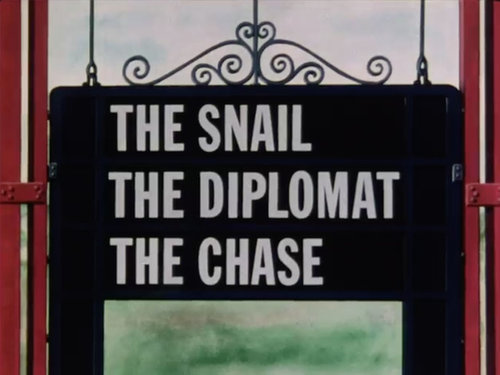
“The Snail, The Diplomat and The Chase” is a 1976 documentary detailing the story of the 1975 Aintree hero, L’Escargot. Its titular subject matters were, in reverse order, a long-running quest to win the Grand National (“Chase”), prominent diplomat, democrat politician and racehorse owner Raymond Guest (“Diplomat”) and the talented ‘chaser L’Escargot (“Snail”).
| |
L'Escargot by the numbers | |
|
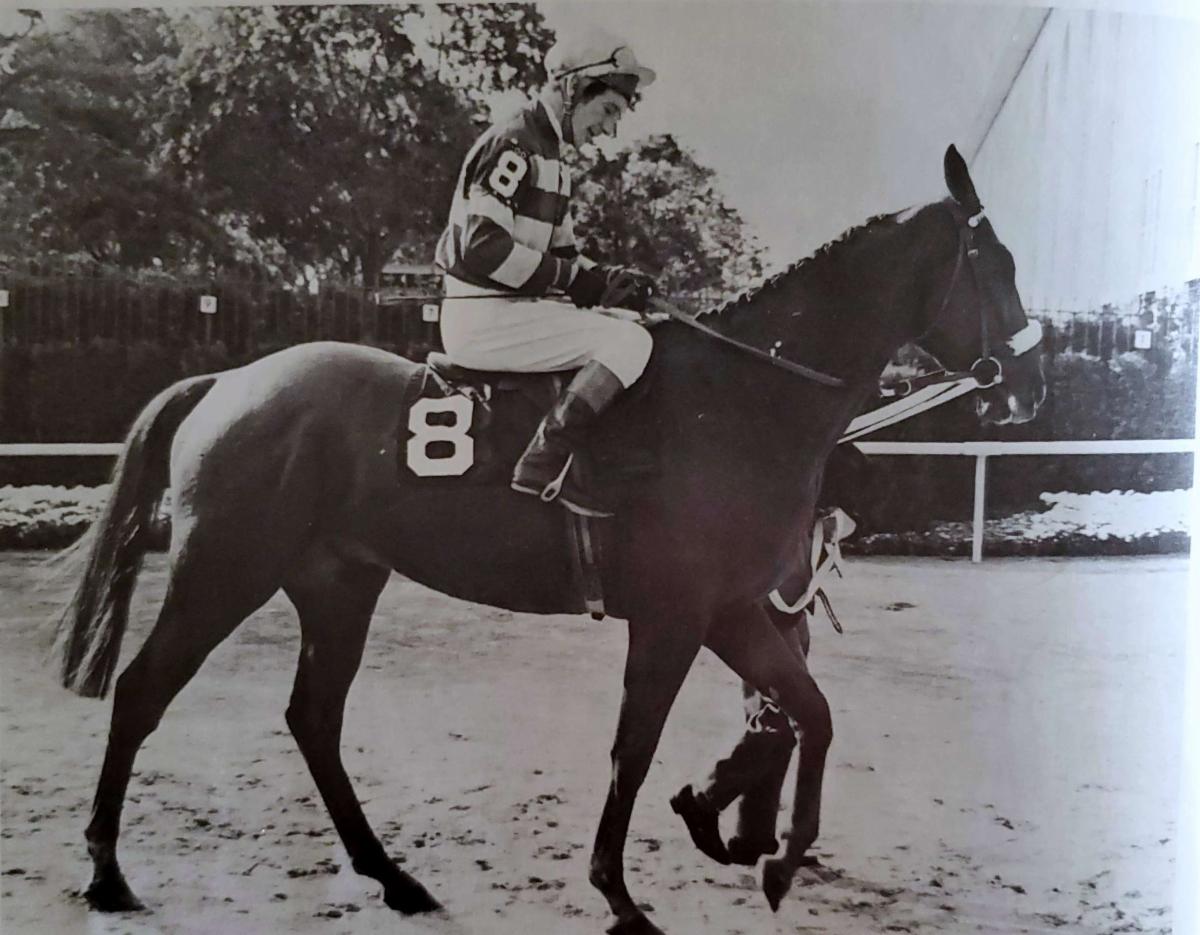
Chestnut gelding, born in 1963 by Escart III out of What A Daisy
Breeder: Barbara O’Neill
Owner: Raymond Guest
Trainer: Dan Moore
Jockey: Tommy Carberry
(photo: at the 1969 Temple Gwathmey, Schafer / NSA Archives)
| |
|
🏆 The 1975 English Grand National was the 13th time American diplomat Raymond Guest had tried to win the world steeplechase crown.
He had one attempt by Virginius, two by Flying Wild, two by Packed Home, one by Great Lark, one by Cnoc Dubh, one by Smooth Dealer, one by Ashville and four by L’Escargot.
L’Escargot was brought down in his first try, third in his second, second in his third and won his fourth attempt.
🏆 Racing 1967-1975, L’Escargot won 14 of 61 starts, 15 seconds, seven thirds. He fell twice, unseated his rider once and was brought down in the 1972 Aintree Grand National, his first of four runs in the classic.
🏆 Owner Raymond Guest “retired” L’Escargot after he won the 1975 National, and he reportedly gave the horse to trainer Dan Moore’s wife, Joan, to be pensioned.
Saying that the horse was fretful in retirement, the Moores put the horse back in training and ran the horse in the Kerry National in Joan Moore's silks that autumn. He finished second, but Guest was reportedly displeased and took back ownership of L’Escargot.
The gelding was brought to Guest’s Powhatan near Fredericksburg, Virginia. He lived out his days there, dying at age 21.
🏆 His earnings are tricky to translate to present-day values, but writer David Owen figures his 88,000 English pounds equal about a million pounds today.
| |
|
🏆 L’Escargot was the first Irish-trained winner of the National for 17 years.
The interval before the next Irish-trained winner was even longer: 24 years: in 1999, Bobbyjo (pictured) won for Irish trainer – of all people, Tommy Carberry. The jockey was Tommy’s son Paul.
| |
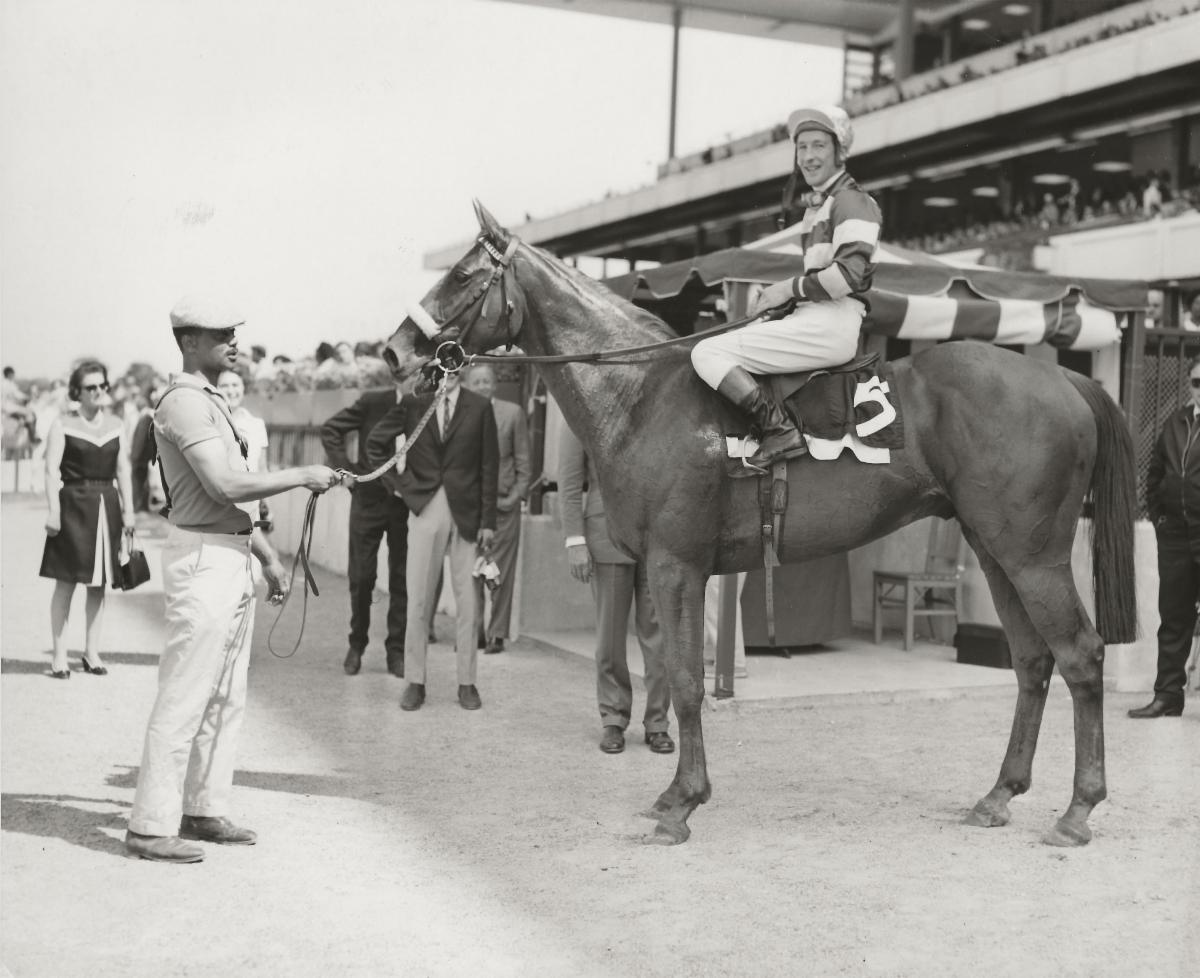
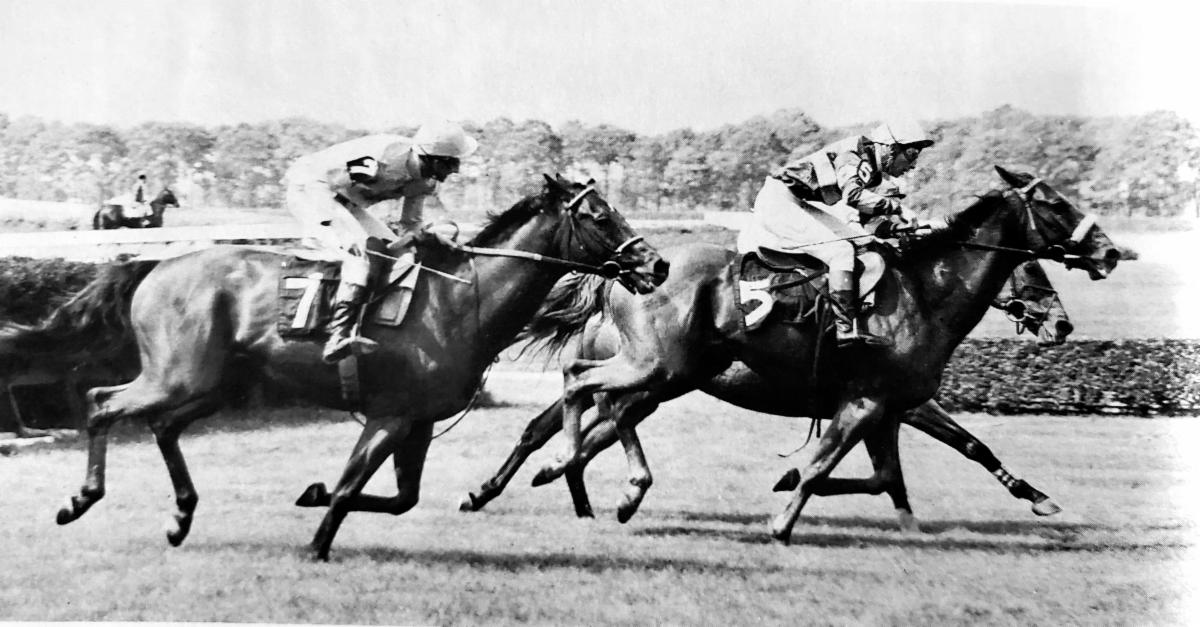
L'Escargot and Tommy Carberry (#5) winning the 1969 Meadow Brook Steeplechase Handicap at Belmont Park. (NYRA - Sirico and Coglianese) | |
|
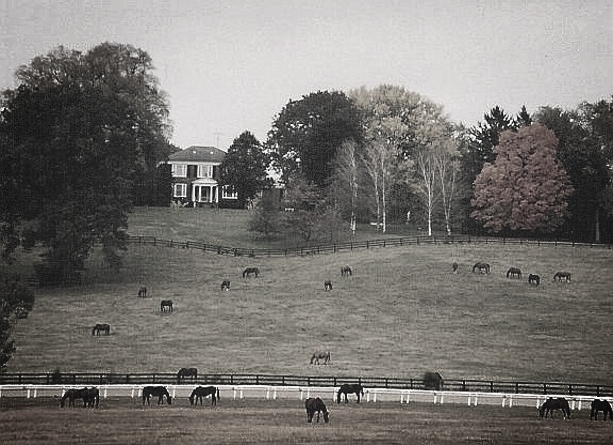
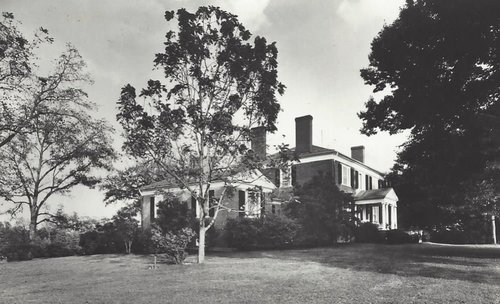
Situated on the fertile Virginia farmland on a wide peninsula between the Rappahannock River and the Potomac River, Powhatan is located south of Washington, D.C., 16 miles east of Fredericksburg, Virginia.
The red brick manor house is a classic example of an early Georgian plantation mansion. The construction date is uncertain, although it may have been designed by noted architect Richard Taliaferro, who designed several important Virginia plantations including Carter's Grove and Wilton, his own townhouse in Williamsburg and supervised repairs to the Governor's Palace in 1751.
| |
Meet ‘Snail’ writer David Owen | |
|
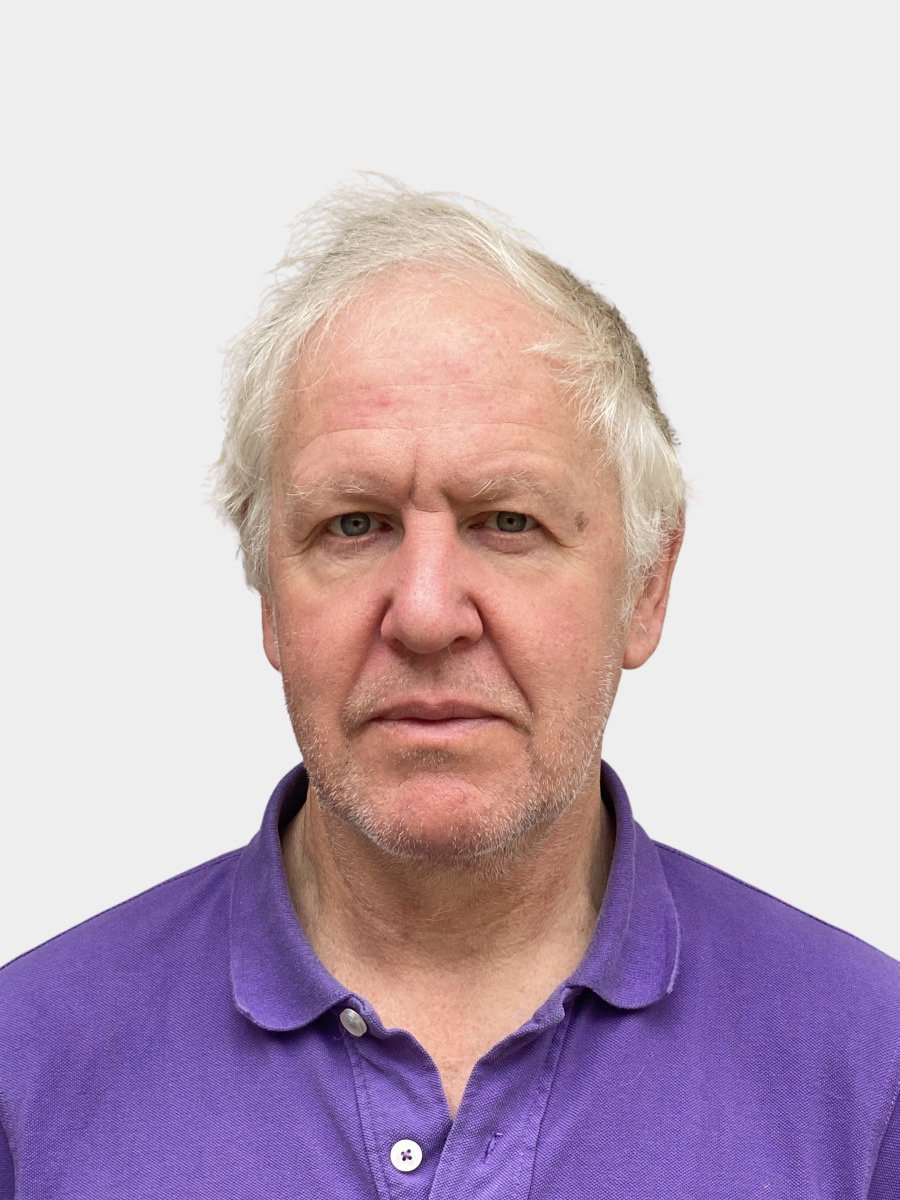
David Owen, 62, received a degree in modern languages from Oxford.
During his 20-year stint as a sports editor at the Financial Times, Owen worked from their Chicago, Toronto and Paris bureaus.
Owen says his interest in racing comes from a long family tradition. “I had an uncle who was very much into horseracing in the English West Country,” he says, “so to some extent it is 'in the genes.' But funnily enough, I've never really followed racing like I do soccer and cricket.
“What intrigues me about racing is the way it brings people together whose paths probably would not otherwise cross. In a British context, this is partly to do with the class system – often upper class owners, and sometimes trainers, (shoulder-to-shoulder with) working class staff and (most of the) jockeys.
“Every horse has this little world of 'connections', not to mention punters, revolving around it. What is more, these little worlds are constantly evolving – horses can switch yards, jockeys can switch horses, etc. So the social aspect underlying the basic competition really interests me.”
Owen’s first horseracing book, “Foinavon: The Story of the Grand National’s Biggest Upset,” won the Tony Ryan Book Award.
“Foinavon was the hugely unlikely winner of the 1967 Grand National,” Owen explains. “You can imagine – 44 starters, 44 little worlds to poke around in.
“It was perfect for me.
“I think I managed to speak to 28 of the jockeys who took part in the race, many of whom have since passed away, so you could say I wrote the book in the nick of time.”
Owen has written five books – two on cricket, one on rowing in the Olympic Games, “Foivanon” and “No Snail.”
| | | | |