|
Written by Kieran Delamont, Associate Editor, London Inc. | |
EMPLOYMENT
Saying goodbye to the no-job summer
Canadian youth were hammered by the toughest summer job market in decades ― a hard reality that may have lasting implications
| | |
AS WE WRAP up summer 2025 (sorry!), many young people will be heading back to school with fewer stories from their summer jobs to share. Or, none at all. With youth unemployment higher than it has been in a generation, it was something of a no-job summer for many in Canada.
Officially, the youth employment rate was 53.6 per cent in July this year, which StatsCan notes is the lowest it’s been since 1998, excluding the pandemic. Some economists expect a turnaround in the works, like a group of BMO economists who wrote to “look for a gradual rebalancing of conditions in the youth job market ― it’s just going to take a while.” But whichever way you slice it, youth unemployment has been seriously elevated this year.
Statistics can tell you one version of the story, but on the other side of the coin are all the young people who have just lost out on valuable work and life experiences. “I want to do something,” one 19-year-old Windsorite told CBC. “We’re the new generation and it feels like we’re behind — I want a car, I want to drive. I’m an adult now, so I want to feel like I’m an adult."
Others spent their summer trying in vain to land something. “You show up and go with a résumé and then ask to talk to the manager,” said one 16-year-old. “A lot of the time they don’t call back.”
There are the usual suspects in the story of youth unemployment as well ― curmudgeonly business owners who think the younger generation are lazy, entitled and so on ― but when experts look at this, many are concerned more about the long-term effects, rather than the short-term.
“What is the impact going to be on youth later on down their work pathway?” asked Jane Morrise-Reade, CEO of the Association of Service Providers for Employability and Career Training B.C. “We hear stories of youth applying for 100, 200 [jobs] and not hearing back at all from employers and not even receiving any notification, let alone an interview. That is soul crushing for an entire generation.”
With time pretty much up on summer jobs, skills development professionals like Morrise-Reade have started to think about how this situation can be improved in the coming years. And businesses can stand to gain a lot, she said.
“I think in my experience as an employer, hiring youth is really dynamic and can create an incredibly wonderful work environment for everybody that works at your organization.”
| |
MANAGEMENT
Off the menu
Why no one wants to eat your compliment sandwich
| | |
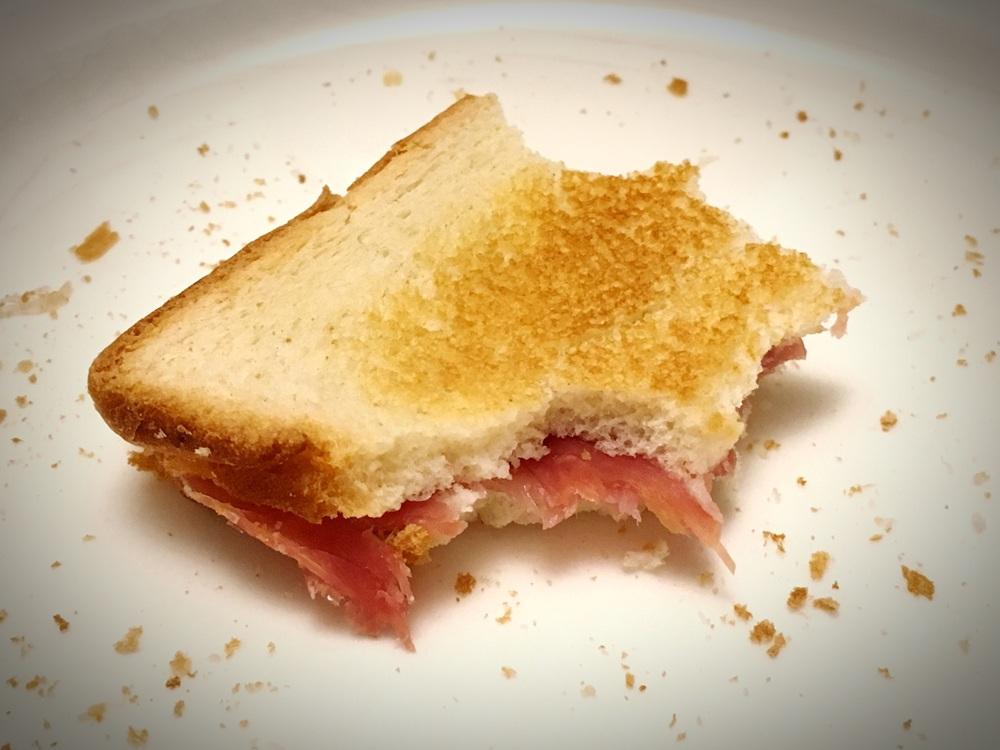
IF YOU HAVE had a performance review at just about any point in the last 40 years, someone has probably hit you with the compliment sandwich: one good thing, then the biting criticism your boss desperately wants to tell you, then another good thing to soften the blow.
As a managerial device, the compliment sandwich dates back to the 1940s, but appears to have been widely popularized by Mary Kay Ash (founder of Mary Kay Cosmetics) in her 1984 book Mary Kay on People Management.
But according to Ivey Business School prof Karen MacMillan, the time is nigh to throw that sandwich away. “It was once the gold standard,” she said. “But the research is clear [that] layering compliments doesn’t make tough feedback any easier to swallow.”
MacMillan isn’t the first to toss out the compliment sandwich; other workplace management experts have criticized it over the years. “The risk I think that we take with the feedback sandwich type of approach is that we have we might have a different perception in our head of which of those pieces actually landed than the other person on the receiving end of it,” said Radical Candor CEO Jason Rosoff.
MacMillan falls into the camp of management thinkers who believes the workplace needs more blunt honesty. Her research, conducted with fellow Ivey professor Fernando Olivera, lecturer Cameron McAlpine and Gouri Mohan from the IESEG School of Management, looks at what blunt, upfront candour can do in the workplace. “When practiced with kindness, candour has wide-reaching benefits,” MacMillan said.
One of its main advantages seems to be that candour has a better chance of actually landing. “The feedback sandwich has a high chance of going sideways if the meat in the middle is crucial for the other person to ingest,” wrote Radical Condor’s Kim Scott. “Folks who receive the feedback sandwich often discard the meat (the criticism) and instead focus on the two delicious pieces of artisan bread (the praise).”
What’s more, points out MacMillan, it risks blunting the impact of a sincere compliment; rather than make them feel good, it puts people on edge for whatever they’re about to hear next.
“They’re waiting for the other shoe to drop,” MacMillan said. “Regularly starting with a compliment to ease into a critique quickly teaches people to be on high alert. They end up ignoring the positive and resenting the negative.”
| |
| |
Terry Talk: The AI trust gap
| AI is transforming how we lead and grow our organizations ― but employees are often left in the dark. With 22 per cent unsure of their company’s AI plan, a critical trust gap is emerging. In this Terry Talk, Ahria Consulting president & CEO Terry Gillis explores how HR leaders and organizations can bridge that gap with transparency, empathy and values-driven communication. AI is here to stay ― how we implement it is what truly matters. | | | |
CAREERS
Have you hugged your job today?
Forget job hopping. More people are job hugging in the cooling labour market
| | |
SO, YOU’VE FISHED around a bit in the job market, decided it seems like tough slogging and are opting to keep the job you have right now. What do you do?
Wrap it in a bear hug and hold onto it for dear life, it seems.
The consultants at Korn Ferry are minting the term ‘job hugging’ to describe what they’re seeing in the labour market right now, where job hopping has given way to higher retention rates and less turnover.
“The phrase job hugging just kind of coined itself,” said Korn Ferry consultant Stacy DeCesaro, speaking to Business Insider. The effect is particularly strong among top performing talent, DeCesaro reckoned, with data showing reduced turnover at the executive and senior-level employee level. “Right now, top performers are only leaving if they’re miserable in their roles,” she said in a company blog post.
Really, job hugging is just another term for the dynamics present in a slack labour market, although lower turnover rates in this case are also paired with lower desire to change jobs; after a few years of job hopping, and with macroeconomic anxiety in the air, employees are now more keen to stay put, as opposed to being unable to move.
That presents a different labour market dynamic from the past few years, and Korn Ferry consultants urge businesses to make sense of the current situation. Some will be able to trim recruiting and training costs, and they note that this set of dynamics tends to limit the need for steep wage increases.
Indeed, for some businesses the stability will be a boon. “It’s great to have a long-tenured workforce and build capacities within it,” said Dennis Deans, a human resources partner with Korn Ferry. But don’t get complacent, experts warn — once the pendulum inevitably swings back in the other direction, businesses can get caught flat footed.
“Firms run the risk of becoming comfortable perches from which workers can jump when the time’s right,” warned Korn Ferry’s Matt Bohn. “That’s the danger of this job market.”
| |
CULTURE
Prepping for the AI apocalypse
From building survival structures to abandoning retirement planning, the AI doomers are having their moment
| | |
|
FROM THE ACADEMIC who warns of a robot uprising to the workers worried for their future – is it time we started paying attention to the tech sceptics?
The rise of AI-powered tools has always come with a side dish of anxiety, from claims that it would wipe out tens of millions of jobs to fears that it could wipe out tens of millions of humans. Some are able to shrug these off. Others, not so much…
“For a certain class of Silicon Valley denizens, AI is not just the next buzzy technological wave,” reads a Business Insider feature on a new crop of doomsday preppers that have risen up in the backdrop of AI. “They’re spending their retirement savings, having ‘weird orgies’ and building survival bunkers.”
Tech writers have noted that the AI doomers are growing “doomier” lately, with critics more concerned that AI companies lack sufficient guardrails, and some AI experts are concerned that humans deploying AI lack sufficient collective common sense. Some creative thinkers have outlined pretty dire, sci-fi like possible futures. The more developed AI gets, the more anxiety seems to follow it around.
Business Insider writer Rob Price spoke to a bunch of others who are prepping in their own way for a future they see where AI has full control of the economy and technology. Some are doing the classic prepper things ― stockpiling cans of shelf-stable food, survival supplies and developing greenhouse capabilities. Others, of course, are going even further ― like entrepreneur James Norris, who is building a “survival sanctuary” somewhere in southeast Asia, or Wichita State University business prof Ross Gruetzemacher, who is building a facility in Wyoming.
The future these folks paint is a pretty dire one, but AI doomerism shows up in smaller ways, too; several people Price interviewed simply think AI means it isn’t necessary to save for retirement anymore. Others have just let this fear of the future turn into a thriving life in the present: throwing the aforementioned orgies, trying to “pivot to being cool/hot” or just going to the gym more often.
“I think it makes sense to just adopt a little bit of a bucket-list mentality around this,” said venture capitalist Vishal Maini. “Do what’s important to you in the time that we have.”
|
| | | | |