|
Written by Kieran Delamont, Associate Editor, London Inc. | |
CULTURE
The four-day work week isn’t dead. It’s just a secret
Some workers are stealthily taking three-day weekends — every weekend
| | |
A LITTLE EDITORIAL accountability is in order. Like many others, we here at London Inc. Worklife probably overinvested in the possibility that the four-day work week would become a corporate norm. In our defense, it really did look like it had legs: the global four-day workweek pilot program saw a lot of uptake and among companies trying it, the feedback seemed to be good. Things were, for a while at least, trending in favour of the four-day week.
And then it got crowded out of the conversation, more or less. Companies got caught up in divisive RTO mandates, there was AI everywhere, inflation, you name it — as quickly as it rose in prominence, the four-day week faded to the backburner.
But maybe good ideas don’t die, they just go into hiding for a while. That might be the case for the four-day work week: while it isn’t officially happening, there sure are a lot of workers who are doing it unofficially.
The Financial Times in the UK reported recently there is a good amount of evidence that the four-day week is operating in practice, even if it’s not captured by official data.
“In the leisure and retail sectors there are early signs of a more casual attitude to working on Fridays,” wrote reporter Josh Gabert-Doyon. Gym owners (climbing and otherwise) report that daytime hours on Friday are “unexpectedly busy,” while consumer district foot traffic (a proxy for people doing things that aren’t work) has risen 2.5 per cent each year since 2023. Employers sense it’s happening, too, with one COO telling FT that Fridays are seeing a swell in absenteeism.
It’s over here on this side of the ocean, too. Business Insider recently looked into it and found that Fridays are looking less and less like work days. “On Fridays — without telling her coworkers — Annie typically doesn’t work,” wrote Amanda Hoover, chronicling the story of one PR professional who said, “Fridays are the very least that I can do for myself to get through [the rest of the week.]”
“What was once the final push to the weekend is becoming a sneaky personal day for some remote workers,” Hoover said. “The trend has been called ‘quiet Fridays’ or ‘gentle Fridays’ — a clandestine progression of casual Fridays or summer Fridays from the pre-pandemic era.”
This, it appears, will probably be the real legacy of the four-day work week experiment. “Where there’s a will to work less,” says Hoover, “there’s a way.”
| |
C-SUITE
No sex please, we’re CEOs
From work obsession to voluntary celibacy, young CEOs and entrepreneurs are experiencing a decline in sexual activity
| | |
IN A LITTLE under two weeks, it’ll be Valentine’s Day. Love will be in the air, chocolates and roses will be gifted and it will be date night for many couples (get those resos made now!).
But — adulterous Coldplay concerts aside — that amorousness is harder to find in today’s C-suite, where it appears there is less and less time for romance. Or, as Business Insider reporter Henry Chandonnet crudely put it: “‘It’s time to build’ means there’s no time to bone.”
Think back a few months to when we noted the rise of the 996 schedule (9 a.m. to 9 p.m., six days a week) among the tech and Silicon Valley crowds. And prior to that, we wrote about the entrepreneur types touting ‘monk mode’ — essentially shutting out all external distractions in favour of focusing on one core task.
This is the world in which many of today’s young CEOs operate — and more of them are living celibate, aromantic lives as a result.
“The opportunity cost is really high,” one 24-year-old founder told Business Insider. “Every night you spend out is time you could have spent building your startup. Most founders wait until the startup is more stable, like series B.” She told the publication that when you’re grinding seven days a week, opening Tinder, Bumble or Hinge is “a big, big distraction.”
For some CEOs, celibacy is a deliberate choice. “I went celibate, for a year,” wrote author and career coach Michelle de Havilland. “When I removed myself from the dopamine rollercoaster of modern dating, something fascinating happened: my brain stopped being hijacked by the next swipe, text or flirtation. The constant low-level anxiety of ‘Does he like me? Should I text back? What did that emoji mean?’ vanished.”
And wouldn’t you know it, there is some evidence suggesting this solo behaviour can actually be good for business. A Wharton School of Business study found that single, unmarried CEOs tended to run companies that invested more in R&D, capital projects and acquisitions, whereas companies run by married CEOs tended to be more risk-averse and cautious.
“Evolutionary biology suggests that single men in particular are more aggressive and are willing to take more risk,” said researcher Nikolai Roussanov. “Riskier firms prefer single CEOs, who are more willing to engage in risky projects.”
| |
| |
Terry Talk: Be more dog (yes, this is leadership advice)
| January is behind us — and no, we’re not suggesting you bark at strangers, chase the mail carrier or turn your keyboard into a chew toy. But we are suggesting leaders could benefit from being a little more dog. In this Terry Talk, Ahria Consulting president & CEO Terry Gillis takes a look at what dogs get right (and humans tend to overthink) and how adding some simple “dog habits” could greatly benefit you and your team. | | | |
REMUNERATION
Why your raise might look a little nutty
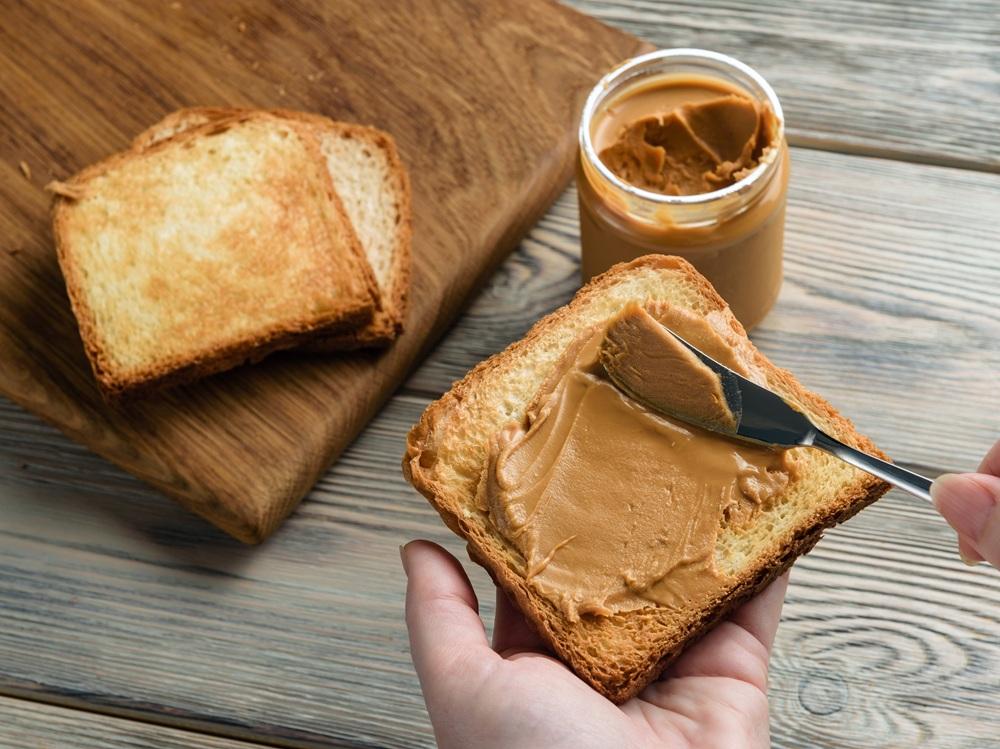
Like it or not, employers are spreading raises like peanut butter in 2026
| | |
HERE’S SOME GOOD news for anyone hoping for a raise this year (and especially for anyone worried they might not have earned it): 44 per cent of firms surveyed by Payscale say they are planning to give standard, across-the-board pay raises this year, as opposed to targeted, merit-based increases.
They’re calling it ‘peanut butter raises’ — as in, spread evenly, like peanut butter — and they’re shaping up to be a new dynamic in salary increases for 2026.
“Tying pay increases to performance ratings has come under criticism in recent years for being too subjective and prone to bias,” wrote Payscale. “The rise in organizations electing to standardize pay increases across employees is driven by a need to alleviate administrative burden, especially where resources are strained and pay budgets are under pressure.”
One such major company is Starbucks, which opted to give its corporate employees a standardized two per cent raise last year, pitching it as a prudent way to retain workers while controlling overall costs.
The trend is likely going to differ between large and small companies, Payscale notes. Larger companies are more likely to offer this kind of across-the-board pay hike because they’re easier; smaller companies may have to be more flexible and targeted, because challenges vis-a-vis retention and recruitment can be more substantial.
So, it’s probably good news — for everyone except the top performers, of course.
“With no differentiation based on performance, it's easier to give everyone something. But there is a risk that top performers will feel disadvantaged in that environment,” said Payscale’s chief compensation strategist, Ruth Thomas.
That said, if you think you fall into that category, you may have to get creative, should you choose to try to negotiate your compensation for the year. “Base pay is not your only lever, and organizations may look more at bonuses and promotions when base pay budgets are restricted.”
| |
REMOTE WORK
Winner, winner, chicken dinner
While white-collar workers bemoan RTO mandates, at least one industry is thankful to have more people back at their desks: restaurants
| | |
|
AS YOU GRUMBLE and curse under your breath during your morning commute, vowing revenge against whatever upper management boss signed the order to force you into the office five days a week, you might turn your head and see someone else on their way to work, with a big smile on their face, seemingly happy about all the people crowding the streets: it’s your local restaurateur, which is probably the only constituency currently loving the RTO5 trend.
Foot traffic at Canadian restaurants had a bit of a rebound in 2025, according to data from TouchBistro. After several very tough years, the average restaurant saw an increase in foot traffic of around 34 per cent, according to its 2026 Canadian State of Restaurants report, and nearly four in five restaurants saw a noticeable increase in visits.
“What’s driving this increase? The return-to-office movement,” the report concluded. “Monday morning coffee crowds are back, lunchtime is busy again and mid-week dinner traffic is strengthening. Operators are no longer counting on Friday and the weekends to pay the bills.”
Overall, 2025 was a pretty good year for restaurants, too. Profit margins, the report said, rebounded to “a healthy 10.4 per cent,” and 82 per cent of restaurant operators said they were optimistic about the future. "In a challenging year defined by intense labour shortages and rising food costs, Canadian restaurants proved that adaptability is the new competitive advantage," said TouchBistro’s CEO Samir Zabaneh.
This seems to match what those in the Canadian food sector are feeling these days. In Ottawa, the owner of a downtown Indian restaurant told The Globe and Mail the more RTO, the better. He was happy to hear talk from Prime Minister Mark Carney of the federal government requiring more workers back in the office, even if that’s been a very contentious issue in the city.
“For a lot of people, the vibe was very much, ‘Great, this sounds good,’” he said, acknowledging that not everyone loves this line of thinking. “I think the general sense of the community for the [downtown] core would be, ‘We understand their positions, but we think it would make more sense to have people back to work a little bit more.’”
|
| | | | |