|
Margo Schoenberg and Ted Freedman
July '26, Numana, Italy
| | |
Dear friends,
It’s a shame only one of my parents can babysit.
Worse, my father makes my mother’s job harder when she is watching our son, Hugh.
Last week, Colleen and I deposited the young man with his paternal grandparents as we attended to some errands.
Around 1:00pm, we called to check in, figuring Hugh would be snoozing soundly, enjoying his midday rest.
My father answered: “Don’t disturb us”
“Isn’t Hugh napping?”, I queried
“I’m telling him about my basketball triumphs. Leave us alone. We don’t need you telling us what to do.”
An abrupt silence indicated I was then alone on the line.
Best we can tell, another 20 or so minutes of one-way conversation ensued, after which Hugh conked out well after he ought to have.
65 minutes later, his schedule distorted, the shrimp emerged, cranky and frustrated.
When we brought Hugh downstairs, rubbing his red eyes, my father noted: “Short nap, huh?”.
Yeah. Short nap.
But at least he knows about your left-handed layups.
Fortunately, Hugh will be getting another male role model in his life because this summer Margo, my younger sister, got engaged to her superb (and British!) boyfriend, now fiancé, Ted, last month.
It’s a blessing to see our family continue to grow, and especially to be seeing Margo off to so capable a fellow. I knew Ted was the one for us when I discovered he’s an Arsenal fan, and he’s continued to impress.
I know Hugh will be in good hands watching football and films with his aunt and uncle.
What follows in this quarterly: shamus reading, classic American cinema, and thoughts on the Jewish High Holidays.
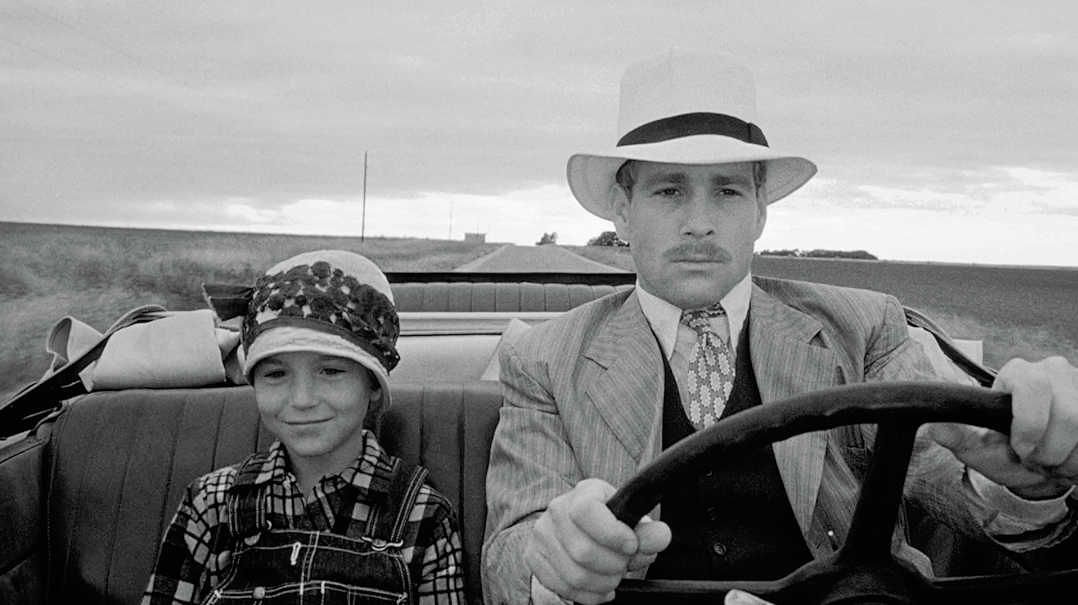
| | Fall for a Classic: Paper Moon | | |
Tatum and Ryan O'Neal, Paper Moon
Photo via Google Images
| | |
As we celebrated our nation’s semiquincentennial this summer, I considered which movies I’d seen that feel unmistakably American to me that I could recommend.
More than a few came to mind, but one gradually crowded out the rest: Paper Moon, from 1973.
In a rare casting arrangement, the film co-stars real-life father-daughter pair Ryan and Tatum O’Neal; Ryan as bible-swindling conman Moses Pray and Tatum as abandoned, but fiercely independent and intelligent youngster, Addie Loggins, for which she won the Oscar for Supporting Actress at age 10.
The two first encounter each other at the funeral for Addie’s mother, and Moses is tasked with transporting Addie to relatives with whom she is supposed to live. What follows is a most remarkable road movie, set in Depression-era Kansas, beautifully photographed in black-and-white.
In addition to the tremendous performances from both O’Neals, Madeline Kahn sparkles in the role of Trixie Delight, a traveling call girl who wedges herself between our duo. Don’t miss an iconic speech she gives to Addie on a roadside hill.
I’m not sure if you have a list of movies that when flipping through channels demand a chunk of your time, but I do.
Directed by the late Peter Bogdanovich, Paper Moon is one that I will watch until my schedule requires otherwise. Typically, I spot the film on Turner Classic Movies.
While Sopranos fans may recognize Bogdanovich in the role of Dr. Elliot Kupferberg, the New Yorker began his career in show business first by writing film reviews, then interviewing, penning biographies of, and making documentaries about well-known filmmakers. Through these efforts, he developed a friendship, which would blossom into a kind of apprenticeship, with Orson Welles.
After rocketing into stardom with three successive hits – the 1971 Texas high school drama Last Picture Show, the farce What’s Up, Doc, released in 1972, and Paper Moon in 1973, Bogdanovich’s personal and professional life hit rocky terrain, which would render the prodigy, regrettably, unable to reach again the creative heights he enjoyed with his early features.
Coincidentally, or not, many film lovers say the same about Bogdanovich’s towering mentor.
When Bogdanovich was developing the story for Paper Moon he, allegedly, called Welles to share progress and receive feedback. Welles offered: “The title is so good, can’t you just release that?”
It’s true; the title is that good. But I’m glad there is a movie to accompany it.
Paper Moon is an all-time great and quintessentially American film.
Were it Bogdanovich’s sole contribution to our catalogue of cinema, his place in film lore would be secure.
Not to be missed as we enjoy the 250th anniversary of our country.
| | Crisp & Gritty: L.A. Requiem | | |
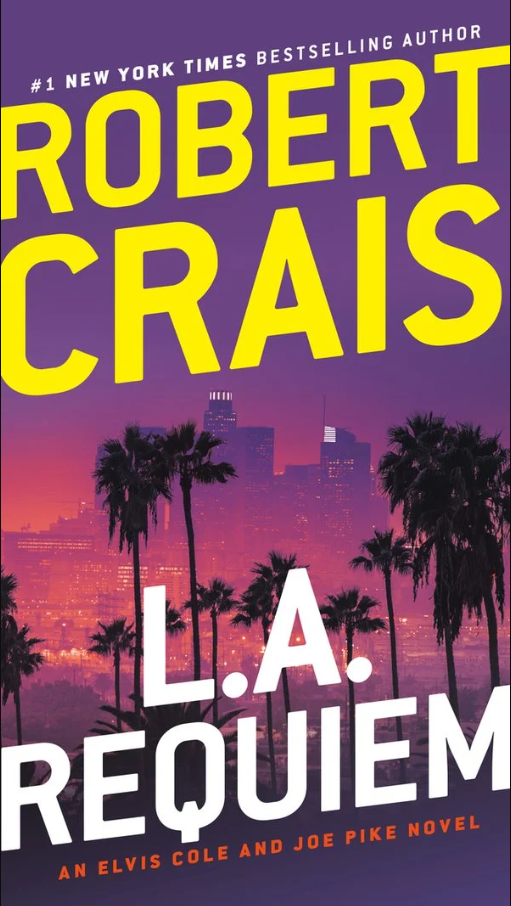
L.A. Requiem by Robert Crais
photo via Google Images
| | |
An excellent read: L.A. Requiem, a 1999 detective novel by Robert Crais, featuring the warm, wise-cracking private investigator Elvis Cole and his silent, tattooed, former Marine and ex-cop partner, Joe Pike.
This book is the eighth installment of the Elvis Cole and Joe Pike series, but it’s the one I started with, and you can too.
In fact, many readers and critics view this novel as the strongest of the first eight – it won the 2000 Dilys Award and was nominated for the Edgar, Anthony, and Shamus Awards that same year – and is widely considered a significant step forward for Crais.
While Pike is typically relegated to side character status, here he becomes a co-protagonist when he and Cole are contracted to work with LAPD to the murder of Karen Garcia, Pike’s ex-girlfriend and the daughter of politically connected and powerful Frank Garcia.
The backstory for Joe Pike is especially well constructed and unfurled; Crais engrossingly reveals the depths of Pike's character to us through the investigation itself and via flashbacks that directly impact Pike’s present-day work and relationships. Pike’s past was entirely unexplored prior to Requiem, so even longtime fans were learning Pike's history for the first time.
A standout plotline for me was the interplay between Cole and Samantha Dolan, a clever, stunning, and volatile detective who initially resents having to babysit Elvis Cole, but grows into a willing investigative partner and a romantic temptation.
Published in 1999, you’ll be treated to such cultural throwbacks as the Sony Discman, landlines, and morality.
I was born in the mid-90s, so I can’t claim a strong, personal grasp of the decade.
But I do recall attempting to sleep over at a friend’s house to celebrate New Year’s Eve 2000, crying inconsolably at 11:00 p.m., and calling for my mom to be pick me up, which she did. We listened to the ball drop on the car ride home.
Maybe I never had the makings of a detective.
I’ll stick to recommending novels about them.
An excellent, rich, and hard-boiled gumshoe offering. Well worth your time.
| | |
Shofar Blowing
Photo via Google Images
| |
The Jewish high holidays conclude this year on Sunday, October 4th, with the celebration of Simchat Torah.
What begins with Rosh Hashanah, commonly referred to as the Jewish New Year, also includes Yom Kippur, our Day of Atonement, and Sukkot, a harvest and outdoor-based festival.
Congregational rabbis labor intensely preparing their High Holiday sermons, knowing it's when they'll speak to the largest number of congregants all year.
I recently read an article by Jon Argaman, a Philadelphia-based writing coach, who describes his summer where he consulted on, read, and edited around 50 rabbinical High Holiday sermons.
The throughline he noticed this year: how to live when chronic crisis is our new normal.
That subject resonates.
Between Rosh Hashanah and Yom Kippur are the Days of Awe – a period of introspection, amend-making, and resolution-setting.
I won’t share my specific resolutions, but I will share my theme of 5787: Flexibility.
A flexibility of mind, body, and spirit – to adapt to new and unexpected circumstances, if not always comfortably, exactly, at least sustainably.
I hope that if you too are finding yourself burnt out or, perhaps worse, increasingly numb, you take the time to determine what sustains you, and lean in to that.
Despite being known as the Jewish New Year, Rosh Hashanah occurs on the first day of the seventh Hebrew month, Tishrei. That’s because it isn’t our New Year that we’re celebrating; it’s the birth of the world.
So, on Simchat Torah, we read the final verse, of the final chapter, of the final book of our Torah -- Deuteronomy. Then we start over. And read from the first chapter of the first book, Genesis.
We end our holiest of days by beginning the Torah afresh, and each of us, a new chapter in our lives.
May you find ways to make that new chapter sweeter, more beautiful, more sustainable than the last.
Shana tova.
| | |
It looks like I'll need at least one new linen suit this year, so don't be shy about pointing me in the direction of a good outfitter.
Ted: Welcome to the family, and good luck with Margo. She cries even more than I do.
If you’d like to send me comments or your own recommendations, please do so through my website.
I encourage you to forward this newsletter to anyone you think may be interested; they can sign up for NCQ via: subscribe.
We'll talk when the leaves fall.
| | | | |