North Plains Water News

July 2026

Precision Irrigation Pays Off in Challenging Conditions

Dr. David Sloane

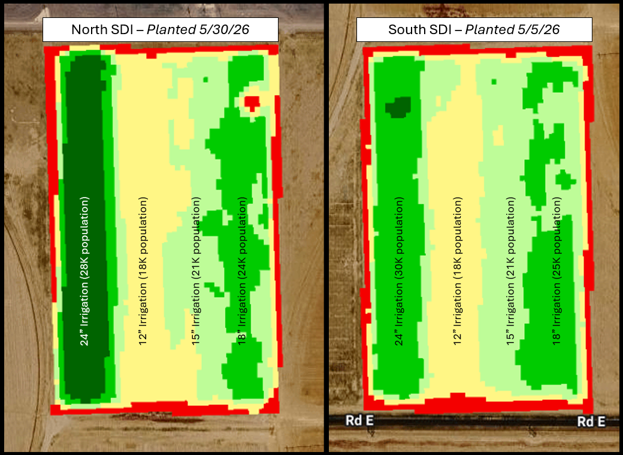
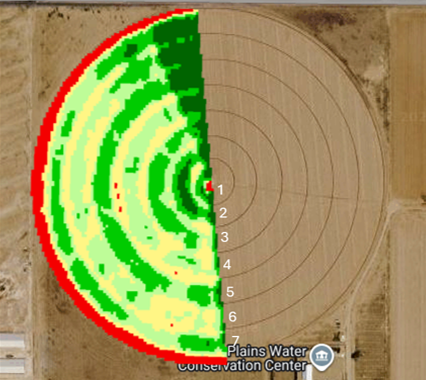
The demonstration plots at the Water Conservation Center (WCC) are looking good, despite the incredibly hot weather we have been experiencing lately. They were well served by the excellent soil moisture they were planted into, thanks to the permanent soil moisture probes that guided pre-irrigation to fully wet the soil profile prior to planting. The early planted corn tasseled in mid-July and is now into grain fill. While the later planted corn is shaping up to tassel in the first week of August. The sub-surface irrigation (SDI) fields are faring better than the pivot irrigated fields and this is probably related to the frequency of irrigation rather than the amount of water used. The hot, dry conditions should be a great test for the drought tolerant hybrids planted on the SDI fields and the differences due to plant population and irrigation regime are now very prominent. Figure 1 shows a recent satellite NDVI image of the SDI fields and the plant vigor is closely matched to the amount of irrigation each zone gets every 2nd day. The low-water zones are existing on approximately 2.7 gpm/ac of water!

Figure 1: NDVI images for the north and south SDI fields. The images were taken on 7/23/2026.

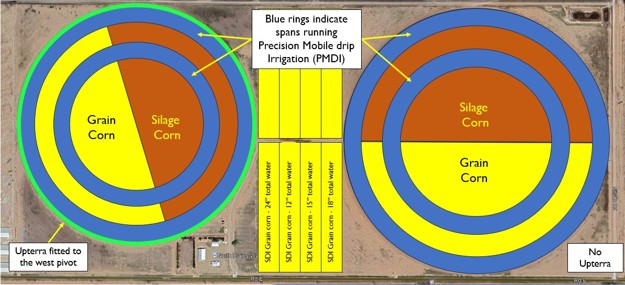
The two pivot fields were split-planted to an early corn silage crop and a later planted corn crop that will be harvested for grain. By split-planting, we have been able to favor irrigating the early planted corn to get it through pollination and have now switched to favoring the late planted corn to give it a boost as it approaches tassel.

Figure 2: Shows the layout of the demonstrations at the Water Conservation Center.

Apart from sharing water between crops on the pivots, this season we are also demonstrating how precision mobile drip irrigation (PMDI) compares to regular nozzles run in bubble mode. The mobile drip uses the same hose used for sub-surface drip but, rather than being buried, it is attached to each irrigation drop and dragged around the surface of the field behind the pivot. We simply include as many emitters on the drip hose as are necessary to match the size of the nozzle it replaces, meaning the hoses are longer on the outside of the pivot and get progressively shorter towards the center. These hoses replaced the nozzles on spans 5 and 7 of each pivot (Figure 2) and ever since they were installed on June 18th, they have irrigated both early and late planted corn. So far, the results have been quite remarkable but were more obvious in the young corn due to the more open canopy. Since the late planted corn has grown up and offered more protection, the differences in infiltration depth between the PMDI and LEPA (i.e. bubble mode) have been less obvious.

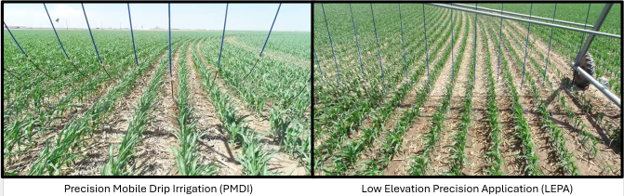
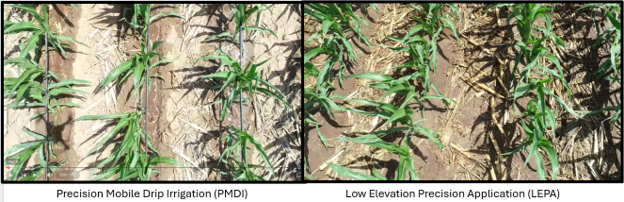
Figure 3: PMDI versus LEPA. The PMDI only wets half the soil surface whereas the LEPA wet the entire soil surface.

Figure 3 shows the drip hoses fitted to the irrigation drops in the PMDI compared to the regular nozzles running LEPA (bubble mode) and the resulting wetting patterns that were observed. The PMDI only wet half the soil surface compared to the LEPA and the water infiltrated approximately twice as deep. The dry soil between the wet strips produces no evaporation and the deeper wetting pattern also gets it down and away from surface evaporation from the wet strip. Another benefit of the drip hose is that it gives a much longer soak time due to the time it takes for the full length of hose to pass each plant. This can reduce run-off in heavy soils and get more of the water to the root zone where it is needed. The narrow and deep wetting pattern should be more efficient than using spray nozzles and it was evident in the NDVI map (Figure 4) showing greater plant vigor under the PMDI spans. This difference in crop vigor was not detectable in the early planted corn where the rows were already closed by the time the PMDI was fitted. It will be interesting to see how this translates into yield and if it is more evident were the crop had a longer period of vegetative growth under PMDI. It will also be interesting to see the differences next year during pre-irrigation, where there is no crop canopy and the conditions are generally windier. We have soil moisture probes installed under the PMDI and LEPA on both halves of both pivots, so we will have plenty of data to make some comparisons and really examine the differences between the two systems. We will also be able to make some value calculations and explore the return on investment of PMDI.

Figure 4: NDVI image taken on July 8th showing greater plant vigor in spans 5 and 7, where the PMDI was fitted.

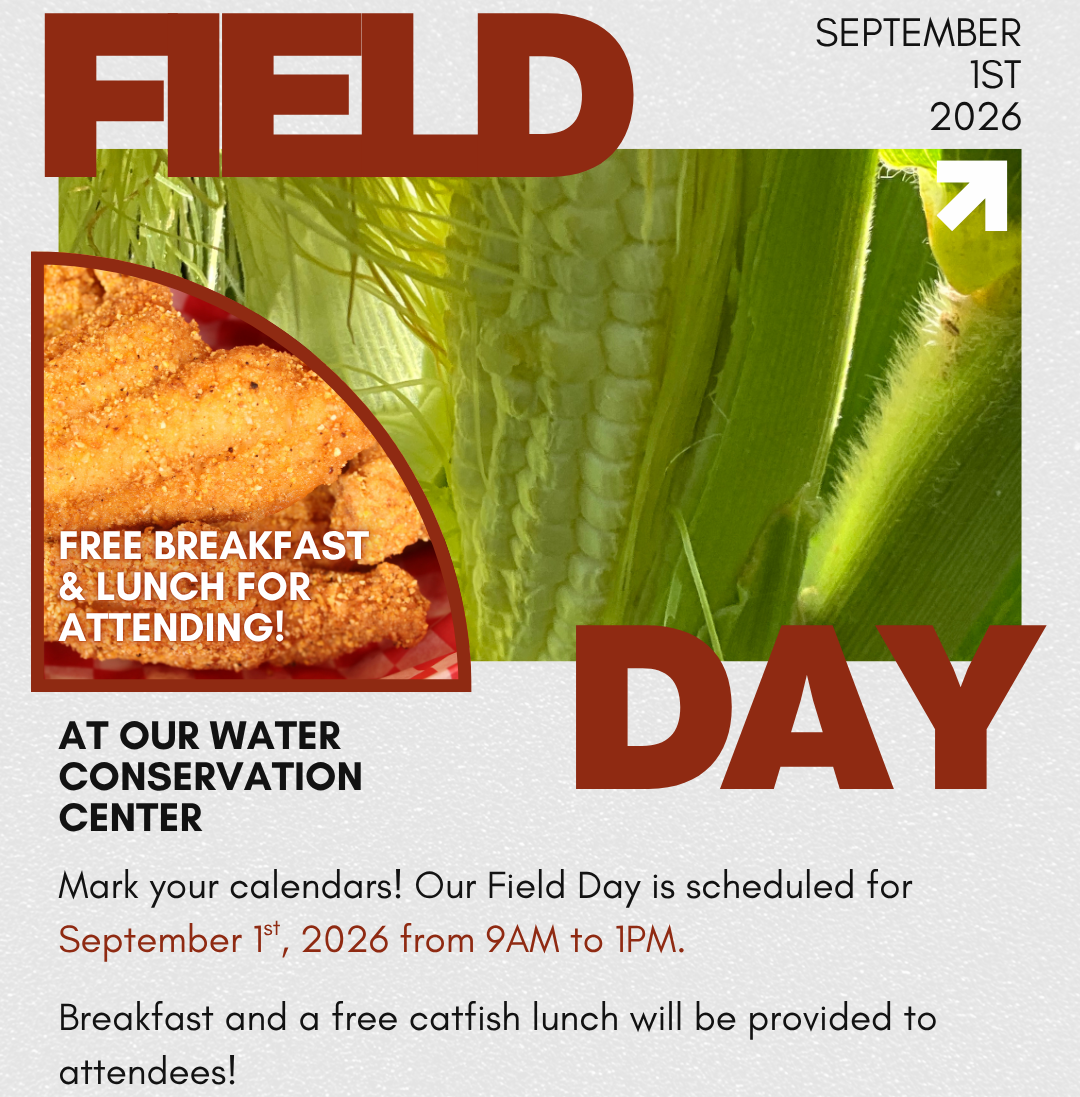
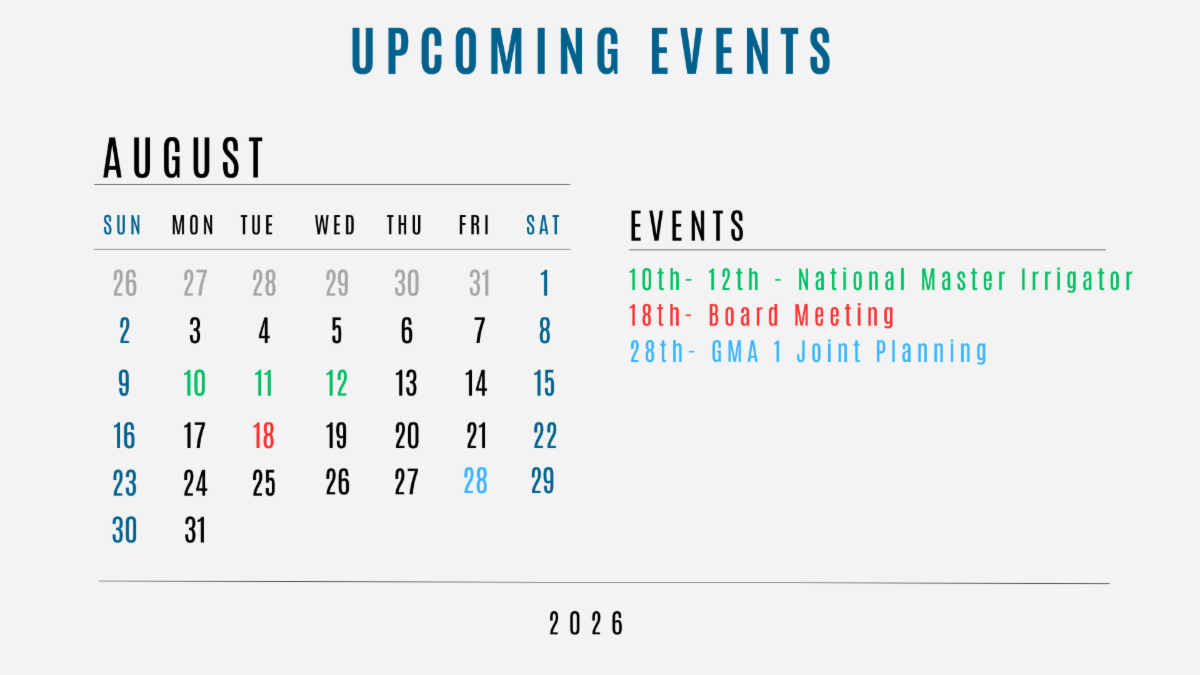
All the work done at the WCC is to promote technology and farming practices that enhance water use efficiency in a way that can be replicated on producer farms. We encourage you to come and see for yourself what might work on your farm or to reach out and ask questions. Please come along to the field day on September 1st and see first-hand at how the various drought tolerant hybrids are handling the heat in such a dry season. We are really putting them to the test and they will be on show, along with the comparison between PMDI and LEPA. 

This is Texas Water Campaign

The Texas Water Development Board (TWDB) has launched the This is Texas Water campaign, a statewide initiative designed to help Texans better understand their water resources. The campaign encourages residents to explore where their water comes from, how water demands are changing across the state, and the long-term planning efforts underway to help ensure a reliable water supply for future generations.


Visit the This is Texas Water website to learn more about your water resources!

North Plains GCD Receives State Grant to Advance Groundwater Research

The Texas Water Development Board (TWDB) recently awarded more than $7 million in Groundwater Science, Research, and Data Collection Grants for Fiscal Years 2026 and 2027 to groundwater conservation districts across Texas. These grants support scientific studies and data collection that help districts make informed groundwater management decisions and plan for the future.


As part of this statewide investment, the North Plains Groundwater Conservation District (NPGCD) was awarded $158,051 to further improve the scientific understanding of the Ogallala and Dockum aquifers using geophysical data.


This project builds on the District's ongoing efforts to better understand the underground geology within NPGCD's boundaries. By analyzing geophysical well logs, researchers will more accurately define the boundaries of the Ogallala, Upper Dockum, and Lower Dockum aquifers.

Improving this information will allow the District to develop more accurate groundwater production estimates for each aquifer and better understand the characteristics of the Dockum Aquifer, including the thickness and distribution of water-bearing sand formations.


While much of this work takes place below the surface and behind the scenes, it plays an important role in protecting the region's groundwater resources. Better scientific information allows the District to make sound management decisions based on the best available data while supporting long-term water planning for agriculture, municipalities, businesses, and future generations.


The project will also produce high-quality datasets that can be used during future updates to the state's Groundwater Availability Models (GAMs), which are important tools used to evaluate groundwater resources across Texas.


At North Plains GCD, responsible groundwater management begins with understanding the resource. This grant represents another step toward ensuring that local water management decisions are based on the most accurate and up-to-date science available.


Lake Palo Duro: Monitoring the Connection Between Surface Water and Groundwater

In a collaborative effort between Moore and Hansford counties, the City of Stinnett, and the Palo Duro River Authority (now known as the Palo Duro Water District), construction of Lake Palo Duro was completed in 1991. The reservoir was originally developed to provide a reliable municipal water supply while also serving as a recreational destination for the region.


Today, Lake Palo Duro faces ongoing challenges due to persistently low water levels. Extended regional drought conditions, combined with improved agricultural irrigation practices that have reduced surface runoff entering the lake, have made it difficult for the reservoir to maintain significant water volume.


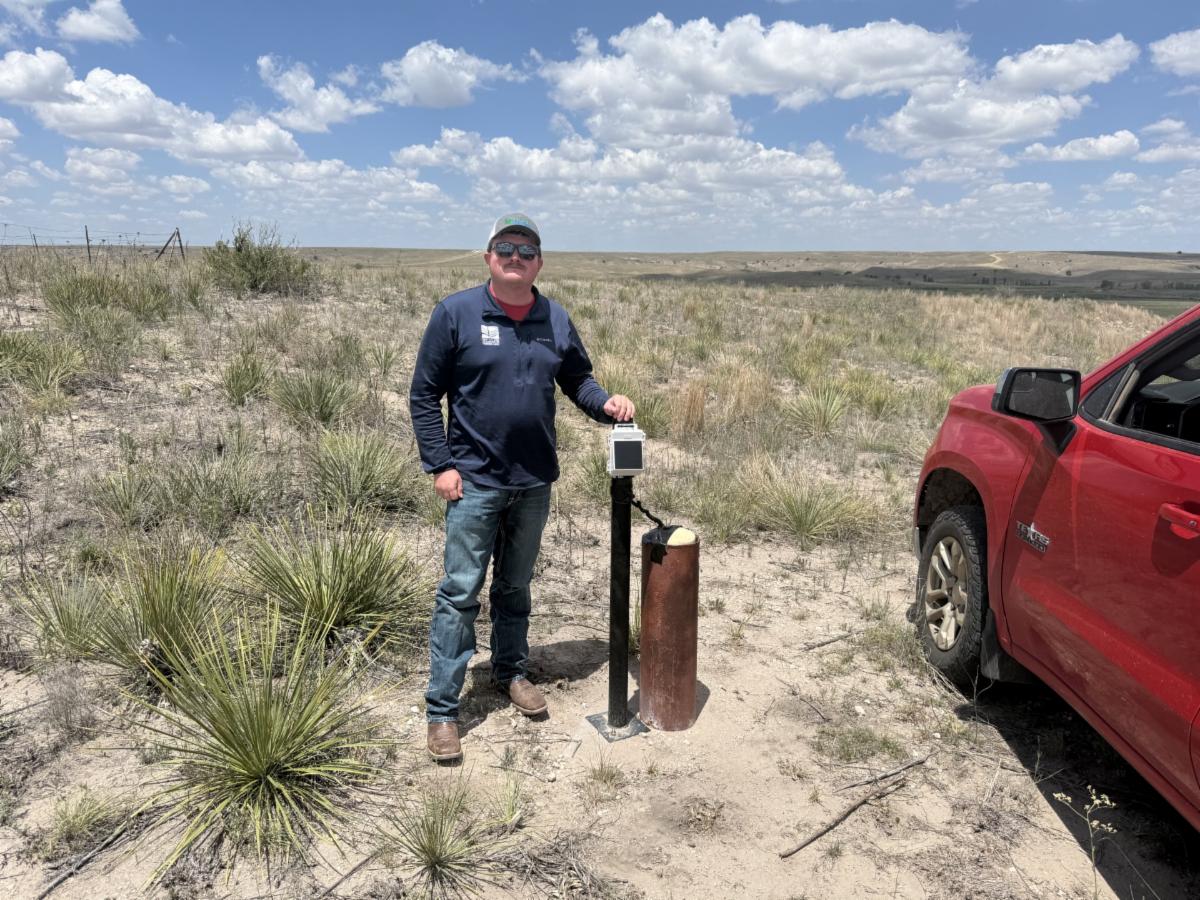
To better understand the relationship between the lake and the underlying Ogallala Aquifer, the North Plains Groundwater Conservation District has partnered with the Palo Duro Water District on a new monitoring project. Four telemetry units have been installed around the lake to collect groundwater data and measure how recharge from the lake may influence the aquifer over time.


While current dry conditions limit the amount of recharge occurring, the monitoring equipment is already in place and will provide valuable data when the region receives much-needed rainfall. The information gathered will help both organizations better understand the connection between surface water and groundwater and support informed water management decisions for the future.

Bringing Water Education to Our Schools

Do you know where your water comes from? Many students—and even adults—don't realize that nearly every drop of water used in our communities comes from beneath our feet. That's why the North Plains Groundwater Conservation District wants to bring water education directly into local classrooms.


Our goal is simple: help students understand where their water comes from, why it is important, and how they can help protect it for future generations.

Through fun, hands-on activities and interactive presentations, students learn about groundwater, the Ogallala Aquifer, the water cycle, conservation, and the important role water plays in our everyday lives. Whether it's brushing their teeth, growing food, raising livestock, or supporting local businesses, water connects us all.


By visiting schools, we hope to inspire curiosity and encourage students to become good stewards of one of our region's most valuable natural resources. Small actions—like turning off the faucet while brushing teeth or reporting water leaks—can make a big difference when everyone does their part.


If your school, classroom, or youth organization would like to schedule a water education presentation, we'd love to visit! Our programs are designed to be educational, engaging, and age-appropriate for students of all grade levels.

Teaching today's students about groundwater helps ensure tomorrow's leaders understand the importance of protecting the water resources that keep our communities, farms, ranches, and businesses thriving.

Important Links...


Facebook  Twitter  Instagram