|
Dear Colleagues,
Happy Holidays, We wish you and yours a safe and wonderful holiday season! But, before we get there, we've got our newest edition of Northeast Connections for you to keep up with the world of telehealth!
November was an important and busy month in terms of telehealth policy and regulation. In addition to the restoration of federal telehealth flexibilities on November 12th (through January 30, 2026; read more here), we also saw updates from CMS clarifying the process for provider location documentation and suppression, and other frequently asked questions (see here), along with a fourth temporary extension of teleprescribing flexibilities proposed by the DEA (see here).
As a reminder, the changes in federal Medicare policy do not impact your state’s Medicaid or private payer policies, many of which have been permanently expanded to allow for more broad utilization of digital health solutions. Please reach out to the NETRC team anytime with questions regarding federal or state telehealth policy, or to explore how your organization can use telehealth to its full potential in the evolving environment.
Between the policy conversations referenced above, potential state level policy expansions, the expansion of Remote Patient Monitoring and Remote Therapeutic Monitoring care models, and various telehealth conferences and events, 2026 is shaping up to be another transformative year for the telehealth landscape, and we look forward to being a part of it with you!
We hope you find time to rest, and catch up with family over the holiday season, and we've got some fireside reading material with telehealth updates galore below. As always, please don't hesitate to reach out with your telehealth questions, success stories, or just to say hello; we hope to hear from you!
On behalf of the entire NETRC Team – Be Well,
Reid Plimpton, MPH - Program Manager
| |
Updated Telehealth Policies Across the Region
Connecticut
Last updated 09/02/2025
Connecticut Medicaid is required to cover telemedicine services for categories of health care that the commissioner determines are appropriate, cost effective and likely to expand access to medically necessary services where there is a clinical need for those services to be provided by telehealth or for Medicaid recipients for whom accessing appropriate health care services poses an undue hardship. An additional law requires reimbursement of audio-only telehealth under certain circumstances and reimbursement for services provided by means of telehealth to the same extent as if the service was provided in person. The CT Medicaid Program manuals do not mention reimbursement for telemedicine though provider bulletins do indicate coverage and reimbursement for some services, including those rendered via audio-visual and audio-only modalities. At the beginning of 2025, DSS also added procedure codes to the physician office and outpatient fee schedule for billing e-consults. CT Medicaid has created a Telehealth Information page with FAQs and a CMAP Telehealth Table, which includes a list of procedure codes approved to be rendered via telehealth.
Maine: Billing Reminder: When Services are Rendered Via Telehealth
Dec 02, 2025
All MaineCare services delivered via Telehealth must comply with Ch I, Section 4 of the MaineCare Benefits Manual (MBM). Unless otherwise specified, all services must be billed in accordance with applicable sections of the MBM. Providers must also submit claims in accordance with Department billing instructions.
When providers bill for services, the same procedure codes and rates apply to the covered service billed for both telehealth and services delivered in-person. When billing for Telehealth Services, health care providers at the Receiving (provider) Site should bill for the covered service using the same procedure code they would if it were delivered in-person and must add the GT modifier to the claim.
For questions, please contact your Provider Relations Specialist.
Massachusettes
Last updated 08/11/2025
MassHealth updated their telehealth policies, effective Oct. 1, 2023 to align with most COVID era policies. They now reimburse for live video, asynchronous, and audio-only delivery modalities with certain exceptions for noncovered services. They state that reimbursement for remote patient monitoring will be announced at a future date.
New York
Last updated 11/21/2025
New York Medicaid offers live video, store-and-forward, and remote patient monitoring reimbursement. Both the Department of Health and Office of Mental Health adopted final rules making many emergency Medicaid telehealth expansions permanent, including allowances for audio-only coverage. In addition, recently effective legislation requires telehealth reimbursement parity until April 1, 2026. See NY Medicaid Telehealth website for an overview of policies and the Medicaid Telehealth Policy Manual for the most current guidance.
Rhode Island
Updated Telmed Billing Guidance for the State of Rhode Island can be found here
Vermont
Last updated 12/08/2025
Vermont Medicaid reimburses for live video under certain circumstances. Store-and-forward is covered when it is clinically appropriate and medically necessary. DVHA will not reimburse for teleophthalmology or teledermatology by store-and-forward means. Home health monitoring is considered a Medicaid benefit and is available under certain conditions. Additionally, audio-only telephone is also required to be reimbursed under certain circumstances. The Medicaid program has updated their regulations to include reimbursement of audio-only services when clinically appropriate and medically necessary, including the recently added AMA codes.
| | | |
Stories From the Region
We want to start a new segment of Northeast Connections in which we share telehealth-related stories or innovations from around NETRC's region (Maine, New Hampshire, Massachusetts, Connecticut, Rhode Island, and New York). We want to hear from you! Have you launched a new program or process that is working well?
What successes have you had? You can click below to reach out, and your story may be featured in a future issue of this newsletter.
Previous success stories can be found here
| | |
|
December 18, 2025
.
Telehealth Policy Update
Recent legislation authorized an extension of many Medicare telehealth flexibilities. This includes:
- Waiving geographic and originating site requirements through January 30, 2026.
- Expanding practitioners eligible to furnish telehealth services through January 30, 2026.
- Allowing Federally Qualified Health Centers and Rural Health Clinics to serve as distant site providers through January 30, 2026.
- Delaying in-person requirements for tele-mental health services through January 30, 2026.
- Allowing audio-only telehealth through January 30, 2026.
Other recent updates include Medicare telehealth policies in the Calendar Year 2026 Physician Fee Schedule.
| | | | |
NEW from ATA: Unlock the Digital Infrastructure Score (DIS) and Mapping Tool
Not all communities have the same access to technology due to variables including broadband access, speed, affordability, and device ownership. These variables directly impact telehealth, remote work, and access to critical online resources.
The Digital Infrastructure Score is an index comprised of the variables that measure a community's capacity and readiness to utilize technology. The user friendly Mapping Tool gives you instant, data-driven insights to:
- Pinpoint communities with limited digital access
- Plan and target telehealth and resource deployment
- Compare digital readiness across ZIP codes, counties, and states
- Align infrastructure gaps with social and economic indicators
Why Access It?
With interactive maps, service-area comparisons, and built-in analytics, the DIS Tool helps health systems, policymakers, service providers, and more see where digital gaps exist, and where to act.
👉 Submit the form to access the DIS and Mapping Tool and start identifying where your communities are most in need.
Thought leadership by the ATA’s CEO Advisory Group on Expanding Access to Healthcare.
Go here to submit the form
| | News & Events from Around the NCTRC | | *NEW TELEHEALTH RESOURCES FROM CCHP* | | |
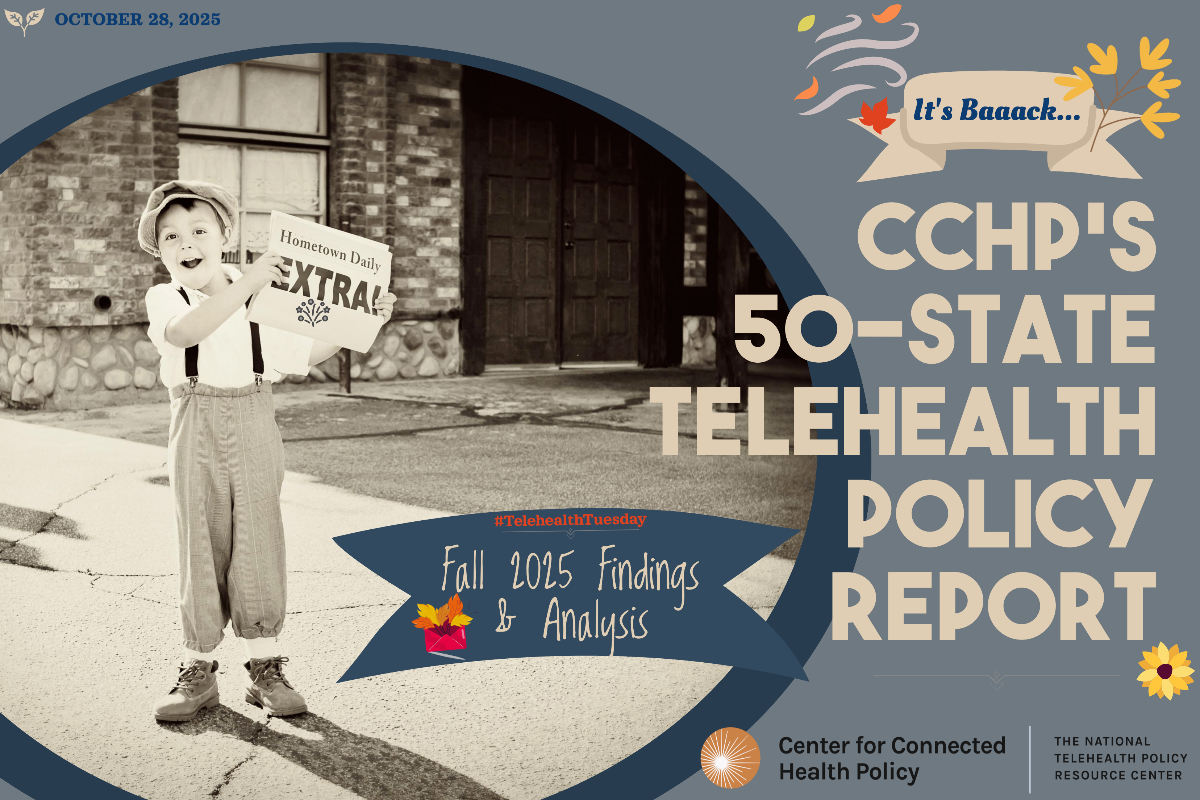
The Center for Connected Health Policy (CCHP) announced the release of its 2025 State Telehealth Policy Summary. Alongside the report, CCHP has also published a companion chart that outlines how states compare across a range of telehealth policies, as well as an infographic capturing the major findings. For those seeking state-specific details, the most up-to-date information can always be accessed and exported as a PDF directly from CCHP’s online Policy Finder tool. This edition reflects CCHP’s review of states conducted between late May and early September 2025. In some cases, states may have enacted significant legislation or implemented new policies after their respective review date; in which case, those changes will be reflected in future Policy Finder updates. Read more Here
Additionally, The Center for Connected Health Policy (CCHP) has developed several new telehealth resources created specifically for the Intellectually/Developmentally Disabled (IDD) community. Made possible through generous funding from the WITH Foundation, this series of resources aims to improve IDD patients and caregivers’ awareness and knowledge of telehealth including how it can be used to receive health services. Resources were also developed to assist providers in providing IDD patients with a positive experience in their telehealth visits.Your copy should address 3 key questions: Who am I writing for (audience)? Why should they care (benefit)? What do I want them to do (call-to-action)?
Create a great offer by adding words like "free," "personalized," "complimentary," or "customized." A sense of urgency often helps readers take action, so consider inserting phrases like "for a limited time only" or "only 7 remaining!" To learn more go Here
| | Other Upcoming Webinars and Events | | |
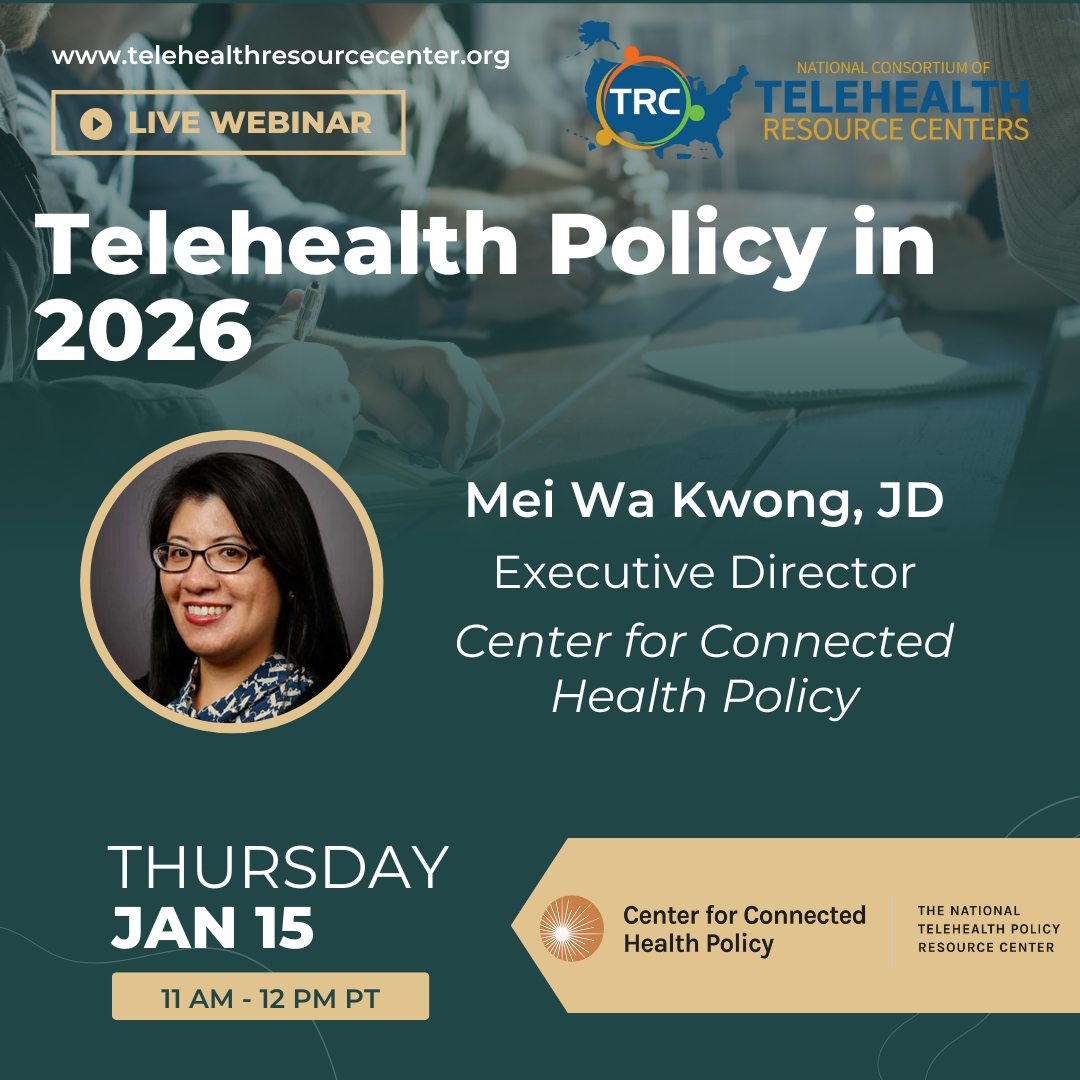
📢 Upcoming NCTRC Webinar: Telehealth Policy in 2026
Join us on January 15, 2026, at 11:00 AM PT for an informative webinar hosted by the Center for Connected Health Policy (CCHP).
🎤 Featured Presenter:
Mei Wa Kwong, JD, Executive Director of the Center for Connected Health Policy
This session will provide an update on current federal and state telehealth policies and discuss what we can expect to see in 2026. Whether you’re a provider, policymaker, or telehealth stakeholder, this webinar offers valuable insights to keep you informed and prepared.
✅ Don’t miss this opportunity to hear from one of the leading voices in telehealth policy.
👉 Register Here
| | |
The UNH Project ECHO® Hub is excited to announce the launch of its next cohort of Project ECHO: Aging, Community, and Equity! This series will focus on supporting individuals living with dementia. A few of the topics we’ll explore in this program include:
- Maintaining Independence & Dignity
- COVID-19 & Dementia
- Trauma-Informed Dementia Care
- Person-Centered Communication
- Supporting Caregivers
Intended Audience: Those supporting older adults in rural areas of Maine, New Hampshire, Vermont, and northern New York, including:
- Medical, behavioral, and social service providers
- Nursing facility, home health, and hospice staff
- Transportation, housing, and other community-service organizations
- Individuals living with dementia, families, and caregivers
We welcome participants with all levels of experience across a variety of roles. There is no cost to participate, and CEUs will be available (accreditation pending). Sessions will be held every other Wednesday from 12 – 1 PM EST on Zoom. Sessions will begin on February 11 and will conclude on May 6, 2026.
Interested parties can complete the application of interest here. Please share the word with any colleagues or contacts who may be interested. For more information, please contact Care2.ECHO@unh.edu.
The project is supported by the Health Resources and Services Administration (HRSA) of the U.S. Department of Health and Human Services (HHS) as part of a financial assistance award totaling $475,000 annually, with 100% funded by HRSA/HHS. The contents are those of the author(s) and do not necessarily represent the official views of, nor an endorsement by, HRSA/HHS or the U.S. Government.
This project is funded by HRSA and is brought to you by CARE2, a collaboration between Medical Care Development and the University of New Hampshire Institute for Health Policy and Practice.
| | |
Featured Telehealth News
A larger news compilation can be found on the NETRC site here.
How OSF HealthCare is using RPM to serve maternity deserts
HealthcareITNews December 2, 2025 Link
The rural Illinois health system says more than 80% of the mothers it reaches out to with an option for remote patient monitoring decide to enroll – and 75% stay actively engaged to be monitored for the first six weeks of postpartum care.
AI advancements to boost RPM in 2026, telehealth expert says
HealthcareITNews December 1, 2025 Link
Brandi Clark, vice president, digital care, OSF OnCall, at Illinois health system OSF HealthCare, offers predictions on telemedicine and remote patient monitoring technologies and reimbursement for the year ahead.
Patients favor asynchronous e-visits for common conditions
TechTarget November 26, 2025 Link
New research shows that asynchronous e-visits accounted for a high percentage of total initial visits for outpatient conditions, such as UTIs and acne, with low seven-day follow-up rates.
CMS confirms retroactive payments, eases address reporting
TechTarget November 24, 2025 Link
An updated FAQ from CMS confirms retroactive reimbursement for telehealth services provided during the government shutdown and the elimination of the address reporting burden.
CMS clarifies telehealth rules following the government shutdown
HealthcareITNews November 21, 2025 Link
The agency confirmed that eligible Medicare telehealth reimbursements would be processed retroactively for virtual visits and cleared up confusion on provider home address reporting requirements.
Medicare Telehealth Waivers Extended...For Now Away!
CCHP November 18, 2025 Link
Last week, after agreeing to a deal to end the federal government shutdown, Congress passed a continuing resolution that would reopen the government, at least through January 30, 2026. Within the continuing resolution package was an extension of the Medicare telehealth waivers, which had previously expired on October 1, 2025 (NOTE: The package contained several divisions, however the link provided in this newsletter only goes to the section containing the telehealth items). In the passed legislation, the telehealth waivers that had expired will now be extended through January 30, 2026.
DEA to publish 4th extension of telehealth prescribing rule in wave of relief for virtual care providers
FIERCEHealthcare November 13, 2025 Link
Telehealth providers are receiving a flood of federal relief this week.
As the government reopens its doors, the Drug Enforcement Administration (DEA) also appears ready to issue another temporary extension of pandemic-era prescribing flexibilities.
2026 Physician Fee Schedule extends some virtual care payments
TechTarget November 13, 2025 Link
The PFS final rule adds ADHD treatment to its digital mental health payment pathway and allows FQHCs to continue to bill for telehealth services until the end of 2026.
Telehealth flexibilities reinstated through January 2026
TechTarget November 13, 2025 Link
The newly passed continuing resolution extends telehealth flexibilities and the CMS hospital-at-home waiver through Jan. 30, 2026 and approved retroactive payments.
Final 2026 Medicare Physician Fee Schedule - CCHP Releases Analysis of Telehealth Policies
CCHP November 12, 2025 Link
On October 31st, the Centers for Medicare & Medicaid Services (CMS) released the finalized 2026 Physician Fee Schedule (PFS). As in previous years, the Center for Connected Health Policy (CCHP) has reviewed the rule, identified the telehealth-related provisions, and prepared a detailed factsheet summarizing the changes along with CCHP’s analysis.
| |
Recommended Telehealth Research/Resources
Check out the complete Telehealth Library Database on the NETRC site here.
| | |
State Telehealth Laws and Reimbursement Polices/Fall 2025 At A Glance
CCHP 2025
State Telehealth Laws and Reimbursement Policies/Fall 2025/Summary Chart of Key Telehealth Policy Areas
CCHP 2025
Billing for Remote Patient Monitoring in Medicare
U.S. Department of Health & Human Services-Office of Inspector General
Telehealth and Federally Qualified Health Centers-FQHC Fact Sheet
CCHP 2025
State Telehealth Laws and Reimbursement
Telehealth adds to primary care workload, study finds
Austin Littrel 2025
Opportunities to Alleviate the Health Care Workforce Crisis with Telehealth and Emerging Technologies: Proceedings From an Expert Roundtable
Jared Augenstein, Tracy A. Massel, Annie Fox, Ryan Kruis; 2025
Webinar: Use and Usefulness of Billing Data to Estimate Telehealth Reach and Outcomes
Telehealth Centers of Excellence; 2025
Wearable Intervention for Alcohol Use Risk and Sleep in Young Adults
Lisa M. Fucito, PhD, Garrett I. Ash, PhD, Ran Wu, MS, et al. 2025
Implementation of an AI-powered Virtual Nursing Program
Saurabh Chandra MD PhD, Bethany Smith RN, Lindsey Kuiper PhD, Yueh-Yun Lin PhD, Briana Petty RN, Kristina Cherry RN PhD; 2025
Organizational Factors Associated with Using Telehealth Services: Perspectives from Leaders of Rural Health Clinics and Federally Qualified Health Centers
Constance van Eeghen, DrPH; John A. Gale, MS; Erika Ziller, PhD; Yvonne Jonk, PhD; 2025
| | Have telehealth questions? | | The Northeast Telehealth Resource Center has been made possible by grant number 6 U1UTH42523‐04‐01 from the Office for the Advancement of Telehealth: HRSA / DHHS. | | | | |