Dear Colleagues,


As you've likely heard, many of the temporary Medicare telehealth waivers established in response to the COVID-19 pandemic expired as of October 1, 2025. Because the extension of federal telehealth flexibilities was dependent on the passage of the FY2026 spending bill, which Congress has not yet accomplished, the subsequent government shutdown has resulted in a rollback to pre-pandemic policy related to telehealth reimbursement, including but not limited to restrictions on patient locations and eligible providers. While conversations and policy proposals in D.C. are still trending toward these flexibilities being reinstated or extended (potentially with retroactivity to the expiration date of 10/1), the ability to leverage telehealth to meet the needs of Medicare patients is limited in the current landscape. We encourage you to explore the resources linked throughout the newsletter and share them with colleagues who oversee operations and revenue cycle management, to ensure that all are aware of the changes regarding Medicare telehealth coverage, and that your organization is communicating these changes to patients and families as relevant. As a reminder, these changes in federal Medicare policy do not impact your state’s Medicaid or private payer policies, many of which have been permanently expanded to allow for more broad utilization of digital health solutions. Please reach out to the NETRC team anytime with questions regarding federal or state telehealth policy, or to explore how your organization can use telehealth to its full potential in the evolving environment. 


Read more about the current status of the Telehealth Flexibilities here, here, here and at the NCTRC website, or at CCHP's website.


In short, as expected, this fall will be an interesting one, filled with implications for the future of telehealth. In addition, we're entering conference season, and there are also a number of great webinars highlighting innovative use cases and/or telehealth providers utilizing workflows that you may be able to implement in your health system; we hope to see you at some of these events to glean from their successes and lessons learned. Carve out some time to enjoy staples of the northeast fall, but first, catch up with these updates and more below in our newest edition of Northeast Connections. As always, please don't hesitate to reach out with your telehealth questions, success stories, or just to say hello; we hope to hear from you!


On behalf of the entire NETRC Team – Be Well,

Reid Plimpton, MPH - Program Manager


Regional Updates


Fall Events!

We have been busy planning several exciting and informative learning opportunities for you. We hope we'll see you at the following events. All are free to attend but registration is required.


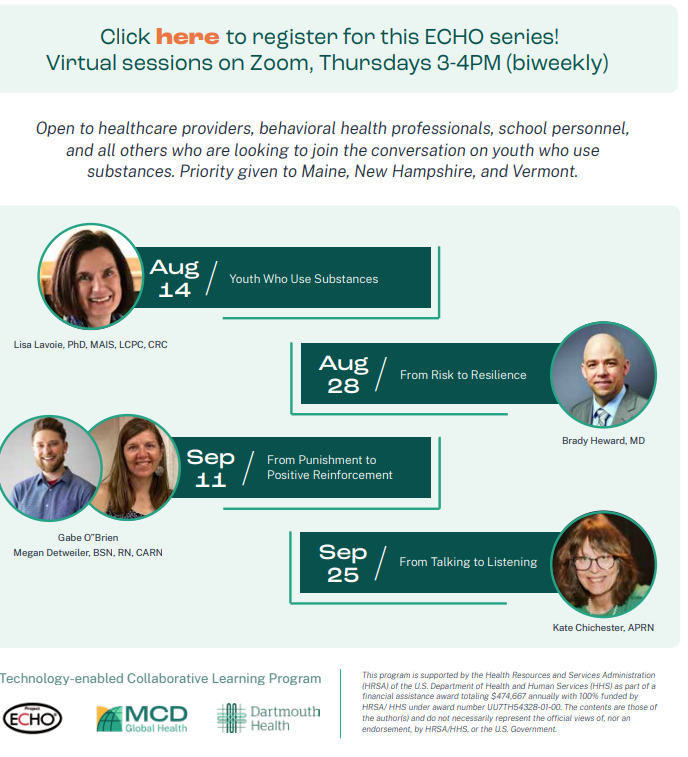
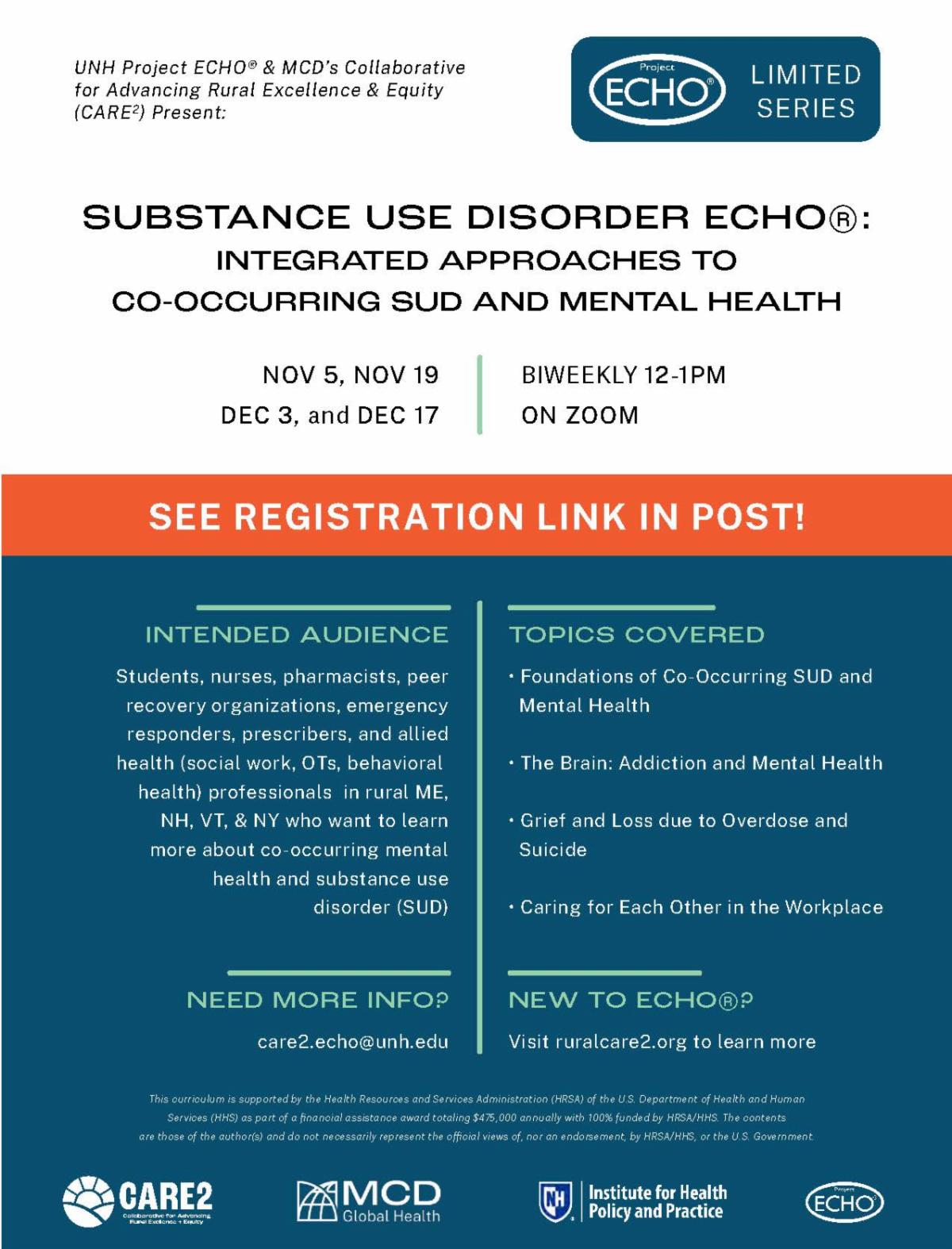
From Risk to Resilience: Reframing Our Response to Youth Who Use Substances 

Project ECHO Program 

MCD Global Health's Technology-Enabled Collaborative Learning Program 


Join subject matter experts from around the region during biweekly virtual sessions on Zoom from Thursdays, 3-4 PM. Open to all healthcare providers, behavioral health professionals, school personnel, and all others who are looking to join the conversation on youth who use substances. Priority is given to Maine, New Hampshire, and Vermont. No cost to join. Interdisciplinary teams are encouraged to apply. 

Click Here to join the iECHO platform and register today! Questions? Need help registering? Email mfascione@mcd.org with questions. 


More information on CME, nursing, and social work credits is coming soon. 


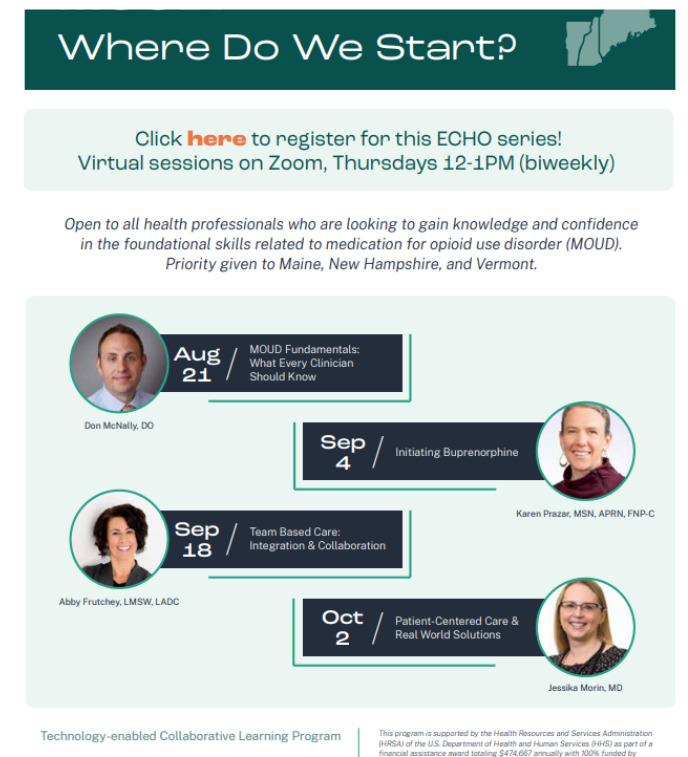
MOUD: Where Do We Start? 

Project ECHO Program 

MCD Global Health's Technology-Enabled Collaborative Learning Program 


Join subject matter experts from around the region during biweekly virtual sessions on Zoom from Thursdays, 12-1 PM. Open to all health professionals who are looking to gain knowledge and confidence in the foundational skills related to medication for opioid use disorder (MOUD). Priority is given to Maine, New Hampshire, and Vermont. No cost to join. Interdisciplinary teams are encouraged to apply. 

Click the Here to join the iECHO platform and register today! Questions? Need help registering? Email mfascione@mcd.org with questions. 


More information on CME, nursing, and social work credits is coming soon. 


Stories From the Region


We would like to start a new segment of Northeast Connections in which we share telehealth-related stories or innovations from around NETRC's region (Maine, New Hamsphire, Massachusetts, Connecticut, Rhode Island and New York) We want to hear from you! Have you launched a new program or process that is working well?

What successes have you had? Click below to reach out and your story may be featured in a future issue of this newsletter.

National Updates

Can I use telehealth at school?

School-based telehealth can help children more easily receive health care services.

To learn more go Here

New: Health Technology Ecosystem

CMS recently announced the digital health ecosystem to modernize health care by empowering patients and providers through innovative health technologies.


Read more


NEW from ATA: Unlock the Digital Infrastructure Score (DIS) and Mapping Tool

Not all communities have the same access to technology due to variables including broadband access, speed, affordability, and device ownership. These variables directly impact telehealth, remote work, and access to critical online resources.

The Digital Infrastructure Score is an index comprised of the variables that measure a community's capacity and readiness to utilize technology. The user friendly Mapping Tool gives you instant, data-driven insights to:

  • Pinpoint communities with limited digital access
  • Plan and target telehealth and resource deployment
  • Compare digital readiness across ZIP codes, counties, and states
  • Align infrastructure gaps with social and economic indicators

Why Access It?

With interactive maps, service-area comparisons, and built-in analytics, the DIS Tool helps health systems, policymakers, service providers, and more see where digital gaps exist, and where to act.

👉 Submit the form to access the DIS and Mapping Tool and start identifying where your communities are most in need.

Thought leadership by the ATA’s CEO Advisory Group on Expanding Access to Healthcare. 


Go here to submit the form


Rural Health Transformation (RHT) Program

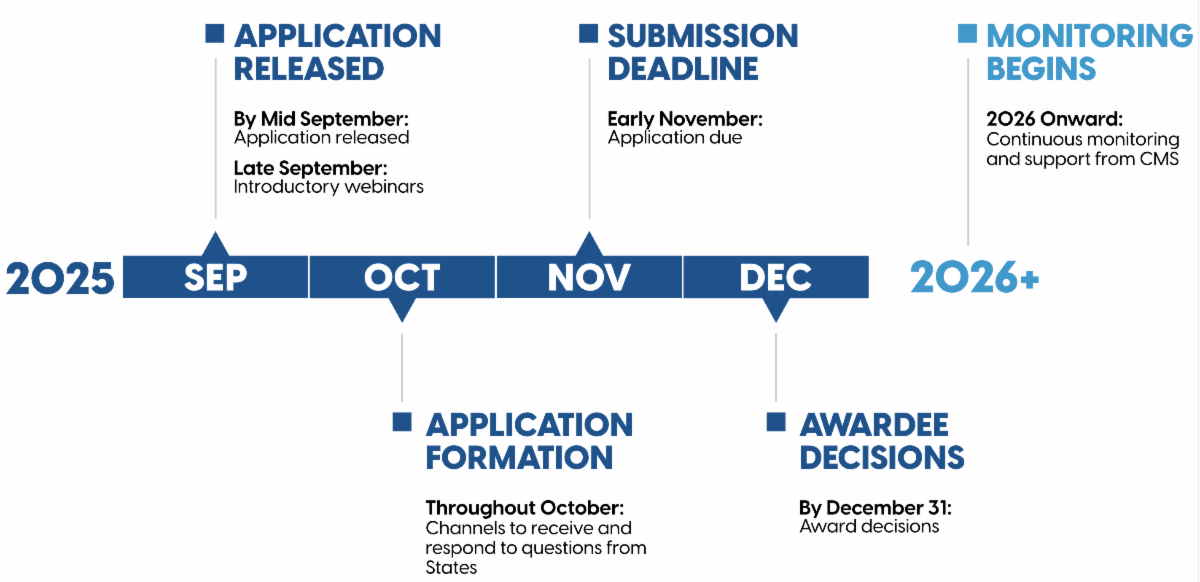
The Rural Health Transformation (RHT) Program, which was included in HR 1 and passed earlier this year, will provide $50 billion in funding over a five-year period, to help states improve healthcare access, quality and outcomes in rural communities. Administered through the Centers for Medicare and Medicaid Services (CMS), the notice of funding opportunity (NOFO) was released 9/15/2025, further informing states of the application process and funding requirements. Additionally, CMS has created a webpage devoted to this program.


FUNDING & APPLICATION: Only the fifty U.S. states are eligible to apply (D.C. and U.S. territories are excluded), and how each state develops its proposal will likely involve stakeholders and interested parties within their respective state borders. Applications are due November 5, 2025, and funds will be awarded by December 31, 2025.


As noted above, $50 billion will be available over five years, meaning $10 billion annually. Fifty percent of the funds will be distributed equally among the states with successful applications. The other 50% will be allocated by CMS based on a variety of factors such as rural population, the fiscal situation of certain hospitals in the state, and other additional elements.


Click Here for additional details.

News & Events from Around the NCTRC

Job Postings

Behavioral Health Care Manager (BHCM) – Master's Level

LECOM Medical Center and Behavioral Health Pavilion


Behavioral Health Care Manager (BHCM) – Bachelor’s Level

LECOM Medical Center and Behavioral Health Pavilion


Full-Time | Erie, PA & Ashtabula, OH or Erie, PA & Clymer, NY


Be the Reason Someone Gets the Help They’ve Been Waiting For

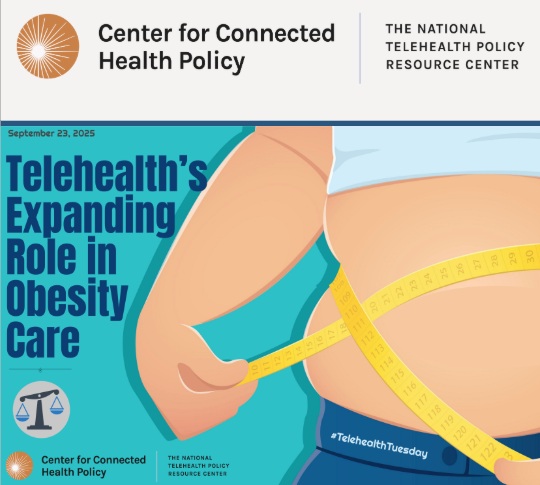
Obesity has long been recognized as one of the most pressing public health issues in the United States, and today its intersection with telehealth is gaining new significance. With the rise of anti-obesity medications (AOMs), particularly GLP-1 receptor agonists such as semaglutide and tirzepatide, more patients are turning to virtual platforms to access treatment, counseling, and long-term management. GLP-1 receptor agonists work by mimicking the effects of the naturally occurring hormone glucagon-like peptide-1, which helps regulate appetite and blood sugar. By slowing gastric emptying, increasing feelings of fullness, and reducing food intake, these medications have been shown to produce substantial and sustained weight loss in many patients. 


Meanwhile, new data from FAIR Health’s Monthly Telehealth Regional Tracker, which was featured in a PR Newswire article in mid-September, revealed that obesity re-entered the top five telehealth diagnostic categories nationally in June 2025, after first appearing in the tracker in February of this year.

To read more go here

Other Upcoming Webinars and Events

2025 New England Rural Health Association Conference

November 4-5, 2025


2025 New England Rural Health Association Conference


Hosted by: New England Rural Health Association (NERHA)


The annual NERHA conference attracts 400 attendees from across New England and is a unique opportunity for rural healthcare professionals from hospitals, clinics, oral health, behavioral health, human services, higher education, advocates, community leaders and stakeholders to come together for two days of rural health immersion.


Register here

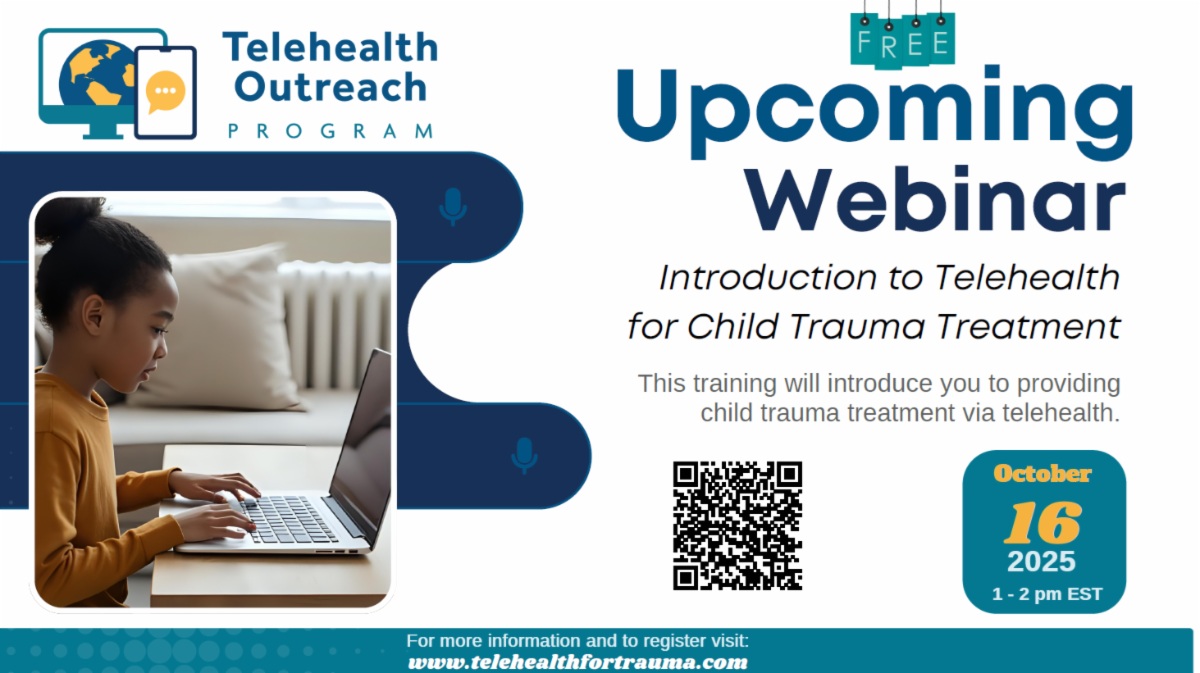
October 16th: Join this free, live webinar exploring how telehealth can be a powerful tool in delivering trauma-informed care to children. This session will offer practical insights, evidence-based strategies, and real-world considerations for working with children and families affected by trauma.


Register here


For more information and other upcoming trainings visit telehealthfortrauma.com


🌐 Upcoming Webinar 🌐

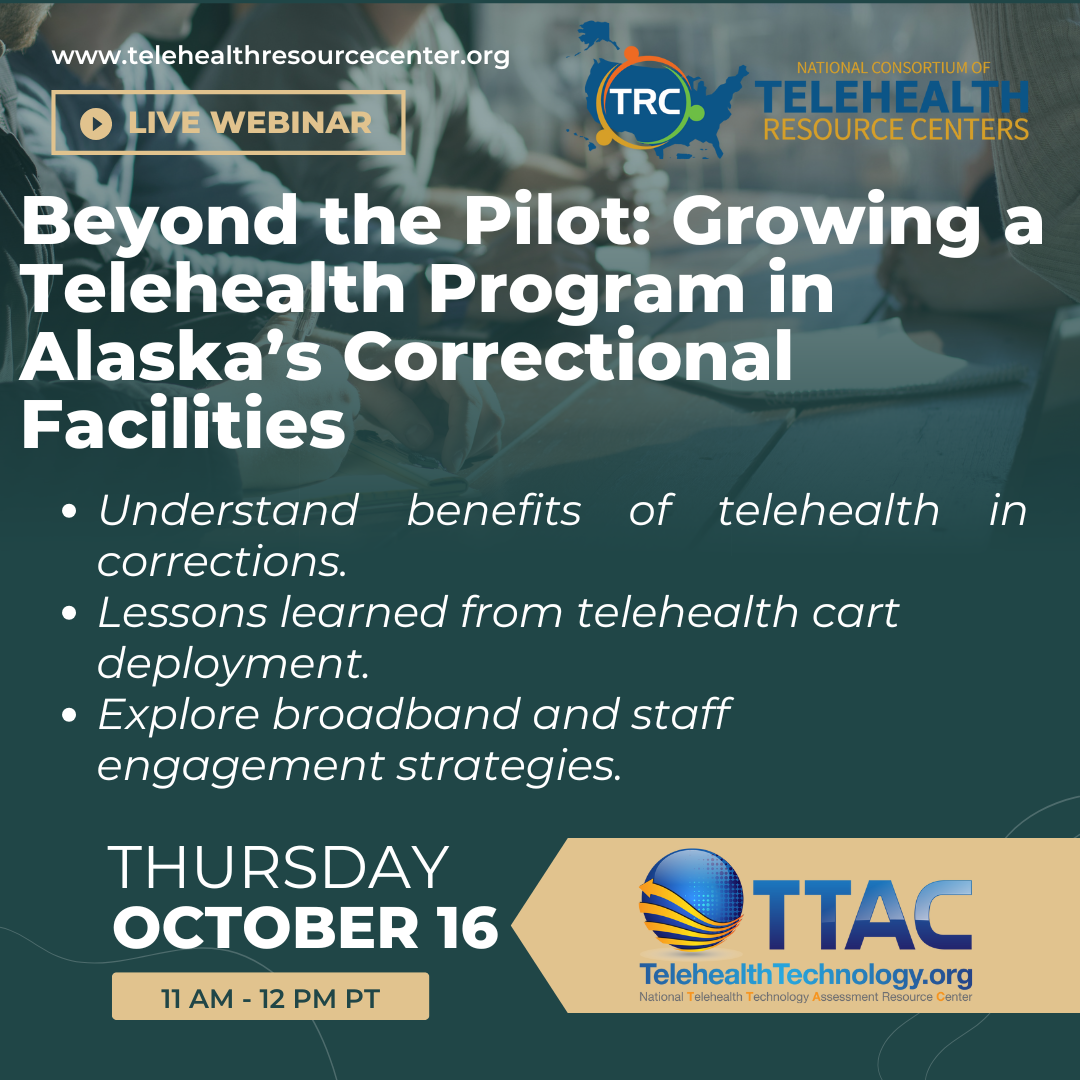
We’re excited to share an upcoming NCTRC Webinar  - Beyond the Pilot: Growing a Telehealth Program in Alaska’s Correctional Facilities

📅 October 16, 2025 | 11:00 AM PT


Speakers from the National Telehealth Technology Assessment Center (TTAC) and the Alaska Department of Corrections (AK DOC) will highlight the unique opportunities and challenges of implementing telehealth in correctional settings.


Key topics include:

✔️ Benefits of telehealth in correctional environments

✔️ Lessons learned from deploying telehealth carts

✔️ Addressing broadband and access challenges

✔️ Engaging staff to improve technology outcomes


👉 Register here: https://us02web.zoom.us/webinar/register/WN_-BGHqY4ySDONaGtojMckDg


The UW Health Virtual Command Center: Expanding Reach, Improving Access

Date & Time Oct 29, 2025 11:00 AM in Eastern Time (US and Canada)


Description: Discover how UW Health is transforming critical care delivery through its innovative virtual command center. By partnering with rural and community hospitals, UW Health extends specialist expertise beyond its own walls, keeping patients closer to home while providing bedside teams with around-the-clock support. This outreach model not only enhances patient outcomes but also strengthens local care teams and operational efficiency.


Join this session to hear actionable insights, real-world successes, and forward-looking strategies for scaling virtual care across diverse healthcare settings.

Rural America: Community & Opportunity

Did you know that nearly 61 million Americans call #rural communities home? These areas combine a strong sense of community with fulfilling work opportunities! Join us in celebrating the #PowerOfRural on November 20 for #NationalRuralHealthDay. Learn more at powerofrural.org.

Featured Telehealth News

A larger news compilation can be found on the NETRC site here.

Medicare Telehealth In-Person Mandate Began October 1, 2025: Know The Facts

telehealth.org October 14, 2025 Link

Medicare permanently covers behavioral and mental health services. However, the in-person requirement for Medicare beneficiaries with behavioral telehealth services began on October 1, 2025. Patients who began their behavioral telehealth visits before that date are currently only required to have an annual in-person visit.


'Deviceless' RPM could be a potent telehealth expansion

HealthcareITNews October 13, 2025 Link

Remote patient monitoring that relies only on text messages could help drive engagement, compliance and outcomes at scale. And extend beyond biometrics to include data such as behavioral health concerns, post-discharge challenges and SDOH.


Medicare Telehealth During Shutdown: What Clinicians Should Do This Week

telehealth.org October 8, 2025 Link

With Congress at an impasse on the continuing resolution (CR), certain flexibilities that have become entangled with this funding process have lapsed. For the first time since their introduction during the pandemic, some Medicare telehealth flexibilities have expired, leaving healthcare systems and clinics in a difficult position to determine the level of risk they are willing to accept to continue seeing their patients.


Telehealth flexibilities have expired. Here's what you need to know.

TechTarget October 2, 2025 Link

Telehealth and hospital-at-home flexibilities expired Sept. 30, 2025, reverting Medicare coverage to pre-pandemic restrictions and disrupting virtual care access nationwide.


Patients and providers face telehealth cliff as government shutdown begins

HealthcareITNews October 1, 2025 Link

Access to timely and affordable virtual care is in jeopardy as the federal government goes dark without an extension for CMS telehealth flexibilities, which expired Sept. 30.


September Continuing Resolution Impasse: Can Congress Avert the Medicare Telehealth Cliff? 

Telehealth.org September 30, 2025 Link 

With key Medicare telehealth flexibilities set to expire on September 30, 2025, Republicans and Democrats have floated competing Continuing Resolutions (CRs) to extend virtual care rules and Hospital-at-Home flexibilities. 


How messaging-oriented care can unburden telemedicine 

HealthcareITNews September 29, 2025 Link 

Dr. Rishi Khakhkhar, CMO at Counsel Health and an ER physician, discusses some telehealth shortfalls and how asynchronous virtual care can tend to a lot of care in a way that preserves synchronous visits for patients who really need them. 


The APA’s 2024 Telepsychology Guidelines: What Clinicians Need to Know 

Telehealth.org September 29, 2025 Link 

Telehealth has become a powerful and increasingly common part of modern mental and behavioral health care. As regulations and technologies shift rapidly, clinicians need clear, evidence-based guidance to ensure safe and effective practice. 


Supporting cardiac medication management with telehealth 

TechTarget September 25, 2025 Link 

Sutter Health is using a telehealth-based model to connect heart failure patients with pharmacists for medication management, boosting clinical outcomes and patient experience. 


Government support for RPM is having an impact on healthcare 

HealthcareITNews September 22, 2025 Link 

With updated CMS billing codes and reimbursement eligibility, remote patient monitoring is fast becoming a standard of

care for management of chronic conditions. A remote care CEO offers a closer look at one provider's positive outcomes.


Using Telehealth to Reduce Losses and Decrease Cost

telehealth.org September 19, 2025 Link

Post-COVID, telehealth has “survived” as a mainstay modality to deliver care to patients at a distance. And many healthcare leaders now more fully understand that telehealth is much more than just video visits, including patient portals, patient education, and a full host of virtual care modalities, including remote physiological monitoring (RPM), virtual exams, and digital therapeutics.

 
Recommended Telehealth Research/Resources
Check out the complete Telehealth Library Database on the NETRC site here.

Telehealth adds to primary care workload, study finds

Austin Littrel 2025


Opportunities to Alleviate the Health Care Workforce Crisis with Telehealth and Emerging Technologies: Proceedings From an Expert Roundtable

Jared Augenstein, Tracy A. Massel, Annie Fox, Ryan Kruis; 2025


Webinar: Use and Usefulness of Billing Data to Estimate Telehealth Reach and Outcomes

Telehealth Centers of Excellence; 2025


Wearable Intervention for Alcohol Use Risk and Sleep in Young Adults

Lisa M. Fucito, PhD, Garrett I. Ash, PhD, Ran Wu, MS, et al. 2025


Implementation of an AI-powered Virtual Nursing Program

Saurabh Chandra MD PhD, Bethany Smith RN, Lindsey Kuiper PhD, Yueh-Yun Lin PhD, Briana Petty RN, Kristina Cherry RN PhD; 2025


Organizational Factors Associated with Using Telehealth Services: Perspectives from Leaders of Rural Health Clinics and Federally Qualified Health Centers

Constance van Eeghen, DrPH; John A. Gale, MS; Erika Ziller, PhD; Yvonne Jonk, PhD; 2025


Have telehealth questions?

The Northeast Telehealth Resource Center has been made possible by grant numbers 1 U1UTH42523‐01‐00 an2 U1UTH42523‐04‐00 from the Office for the Advancement of Telehealth: HRSA / DHHS.


NETRC | netrc@mcdph.org | 800-379-2021 | www.netrc.org

 ‌  ‌

X  Linkedin