Northeastern Law:
News from the Clinical Program
|
|
Margo Lindauer Appointed Director of Clinical Programs
|
|
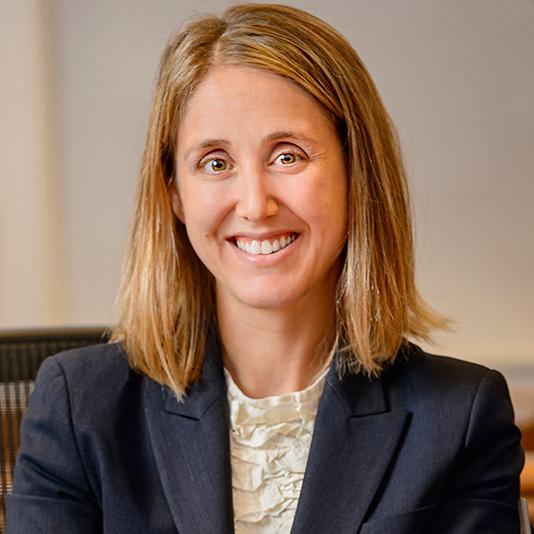
Professor Margo Lindauer ’07
has been named director of clinical programs at Northeastern University School of Law, effective January 1, 2020. Lindauer, who has served as director of the school’s Domestic Violence Institute and Domestic Violence Clinic since 2014, takes the helm from Professor Jim Rowan, widely recognized as a pioneer in the field of law school clinical training. Rowan led the school’s efforts in building a nationally recognized program —
U.S. News & World Report
ranks the school No. 26 for clinical training.
|
|
|
Gundavaram Selected as Teacher of the Year
|
|
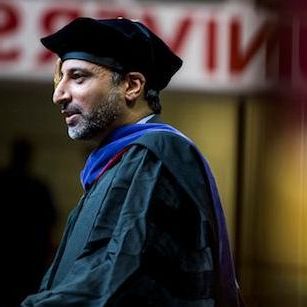
Professor Hemanth Gundavaram
,
co-director of the law school’s Immigrant Justice Clinic, was selected by the class of 2019 as Teacher of the Year and Faculty Commencement Speaker.
Getting a dream job means tuning out the critics, putting in the extra effort, being persistent and reaching for that dream before you feel ready, Gundavaram told the graduates in May. He said that when they crossed the stage, they’d be draped with a hood over their shoulders and be handed a diploma, but it represented more than that. “What will be draped over your shoulders is responsibility, and what will be handed to you is power,” he said.
|
|
|
Making the Case for Clients in Need
|
|
At Northeastern University School of Law, our clinics seek to provide justice in particularly transformative ways, from promoting smart health policies to providing a voice — and a chance — for underprivileged populations through no-cost legal advice and representation. Here are just a few recent examples of our clinical program’s work:
|
|
CIVIL RIGHTS AND RESTORATIVE JUSTICE CLINIC (CRRJ)
|
|
CRRJ Awarded $750,000 from Mellon, $300,000 from Ford
The Andrew W. Mellon Foundation has awarded $750,000 to CRRJ to support its pathbreaking work in investigating and archiving acts of racial terror in the South between 1930 and the 1970s. The Mellon Foundation grant will be used to deepen the work of the CRRJ Burnham-Nobles Digital Archive, an extraordinary collection of primary source documents as well as still images and interviews on cases of racially motivated homicides in 12 southern states. CRRJ was also awarded a two-year grant of $300,000 from the Ford Foundation to support the digital archive.
|
|
CRRJ Partners with Vassar College
This month, CRRJ welcomes four undergraduate students from Vassar College to campus. Over the course of the year, the undergraduate students will work with CRRJ staff, including visiting scholar and Vassar professor Diane Harriford, to investigate several cases for the CRRJ archive. The students will spend a week at Northeastern learning about CRRJ and begin their work. In March, they will spend a week in Alabama investigating their cases before presenting their work back at Vassar in April.
|
|
COMMUNITY BUSINESS CLINIC
|
|
Speaking the Language of Success
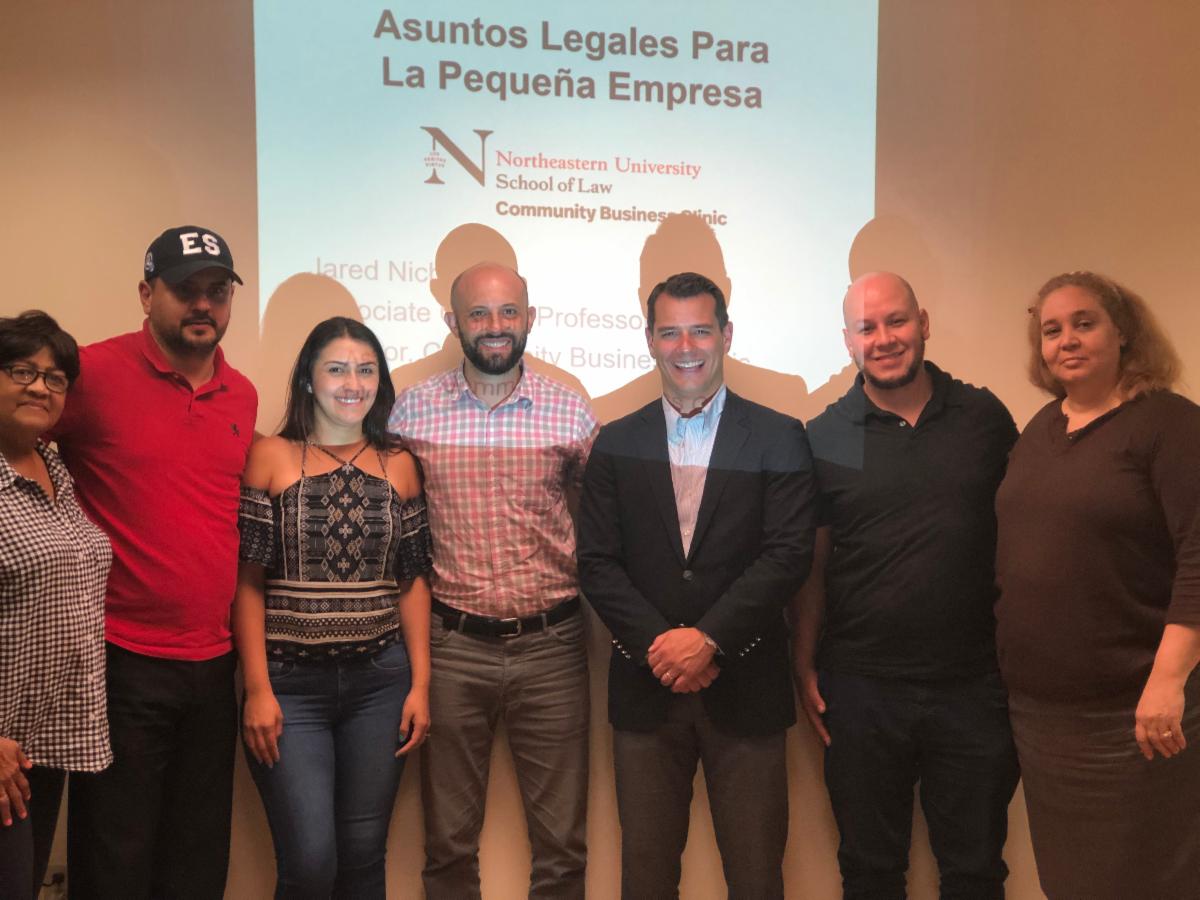
Professor Jared Nicholson is expanding the Community Business Clinic’s portfolio to include Spanish-language seminars and workshops in the Greater Boston area. He launched the program with workshops in collaboration with Emprendemiento Para Todos (Entrepreneurship For All) and Pathways, an adult education provider in Lynn, Mass. “I am excited to partner with these grassroots organizations to reach aspiring entrepreneurs in their native language,” said Nicholson. “Immigrants disproportionately turn to small business to find opportunity. As these aspiring entrepreneurs and community leaders prepare to launch their visions, we’re grateful for the opportunity to add legal know-how to the training and support they receive.”
|
|
Partnering with the City of Boston
During the final week of National Domestic Violence Awareness Month, the Domestic Violence Clinic hosted Boston City Councilors for a hearing at the law school on domestic violence and sexual assault in the city of Boston in an effort to reduce the prevalence of this abhorrent behavior. The hearing focused on ways to provide support for victims, solutions for increasing reporting opportunities for all — such as our immigrant and LGBTQ communities — as well as other ways to educate the public about this pervasive problem.
“I am thrilled to work in partnership with President Campbell and Councilor Flynn to bring awareness to the prevalence and challenges survivors face as they seek justice, and to join with the law school’s Center for Health Policy and Law to bring this conversation to our campus,” said Margo Lindauer, director of the Domestic Violence Clinic. “This is a great example of working in partnership with local government to move an issue forward. I hope this is just the beginning of a longer conversation with many different stakeholders and survivors in our city.”
|
|
Students Assist Migrants at the Border
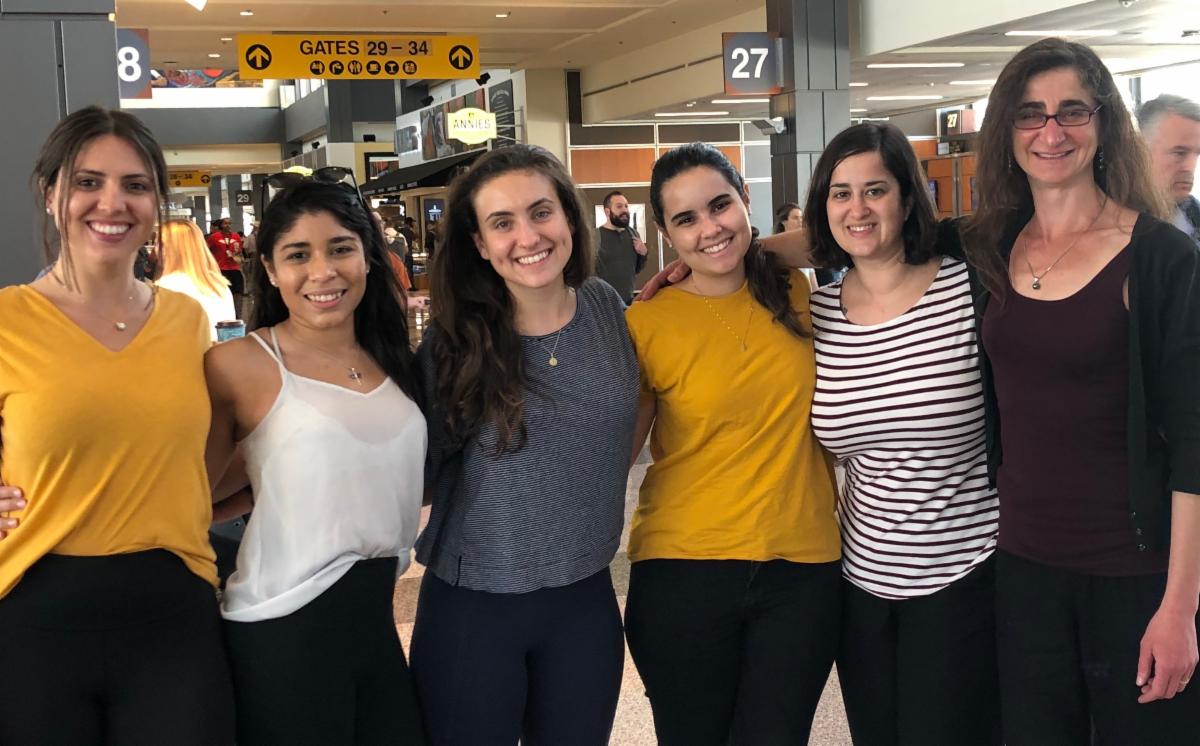
Dilley, Texas, is home to the nation’s largest family detention center. At the 2,400-bed South Texas Family Residential Center, immigrant mothers and children — mostly fleeing extreme violence in Honduras, Guatemala and El Salvador — need lawyers. For one week in May, Northeastern law students, under the auspices of the school’s Immigrant Justice Clinic, helped meet that need. The students assisted the Dilley Pro Bono Project (DPBP), a local partner in the Immigration Justice Campaign, which operates a non-traditional pro bono model of legal services that offers direct representation.
The Northeastern law students used a training manual — developed by other Northeastern students in the School of Law and the College of Arts, Media and Design — to help guide them throughout the experience. The manual includes strategies for volunteers to help asylum seekers share their stories and communicate why they need protection in the US during their credible fear interviews. The manual was developed when a seminar created by the law school’s NuLawLab staff — Dan Jackson ’97, executive director, and Jules Rochielle Sievert, creative director — merged with a course taught by Sarah Kanouse, an associate professor in the university’s Department of Art + Design.
“This is a great example of interdisciplinary work,” said Jackson. “It fits perfectly with our goal of designing, testing and producing new approaches to helping people understand and exercise their legal rights.”
|
|
A Great IDEA!
When Northeastern University student entrepreneurs launched IDEA, a business accelerator, they turned to Professor Susan Montgomery and law students for legal guidance.
Thus was born Northeastern’s
IP
CO-LAB
, a clinic run by law students and overseen by faculty from the law and business schools that provides entrepreneurs with critical legal information related to intellectual property laws. Last year, the IP CO-LAB served 39 clients and completed 43 projects, including nine federal trademark applications and four client trademark registrations issued by the USPTO.
|
|
LEGAL SKILLS IN SOCIAL CONTEXT
|
|
Loan Rangers Advocate for Student Borrowers
All first-year students at Northeastern University School of Law take Legal Skills in Social Context (LSSC), the school’s unique, ABA-approved clinical program focused on social justice research projects. Through LSSC, students are organized into small “law offices” and assist nonprofit legal organizations on issues ranging from cannabis licensing and racial equity to criminal justice reform. Recently, one of the student law offices (dubbed “The Loan Rangers”) worked with the Public Higher Education Network of Massachusetts (PHENOM) on a Student Loan Bill of Rights to provide all student loan borrowers in the state with the basic consumer protections they deserve, create a “know-your-rights” guide for student borrowers and suggest amendments to the bills in the State House. Here’s student Sarah Pavlini ’20 talking about the importance of the Student Loan Borrowers Bill of Rights, which passed the Massachusetts State Senate, 36-0:
|
|
NuLawLab Students Collaborate with Local Artist
Seven law students in the NuLawLab’s summer Seminar in Applied Design and Legal Empowerment were tasked with working with member
Anthony Romero
, a local artist and member of the faculty of the School of the Museum of Fine arts at Tufts University, and the Northeastern University Archives &
Special Collections
to answer the question “
what might we learn from the rich history of successful East Boston activism that can be deployed to empower current residents to assert their legal rights in proactive defense against displacement by redevelopment?
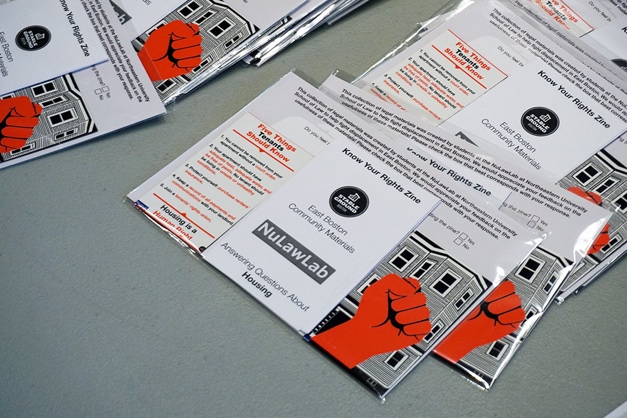
” The student team designed a suite of materials made up of a promotional banner, a “know-your-rights ‘zine” and a re-envisioned edition of the
East Boston Community News
. Their work is currently being distributed in East Boston, and has been incorporated into Romano’s part of an installation at the
Institute of Contemporary Art
’s
exhibition “
When Home Won’t Let You Stay
.”
|
|
POVERTY LAW AND PRACTICE CLINIC
|
|
Spreading the Word About Welfare Rights
To ensure that immigrants and battered women are aware of their welfare rights, students in the Poverty Law and Practice Clinic recently created and presented advocacy training modules for the Community Advocacy Program (CAP),
a partnership of community health centers providing free and confidential domestic violence services for health center clients and community residents in the Boston area. CAP is
sponsored by Northeastern University’s Center for Community Health Education Research and Services Program (CCHERS).
Rooting for Environmental Justice
In addition to the clinic’s usual advocacy work, Professor Jim Rowan offered students a window into movement lawyering this summer and fall when the Poverty Law and Practice Clinic coordinated with the law school’s Center for Public Interest Advocacy and Collaboration and Green Roots, an environmental justice organization in Chelsea, Mass., to explore ways that zoning could be used to foster affordable housing. Clinic students were introduced to lawyering in support of community organizing.
|
|
PRISONERS
’
RIGHTS CLINIC
|
|
Inspiring Hope
Students in the Prisoners’ Rights Clinic recently helped secure parole for two clients serving life sentences. In one case, the client, “Mr. A,” had received a life sentence for a murder and a separate consecutive sentence of 12 to 15 years for armed assault. Clinic students first represented Mr. A in 2015 at his initial parole hearing, but parole was denied because the board believed he did not express adequate insight and remorse about his crimes. In 2018, one of the clinic students prepared Mr. A to talk at length about meeting with family members of murder victims through the Restorative Justice Program in prison and how that had opened his eyes and his heart to the impact his crimes had on the victims’ families. The student also helped him better express how much he had learned about his frustrations and feelings of indignation by participating in anger management programs offered in prison. When Mr. A was granted parole to his consecutive sentence, he began to see light at the end of his lengthy incarceration rather than just endless despair.
“Mr. B,” in his 70s, had been incarcerated for a murder conviction since 1998 and denied parole on two previous occasions, in 2012 and 2015. As a result, he had given up on the idea of parole and had reconciled himself to living out the remainder of his life behind bars. Then, two clinic students came into his life. They inspired him to change his defeatist attitude and worked with Mr. B to prepare for his meeting with the Parole Board. They helped him to open up about what had made him commit the senseless crime and how he has dealt with his anger issues through programs in prison. Their efforts paid off. The Parole Board voted to grant Mr. B. parole after a short time in a lower-security prison.
“Had these two prisoners not been represented by our clinic students, the chances are they would have been denied parole again,” said Professor Wally Holohan.
|
|
PUBLIC HEALTH LEGAL CLINIC
|
|
Suing Juul
Students in the law school’s Public Health Legal Clinic, which works hand in hand with the law school’s Public Health Advocacy Institute, took part in initiating a class action lawsuit in April against e-cigarette titan Juul Labs, demanding that the company fund a statewide treatment program for teenagers who begin using the company’s e-cigarettes before age 18 and want to quit. It is one of the first lawsuits
in the country asking for this type of action from Juul, the company facing criticism — and a rash of lawsuits — for marketing to young people. “We don’t have anywhere to send these parents or these kids,” said Mark Gottlieb ’93, PHAI executive director and director of the clinic. “There’s a real need for figuring out how to treat them and providing them with treatment.”
Not So Happy Meals
Clinic students recently participated in filing a complaint with the Children’s Advertising Review Unit of the Better Business Bureau and Federal Trade Commission against McDonald’s for violating self-regulatory guidelines by advertising toys to young children on TV and online as part of its Happy Meals campaign promoting “Toy Story 4.”
|
|
And More ...
Other recent clinic projects have addressed policies to help incarcerated populations in Massachusetts with opioid use disorder; examine legal approaches to deceptive marketing of sugary drinks as healthy options; legislative approaches to lowering the cost of life-saving prescription drugs; policy options to deal with addiction treatment scams; development of comments to the FDA on proposed rules to limit the use of menthol as a characterizing flavor in tobacco products; examining legal approaches to remove lead from pipes feeding drinking water in Massachusetts schools; and a review of legal approaches to the acute lung injuries attributed to vaping.
|
|
Welcome New Faculty and Fellow
|
|
Bruce Jacoby
joins the faculty as associate clinical professor and director of the IP CO-LAB, the law school’s intellectual property clinic. He previously served as an assistant clinical professor for the Intellectual Property and Entrepreneurship Law Clinic at UConn School of Law, where he earned his JD in 2003. After law school, he joined Wiggin & Dana in New Haven as a member dedicated to the firm’s intellectual property practice group and held similar positions in subsequent years at other firms, most recently as senior trademark counsel to Kim IP Law Group, an intellectual property boutique firm. The years between his undergraduate and law degrees were spent as both a freelance cameraman and filmmaker, then as a writer and creative director. His experience on both the creative and legal sides of intellectual property issues gives him a unique perspective on the challenges involved and makes him particularly well-suited for his new role.
|
|
Jared Nicholson
joins the law school as associate clinical professor and director of the Community Business Clinic. He comes to Northeastern from Latham & Watkins, where he was an associate representing numerous startups and coordinated a number of pro bono projects. Nicholson is a graduate of Harvard Law School, where he served as executive director/student attorney in the Harvard Legal Aid Bureau, and received his AB from Princeton University at the Woodrow Wilson School of Public and International Affairs. He is a member of the Lynn School Committee and past staff attorney and Skadden Fellow with Northeast Legal Aid. He also spent three years as a senior business analyst with McKinsey & Co.
|
|
In September, CRRJ welcomed a new legal fellow,
Katie Sandson
. Prior to joining CRRJ, Sandson served as a clinical fellow at the Harvard Law School Food Law and Policy Clinic (FLPC), a division of the Center for Health Law and Policy Innovation. At FLPC, Sandson provided legal and policy guidance to community advocacy groups and nonprofits working to improve their communities’ food systems and mentored students enrolled in the clinic. She received her BA in English literature from Washington University in St. Louis and her JD from Harvard Law School.
|
|
Professor Margaret Burnham and CRRJ Legal Fellow Katie Sandson
— along with CRRJ advisory board member Melissa Nobles, Kenan Sahin Dean of the School of Humanities, Arts, and Social Sciences and professor of political science at the Massachusetts Institute of Technology — presented at the Radical Cartography Now: Digital, Artistic and Social Justice Approaches to Mapping conference at Brown University in September. As presenters on the “Mapping Racial Violence” panel, they introduced a digital map prototype titled “Silenced Histories: The Archive of the Civil Rights and Restorative Justice Project, 1930-1955,” which compiles cases of racially motivated homicides from 1930 to 1955 into an interactive map, drawing on data from the CRRJ Burnham-Nobles Archive. The digital map was created in partnership with the law school’s NuLawLab.
Professor Hemanth Gundavaram
served as a co-working group leader on immigration law at the AALS Clinical Conference in San Francisco in May.
|
|
Professor Margaret Burnham
|
|
Professor Hemanth Gundavaram
|
|
Professor Susan Montgomery
|
|
|
|
|
|
|