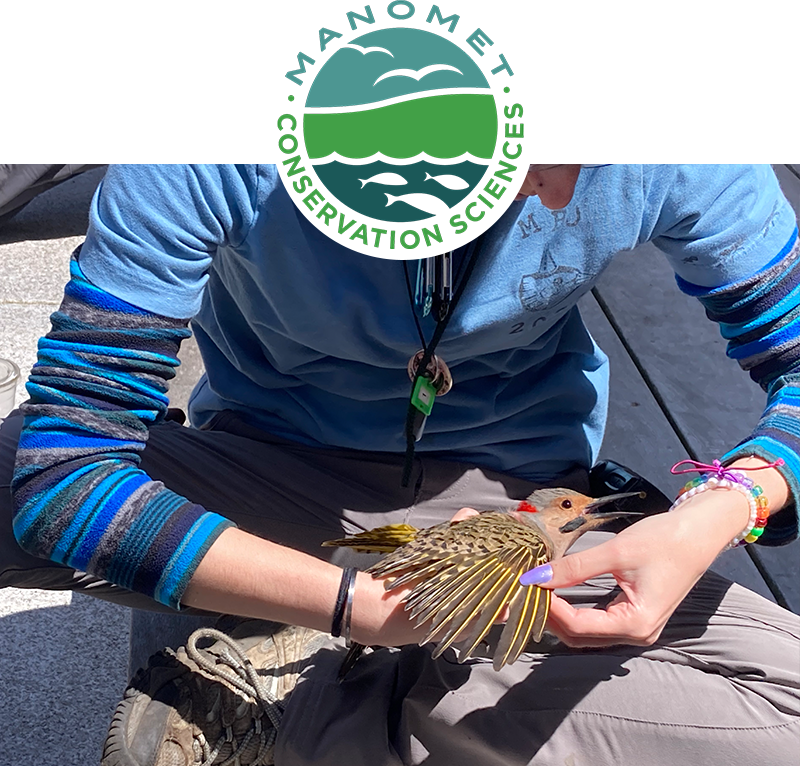
Bird Bander Amy Hogan checks for a molt limit on the wing of a Yellow-Shafted Flicker at the Trevor Lloyd-Evans Bird Banding Lab at Manomet Headquarters. (Birds are banded under a federal banding permit by trained professionals.) | Photo: Peter Zheutlin | |
TODAY’S FEATHER FACT:
A molt limit in birds refers to the visible boundary between old and new feathers, typically seen during partial molts. These differences in feather color, wear, and quality are caused by incomplete molts, where some feathers are retained while others are replaced. Molt limits are most easily observed in wing feathers, especially between different feather types like coverts and flight feathers.
| | | |
Good Migrations
Spring in the States is in full swing—and so is the Manomet team. As birds surge northward on their epic migrations, our scientists are right there with them, from the Gulf Coast of Texas and Louisiana to the barrier islands of Georgia, banding and counting in the field. While our North American teams are out chasing data, our Latin American colleagues are deep into analyzing the results of their own just-wrapped field season. And in even more exciting news, we’ve just welcomed the Wade Institute for Science Education into the Manomet flock—growing our capacity to connect science and education in powerful new ways.
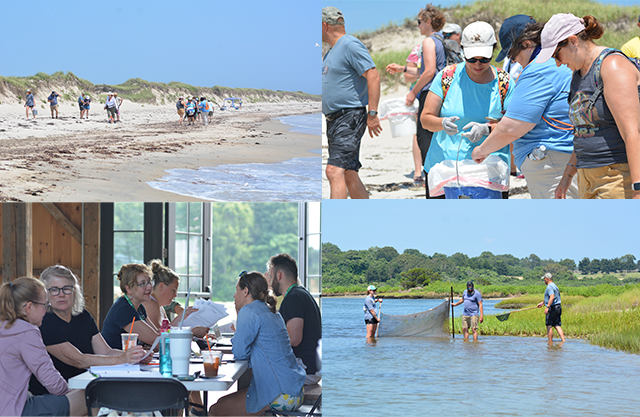
| | Wade Institute for Science Education at Manomet Conservation Sciences offers hands-on (sandy! salty!) professional workshops for educators and administrators in scenic partner locations around the state of Massachusetts. | Photo: Alex Amsden / Wade Institute | | Manomet Welcomes Wade Institute for Science Education Under Our Umbrella | | |
This month, Manomet Conservation Sciences is proud to welcome the Wade Institute for Science Education—founded by trailblazer (and Manomet supporter) Emily Vanderbilt “Paddy” Wade—into our organization. Paddy, one of just seven women in her 1945 MIT chemistry class, was a tireless advocate for science education. Her legacy lives on as Manomet and the Wade Institute join forces to expand hands-on science learning for educators, students, and the next generation of conservation leaders.
LEARN MORE >>
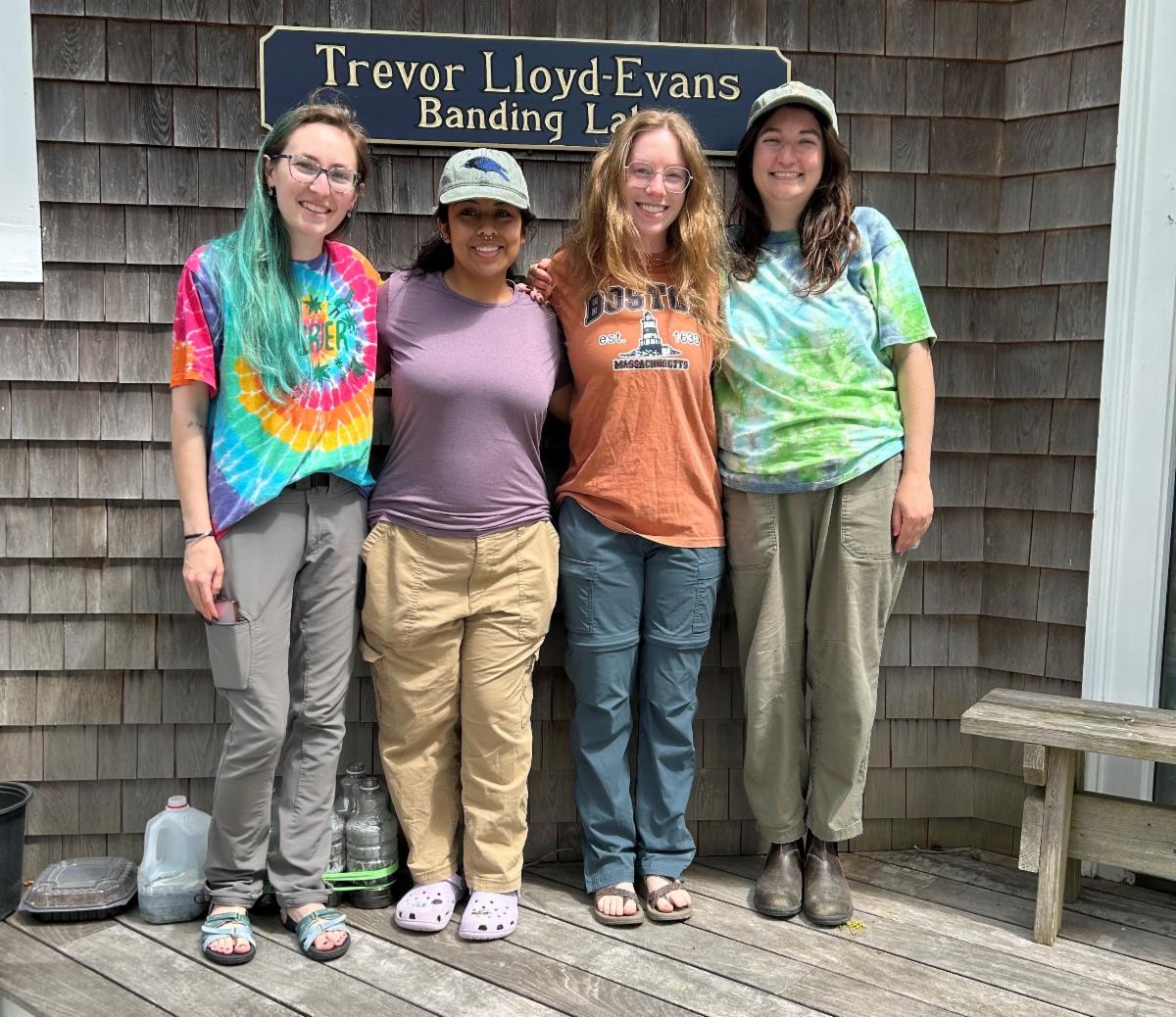
| | Meet the 2025 Bird Banding team at Manomet: Banders Amy Hogan and Sarah Duff (far left and far right), and banding interns Grace Whitten and Michelle Winfield (center left and right) | Photo: Banding Team / Manomet | | |
Welcoming New and Familiar Faces to Manomet’s Bird Banding Season!
At Manomet’s Trevor Lloyd-Evans Bird Banding Lab, bird banding isn’t just about putting tiny bands on tiny legs—it’s about understanding the bigger picture. Each spring, as birds head north on their amazing migrations, our team is out there gently catching and banding them, gathering key info about their health, numbers, and where they’re headed.
Why does it matter? Because these little check-ins help us see how bird populations are doing, spot shifts in ecosystems, and figure out how to protect the places birds (and people!) rely on across the Western Hemisphere. Every bird we band is part of a story we’ve been following for more than 50 years. That makes our lab one of the longest-running bird banding operations in North America—and we’re just getting started.
LEARN MORE >>
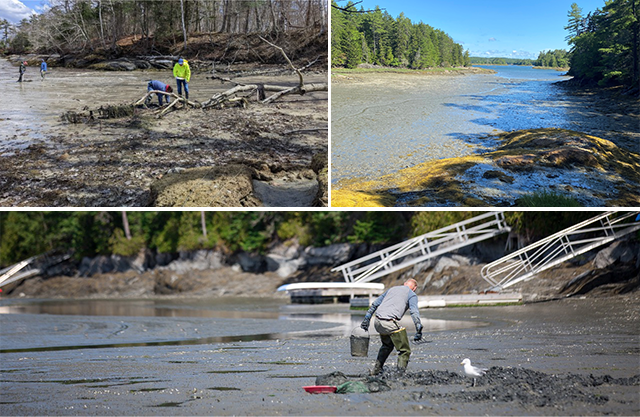
| | Mudflats and shifting shorelines: Manomet Fisheries team and partner research are tackling tough questions in Maine. | Photos: Maine Coast Fishing Association, Manomet / Emily Farr | | |
Shifting Shores: How Sea Level Rise is Reshaping Maine’s Mudflats
Maine’s coastal communities—and the shellfish harvesters who depend on them—are already feeling the impact of rising seas. There’s less time to dig for clams, shorelines are shifting, and storms bring flooding that’s getting worse and more frequent.
But what’s really going on beneath the surface? How is sea level rise actually reshaping these landscapes? Read on to hear how Manomet and partners are tackling these tough questions and providing positive change for these coastal communities, including some very cool ARC GIS StoryMaps in Scarborough and Northern Bay, Penobscot in Maine.
READ MORE >>
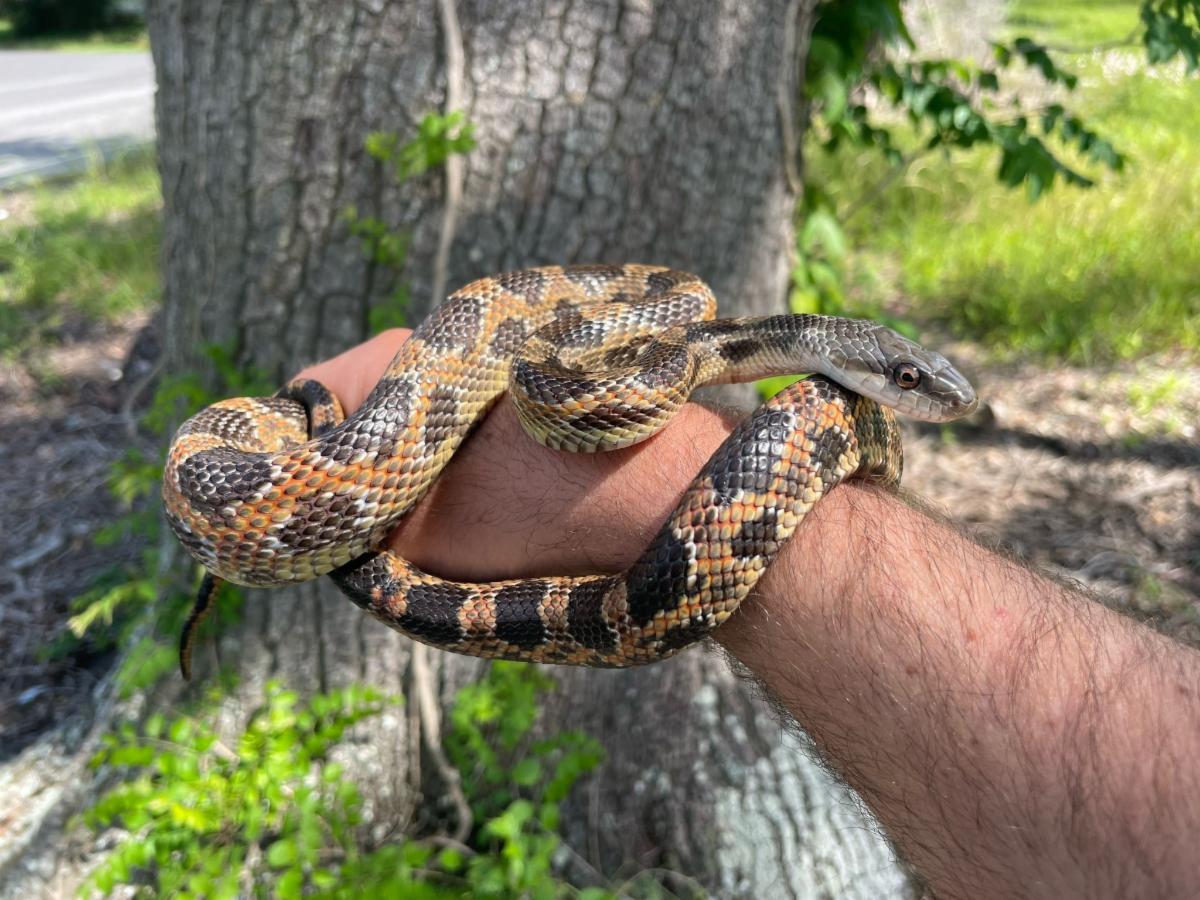
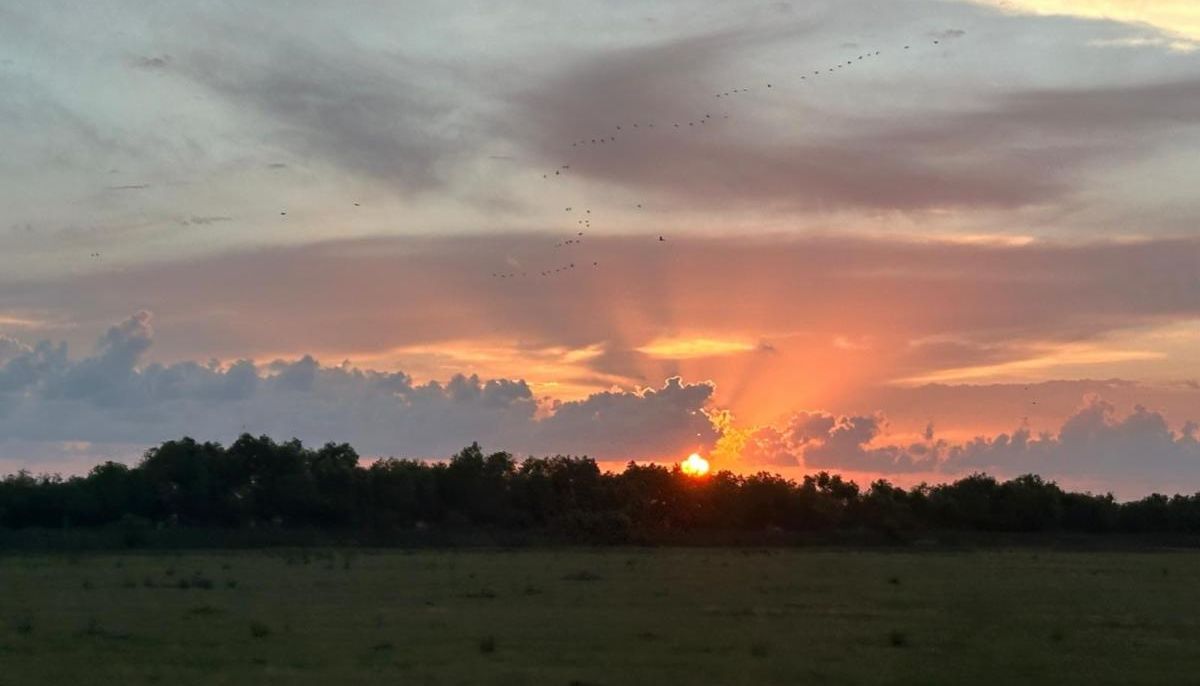
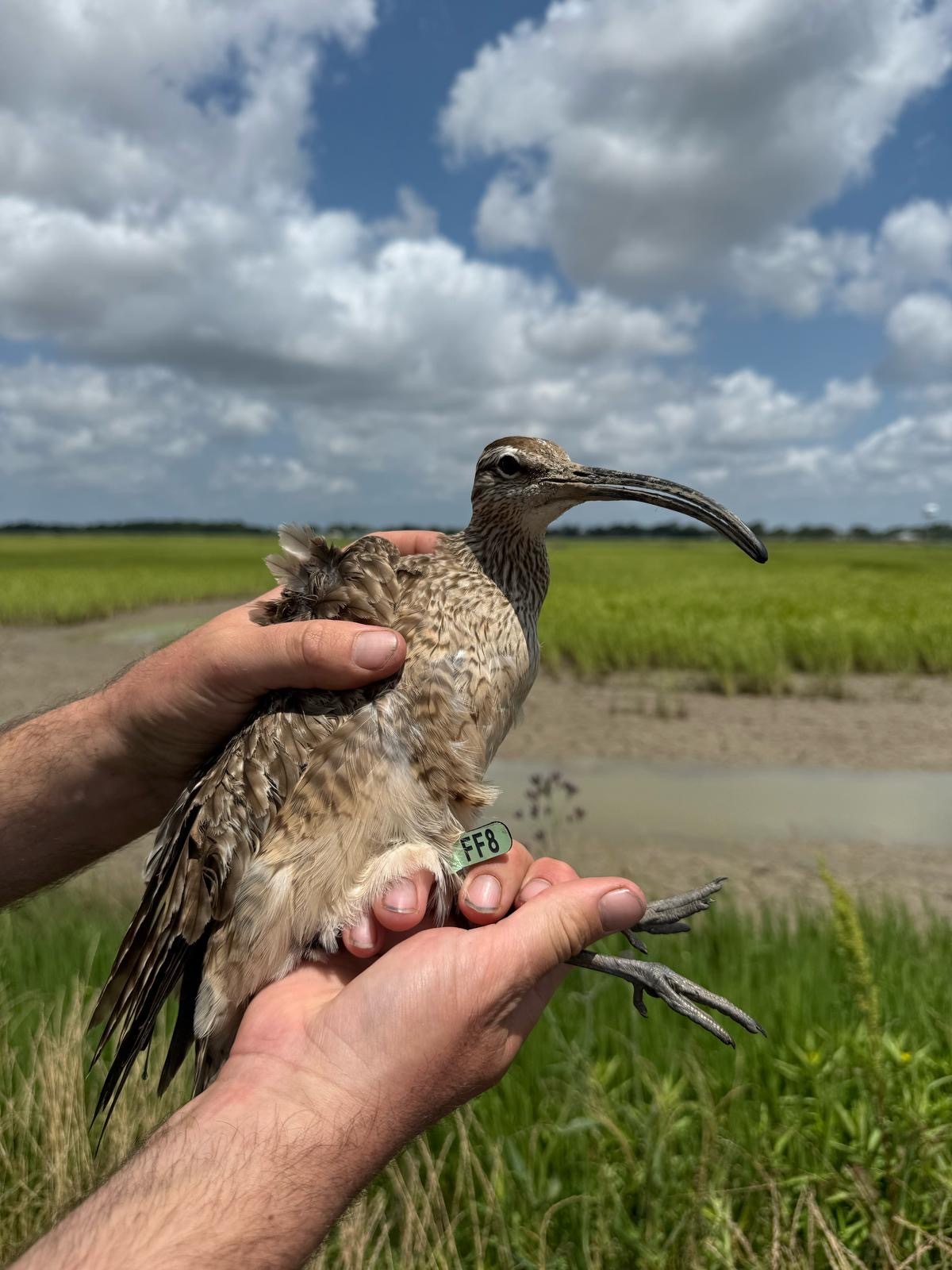
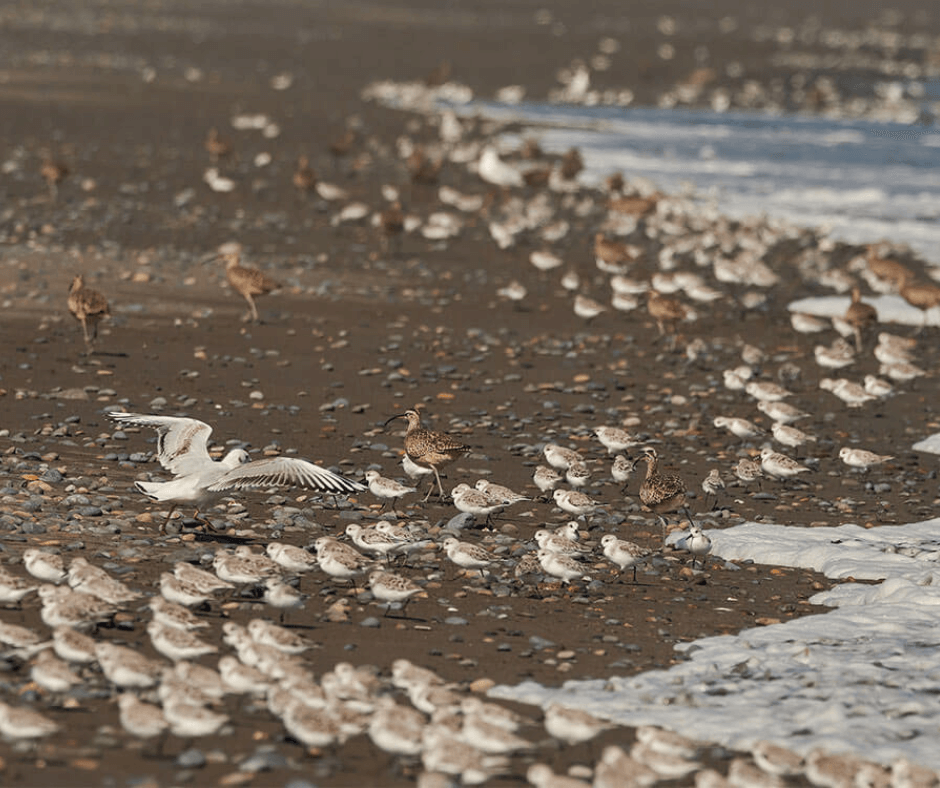
| | Manomet scientists have been working in the field at whimbrel stopover sites in Texas and Louisiana - and you never know what other species one might find… | Photos: Manomet / Shiloh Schulte, Alan Kneidel, Elijah Wojohn, Abby Sterling, Sam Wolfe | | |
Whimbrels (Numenius phaeopus) are on the move! After spending the winter along the tropical north coast of South America since September 2024, these long-distance migrants are now heading north. Their journey includes important stopovers in the southeastern U.S.—with key sites in Texas, Louisiana, Georgia, South Carolina, and Virginia—where they rest and refuel before continuing on to their nesting grounds in the far north of Canada and Alaska.
LEARN MORE >>
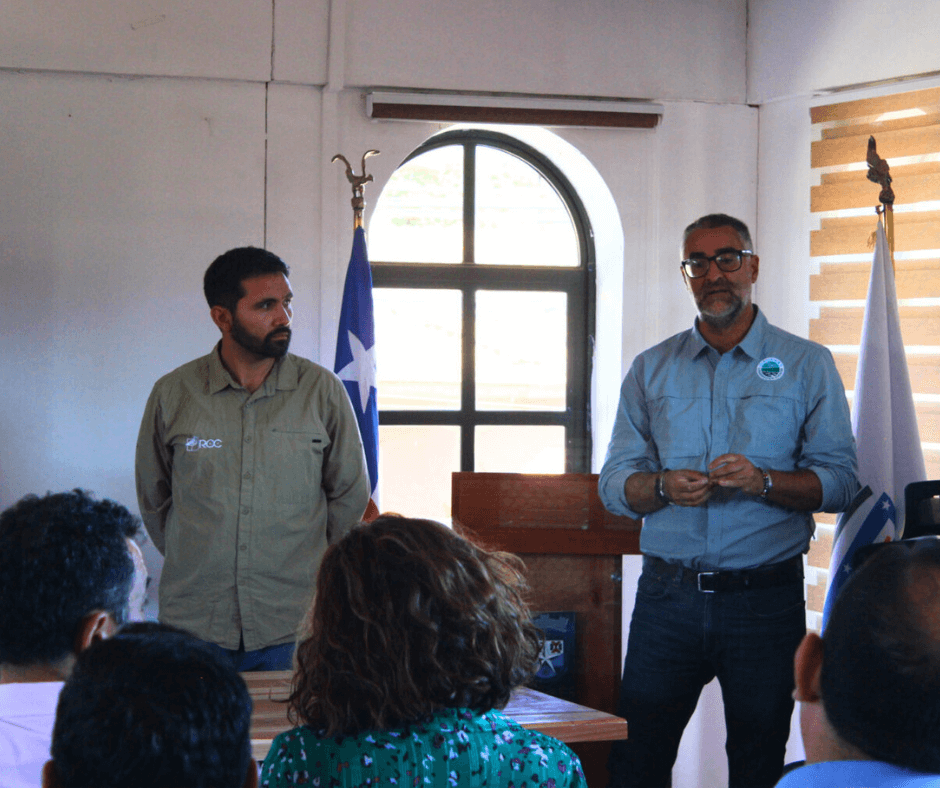
| | Pictured: (Left) Mixed flock at Mataquito-Huenchullamí WHSRN site. Photo: Juan Carlos Carreño Rojas (Right) Franco Villalobos and Manomet's Diego Luna Quevedo during visits to the community. | Photo: ROC. | |
Big News from Chile
A key site for American Oystercatchers and Whimbrels is moving toward official protection, thanks to collaboration between local communities, conservation groups, and WHSRN partners. Located along Chile’s Gulf of Arauco, this critical stopover and breeding area supports thousands of migratory shorebirds each year—and now it's one step closer to long-term conservation.
Learn more about this unique site here >>
| | |
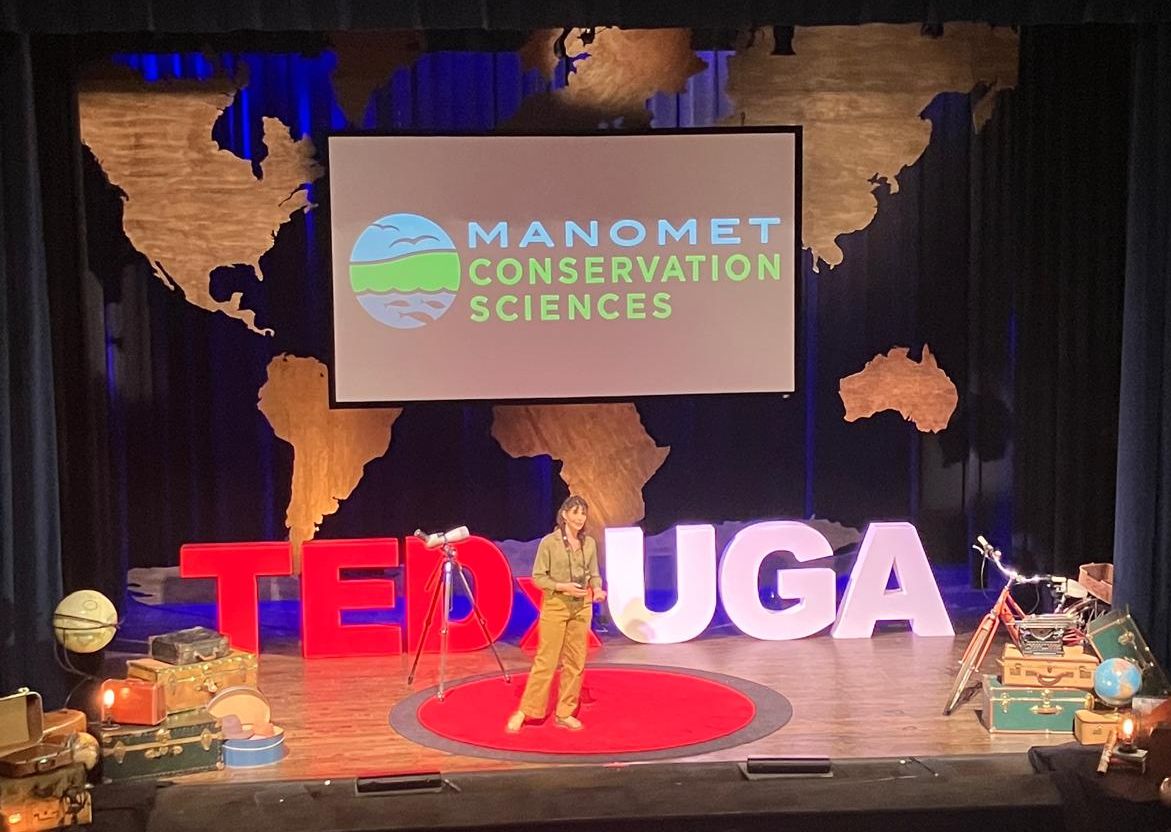
What do shorebirds and TED talks have in common? Manomet's Dr. Abby Sterling! Abby was chosen from hundreds of applicants from her alma mater, University of Georgia to talk about some of the planet's most remarkable long-distance migrants. | Photo: Manomet/ Allie Hayser | | No Boundaries Vintage Binocular Raffle! | | | | |
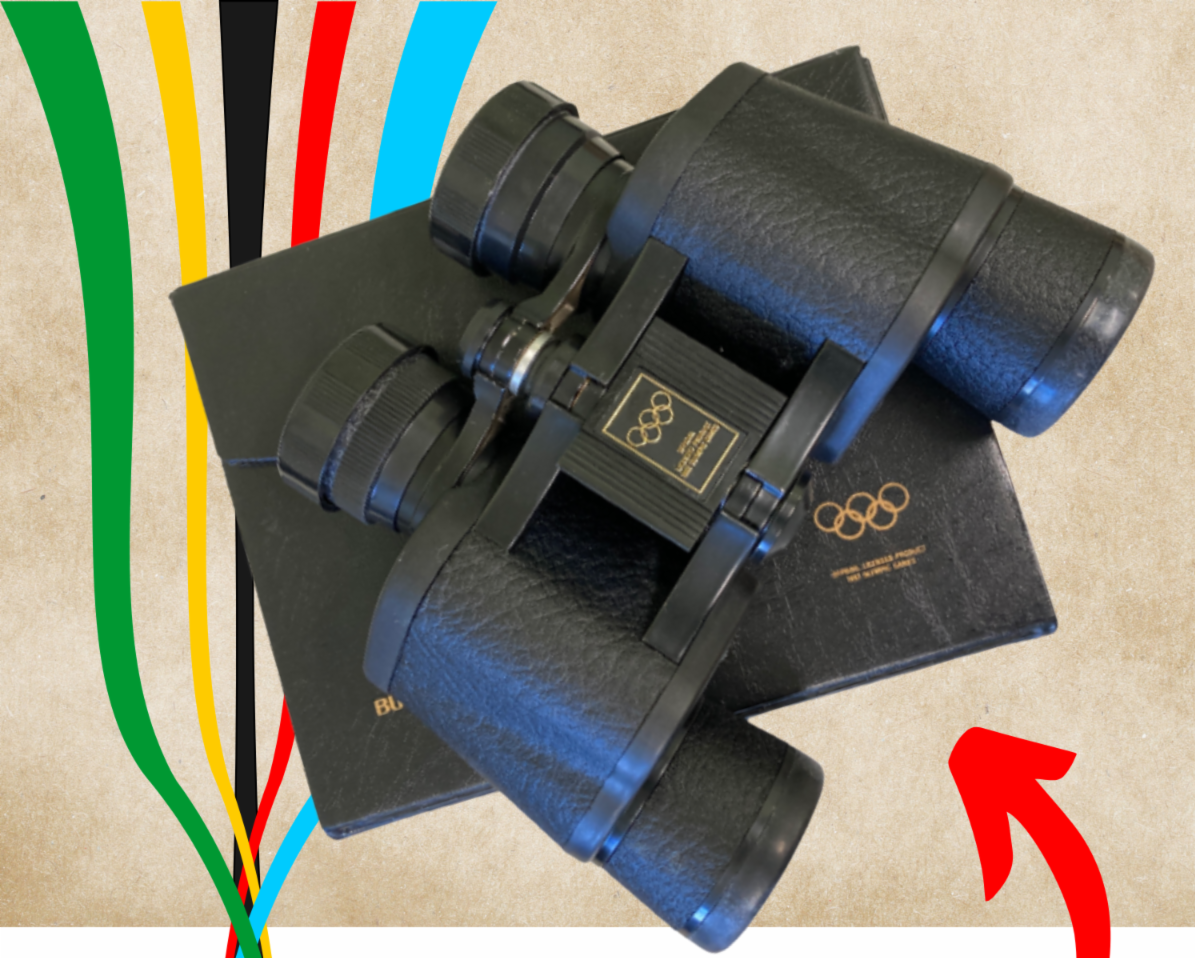
Congratulations to our raffle winners who donated at least $5 to our No Boundaries Shorebird campaign for a chance to receive a pair of vintage 1992 Olympic Binoculars!
A big round of applause to:
Cindy Cobb
Maria McCarthy
Wendy Miller
Jill Jewell Mathieu
Paul West
Carol Jankowski
Annaleah Gonzalez
| | |
Thank you all—and everyone who donated—for supporting Manomet’s No Boundaries campaign! Your generosity helps protect migratory shorebirds across the Americas. Winners will be contacted shortly to arrange delivery of their prizes!
READ MORE ABOUT NO BOUNDARIES >>
| | Thank you to our recent corporate partners for helping Manomet deliver its mission of improving the health of flyways, coastal ecosystems, and working lands and seas. | | | | |