November 2025

In This Issue:

  1. NH lawmakers get lesson in carbon capture forestry
  2. How does Maine’s forest carbon credit market work?
  3. Less snow makes trees absorb less carbon, according to new BU study
  4. New “Carbon Stewardship on National Forests and Grasslands” short course launched
  5. New maps help decision-makers factor albedo into tree-planting strategies
  6. ICYMI: Forest Management & Stewardship Plan Addendum for Carbon and Climate Resiliency
  7. Adaptation Planning and Practices online training, January 26 to March 16, 2026

NH lawmakers get lesson in carbon capture forestry


Charles Levesque, president of Innovative Natural Resource Solutions LLC, who helped found the Northeast Forest Carbon and Climate

Partnership gave a presentation to the joint New Hampshire House/Senate Carbon Sequestration Program’s Study Committee. The committee will work for the coming months to understand and perhaps suggest possible legislation as the state faces the advent of timber tracts being used for carbon sequestration.


Read the article

How does Maine’s forest carbon credit market work?


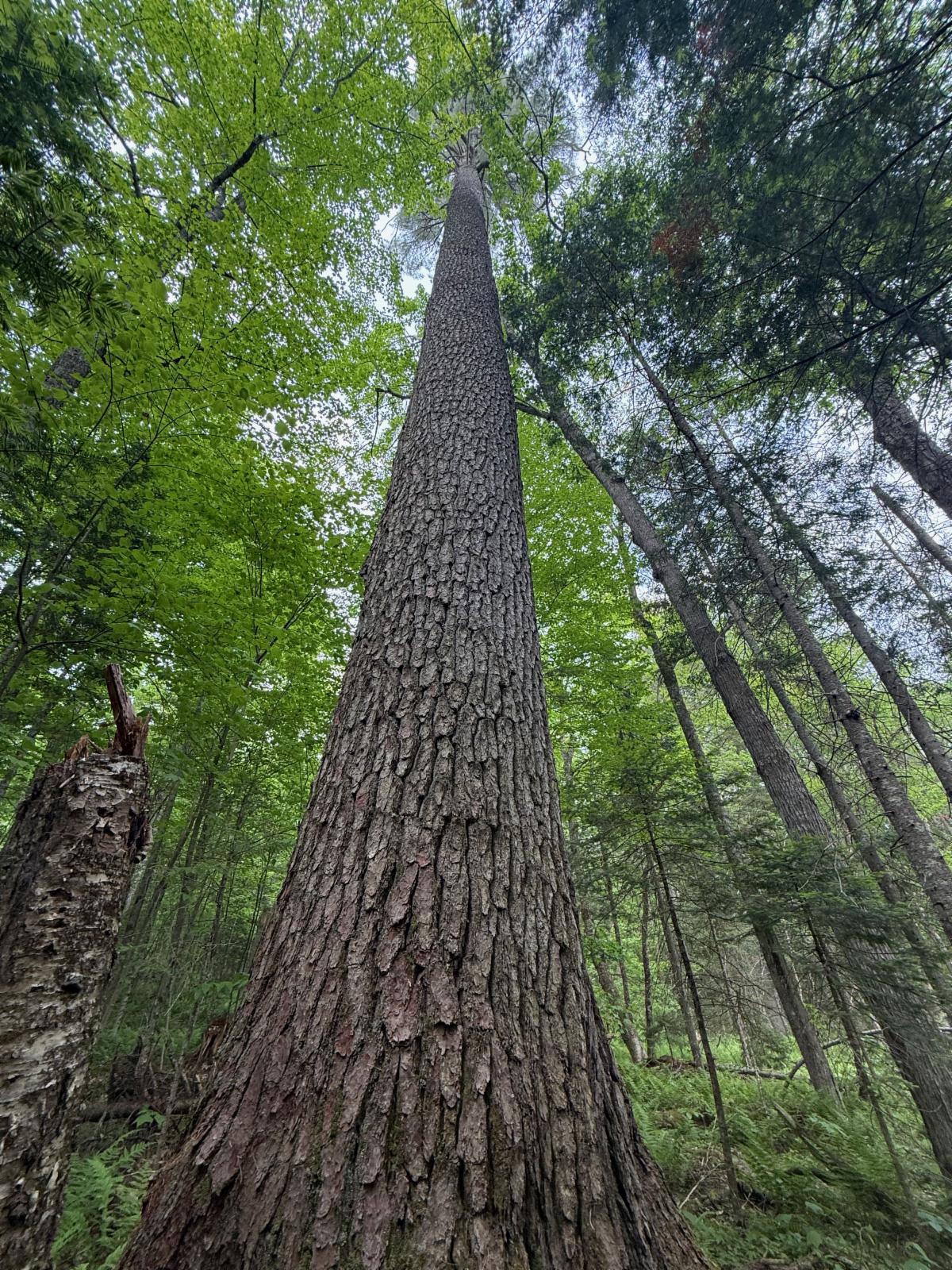
Maine landowners are beginning to tap into the voluntary forest carbon credit market — selling credits based on the carbon their trees sequester. But access isn’t easy, especially for small, family-owned woodlots: accurately measuring carbon storage requires costly surveys. To make things more affordable, developers are turning to remote sensing and LiDAR technology, which can map out individual trees and estimate carbon storage more precisely. At the same time, the state of Maine is launching incentive programs, backed by federal funding, to reward landowners for climate-friendly forestry practices. However, long-term success hinges on reliable data — and ongoing support for forest inventory programs to reduce uncertainty in carbon calculations.


Read the article

forestry-climate-tile.jpg

Less snow makes trees absorb less carbon, according to new BU study


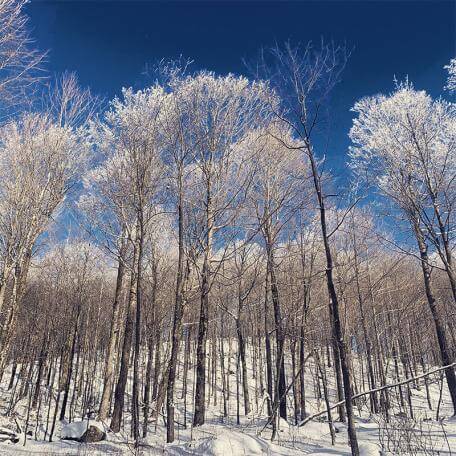
A new study reveals that shrinking snowpacks could significantly undermine forests’ ability to capture carbon. Although warmer summers boost tree growth, the lack of insulating snow slows growth dramatically. The authors warn that many Earth system models may overestimate the carbon-sequestration potential of northeastern forests because they fail to account for these winter dynamics.


Read the article

New “Carbon Stewardship on National Forests and Grasslands” short course launched


Michigan State University's Forest Carbon and Climate Program (FCCP) has released a new “Carbon Stewardship on National Forests and Grasslands” short-course co-developed in collaboration with the Northern Institute of Applied Climate Science. The course is freely available to interested learners.


National Forest and Grasslands Carbon Course

New maps help decision-makers factor albedo into tree-planting strategies


A new study highlights how restoring tree cover can, in some locations, heat up the Earth rather than cool it by affecting how much sunlight the surface reflects (i.e. 'the albedo').  Albedo can cause large reductions to the climate benefit of tree planting – but new science helps identify locations with greatest cooling potential. The researchers provide a tool practitioners and land managers can use to determine just how much of a problem albedo is for any reforestation or afforestation project on the globe. 


Read the article


ICYMI: Forest Management & Stewardship Plan Addendum for Carbon and Climate Resiliency


The Northeast Forest Carbon and Climate Partnership authored a Guide for a Forest Management/Stewardship Plan Addendum for Forest Carbon and Climate Resiliency that provides suggested steps for foresters and managers when considering how to address forest carbon and climate resilience goals in forest management plans.


Access the Guide

Adaptation Planning and Practices online training, January 26 to March 16, 2026


Hosted by the Northern Institute of Applied Climate Science and USDA Northern Forests Climate Hub, this is an interactive training or forest and natural resource managers working in New England (CT, MA, ME, NH, RI, VT) and New York to learn about climate change impacts relevant to the region, and to identify customized adaptation actions appropriate to local ecosystems (rural and urban), habitats and resource areas, and with cultural perspectives. Throughout this 8-week training, participants will develop robust project-specific climate adaptation plans using the Adaptation Workbook and will receive coaching and feedback from NIACS staff in structured weekly web-based lectures and group discussion meetings. There are no registration fees. The 8-week online training begins January 26 and finishes March 16, 2026. Registration is required. 


Learn More and Register

Who to Contact in Your State


  • Connecticut – Andrea Urbano, Service Forester, CT Dept. of Energy and Environmental Protection – Andrea.Urbano@ct.gov
  • Maine – Andy Whitman, Climate/Carbon Specialist, Maine Forest Service – Andrew.Whitman@maine.gov
  • Massachusetts – Christina McKeown, MA DCR Climate Forester – Christina.MCKeown2@mass.gov
  • New Hampshire – Steve Roberge, Extension State Specialist, UNH Cooperative Extension – Steven.Roberge@unh.edu
  • New York – Molly Hassett, Forest Climate Section Leader, NY DEC, Division of Lands and Forests – Molly.Hassett@dec.ny.gov
  • Rhode Island – Nancy Stairs, Cooperative Forestry Program Supervisor, RI Dept of Environmental Management, Div. of Forest Environment – Nancy.Stairs@dem.ri.gov
  • Vermont – Al Freeman, Climate Forester, VT Dept. of Forests, Parks and Recreation– Alissa.Freeman@vermont.gov
 

Sign Up for this Newsletter! Link

 
X Share This Email
LinkedIn Share This Email
Facebook  X  Instagram