In This Issue:
- Update on the Securing Northeast Forest Carbon Program
- Who to contact in your state
- Forest carbon and climate workshops in New York and New Hampshire this summer
- Lessons from the first American Forest Foundation carbon auction
- Group of scientists review and rate carbon offset protocols
- New forest carbon inventory for Vermont
- Research shows that dead trees in streams can store large amounts of carbon
- Maine landowners shape forests for carbon storage
- In case you missed it: A Guide to Forest Carbon in the Northeast
| | | |
Update on the Securing Northeast Forest Carbon Program
The Securing Northeast Forest Carbon Program was created to be a cooperative initiative among the state forestry offices of Connecticut, Maine, Massachusetts, New Hampshire, New York, Rhode Island, and Vermont, launched in 2021. The project was initially funded by a USDA Landscape Scale Restoration Grant, which concluded this past winter. Recognizing the value of the collaboration and its educational outreach, University of Vermont Extension has stepped in to continue facilitating the program, including maintaining the website and newsletter to ensure ongoing communication and engagement.
We’ve also decided to change the name to the Northeast Forest Carbon and Climate Partnership. We think this name better reflects the group moving forward. The website url will remain the same.
Reach out to Ali Kosiba (alexandra.kosiba@uvm.edu) with any questions or thoughts.
| | |
Who to Contact in Your State:
-
Connecticut – Andrea Urbano, Service Forester, CT Dept. of Energy and Environmental Protection – Andrea.Urbano@ct.gov
-
Maine – Andy Whitman, Climate/Carbon Specialist, Maine Forest Service – Andrew.Whitman@maine.gov
-
Massachusetts – Christina McKeown, MA DCR Climate Forester – Christina.MCKeown2@mass.gov
-
New Hampshire – Steve Roberge, Extension State Specialist, UNH Cooperative Extension – Steven.Roberge@unh.edu
-
New York – Molly Hassett, Forest Climate Section Leader, NY DEC, Division of Lands and Forests – Molly.Hassett@dec.ny.gov
-
Rhode Island – Nancy Stairs, Cooperative Forestry Program Supervisor, RI Dept of Environmental Management, Div. of Forest Environment – Nancy.Stairs@dem.ri.gov
-
Vermont – Al Freeman, Climate Forester, VT Dept. of Forests, Parks and Recreation– Alissa.Freeman@vermont.gov
| | | |
Happening this summer: Forest Carbon and Climate Workshops
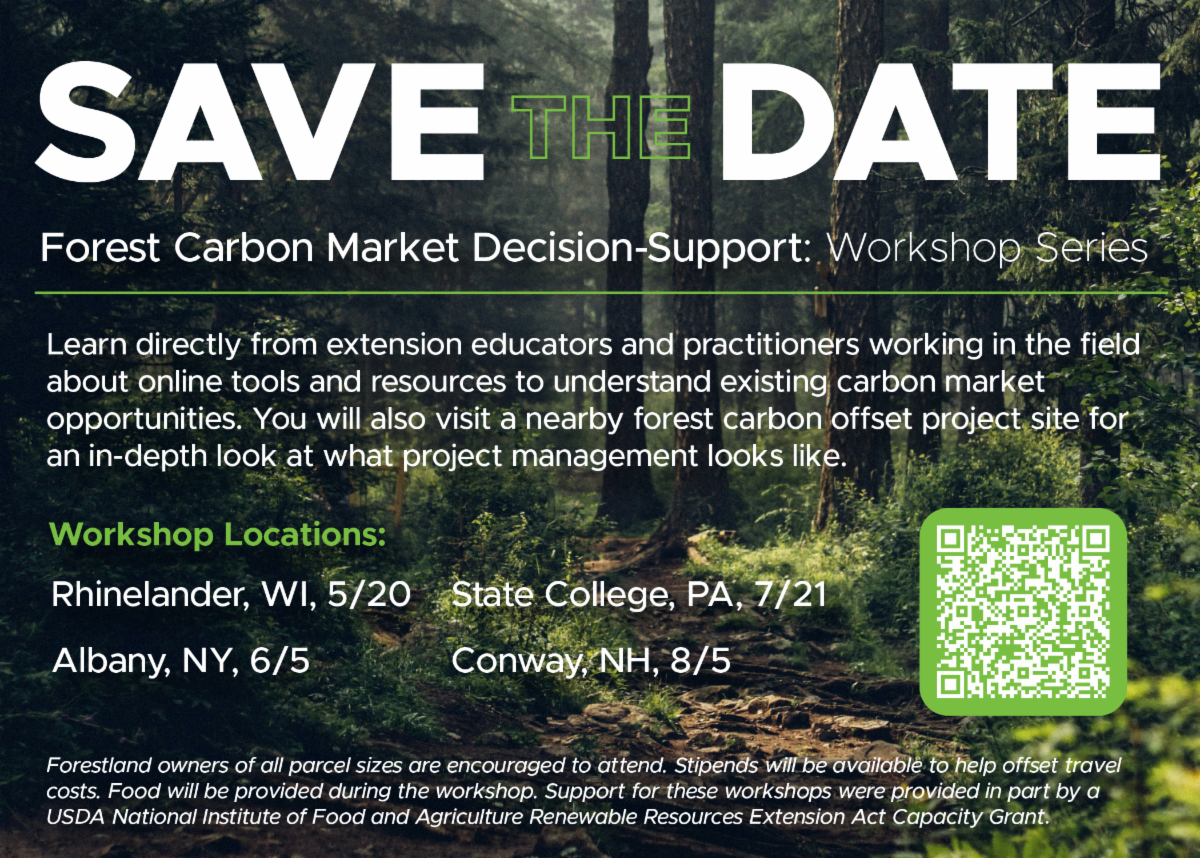
The Michigan State University Forest Carbon and Climate Program will be hosting a series of workshops for Voluntary Forest Carbon Markets across the eastern US this summer. Participants will have the opportunity to learn directly from extension educators and practitioners working in the field about online tools and resources to understand existing carbon market opportunities. Over the course of 1-day, participants will also visit a nearby forest carbon offset project site for an in-depth look at what project management looks like. To learn more about the workshops please click here.
Forestland owners of all parcel sizes are encouraged to attend. Other forestry professions and extension professions are encouraged to attend. There is no cost to attend a workshop. Food will be provided during the workshop. Participants are eligible for travel reimbursements up to $150. Register here!
| | | | |
Lessons from the First American Forest Foundation Carbon Auction
American Forest Foundation hosted its first Carbon Auction for carbon credits generated from the Family Forest Carbon Program (FFCP). However, the auction didn’t go as planned. The feedback was that the format did not meet buyers’ needs. To read more about this auction, and how AFF is moving forward,
Check out this article here!
| | |
Group of Scientists Review and Rate Carbon Offset Protocols
A team of scientists evaluated and scored 20 forest carbon credit protocols. The results suggest that most protocols are not strong enough to ensure that certified credits are high-quality. They concluded that:
1. Existing forest carbon credit protocols are too weak to ensure high-quality credits
2. Key concerns are with non-permanence risk, additionality and baselines, and leakage
3. Protocol improvements are needed to deliver reliably high-quality forest carbon credits
4. Non-offsetting financing mechanisms are needed to enhance forest carbon storage
Check out the report and scorecard here!
| | |
New Forest Carbon Inventory for Vermont
To monitor the carbon benefits of Vermont’s forest sector, Dr. Alexandra Kosiba of UVM Extension prepared the recently released 2025 Vermont Forest Carbon Inventory. The inventory covers carbon stored in forests, as well as carbon gains and losses across the forest sector, including sequestration by existing forests, urban trees, newly established forestland and harvested wood products in use and in landfills. It also measures emissions from when a forest is converted to another type of land use, such as agriculture or development.
Read the report here!
| | | | |
Research Shows that Dead Trees in Streams Store Large Amounts of Carbon
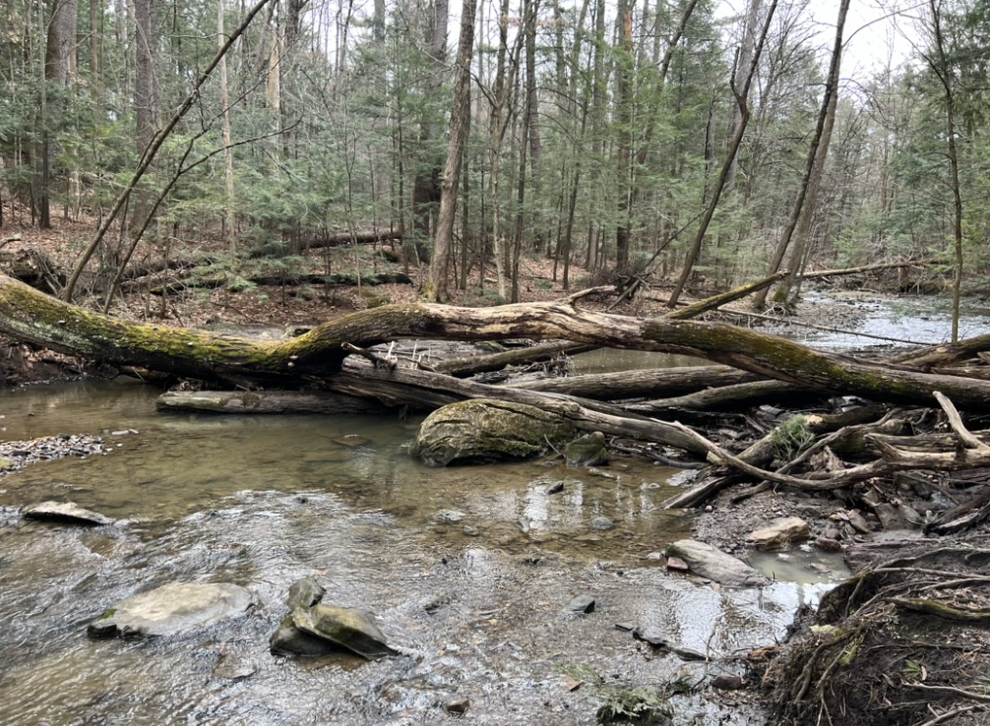
North Country Public Radio interviewed University of Vermont researchers about their paper in the journal Ecosystems. The authors quantified the amount of carbon in forested streams stored in dead logs. They found that large trees contributed disproportionately to the amount of carbon, which related to the forest’s complexity.
Listen to the story here!
| | | | |
Maine Landowners Shape Forests for Carbon Storage
The Appalachian Mountain Club details strategies for developing climate-smart forestry on large timberland holdings, both privately and publicly owned. It stresses the need for managing harvests with pre-commercial thinning, cutting small, low-value trees to give more commercially valuable timber room to thrive.
Read article here!
| | | | |
In case you missed it: A Guide to Forest Carbon in the Northeast
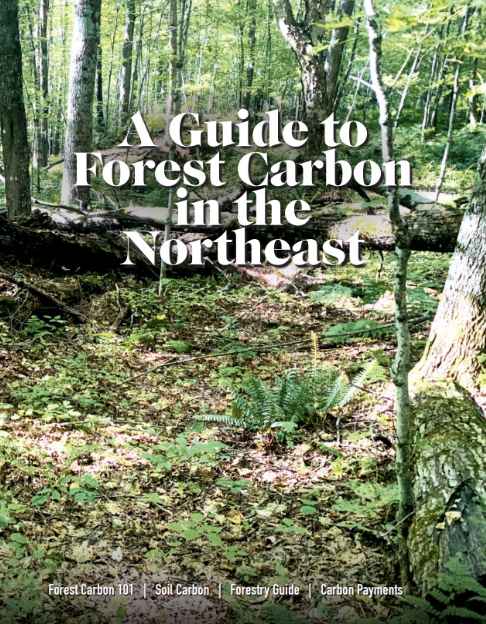
A reminder - there is a new publication through Northern Woodlands by Dr. Alexandra Kosiba, UVM Extension, and funded through the USDA Forest Service grant Securing Northeast Forest Carbon Program. The publication can be found online here!
The Guide contains chapters on Forest Carbon 101, Soil Carbon, Managing for Forest Carbon and Forest Carbon Markets and is the compilation of 4 articles that ran in Northern Woodlands magazine in 2023. Additional information including a new forest carbon glossary and next steps for landowners is included.
A hefty supply of the printed version of the publication is with the state forestry agencies in New England and New York. If you want a printed copy or copies, you should contact the individuals above. Note: not all state agencies will be able to mail printed copies but they can tell you where you can pick them up.
| | | Sign Up for this Newsletter! Link | | Northeast Forest Carbon and Climate Program | Contact Us | FAQs | Privacy Policy |
| | | |