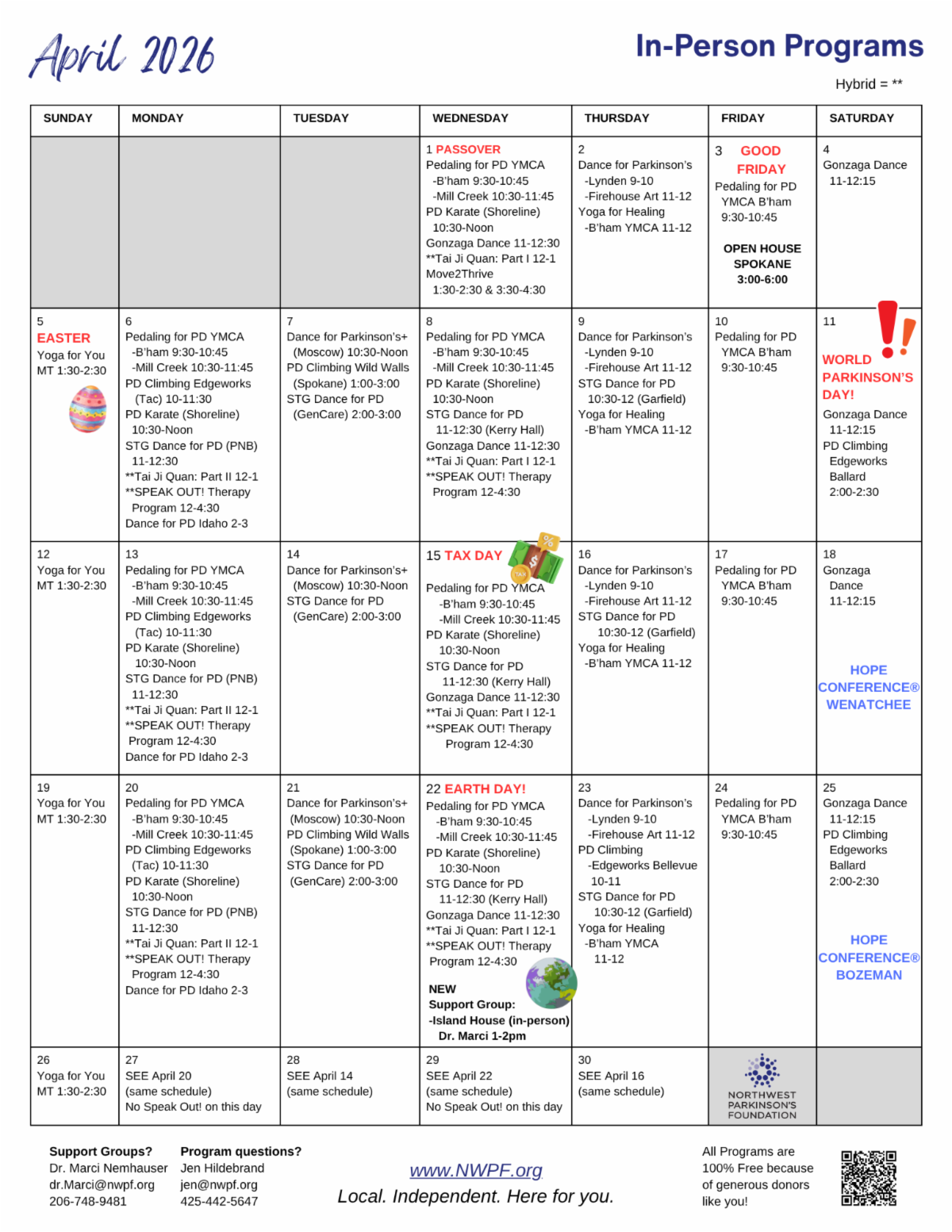
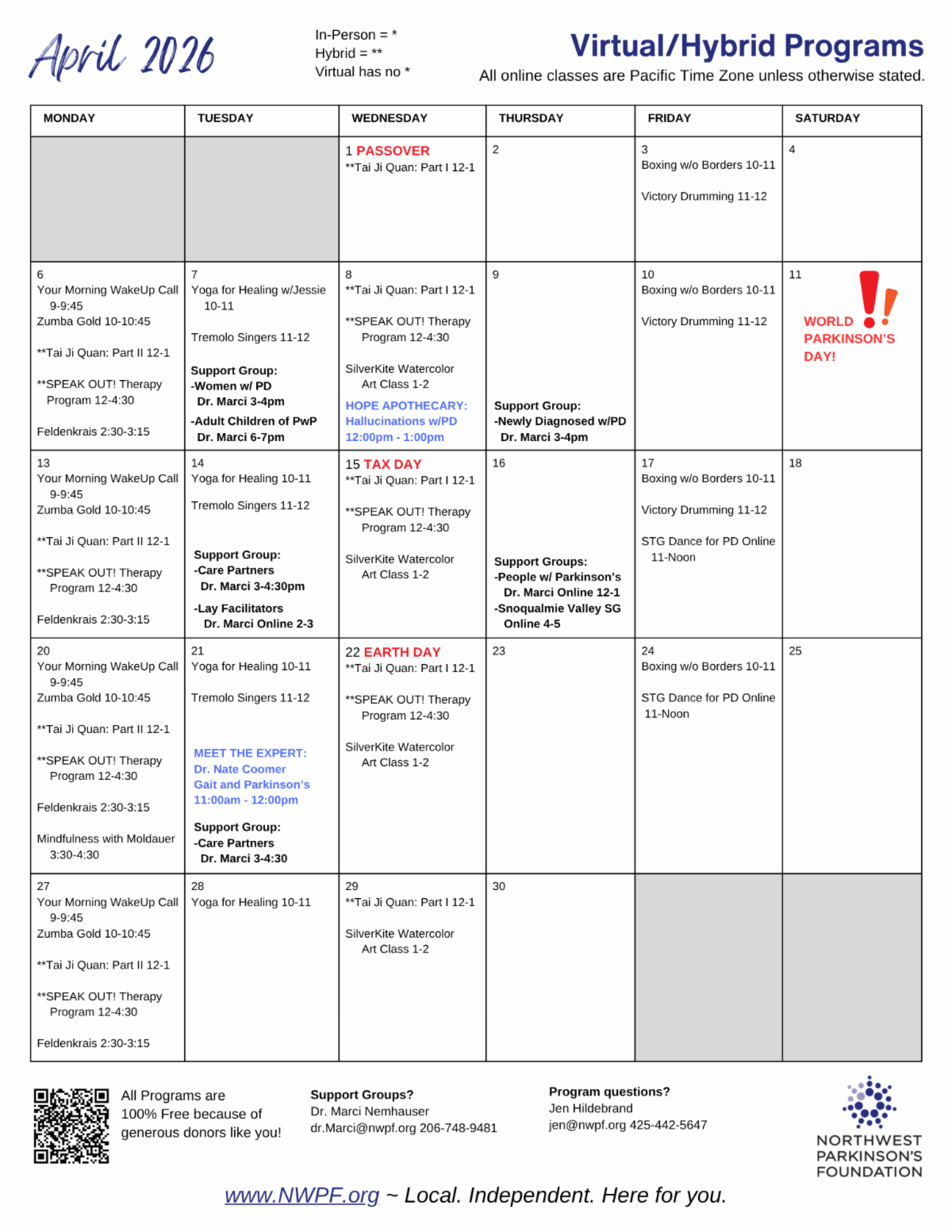
|
💜 This is the Kick-off Issue!!
Just in time for April Parkinson's Awareness Month.
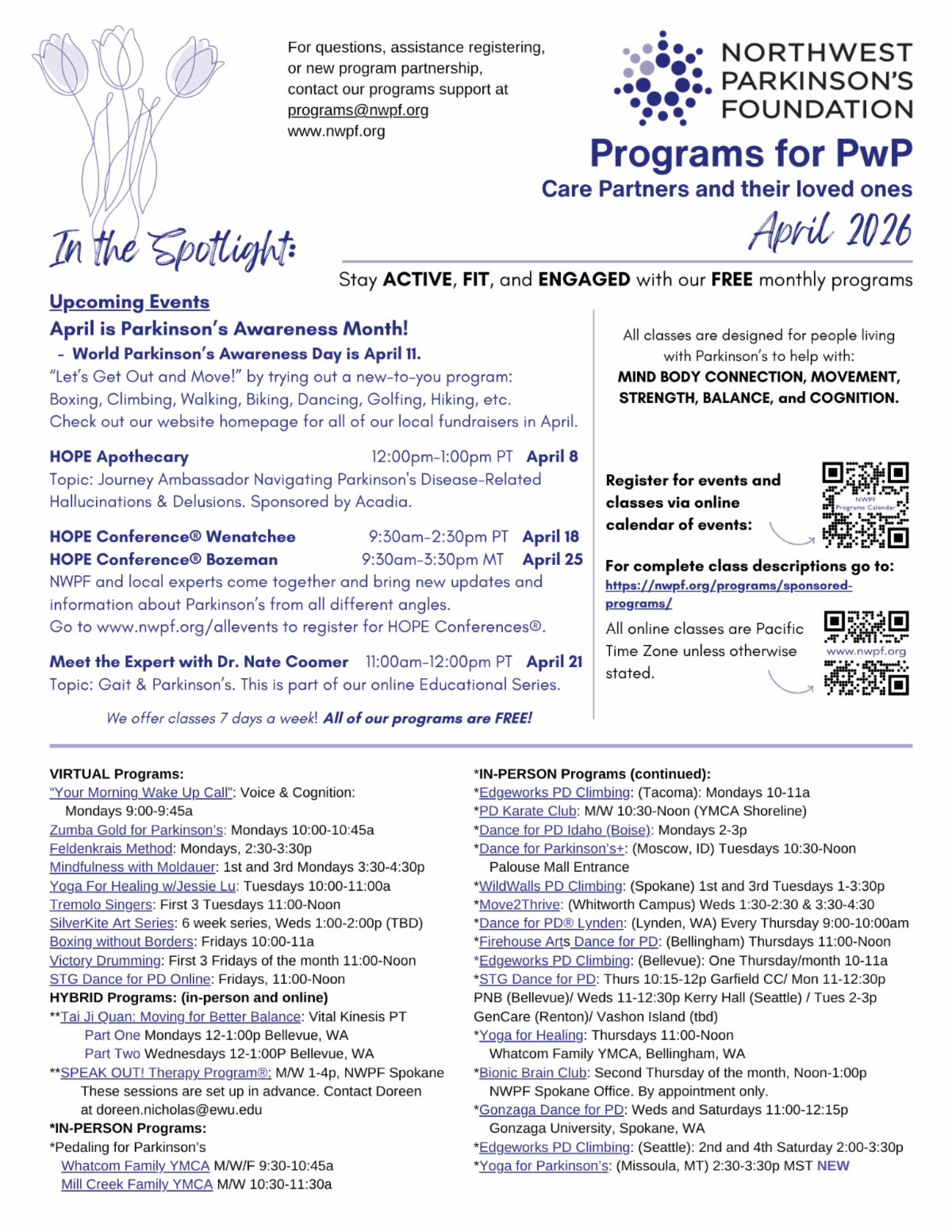
Please enjoy the NEW Northwest Parkinson's Connection for Messages of HOPE, our Monthly Blog and/or pieces of writing submitted, Highlights, articles that we find interesting, etc. This will come out the 1st of each month. Our weekly Monday newsletter, What's Happening This Week, will still have the program and event details that are happening during the week.
This will be a place that you can slow down, read, reflect, connect to what's happening in the world of Parkinson's.
| | PARKINSON'S AWARENESS MONTH | | |
April is Parkinson’s Awareness Month
By Dr. Marci Nemhauser | March 28, 2026
(Article in Senior Rising Newsletter, Youth Family Services Mercer Island)
A time to shine a light on Parkinson’s disease and the millions of individuals and families it affects worldwide. Parkinson’s is a progressive neurological condition that impacts movement, balance, and quality of life, but it does not define the strength, resilience, or contributions of those living with it.
This month is an opportunity to increase understanding, reduce stigma, and show support for people with Parkinson’s, their care partners, and the healthcare professionals and researchers working toward better treatments and, ultimately, a cure. By learning more, sharing resources, and supporting advocacy and research efforts, we can help build a more informed and compassionate community.
Together, let’s raise awareness and stand with the Parkinson’s community—not just in April, but all year long.
| | |
MOVE FOR PARKINSON'S MONTH: Hope through Awareness
April is a time to deepen understanding of Parkinson’s and recognize the strength of those living with it every day. Awareness grows through shared stories, education, and open conversations that help others better understand the realities — and the resilience — within the Parkinson’s community.
At Northwest Parkinson’s Foundation, awareness means connection, support, and access to programs and resources, at no cost, that empower people to live well. Each voice raised and each story told helps build compassion and progress. Hope grows when communities come together to learn, support one another, and ensure no one faces Parkinson’s without understanding and care.
| | |
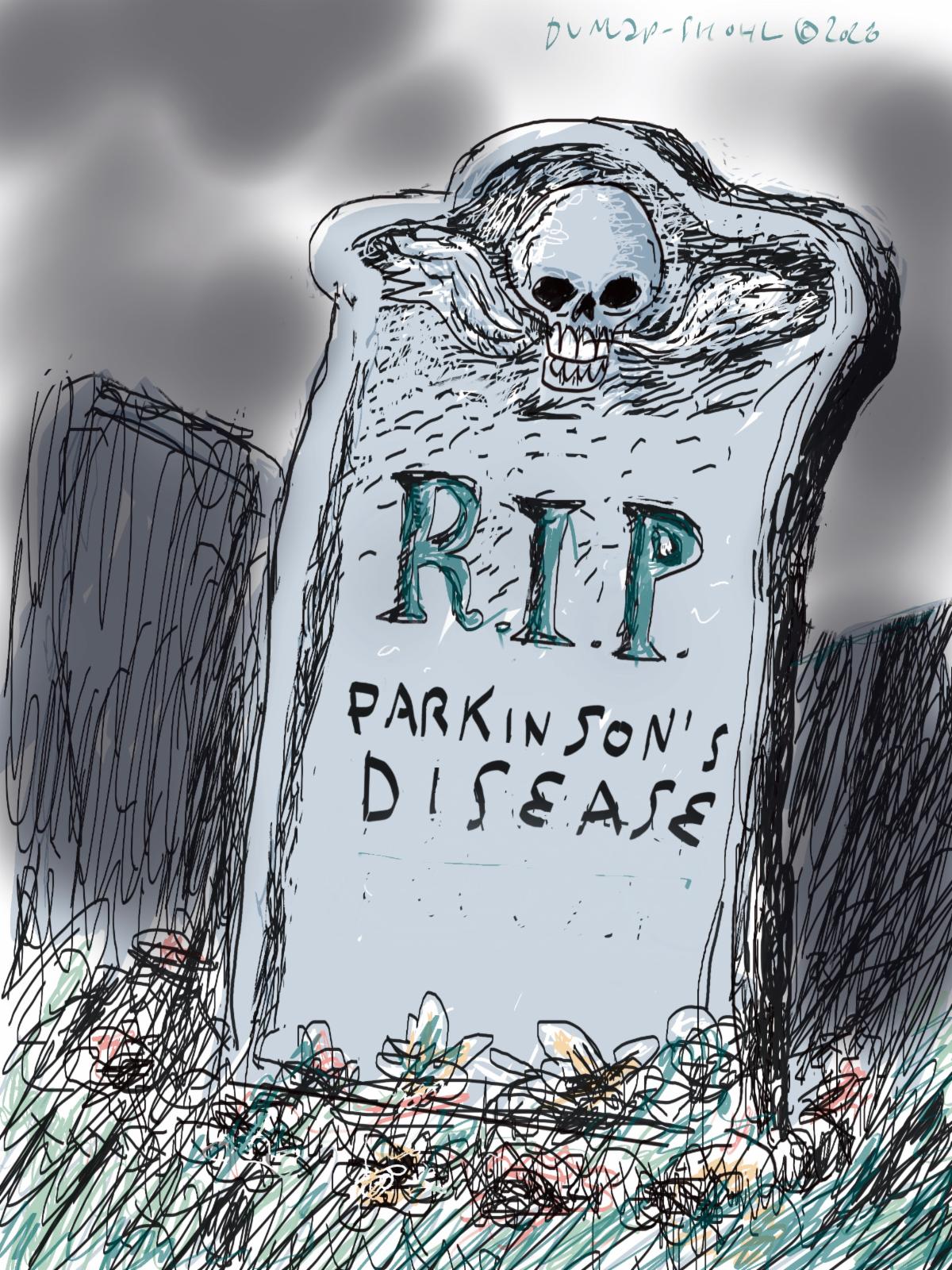
What if there were no Parkinson’s Disease?
By Peter Dunlap-Shohl | April 1, 2028
We all wish Parkinson’s disease would go away. Many smart people have devoted their lives to ending this particular brand of misery, and sooner or later, they will succeed. What would a world without Parkinson’s look like? One way of guessing what a PD-free planet would mean is to look at the world as it is now, and subtract Parkinson’s disease from it. I’ll start.
I hate to admit it, but having Parkinson’s has defined and shaped me in powerful ways, despite my vows to avoid exactly that. I took risks and engaged in activities I never would have gone near, but for Parkinson’s.
Some of those risks and activities: Managing a support group, and its sub-tasks, like rounding up speakers, providing transportation for an infirm (and cranky) group member, moderating meetings, securing venues for meetings, and bringing treats to the group sessions is one big example. Organizing fundraisers was another big one; Undergoing brain surgery, another.
Parkinson’s excepted, I have never been so physically fit. Convinced as I am about the power of exercise to slow the progression of our affliction, I am strict about adhering to my exercise program, pedaling intervals for at least 30 minutes every other day, alternating a high pedal cadence near my maximum heart rate with a slower recovery cadence.
This is not out of some admirable discipline; it is driven by naked fear. Fear of what will become of me should I fail to keep up my hours on the bike, pedaling like a man possessed, getting nowhere fast, but staying ahead of Parkinson’s or at least falling behind more sloooooowwwwwwllllllllllllyyyyyy than I would otherwise.
And speaking of falling, if there were no PD, I wouldn’t have two broken kneecaps, a matched set! Said set acquired in separate falls that attacked out of nowhere and left me with the bitter knowledge of how it felt if you crossed the IRA in the 1980’s and they caught up with you.
Nor would I have an arm broken at the wrist and the femur, acquired in yet more falls. You can’t keep a good person with PD down, but given their haphazard balancing skills, they will likely keep themselves down for you.
I think it’s safe to say that in a world without PD, I at least would look considerably less worn and raggedy. To that extent, a better world seems like a given if we could ditch Parkinson’s.
But enough about me, what about you? On that subject, I can say one thing for certain. In a world without Parkinson’s disease, you wouldn’t be reading this PD blog.
Read this and other blogs on our website.
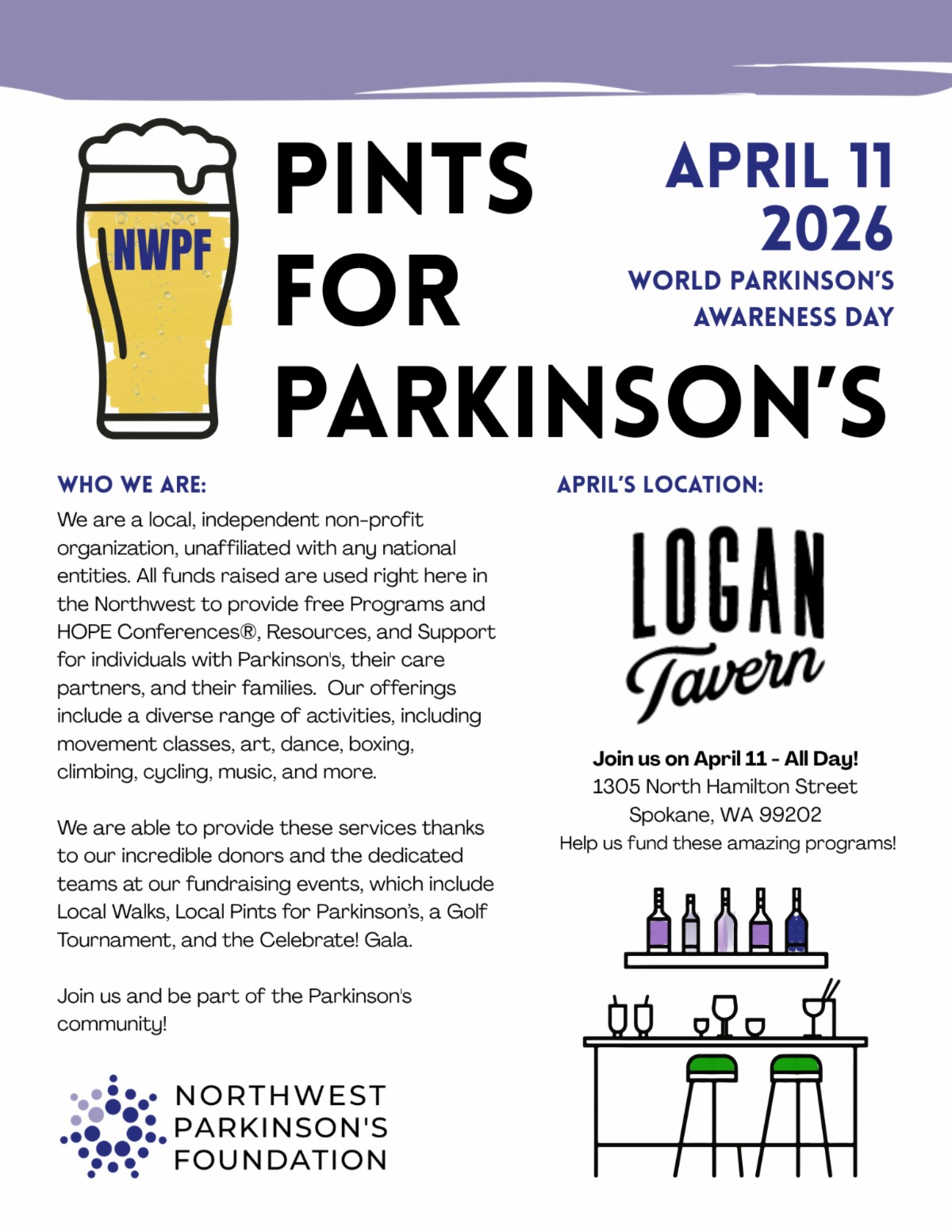
| | FUNDRAISERS FOR THE MONTH OF APRIL! | | Join us as raise funds and come together as a Parkinson's Community. April 11 is World Parkinson's Day. See below if there is a fundraiser near you! | | |
SPOKANE!
🍺 Pints for Parkinson's 🍺
Saturday, April 11, 2026
All Day Long
Logan Tavern
(Stay tuned for the May's Pints event)
| |
|
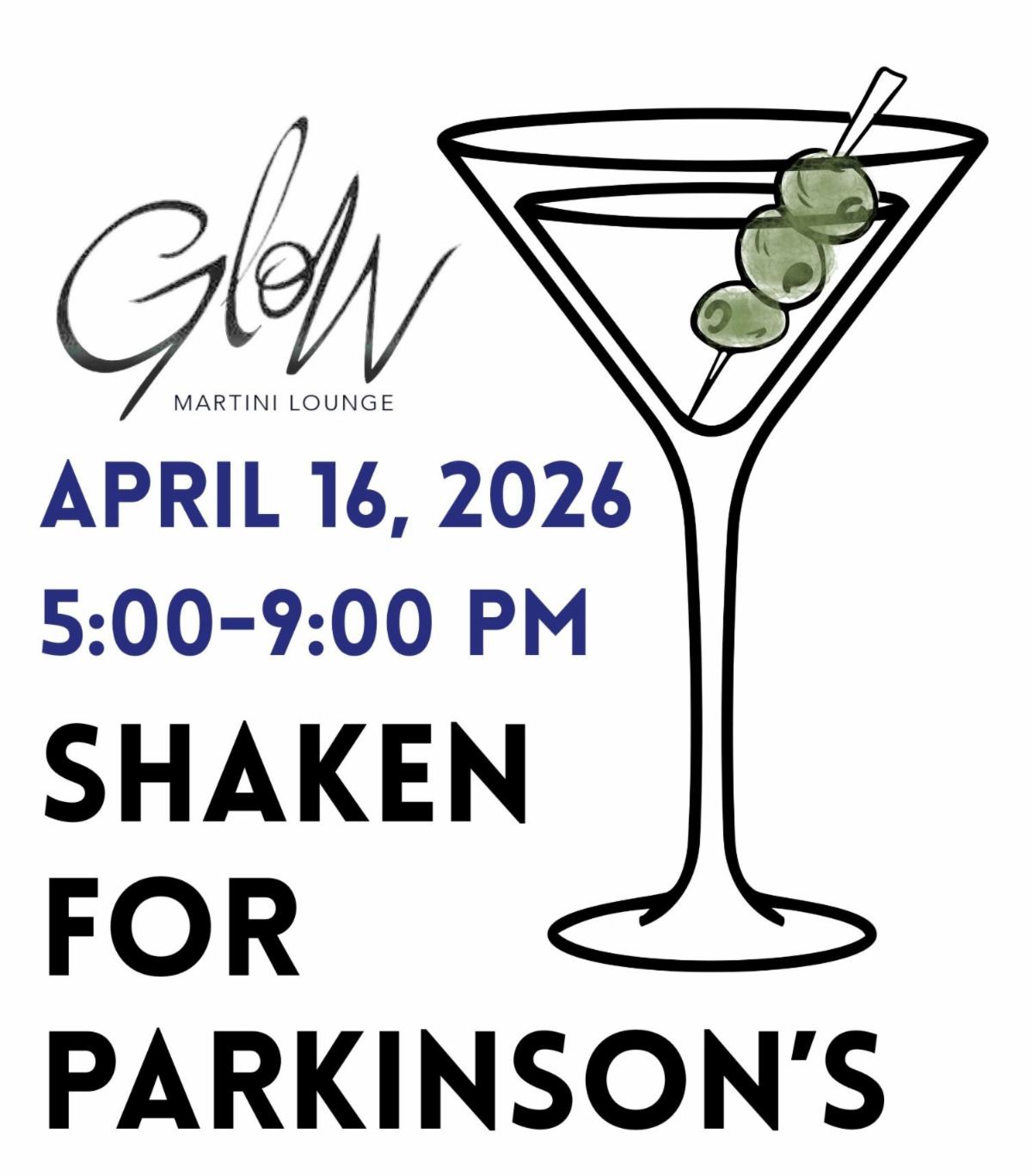
BONNEY LAKE!
🍸 Shaken for Parkinson’s 🍸
Thursday, April 16, 2026
5:00-9:00 PM
Glow Martini Lounge
| |
💅🏼 Pedicure for Parkinson's 💅🏼
8th Day Nails
Date coming soon!
💜 Keep an eye on Social Media for more April Fundraisers!
| |
|
EPA Moves to Roll Back PFAS Drinking Water Protections, Leaving Americans Exposed to Toxic Chemicals at the Tap
Environmental Protection Network
Aaron Bharucha
September 12, 2025
| |
Washington D.C. – Yesterday, the U.S. Environmental Protection Agency (EPA) filed a motion in federal court to vacate portions of its 2024 rule setting drinking water limits for PFAS, also known as “forever chemicals,” seeking to strike enforceable standards for four different PFAS: GenX, PFHxS, PFNA, and PFBS. This action follows the agency’s earlier decision to extend by two years the compliance deadline for drinking water systems to meet standards set for PFOA and PFOS, the two most widespread PFAS.
Dr. Betsy Southerland, the former Director of the Office of Science and Technology in EPA’s Office of Water, a 30-year EPA employee who now volunteers her expertise with the Environmental Protection network, made the following statement on EPA’s efforts to roll back PFAS drinking water standards:
“Every single thing to prevent, control, or clean up PFAS contamination to protect human health is being delayed and undermined by EPA Administrator Zeldin’s current plans. This motion, which aims to rescind standards for dangerous PFAS in our drinking water, is the most egregious example.
“The impact of these chemicals is clear. We know that this is significant for pregnant women who are drinking water contaminated with PFAS, because it can cause low birth weight in children. We know children have developmental effects from being exposed to it. We know there’s an increased incidence of cardiovascular disease and cancer with these chemicals.
“Two of the four chemicals targeted in this motion are the ones that we expect to be the most prevalent, and only increasing contamination in the future. With this rollback, those standards would be gone.
“Americans remain exposed to toxic PFAS in tap water without enforceable national standards.
“Bottom line: If you don’t want to continue drinking these toxic PFAS chemicals for years into the future, you need to buy a filter to protect yourself because EPA will not protect you.”
Background
- Under the Safe Drinking Water Act, EPA is required to set health-protective standards for contaminants in drinking water, including PFAS.
- In 2023, EPA set limits on six PFAS chemicals, based on scientific evidence of their harm to human health.
- In May 2025, EPA announced that it would delay compliance standards for PFOA and PFOS until 2031.
- On Thursday, September 11, 2025, EPA filed a motion in federal court to eliminate enforceable standards for GenX, PFHxS, PFNA and PFBS.
| | | | |
The Trouble with an Aging Generation and Technology
By Ann Flickinger | March 28, 2026
Picture this:
You sit down in the morning, coffee in hand, ready to watch the news. The television won’t load. A message appears: ⚠️ No network detected.
You check the router. Lights are blinking. You restart the TV. Nothing changes. You call your internet provider and wait on hold. When someone finally answers, they run a remote test and tell you, politely, that everything looks fine on their end. The internet is working.
But it isn’t working. Now what?
For many older adults, this scenario is not unusual — it is becoming routine. Everyday technology problems now require layers of troubleshooting once handled quietly by specialists or never required at all. Today, ordinary tasks demand an understanding of Wi-Fi networks, software updates, passwords, streaming platforms, and device settings.
Turned out to be a wire got bumped and the Wi-Fi router had to be reset, but this required an app, a password reset, and recovery email. It also took the help of younger family member to come over and save the day, who is now set as the recovery email, just in case.
OR this scenario…
You have an iPhone. You thought you had the right passcode, but it says it is wrong. You try again…locked out for 1 hour. $#*@! Eventually the message appears: Your Apple ID has been locked. Please contact Apple Support. $#*@! $#*@!
Your phone is locked. Your iPad is locked. Your Apple ID is locked.
So, now that you have locked yourself out of using said phone to call Apple Support, you go to your computer to try to get your AppleID unlocked. To do that, you need to be able to receive a text message with a recovery pin code on your phone to be able to reset your AppleID. Well, that won’t work because your phone is locked.
At this point, your nephew notices that he hasn’t been able to reach you in a couple weeks, so he comes to help from another state!
Let the circus continue.
Your nephew calls your phone carrier to see if they can unlock the phone to be able to receive this text message.
Set up a pin to talk to Customer Service about your account? Yup.
Remember your pin? Nope.
Now, “to be able to reset the phone and verify you are who you are, we will need you to come into a store.” However, you are not mobile and getting to that store would be a big, complicated arrangement. Too bad.
Skipping to the end, this eventually got straightened out, but involved someone flying in from out of state, a burner phone, and an assisted living shuttle bus among other things. (I literally am not making this up.)
Individually, these stories sound absurd. Increasingly, they are ordinary.
We are quietly creating a new kind of inequality — not based on income or education, but on technological fluency combined with the relentless pace of technological change.
For younger generations, technology feels invisible. Systems update constantly, interfaces change, and new security measures appear without much disruption because adaptation has always been part of their experience. Learning never stops because the environment never stops changing.
For many seniors, however, technology once operated differently. You learned how something worked, and it stayed that way for years. Today, mastery is temporary. Buttons move. Menus reorganize. Password rules change. Security layers multiply. Devices update overnight without explanation.
The challenge is not simply learning technology. It is learning technology that refuses to stay learned.
As healthcare, banking, communication, transportation, and community life move online, difficulty navigating these systems becomes more than inconvenience — it becomes exclusion. Being locked out digitally can mean being locked out socially, medically, and practically.
The frustration runs both ways. Younger people may interpret difficulty as resistance or unwillingness to learn. Older adults often feel embarrassed asking for help or anxious about making mistakes. The result is an empathy gap, where impatience replaces understanding and confidence quietly erodes.
This is not a failure of intelligence or effort. It is a mismatch between human learning patterns and technological design. Humans learn through repetition and stability, modern technology rewards constant adaptation.
A society that depends on technology must decide whether efficiency matters more than inclusion. Designers can prioritize clarity and stability. Families and communities can teach with patience rather than speed. And systems can be built with the understanding that aging is not a niche experience — it is a universal one.
Because given enough time, everyone becomes the person staring at a screen that says the internet works, while nothing works at all.
Your TV service, internet, phone, email providers, etc. are other areas that can be simplified. This is something you can do before it becomes a complete blank stare.
| | APRIL NWPF SUPPORT GROUP DATES | | |
April:
- Women with Parkinson's, Tues, Apr 7 @ 3:00-4:00pm PT
- Adult Children of PwP, Tues, Apr 7 @ 6:00-7:00pm PT
- Newly Diagnosed with PD, Thurs, Apr 9 @ 3:00-4:00pm PT
-
Care Partners for PwP, Tues, Apr 14 @ 3:00-4:30pm PT
- People with Parkinson's, Thurs, Apr 16 @ Noon-1:00pm PT
-
Snoqualmie Valley Area, Thurs, Apr 16 @ 4:00-5:00pm PT
(in-person)
- Island House Support Group, Apr 22 @ 1:00-2:00pm PT
-->Starting up group here/gauging interest (in-person)
Island House, Mercer Island, WA
Everyone is welcome, just sign in at the front!
- Lay Facilitators, Tues, Apr 21 @ 2:00-3:00pm PT
- Care Partners for PwP, Tues, Apr 28 @ 3:00-4:30pm PT
| |
Contact Dr. Marci to join. Or, email us at info@nwpf.org if you are looking for a support group in your area as we update our online list. If you need a consult to help decide your needs, email Dr. Marci, dr.marci@nwpf.org. For a full description of all the NWPF Support Groups go to the NWPF website under Resources.
| | | | | (VIrtual/Hybrid Only Classes) | | |
We are a lifeline of HOPE—for and by
the NW Parkinson's community.
| | If you've benefitted from our programs and services and our guidance through your Parkinson's journey, please consider making a donation. | | To give by phone, please call Pam Reeve at 206-946-6518. | | NW Parkinson's has the highest level of transparency awarded to non-profits! We are committed to upholding this level of transparency so our community can support our work with trust and confidence! | | |
You are receiving this email because you have expressed an interest in Northwest Parkinson's Foundation.
We never share your information with other organizations or companies.
Please Note: Our weekly updates are a collection of recently published articles and stories. They are offered to our readers solely on an informational basis. We urge you to do your own follow up on any of the information found in the articles presented.
The information posted here by www.nwpf.org is not to be considered medical advice and is not intended to replace consultation with a qualified medical professional. If you have any questions or concerns about the information contained in the articles ALWAYS check with your own doctor before trying or following any suggestions found in the articles.
| | | | |