|
Christopher Nolan’s new film, The Odyssey, arrives in cinemas this week.
It stars Matt Damon as Odysseus.
There are gods, monsters, storms, shipwrecks, the Cyclops, Circe, the Sirens and no doubt, enough IMAX thunder to loosen the fillings in your teeth.
Filmed across six countries, using real ships and enormous sets, it cost a reported $250m and opens on 17th July.
The Odyssey tells an enduringly simple story. A man is trying to get home.
Odysseus, has survived ten years of war at Troy.
You might think winning the war would be the difficult part. It wasn’t. The difficult part was getting home to Ithaca.
That took him another ten years…
…because every time home appeared within reach, something else got in the way.
A storm. A monster. A temptation. A disagreement among the gods. The ancient Greeks had a word for the central idea of the story…
…nostos.
Usually translated as homecoming, it means more than travelling from one place to another. It's the return of someone to their home, their family, their place in the world and, ultimately…
…to themselves.
Odysseus’s journey is not over when he first sees Ithaca. He must cross the threshold, be recognised, restore his relationships and reclaim his place in his family and community.
Neither is yer granny’s journey over... when the hospital transport draws up outside her front door.
After days or weeks of hospital deconditioning, she may have to relearn how to manage the ordinary business of living, and resume her place as a parent, grandparent, friend and neighbour.
She has to reclaim her status.
That is nostos.
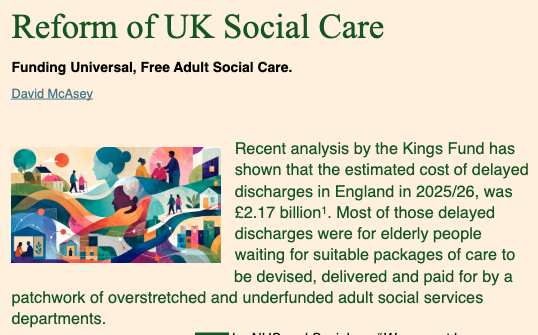
Anyone who has tried to organise a complex hospital discharge will recognise the plot.
A storm over the money.
A monster made of forms, assessments and bureaucracy.
The temptation to cut corners to meet a target.
Professional disagreements about clinical risk, responsibility and cost.
Discharge is a process… tick the boxes, clear the bed and move on.
For the hospital, discharge can look like the end of the journey.
For the patient, it may be where the most difficult part begins.
Getting someone through the hospital doors is not the same as getting them home.
- Does someone have a key.
- Is the heating on.
- Food in the fridge.
- Medicines have arrived and someone understands how and when they should be taken.
- Carers come when they are supposed to.
- The patient knows who to call if something goes wrong.
- The family understands what has happened and what is expected of them.
- Friends and neighbours are ready to pick up the threads of ordinary life.
Most importantly, the person feels safe. Can they get a plate of hot food from the microwave to the table while using a walking frame?
They may have been discharged…
…but has their discharge passed the NOSTOS test?
Needs understood.
One person owns the journey.
Support is in place.
Treatment and transport are ready.
Ongoing contact is clear.
Safe, settled and status restored.
Discharge is where the NHS’s fragmented structure becomes most visible.
We measure delayed discharges, length of stay, beds released and patients leaving before lunchtime… they matter, but…
… they are mainly measures of the hospital’s performance. They tell us very little about whether the patient’s homecoming succeeded.
Nostos would shift the emphasis from moving people out of hospital to moving them back into their lives.
A badly managed discharge can undo days or weeks of skilled treatment.
A good one can restore independence, reduce the risk of readmission and give someone back their confidence and hope.
Odysseus faced storms, monsters and quarrelling gods.
Patients face assessments, handovers, absent carers, missing equipment and medicines that have not arrived, and…
… struggle with the frayed threads of ordinary-life that must somehow be picked up again.
This ancient story is not just the script for a modern movie. It is an allegory for all our journeys and a warning about those we design for other people.
The NHS has become very good at measuring when a patient leaves a bed.
We need to become better at knowing when they have truly arrived home.
That’s the difference between discharge and nostos.
|