Our mission is to inspire meaningful connections to Santa Barbara history. | |
|
Dear Friends,
I hope you enjoy this article about photographer J. Walter Collinge by historian and friend, Hattie Beresford.
Our exhibition, "J. Walter Collinge: Pictorial Santa Barbara & Beyond," is on view now.
Happy reading,
Dacia Harwood
Executive Director
| |
|
Pictorial Splendor in Santa Barbara
By Hattie Beresford
The Santa Barbara Historical Museum’s latest exhibition features one of Santa Barbara’s most noted and prolific photographers, James Walter Collinge. Though his name is little-known today, his documentation of Santa Barbara scenes as well as his pictorial artistry gives us a glimpse into a rich period of our storied past.
Born in Montana in 1883, Collinge bounced from town to town and state to state due his father’s work for the railroads. As a child he suffered several ailments that left him with a severe hearing loss and poor eyesight. His interest in photography was fostered when he worked for a photographer in Oregon, and his poor eyesight, ironically, ended up honing his ability to see and balance form and light.
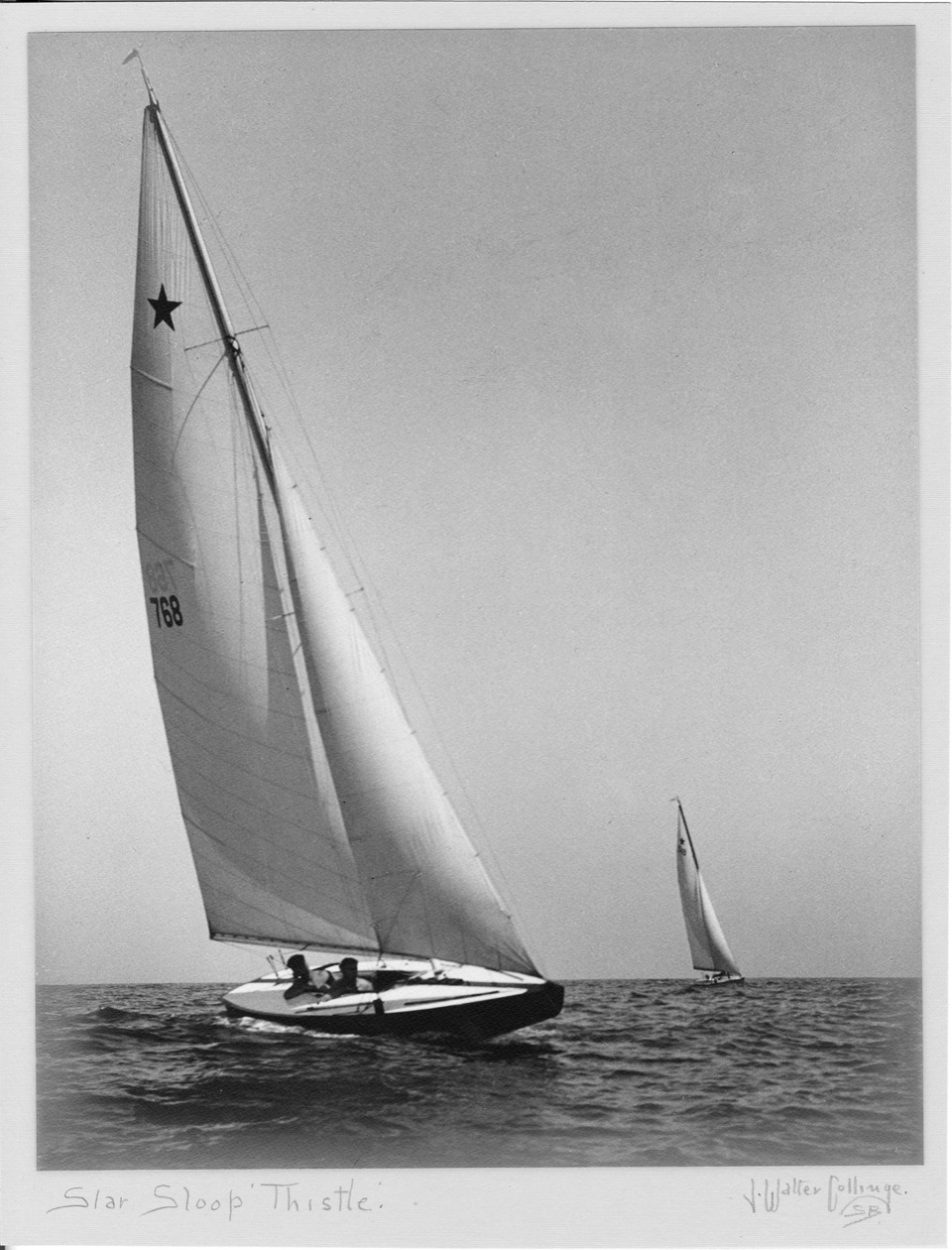
By 1906, Collinge was married and living in Southern California where he eventually opened a stationery store in Pomona. In 1920, he came to Santa Barbara to fulfill his dream of making a living through photography. Almost immediately, the local newspapers began using his photographs of yachts and marine scenes as he was an avid sailor and had become a member of the Santa Barbara Yacht Club. His own boat was appropriately christened Kodak.
|
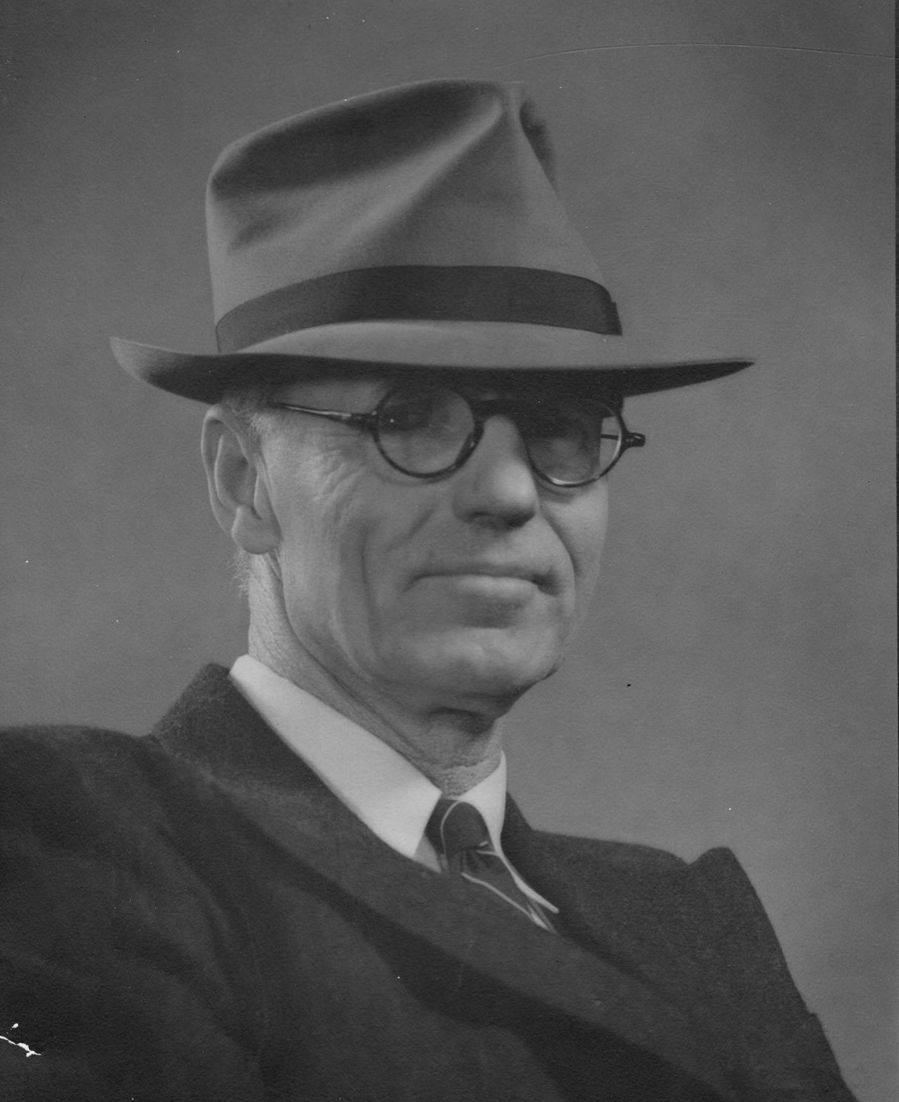
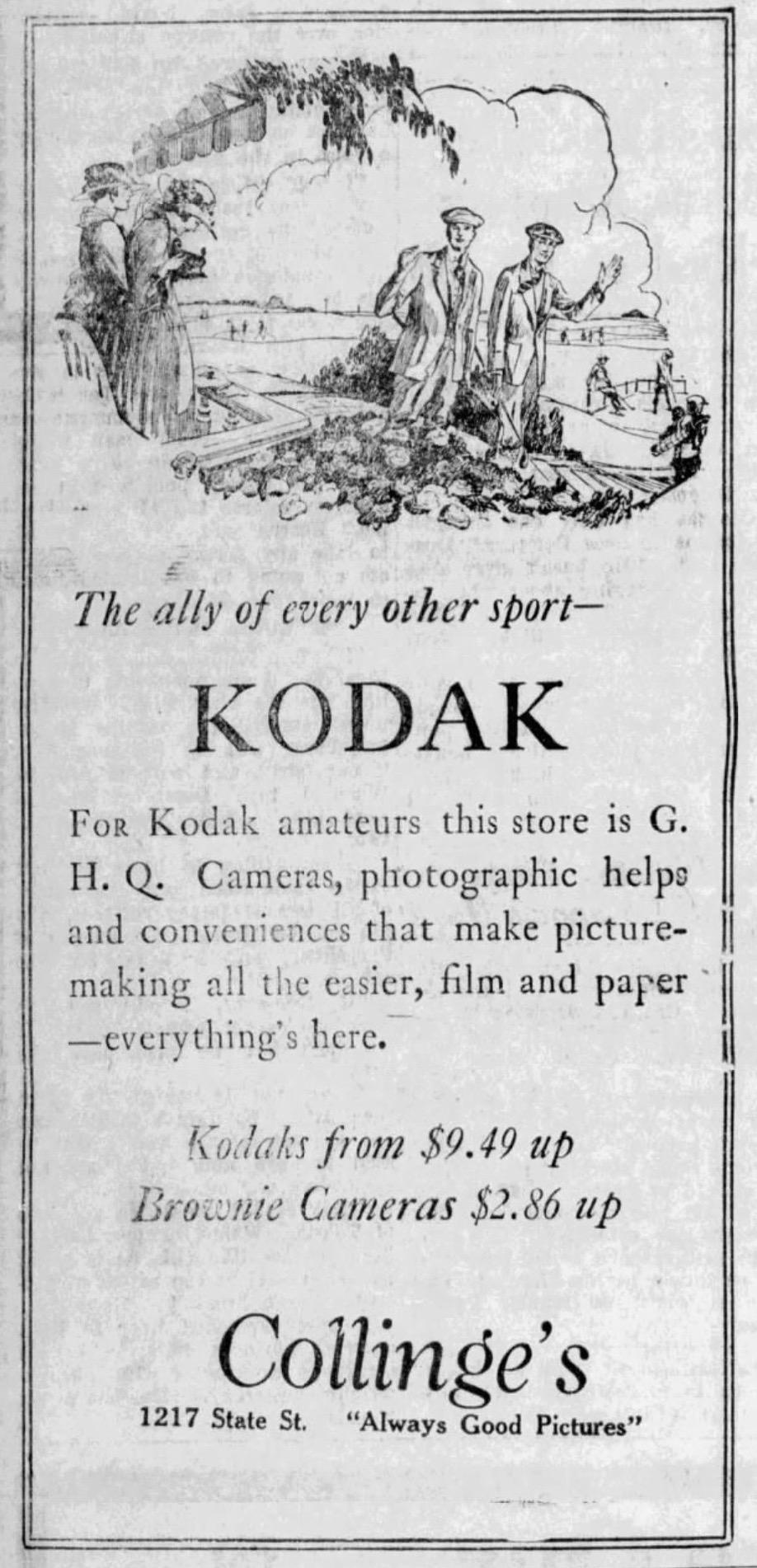
J. Walter Collinge, (Courtesy Brad Bayley.) | The star sloop Thistle in a race. (Gift of Peg Collinge) | One of Collinge’s early advertisements from 1921. | |
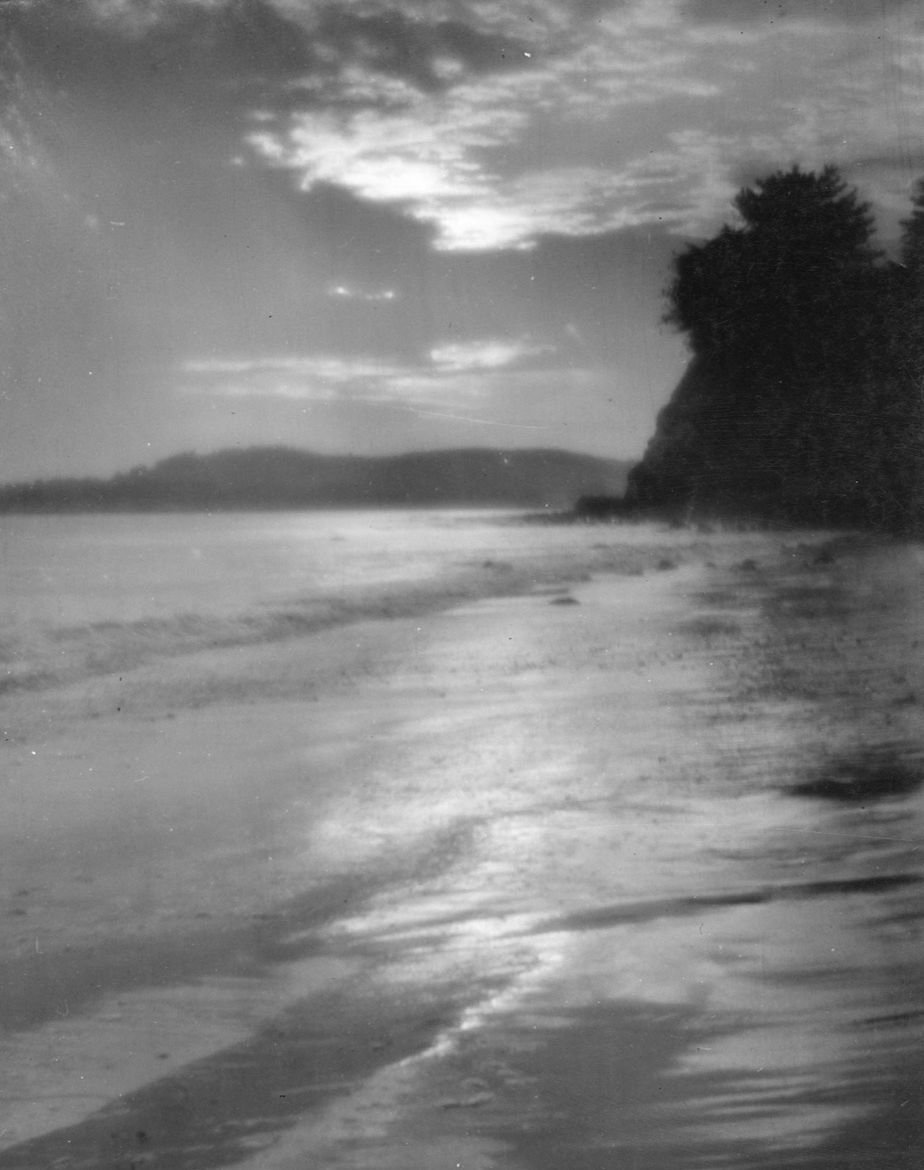
Collinge engaged in commercial “butter and egg” work, but his passion lay in Pictorialism, the idea that photography was an art form, and that beauty should be the goal of a photographer. He created atmospheric portraits and images using soft focus techniques and manipulation of development and printing processes to express his unique artistry.
By 1924, Collinge was giving exhibitions of his work at his studio on State Street. And by 1925, his reputation had begun to spread worldwide as galleries and salons and magazines exhibited his award-winning photos.
|
|
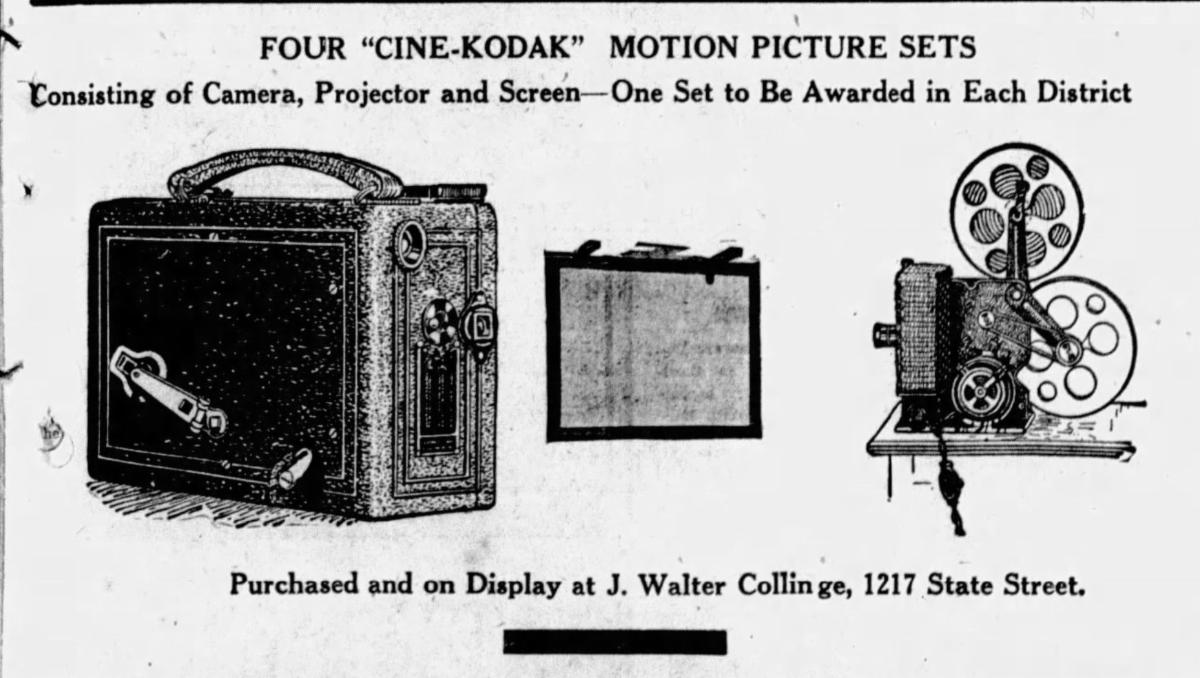
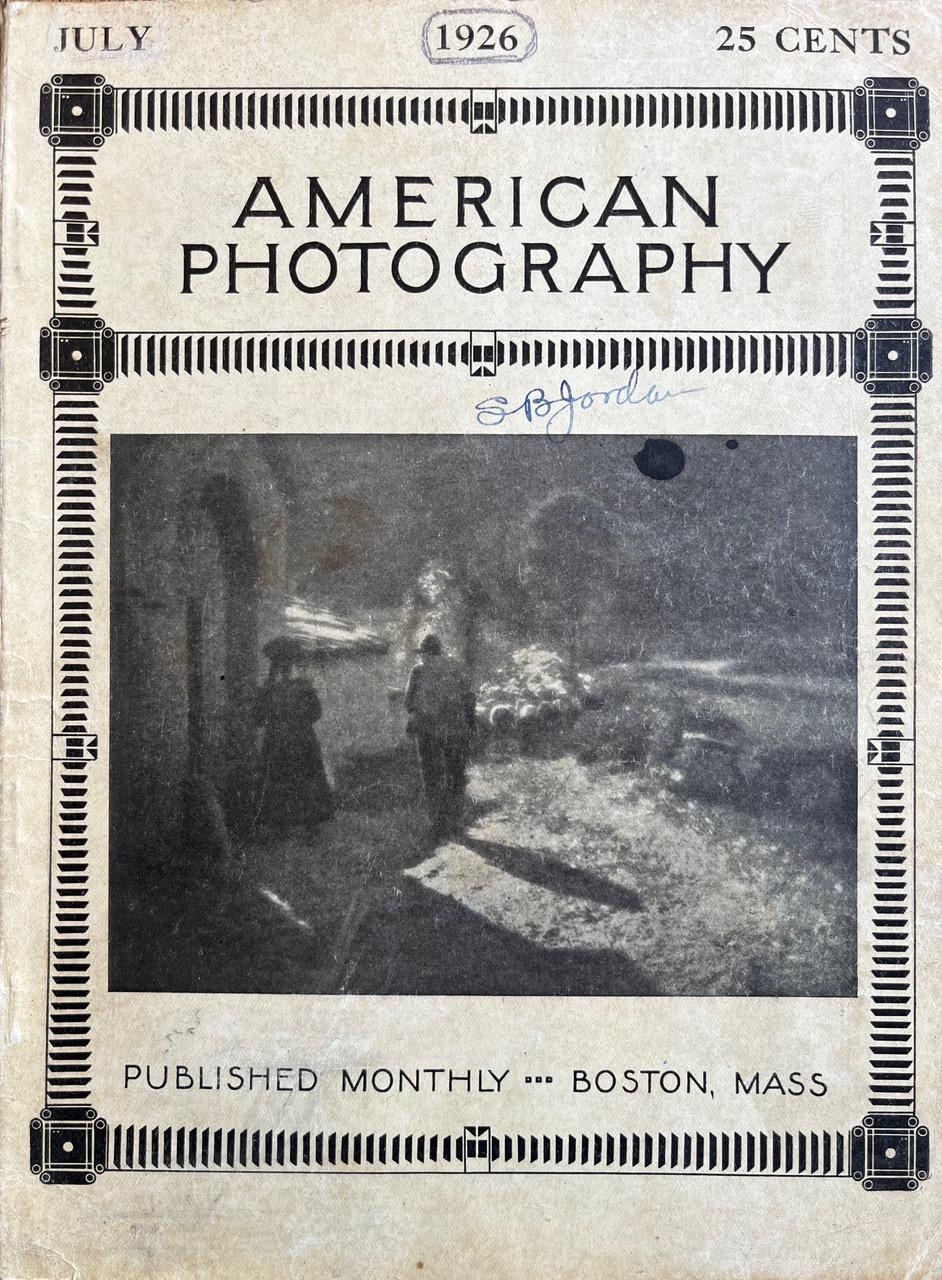
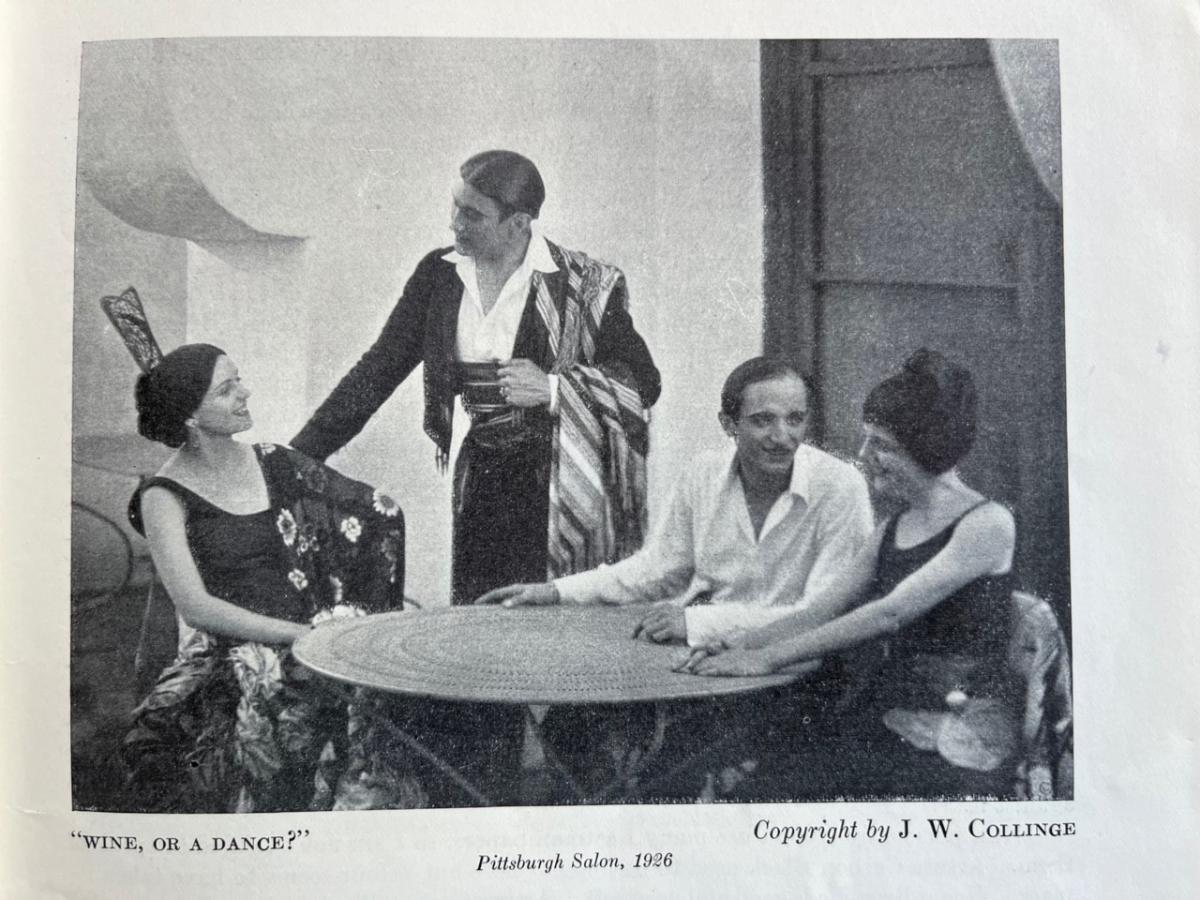
A black and white Pictorial image of Butterfly Beach. Collinge also hand painted some of these images and the painted version of this one, which is in the exhibit, is stunning. (Gift of Peg Collinge) | An ad from 1927 shows that Collinge had ventured into movie making and his film of dancers dancing was exhibited at the School of the Arts. | Collinge’s work was included in a review of the Pittsburg Salon in American Photography. | “Wine, or a Dance?” received glowing comments from the American Photography reviewer. It depicts Fiesta in El Paseo in 1925. | |
Jack’s Fountain
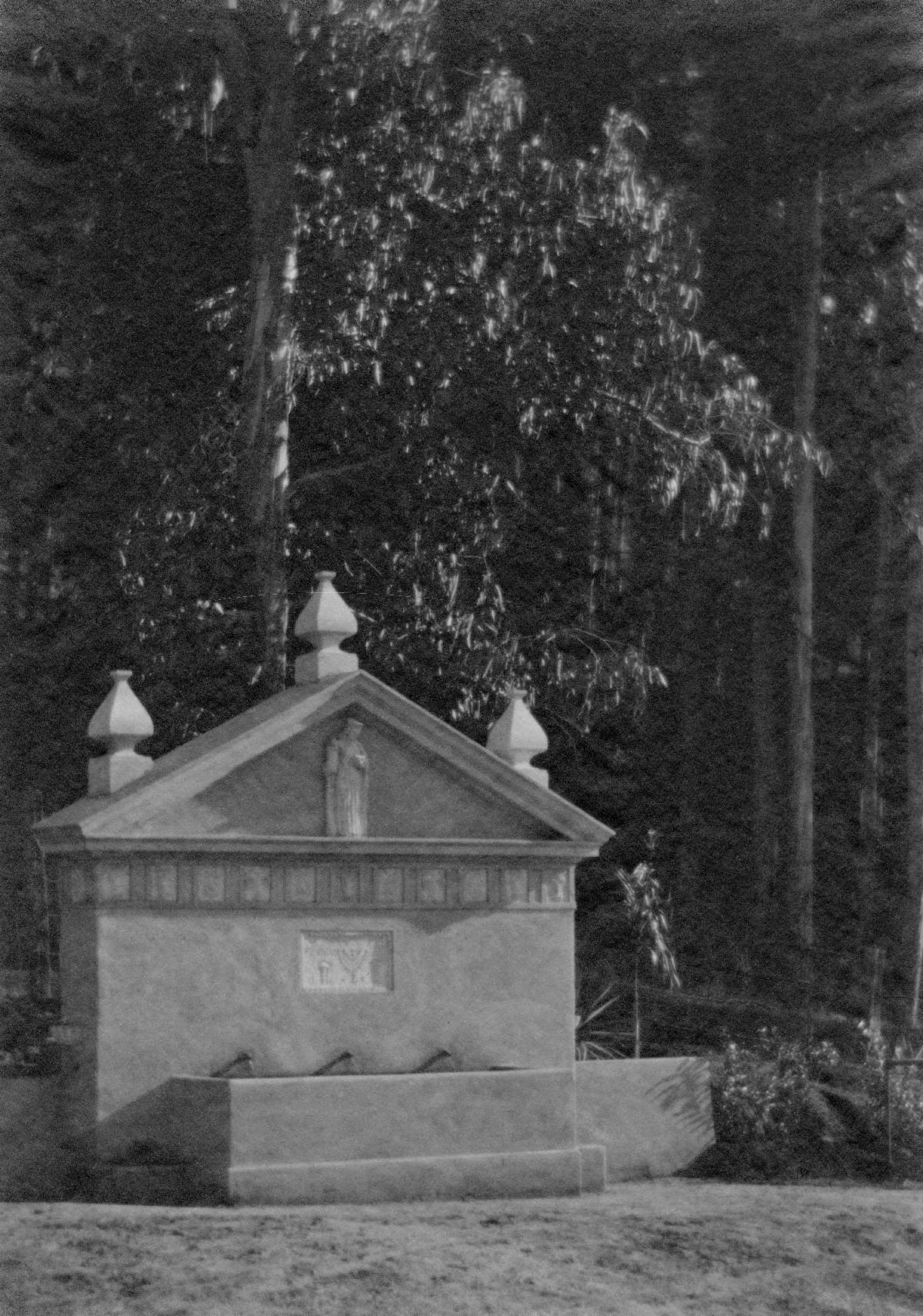
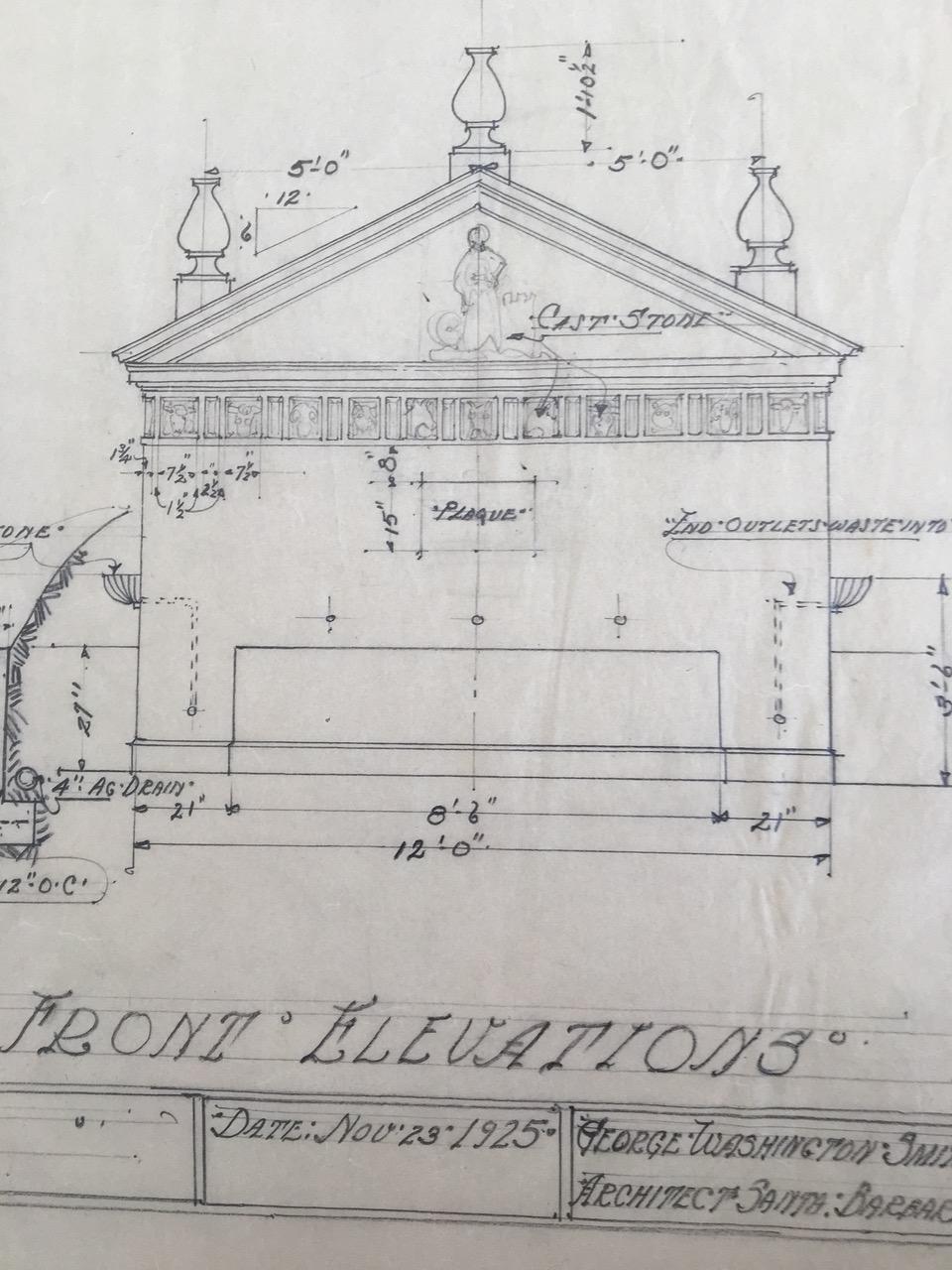
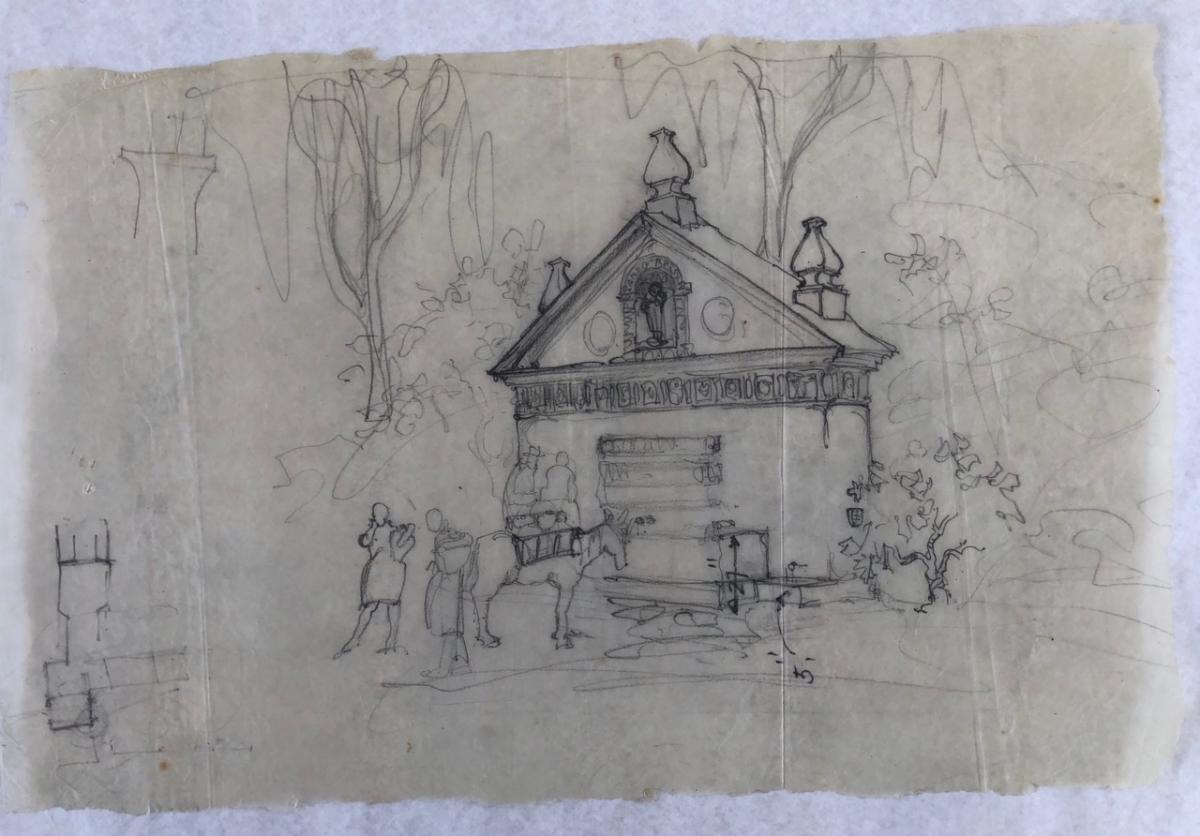
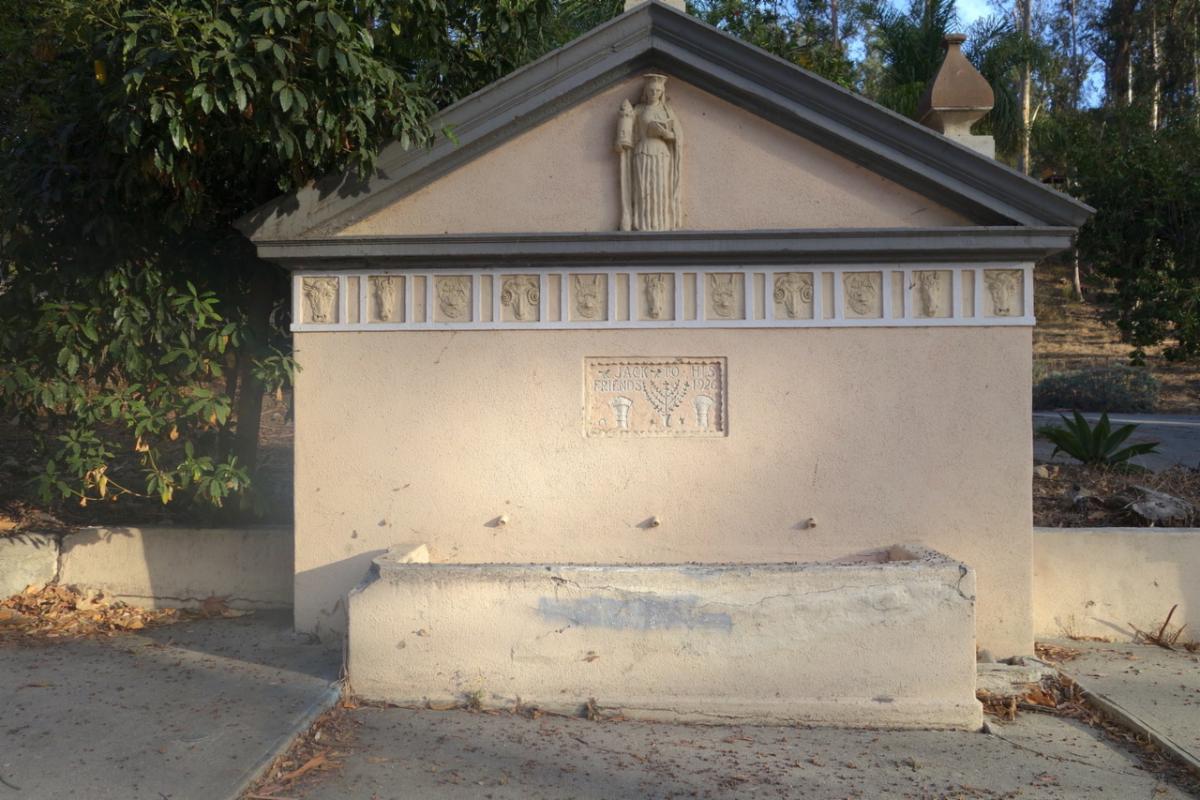
Collinge’s atmospheric Pictorial photo of Jack’s Fountain on the corner of Sycamore Canyon and Sheffield Drive serves also as a document of the past. Commissioned by the oft married Margaret (Peggy) Ravencroft (Doe, Rogers, Courtney), the firm of George Washington Smith, with Lutah Maria Riggs as designer, built a water trough and fountain in memory of Peggy’s favorite saddle horse, Jack. An avid defender and supporter of animals, Peggy financed dozens of animal shelters and clinics worldwide. Locally, she made weekly trips to the dog pound, paid the licensing fee and found homes for animals before they could be put to death. The trough was placed at that corner to provide water for the horses of riders and other animals along the trail.
| Jack’s Fountain. (Gift of Peg Collinge) |
Architectural drawing of plan for Jack’s Fountain shows the front elevation. | Lutah Maria’s rendering of the fountain. | Author photo of Jack’s Fountain before City Parks and Recreation revitalized it. Saint Barbara graces the pediment and the plaque says, “Jack, to his friends, 1926. (author photo) | |
The Fairy Ring
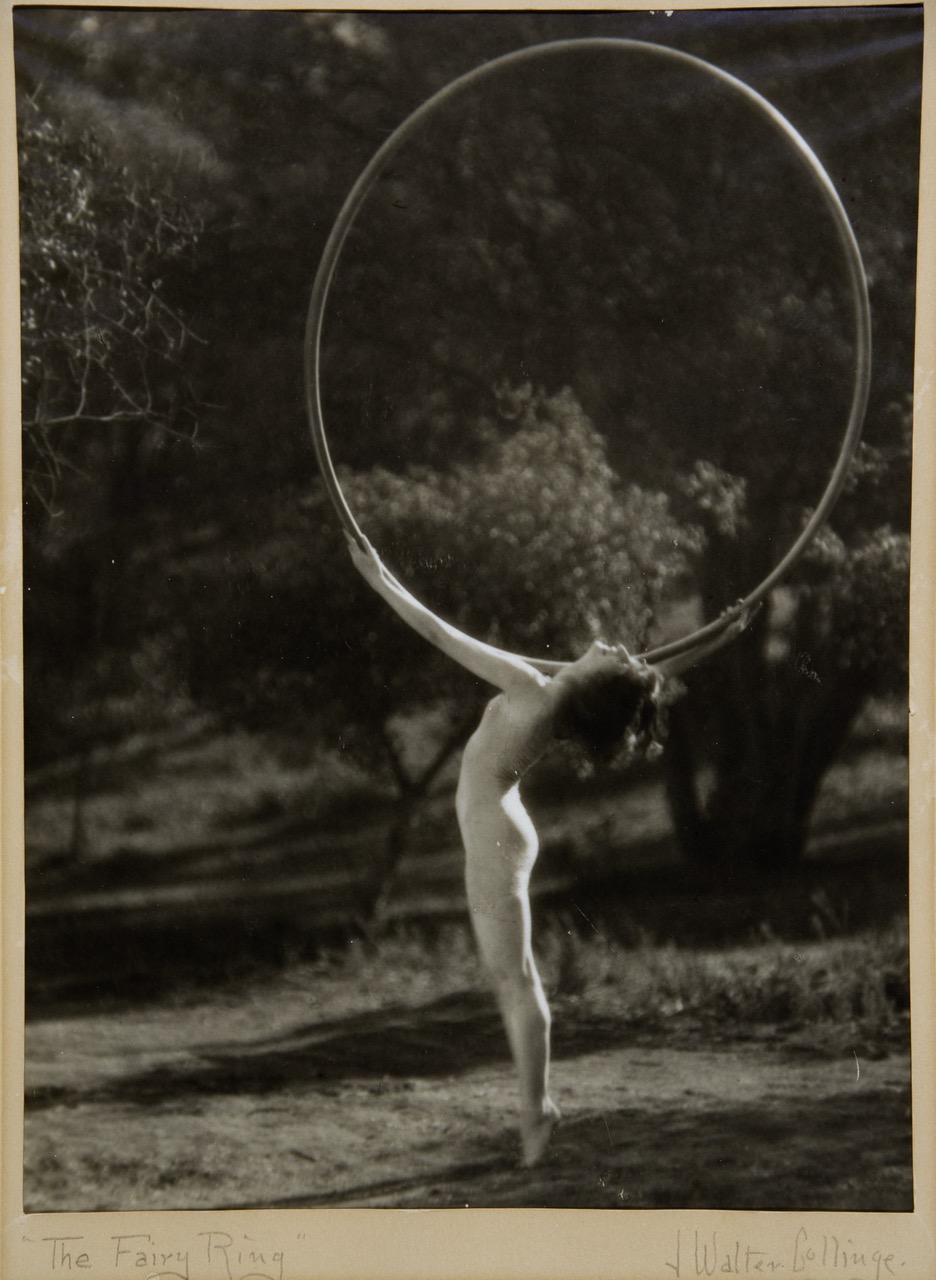
Arguably Collinge’s most famous photograph, The Fairy Ring depicts a young nude woman posed on tip toe in an extended arc holding aloft an enormous metal ring against an indistinguishable dark landscape. The model was Doris Humphrey, who was an early pioneer of modern dance. (A closer look reveals she wasn’t actually naked.)
When the photo was exhibited in London in 1926, the reviewer said that the lines were delightful and the lighting exceptional and one hardly realized that the charm of the picture was largely due to a nude figure at all. Another reviewer said that Collinge’s photo displayed “what may be called French Grace,” a concept that goes beyond meticulous craftsmanship and imbues the work with charm and beauty and insight.
|
Collinge’s The Fairy Ring traveled the world garnering prizes. The original print is a gift to the museum from Edith Ogella. | |
The Gift
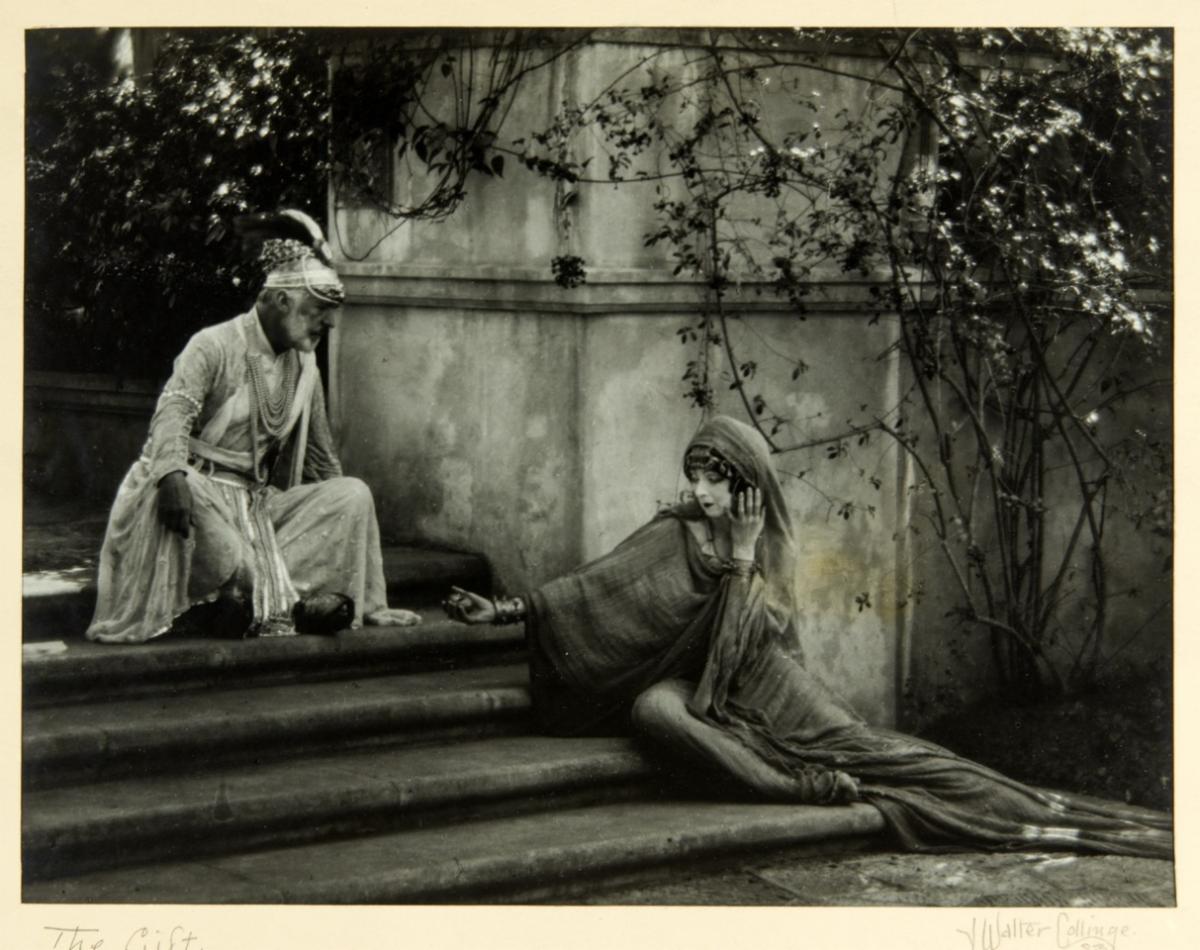
Labeled simply “The Gift” the photo shows a woman handing “a gift” to an elaborately costumed character. Evocative on its own, the history behind the models and the scene reveal an important piece of Santa Barbara’s past. The bejeweled and draped king is the artist Albert Herter, and the courtesan is the dancer Ruth St. Denis.
|
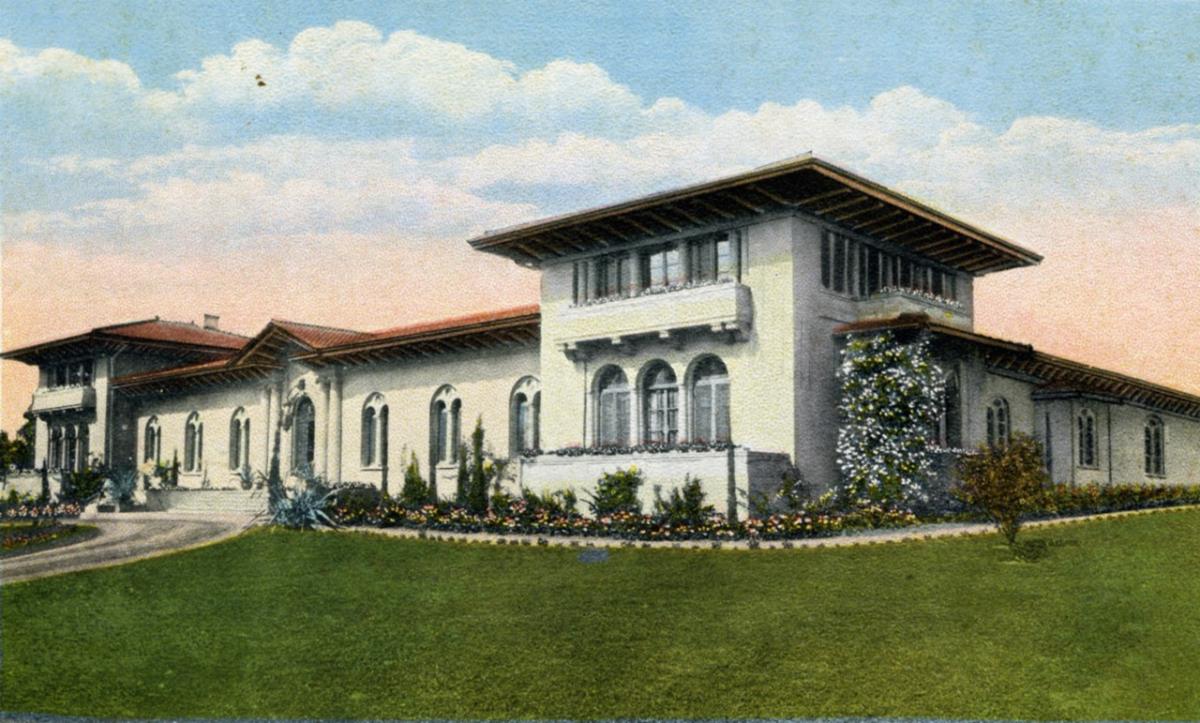
The Gift (Gift of Peg Collinge) | Herter was a world-renowned artist from a distinguished East Coast family who made Santa Barbara his home in 1913 and established an exclusive hotel he called “El Mirasol.” Herter was known for his mural work, two of which hang in the downtown library, and many others reside in state houses and other institutions throughout the world. He and his artist wife Adele were involved in dozens of community cultural projects. |
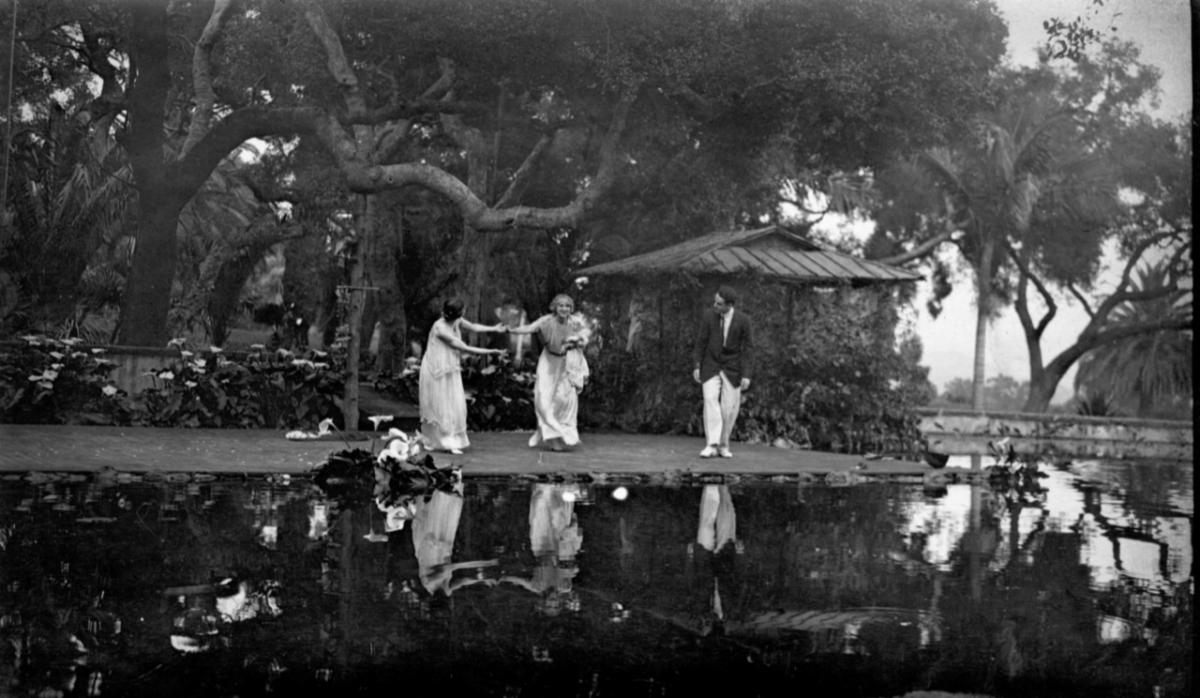
El Mirasol became the premier hotel in Santa Barbara when it opened in 1914. | Ruth St. Denis was a modern dance pioneer. She and her partner, Ted Shawn, formed a dance company and trained two local girls, Martha Graham and her sister Georgia. At the time the photo was taken (1929), Ruth had been performing in Santa Barbara for years and was famous for her performances on the lotus pond of Charles Frederick Eaton’s estate in Montecito, which later became Lolita Armour’s El Mirador. | |
Ruth St. Denis, Eleanor Pierce, and Ted Shawn on the stage over the lotus pond at Riso Rivo, the Charles Frederick Eaton estate in Montecito. The Wisteria Fete in 1915 was a fundraiser for the Recreation Center. (The estate was later purchased by Lolita Armour.) (unknown photographer) | |
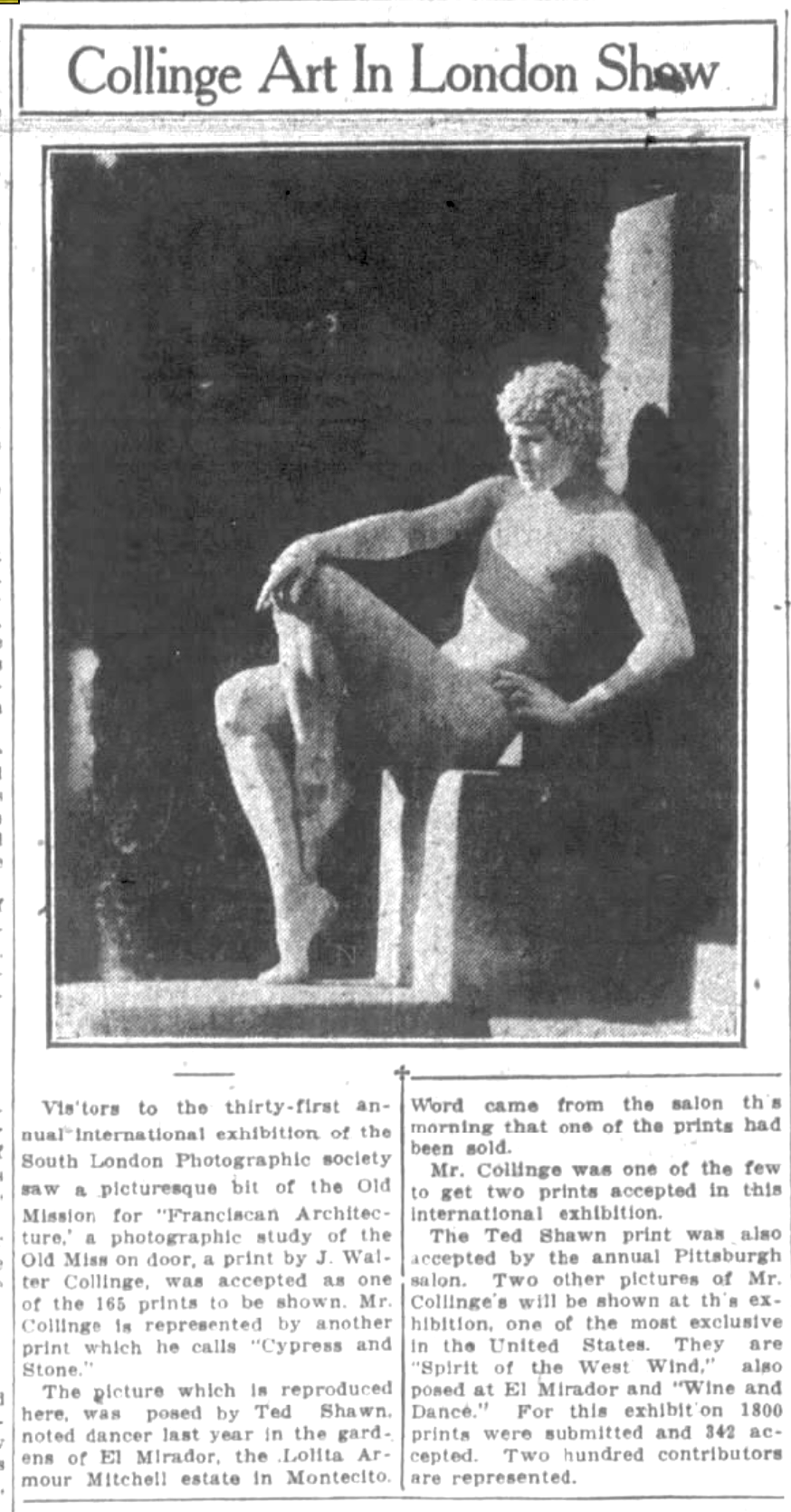
Collinge used Denis's partner, Ted Shawn, as the model for his photo Cypress and Stone. Taken in the gardens of El Mirador, Lolita Armour’s estate in Montecito, the photo was displayed at international and national exhibitions. In the photo, Shawn personifies a Greek statue, and the use of light and dark is both accentuated and balanced through the geometry of the pose. | |
Ted Shawn posed for Cypress and Stone, another award-winning photograph by Collinge. | |
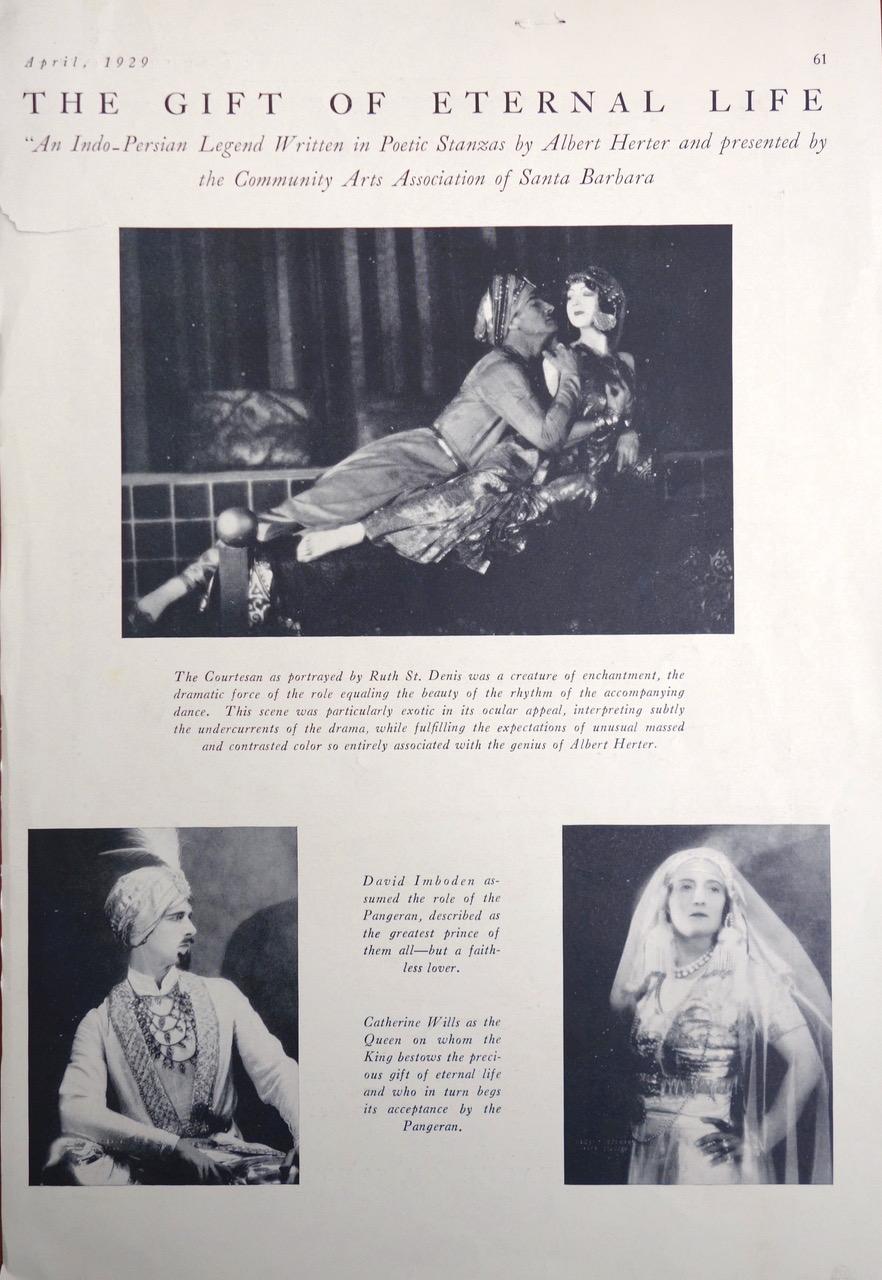
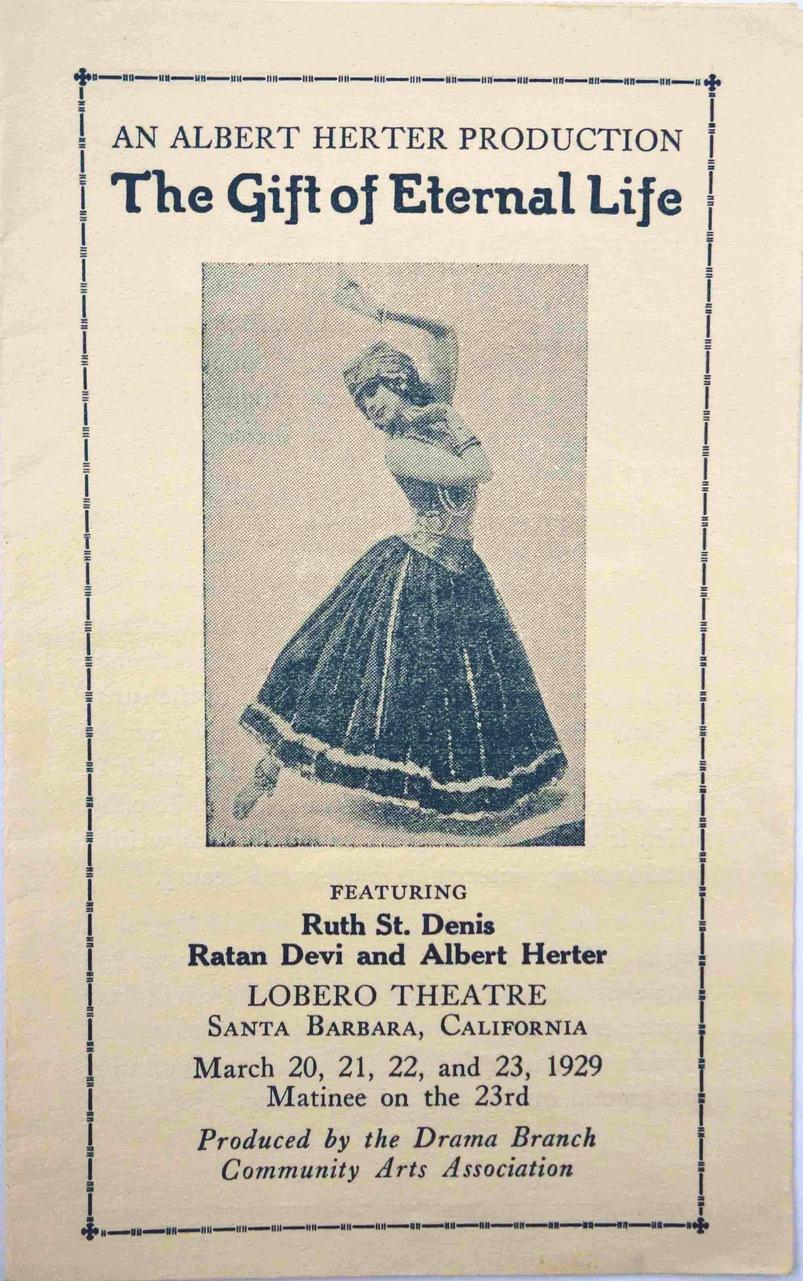
Over the years, Herter created benefit productions for the Community Arts Association. In 1929 he wrote and produced “The Gift of Eternal Life” which involved hundreds of locals in its creation. It featured silent film star and former Community Arts Drama director, David Imboden as the prince, Ruth St. Denis as the courtesan, and Albert himself as the King. | |
An article celebrates the amazing and famous production that included hundreds in the cast and featured, not just St. Denis and Herter, but also David Imboden, star of the silver screen and sometime director of the Community Arts Players. | |
The Gift of Eternal Life played at the Lobero Theater in 1929. | |
Our exhibition, “J Walter Collinge: Pictorial Santa Barbara & Beyond,”
is open until May 11, 2025 | |
|
About the Author
Historian Hattie Beresford authored three Noticias and recently completed the 100-year history of the Community Arts Music Association entitled Celebrating CAMA’s Centennial.
For nearly two decades Beresford has written a column for the Montecito Journal called “The Way It Was,” in which she has been able to indulge her long-standing interest in the people and events of Santa Barbara’s past. She is also a regular contributor to the Montecito Journal Magazine. Read her articles here.
She co-edited and produced the memoir of local artist Elizabeth Eaton Burton, My Santa Barbara Scrapbook and authored the sold-out book, The Way It Was: Santa Barbara Comes of Age.
Explore her work for sale in our museum store here.
| |
|
The Museum is open Wednesdays 12-5pm, Thursdays 12-7pm,
Fridays 12-5pm, Saturdays 12-5pm, and Sundays 12-5pm. Admission is complimentary.
| |
|
Read past issues of Noticias
HERE
| |
Our mission is to inspire meaningful connections to Santa Barbara history. | | | | |