Our mission is to inspire meaningful connections to Santa Barbara history. | |
|
Dear Friends,
I hope you enjoy this article about our own Covarrubias Adobe by historian and friend, Hattie Beresford.
Happy reading,
Dacia Harwood
Executive Director
Ps: The recent storms have impacted our beloved adobe, please make a much needed donation if you can.
| |
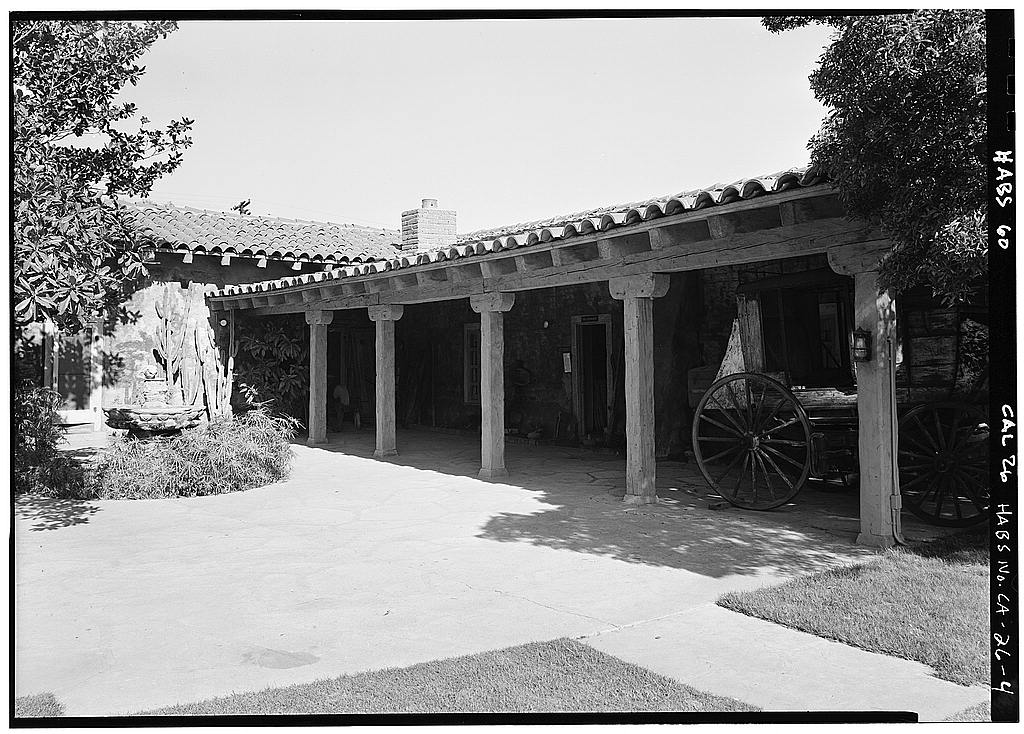
Covarrubias Adobe in the 1930s (Library of Congress, Historic American Building Survey) | |
|
The Covarrubias Adobe
By Hattie Beresford
In July 1909, the Morning Press announced alarming news; the venerable Covarrubias Adobe had been sold and was to be razed and replaced by a modern apartment building.
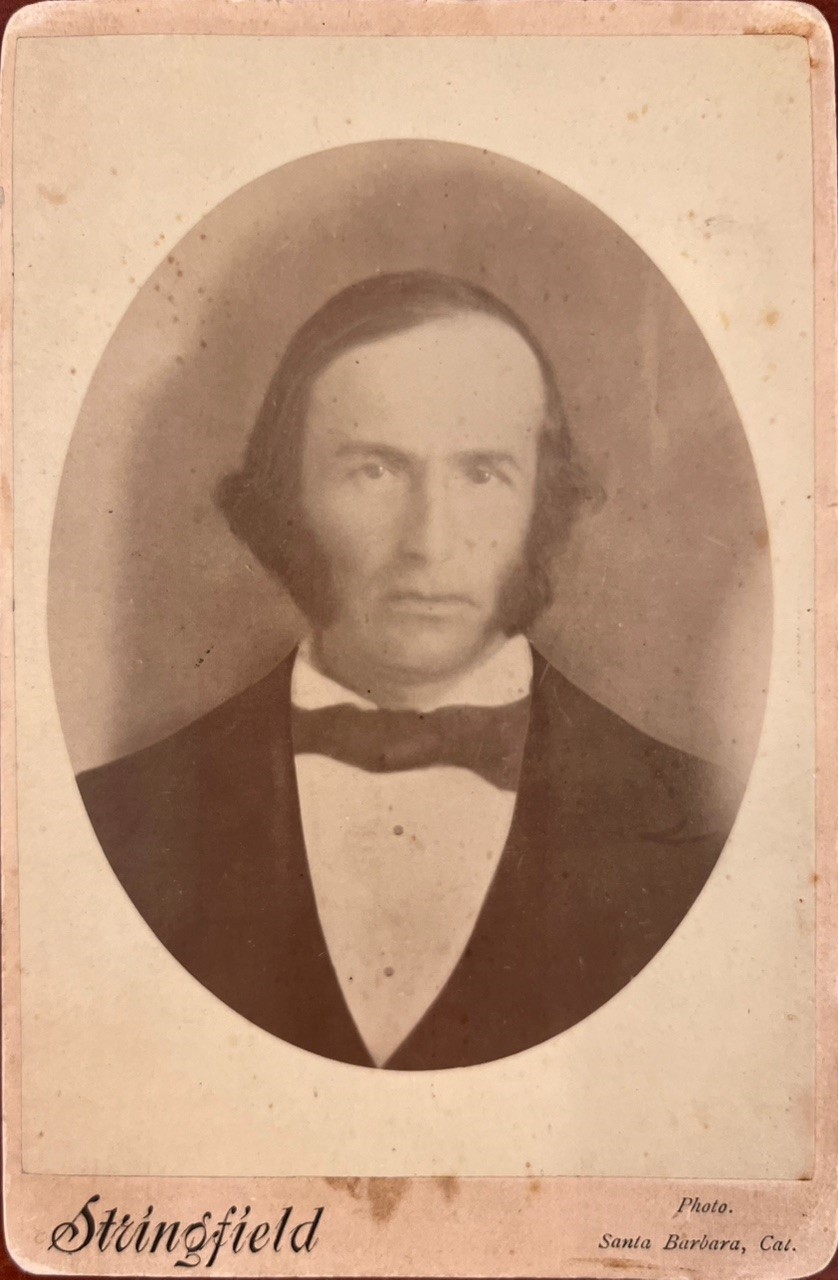
The adobe had been built in 1817 by Domingo Antonio Carrillo for his wife, Maria Concepción Pico, whose brother Pio would become the last Mexican governor of California. In 1838, their daughter married José Maria Covarrubias, a Spanish native of France, who became private secretary to Pio Pico, served as alcalde (mayor) of Santa Barbara as well as county judge, delegate to the State Constitutional Convention and State Assemblyman. The adobe, therefore, was rife with history that stood poised to be demolished.
|
José Maria Covarrubias became private secretary to the last Mexican governor, Pio Pico. After 1848, he served as a delegate to the California State Constitutional Convention, sat on the state legislature and became a Santa Barbara County judge. (SBHM) | |
By some miracle, ten years later the adobe still stood. After successive residential lessees and periods of vacancy, in June 1919, the newspaper reported, “Another of Santa Barbara’s old historic adobes has been reclaimed to lend itself to the artistic needs of the present day.”
J. H. McDonald, who was associated with Flying A Studios and the Portola Theater, saw possibilities in the romantic old adobe and adapted it to studios. He wanted a place where artists could gather “in a congenial atmosphere of informality to sketch from life and to exchange views and exhibit their art.”
In December of 1919, Cadillac tycoon and local arts supporter Clarence A. Black purchased the adobe for $5,000. He intended using it as artists’ studios or art school.
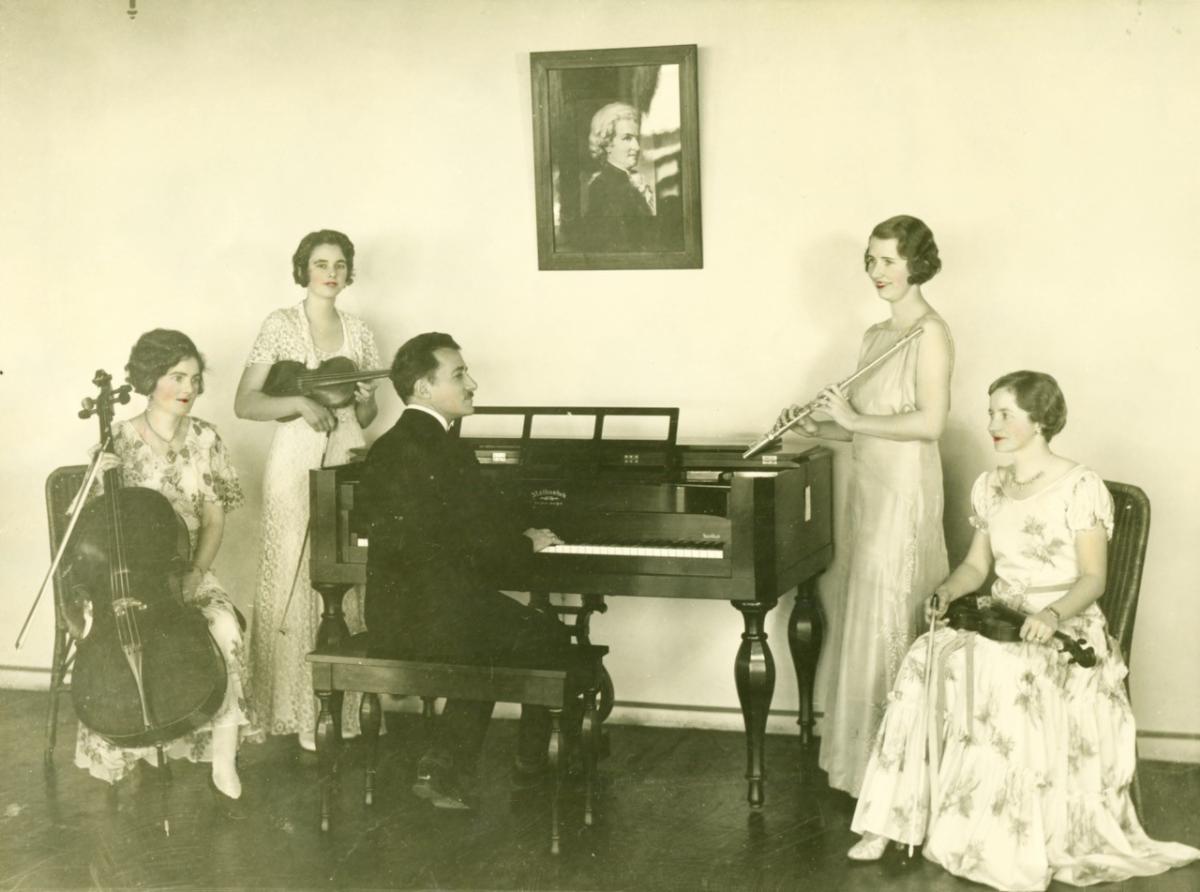
The years 1919 and 1920 saw a great cultural renaissance in Santa Barbara. For the first Community Arts Association production, The Quest, the costumes were made at “Covarrubias Art School.” (The site and name were quickly abandoned in favor of the Dominguez adobe and Santa Barbara School of the Arts.)
|
|
Roger Clerbois, one of the founders of the Community Arts Music Branch (today’s CAMA) had a studio in the Covarrubias for his Mozart Society, seen here. (SBHM) | |
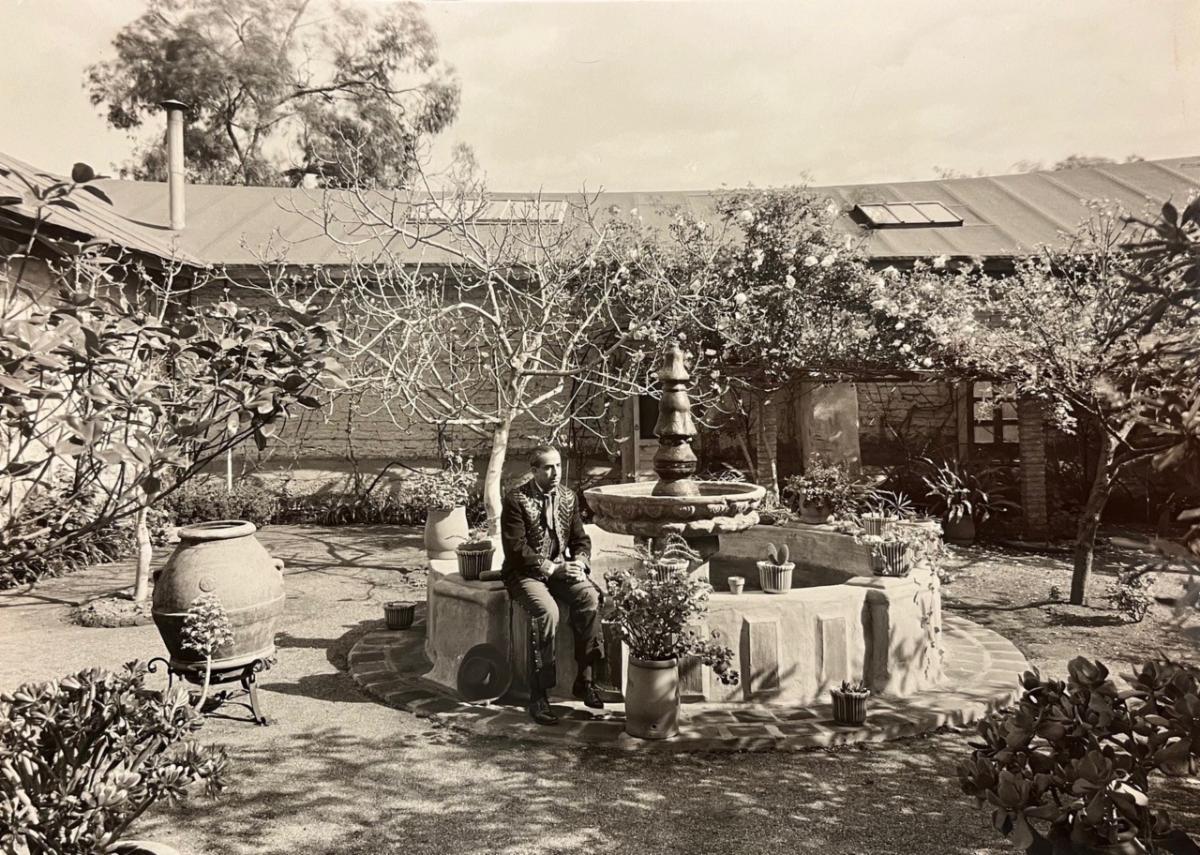
In 1920, writer, historian and antiques dealer, John R. Southworth, purchased the Covarrubias. The original mission tiled roof had been sold off to a Montecito man in 1886, so wood panels covered the willow canes limed with mud. He clad the interior with asbestos wall board and redwood in a gothic style, and he constructed a wall of cement around and underneath the old walls for protection.
Southworth also saved the adobe belonging to the Natural History Museum on Anacapa Street, which was slated for demolition. “It will be the first adobe in California to be moved without melting away,” he said.
|
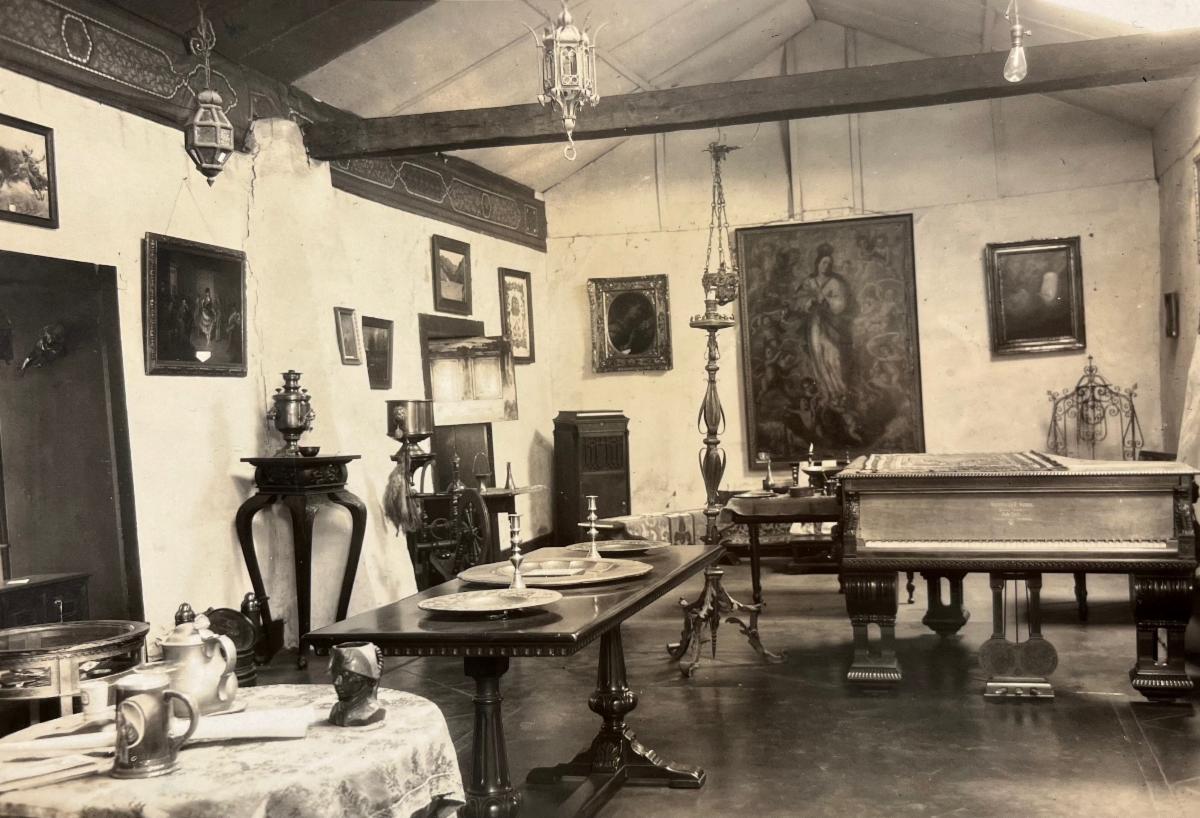
After John Southworth purchased the adobe in 1920, he reinforced and protected the Covarrubias by encasing the walls in concrete, which can be seen in the photo. The roof, however, remained innocent of its former clay tiles. The photo shows what is thought to be Southworth in Fiesta garb circa 1928. (SBHM) | Southworth’s antique business in the Covarrubias Adobe circa 1930 contained, among other paintings and furnishings, a Steinway piano used by Mebane Beasley’s vocal students and The Virgin Purisima by Miguel Cabrera. On the far wall today, there is a large stone fireplace. (SBHM) | |
For the next 18 years, both the Covarrubias and the Historic adobes were used in whole or part by Southworth, who periodically lived and worked there. Lessees included a tearoom, an interior decorating business, shops, an art gallery, and art and music studios. The constant rotation of lessees may have been prompted by the Covarrubias ghost. Known as “The White Lady,” each midnight she moves silently through the sala looking for her child who had died in infancy in 1819.
Despite rumors of hauntings, various groups in town continued to use the romantic, historic setting of the adobes for events. In 1927, the Strollers, an amateur drama and music group, held its Fiesta dinner in the garden of the Covarrubias. The following day’s report described the setting as “charming patios where little fruit trees grow against old adobe walls and a grapevine drapes itself on a low ramada and festoons across doorways and low, deep apertures of windows.”
|
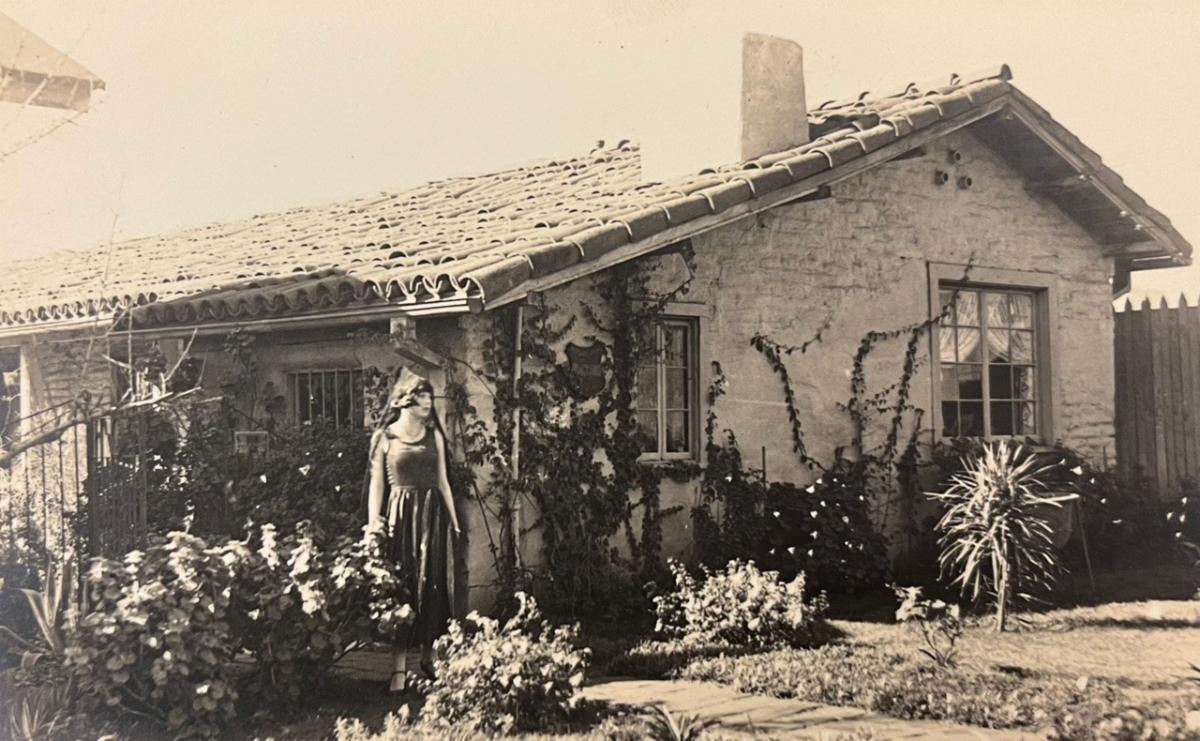 | Over the years, the Historic Adobe saw service as residence, tea rooms, restaurant, art gallery, and a night club. (SBHM) | |
In 1936, the public was delighted to find that “Los Adobes” had become a nightclub with dining, dancing, and cocktails. That August, Eddie Valencia and his Beach Combers entertained with their Big Band sound tinged with a Hawaiian twang. Santa Barbarans rushed out to buy their DECCA 78 single, “Kanakanui Hotel.”
In 1938, Southworth sold the adobes to Los Rancheros Visitadores, who planned to make them a club center, complete with museum and art gallery. They replaced the shingle roof with tile and restored the courtyard fountain and the adobe walls. Donations of art and Californio relics provided the décor as did a unique set of paintings of the California missions by Will Sparks.
|
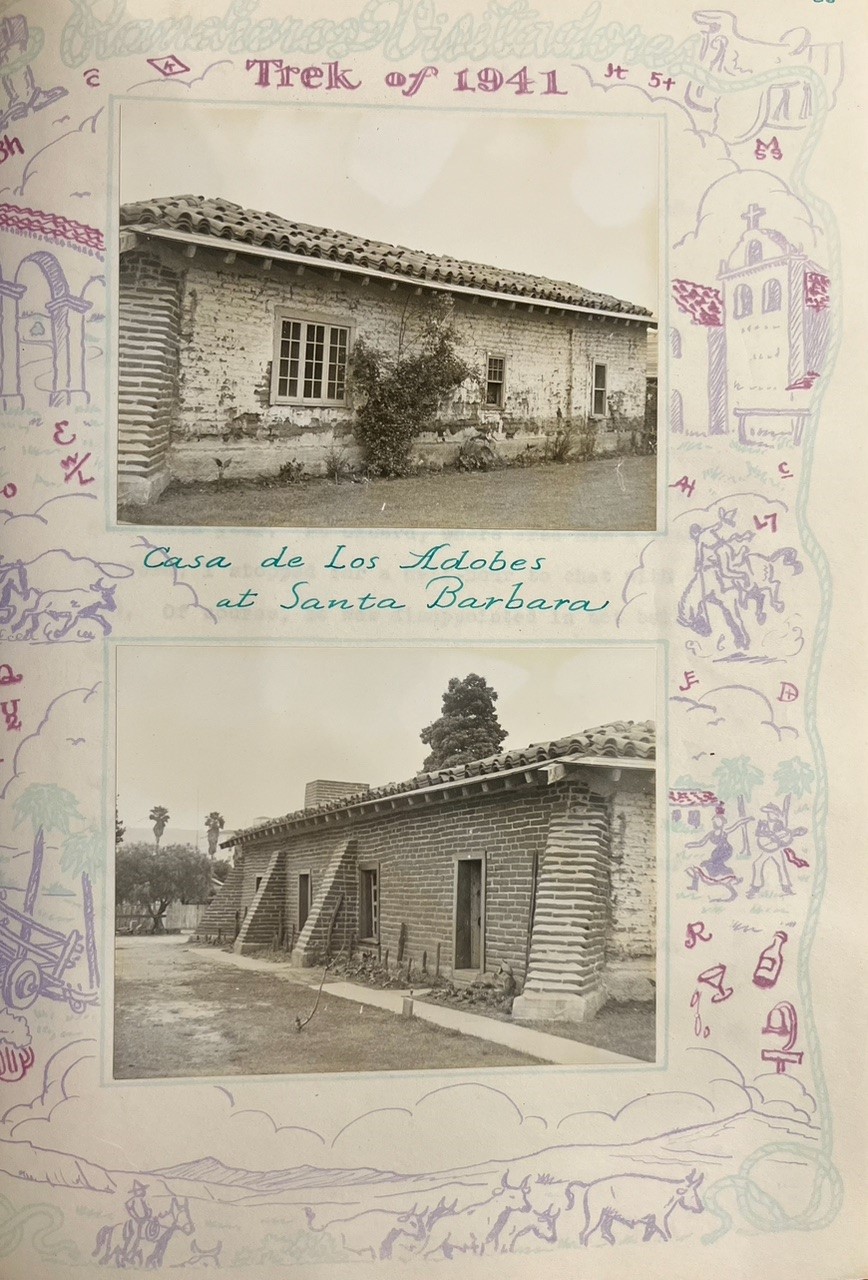
With new roof tiles at the ready and buttressing in place, the Covarrubias was nearly ready for occupancy in 1941, as the Los Rancheros Visitadores Trek Book reveals. (SBHM) | |
In 1941, the Santa Barbara Chamber of Commerce moved into the adobes because they wanted quarters that were in keeping with the spirit of Santa Barbara and which moved them another step forward in preserving precious landmarks.
World War II saw the adobes used for relief efforts. After the war it became known as United Nations House which tried to foster international understanding. In 1959, the Covarrubias was designated as a California State Landmark. Later, City and National designations were conferred, as well. In 1964, the Santa Barbara Historical Society purchased the two adobes.
|
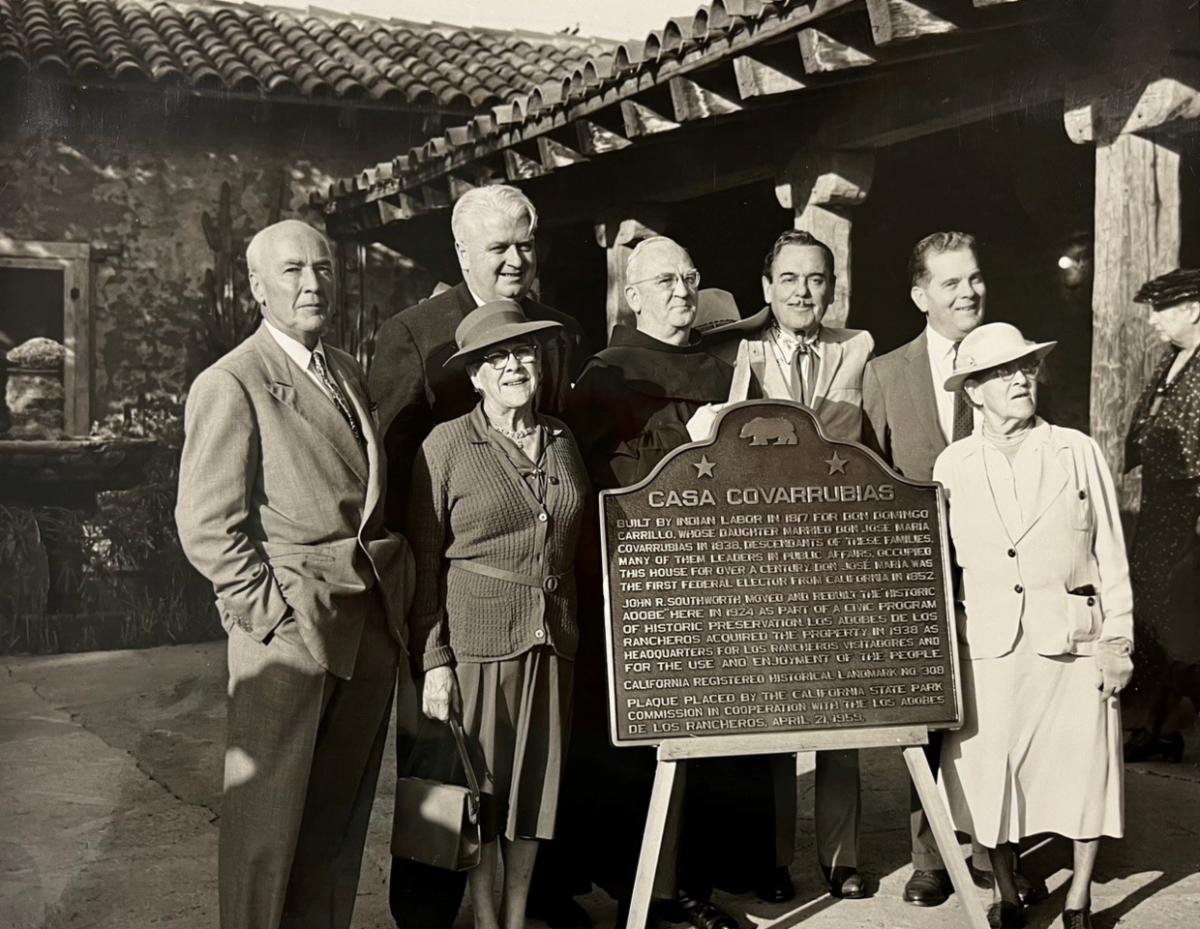
In April 1959, the State of California conferred Historic Landmark status on the Covarrubias Adobe. In this photo by Karl Obert are (front row, left to right) John J. Mitchell, Miss Yris Covarrubias and Miss Aurora Covarrubias; and (back row, left to right) Thomas J. McDermott, Father Maynard Geiger, Leo Carrillo, and Dr. Aubrey Neasham. (SBHM) | Now over 200 years old, the adobe walls of the Covarrubias have seen and hosted two centuries of Santa Barbara’s history. A popular place for community and private events, it has also helped keep Santa Barbara’s history alive by providing a venue for lectures, talks, films, and historic demonstrations. | |
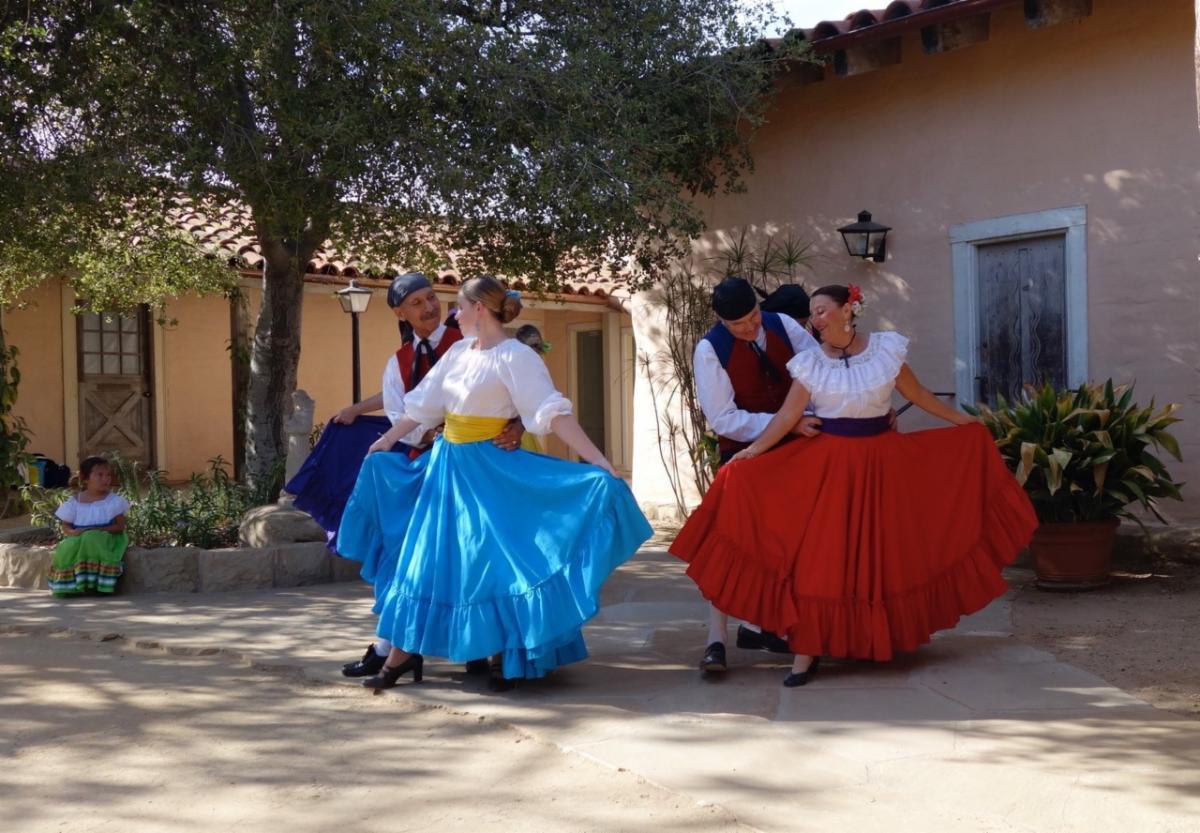
In 1964, the Santa Barbara Historical Museum purchased both adobes and took over stewardship of preserving them. Today, the Covarrubias is a venue for private parties and, more importantly, as a place for demonstrations and talks that relate and preserve the history of Santa Barbara. Seen here is a demonstration of Spanish dances. (Author photo) | |
|
About the Author
Historian Hattie Beresford authored three Noticias and recently completed the 100-year history of the Community Arts Music Association entitled Celebrating CAMA’s Centennial.
For nearly two decades Beresford has written a column for the Montecito Journal called “The Way It Was,” in which she has been able to indulge her long-standing interest in the people and events of Santa Barbara’s past. She is also a regular contributor to the Montecito Journal Magazine. Read her articles here.
She co-edited and produced the memoir of local artist Elizabeth Eaton Burton, My Santa Barbara Scrapbook and authored the sold-out book, The Way It Was: Santa Barbara Comes of Age.
Explore her work for sale in our museum store here.
| |
|
The Museum is open Wednesdays 12-5pm, Thursdays 12-7pm,
Fridays 12-5pm, Saturdays 12-5pm, and Sundays 12-5pm. Admission is complimentary.
| |
|
Read past issues of Noticias
HERE
| |
Our mission is to inspire meaningful connections to Santa Barbara history. | | | | |